When Alexander starts talking about this brand, his face takes on such an expression that it seems even the birds stop singing and the wires stop humming. So solemn does this moment look. "Haven't decided yet," I honestly admitted. "Right, you need to feel the classics..." he replied, elegantly readjusting my mindset.
INSERT AND TURN?
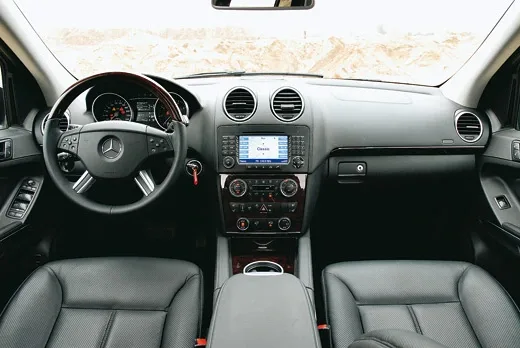
The photographer's trick worked. Soon I was already mentally composing the future article. "Mercedes is not for taxi drivers. Even handling the ignition key requires a certain degree of intelligence. You can't just insert it and turn it until the starter screams. That's how you treat your 'Volga' or whatever it's called now, Siber? Mercedes requires that you first insert the key and calmly enjoy the dashboard coming to life. Then turn it to the first click and leisurely watch how the steering wheel, raised for easy exit, lowers. And only then can you gently, without fuss, wake up the starter. This ritual is akin to a tea ceremony. And every exit from the garage is like a small parade.
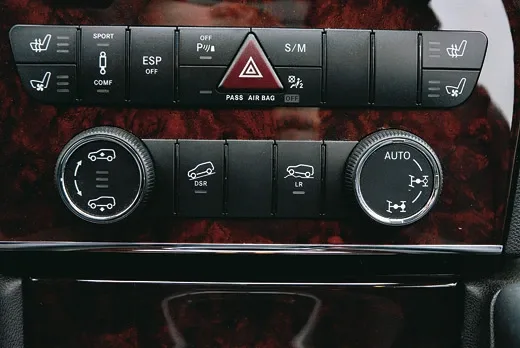
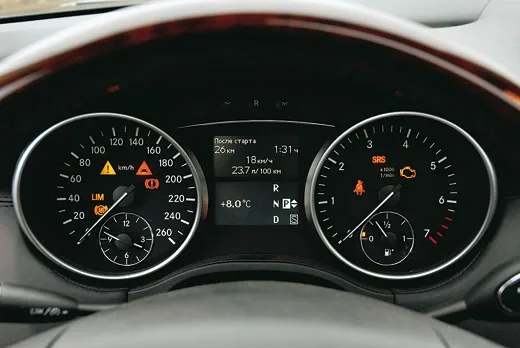
Not some gay parade on a chameleon-painted Porsche Cayenne, but a real May Day promenade with flags, a podium, and fresh wind in clouds pierced by sunbeams."
NOT MAKING A MOUNTAIN OUT OF A MOLEHILL
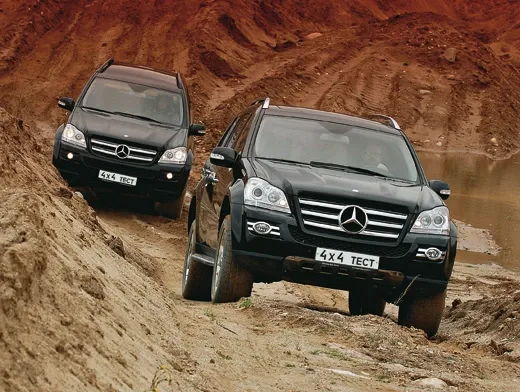
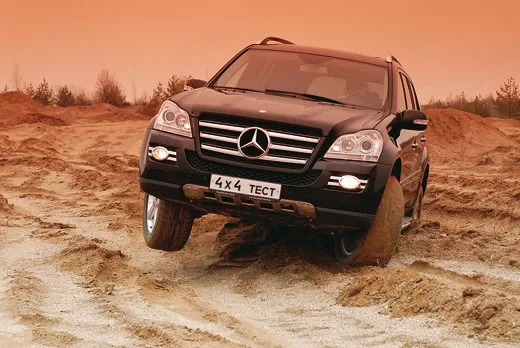
Shaking off the hypnosis induced by the photo artist, I'll try to write a few lines on my own. The only thing that truly delights me about the Mercedes GL is its off-road capability. To some extent, the smoothness of the ride is also pleasing, but... it's not so superior to, say, the VW Touareg as to make a mountain out of a molehill. There is a difference, but it's aimed at gourmets warmed by myths, eagerly seeking justification for their investments.
Earlier, talking about off-road capability was laughable because of the price of the new GL. It was too troublesome to bury 120 thousand euros in the forests near Moscow. But now a "cheap" version with a diesel has appeared, and it costs only 80 thousand. The first units flew off the shelves in Russian dealerships within hours. Of course, on the outside it looks like a real GL! And what's inside—few people bother to check (as the sellers themselves explain).
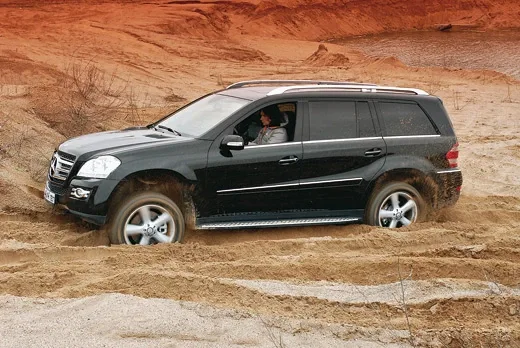
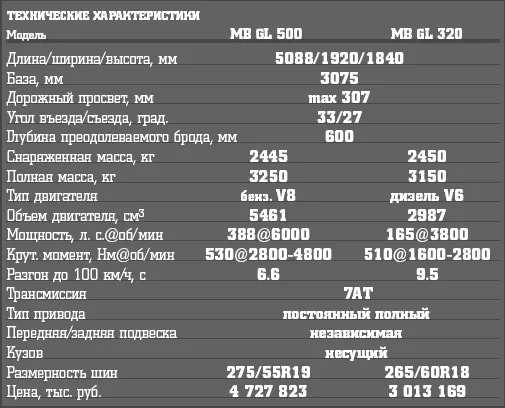
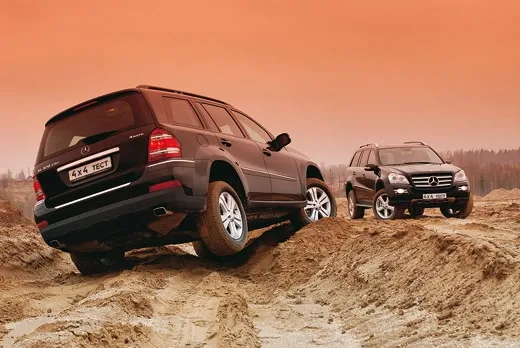
It was precisely this outrage that prompted us to take the cheapest and the most expensive Mercedes-Benz GL. The role of the most expensive "Geländewagen" was played by the petrol modification with a 5.5-liter engine. The "cheap" one is equipped with a 3-liter diesel. The difference is 47 thousand euros, 100 kg of weight, 2.5 liters of displacement, and, of course, 164 horsepower and 20 newton-meters in favor of petrol.
AGAINST MY WILL
While I was slowly tying my shoelaces, our advertising director took the keys to the GL 500 and made a few laps around the editorial office. After that, he pulled me aside and whispered in my ear: "I hope you haven't written anything bad about this engine?" "No, haven't had the chance yet," I replied, freeing myself from Mikhail's heavy gaze, but soon realized that I had again involuntarily fallen under someone else's influence. The ad man drives an ML, and together with the photographer who has taken a liking to the C-Class, they have formed a strong editorial faction with a powerful suggestive influence on journalistic minds. Even now, against my will, I want to write a small hymn to the eight-cylinder, three-hundred-eighty-eight-horsepower unit.
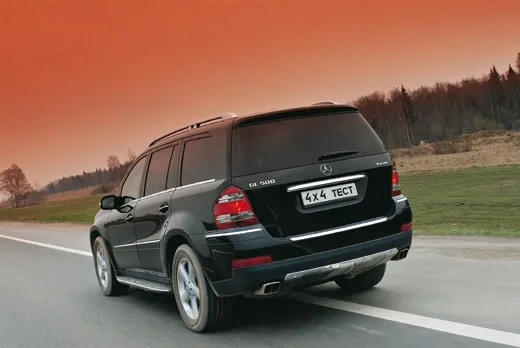
"Of course, it is intoxicatingly powerful and provides both dynamics across the entire rev range and driving comfort. The GL is one of the heaviest SUVs, but the 5.5-liter V8 is enough for it; you don't need more. At any speed, you know it works effortlessly and always has a power reserve to get out of a critical situation. The large displacement promotes smooth, measured driving. Operating revs are below 1500. With proper use, it can even gain a reputation for being economical."
…At this point, the hypnosis weakened, and I remembered my direct duties. Such engines should be given away for free and forced to be driven from six in the morning until midnight. Why? So that they finally bore the Mercedes-Benz owners, and the Russian market, which today is held up by sheer show-off, would reach for truly economical units that all of Europe drives.
WON'T FEEL SORRY
Take, for example, the new Mercedes diesel installed on the GL 320. It lets you have so much fun on sand and rough terrain that the petrol version takes a back seat. True, there are some issues. Mercedes has taken the liberty of supplying a diesel engine to Russia, but it has removed the particulate filter and installed a water separator in the fuel line so that water from our diesel fuel can settle. They also had to reduce the service interval to 10,000 km.
On the fuel filler flap of the diesel GL 320, it says—only fill with Euro-4 standard fuel. I held the nozzle at some Moscow-region gas station, listening to the noise of the diesel swill stream, and thought: "How many meters towards the Daimler representative office will I manage to drive?" This time it was fine.
At first, it seemed to me that the diesel responded too sluggishly to the gas. But the first impression was simply spoiled by the adaptive gearbox. Looking back at the previous sluggish run, it was choking the journalist's eagerness. As it turned out, the diesel is excellently balanced—no vibrations—and feels great off-road, and on the highway it's not afraid of high revs at all.
Comparing two different Mercedes engines makes no sense, if only because of the financial chasm that separates their buyers. But if you ask me what my choice is, I'll answer—diesel. Let it not press the occupants' backs into the leather seats like the 5.5-liter engine, but it will calmly climb sandy slopes where its petrol counterpart would require a good run-up and a lack of pity.