
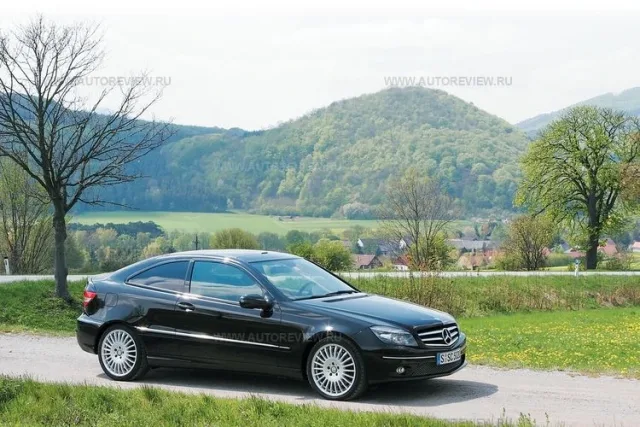
First, I carefully read the press release about the Mercedes-Benz CLC. Then — again. Not a word about which platform this three-door is built on! Maybe on the basis of the new C-Class of the W204 series? After all, the exterior is "new" — faceted and grille-like. But the wheelbase and track of the Mercedes CLC are exactly the same as those of the previous-generation Mercedes Sports Coupe. And the interior is "rounded": as it was, so it remains.
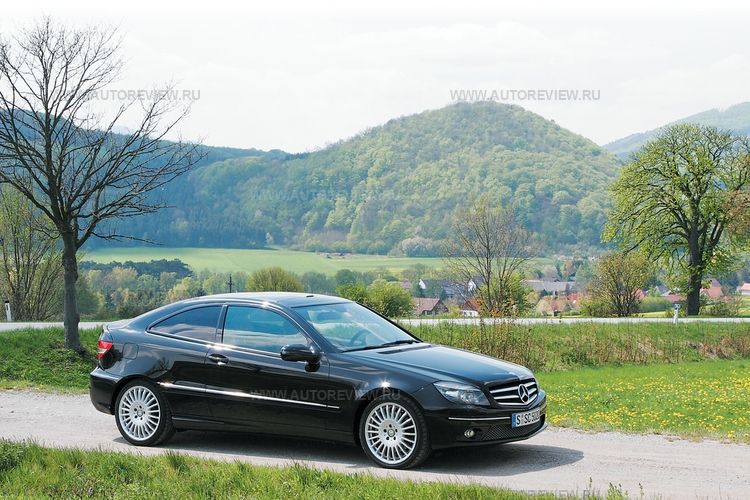
The front of the Mercedes-Benz CLC hatchback is exactly like that of the new-generation C-Class in Avantgarde trim
And all because the Mercedes CLC is actually the "old" Mercedes Sports Coupe! But technically and design-wise re-equipped. And there is nothing wrong with that: as the proverb says, if it ain't broke, don't fix it.
Even Dr. Thomas Weber, a member of the board of Daimler AG, avoids a direct answer to the question about the platform on which the Mercedes CLC is built: "We used more economical engines, new steering, the latest-generation multimedia system, changed the exterior... Our marketing research showed that it is exactly such changes that most buyers of the CLC model expect. As for the platform... In the future, we will generally move away from such a concept — we will use modular schemes."
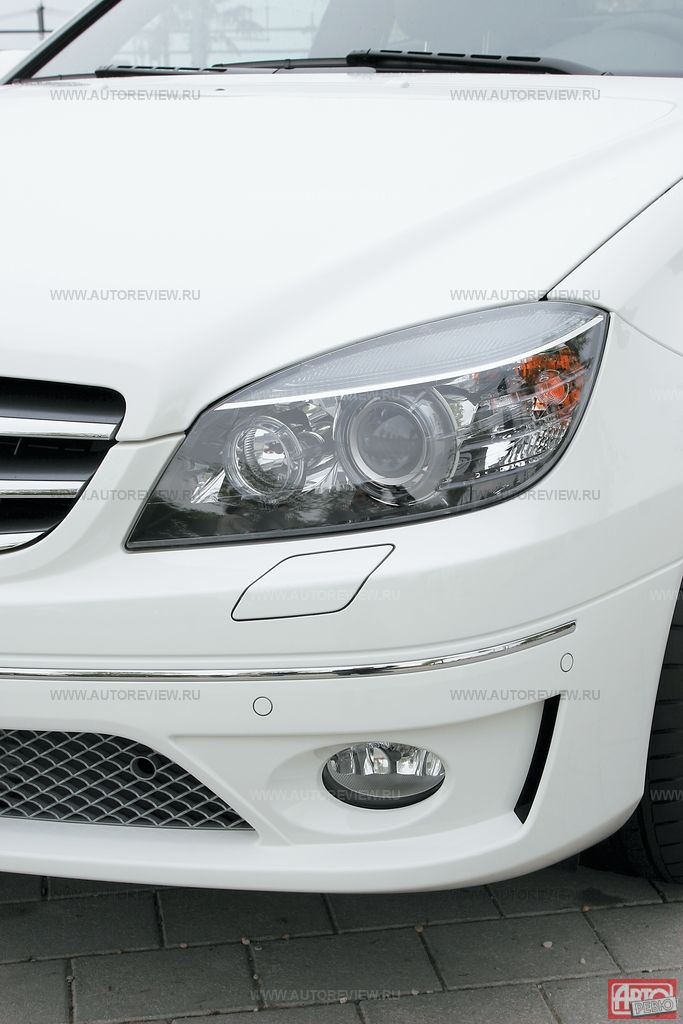 | |
| Xenon headlights and "side" light lamps in the headlights are included in the package equipment of the CLC 200K and CLC 230 versions | On the mirrors — elegant "turn signal" repeaters |
So, Mercedes is following the Volkswagen Group, which has already begun to "assemble" its models from different-platform "cubes." You are on the right path, comrades!
And Weber is also a good fellow: he seemed to answer the question, and at the same time avoided the unfavorable wording "old platform." But still, we need to face the truth: the Mercedes CLC is actually the previous three-door Sports Coupe, built on the platform of the C-Class of the W203 series.
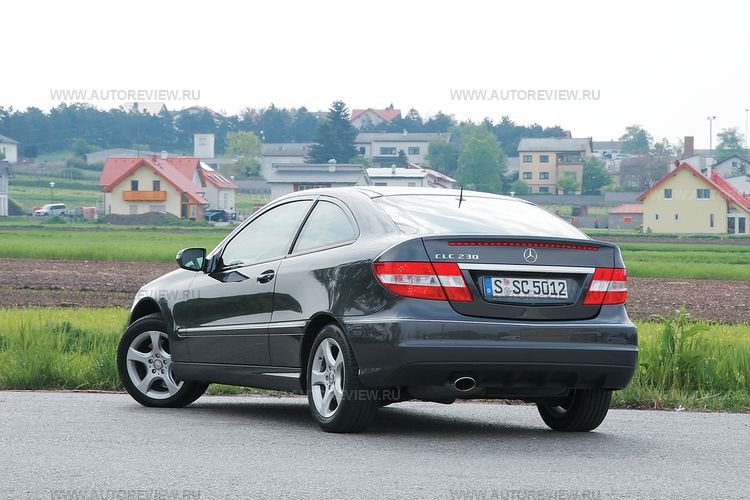
At the rear, huge lights appeared, but the additional window under the spoiler disappeared
By the way, BMW did approximately the same thing in its time. When the three-door Compact hatchbacks appeared in 1994, they were built using a simple rear suspension with oblique triangular arms from the old E30 "three" — while the new E36 "three" with a clever multi-link was already being produced in full swing. So "downshifting" when creating "entry-level" three-doors is not new. And the reason for this phenomenon is simple. Why invest huge money in developing a car with new suspensions, why conduct hundreds of expensive tests under the scorching sun of Death Valley and in frosty Sweden, if the client will not appreciate it anyway? And for the Mercedes-Benz Sports Coupe hatchback, the client was predominantly female. For whom it is much more important that the car looks new and that it is cozy inside.
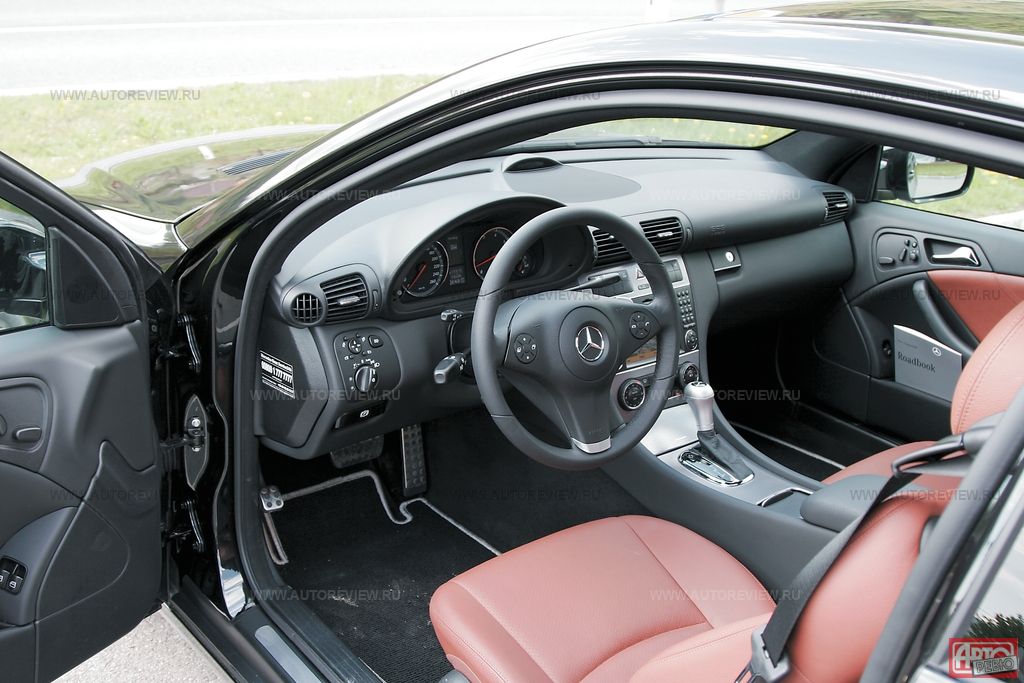 | 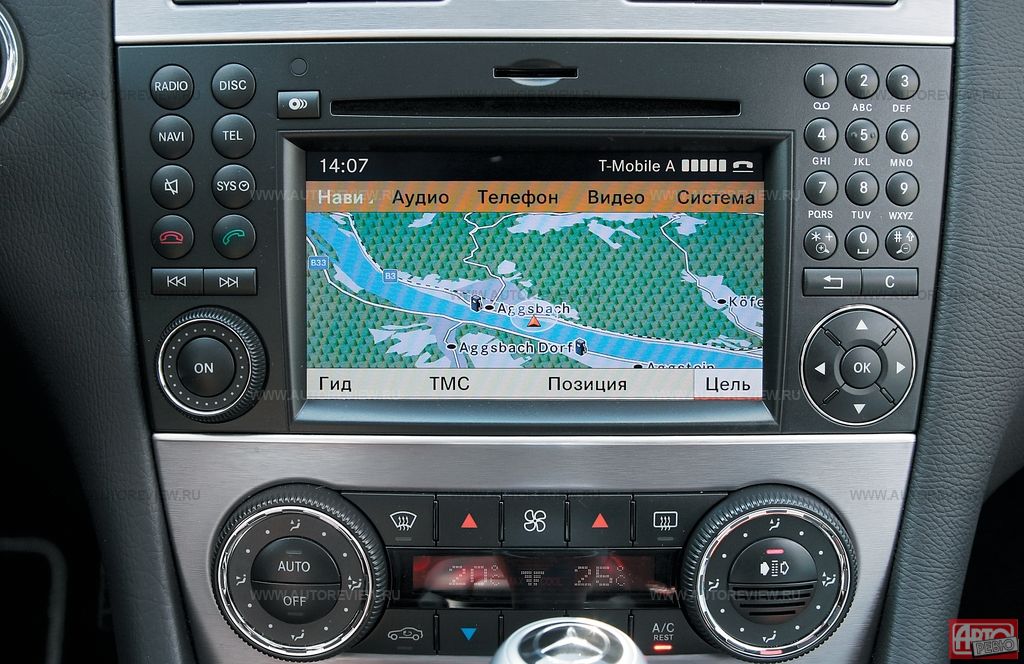 | |
| The interior remained the same as in the previous C-Class, but the steering wheel here is new | Familiar instruments can be ordered with "carbon" decor | On the screen — excellent graphics and a menu in Russian |
It is cozy in the Mercedes CLC — that's a fact. After all, the new (or rather, updated) three-door, although transformed externally, losing its characteristic third door with a lower transparent section, retained the old interior. No angularity — everything is rounded, as it was before. But the color display with a diagonal of 6.5 inches surrounded by round buttons is really like on the new "C." Moreover, the charm of the Command APS multimedia system is not in the buttons, but in the excellent graphics and the presence of a Russified menu — including the navigation menu.
"Navigating" around Vienna using the Mercedes system was very pleasant: error-free prompts voiced by a pleasant female voice, beautifully drawn interchanges...
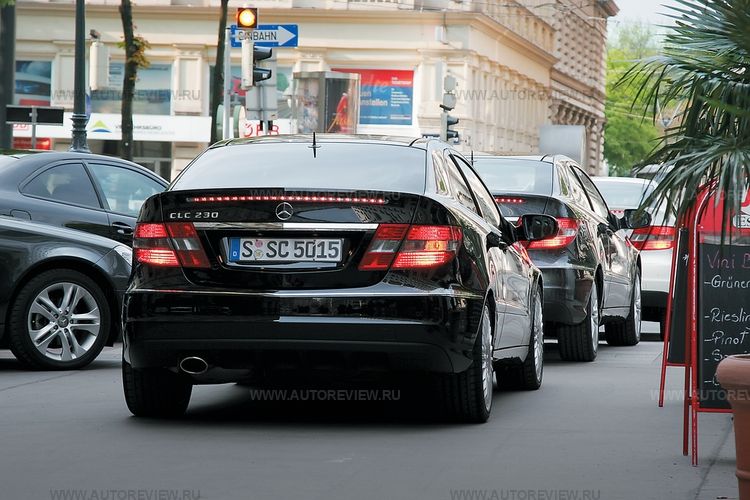
The seating position behind the wheel is just as comfortable. In the back, it is still a bit cramped, especially if a tall driver is behind the wheel: there is minimal legroom, and the sloping roof "presses." One thing is good — the front seats slide forward very easily (regardless of whether they have electric or mechanical adjustments), freeing up a wide passage to the rear seats.
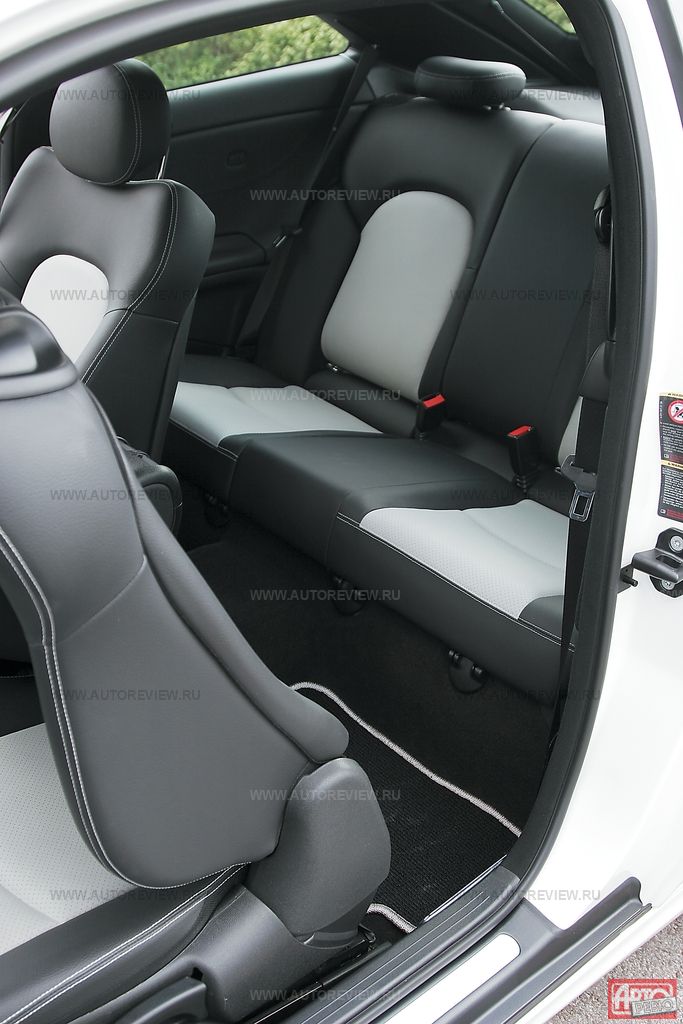 |
| There is not much space in the back, but entry and exit are facilitated by easily sliding forward seats |
Engines? As before, the base will be the 143-horsepower Mercedes CLC 180 Kompressor with the most popular in Russia supercharged "four." But there were no such cars in Vienna, and I took the keys with the tag "CLC 200 Kompressor." This 184-horsepower engine is the only one in the CLC engine range that gained 20 hp — due to a more dynamic supercharger and new pistons, and at the same time allowed reducing fuel consumption by 0.6—0.7 l/100 km. The engine is quiet and torquey. The five-speed "automatic" is not the "fastest-firing," but it works softly and smoothly. And when on the autobahn you easily reach 200 km/h, you experience nothing but pleasure.
Comfort — and no sport! That is the credo of the CLC three-door. The suspension softly swallows small irregularities and at the same time does not annoy with rocking on asphalt waves. Tire noise is practically inaudible, aerodynamic noises are noticeable only on versions with a glass roof and at high speeds. The hatchback confidently holds a straight line, calmly and accurately responds to steering corrections. Mercedes!
Like the new SL roadster, the CLC hatchback is now also equipped with steering with a variable gear ratio (see AR No. 8, 2008), but for some reason for an additional charge. However, even with the "variable" steering on a winding road, the Mercedes CLC is not as good as on a straight line. Yes, it is reliable and safe, but the steering wheel is "too light," the turnability is slightly understeering (when exceeding speed in a corner, the CLC slides with its front end outward), reactions are softened... And the ultimate capabilities in corners are limited.
However, how often do owners — or rather, female owners! — of such cars drive on the "edge"? If they do find themselves on that very edge, then in 99% of cases they will rely on the help of the stability control system — in the case of the CLC, the help is timely and accurate. I checked on a mountain road: ESP excellently extinguishes even understeer, not to mention oversteer.
That is how a Mercedes should be — comfortable and safe.
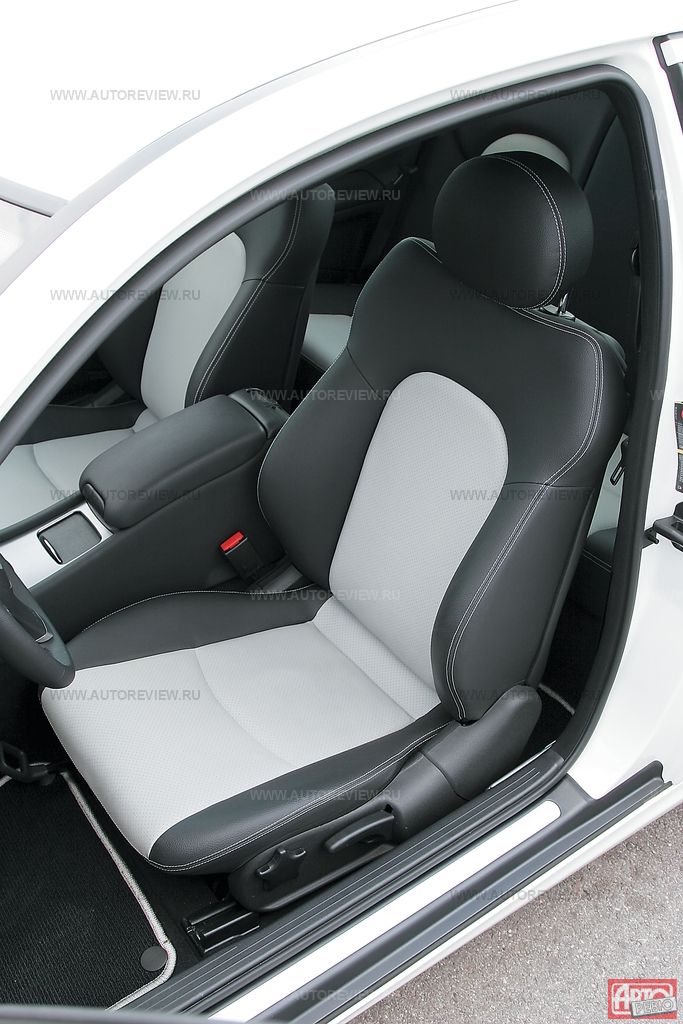 | |
| Nice seats are comfortable in the Mercedes way | If not for this "paw," you would have to reach far back for the belt |
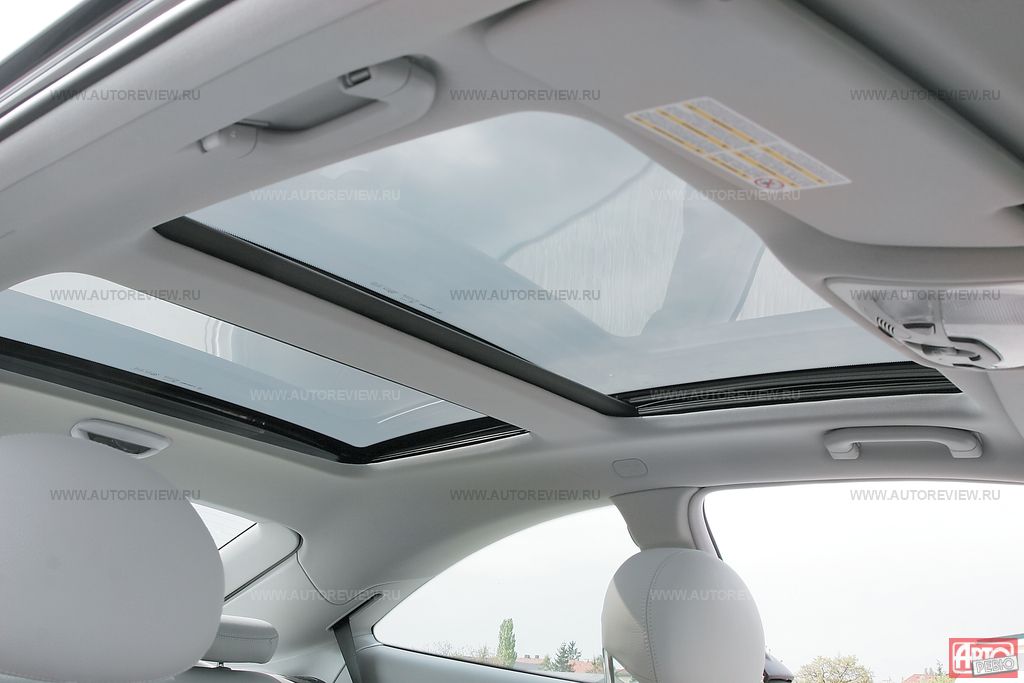 | |
| The panoramic roof is two sunroofs, of which only the front one opens | Visibility through the rear window leaves much to be desired |
And if a Mercedes is sold in Russia, then even in the base configuration it must have rich equipment — "automatic," seat heating, climate control, alarm... This is how the Mercedes CLC will appear before lovely Russian women. Prices for cars of the special series (and there will be no other) — from 1,143,300 rubles for the CLC 180 Kompressor, from 1,328,300 rubles for the CLC 200 Kompressor, and from 1,476,300 rubles for the CLC 230 with a 204-horsepower V-shaped "six" with a volume of 2.5 liters.
But the top version CLC 350 (272 hp) will not be officially supplied to us, as well as the diesel modifications CLC 200 CDI (122 hp) and CLC 220 CDI (150 hp). There is no demand. And, apparently, none is expected. After all, the Mercedes CLC, like the former Sports Coupe, is related to sport only by name. And, perhaps, by design.
| Passport data | |||
| Parameters | Automobile | ||
| Mercedes-Benz CLC | |||
| Modification | CLC180 Kompressor | CLC 200 Kompressor | CLC 230 |
| Body type | 3-door hatchback | 3-door hatchback | 3-door hatchback |
| Number of seats | 5 | 5 | 5 |
| Trunk volume, l | 310/1100* | 310/1100* | 310/1100* |
| Curb weight, kg | 1400 | 1405 | 1450 |
| Gross weight, kg | 1945 | 1950 | 1995 |
| Engine | petrol, with distributed fuel injection and supercharger | petrol, with distributed fuel injection and supercharger | petrol, with distributed fuel injection |
| Location | front, longitudinal | front, longitudinal | front, longitudinal |
| Number and arrangement of cylinders | 4, in-line | 4, in-line | 6, V-shaped |
| Displacement, cm³ | 1796 | 1796 | 2496 |
| Cylinder bore/piston stroke, mm | 82.0/85.0 | 82.0/85.0 | 88.0/68.4 |
| Compression ratio | 9.3:1 | 8.5:1 | 11.2:1 |
| Number of valves | 16 | 16 | 24 |
| Max. power, hp/kW/rpm | 143/105/5200 | 184/135/5500 | 204/150/6100 |
| Max. torque, Nm/rpm | 220/2500—4200 | 250/2800—5000 | 245/2900—5500 |
| Gearbox | manual, 6-speed (automatic, 5-speed) | manual, 6-speed (automatic, 5-speed) | manual, 6-speed (automatic, 7-speed) |
| Drive | rear-wheel drive | rear-wheel drive | rear-wheel drive |
| Front suspension | independent, coil spring, McPherson | independent, coil spring, McPherson | independent, coil spring, McPherson |
| Rear suspension | independent, coil spring, multi-link | independent, coil spring, multi-link | independent, coil spring, multi-link |
| Front brakes | disc, ventilated | disc, ventilated | disc, ventilated |
| Rear brakes | disc | disc | disc |
| Tires | 205/55 R16 | 205/55 R16 | 205/55 R16 |
| Maximum speed, km/h | 220 (215)** | 235 (231) | 240 (234) |
| Acceleration time 0—100 km/h, s | 9.7 (9.9) | 8.6 (8.7) | 8.4 (8.6) |
| Average fuel consumption, l/100 km | 7.7—8.1 (7.8—8.3) | 7.8—8.2 (8.1—8.6) | 9.2—9.5 (9.1—9.5) |
| Fuel tank capacity, l | 62 | 62 | 62 |
| Fuel | AI-95 | AI-95 | AI-95 |
| * With rear seats folded | |||
| ** Data in parentheses for vehicles with automatic transmissions | |||
What else?
In addition to the "junior" coupe-hatchback Mercedes CLC, the updated "coupe-sedan" CLS and the true coupe CL 500 4Matic, which finally began to be equipped with all-wheel drive, were presented in Vienna. Both of these models are in steady demand in Russia: last year, 302 pre-restyling Mercedes-Benz CLS sedans and 526 luxury Mercedes-Benz CL coupes were sold.
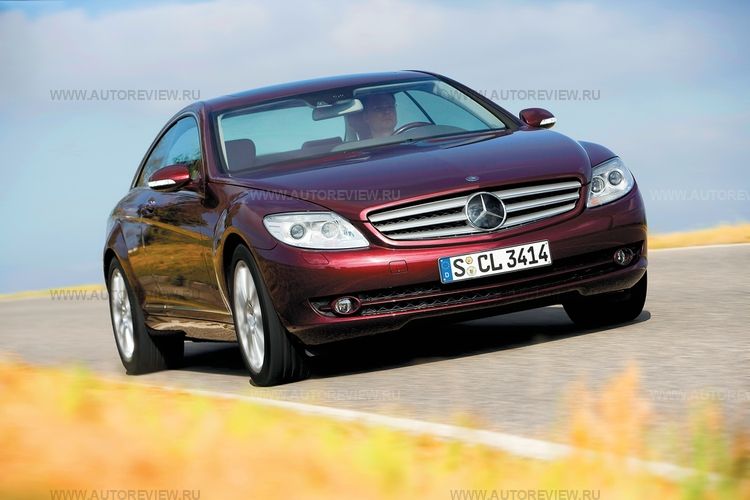
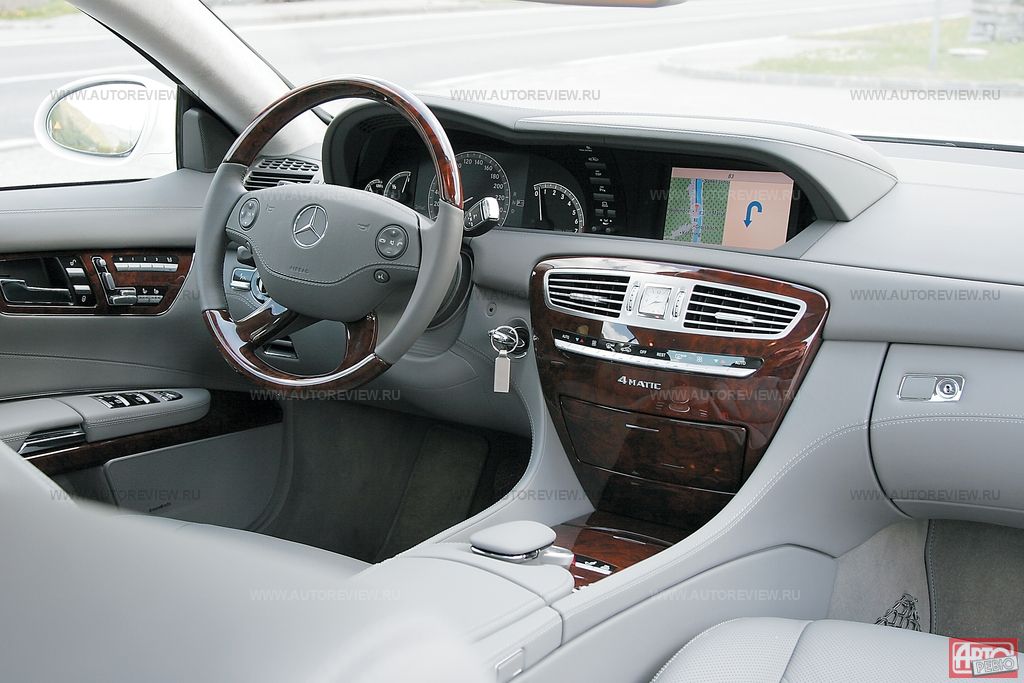 |
| The all-wheel-drive essence of the coupe is reminded by the 4Matic badge on the center console |
The all-wheel drive on the CL 500 is the same as on the S-Class: with torque distribution between the front and rear axles in a 45:55 ratio and a disc lock for the center differential. All-wheel drive increased the weight of the eight-cylinder coupe by only 70 kg, so on asphalt the Mercedes CL 500 4Matic accelerates to 100 km/h in the same 5.4 seconds as its single-drive sibling. And on slippery roads, of course, it has undeniable advantages in both dynamics and handling. And the surcharge for these advantages is 185 thousand rubles: the all-wheel-drive Mercedes-Benz CL 500 4Matic will cost 5,302,100 rubles in Russia.
The "four-door coupes" with the CLS letters are still without all-wheel drive. Aesthetic changes are intended to warm up demand for these cars: new bumpers, radiator grille and lighting. On 2008 model year cars, the regular "turn signals" in the rear lights gave way to spectacular LED "arrows", and arrow-shaped repeaters also appeared in the mirrors. By the way, the area of the exterior rear-view mirrors was increased by 32% — visibility improved, and therefore safety.
Inside — a three-spoke steering wheel with music control buttons and new trim materials. The Command DVD APS Plus system includes not only a six-disc DVD changer, but also a hard drive for audio recordings, a slot for SD memory cards and, of course, Russian-language navigation.
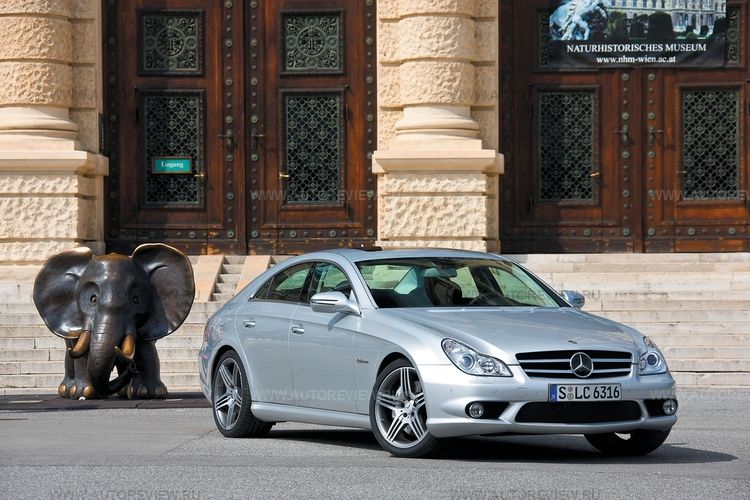
And the cost of the "entry ticket" for those wishing to purchase a Mercedes CLS has been reduced: if earlier the base version was the CLS 350 (292 hp), now a more affordable modification CLS 280 (231 hp) has appeared, which can be bought for 2 million 552 thousand rubles: this is 226,700 rubles cheaper than the CLS 350. The range is topped by the "charged" CLS 63 AMG (514 hp) with a seven-speed sports gearbox AMG Speedshift Plus, which we described in detail in the article about the updated SL 63 AMG (see AR No. 8, 2008). The price of such a car is almost five million rubles.
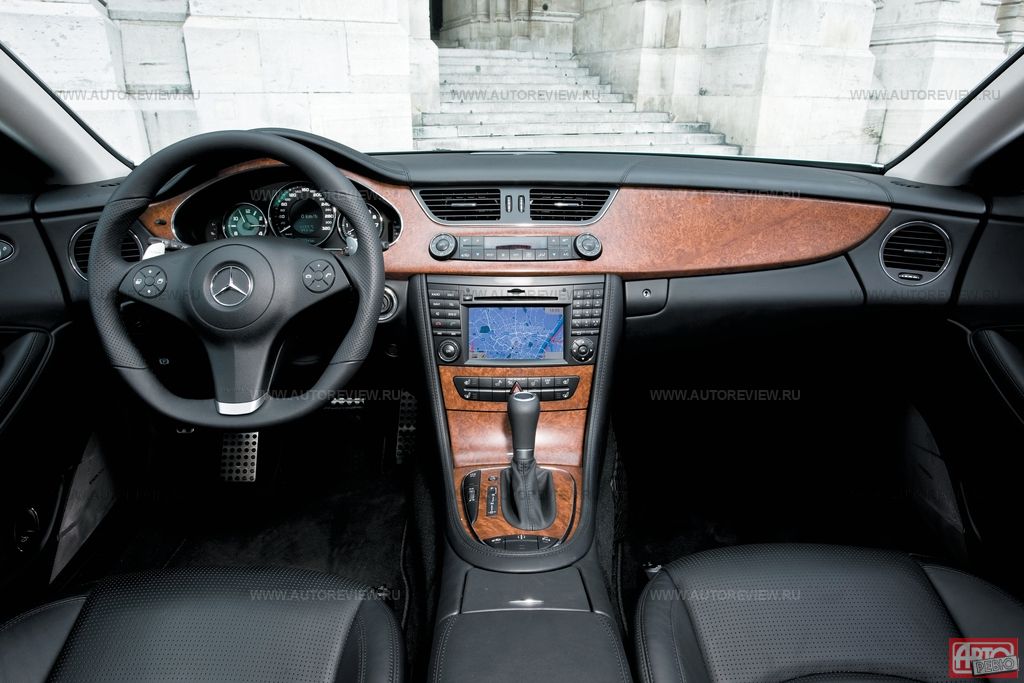 | 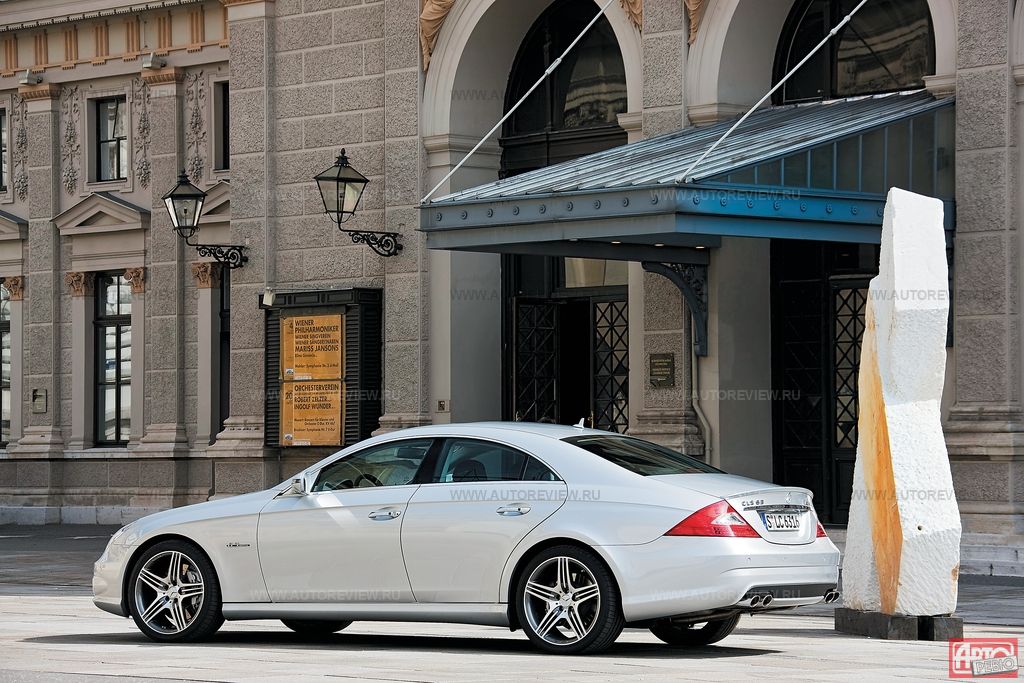 | 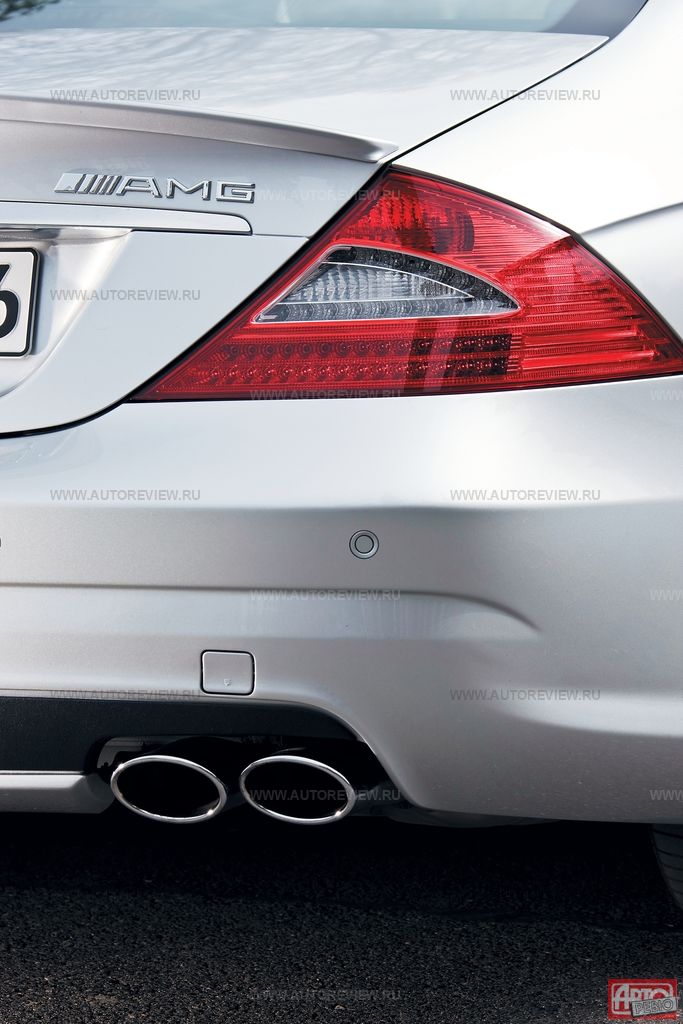 |
| The main change in the interior of the CLS sedan is a "light" steering wheel with three spokes instead of the previous solid four-spoke one | The unique silhouette is the calling card of the CLS | The restyled CLS can be recognized from behind by the arrow-shaped turn indicators |