Official dealers, in turn, were in no hurry to change their position, claiming that the main thing in a pickup is simplicity and low price... It seems that this situation is now beginning to gradually change.
HUNGER VS APPETITE
Interest in pickups in Russia began to actively grow about three years ago. Chinese manufacturers entered the market with their copies of HiLux, Ford and Mazda introduced the Ranger and B2500 models, and the pioneer Mitsubishi L200 competed with them. Rare appearances of such exotic models as Honda Ridgeline or Dodge Ram could be left unmentioned if not for the effect they had on the streets... And this year, pickups finally appeared in Russia that are almost as good as SUVs in terms of comfort and characteristics. The two newest models — Mazda BT-50 and the new Mitsubishi L200 — came to our test, and today we present them to your judgment. By the way, the model names are chosen poorly from a logical standpoint. It is Mitsubishi that should have received a completely new index, because it has changed so much both externally and technically, while Mazda could well have kept the old name B2500, since in essence it is that. But marketing follows its own laws.

FUJI IS NOT A PIT!
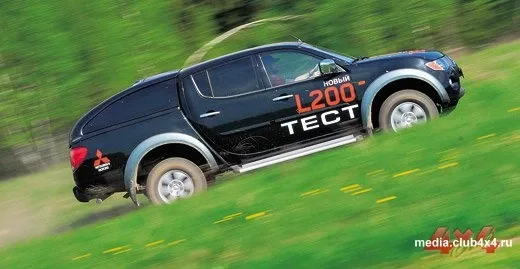
Let's start with the Mitsubishi L200, as a veteran of our market. This light truck has transformed beyond recognition! I remember when I first saw the sketches of the new pickup, I thought: "Such a miracle will never come off the assembly line! No one will understand..." Now, after driving around the far Moscow region, I am happy to admit my mistake. The Japanese said — the Japanese did! Well done! It's just that, in my opinion, he overdid it a bit. A pickup is still to some extent a truck. Glamour can be present in details, but making the whole car as if it were created for an elegance contest is too much. It's clear that the triangle on the nose and pentagonal headlights are the brand's style, but it turned out too crossover-like and lightweight. What did the manufacturers want to show with such a "licked" silhouette? That the L200 can accelerate to 260 km/h? No, it can't. That it's a sports car? Again, no, not at all...
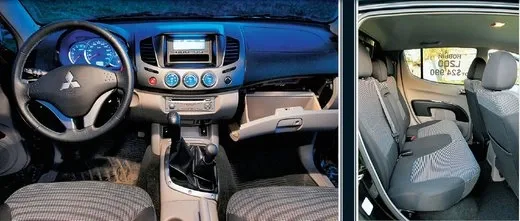
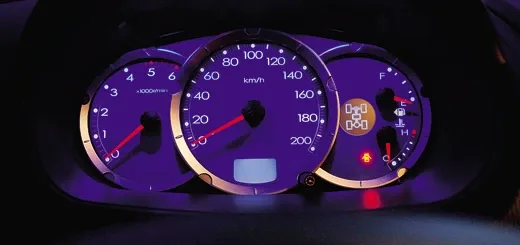
Futurism and style from nineties sci-fi films have captured the L200 designers. Even too much... There could have been fewer shades of ultramarine
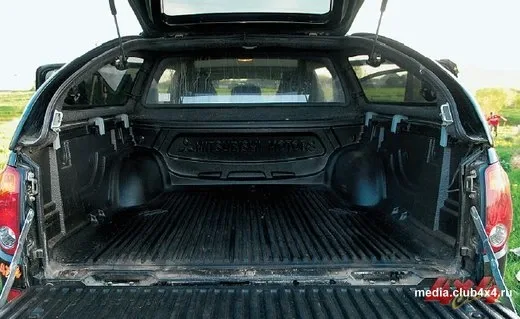
The L200 body is suitable for transporting many small items or a small number of tall ones if the cover is removed
The seats have become stiffer and better profiled. But the floor is too high, and therefore, despite the seat cushion adjustment, the driver's legs are stretched parallel to the ground. It's unusual and uncomfortable. The steering column adjusts only for tilt, and sometimes you want to pull the wheel closer to you. Visibility is so-so, but nothing can be done about it — it's a pickup. It's bad that due to the sloped hood, the front dimensions are not visible. For an SUV, this is not useful...
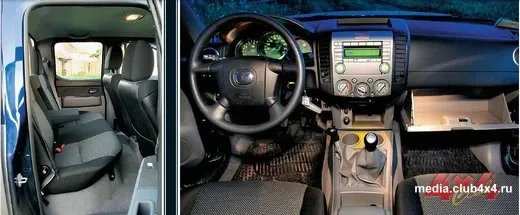

The Mazda interior is much more restrained. Fortunately, there is no hint of any "zoom-zoom" here, and there is enough space in the back for adult passengers
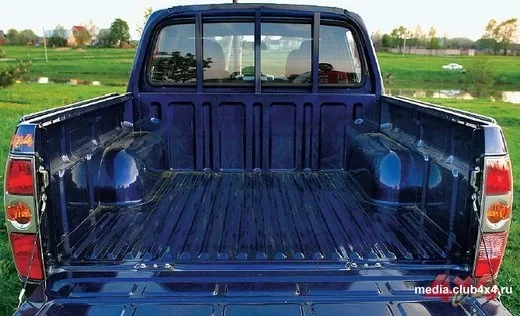
As we verified, a 500cc ATV fits in the BT-50 bed — though you have to drive one wheel onto the wheel arch
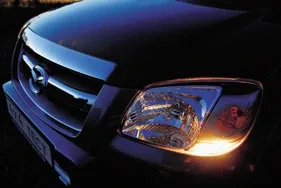
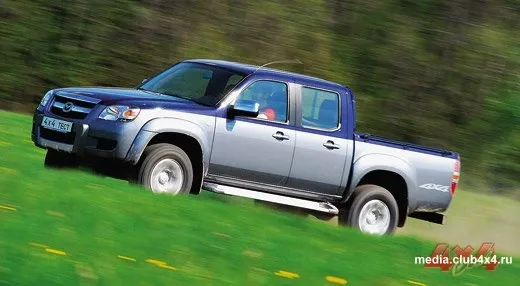
As for the Mazda B-series update, it is mainly concentrated at the front. In the sense that the changes are noticeable on the front of the pickup and under its hood. Both have benefited it. The other is more. Why such deliberate unisexuality in appearance? It's clear that in Asia it has always been the same: boy, girl — what's the difference... As long as they study well... But with an openly masculine car, which a "light truck" should be by definition, you can't do that. The image of a half-torn ronin with a sword in a shabby scabbard and the face of Toshiro Mifune should be reflected in every detail. Especially in the front. But here — lined eyes, narrow cheekbones, a Gioconda half-smile of the vast plastic bumper. Yes, it's clear that the notorious bumper meets modern safety requirements, and still — a cool pickup should have a dragon's grin, not a politically correct curve of the lips. However, the image of the BT-50 is in any case more restrained than the thoroughly soaped L200, which can probably be counted as a plus.
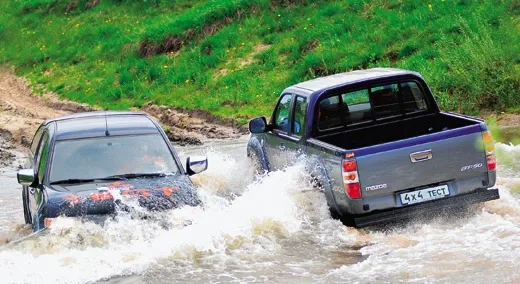
Even with the most futuristic design and crossover proportions, our subjects remain true SUVs at heart.
The Mazda interior is not as futuristic as its competitor's; it looks more solid and calmer. This car is clearly not for showing off. There are a couple of annoying little things, like the unclear recirculation knob, but that's nothing compared to how your eyes rest after the ornate avant-garde of the L200. But the BT-50 has as many as five cup holders! The Mazda seats are simpler, but they are comfortable to sit in, the climate control is manual, the music is decent but inferior to the rival, and visibility is a bit better. The seating position is the same as in the Mitsu — the cabin height is also not great. In the back, both cars are equally spacious, except that the BT-50 is a bit tighter — but still, these are now almost full-fledged seats, not a bench as before.
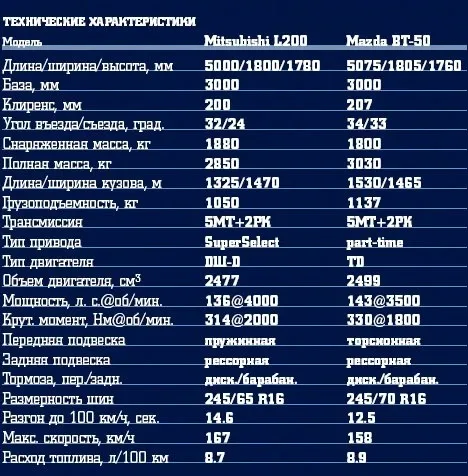
SPECS: MITSUBISHI L200
SPECS: MAZDA BT-50
 HITCH 'EM UP, GUYS!
Previously, we drove pickups empty, rightly assuming that the owner mostly drives that way. Now we decided to change our approach and test the vehicles both empty and with a decent load. For this, we ordered a couple of ATVs, one of which was a two-seater. The idea only partially worked out. The Mitsubishi turned out to have a canopy, which we didn't remove after measuring the bed: it couldn't fit not only the 800cc two-seater ATV but even the compact 500cc one. So, without much thought, we loaded the smaller ATV into the Mazda and shortened the program. By the way, the ATV barely fit into the Mazda's bed as well. The distance between the wheel arches didn't allow the Polaris wheels to sit straight, and we couldn't drive onto them either. We had to place the ATV with its wheels splayed — one wheel on the arch, another on the floor — and cinch it down tightly with straps. The rear wheels rested on the fold-down tailgate, which easily handled the load.
HITCH 'EM UP, GUYS!
Previously, we drove pickups empty, rightly assuming that the owner mostly drives that way. Now we decided to change our approach and test the vehicles both empty and with a decent load. For this, we ordered a couple of ATVs, one of which was a two-seater. The idea only partially worked out. The Mitsubishi turned out to have a canopy, which we didn't remove after measuring the bed: it couldn't fit not only the 800cc two-seater ATV but even the compact 500cc one. So, without much thought, we loaded the smaller ATV into the Mazda and shortened the program. By the way, the ATV barely fit into the Mazda's bed as well. The distance between the wheel arches didn't allow the Polaris wheels to sit straight, and we couldn't drive onto them either. We had to place the ATV with its wheels splayed — one wheel on the arch, another on the floor — and cinch it down tightly with straps. The rear wheels rested on the fold-down tailgate, which easily handled the load.
 CONQUERING THE ENVIRONMENTS
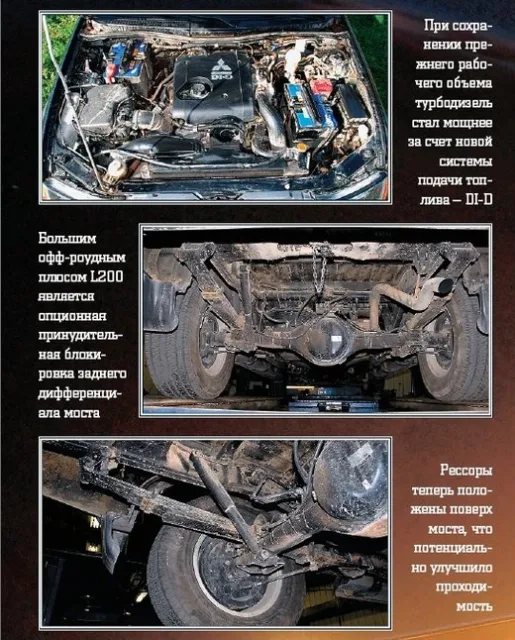
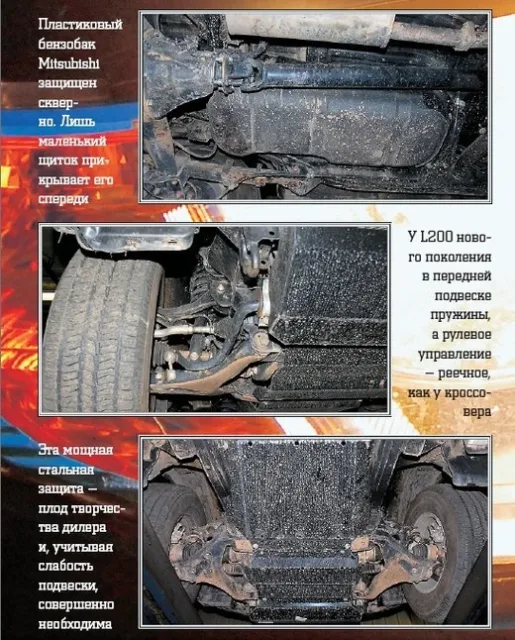
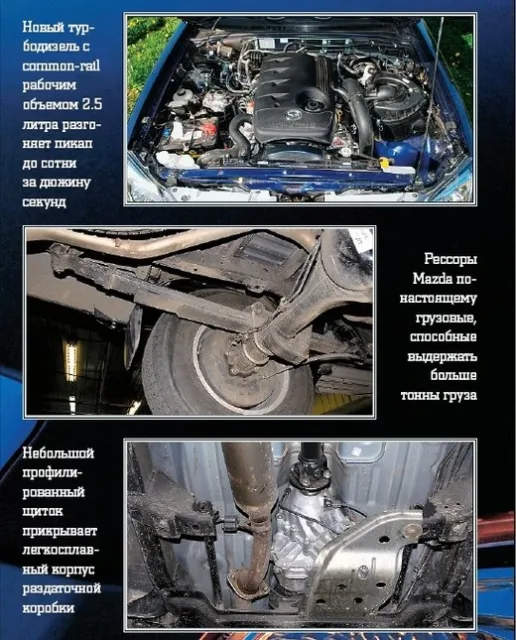
Asphalt, dirt road, and off-road — that's the brief test program. The main and huge plus of both models is the new engine. In both cases, these are 2.5-liter turbodiesels, but now noticeably more powerful, with a common rail fuel system. The BT-50's engine produces 143 hp and 330 Nm of torque, while the L200's produces 136 hp and 314 Nm. In both cases, this is about a third more than previous figures, and the difference is felt immediately. A hundred kilometers on the highway showed that both vehicles have ample dynamics, although subjectively the Mazda feels more assertive. The L200's directional stability would be ideal if not for the overly sensitive steering, which is more than compensated by the permanent all-wheel drive mode (we had, of course, the advanced version with the SuperSelect transmission). But the Mazda's somewhat vague steering will occasionally make you correct the trajectory. In corners and during any maneuvering, the advantage goes to the Mitsubishi. Its on-road trajectory stability is an example for all light truck manufacturers.
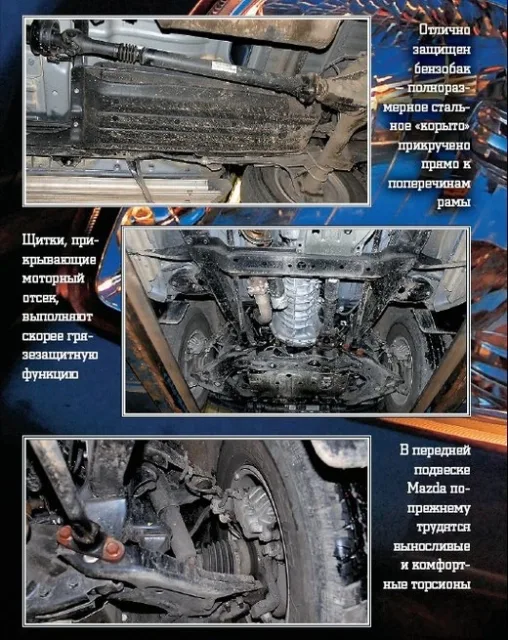
On dirt roads, much depends on the selected drive type. With part-time, the L200 tends to oversteer, but with full-time, it's almost impossible to knock it off its line. However, it starts to lean unpleasantly earlier, and the desire to add throttle or take a corner harder immediately disappears. Against this backdrop, the Mazda is a classic truck that you shouldn't rush. If you drive calmly, it will be reliable both on asphalt and on the grader, especially since its suspension is noticeably more robust, albeit softer.
CONQUERING THE ENVIRONMENTS
Asphalt, dirt road, and off-road — that's the brief test program. The main and huge plus of both models is the new engine. In both cases, these are 2.5-liter turbodiesels, but now noticeably more powerful, with a common rail fuel system. The BT-50's engine produces 143 hp and 330 Nm of torque, while the L200's produces 136 hp and 314 Nm. In both cases, this is about a third more than previous figures, and the difference is felt immediately. A hundred kilometers on the highway showed that both vehicles have ample dynamics, although subjectively the Mazda feels more assertive. The L200's directional stability would be ideal if not for the overly sensitive steering, which is more than compensated by the permanent all-wheel drive mode (we had, of course, the advanced version with the SuperSelect transmission). But the Mazda's somewhat vague steering will occasionally make you correct the trajectory. In corners and during any maneuvering, the advantage goes to the Mitsubishi. Its on-road trajectory stability is an example for all light truck manufacturers.
On dirt roads, much depends on the selected drive type. With part-time, the L200 tends to oversteer, but with full-time, it's almost impossible to knock it off its line. However, it starts to lean unpleasantly earlier, and the desire to add throttle or take a corner harder immediately disappears. Against this backdrop, the Mazda is a classic truck that you shouldn't rush. If you drive calmly, it will be reliable both on asphalt and on the grader, especially since its suspension is noticeably more robust, albeit softer.
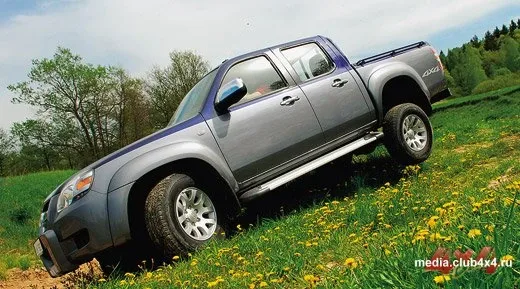
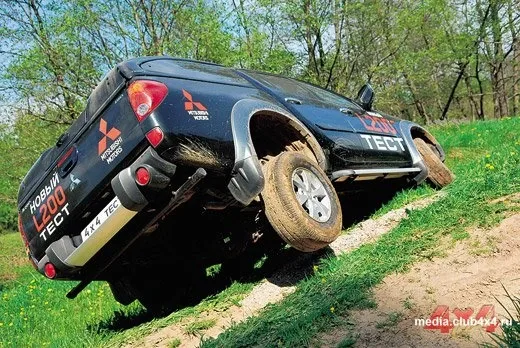 On serious terrain, the Mitsubishi puts the Mazda on its back. Not only does its transmission allow driving in full-time mode without overloading components prematurely, but it also has a rear differential lock available as an option. With such a rival, the BT-50 can't compete, and despite its advertised "off-road campaign," it just helplessly spins its unloaded wheels in the air, twitching according to the weak will of the limited-slip differential, which only works on a straight line, in winter, and without load... However, the Mazda has a more energy-intensive front suspension and an engine with a flat torque curve from the very bottom, almost from idle. Interestingly, the BT-50 rides stiffer with a load than empty...
THERE WILL BE NO WAR
So what about prices? The minimum price for the L200 with simple EasySelect and manual transmission, without luxuries like alloy wheels, is $24,990. For a similar simple BT-50, they ask $23,490 — but it, by the way, has a standard fuel filter heater, which is important for a diesel. The most expensive BT-50 trim with air conditioning, chrome, and power package costs $30,300. But Mitsu for less money — $29,900 — offers all the same plus climate control and, most importantly, the advanced SuperSelect transmission with permanent all-wheel drive. So I wouldn't claim that the Mazda BT-50 is cheaper — unless we're talking about purchasing work vehicles. Yes, and for $31,490 you can get the Mitsu L200 with an "automatic" as well... Stop, no campaigning. Our today's rivals have completely different target audiences. The tricked-out Mitsubishi L200 looks more impressive and handles better, and it's structurally much more modern. Dealers expect that in addition to traditional fans of the model, it will also interest the young-modern-hip crowd. But the Mazda BT-50 is clearly more durable, retaining more of the truck.
The Russian office of Mazda believes that serious men when choosing a pickup can only settle on the BT-50. Well, we'll say this: the Mazda should be taken as a vehicle for active recreation — it's more durable, has a larger bed, and is simpler itself. But if you need a versatile SUV for everyday use, the Mitsubishi is better. The rest is from the devil and marketers.
On serious terrain, the Mitsubishi puts the Mazda on its back. Not only does its transmission allow driving in full-time mode without overloading components prematurely, but it also has a rear differential lock available as an option. With such a rival, the BT-50 can't compete, and despite its advertised "off-road campaign," it just helplessly spins its unloaded wheels in the air, twitching according to the weak will of the limited-slip differential, which only works on a straight line, in winter, and without load... However, the Mazda has a more energy-intensive front suspension and an engine with a flat torque curve from the very bottom, almost from idle. Interestingly, the BT-50 rides stiffer with a load than empty...
THERE WILL BE NO WAR
So what about prices? The minimum price for the L200 with simple EasySelect and manual transmission, without luxuries like alloy wheels, is $24,990. For a similar simple BT-50, they ask $23,490 — but it, by the way, has a standard fuel filter heater, which is important for a diesel. The most expensive BT-50 trim with air conditioning, chrome, and power package costs $30,300. But Mitsu for less money — $29,900 — offers all the same plus climate control and, most importantly, the advanced SuperSelect transmission with permanent all-wheel drive. So I wouldn't claim that the Mazda BT-50 is cheaper — unless we're talking about purchasing work vehicles. Yes, and for $31,490 you can get the Mitsu L200 with an "automatic" as well... Stop, no campaigning. Our today's rivals have completely different target audiences. The tricked-out Mitsubishi L200 looks more impressive and handles better, and it's structurally much more modern. Dealers expect that in addition to traditional fans of the model, it will also interest the young-modern-hip crowd. But the Mazda BT-50 is clearly more durable, retaining more of the truck.
The Russian office of Mazda believes that serious men when choosing a pickup can only settle on the BT-50. Well, we'll say this: the Mazda should be taken as a vehicle for active recreation — it's more durable, has a larger bed, and is simpler itself. But if you need a versatile SUV for everyday use, the Mitsubishi is better. The rest is from the devil and marketers.