
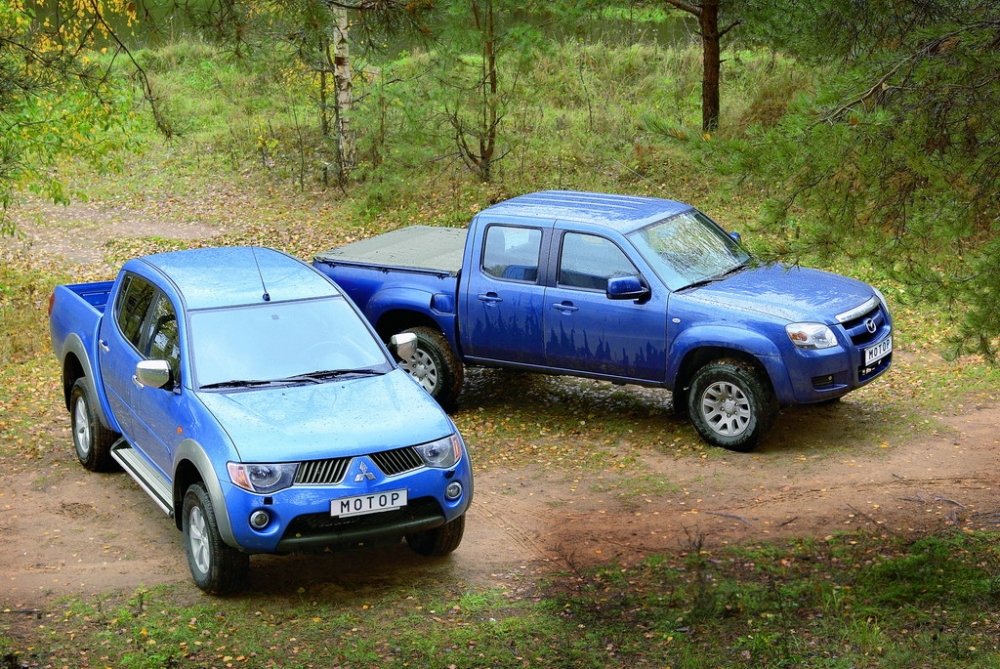
 This is already the second generation of Mazda pickups and the third of Mitsubishi sold on our market. Demand for previous generation models was quite low. And that's not surprising. First of all, because the "old" L200 and B2500 were purely utilitarian vehicles. Simply put, they were almost trucks with noisy low-power diesels, shaky suspensions, and mediocre cabin comfort. Today's models are a huge step forward. Utilitarianism, of course, hasn't gone anywhere. These are still body-on-frame "workhorses" with a rear axle on leaf springs, possessing outstanding off-road qualities, capable of carrying more than a ton of cargo and towing a three-ton trailer. Indispensable helpers for farmers or builders. But at the same time, the new models have become much more refined. So much so that they are quite capable of taking a slice of the pie from SUVs and crossovers, especially given the attractive price of pickups, around $30,000. This is already the second generation of Mazda pickups and the third of Mitsubishi sold on our market. Demand for previous generation models was quite low. And that's not surprising. First of all, because the "old" L200 and B2500 were purely utilitarian vehicles. Simply put, they were almost trucks with noisy low-power diesels, shaky suspensions, and mediocre cabin comfort. Today's models are a huge step forward. Utilitarianism, of course, hasn't gone anywhere. These are still body-on-frame "workhorses" with a rear axle on leaf springs, possessing outstanding off-road qualities, capable of carrying more than a ton of cargo and towing a three-ton trailer. Indispensable helpers for farmers or builders. But at the same time, the new models have become much more refined. So much so that they are quite capable of taking a slice of the pie from SUVs and crossovers, especially given the attractive price of pickups, around $30,000. |
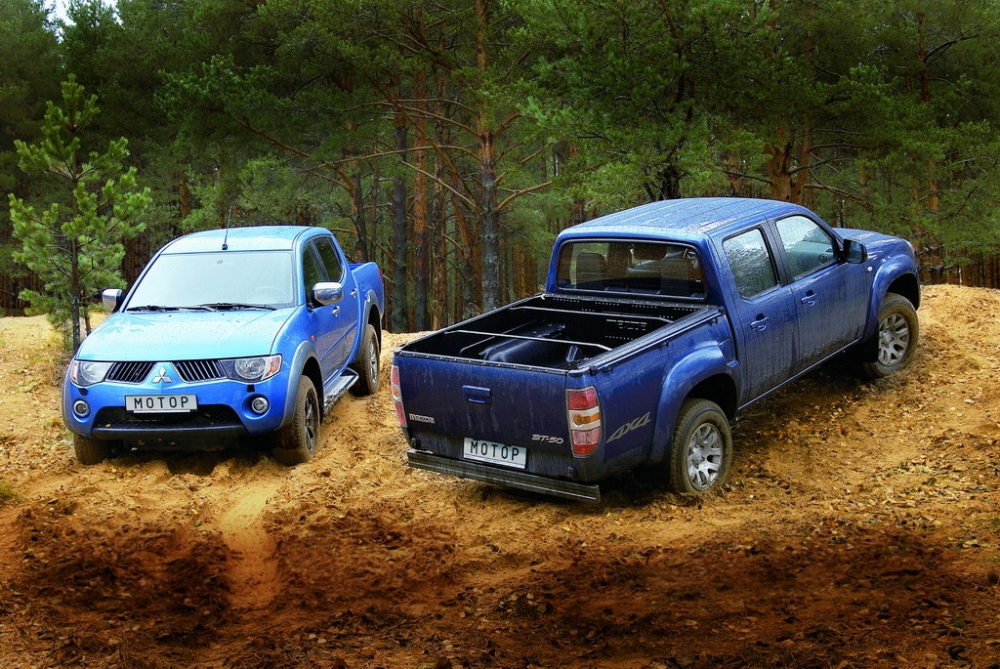 The build quality has improved significantly – both outside and inside. The five-seat Double Cab interiors welcome occupants with unprecedented comfort and trim at the level of passenger cars. Inside, it has become noticeably quieter, and vibrations from the engine, transmission, and suspensions are felt less. The new generation common rail turbodiesels are more powerful and torquier than before. For Mazda, the power increase was 34 hp, torque increased by 64 Nm, and for Mitsubishi, the gain is 21 hp and 74 Nm, respectively. At the same time, they don't rattle as much, accelerate the pickups faster, and consume less diesel. The build quality has improved significantly – both outside and inside. The five-seat Double Cab interiors welcome occupants with unprecedented comfort and trim at the level of passenger cars. Inside, it has become noticeably quieter, and vibrations from the engine, transmission, and suspensions are felt less. The new generation common rail turbodiesels are more powerful and torquier than before. For Mazda, the power increase was 34 hp, torque increased by 64 Nm, and for Mitsubishi, the gain is 21 hp and 74 Nm, respectively. At the same time, they don't rattle as much, accelerate the pickups faster, and consume less diesel. |
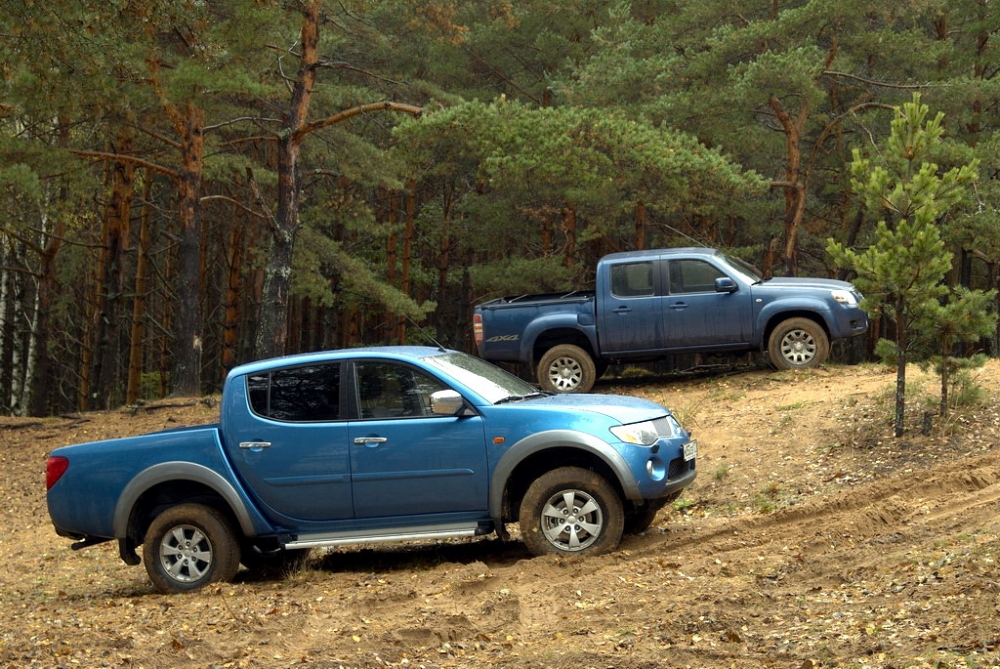 The rear suspension of both vehicles has not changed structurally. The solid axle on leaf springs remains, but it has been modernized to increase load capacity while reducing oscillations and improving handling. Up front, however, there are changes. Mitsubishi now has a coil spring suspension on double wishbones, while Mazda has a torsion bar with double A-arms. The purpose of all these metamorphoses is clear – to bring the on-road behavior of the pickups as close as possible to the level of mid-size SUVs. The rear suspension of both vehicles has not changed structurally. The solid axle on leaf springs remains, but it has been modernized to increase load capacity while reducing oscillations and improving handling. Up front, however, there are changes. Mitsubishi now has a coil spring suspension on double wishbones, while Mazda has a torsion bar with double A-arms. The purpose of all these metamorphoses is clear – to bring the on-road behavior of the pickups as close as possible to the level of mid-size SUVs. |
 It must be said, the engineers succeeded. But more on that later. For now, let's assess the transformed appearance of the L200 and BT-50. The quality of body panel fit has reached the level of passenger cars, and the design, compared to the previous generation, has reached a new level. Mazda looks conservative in this pair. The BT-50's appearance is a modernized reading of the B-series classic. Straight lines, characteristic proportions, refreshed with a new large grille, new headlights, and wheel arch extensions. The Mitsubishi's exterior is revolutionary for a pickup. Its ornate, intricate design with whimsically curving lines and a "face" in the corporate Mount Fuji style is uncharacteristic for this type of vehicle. It must be said, the engineers succeeded. But more on that later. For now, let's assess the transformed appearance of the L200 and BT-50. The quality of body panel fit has reached the level of passenger cars, and the design, compared to the previous generation, has reached a new level. Mazda looks conservative in this pair. The BT-50's appearance is a modernized reading of the B-series classic. Straight lines, characteristic proportions, refreshed with a new large grille, new headlights, and wheel arch extensions. The Mitsubishi's exterior is revolutionary for a pickup. Its ornate, intricate design with whimsically curving lines and a "face" in the corporate Mount Fuji style is uncharacteristic for this type of vehicle. |
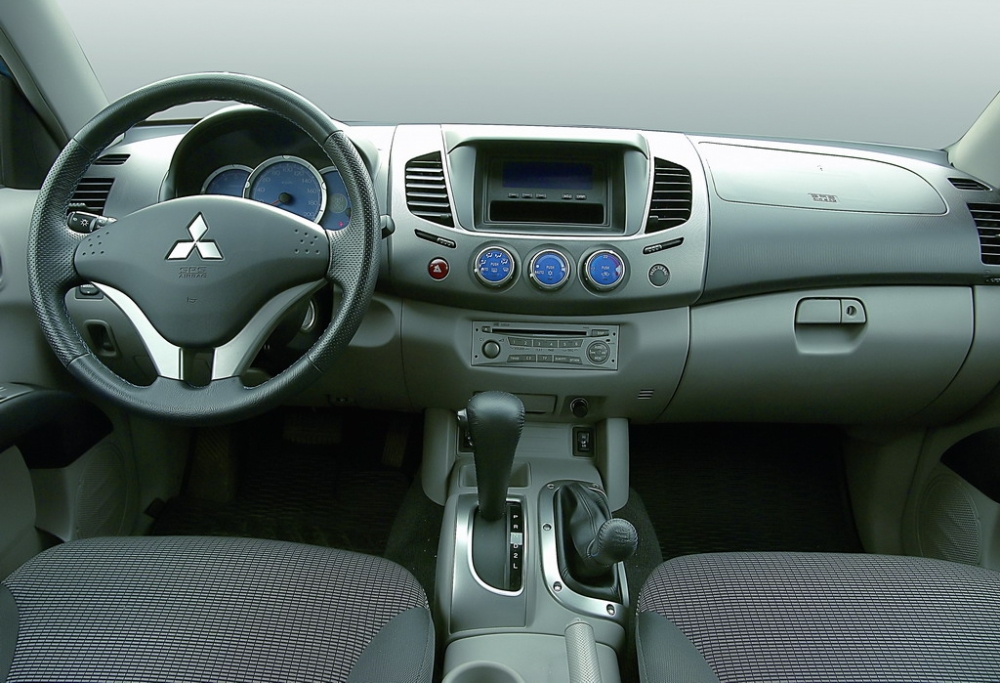
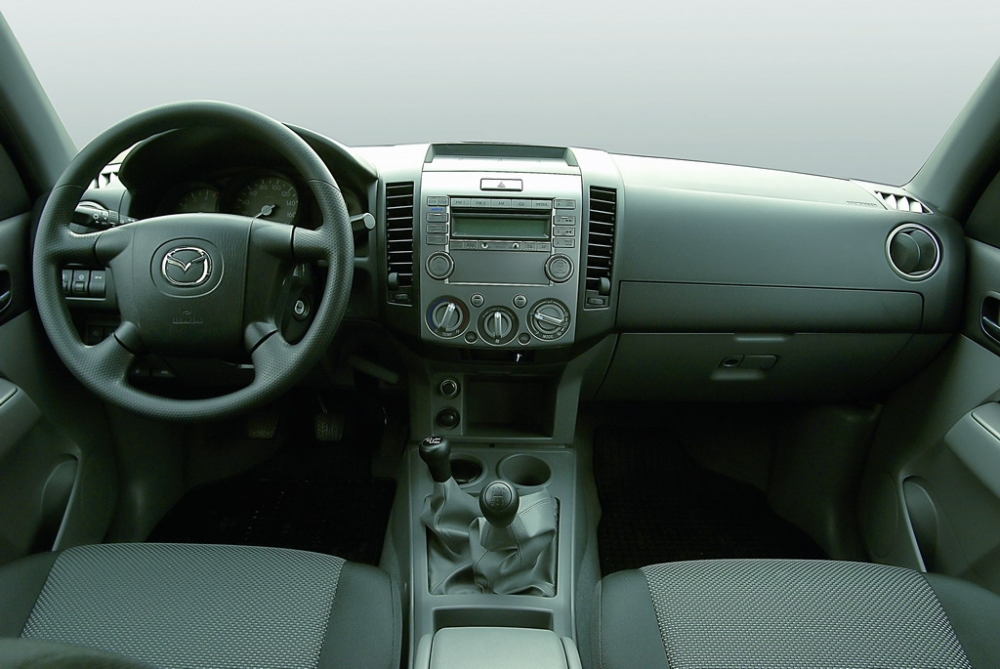
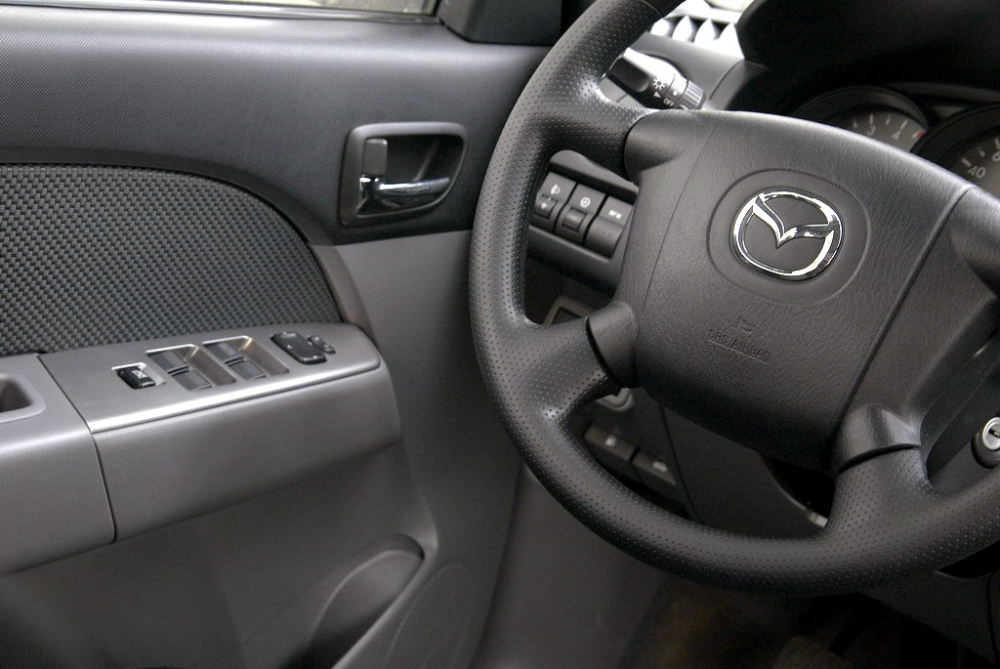
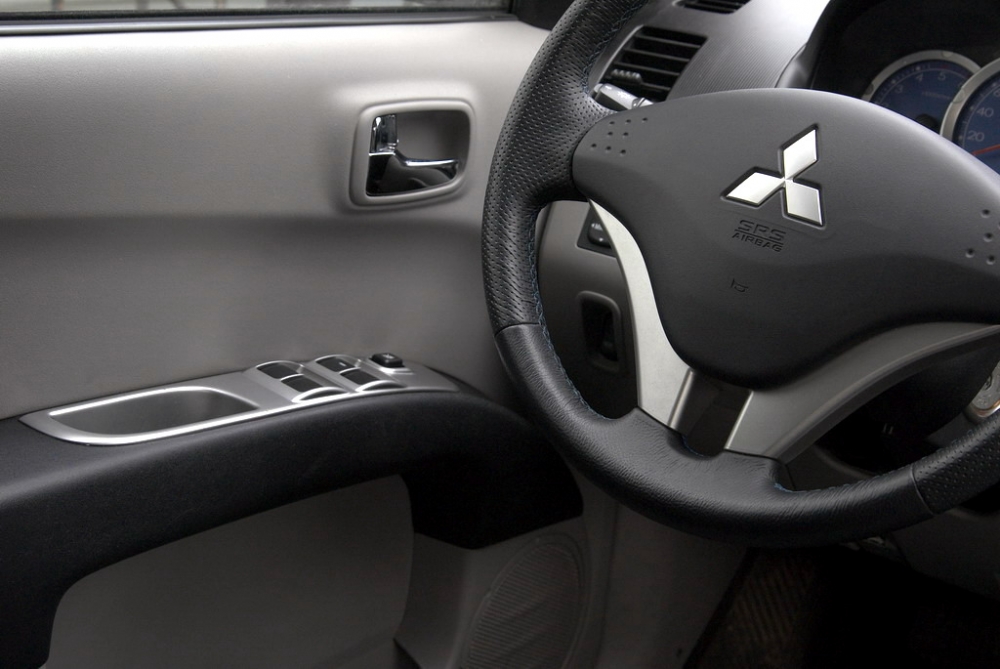
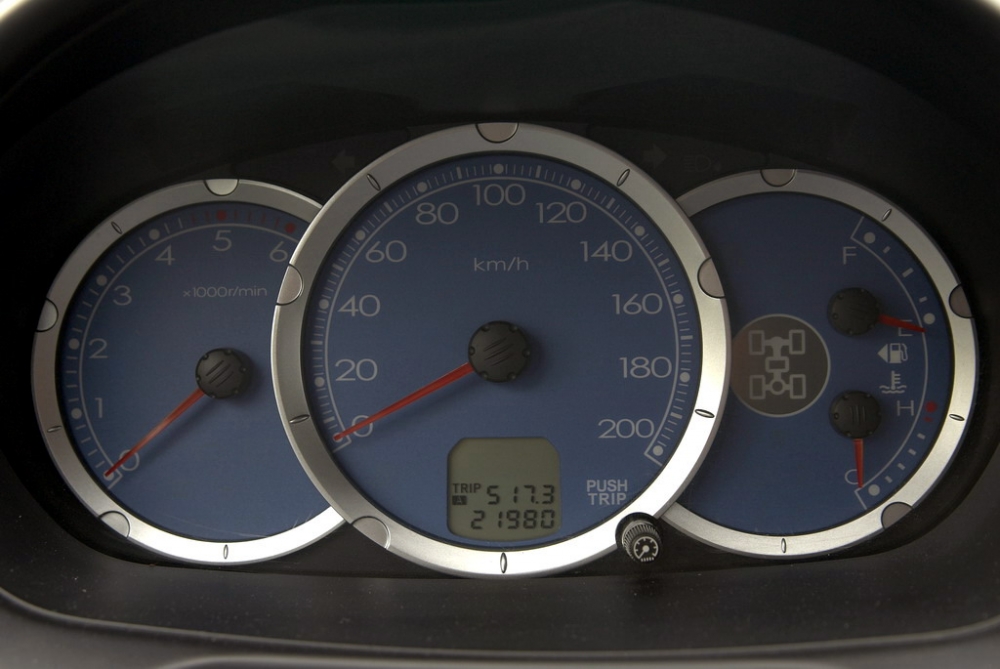
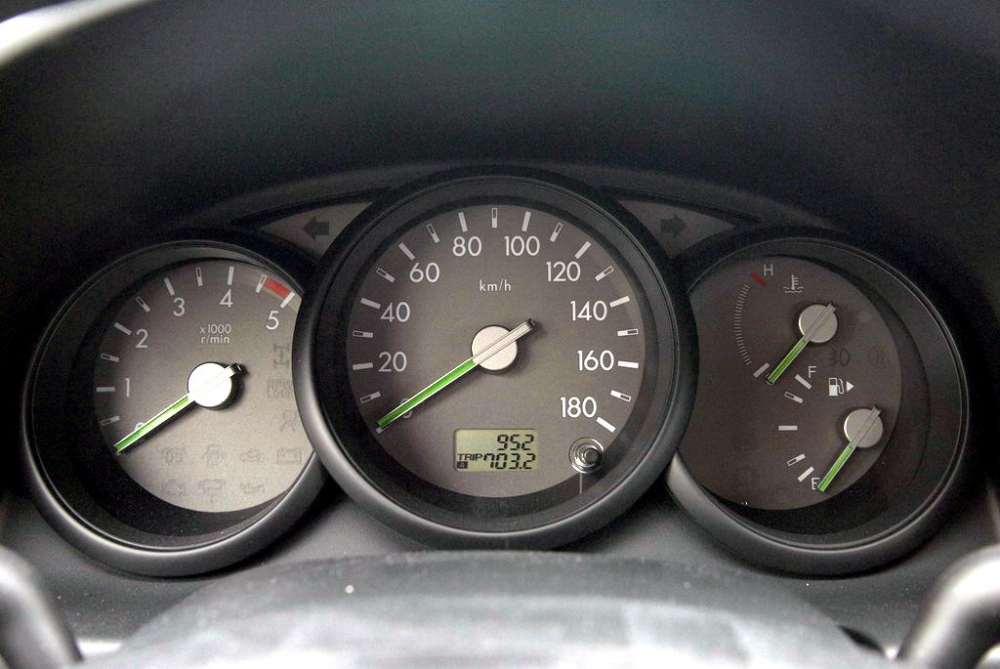
 I'll say more, in my opinion, the L200 was the most extravagant in the company's lineup before the new Lancer came out. And here you decide for yourself which one you like more – the calm, unobtrusive design of the BT-50, or the flashy-pompous style of the L200. The interior is a logical continuation of the exterior shell. Mazda is more traditional here too. Without frills, but very high quality for a pickup. The instrument panel with three dials and the center console resemble the company's passenger cars. The trim materials are, of course, simpler, but the panel fit and driver's workplace organization are top-notch. Ergonomics are fine, except for two things: the steering column not adjustable for reach and a seat with a short cushion. However, you can sit comfortably without problems. True, if the front occupants are taller than 180 cm, then the rear will be a bit cramped. The L200's interior is more cheerful. There's the original blue instrument lighting, convenient climate control "rings," a multifunction display in the center, and leather-wrapped steering wheel, gearshift lever, and transfer case lever. I'll say more, in my opinion, the L200 was the most extravagant in the company's lineup before the new Lancer came out. And here you decide for yourself which one you like more – the calm, unobtrusive design of the BT-50, or the flashy-pompous style of the L200. The interior is a logical continuation of the exterior shell. Mazda is more traditional here too. Without frills, but very high quality for a pickup. The instrument panel with three dials and the center console resemble the company's passenger cars. The trim materials are, of course, simpler, but the panel fit and driver's workplace organization are top-notch. Ergonomics are fine, except for two things: the steering column not adjustable for reach and a seat with a short cushion. However, you can sit comfortably without problems. True, if the front occupants are taller than 180 cm, then the rear will be a bit cramped. The L200's interior is more cheerful. There's the original blue instrument lighting, convenient climate control "rings," a multifunction display in the center, and leather-wrapped steering wheel, gearshift lever, and transfer case lever. |
 The interior seems more homely. Plus, there's a nice feature that allows you to lower the rear window. And rear passengers have a bit more space. But the front seats were not liked at all. Unlike the BT-50, they don't even hint at lateral support. A tall driver sits all the time virtually on the "tailbone," hips don't rest on the cushion. Uncomfortable. A significant drawback of both cars is the lack of enclosed cargo space. In the open bed (the BT-50's is covered with vinyl, while the L200's is bare metal), you can't leave things. And you can't put them in the back if someone is sitting there. But still, transporting passengers is not the main mission of pickups; you can throw stuff on the seat. Nevertheless, we note once again that the layout and overall ambiance of the interior space are closely approaching civilian crossovers, which cannot but please. The interior seems more homely. Plus, there's a nice feature that allows you to lower the rear window. And rear passengers have a bit more space. But the front seats were not liked at all. Unlike the BT-50, they don't even hint at lateral support. A tall driver sits all the time virtually on the "tailbone," hips don't rest on the cushion. Uncomfortable. A significant drawback of both cars is the lack of enclosed cargo space. In the open bed (the BT-50's is covered with vinyl, while the L200's is bare metal), you can't leave things. And you can't put them in the back if someone is sitting there. But still, transporting passengers is not the main mission of pickups; you can throw stuff on the seat. Nevertheless, we note once again that the layout and overall ambiance of the interior space are closely approaching civilian crossovers, which cannot but please. |
 It's time to evaluate the pickups on the move, and also to check what these vehicles are capable of off-road. We headed to the Tver region, to the town of Konakovo. In my opinion, this is the most beautiful place within a 150 km radius of the capital. The Volga River, which originates less than 200 km from there, near Seliger, reaches more than 1 km in width at Konakovo. It's no wonder many call this place the Moscow Sea because of the Konakovo GRES dam. Three hundred kilometers round trip quite allow assessing the vehicle's driving qualities on asphalt, and dirt roads, forest paths, and sandy shores are an excellent off-road testing ground. On asphalt, we didn't expect sharp handling and crazy dynamics from the "semi-trucks." Nevertheless, the test subjects pleasantly surprised us. It's time to evaluate the pickups on the move, and also to check what these vehicles are capable of off-road. We headed to the Tver region, to the town of Konakovo. In my opinion, this is the most beautiful place within a 150 km radius of the capital. The Volga River, which originates less than 200 km from there, near Seliger, reaches more than 1 km in width at Konakovo. It's no wonder many call this place the Moscow Sea because of the Konakovo GRES dam. Three hundred kilometers round trip quite allow assessing the vehicle's driving qualities on asphalt, and dirt roads, forest paths, and sandy shores are an excellent off-road testing ground. On asphalt, we didn't expect sharp handling and crazy dynamics from the "semi-trucks." Nevertheless, the test subjects pleasantly surprised us. |
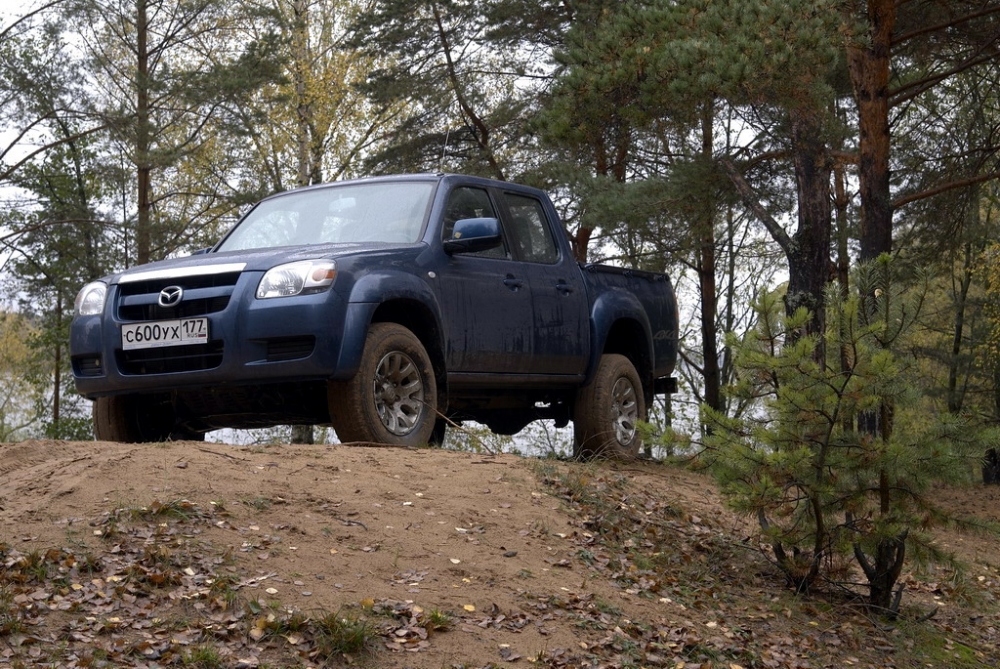 Especially the Mazda. A composed, adequately controlled vehicle. The tandem of the turbodiesel and five-speed manual provides a very decent acceleration for a two-ton giant: just 12.5 seconds to "60 mph." In traffic, you don't feel like a slowpoke. You can easily maintain a speed of 140–150 km/h on a straight. The long (4 turns) steering wheel, which is annoying in the city, on the highway allows avoiding unintended deviations from course. But in a corner, the car follows the steering wheel quite clearly along the trajectory, although there's a bit of a lack of feedback from the "wheel." The BT-50 is relatively stable even on uneven surfaces. Of course, the axle and leaf springs make themselves known, shifting the car in corners or widening the dynamic corridor on broken straights, but that's without load. The suspension is stiff, but energy-intensive and with long travel. Combined with high-profile tires, it allows you to fly over potholes at speed, and you'd be amazed! Especially the Mazda. A composed, adequately controlled vehicle. The tandem of the turbodiesel and five-speed manual provides a very decent acceleration for a two-ton giant: just 12.5 seconds to "60 mph." In traffic, you don't feel like a slowpoke. You can easily maintain a speed of 140–150 km/h on a straight. The long (4 turns) steering wheel, which is annoying in the city, on the highway allows avoiding unintended deviations from course. But in a corner, the car follows the steering wheel quite clearly along the trajectory, although there's a bit of a lack of feedback from the "wheel." The BT-50 is relatively stable even on uneven surfaces. Of course, the axle and leaf springs make themselves known, shifting the car in corners or widening the dynamic corridor on broken straights, but that's without load. The suspension is stiff, but energy-intensive and with long travel. Combined with high-profile tires, it allows you to fly over potholes at speed, and you'd be amazed! |
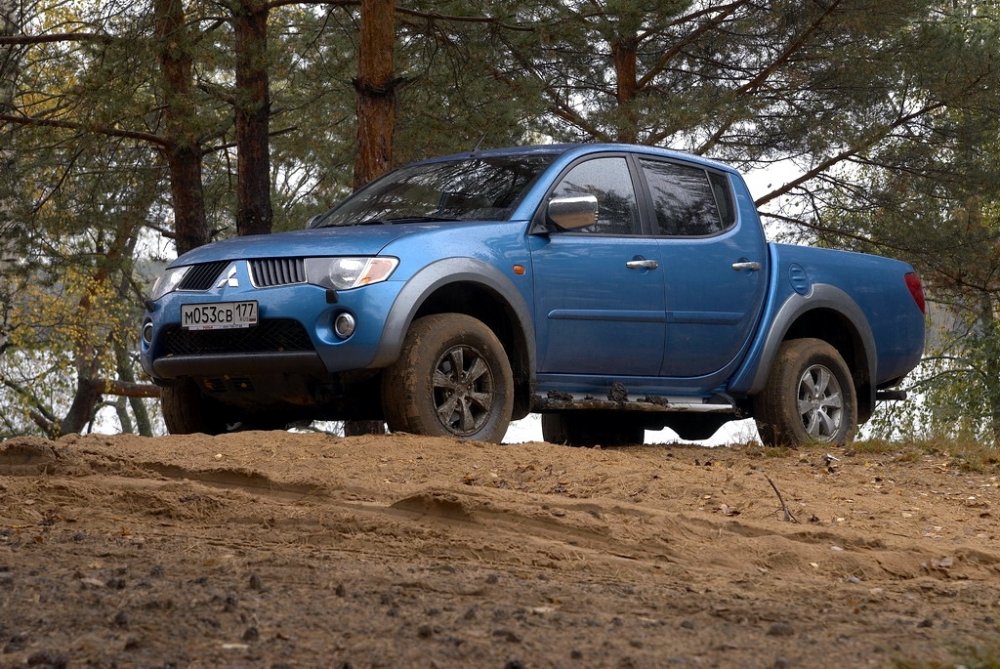 Mitsubishi is more comfortable, softer. Even the "empty" car rides more calmly than the Mazda. It doesn't yield in energy intensity and travel size. But there's a downside – handling has suffered. On the move, the L200 is not as responsive as the BT-50. The feeling of unity with the car is not as high, reactions are more sloppy. And the suspension hits harder on bumps. Moreover, the test car had a 4-speed "automatic," which noticeably worsened dynamics and further distanced you from the driving process. But again, thanks to this, the L200 wins in comfort and convenience in daily use. And it's a bit more spacious in the back. By the way, passengers unanimously said they were more comfortable in the Mitsubishi. So here too, there's a choice – either the nimble but too sharp and stiff BT-50, or the not-so-fast but less annoying L200 that doesn't "count" every pothole. Mitsubishi is more comfortable, softer. Even the "empty" car rides more calmly than the Mazda. It doesn't yield in energy intensity and travel size. But there's a downside – handling has suffered. On the move, the L200 is not as responsive as the BT-50. The feeling of unity with the car is not as high, reactions are more sloppy. And the suspension hits harder on bumps. Moreover, the test car had a 4-speed "automatic," which noticeably worsened dynamics and further distanced you from the driving process. But again, thanks to this, the L200 wins in comfort and convenience in daily use. And it's a bit more spacious in the back. By the way, passengers unanimously said they were more comfortable in the Mitsubishi. So here too, there's a choice – either the nimble but too sharp and stiff BT-50, or the not-so-fast but less annoying L200 that doesn't "count" every pothole. |
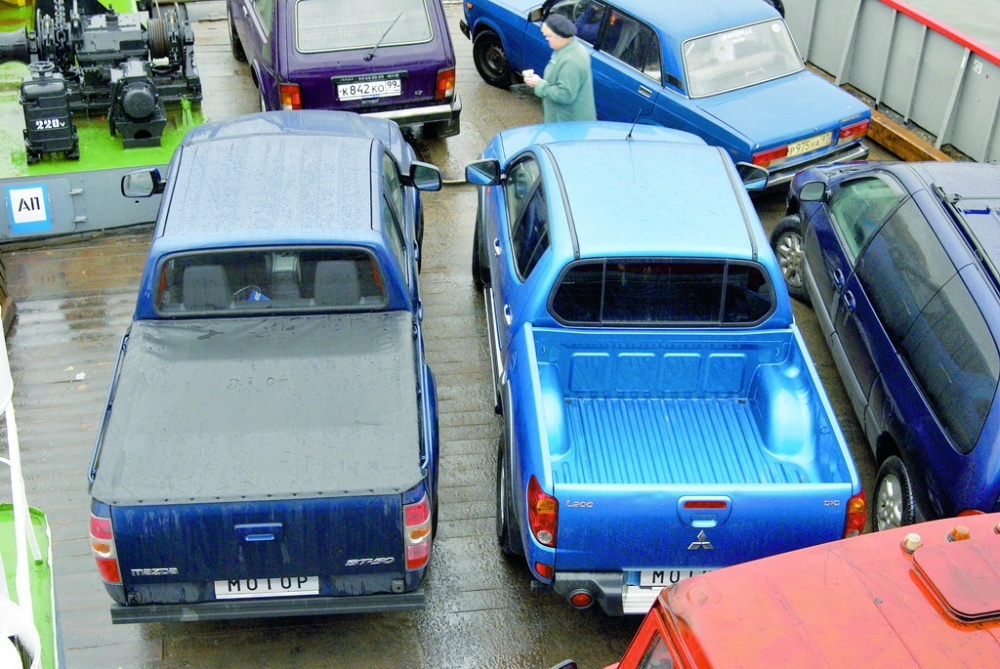
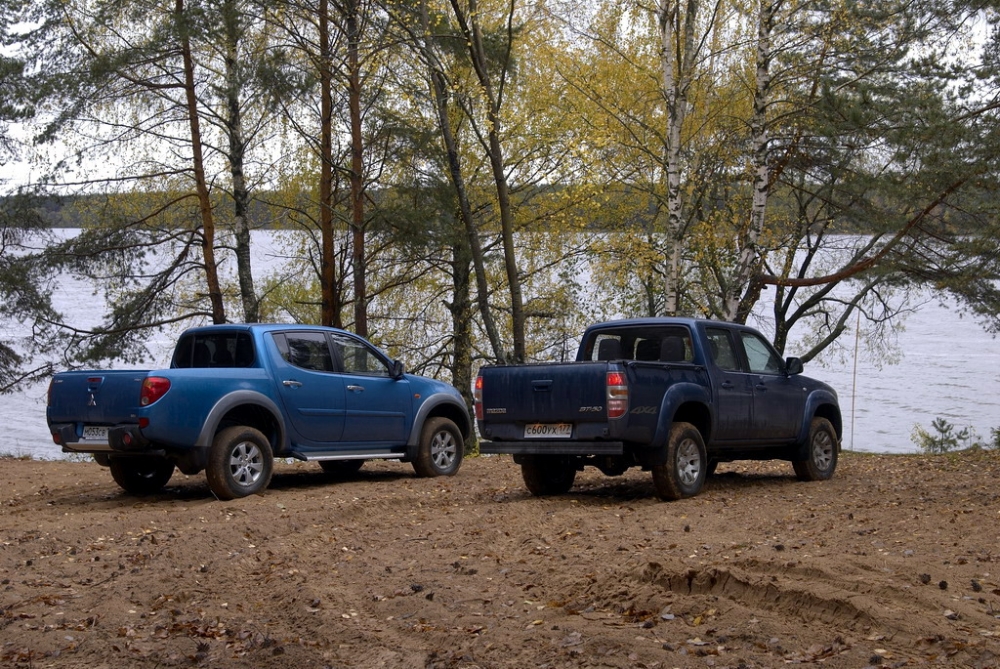 Overall, both pickups, taking into account their design features and weight, left pleasant impressions on the highway. You can confidently embark on a long journey in them. Well, finally, we reached the Volga and crossed to the other bank by ferry. The weather in previous days (continuous rains) gave hope for real off-road tests. And we weren't wrong. The forest road along the riverbank in the lowlands had turned into a real soggy mess. Well, just in case, there's a tow rope, a shovel, and rubber boots in the bed. Forward! Overall, both pickups, taking into account their design features and weight, left pleasant impressions on the highway. You can confidently embark on a long journey in them. Well, finally, we reached the Volga and crossed to the other bank by ferry. The weather in previous days (continuous rains) gave hope for real off-road tests. And we weren't wrong. The forest road along the riverbank in the lowlands had turned into a real soggy mess. Well, just in case, there's a tow rope, a shovel, and rubber boots in the bed. Forward! |
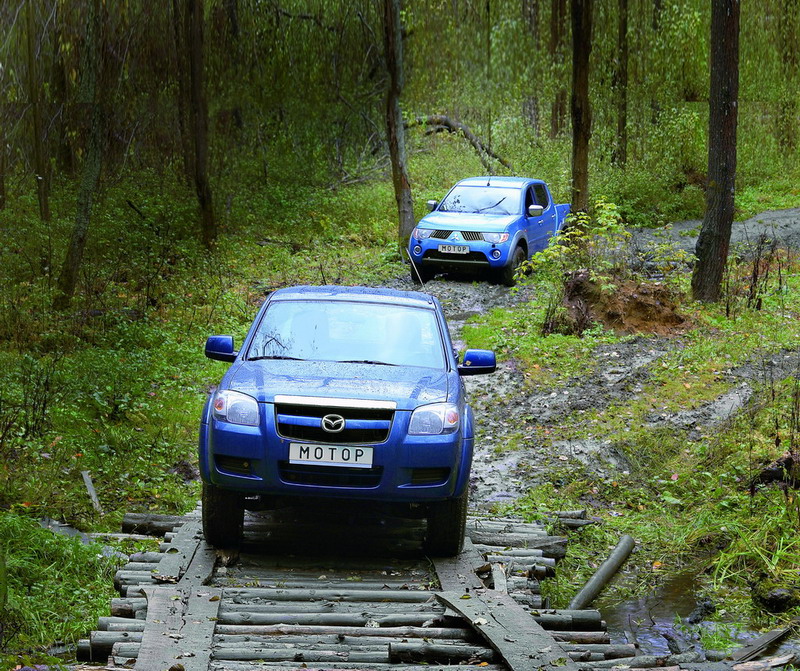
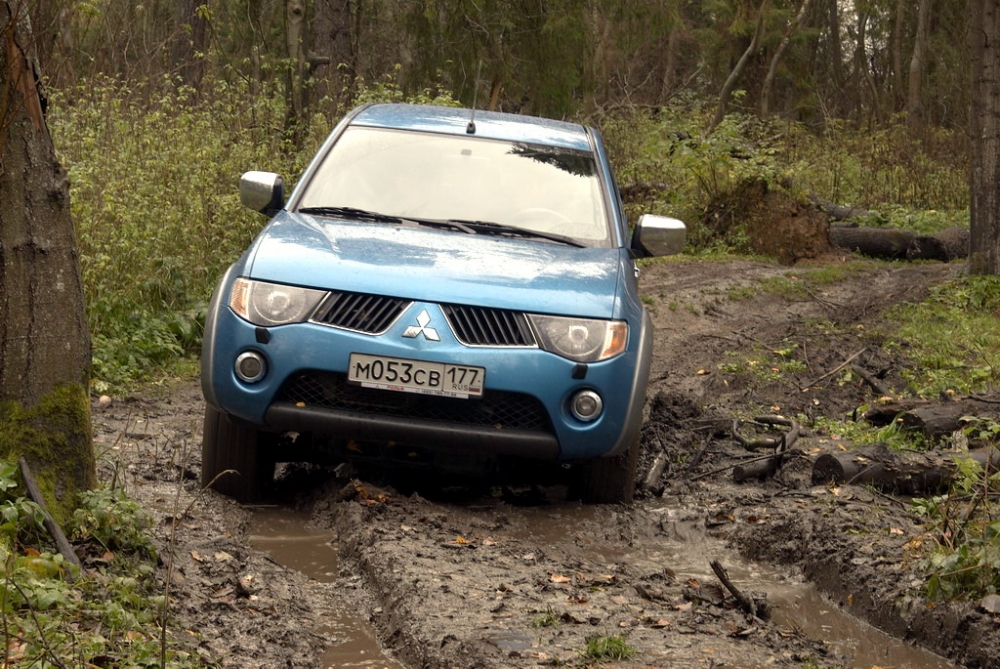 What these vehicles showed off-road commands respect. By engaging low range and the rear differential lock (both have these in their arsenal), you'll find it hard to find a place where these pickups can't go. Of course, this doesn't mean you should rush headlong into a swamp or ford a man-deep crossing. Moreover, their geometric off-road capability is limited by the long wheelbase and substantial rear overhang, and the Mitsubishi also has massive side steps. They are still far from a "UAZ" or a short-wheelbase Wrangler. But still, it's hard to "bog down" the BT-50 and L200. A couple of times, the vehicles got out of the most difficult situations on their own, when the "nose" was sucked up to the bumper into dark mud. At the same time, it can't be said that the Mitsubishi's "automatic" was a hindrance. Although in "rocking," the "manual" is still preferable. What these vehicles showed off-road commands respect. By engaging low range and the rear differential lock (both have these in their arsenal), you'll find it hard to find a place where these pickups can't go. Of course, this doesn't mean you should rush headlong into a swamp or ford a man-deep crossing. Moreover, their geometric off-road capability is limited by the long wheelbase and substantial rear overhang, and the Mitsubishi also has massive side steps. They are still far from a "UAZ" or a short-wheelbase Wrangler. But still, it's hard to "bog down" the BT-50 and L200. A couple of times, the vehicles got out of the most difficult situations on their own, when the "nose" was sucked up to the bumper into dark mud. At the same time, it can't be said that the Mitsubishi's "automatic" was a hindrance. Although in "rocking," the "manual" is still preferable. |
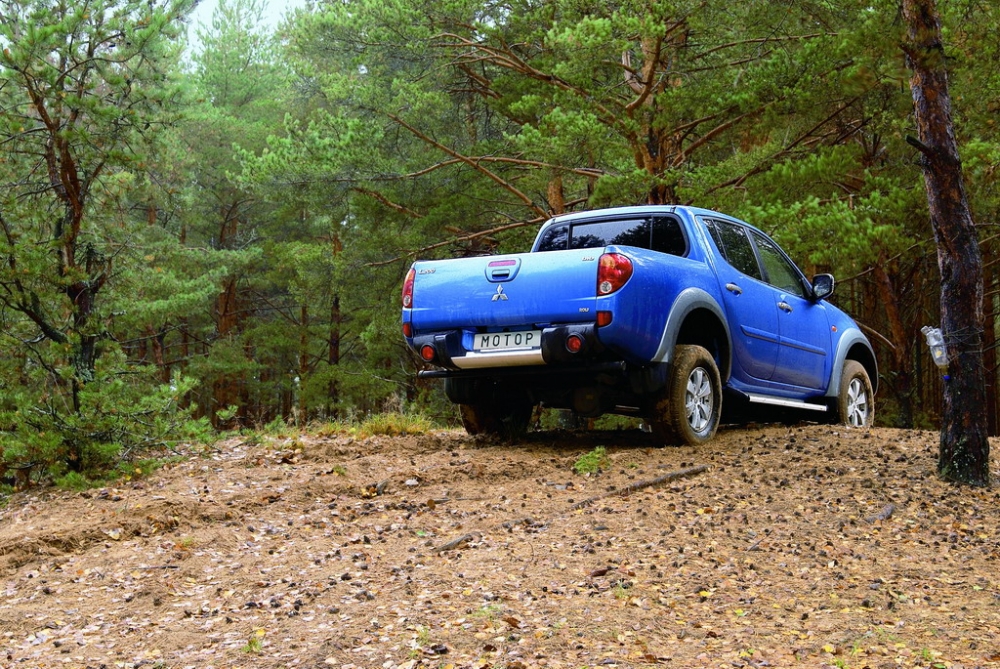 The tow rope, fortunately, was never needed. And along the shore with fairly deep sand, the SUVs moved playfully. They stormed seemingly insurmountable climbs, continued moving forward even in a diagonally hung state, and splashed into huge puddles! You just need to remember that with the rear differential lock engaged, the car barely turns, going like a "plow." The tow rope, fortunately, was never needed. And along the shore with fairly deep sand, the SUVs moved playfully. They stormed seemingly insurmountable climbs, continued moving forward even in a diagonally hung state, and splashed into huge puddles! You just need to remember that with the rear differential lock engaged, the car barely turns, going like a "plow." |
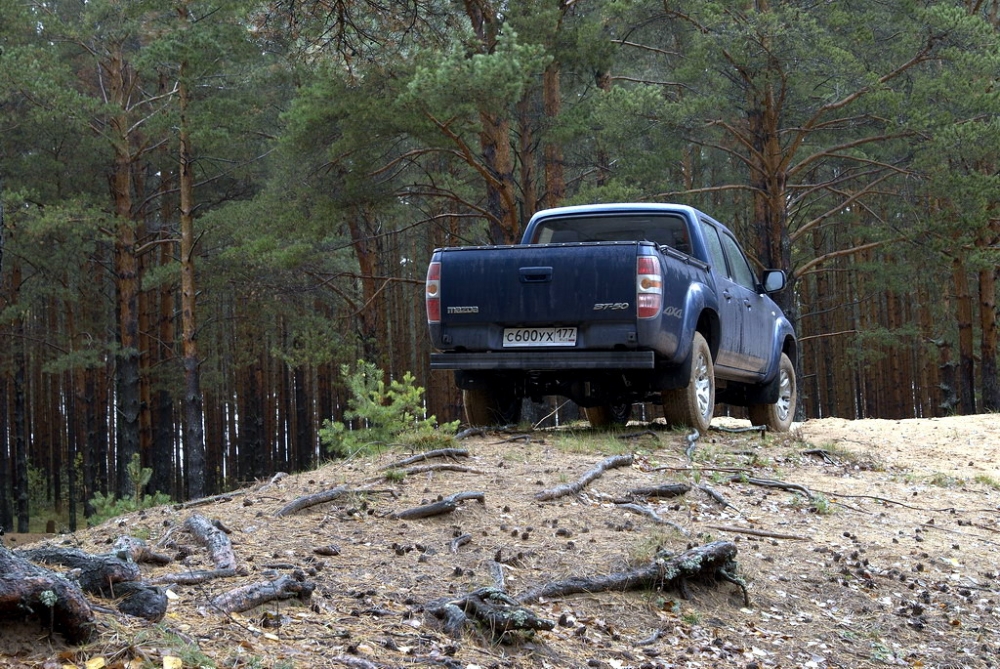 We had a great time on the Volga. And both pickups were excellent helpers in that. They didn't let us down. They pleased us. On the way home, I was going over all the events of the past day in my mind, trying to set priorities and decide which of the vehicles is better? It turned out to be a difficult task. The L200 and BT-50 are very similar in concept and purpose, but each has a number of distinctive features and details. They are still different. Some will like the unconventional design of the Mitsubishi, others – the "classic" Mazda. Some will appreciate the relative (for a pickup) serenity and comfort of the L200, others – the sharpness and assertiveness of the BT-50. Some don't like shifting gears manually, and the "automatic" will satisfy them, while others, on the contrary, like to click the "stick" themselves. To each their own, as they say... We'll just add that these were worthy rivals. We had a great time on the Volga. And both pickups were excellent helpers in that. They didn't let us down. They pleased us. On the way home, I was going over all the events of the past day in my mind, trying to set priorities and decide which of the vehicles is better? It turned out to be a difficult task. The L200 and BT-50 are very similar in concept and purpose, but each has a number of distinctive features and details. They are still different. Some will like the unconventional design of the Mitsubishi, others – the "classic" Mazda. Some will appreciate the relative (for a pickup) serenity and comfort of the L200, others – the sharpness and assertiveness of the BT-50. Some don't like shifting gears manually, and the "automatic" will satisfy them, while others, on the contrary, like to click the "stick" themselves. To each their own, as they say... We'll just add that these were worthy rivals. |
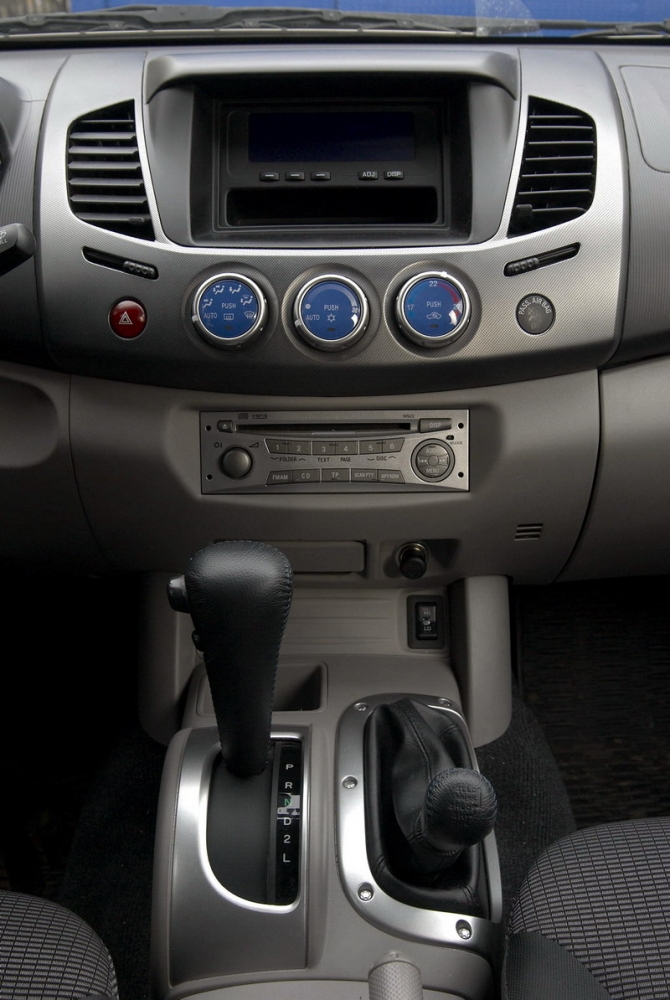 PRICES AND TRIM LEVELS OF MITSUBISHI L200 PRICES AND TRIM LEVELS OF MITSUBISHI L200Mitsubishi L200 is offered with a 2.5-liter turbodiesel (136 hp) in trim levels: Invite, Invite+, Intense, and Instyle. Invite and Invite+ are equipped with a 5-speed manual transmission and EASY-SELECT 4WD all-wheel drive with a rigidly connected front axle. Intense (with Super Select 4WD transmission from Pajero) can be had with a 4-speed automatic, while Instyle comes only with an automatic. Both transmission options are equipped with an electronic rear differential lock. Prices for Invite start at $24,990, and for Instyle at $33,490. The Invite includes: 2 airbags, fabric interior, steel 16-inch wheels, heated front seats, audio prep, central locking. Invite+ adds headlight washers, front fog lights, and air conditioning, while Intense adds ABS and EBD systems, alloy R16 wheels, power-adjustable and heated mirrors, front bumper in body color, fender flares, climate control, MP3 stereo with 6 speakers, drop-down rear window, leather steering wheel and gearshift and transfer case levers, etc. Instyle features leather front seats with power adjustment, 17-inch wheels, and M-ASTC stability control. |
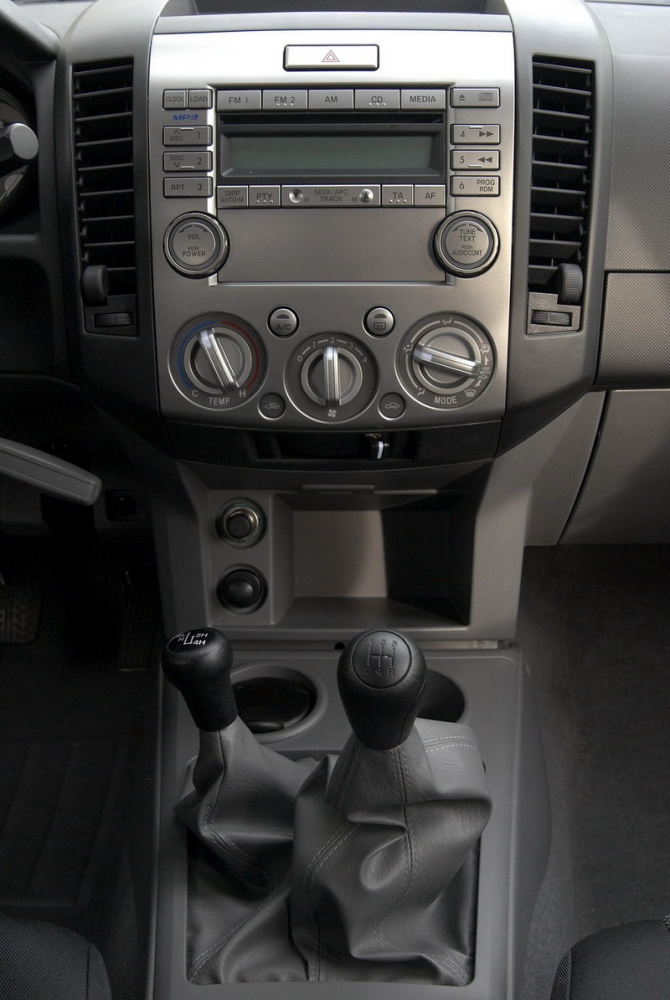 PRICES AND TRIM LEVELS OF MAZDA BT-50 PRICES AND TRIM LEVELS OF MAZDA BT-50All Mazda BT-50 variants are offered with a 2.5-liter turbocharged 4-cylinder diesel engine (143 hp) and a 5-speed manual gearbox with low range, rigid center differential lock, and limited-slip differential in the rear axle. Available options are Direct (EBR), Touring (EBS and l01), and Active (l02). Prices range from $23,490 to $30,300. In the most basic (Direct), the vehicle is equipped with steel R15 wheels, audio prep, front airbags, and tilt steering wheel. The Touring includes bumpers, door handles, mirrors (with power adjustment and heating), and grille painted in body color, power windows, central locking, heated front seats, ABS, side airbags, fender flares, and an MP3 CD stereo with 4 speakers. The Touring (l01) adds alloy 16-inch wheels and a higher-capacity battery. In the most expensive Active trim, two-tone body paint is possible ($690), and the grille, door handles, and mirror housings are chrome, with a stereo system with 6 speakers and a CD changer. The test vehicle is in Touring (l02) trim. Its price is $27,690. |
 |
 |
 |
 |
Similar but different
The pickup truck market in Russia is poorly developed. In fact, it is represented by only four models – Mitsubishi L200, Mazda BT-50, Nissan Navara, and Ford Ranger. But sales volumes are increasing here and now, as in any other segment. We compared the two most popular pickups – Mazda BT-50 and Mitsubishi L200.
Test drive photos
Comments
No comments yet. Say the first word.