|
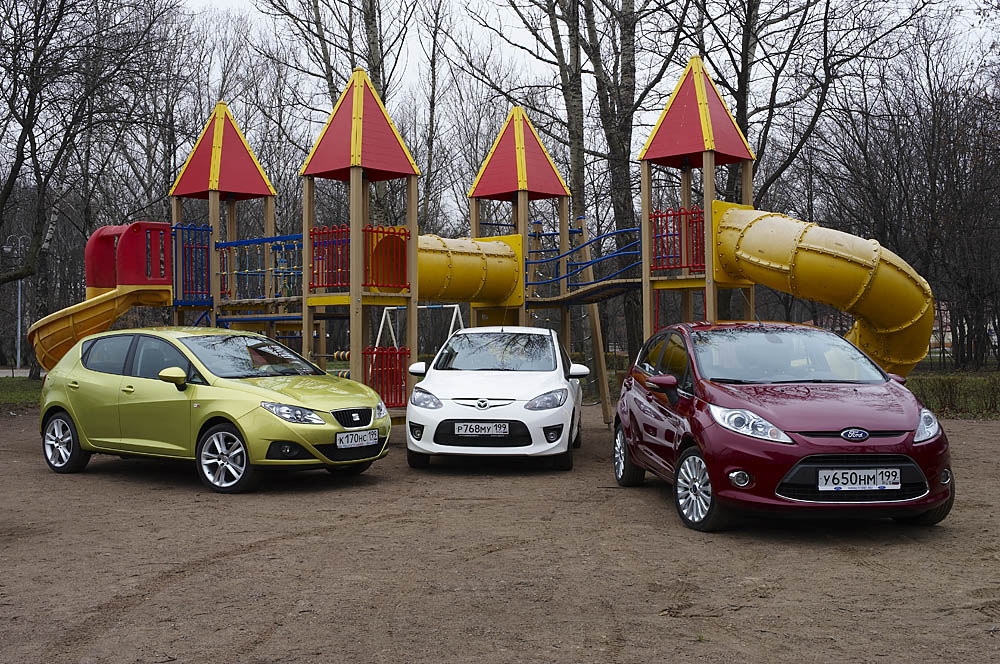
 These three cars ended up in a comparative test for two reasons. Each of them is a fresh new model, and SEAT and Ford have just entered the Russian market. In addition, despite their compact dimensions and modest engines, all three can deliver driving joy. In our opinion, these are the most spirited representatives of their class among those that can actually be bought. Mini and Alfa Romeo MiTo are noticeably more expensive at dealerships. These three cars ended up in a comparative test for two reasons. Each of them is a fresh new model, and SEAT and Ford have just entered the Russian market. In addition, despite their compact dimensions and modest engines, all three can deliver driving joy. In our opinion, these are the most spirited representatives of their class among those that can actually be bought. Mini and Alfa Romeo MiTo are noticeably more expensive at dealerships.
|
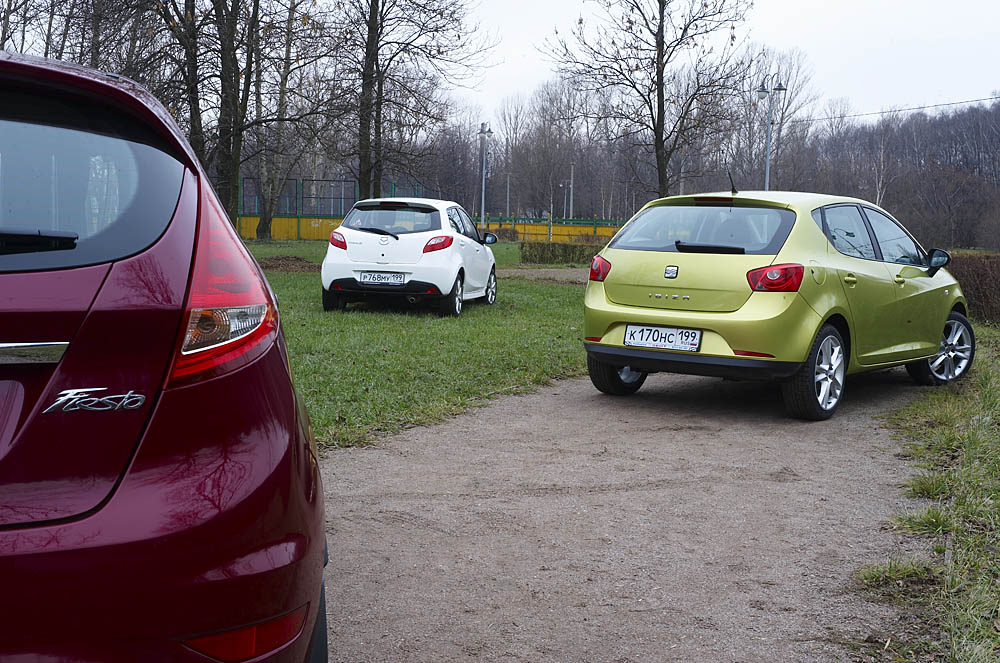
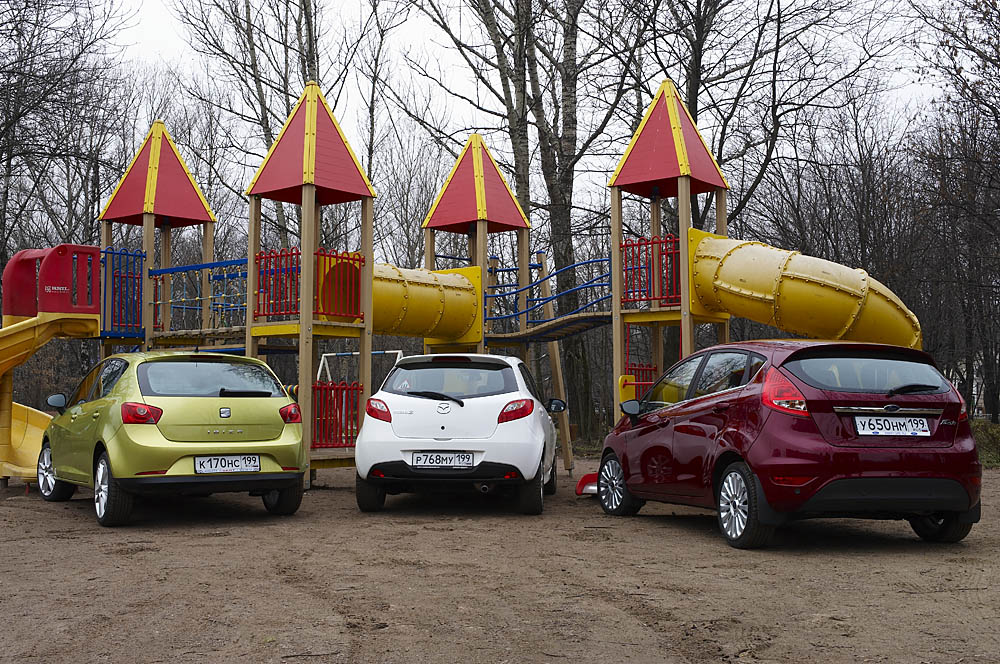
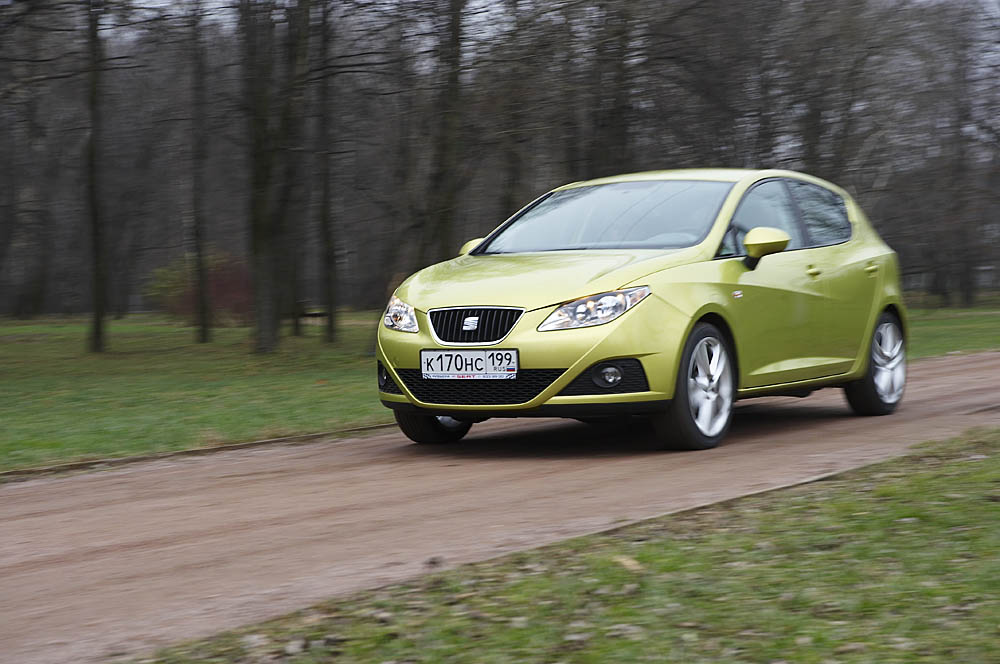
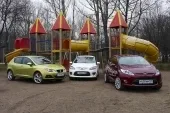 On the capital's highways, our little ones felt like Lilliputians among Gullivers: larger cars, trucks, and trolleybuses pressed in from all sides. But the mini-cars were not timid — they boldly entered street battles and often emerged victorious. Real sneaks! Vroom-vroom, a dash right, a dash left — and we're first at the traffic light again! Maneuvering is easy, largely thanks to excellent visibility. And the SEAT has the best of it. There's no such pronounced rise in the window line as in the Mazda and Ford, and the rear window is not so constrained by the pillars and the edge of the tailgate. The mirrors on the Ibiza are also of a familiar shape. By the way, that very "rise" is almost the only common feature of the appearance of the "two" and the Fiesta, although both are on the same platform. On the capital's highways, our little ones felt like Lilliputians among Gullivers: larger cars, trucks, and trolleybuses pressed in from all sides. But the mini-cars were not timid — they boldly entered street battles and often emerged victorious. Real sneaks! Vroom-vroom, a dash right, a dash left — and we're first at the traffic light again! Maneuvering is easy, largely thanks to excellent visibility. And the SEAT has the best of it. There's no such pronounced rise in the window line as in the Mazda and Ford, and the rear window is not so constrained by the pillars and the edge of the tailgate. The mirrors on the Ibiza are also of a familiar shape. By the way, that very "rise" is almost the only common feature of the appearance of the "two" and the Fiesta, although both are on the same platform.
|
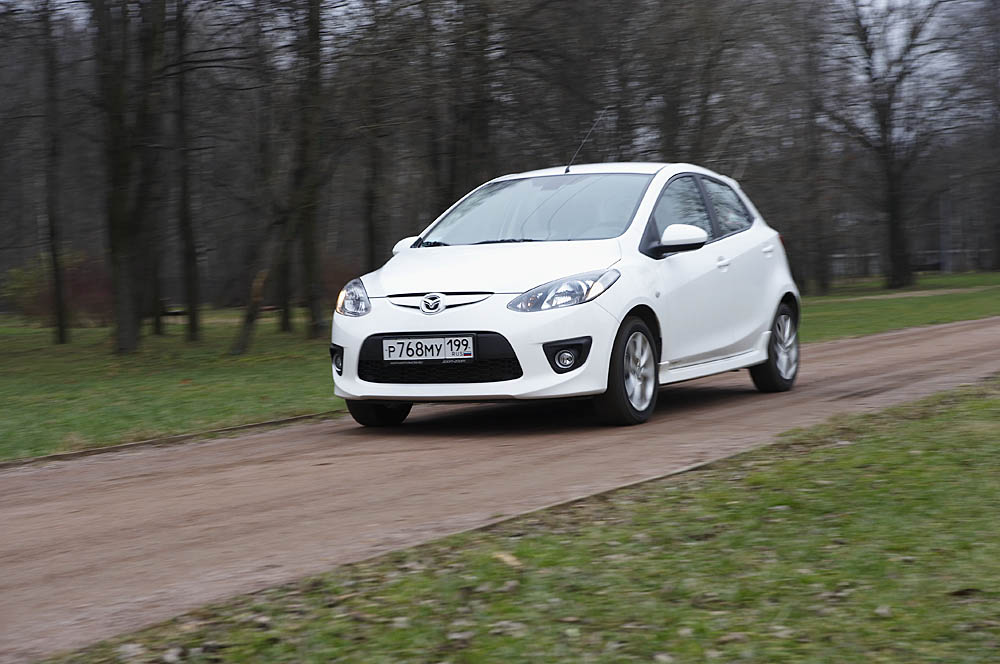
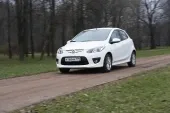
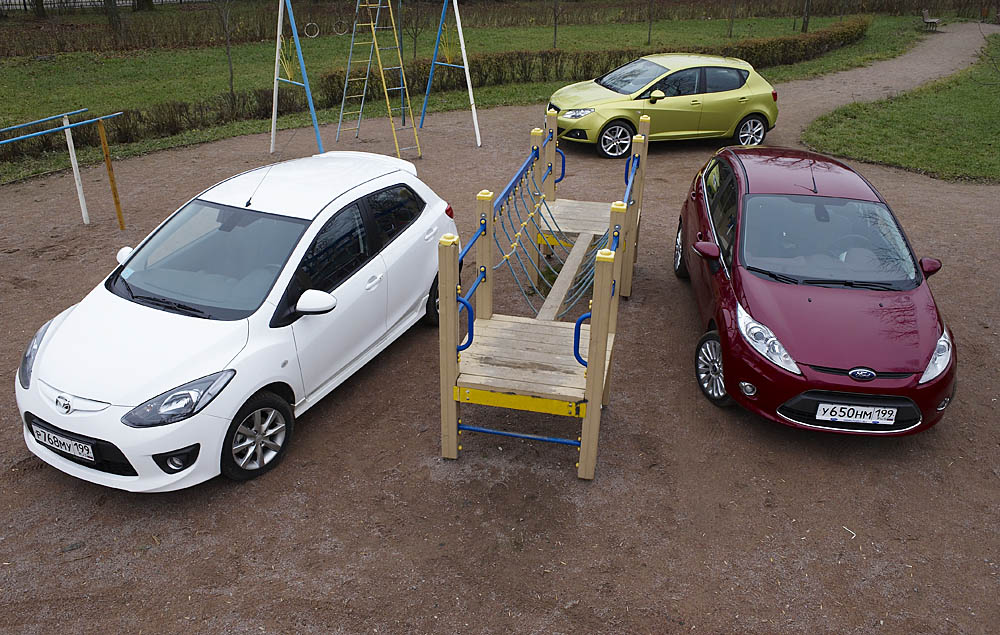
 And which of our trio do passersby pay the most attention to? Not long ago, the Mazda2 collected compliments — they say it has a playful face and sporty shapes. But time passes, people get used to good things. Now the reaction is not the same: the car has become familiar. But the clock is ticking in the other direction too — new fighters are entering the arena. The Ford Fiesta and Seat Ibiza appeared almost simultaneously and quite recently. And which of our trio do passersby pay the most attention to? Not long ago, the Mazda2 collected compliments — they say it has a playful face and sporty shapes. But time passes, people get used to good things. Now the reaction is not the same: the car has become familiar. But the clock is ticking in the other direction too — new fighters are entering the arena. The Ford Fiesta and Seat Ibiza appeared almost simultaneously and quite recently.
|
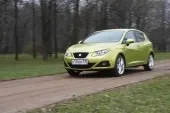
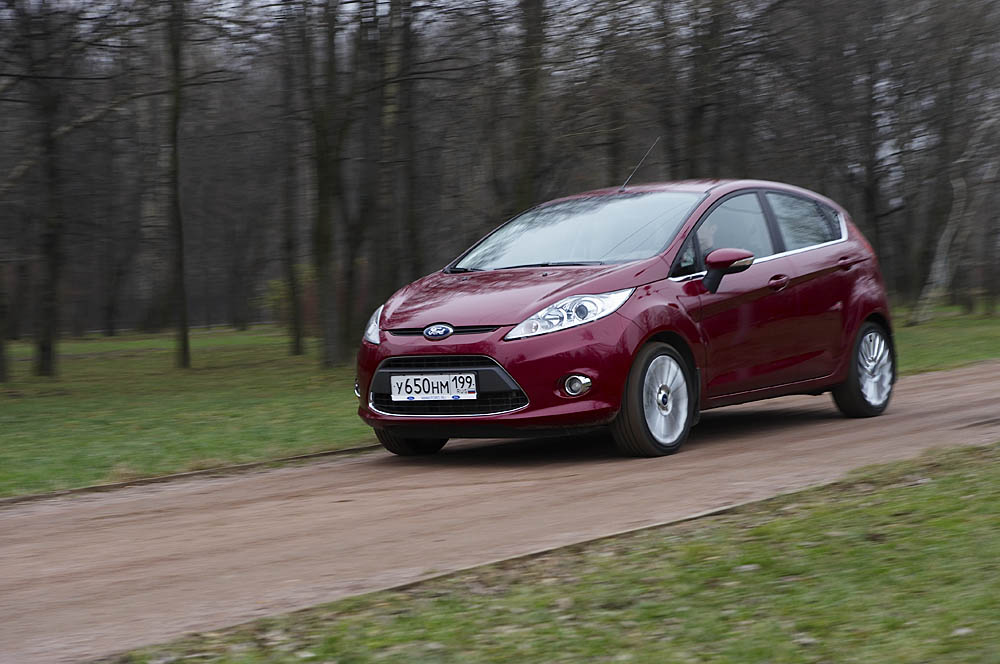
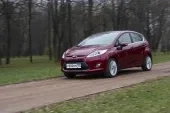 It's no surprise that eyes are drawn to them. And the Fiesta gets the most attention — the design turned out very successful and attractive. The Seat is looked at a little less often. The little Spanish brand's car, unlike other avant-garde models of the brand, turned out quite traditional. It attracts primarily with its rarity, unusual body color, and 17-inch wheels. In profile, you can see three expressive edges drawn by SEAT's chief designer Luc Donckerwolke. But people still love the Fiesta more — they might break their eyes looking at it. It's no surprise that eyes are drawn to them. And the Fiesta gets the most attention — the design turned out very successful and attractive. The Seat is looked at a little less often. The little Spanish brand's car, unlike other avant-garde models of the brand, turned out quite traditional. It attracts primarily with its rarity, unusual body color, and 17-inch wheels. In profile, you can see three expressive edges drawn by SEAT's chief designer Luc Donckerwolke. But people still love the Fiesta more — they might break their eyes looking at it.
|
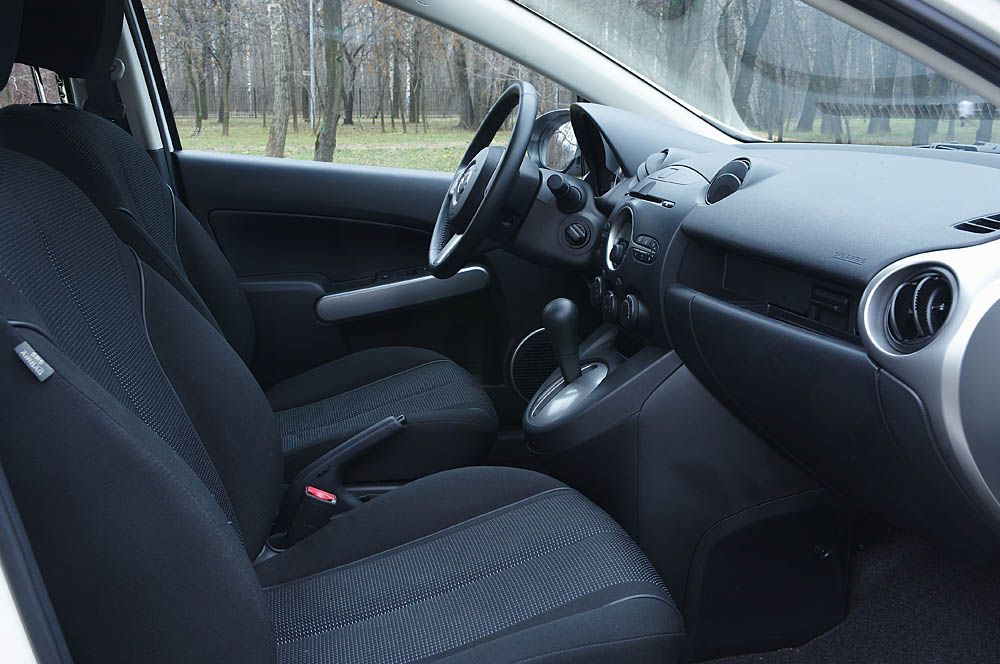
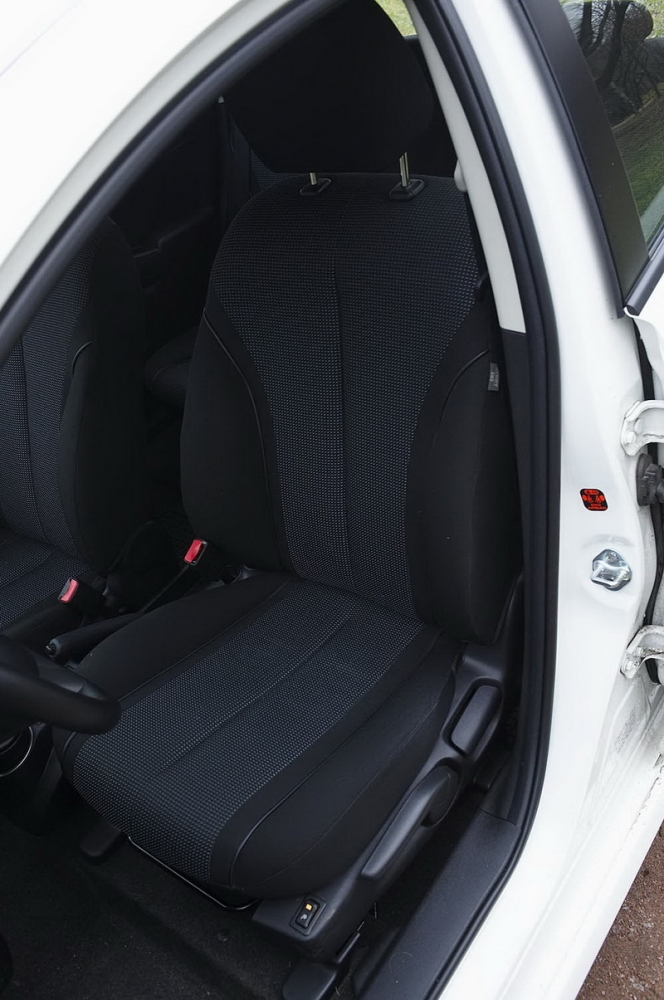
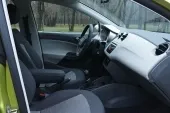
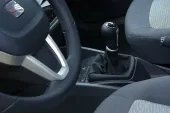
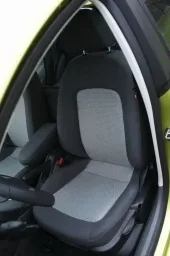
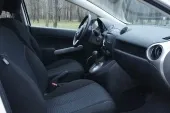
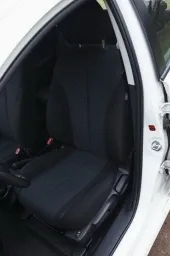
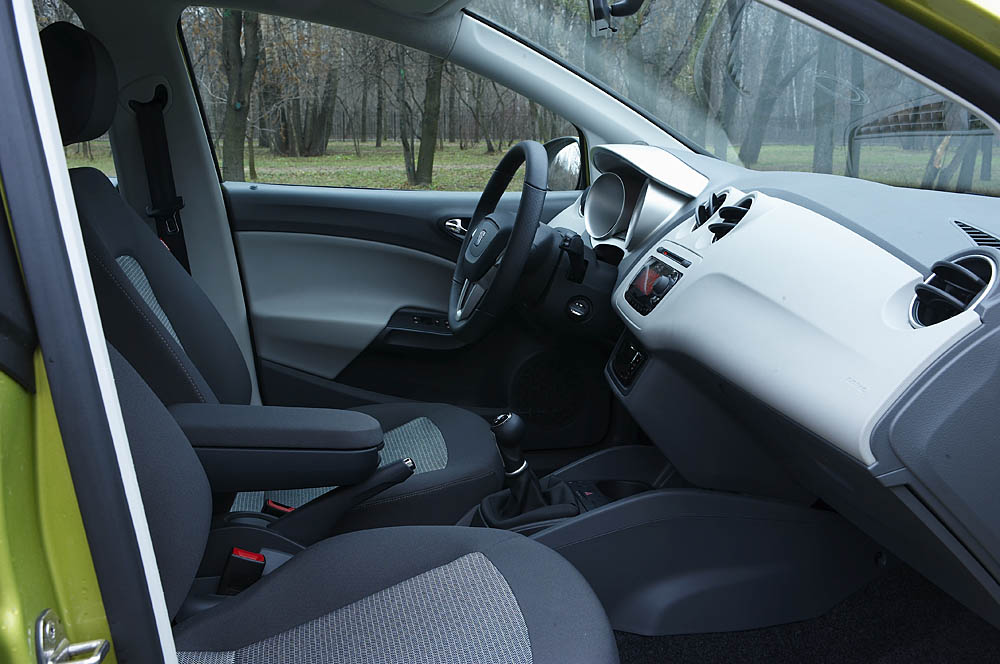
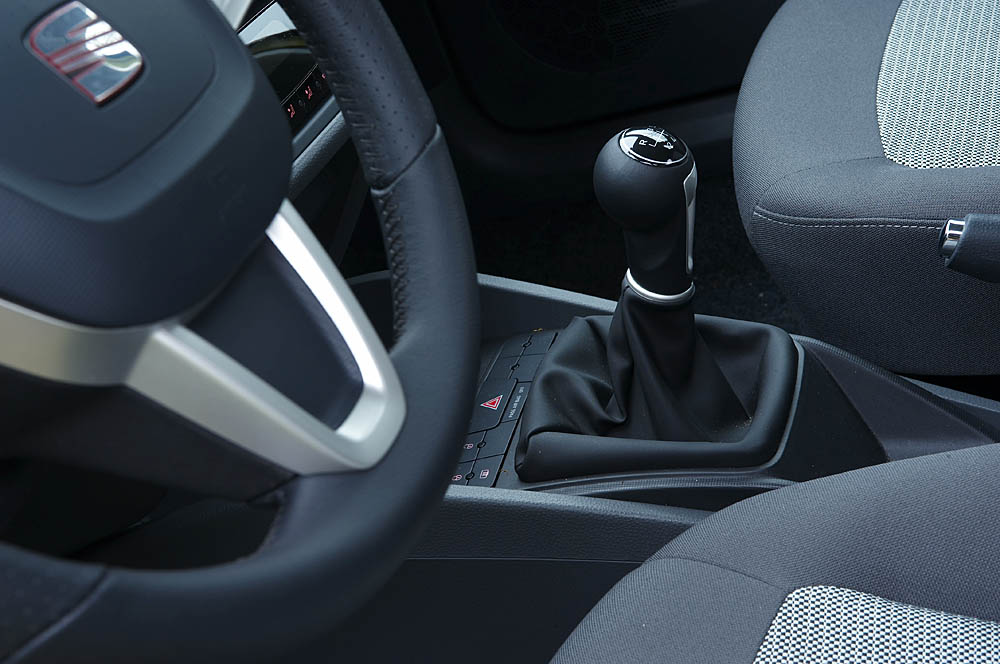
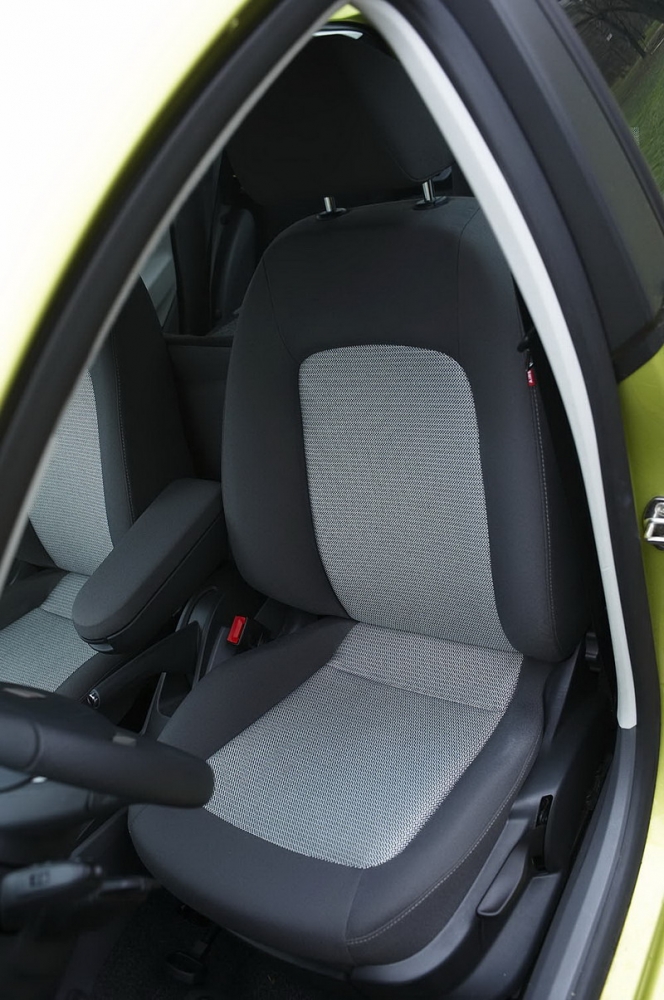
 We know the Mazda's interior inside and out. It never claimed to be luxurious, but it won with simplicity and convenient ergonomics. The instruments look a bit childish, but they read perfectly. The seat and driving position will suit even tall drivers, and the adjustment ranges of the steering column are beyond praise. It would seem, ideal? In general, yes, but exactly until you switch to the SEAT. Here, there seems to be nothing sensational: everything is strict and familiar. Little things like the unusual steering wheel hub, a couple of deep "wells" — nowadays this is common — and the "piano" plastic on the stereo don't count. We know the Mazda's interior inside and out. It never claimed to be luxurious, but it won with simplicity and convenient ergonomics. The instruments look a bit childish, but they read perfectly. The seat and driving position will suit even tall drivers, and the adjustment ranges of the steering column are beyond praise. It would seem, ideal? In general, yes, but exactly until you switch to the SEAT. Here, there seems to be nothing sensational: everything is strict and familiar. Little things like the unusual steering wheel hub, a couple of deep "wells" — nowadays this is common — and the "piano" plastic on the stereo don't count.
|
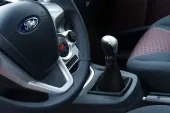
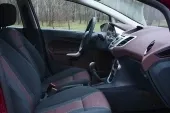
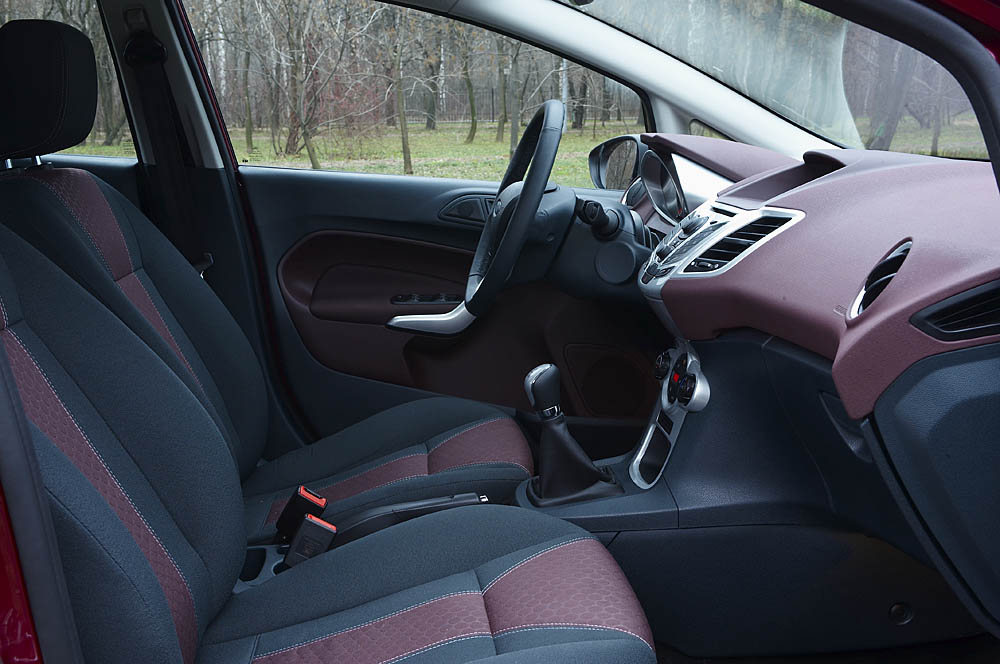
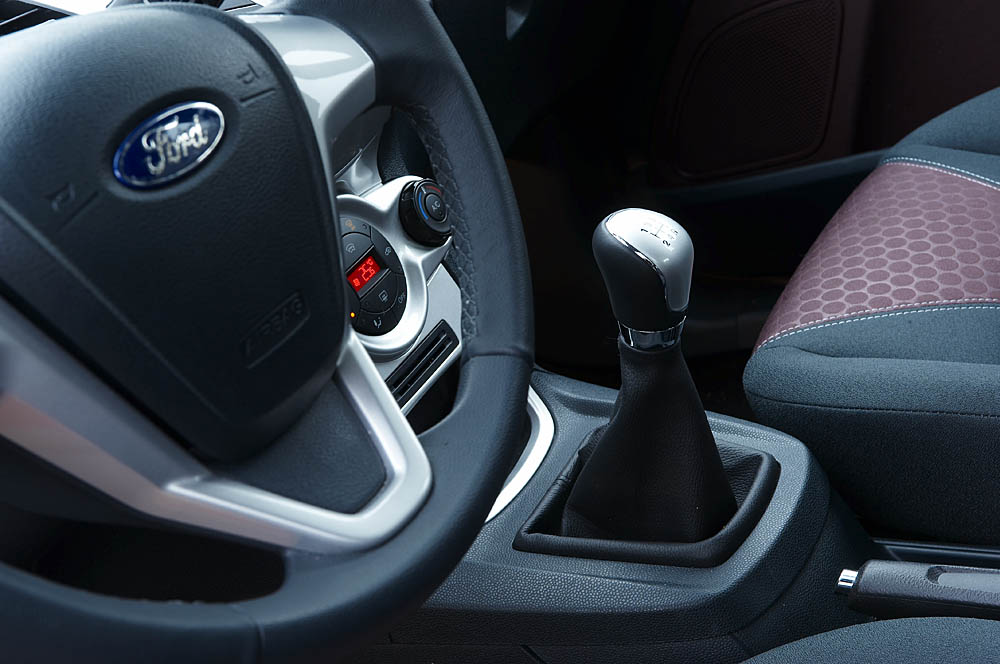
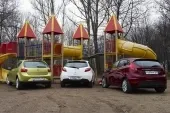 But you can't shake the feeling that you're sitting in a car a class higher — everything inside is so high-quality and well-thought-out. There's no trace of Mazda's frivolity here, but there's also no Volkswagen-like insensitivity; there's some liveliness. We had no complaints about the Ibiza's ergonomics. And can there be any for a car produced under the wing of the VW concern? So, is it the perfect ideal? But we found an even more perfect one. Ford's interior designers put their soul into the cabin. As a result, the Fiesta is not as fun as the Mazda, but not as proper as the SEAT. Functionality is at its best, and the instruments are easy to read. But you can't shake the feeling that you're sitting in a car a class higher — everything inside is so high-quality and well-thought-out. There's no trace of Mazda's frivolity here, but there's also no Volkswagen-like insensitivity; there's some liveliness. We had no complaints about the Ibiza's ergonomics. And can there be any for a car produced under the wing of the VW concern? So, is it the perfect ideal? But we found an even more perfect one. Ford's interior designers put their soul into the cabin. As a result, the Fiesta is not as fun as the Mazda, but not as proper as the SEAT. Functionality is at its best, and the instruments are easy to read.
|
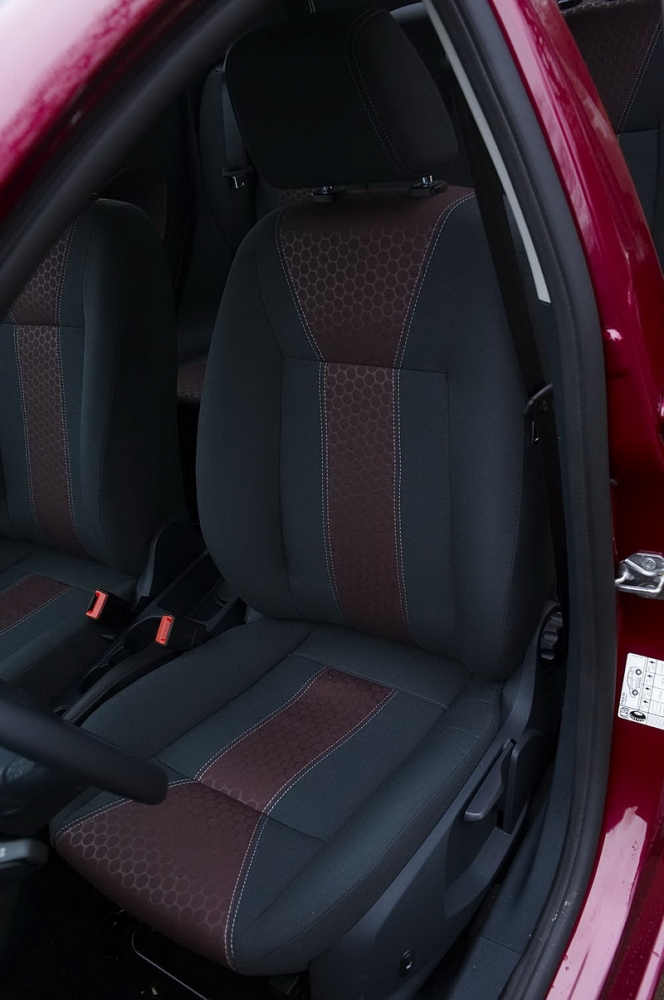
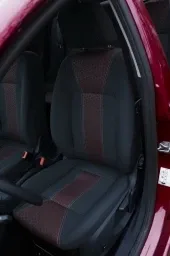 And most importantly: the Fiesta hooks you. It hooks with bold combinations of colors and textures (the buyer can choose from many trim options), a symmetrical center console, an unusual shape of the front panel, and — importantly — excellent build quality. Inside, I liked the Fiesta even more than the Mondeo. We found out that a person of almost any build can get behind the wheel of any of the trio — if, of course, they are not a giant and not very fat. And what about the rear seats? And most importantly: the Fiesta hooks you. It hooks with bold combinations of colors and textures (the buyer can choose from many trim options), a symmetrical center console, an unusual shape of the front panel, and — importantly — excellent build quality. Inside, I liked the Fiesta even more than the Mondeo. We found out that a person of almost any build can get behind the wheel of any of the trio — if, of course, they are not a giant and not very fat. And what about the rear seats?
|
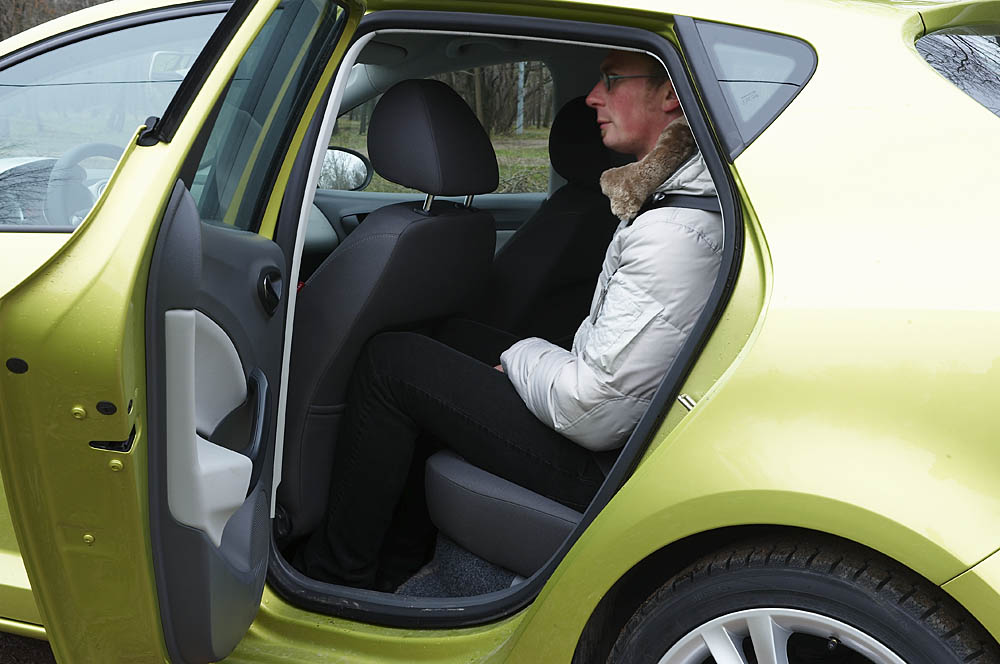
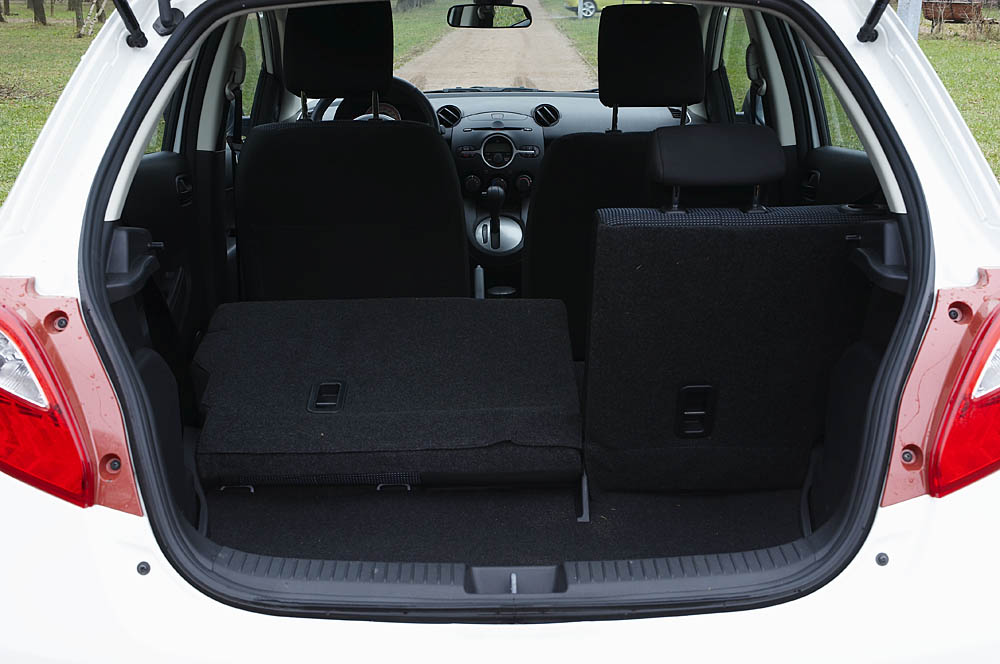
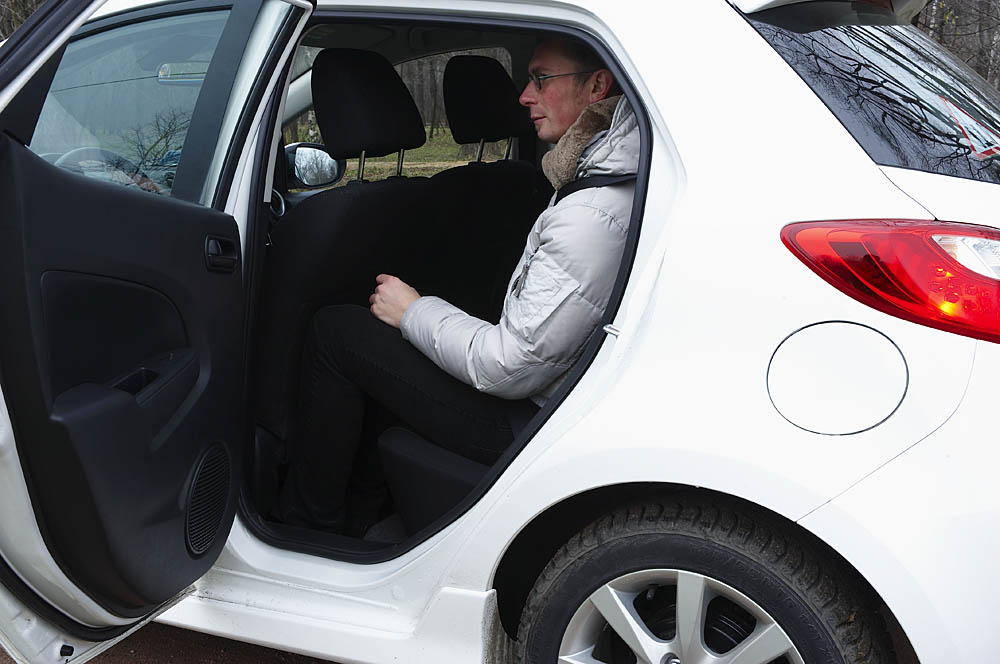
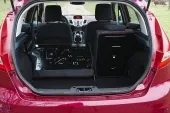
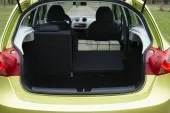
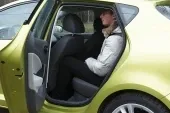
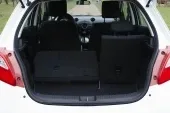
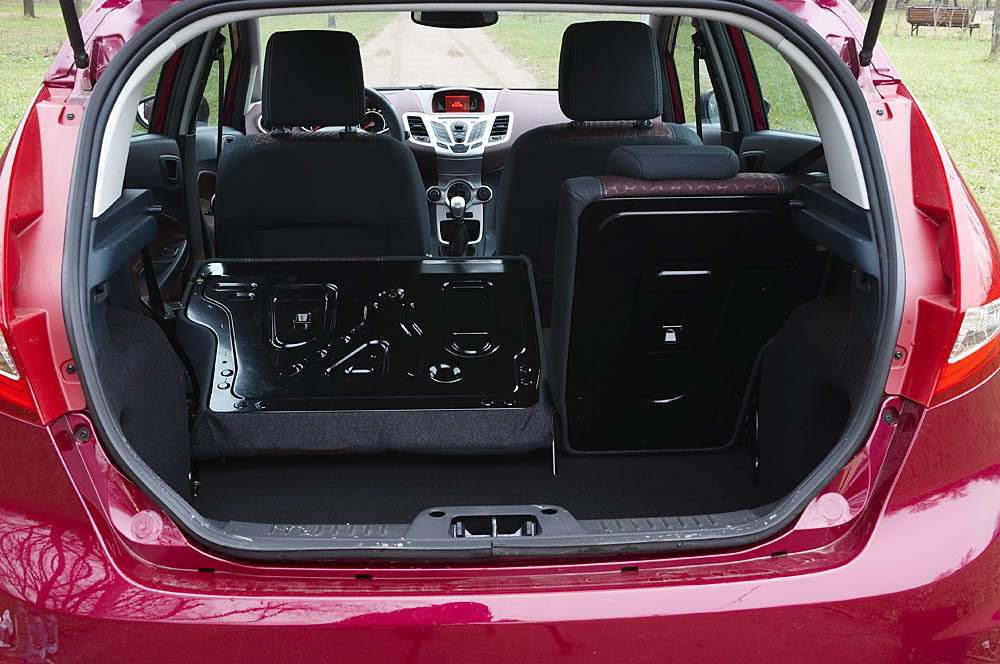
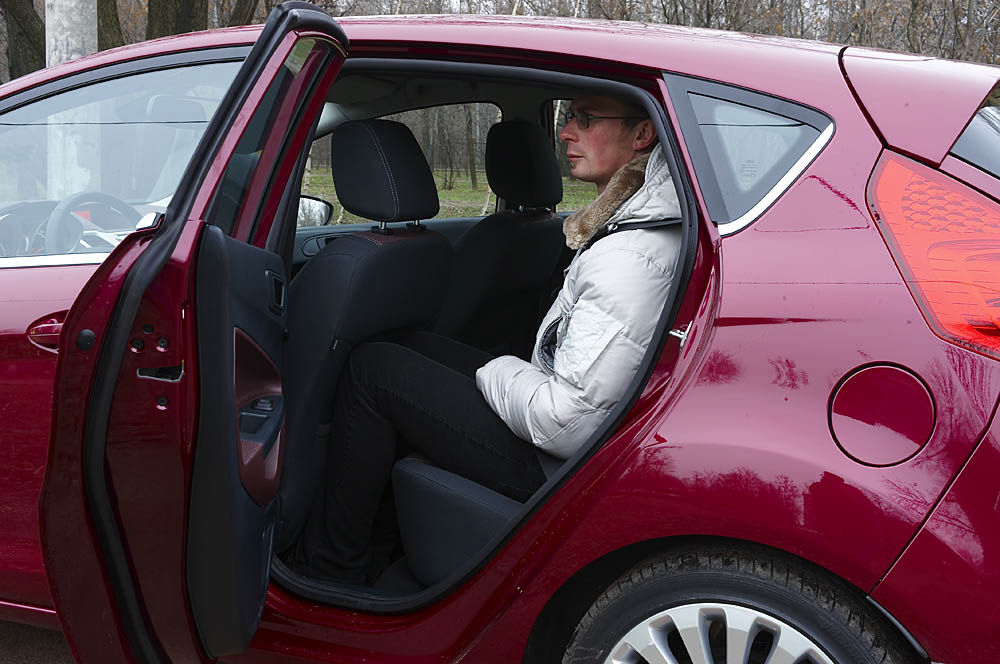
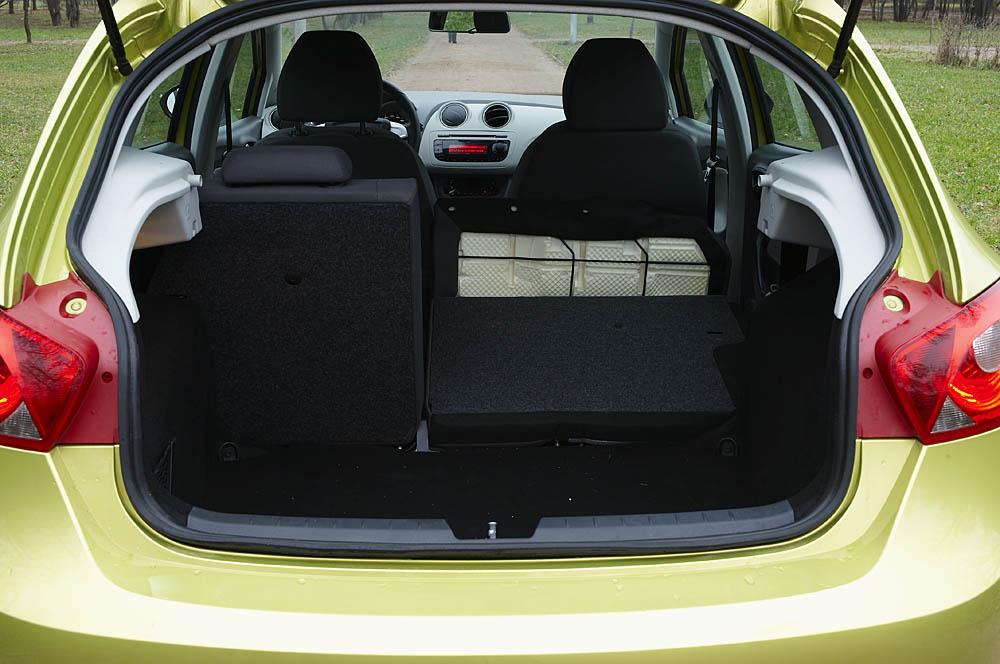
 We deliberately took five-door versions as more practical. For the Fiesta and Ibiza, frankly, there was no choice: the three-door "two" is not sold here. A third passenger in the back is, of course, extra: it's cramped in the shoulders, and you can't fit your legs. But two people are quite comfortable there, even with a height over 180 cm. The seats are arranged amphitheater-style, but you don't hit your head on the ceiling. In terms of rear space, the Mazda and Ford are very similar — again, the common platform and identical wheelbase have an effect. The SEAT is a bit tighter, but you can place your feet more comfortably. We deliberately took five-door versions as more practical. For the Fiesta and Ibiza, frankly, there was no choice: the three-door "two" is not sold here. A third passenger in the back is, of course, extra: it's cramped in the shoulders, and you can't fit your legs. But two people are quite comfortable there, even with a height over 180 cm. The seats are arranged amphitheater-style, but you don't hit your head on the ceiling. In terms of rear space, the Mazda and Ford are very similar — again, the common platform and identical wheelbase have an effect. The SEAT is a bit tighter, but you can place your feet more comfortably.
|
Now, forgetting about design and ergonomics, we get behind the wheel again and head to the start of that very race we talked about at the beginning. Who beats whom? Who is faster? Who is "hotter"? In the discipline of city drag racing, the Ford leaves its rivals behind. Second is the Mazda, and bronze goes to the SEAT. To be honest, we didn't expect any other results. The Fiesta is the only one that officially fits into 10 seconds when accelerating to 100 km/h. With a 1.6-liter engine, it's the most powerful in the trio — 120 hp, and also with a manual. It's convenient to control acceleration. The responsive throttle allows you to easily control wheelspin even without the optional stability control system. |
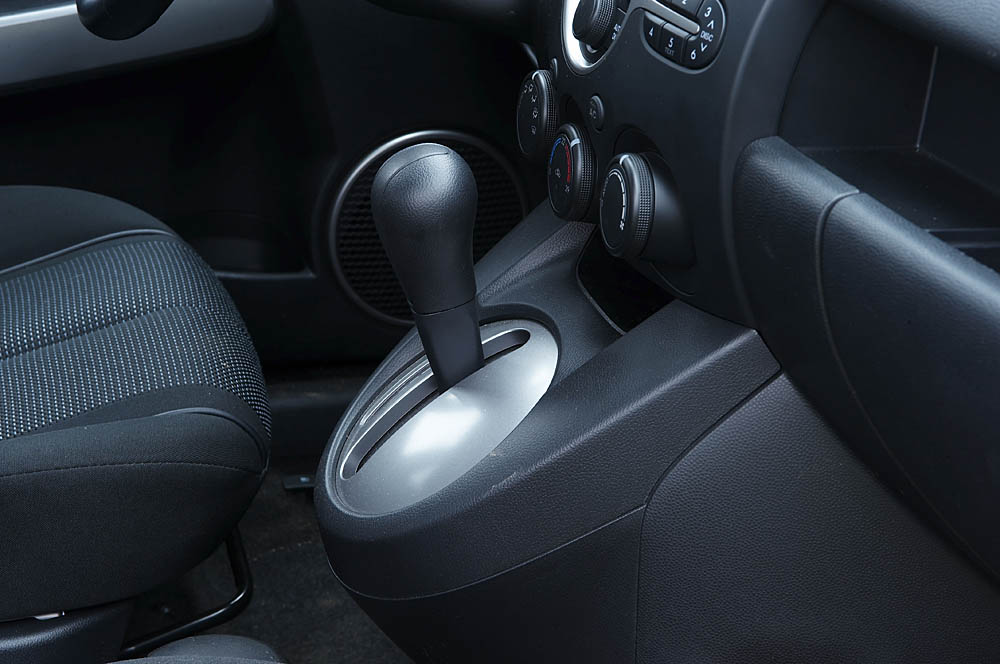
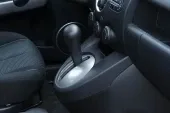
The precise operation of the gearbox also helps. But the Mazda, which finished second, deserves special praise. The only available 1.5-liter engine produces 17 hp less than the Ford's. In addition, the Japanese car had an automatic. Even though the Mazda2 can't accelerate as briskly as the Ford, the engine and automatic transmission have complete mutual understanding. And in sport mode, when the gas pedal becomes even more sensitive and the gearbox disengages fourth gear, the Mazda responds so easily to pressing the right pedal that you're amazed. I once drove the same car with a manual. I'm sure: even despite the loss in power to the same 120 hp of the Fiesta, they would accelerate nose to nose. The SEAT's fiasco was predictable — we got a version with a weak 1.4-liter engine. This proven 85-horsepower MPI veteran is also known from other models of the concern. It seems that 85 hp is not so little, but the lag behind competitors is huge. The Ibiza is also over 50 kilograms heavier than its rivals. I would advise a future owner to splurge on the 1.6-liter 105-horsepower unit. It's also a veteran of the Volkswagen lineup, but the extra 20 hp should liven up the car. Moreover, only with it is the DSG gearbox available. |
 Our Ibiza 1.4 lives only on the first three gears under the constant howl of the engine, which can't even rev up to 6000 rpm. Outside the city, it struggles to reach 160 km/h, while the Fiesta quite easily runs 180, and the Mazda with the automatic calmly gets to 170 on the speedometer. But at cruising speeds of 130–140 km/h, the SEAT holds very confidently. There are no course oscillations, the suspension absorbs bumps without strain, and the sound insulation is the best in the trio. You can feel that the chassis has a reserve, and at 200 km/h everything will be fine. Well, let's wait for the more powerful FR and Cupra versions. Our Ibiza 1.4 lives only on the first three gears under the constant howl of the engine, which can't even rev up to 6000 rpm. Outside the city, it struggles to reach 160 km/h, while the Fiesta quite easily runs 180, and the Mazda with the automatic calmly gets to 170 on the speedometer. But at cruising speeds of 130–140 km/h, the SEAT holds very confidently. There are no course oscillations, the suspension absorbs bumps without strain, and the sound insulation is the best in the trio. You can feel that the chassis has a reserve, and at 200 km/h everything will be fine. Well, let's wait for the more powerful FR and Cupra versions.
|
 For the "Fiesta," the suburban highway is, of course, not the most familiar habitat, but on a straight it holds no worse than the "Ibiza." It's just that the speedometer needle shows not 130, but a full 180! I recall how at the premiere test drives on Tuscan roads (MOTOR, November 2008), I squeezed 200 km/h on the speedometer out of it on Italian autobahns. Our roads mostly don't forgive such speeds, but the "Ford" holds 150–160 km/h without the slightest strain. Perhaps not with the same reinforced-concrete confidence as the "Seat," and there's a bit more noise in the cabin, but there's always a reserve that can be realized by simply pressing the accelerator harder.
 But the Mazda on the road is a real fidget, matching its playful looks. Add soft winter tires to that. On uneven surfaces, you constantly have to correct the steering, in ruts — hold the wheel tighter, but steering the "two" is easy and even pleasant. Still, long endurance distances are clearly not its forte, and the cabin is too noisy. When the asphalt starts to twist, the Mazda shows its hot temper to the fullest. It goes into a slide even with a simple lift-off in a gentle turn. Again, I blame the studs — I recall that on summer tires, the car behaved more stably, and the handling was closer to neutral. But catching a slide is not difficult, everything happens intuitively, and there is enough time to react.
 The Seat, on the other hand, remains academic even on a winding road, like a car a class higher. It does everything by the book: a slight understeer at the entry, which turns into a four-wheel drift. Safe, correct, precise, but without much excitement. Honestly, we expected more sharpness from the Spaniard. Though, on the other hand, for everyday city routine, this is rather a plus. The Ibiza allows you to drive calmly and solidly, not constantly teasing like the Mazda, and not provoking reckless driving. To each their own, as they say. Also, we note that the Seat has the best brakes in this company — the Volkswagen Group has long accustomed us to such a level.
 The Fiesta is the golden mean, a remarkably balanced car. In extreme modes, it can drive both in the "Mazda" and "Seat" scenarios. The chassis is simply magnificent! Want to have a spirited drive? The Ford will easily support that mood. Grip and stability are impressive and even create a feeling of permissiveness — so easily the car dives into corners of any steepness and radius. Everything that happens is fully under the driver's control. The responsive throttle and steering with dense feedback allow you to do anything with the car.
 When you need to sharply reduce speed before entering a corner, good brakes come to the rescue (not as perfect as the Seat's, but it's hard to fault them either). Had enough fun, got the blood pumping? Now you can calm down. If you don't constantly keep the pedal to the floor and don't yank the gear lever back and forth, the Fiesta turns into... no, not a Seat, of course, but a quite solid and comfortable car. As if all those hot corners never happened. We calmly drive home, pondering the test results on the way. Today is exactly the case when, while looking for minor flaws, you don't need to painfully think about who to call the winner. Our sand battles were won by the Ford Fiesta. You'll agree, it's logical when a new and perfect car wins. The balance of consumer qualities and drive in the Fiesta is now close to ideal. The Seat is also good, which impressed most with its solidity and correctness. The main reason for second place is the weak engine, which lacked acceleration dynamics. If there were a more powerful engine here, who knows, maybe the Seat would have pushed the winner aside. The Mazda2 is the oldest of the trio. But even now, it can wink with its slanting headlights and make you smile. And the engine-automatic combination still remains one of the best in the class.



 For the "Fiesta," the suburban highway is, of course, not the most familiar habitat, but on a straight it holds no worse than the "Ibiza." It's just that the speedometer needle shows not 130, but a full 180! I recall how at the premiere test drives on Tuscan roads (MOTOR, November 2008), I squeezed 200 km/h on the speedometer out of it on Italian autobahns. Our roads mostly don't forgive such speeds, but the "Ford" holds 150–160 km/h without the slightest strain. Perhaps not with the same reinforced-concrete confidence as the "Seat," and there's a bit more noise in the cabin, but there's always a reserve that can be realized by simply pressing the accelerator harder.
 But the Mazda on the road is a real fidget, matching its playful looks. Add soft winter tires to that. On uneven surfaces, you constantly have to correct the steering, in ruts — hold the wheel tighter, but steering the "two" is easy and even pleasant. Still, long endurance distances are clearly not its forte, and the cabin is too noisy. When the asphalt starts to twist, the Mazda shows its hot temper to the fullest. It goes into a slide even with a simple lift-off in a gentle turn. Again, I blame the studs — I recall that on summer tires, the car behaved more stably, and the handling was closer to neutral. But catching a slide is not difficult, everything happens intuitively, and there is enough time to react.
 The Seat, on the other hand, remains academic even on a winding road, like a car a class higher. It does everything by the book: a slight understeer at the entry, which turns into a four-wheel drift. Safe, correct, precise, but without much excitement. Honestly, we expected more sharpness from the Spaniard. Though, on the other hand, for everyday city routine, this is rather a plus. The Ibiza allows you to drive calmly and solidly, not constantly teasing like the Mazda, and not provoking reckless driving. To each their own, as they say. Also, we note that the Seat has the best brakes in this company — the Volkswagen Group has long accustomed us to such a level.
 The Fiesta is the golden mean, a remarkably balanced car. In extreme modes, it can drive both in the "Mazda" and "Seat" scenarios. The chassis is simply magnificent! Want to have a spirited drive? The Ford will easily support that mood. Grip and stability are impressive and even create a feeling of permissiveness — so easily the car dives into corners of any steepness and radius. Everything that happens is fully under the driver's control. The responsive throttle and steering with dense feedback allow you to do anything with the car.
 When you need to sharply reduce speed before entering a corner, good brakes come to the rescue (not as perfect as the Seat's, but it's hard to fault them either). Had enough fun, got the blood pumping? Now you can calm down. If you don't constantly keep the pedal to the floor and don't yank the gear lever back and forth, the Fiesta turns into... no, not a Seat, of course, but a quite solid and comfortable car. As if all those hot corners never happened. We calmly drive home, pondering the test results on the way. Today is exactly the case when, while looking for minor flaws, you don't need to painfully think about who to call the winner. Our sand battles were won by the Ford Fiesta. You'll agree, it's logical when a new and perfect car wins. The balance of consumer qualities and drive in the Fiesta is now close to ideal. The Seat is also good, which impressed most with its solidity and correctness. The main reason for second place is the weak engine, which lacked acceleration dynamics. If there were a more powerful engine here, who knows, maybe the Seat would have pushed the winner aside. The Mazda2 is the oldest of the trio. But even now, it can wink with its slanting headlights and make you smile. And the engine-automatic combination still remains one of the best in the class.