
 IS-F is a chameleon car that houses two completely different vehicles. One is for those who soberly assess their capabilities and at the same time want to move quickly and comfortably in any conditions. The second hides behind a small button located near the steering wheel.Comments (1)
So what is the "charged" version of the Lexus IS? Is it a threat to European manufacturers who have spent centuries perfecting the art of creating "hot" D-class sedans? Or just an attribute of a glamorous life in the spirit of D&G (Expensive and Stupid)? Or maybe it's a stylish, modern, and incredibly powerful car ready to delight every day — both on holidays and on gray weekdays?
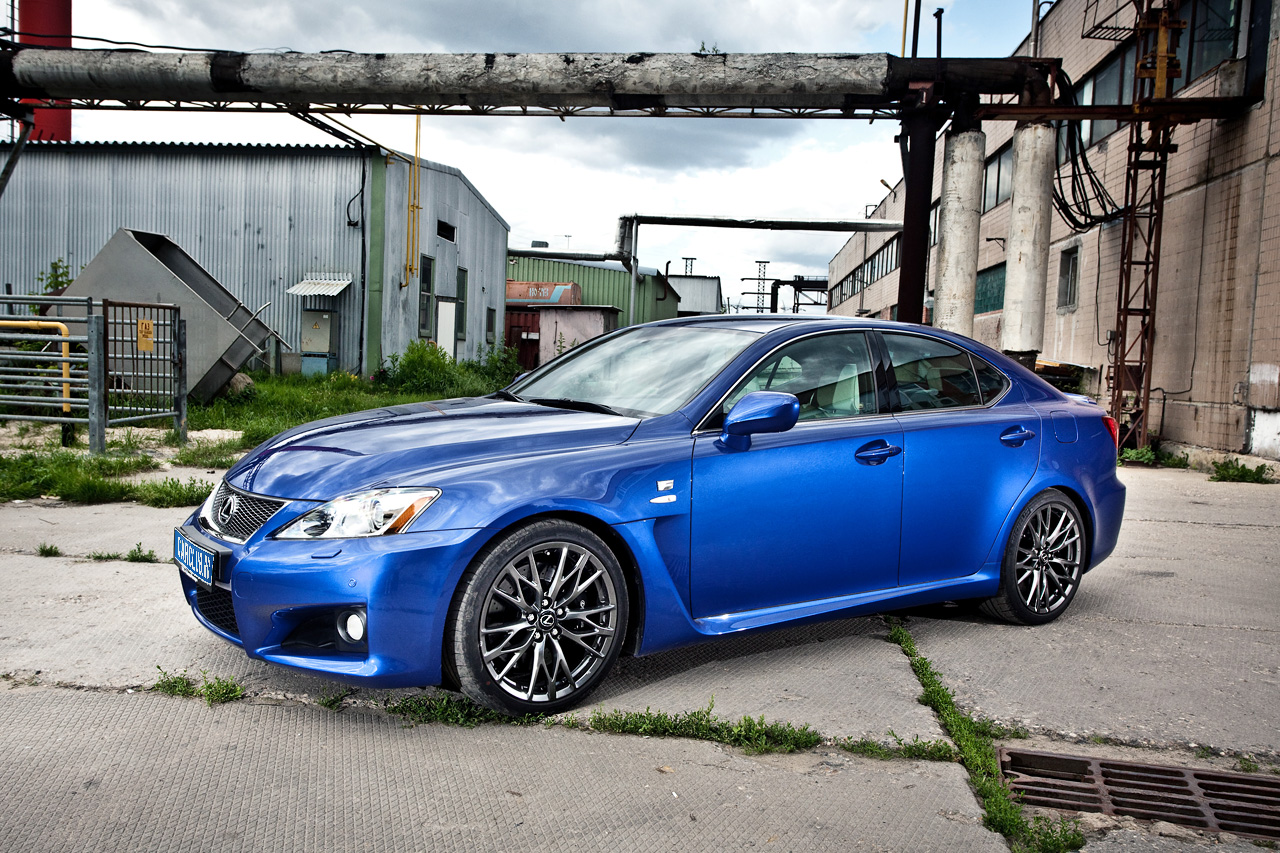 |
| A real predator in the concrete jungle |
It won't be easy to sort out this story.
It's worth noting right away: for Lexus IS-F, this is essentially a debut in the world of fast production cars. When the car was shown to the public in January 2007, it instantly stirred up all adrenaline lovers.
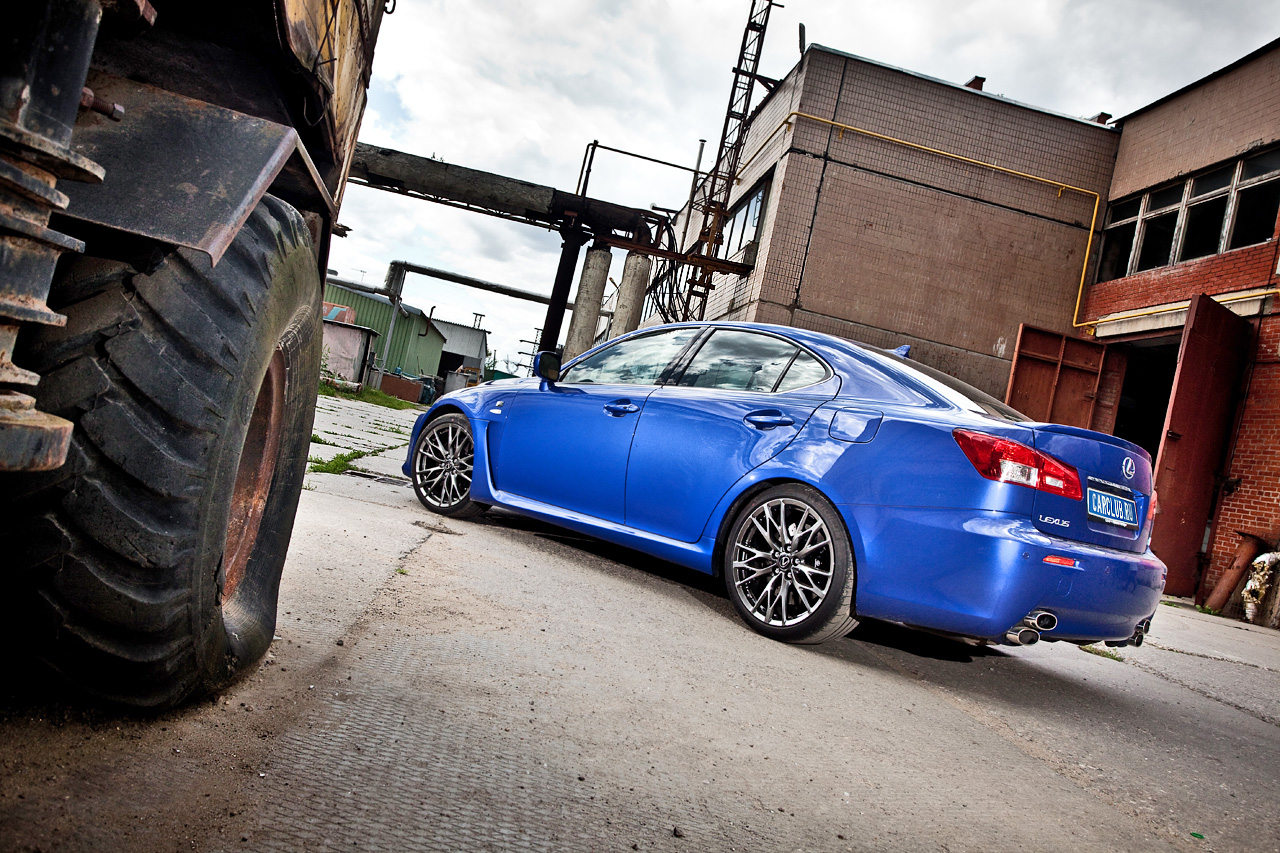 |
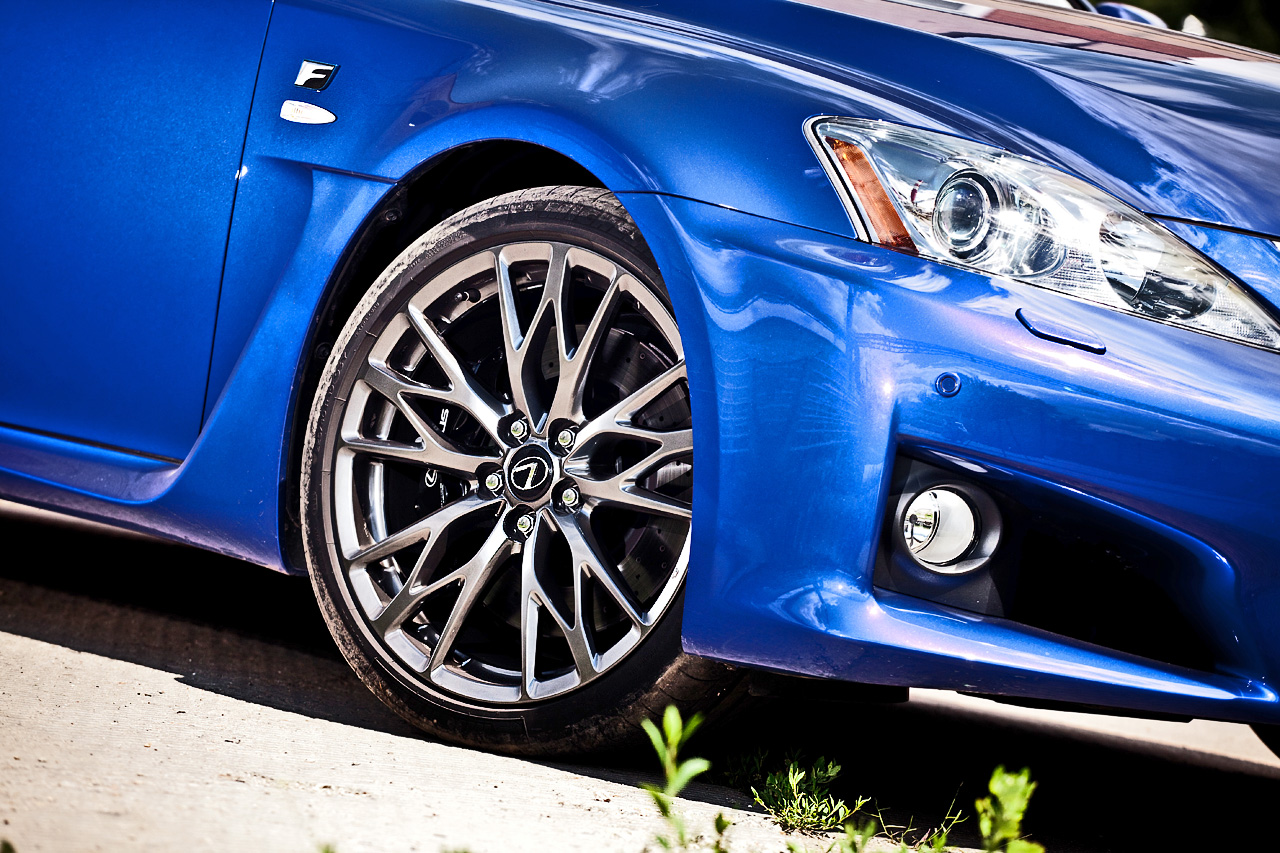
| Nineteen-inch forged BBS wheels — a great combination of weight and strength |
Back then, no one really knew about its driving habits, but the appearance promised a lot. Three years have passed since the premiere, and this car still leaves no one indifferent.
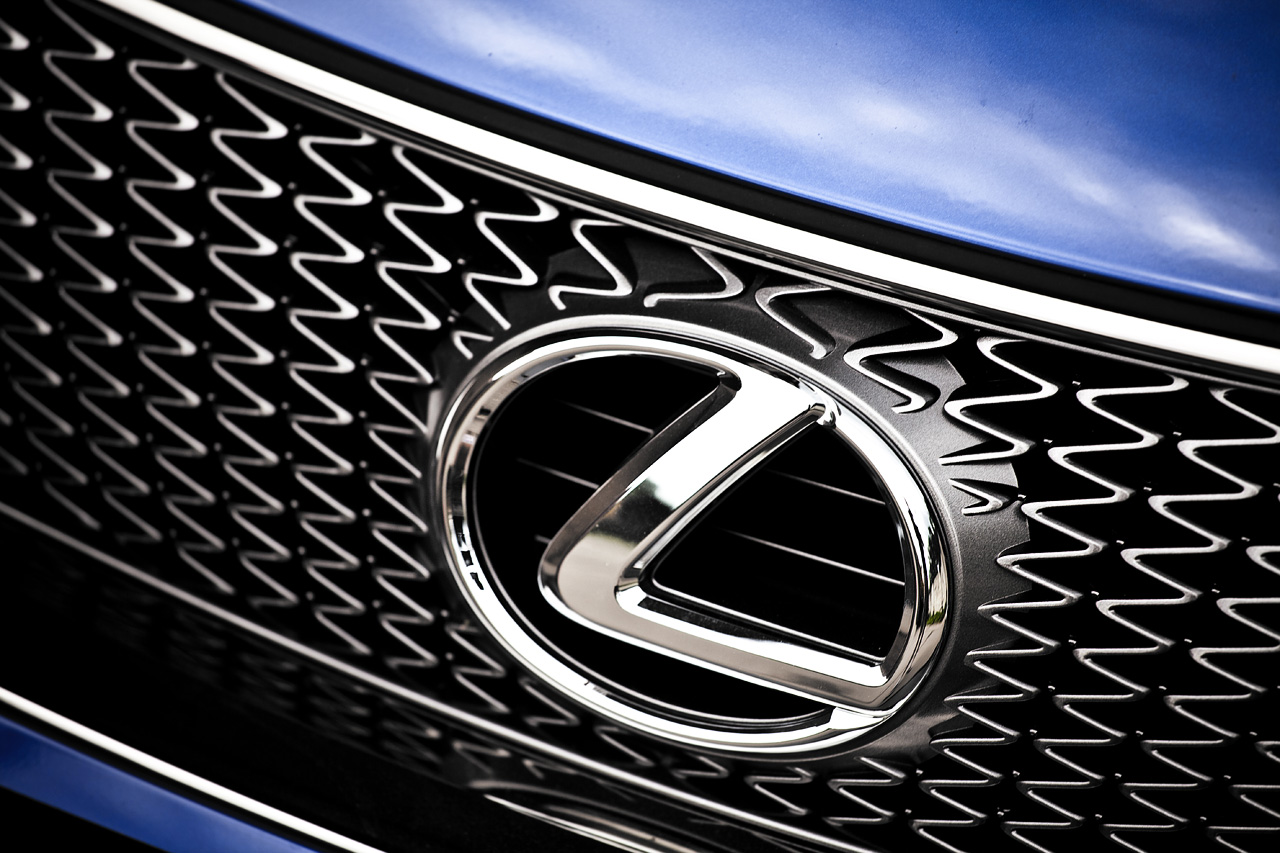 |
| The plastic radiator grille, painted in platinum color, looks very stylish. |
 |
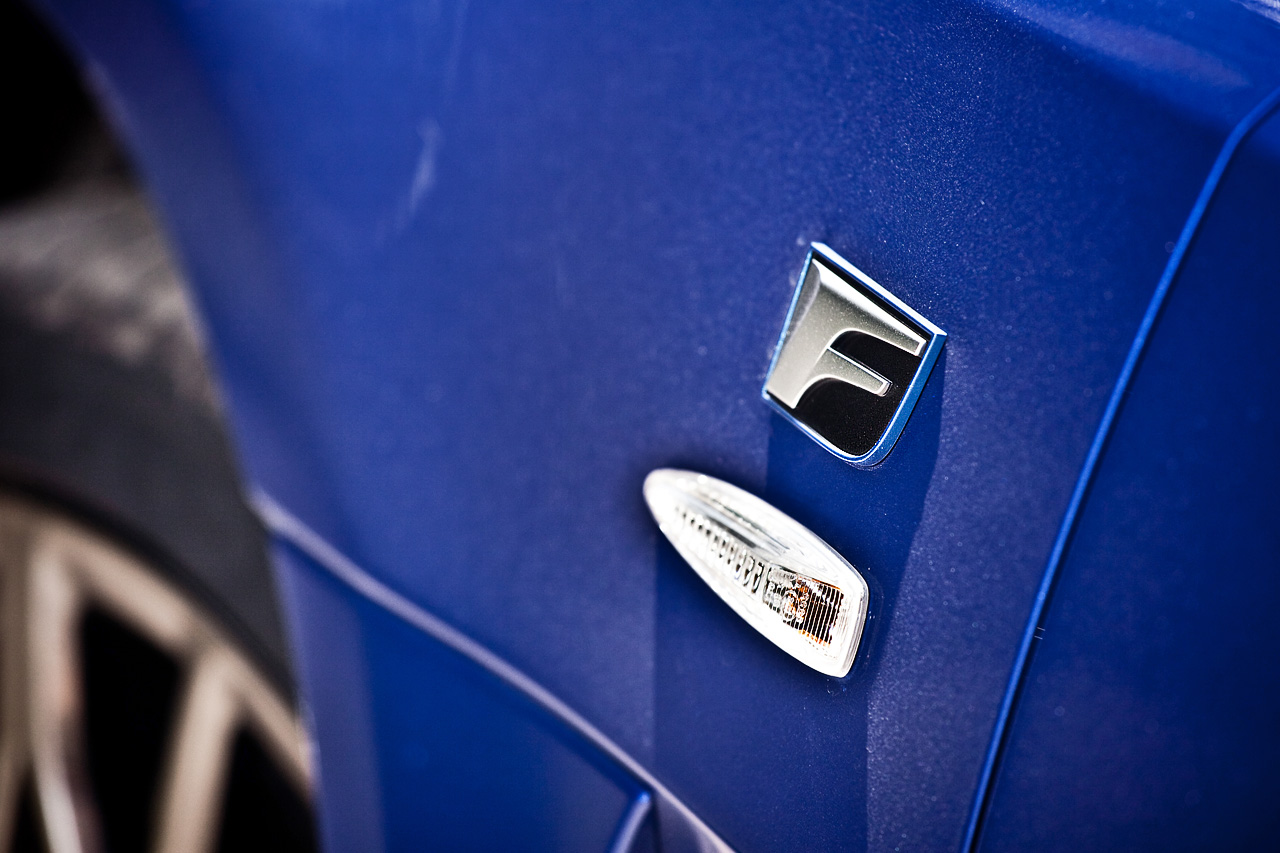
| F badges are scattered all over the body. |
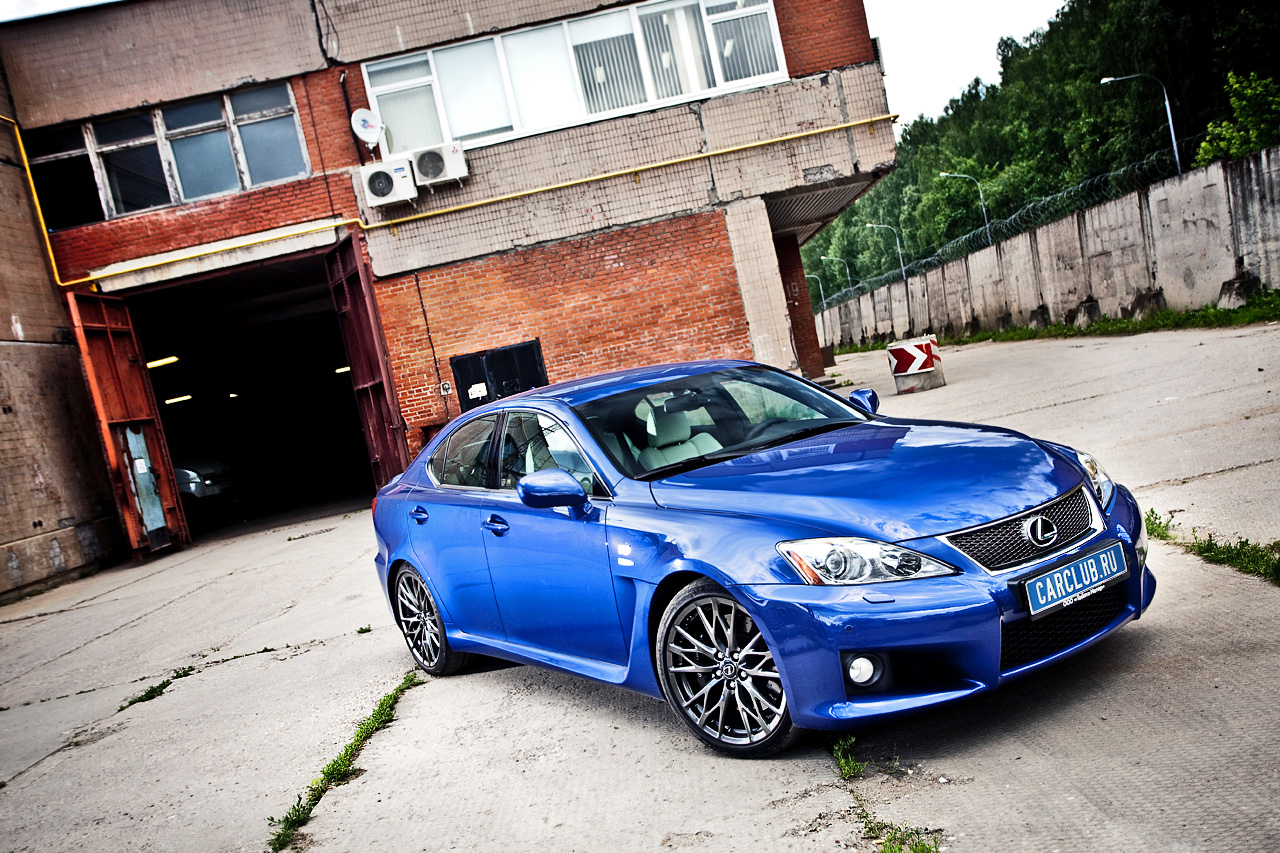
Our test car is painted in the same bright blue pearl as the concept at the auto show. At dusk, it slightly shimmers with purple. In my opinion, this is the most successful color for such a "monster" — it perfectly highlights all the "outstanding" sides of the car.
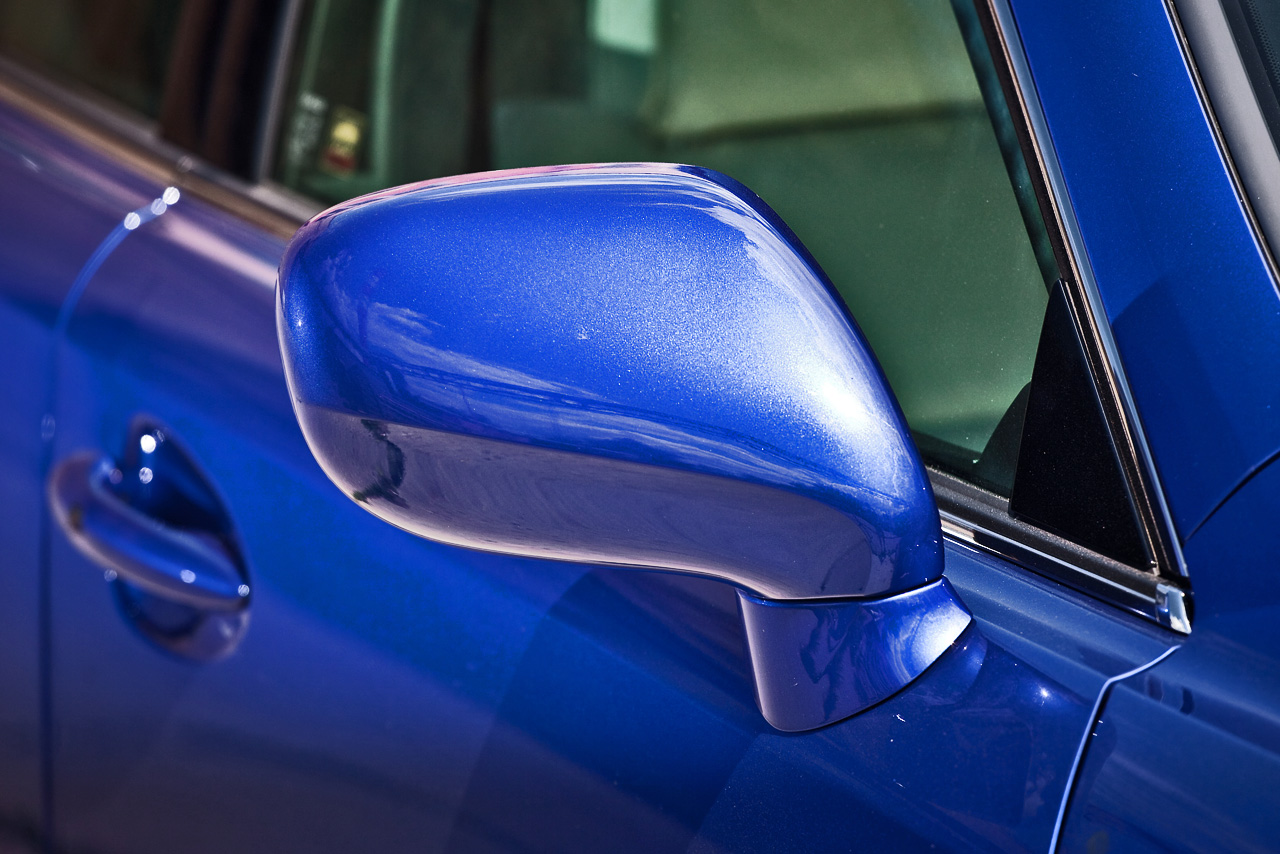 |
| The front part of the side mirrors clearly lacks turn signal repeaters. |
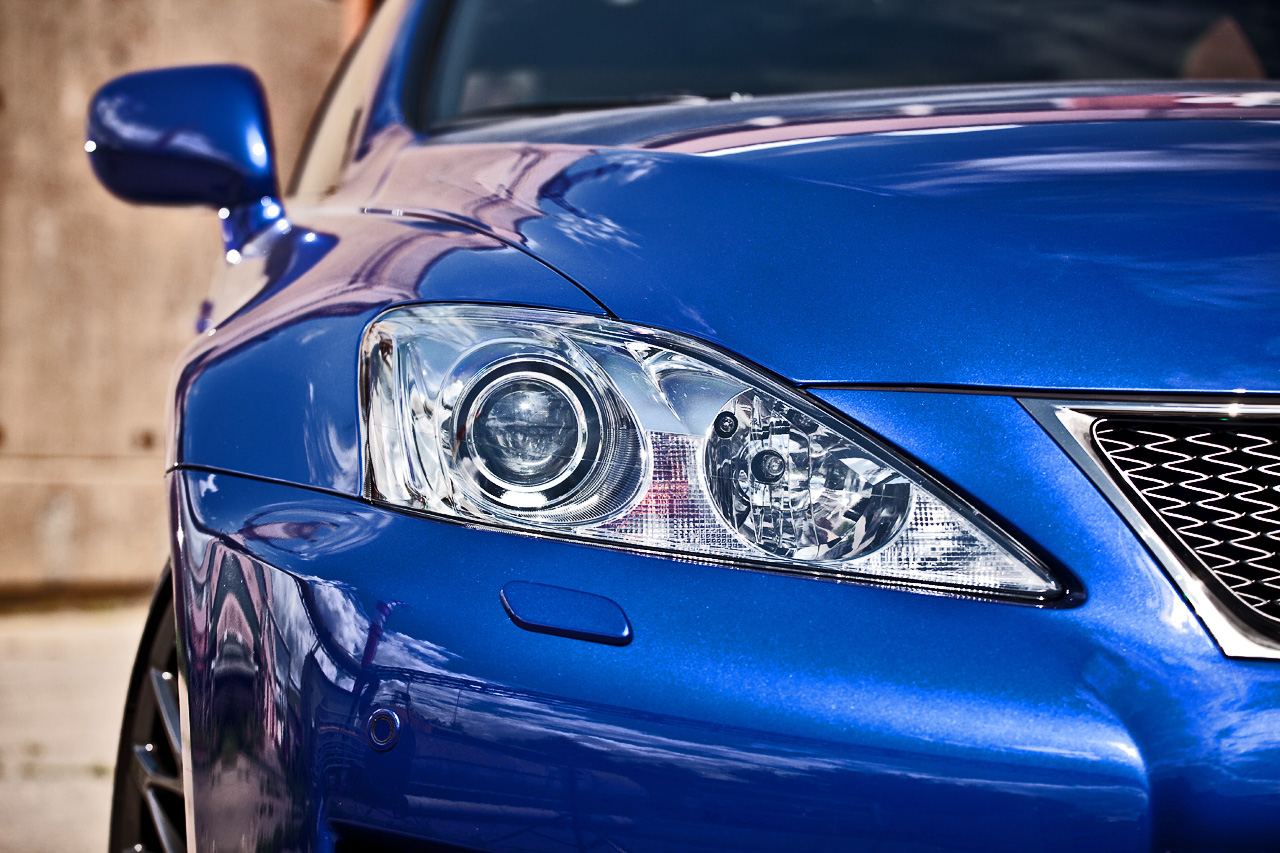 |
| The front optics from the "civilian" version together with other body elements give the appearance swiftness. |
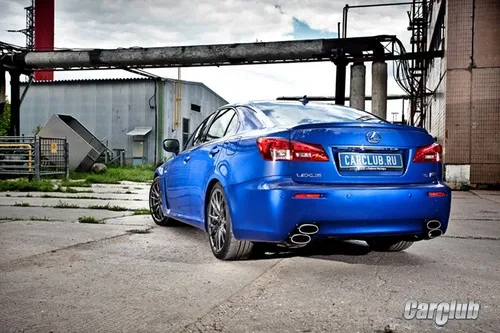
Looking at the car, you catch yourself thinking that about ninety percent of the body panels are created specifically for the IS-F, not borrowed from the regular version. And I think this is close to the truth. Take, for example, the fenders with flared wheel arches and hidden "gills" in them, new bumpers, grilles, and a hood that is raised higher above the ground than on the IS250. The composition is crowned by exhaust tips: four pipes, doubled vertically — a bold solution that breaks all horizontal canons. Funny, but after a while, a similar scheme was applied to the Ferrari California. It seems the Japanese designers, with their stroke, inadvertently suggested an idea to the noisy Italian family!
 |
 |
Result: the exterior is very HOT! Of course, there's no arguing about tastes, but in this component, the IS-F will easily outdo any "charged" European.
So, in our success formula, there are two unknowns left: the interior and technical characteristics. It's time to shed light on them too.
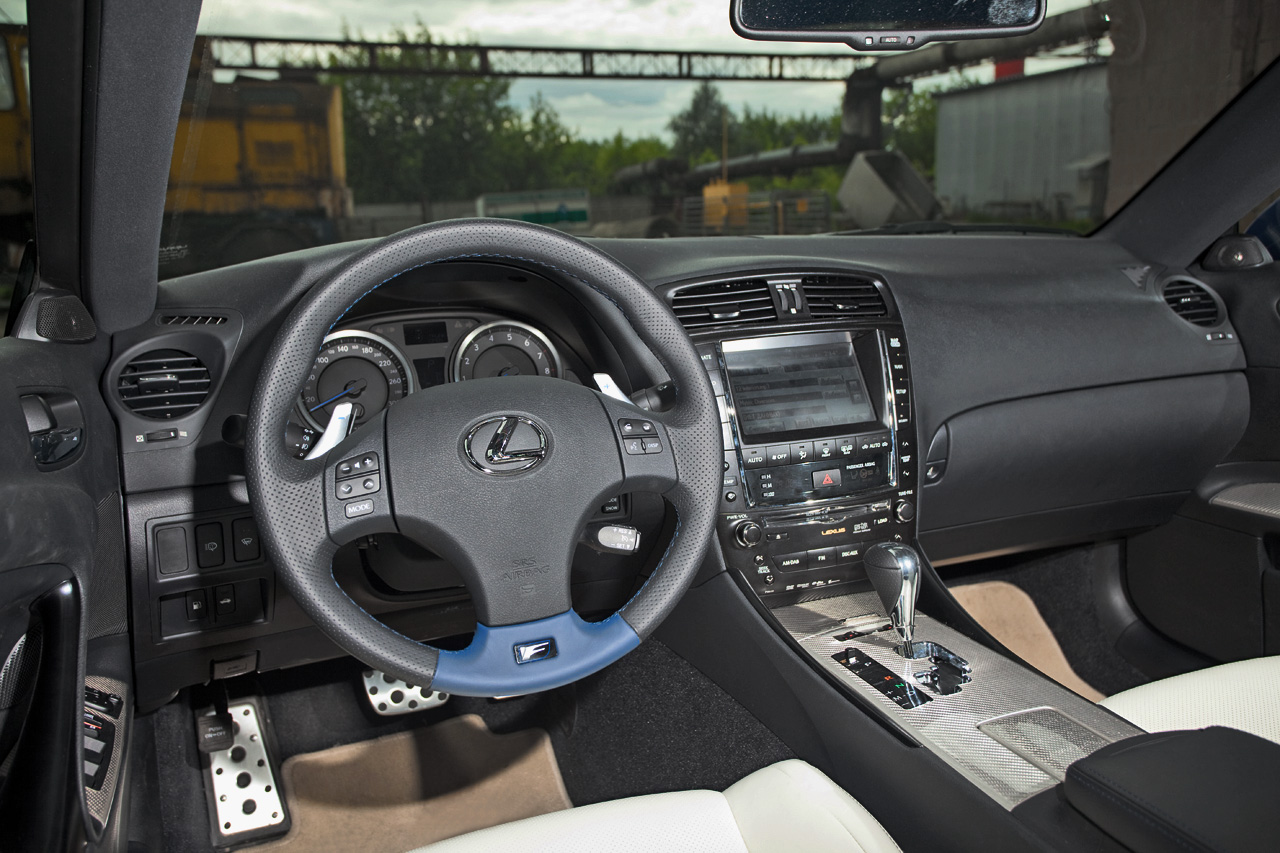 |
| Solid — that's Lexus. |
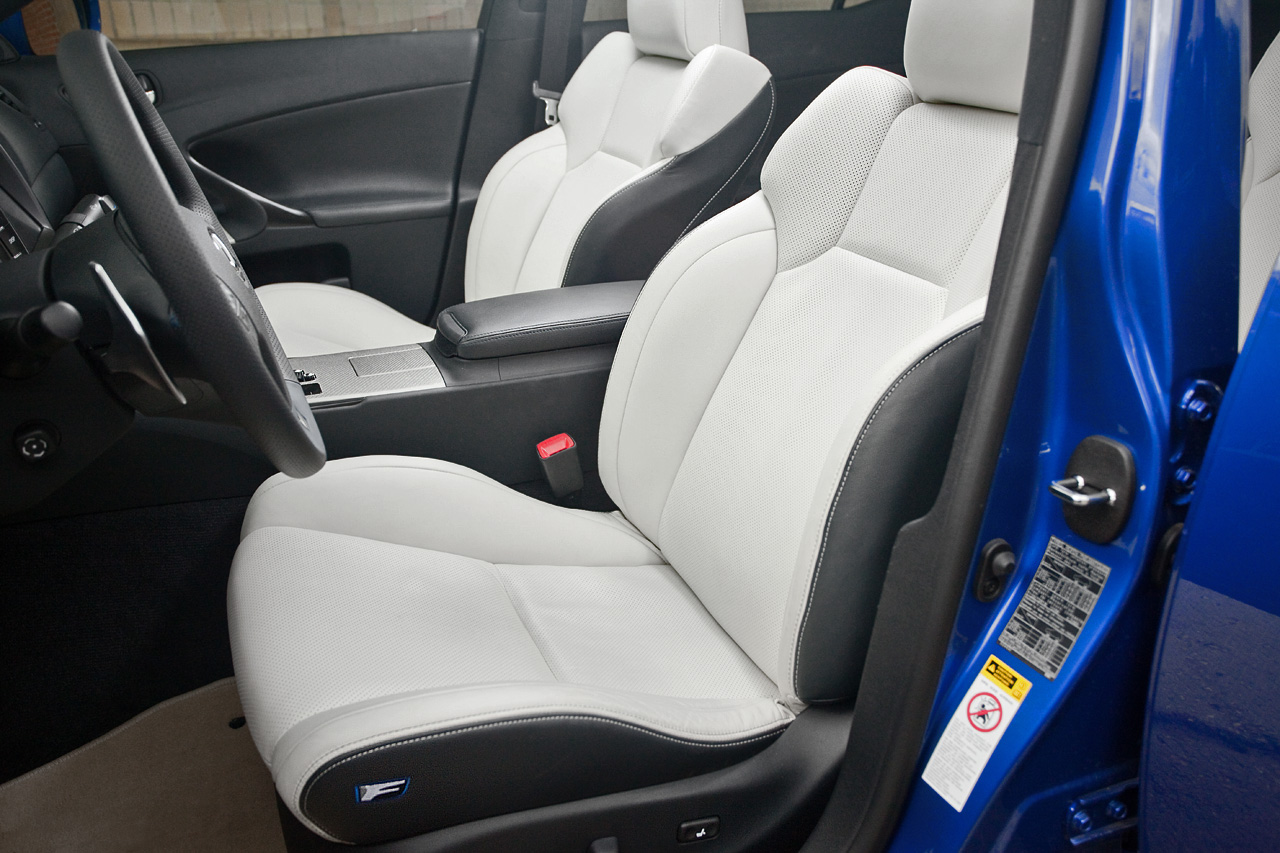
The interior of the IS-F is good, but not as bright as the exterior. Inside, everything is laconic and very solid. From the regular version — a different steering wheel with comfortable "bulges" for grip and seats with enhanced lateral support. No carbon fiber buckets that grind your spine.
 |
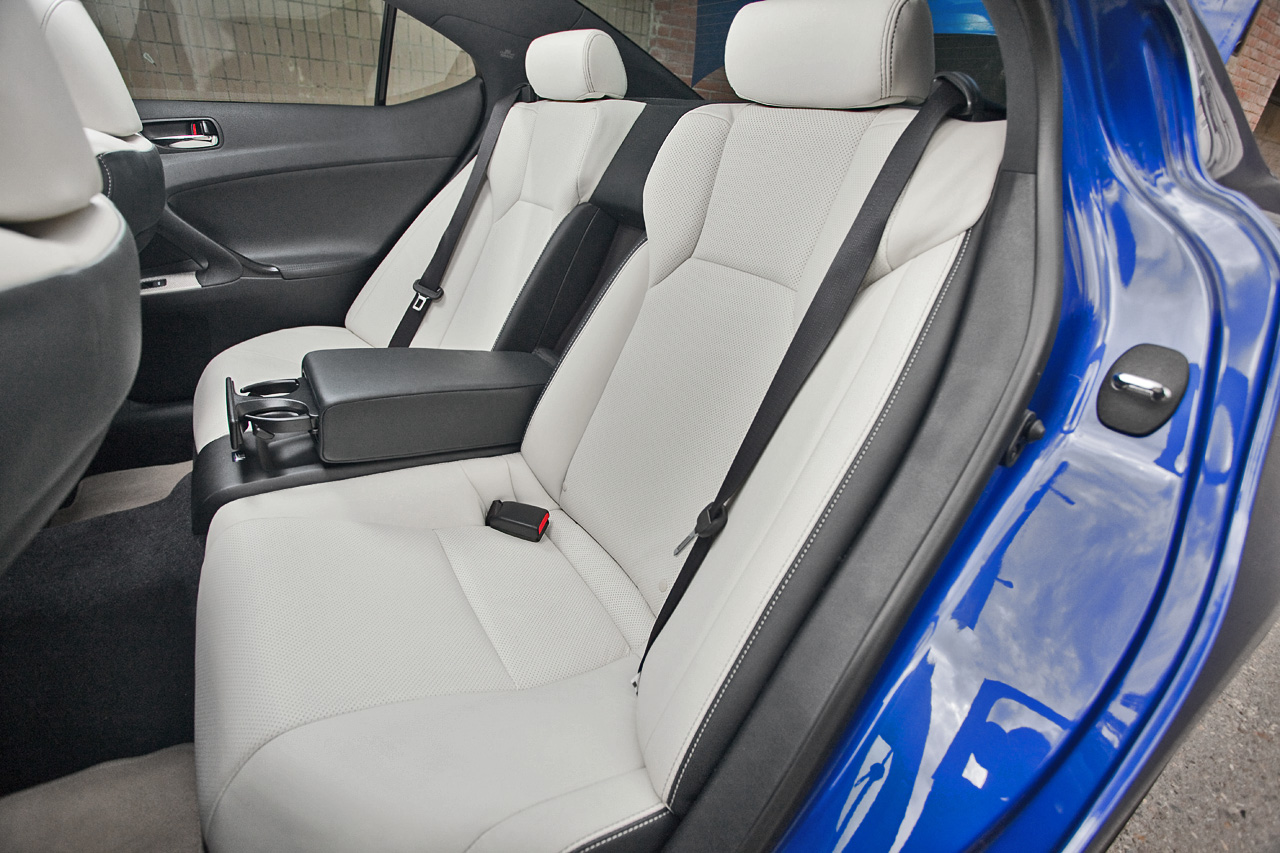 |
Ideal seats are those that perform all their functions while remaining unobtrusive. These are exactly that.
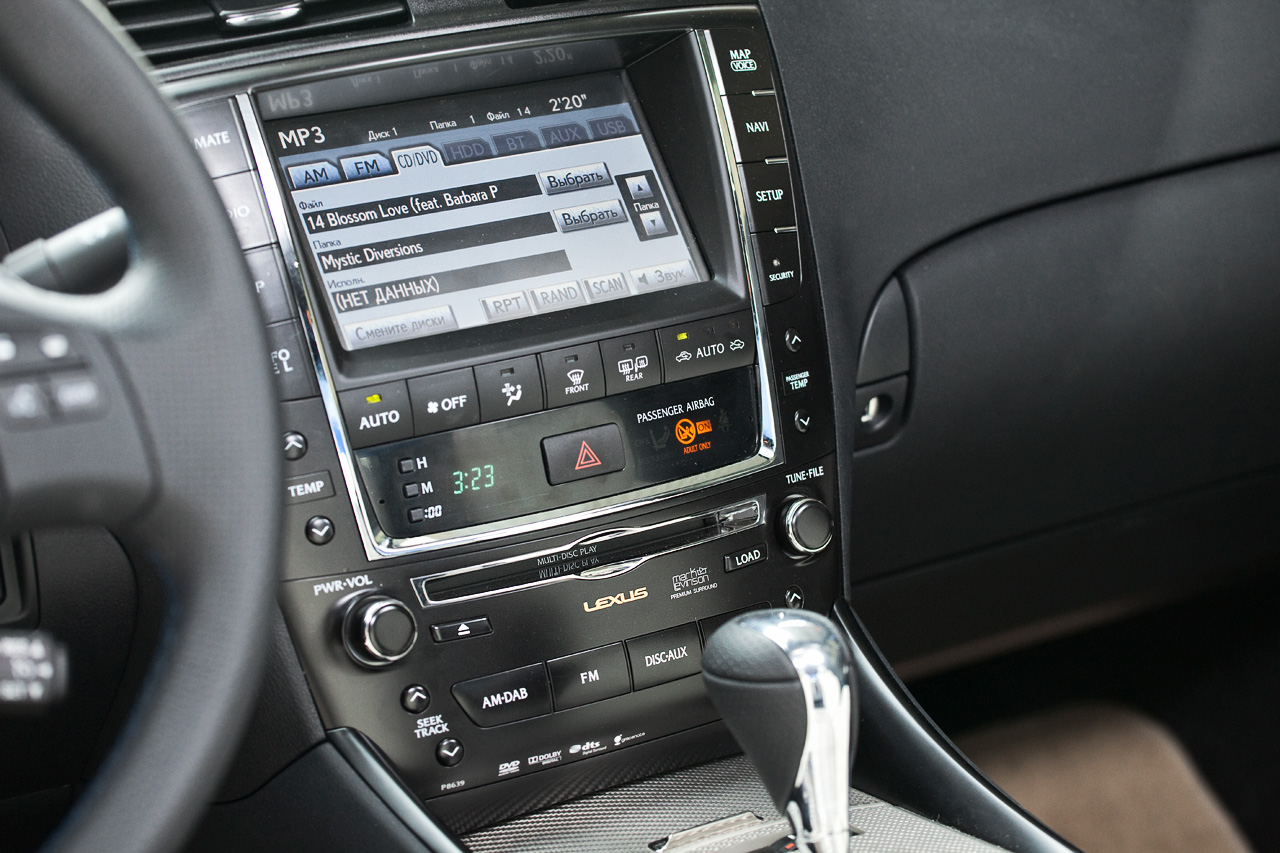 |
| The multimedia system with a touch screen is simple and clear. |
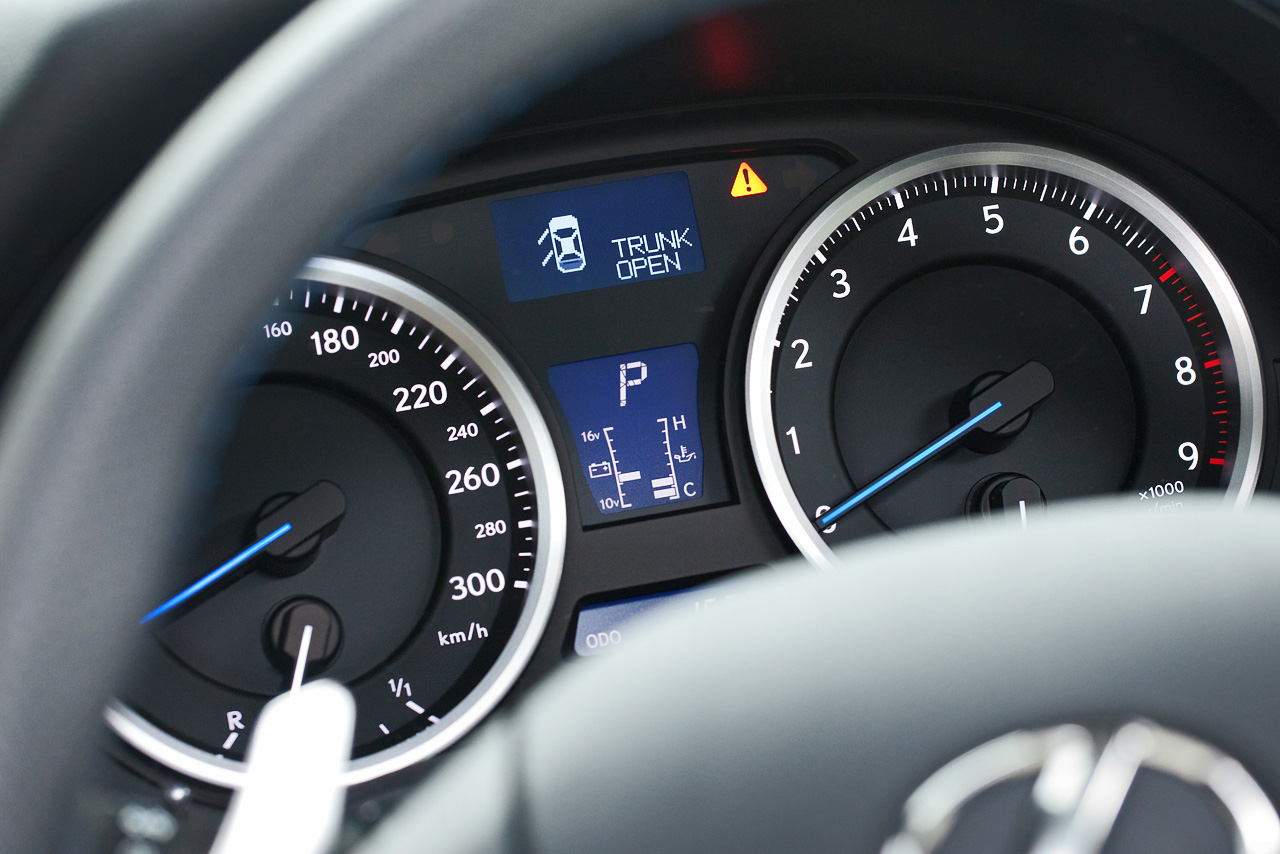 |
| Blue arrows on white numbers of the instruments are perfectly readable, especially at night. |
The interior upgrades are completed by materials: aluminum, Kevlar, and high-quality leather. There are two trim options: all black and combined, like ours — black and white. I bet nine out of ten buyers choose the combined one.
Should I talk about the quality of fit, sound insulation, and ergonomics? You can argue about the Japanese design school as much as you like, but when it comes to quality — it's Lexus. Let's not waste time and move on to the "dessert."
Our reader is an educated person, so I'll limit myself to dry figures: V8 engine with a displacement of 4,969 cm³, power 423 hp at 6,600 rpm, torque 505 Nm at 5,200 rpm. Rear-wheel drive. Gearbox — 8-speed automatic. Brakes: 360-mm discs in front and 345-mm in the rear. Curb weight — 1,700 kg. The exhaust system is a separate song: up to four thousand rpm it peacefully slumbers, emitting a pleasant but quiet baritone, and after that — it explodes with a furious roar that destroys all living things around. That's it, finita — that's enough.
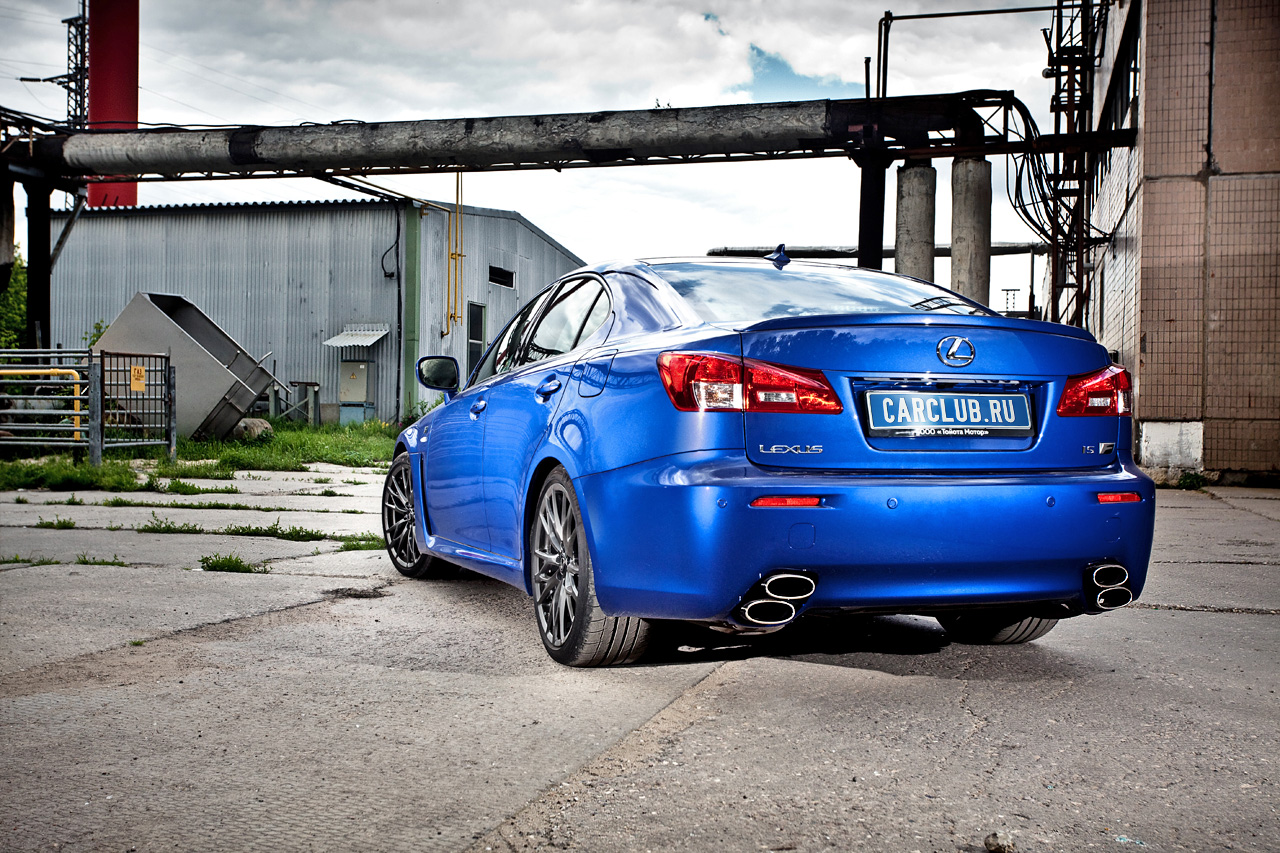 |
| It's a pity that people see this menacing angle for a very short time :) |
And how does all this work in real life? Or, as they often ask, — does it HAUL?
It hauls! And how!
The second most popular question: will it beat the BMW M3?
With driving skills like those of most Russian M3 owners, it will overtake them like they're standing still. Although according to the specs, the "M" is faster. But that doesn't mean anything. They are in the same class, but very different and, perhaps, not even rivals.
We are rapidly approaching the answer to the question posed at the beginning of the test: "The recharged version of the Lexus IS — what is it?"
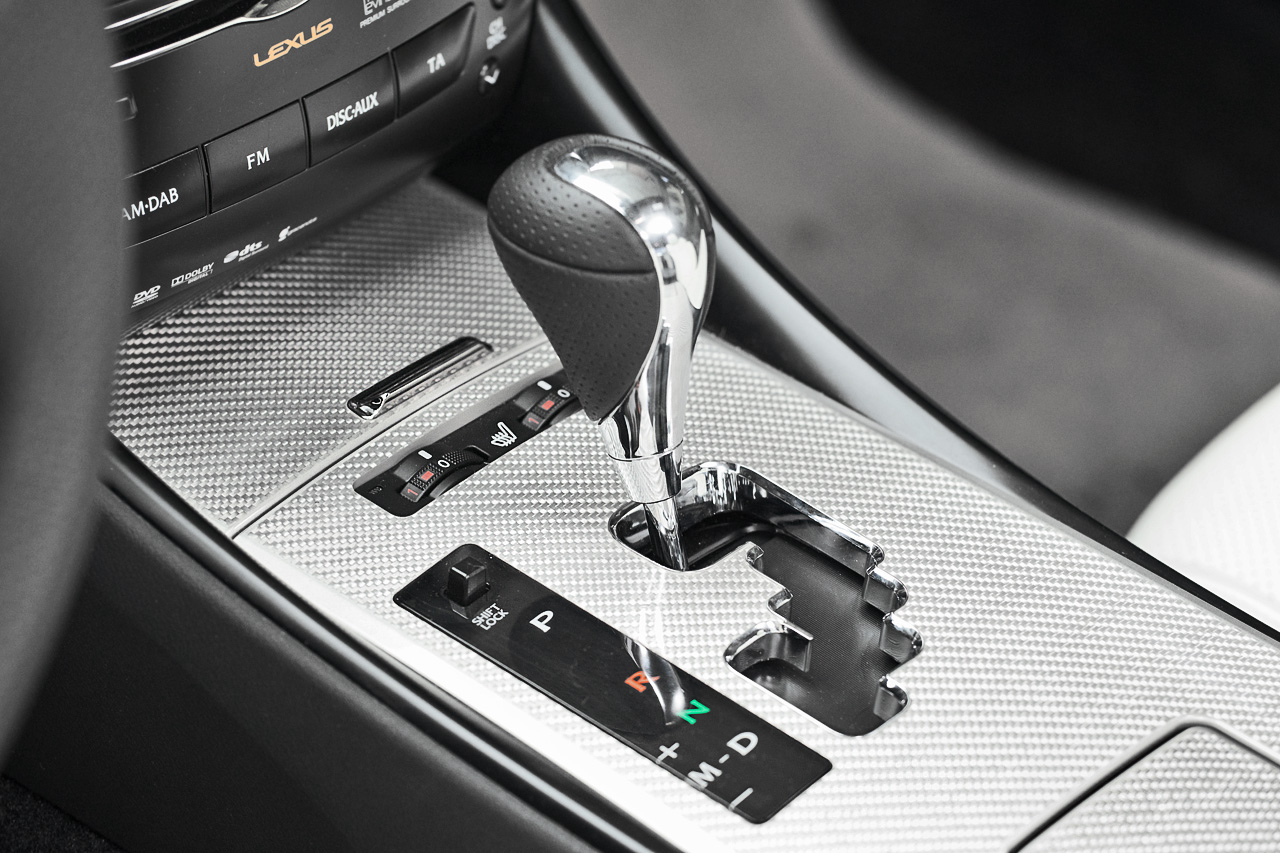
The IS-F is, in essence, two completely different cars combined in one body. The first is aimed at drivers who adequately assess their skills, but at the same time want to get maximum driving pleasure every day for their money. Such a car must be fast, comfortable, and absolutely safe in any situation. And that's exactly what the IS-F is. The comprehensive VDIM electronics are responsible for this, working softly and unobtrusively, like a caring guardian. If the driver makes a mistake, the system will gently back him up, smooth out the error, and not give the owner even a reason to be scared.
 |
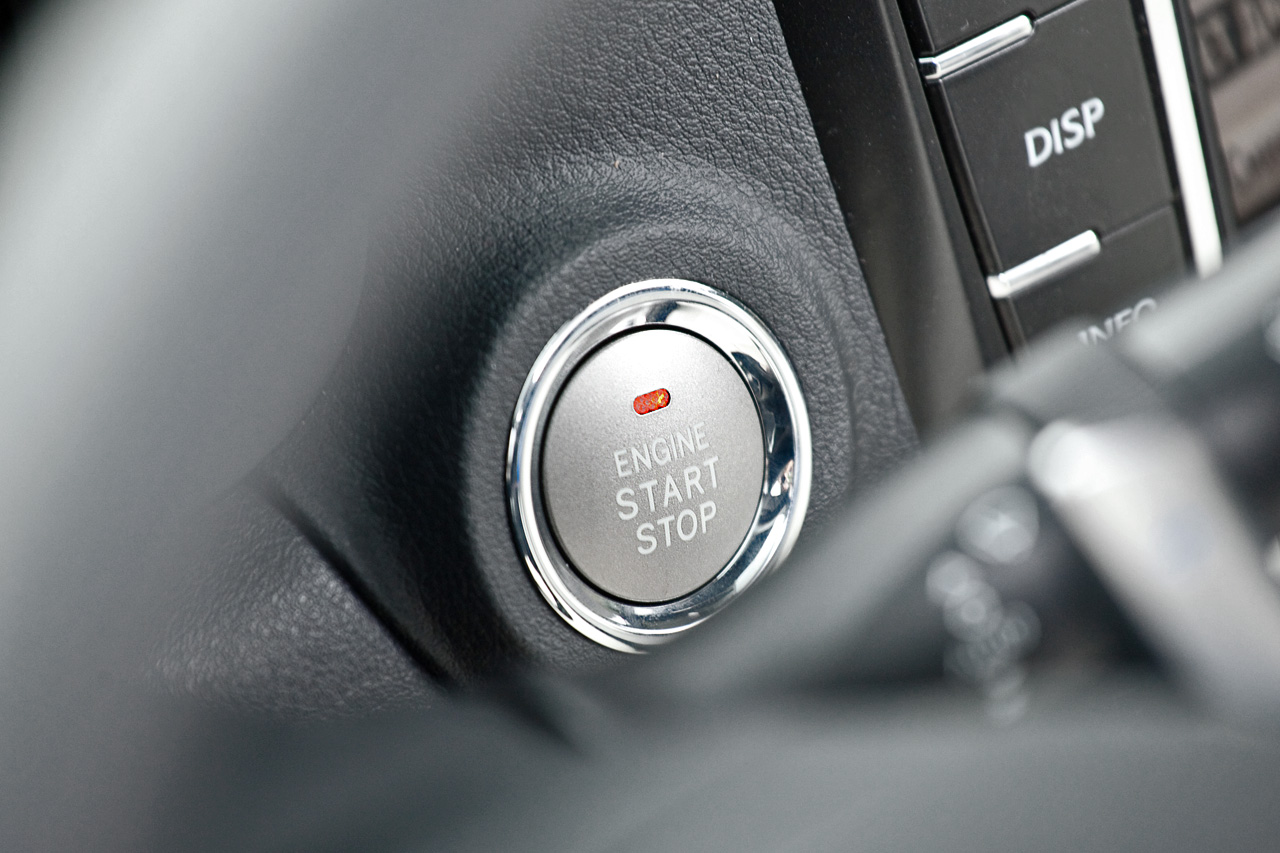 |
But there is also a second, hidden character that awakens by pressing a small button near the steering wheel. Switching to "Sport" mode, you ask VDIM not to interfere so zealously, and if you turn the system off completely, you are left one-on-one with the car, relying solely on your own talent and reaction. It is this incarnation of the IS-F that will appeal to a completely different audience - those who really know how to handle such "attractions" and are ready for this level of responsibility.
In the end, the most accurate description of the IS-F is the image of a magical vessel filled to the brim with adrenaline and having a double bottom. Once you open it, you get two completely different impressions from one car.
Dmitry Malygin