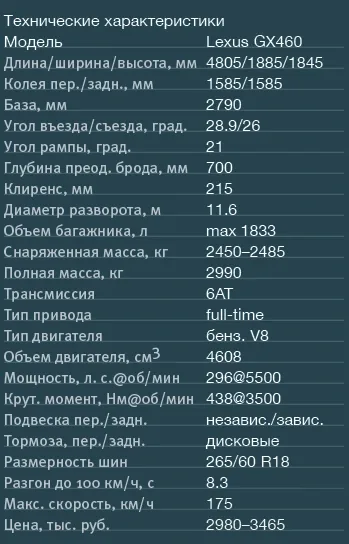
That's why I couldn't describe it here. I'll only say that, as the Japanese believe, it should appeal to potential buyers — men aged 30–45 with a monthly income of $7,000 or more.
HOLD ON TO THE FRAME
Snow was falling from the sky. Vasily (my test partner, a journalist from a car magazine) and I were driving along the Gulf of Finland in a Lexus GX460, exchanging opinions about the new model. I mostly kept quiet. I wanted to hear fresh impressions from someone less familiar with SUVs than I am. The first thing he said: "There's no sense of confidence. The steering wheel feels disconnected from the wheels. It's scary at speed." This complaint is about three hundred years old. Especially when it comes to Japanese and American SUVs.
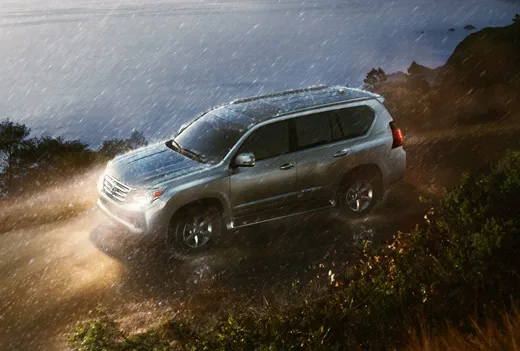
Automakers are trying their best to improve SUV handling. They switch to unibody construction and independent suspensions. They increase body rigidity. But what's good about the good old Lexus? Its traditional solutions. At the core is a frame. It provides increased durability and softness, dampening vibrations and impacts from the road. The Japanese stick to it. We were separately informed about this at a briefing after the first day of the test drive near St. Petersburg.
TURN EVERYTHING OFF
We were heading to the tank firing range, where an off-road course had been prepared for us. After a couple of dozen kilometers, my partner still hadn't gotten used to the "vague" steering, but he was already praising the car: "Look, there's no vertical pitching at all." Thank God, they worked on that. Instead of increased stiffness and other "pavement" tricks, they introduced an adaptive suspension system. Now smart shock absorbers and stabilizers themselves ensure that there are no rolls, pitching, or squatting.
Off-road, the organizers loaded the car with the weight of an instructor. He told Vasya to engage low range, activate the center differential lock, raise the air suspension to the highest position... already here Vasya started getting confused with the buttons. But the instructor also suggested switching the shock absorbers to "Comfort" mode, then selecting one of the multi-terrain select electronic system algorithms, and if possible, using the off-road cruise control — crawl control. Along the way, he mentioned that a rear differential lock is also available as an option. And when he moved on to explaining the multi-terrain monitor, which shows the surroundings and wheel trajectory, Vasya asked in a hopeless voice: "Isn't there a 'turn everything on' button here?" Funny, because the test of the Lexus GX twin — Toyota Prado — published in the previous issue, says that an "cancel everything" toggle would also look good.
At the instructor's request, we set off along a snowy rut, using the full arsenal. But the Lexus roared so laboriously that I quietly suggested turning off the lock first, then low range. In the end, we drove in fixed second gear high range. The 4.6-liter engine very rarely needs serious help from the transmission. We could also have lowered the body to the normal position, because the air elements are only on the rear axle and don't change ground clearance. They are used when the trunk is heavily loaded or there's a trailer.
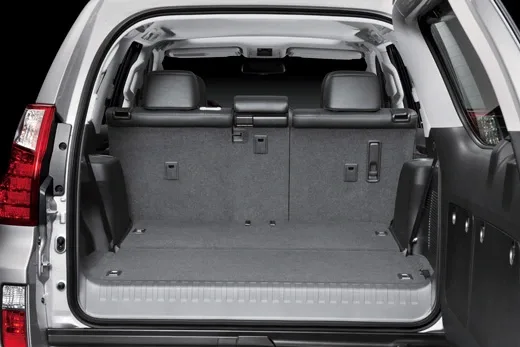
When folded, the third-row seats form a flat floor in the trunk
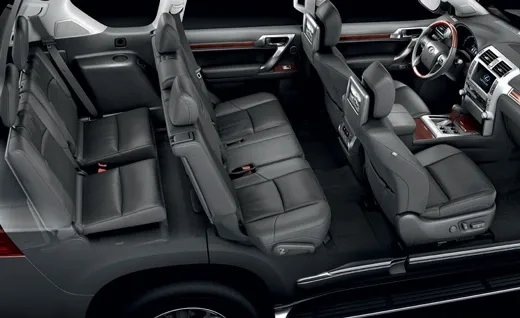
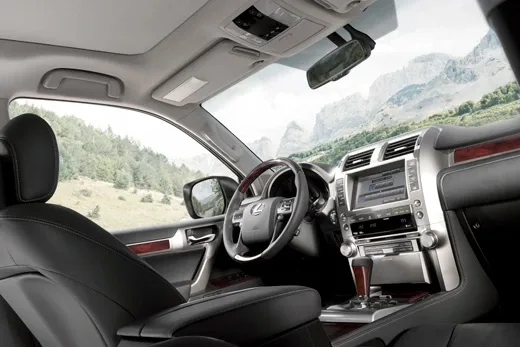
The Lexus cabin is a realm of space, softness, warmth, and comfort
My partner drove a bit, listening to my recommendations, but then he went and turned all the off-road functions back on: "It's safer that way." Apparently, Lexus is moving in the right direction. When eight hundred electronic-pneumatic-hydraulic systems help you, an ordinary person feels more at ease.
IN THE LINE OF FIRE
"Don't fall behind, or you'll end up in the line of fire," a voice suddenly came over the radio, and we rushed toward the exit of the tank range, catching up with the column of test cars. They scared us for nothing, because in the hurry, we hit a log with the front bumper. The Lexus didn't even notice, but the bumper was gone.
"Why do they even make these cars?" — my colleague asked his final question, never reaching a conclusion. Familiar doubts. First, they made the Toyota for people in military uniforms and UN overalls. Then they tried to repurpose it for trips to the bank or theater, calling it Lexus. But to justify a car so packed with off-road systems, you'd need to put the theater in the taiga or the desert. I don't think the actors would be happy.
Maybe it's better to buy a Toyota then? Only if you accept the "small" 4-liter engine. After some effort in the marketing department, the manufacturer separated Lexus and Toyota into different niches. Leaving six-cylinder engines for the Prado, and eight-cylinder ones for the Lexus. A bit of a stretch, isn't it?
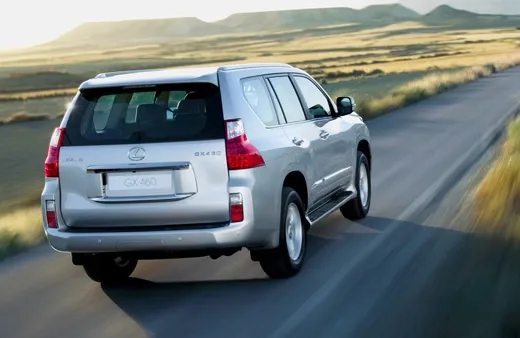
The head of marketing at the Russian Lexus office said that the GX460 will be bought by people "not sensitive to money." I'd add that they are also not very sensitive to style, beauty, or handling. They are practically indifferent even to climate. Adjusting it on the move in the GX460 is still impossible.
Among competitors, the Japanese see cars like the Mercedes ML, Infiniti FX50, Range Rover Sport, and BMW X5. Looking with a sober eye, I'd leave only the Mercedes ML on the list and add the Land Rover Discovery myself. But there's no reason to blame the marketing people. They know their job. It's just that most consumers, when choosing a premium SUV, think in surprisingly different ways. Different laws apply here. And, honestly, I'll probably never understand them.