
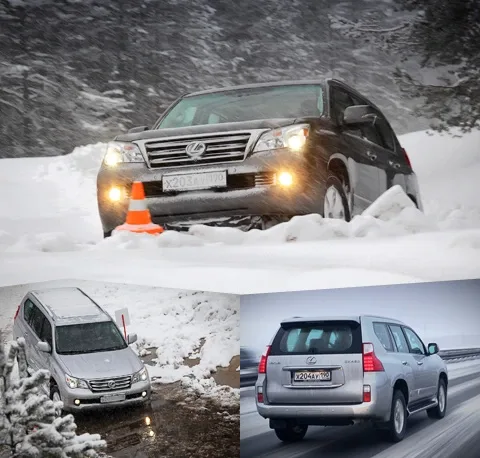
On asphalt, the Lexus behaves like a business sedan: smooth ride, silence in the cabin. You drive onto dirt — and it's already a real off-roader that fears no thick undergrowth. The car's appearance is calm, the interior is spacious. What else is needed for people's love?
While the RX has earned a reputation as a car for ladies, and the LX with its price tag was accessible to few, Russian buyers wanting to find a compromise turned to Toyota — the Prado or Land Cruiser. For a long time, it seemed that it was the big Toyota that prevented the GX from entering our market officially. We will never know the true reason, but the fact remains: the SUV did not have European homologation, and for the sake of one country, albeit a rich one, the Japanese did not want to do certification.
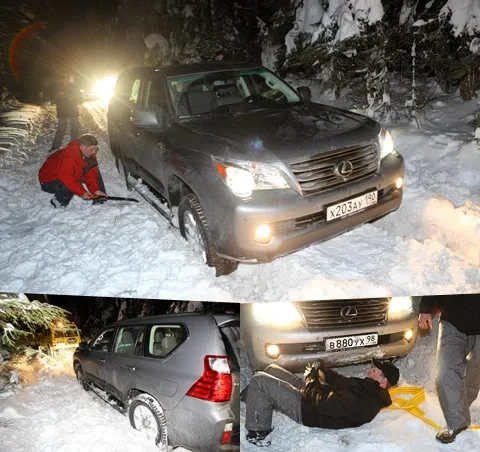
The deeper you go into the forest, the more likely you'll need a tractor. Even with a full off-road arsenal, the GX remains a car on four wheels, and a heavy one — almost three tons in curb weight. Forget about this — and no electronic assistants, even excellent winter tires, will save you.
But times are changing, and Toyota marketers decided that Europe is ready for prestigious Lexus SUVs. Even if at the price of a Land Cruiser 200. On February 20, official sales of the new GX 460 started — first in Russia, then across the continent. This was announced at a presentation near St. Petersburg. The Japanese also have plans for the Chinese market.

Dmitry Trostonetsky, responsible for Lexus marketing, stated: "With the arrival of the GX 460, we expect to grow in the prestigious SUV segment from 9% last year to 12% this year. In numbers, that's 1,880 cars for 2010." The new model has at least four direct competitors — the Infiniti FX50, BMW X5 4.8, Mercedes-Benz ML 500, and Range Rover Sport.
The second-generation GX is built on a proven scheme: in essence, it's a refined Land Cruiser Prado, which, in turn, is a modernization of the "third" Cruiser from 2002. The "G-ix" has the same body-on-frame construction, permanent all-wheel drive with an asymmetric self-locking "Torsen" center differential, and a solid rear suspension. Classic, no doubt.
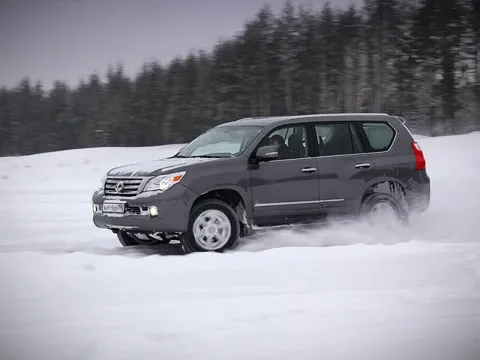
Externally, the GX 460 can be distinguished from the Prado only by small details — as if the Japanese had conducted an unscheduled facelift. Different headlights, bumpers, grille, and a couple of minor touches. But the interior is a completely different story: the architecture is the same, but the feel of the materials is completely different, noticeably more expensive. The matte plastic of the dashboard and door cards just begs to be touched. The large knobs for audio system control resist with a pleasant firmness — you can feel the quality. And the power windows work almost silently, gently slowing down before closing. It also surprised me that the seat belts are completely imperceptible to the body. Maybe such unobtrusiveness will finally make more people in the premium segment buckle up?
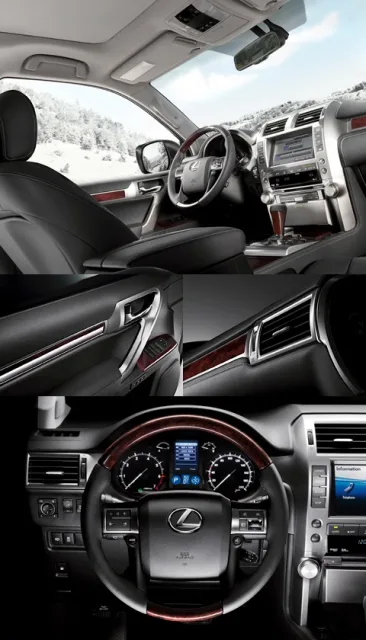
The cabin is truly a mansion, no other word for it. The trim impresses almost more than the off-road talents. You hold your hands on the steering wheel in the "quarter to three" position — and they rest on pleasant, grippy, heated leather. But those accustomed to "ten to two" will have to touch cold and slippery wooden inserts.
The Mark Levinson head unit with seventeen speakers can be hidden behind a special curtain — also attention to detail. Sound and navigation control is via an eight-inch touchscreen. By the way, Lexus has maps of all of Europe loaded in memory. The GX 460, like the Prado, seats up to seven people. The third row folds via servos, but an adult will be cramped in the knees there. However, the trunk has a 220V outlet with 100W power — enough for a laptop or game console.
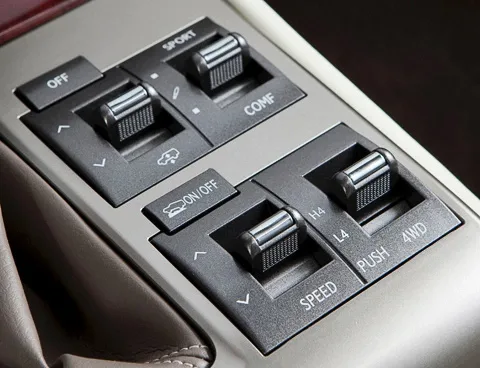
On the center tunnel is the control panel for the off-road arsenal. The upper switches change the ground clearance (air springs are only at the rear) and shock absorber stiffness — Comfort, Normal, and Sport modes are available. The lower ones control the speed of Crawl Control and engage the low-range gear.
The main difference from the Prado, besides the design, is under the hood. The lightweight aluminum engine is the same one fitted to the Lexus GS 460 sedan. Power is 296 horsepower, torque is 438 N·m. It's funny that the Japanese honestly lowered the model index instead of playing with numbers for marketing purposes. The six-speed automatic is borrowed from another sedan sibling — the all-wheel-drive GS 350 AWD. Otherwise, it's a Prado, only the hydraulic stabilizer locks here are called more elaborately — Kinetic Dynamic Suspension System (KDSS).
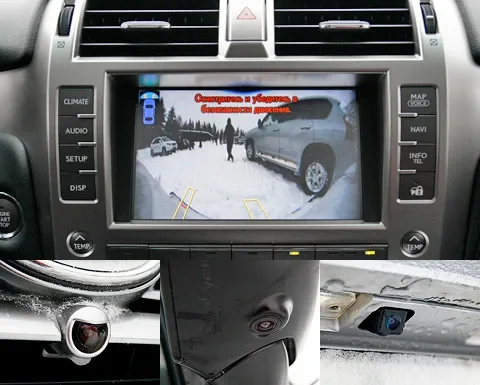
Multi-terrain Monitor is four cameras around the perimeter and trajectory hints overlaid on the video. The markers change color from yellow to red depending on the proximity of an obstacle. It's a useful thing, but in Russia its functionality directly depends on how clean our roads are.
The MTS (Multi-terrain Select) system also came from the Prado — Toyota's answer to Land Rover's Terrain Response. It's four algorithms by which the onboard computer adjusts the actuators to the type of surface. There are "Mud and Sand," "Rocky Ground," "Undulating Terrain," and "Rocks." Essentially, the difference between them is in the allowable degree of wheel slip. It's the presence of MTS that allowed the Range Rover Sport to be named the main competitor of the Lexus. Moreover, unlike the Brit, the Japanese allows you to engage the center lock manually. It's a pity only that there's no rear differential lock, like the Prado has. A subtle hint at status.
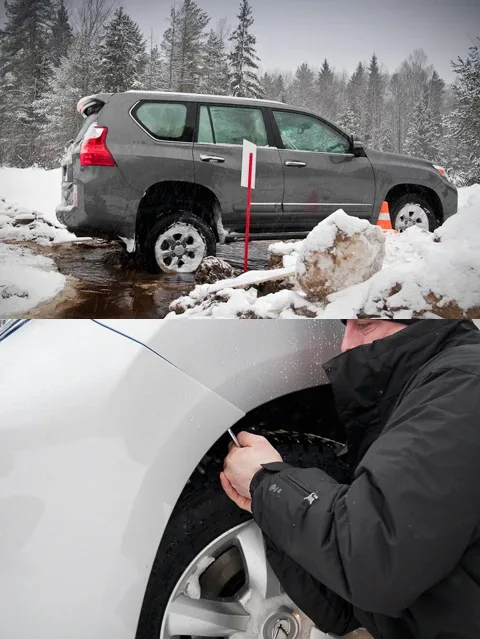
- The Japanese engineers, carried away by electronics, did not forget about the "hardware" either. Note the solid travel of the rear solid axle. Such "stretch" is enough for difficult sections and to avoid scratching the plastic of bumpers and sills.
- Of the six cars participating in the presentation, only one received minor damage — after another snow assault, the front bumper mount broke.
So, I have "Beeline," and Lexus has MTS. The desired off-road mode is selected with buttons on the steering wheel. What's missing from the menu on the instrument display? Exactly — there's no "Snow" program. How can it be without it, the most important setting for Russia? My joke from the snowdrift went unanswered by the instructors — they assured that "Mud and Sand" is perfect for snow. Well, for that, it wasn't necessary to go to Petersburg — the Moscow mayor's office will say the same...
In "mud" mode, the Lexus allows more wheel slip. And Land Rover's approach is the opposite! Terrain Response in mud does not welcome wheel slip and makes throttle responses smooth. The Brit also has a separate "snow" algorithm that doesn't overlap with "sand." Nevertheless, on snow, the GX 460 feels quite confident. And besides, it's great when electronics offer you a choice of tools rather than deciding everything for you, as is now customary among the British. MTS only helps, leaving the driver the right to engage low range or the center lock. And if you have no off-road experience, you can fully trust the electronics.
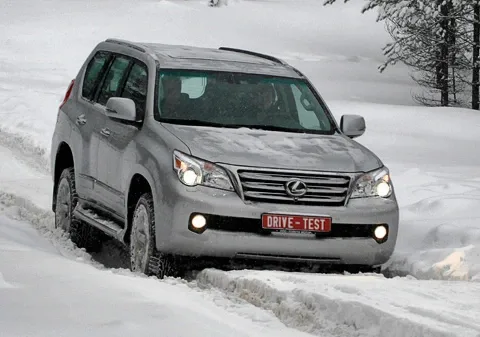
The low-speed cruise control system, Crawl Control, also works excellently. The Lexus crawls (and that's exactly how "to crawl" is translated) wonderfully. You press the button on the tunnel, set the speed with the "flag" — from 0.8 to 5 km/h — and take your foot off the brake. All that's left is to steer and, if necessary, rock the "flag" to adjust the pace. The car itself maintains the set speed, playing with the throttle and braking — selectively or with all wheels at once.
Admittedly, in the art of slow and careful off-road assault, electronics will outdo any, even the most experienced driver. A person can miss with the throttle, allowing wheelspin, or let the car roll backward. But the Lexus does everything equally confidently: whether it's a long climb, a steep descent, or a snow-covered track. After overcoming a difficult section, it's not necessary to turn off Crawl Control — just press the accelerator pedal, and the system "falls asleep" until you take your foot off the accelerator again. The Downhill Assist Control (DAC) slows the car through longer wheel locking, allowing them to literally plow through the ground. In practice, the driver only needs to point the car downhill and take their feet off the pedals — the GX will independently reach the bottom of the hill. The descent speed can be adjusted with the same "flag" of the Crawl Control system. When Fujio Toba, one of the technical specialists who oversaw the GX 460 project, was asked what percentage of buyers of the new "GX" would actually use all this off-road arsenal, he diplomatically avoided the answer, merely noting that customers should be confident in the car on any surface. Then journalists approached from another angle: why does Lexus need the MTS system? The Japanese man perked up and admitted that he once drove a Land Cruiser 80, and he was annoyed by the abundance of levers and buttons — he constantly got confused about what to turn on and when. So the engineers developed a car that would be equally simple and understandable for both an experienced driver and a novice. Mr. Toba was satisfied. The weather itself helped confirm the extraordinary off-road talents of the Lexus GX 460: due to continuous snowfall, the presentation venue turned into a huge snow-covered testing ground. Journalists, however, had less joy — having assessed the "GX's" off-road capability on snow, we learned almost nothing about its behavior on asphalt. The meeting, painted in white, turned out to be unusually monotonous. Oddly enough, the number of buttons in the new Lexus hasn't decreased. At first, it was hard for me to figure out which functions are compatible with each other. For example, you can only turn off the stability control off-road after a complete stop and engaging neutral. And to change the off-road mode, you have to dig into the menu every time. The same Range Rover has everything organized much more logically. But where the Japanese are definitely right is that the Lexus GX 460 allows drivers of any skill level to feel confident off-road. And, as offensive as it may sound, even with a complete lack thereof. It's hard to call the Lexus GX 460 a handsome car. Monumentality or shapelessness? A plump "face" with puffed cheeks, a heavy rear... But by and large, the Lexus design doesn't stick in memory. Turn away — and you've forgotten it. Don't ask me how the GX 460 behaves on winding roads, during overtaking, or in dense city traffic. The short presentation with a clear emphasis on the off-road talents of the new model left many driving questions unanswered. I can only say that on a straight line, the Lexus steering provides enough information about the wheel position so you don't have to constantly correct. The suspension nobly swallows the metal joints of the St. Petersburg ring road regardless of the selected shock absorber mode. And the operation of the six-speed automatic remains virtually unnoticeable to the driver. Space in the "gallery" is an illusion. There's not much knee room, and the seat cushion is a bit thin — you won't sit long on rough roads. But second-row passengers are guaranteed truly royal comfort — both in terms of space and equipment. Three-zone climate control is already available in the base Comfort trim. The top Luxury version boasts rear LCD monitors on extendable brackets. Their presence is an additional incentive to buckle up in the back: during hard braking, unbelted passengers risk hitting their heads on the displays. I hope we'll have another chance to push the GX on asphalt, perhaps in the company of competitors, among whom there are no longer any owners of solid axles. For now, we need to assess the balance of power, at least nominally. Prices and trims are already known. The Lexus GX 460 in the initial Comfort version (full set of safety systems, Crawl Control, rear-view camera, rear air suspension, Smart Key remote door opening system, 18-inch alloy wheels, and much more) is priced at 2,980,000 rubles. That's ten thousand less, but still cheaper than the Range Rover Sport HSE. The perfectly flat trunk floor can be transformed into two additional seats in about ten seconds using the electric drive. If you fold the second-row seatbacks (which fold with a noticeable step), the trunk volume increases to 1833 liters. In the Executive version for 3,132,000 rubles, the above list adds the flagship Mark Levinson audio system, Russian-language navigation with a hard drive and touchscreen. But to get, for example, parking sensors, rear seat heating, and surround-view cameras, you'll have to pay an extra 208 thousand for a Premium version car. And the most expensive option, the Lexus GX 460 Luxury, costs 3,465,000 rubles. That's just 35 thousand rubles less than the "five hundredth" Mercedes ML, which is noticeably more powerful than the Lexus. Despite the seeming attractiveness of prices, the "GX" will initially have to beat competitors with a single V8 engine. Toyota is only thinking about a less powerful gasoline "six." But the 173-horsepower three-liter turbodiesel, which is installed on the Prado, definitely won't appear under the hood of the "GX." However, when the conversation turned to a hybrid powertrain, Fujio Toba smiled slyly: "We will try very hard!" Lexus seems to have successfully fit into the competitive environment both in price, equipment, and off-road preparation. Perhaps the price difference between the GX 460 and the Prado, 318 thousand rubles, is justified. Image-wise, the cars are much further apart than technically. But Toyota showrooms also have the big Land Cruiser 200, which is 116 thousand rubles cheaper than the "GX." It wasn't long ago that the LC200 was in short supply, but there are no more year-long queues, and the V8 turbodiesel is available. And who, tell me, would refuse more if they ask less for more? Lexus brand fans? How many of those do we have? Technical specifications | | Lexus GX 460 | |---|---| | **Body** | | | Body type | wagon | | Number of doors/seats | 5/7 | | Length, mm | 4805 | | Width, mm | 1885 | | Height, mm | 1845 | | Wheelbase, mm | 2790 | | Track front/rear, mm | 1585/1585 | | Curb weight, kg | 2485 | | Gross weight, kg | 2990 | | Trunk volume, l | 104–1833 | | **Engine** | | | Type | gasoline with direct fuel injection | | Location | front, longitudinal | | Number and arrangement of cylinders | 8, V-shaped | | Number of valves | 32 | | Displacement, cm³ | 4608 | | Max power, hp/rpm | 296/5500 | | Max torque, N•m/rpm | 438/3500 | | **Transmission** | | | Gearbox | automatic six-speed | | Drive | permanent all-wheel | | **Chassis** | | | Front suspension | independent, spring double-wishbone | | Rear suspension | dependent, air | | Front brakes | ventilated disc | | Rear brakes | ventilated disc | | Tires | 265/60 R18 | | Ground clearance, mm | 215 | | **Performance characteristics** | | | Maximum speed, km/h | 175 | | Acceleration time 0-100 km/h, s | 8.3 | | Fuel consumption, l/100 km | | | — urban cycle | 17.7 | | — suburban cycle | 9.9 | | — combined cycle | 12.8 | | Toxicity standard | Euro-4 | | Fuel tank capacity, l | 87 | | Fuel | AI-95 | Equipment - Front airbags - Side airbags - Inflatable "curtains" - Isofix child seat anchors - Passenger knee airbag - Driver knee airbag - ABS - Dynamic stability controlLexus GX 470: luxury that isn't afraid of dirt
Imagine a car that feels equally confident on the gleaming showroom floor and on a tank testing ground. That's exactly what the Lexus GX 470 turned out to be — an aristocrat ready for the harshest trials. I spent several days behind its wheel, and it was unforgettable.
Let me clarify right away: this test took place in conditions far from ideal. The organizers, as if testing our courage, laid out a route through the territory of a real tank testing ground. True, there was nothing particularly to shoot there — a bare field with sparse trees and soldiers bustling somewhere in the distance. And with the ford they advised us to cross at low speed, a real comedy unfolded: instead of the promised water obstacle, we found only a meter-wide stream. The water apparently froze or was covered with snow. You'd laugh or cry.
Technical content: time-tested
The heart of the GX 470 is a gasoline V-shaped "eight" with a displacement of 4.7 liters, an aluminum block, direct injection, and a variable valve timing system. It works exclusively with a five-speed automatic. The drive is permanent all-wheel with a locking Torsen differential and a low range. This engine allowed the car to accelerate to 100 km/h in less than nine seconds, and the electronics limited the maximum speed to 180 km/h.
The chassis design with a steel ladder frame hasn't changed: double wishbones in front, a solid axle in the rear. The front suspension travel remained the same despite new springs and shock absorbers. Engineers reinforced the lower arms and steering knuckles and recalibrated the bushings. In the rear, travel increased thanks to new shock absorbers, and the bushings became stiffer. The rear differential was also strengthened.
The body rests on eight rubber-metal mounts. Steel beams at the front and rear of the frame are designed to mitigate the consequences of collisions with small cars. The body itself, with programmed crumple zones, has become stiffer thanks to the multi-layer construction of the reinforcements.
Electronics to help
The KDSS system ensures that when there is a mismatch in the travel of the front and rear suspensions, the hydraulic locks release, maintaining better off-road traction. By slightly reducing the stiffness of the stabilizer bars, it adds smoothness on uneven surfaces. But when the stabilizers twist in the same direction—in a turn or on a slope—the hydraulic line is shut off to increase angular rigidity.
The Multi-terrain Select system automatically adjusts the engine, transmission, and brakes to the specific surface. Four modes are available:
- Mud & Sand — allows a high degree of wheel slip, limiting wheel braking. Ideal for snow as well.
- Loose Rock — provides maximum traction in 4L mode, with electronics more actively braking wheels for precise traction control.
- Mogul — permits brief wheel slip and is suitable for surfaces not covered by standard MTS settings.
- Rock — regulates wheel slip individually with strong braking. For overcoming large obstacles, it engages low range.
The image from four external cameras of the Multi-terrain Monitor system is displayed on an eight-inch screen, showing dangerous zones around the vehicle. Obstacle avoidance trajectories are shown in yellow if the distance is more than a meter, and in red when the distance decreases to half a meter.
Luxury in details
The interior of the GX 470 is a separate story. Three-zone climate control, leather upholstery, wood trim, ventilation and heating for front seats with power adjustments. The steering column is electrically adjustable for tilt and reach. Multifunction steering wheel, cruise control, rain and light sensors, rearview camera, CD-changer with MP3 support—all this was available back then. Keyless entry, fog lights, rear door wiper, and alloy wheels completed the picture. The price of the base trim was 2,980,000 rubles.
Lineage
The Lexus GX 470 debuted in November 2002 at the Detroit auto show. Essentially, it was a rebadged Toyota Land Cruiser Prado 120. The changes were not limited to optics and plastic: the Lexus had its own hood and tailgate. The interior, with identical layout, differed in richer trim. The main technical difference was that very V8, which was already installed on the older Lexus LX.
In 2005, the GX 470 underwent a planned modernization, and engine power increased to 273 horsepower. Over six years of production, more than 167,000 units of this model were sold.
By the way, these photos might not have happened. I arrived at the airport light, having forgotten my camera in one of the GX models. The guys at Lexus worked a small miracle, managing to bring it three minutes before check-in closed. For which I give them special thanks.