
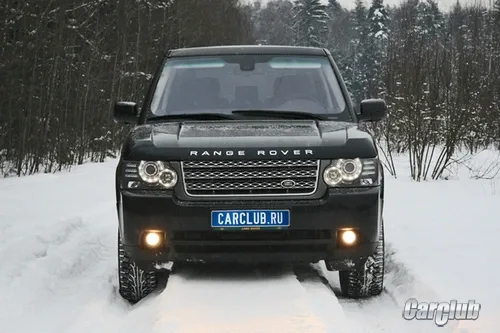
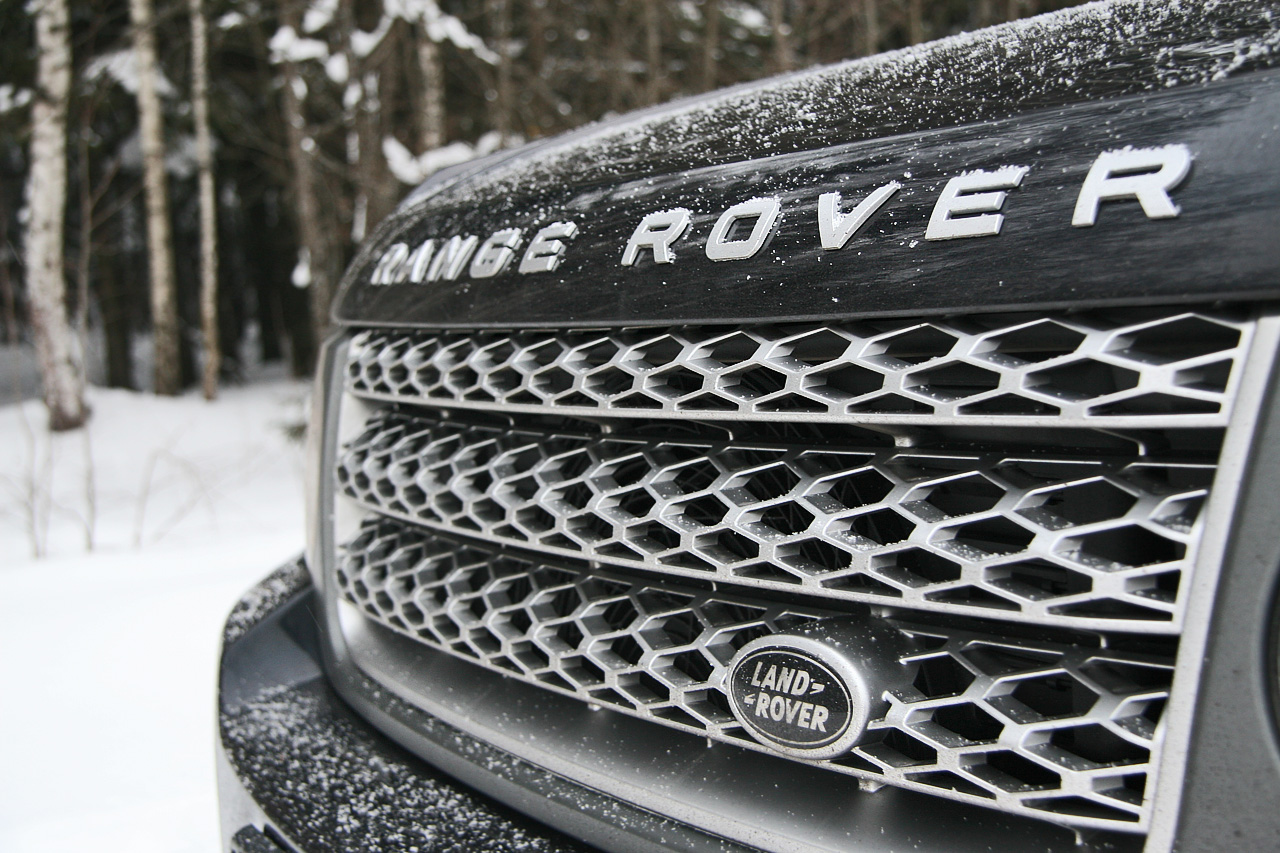
 Last spring in New York, at the auto show, Land Rover showed the public an updated version of its flagship SUV — the 2010 model year Range Rover. Comments
In Russia, this car has long acquired the status of a cult. As soon as dealers brought the first examples in 2002, the domestic business elite began to snap them up at an incredible speed. Thus, the luxury SUV turned into an indispensable attribute of negotiations and social events, although its real capabilities remain unclaimed. A couple of years after the premiere, the car underwent a light modernization, and the current update turned out to be much more serious.
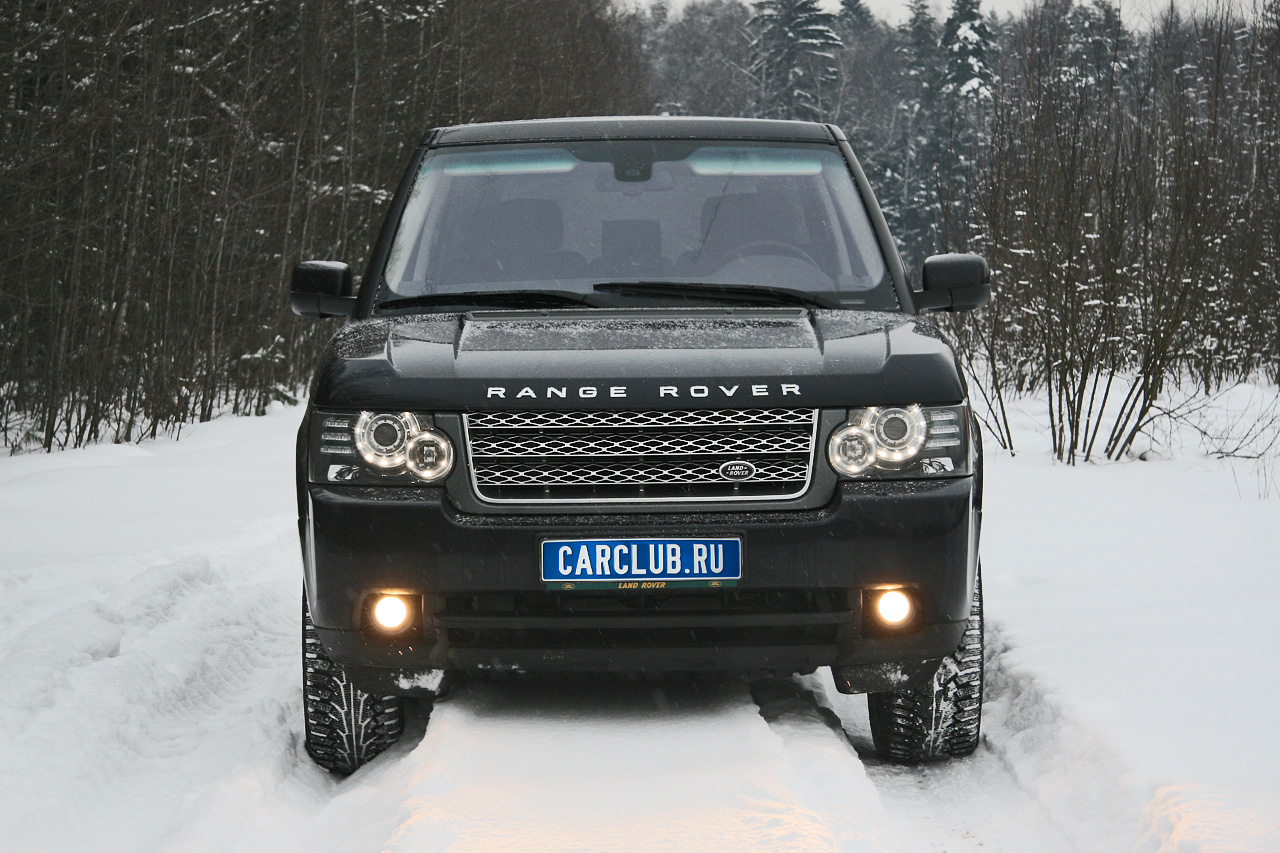 |
| The main changes in appearance are LED optics. The front lights look like four rings that really scare drivers of cars ahead. |
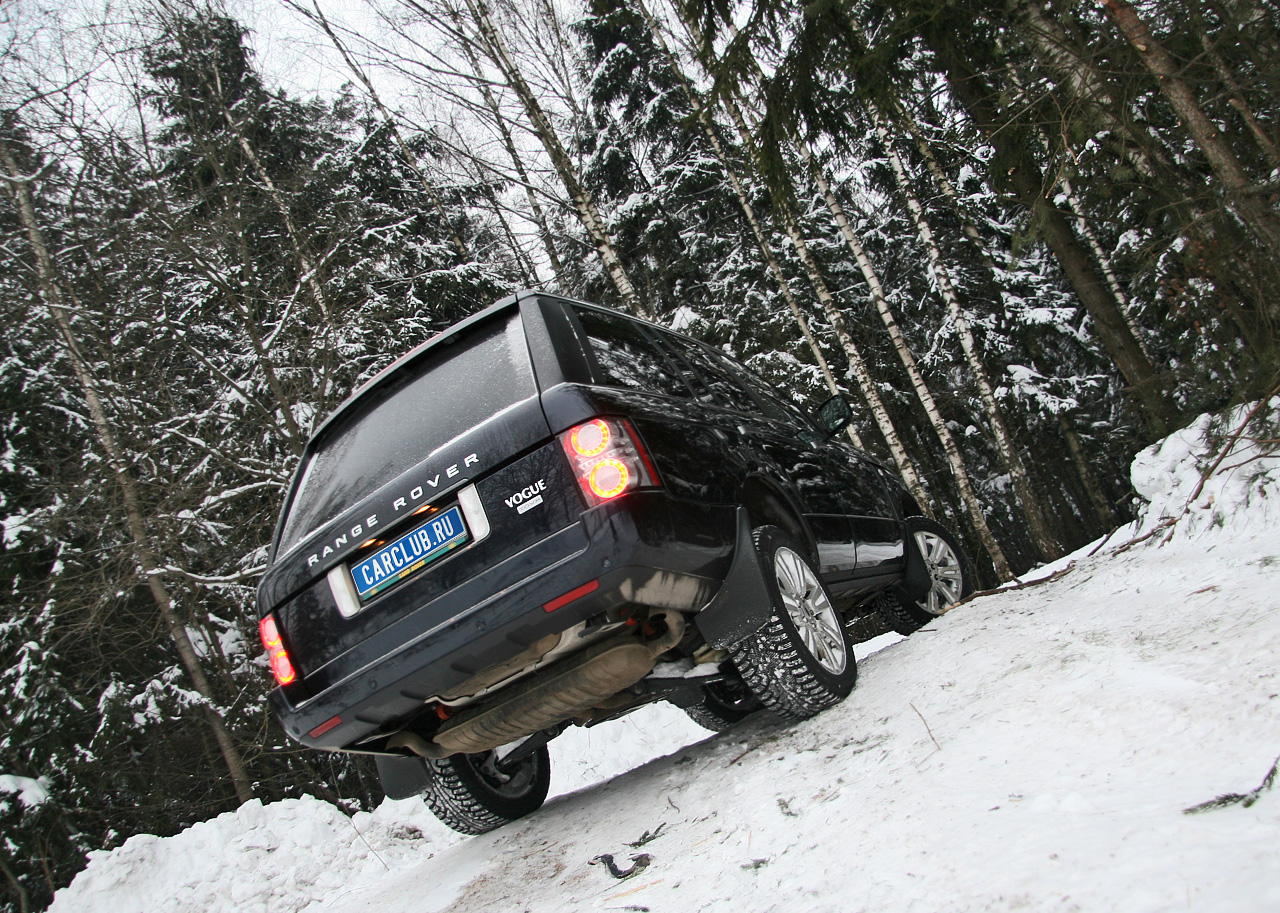
Outside, the angular body received new optics with LED daytime running lights — four bright rings that intersect each other. At the front, the radiator grille and bumper changed, and the fog lights moved to the lower air intake. The rear differs only in the lights, which also became LED.
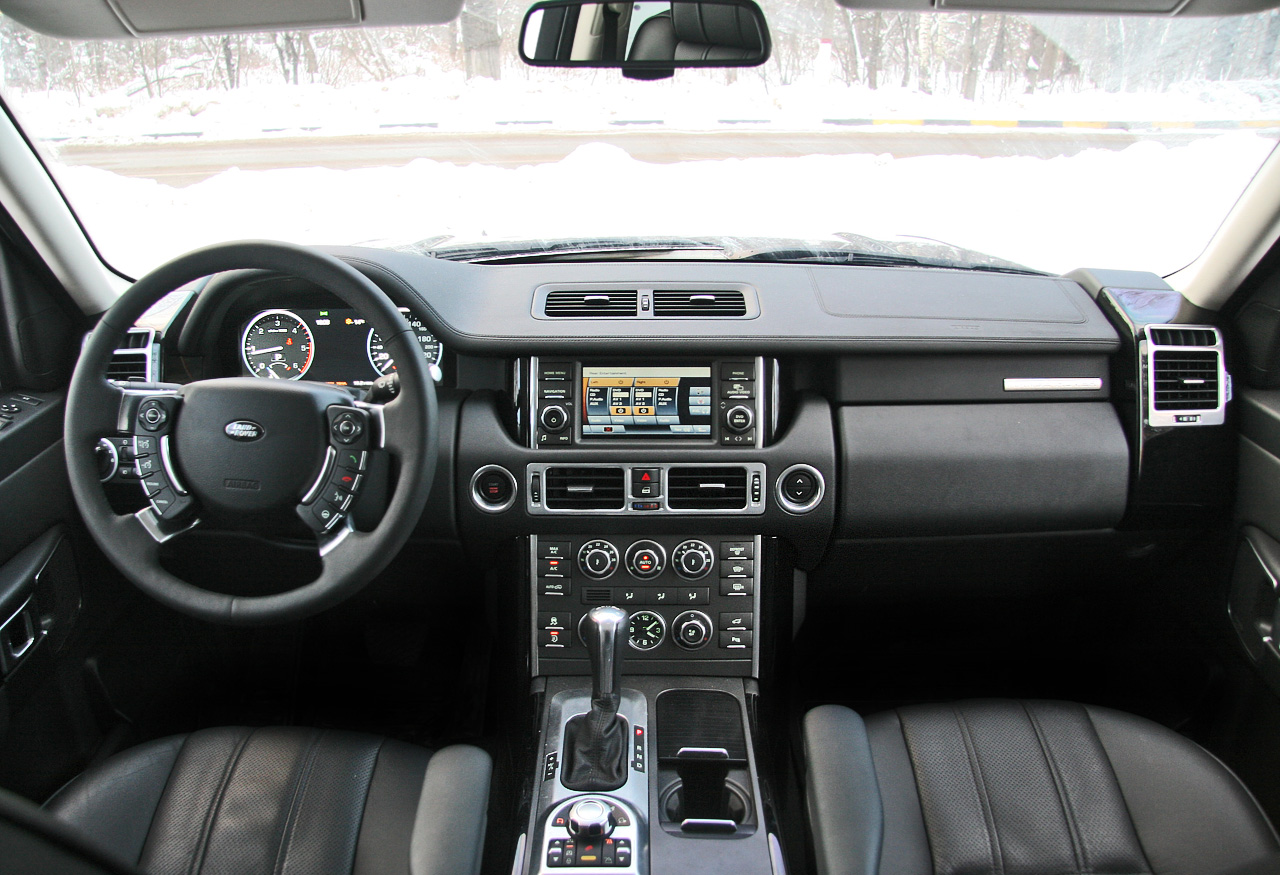 |
| The interior fully matches the luxury status — only expensive leather, pleasant-to-the-touch plastic and natural wood. |
Inside, even higher quality leather appeared, and now the front panel is also trimmed with it. Every button and control is framed with matte chrome, and on the dashboard and doors there are inserts of natural wood. The feeling of luxury is complemented by multi-level interior lighting.
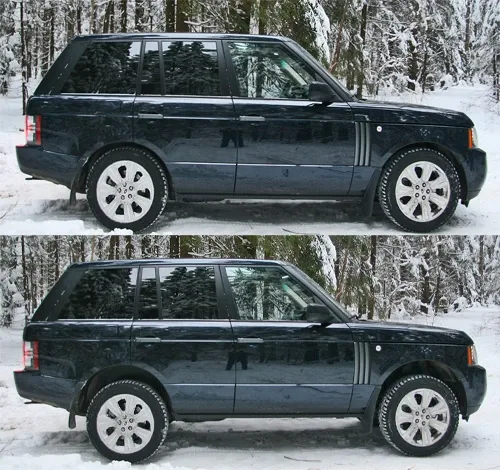 |
| The air suspension noticeably increases geometric off-road capability. It's a pity that such cars more often have to go to meetings rather than conquer off-road. |
Undoubtedly, the main highlight of the interior is the fully digital instrument panel on a 12-inch TFT screen. Virtual scales and graphic displays show all the necessary information, including Terrain Response modes and settings of other systems. Although in terms of picture quality it still yields to the Mercedes one.
 |
At the top of the center console there is a touchscreen of the multimedia system, capable of simultaneously showing two different pictures. That is, the passenger can watch a DVD movie, while the driver at this time can use navigation.
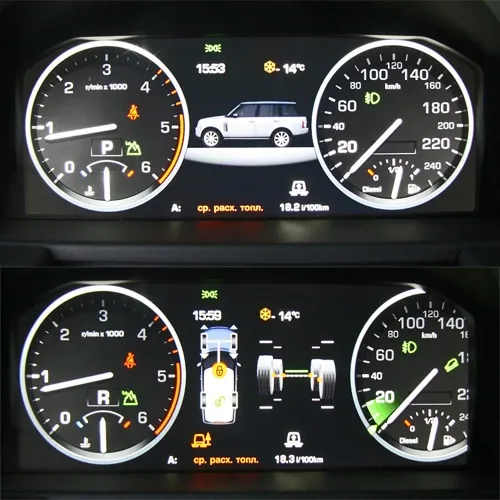 |
| The digital instrument panel shows almost all necessary parameters, including Terrain Response settings. |
During the tests, we first took on the diesel version — under its hood is a powerful eight-cylinder TDV8 with a volume of 3.6 liters, producing 272 hp. In terms of torque, this diesel even surpasses the new gasoline unit with 510 hp. All 630 Nm are available from 2000 rpm. Hence — confident start from the spot and stable traction up to 180 km/h. The engine is excellent! The six-speed automatic from ZF shifts timely and smoothly. And the sound is a separate song: you press the gas to the floor, and all the newton-meters pour out of the exhaust pipes to the public, sounding harmoniously, like an orchestra after long rehearsals.
 |
| In terms of torque, the diesel surpasses even the new gasoline "monster" with 510 hp. All 630 Nm — already from 2000 rpm. The result is powerful acceleration and traction up to 180 km/h. An excellent unit! |
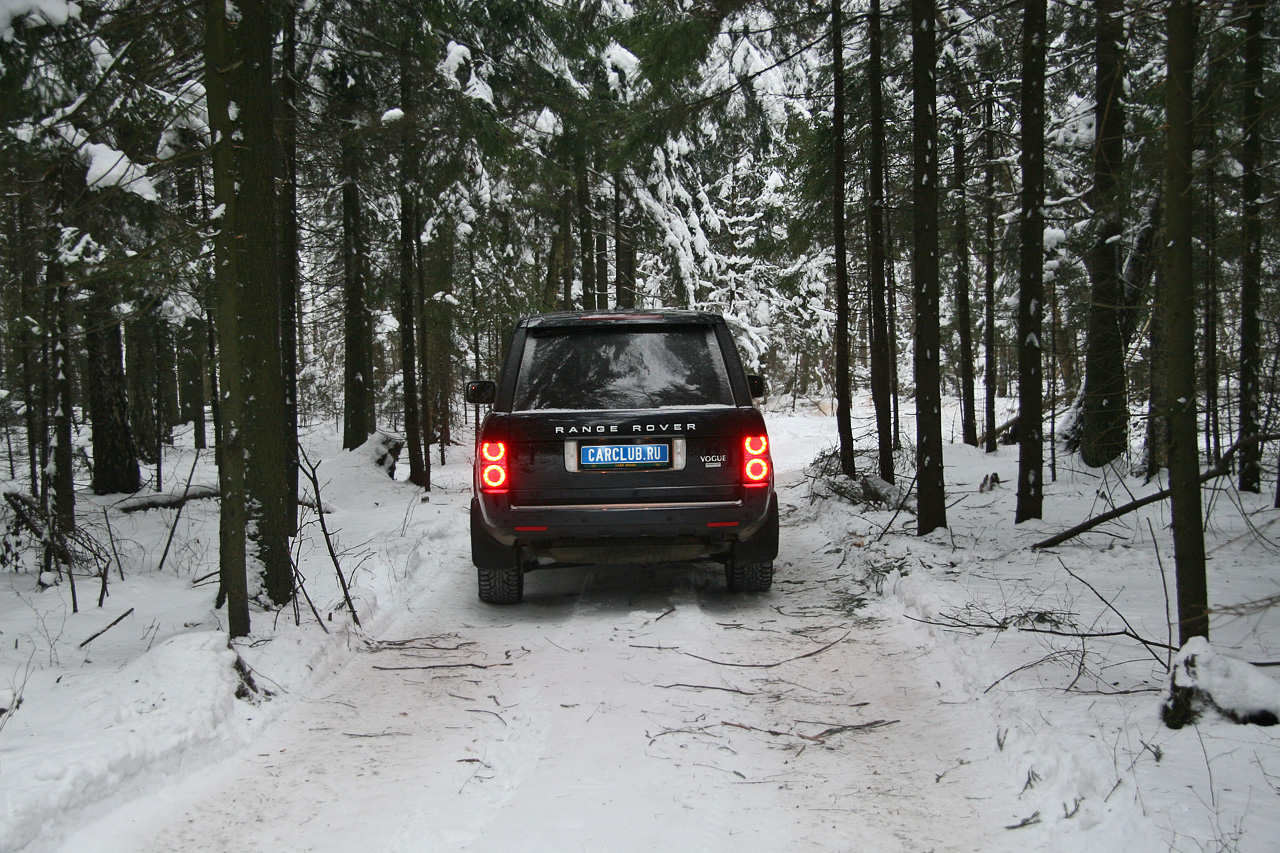
The steering wheel here is large, with a slight "vagueness" at zero, but at the same time quite informative. The heavy SUV quickly reacts to the driver's actions. If not for the studded tires, because of which the car lost part of the harmony between behavior on asphalt and phenomenal off-road capability... But even so, in corners the massive body almost does not roll. And the straight line is pure pleasure. And what is especially pleasant: with such dynamics in the city, in frost of -27 degrees, the consumption did not exceed 18 liters per hundred, while gasoline versions eat at least one and a half times more.
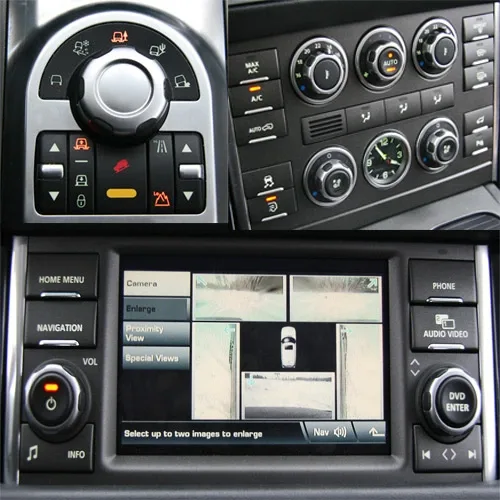 |
| The Terrain Response algorithms have not changed. True, instead of the previous "swinging flags", control of the air suspension and low range is now given to ordinary buttons. On the central screen, pictures from the surround view system are available: two cameras in front, one in each mirror, and another in the tailgate lid — parking in tight courtyards will become easier. |
In parallel with the diesel, we also tried the Supercharged version. Under the hood of the "charged" Range Rover is now a new V8 5.0 — an independent development that has nothing to do with the previous unit.
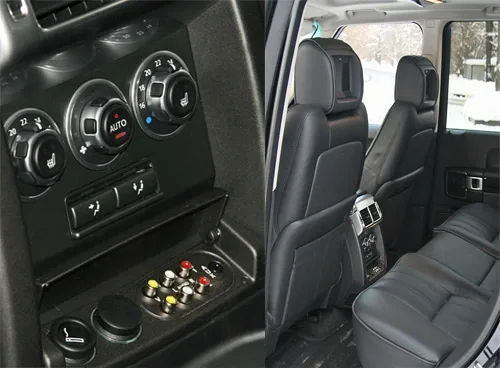 |
| For rear passengers — complete "chocolate". A spacious sofa, separate climate control, heated seats and entertainment system screens. What else could you wish for? |
It's time to get to know the potential inherent in the engine better. And it, frankly, is in abundance. Judge for yourself: 510 hp and torque of 625 Nm in the range of 2500–5500 rpm — this is enough not only for acceleration to a hundred in 6.2 seconds, but also to pull a whole brood of small cars behind you.
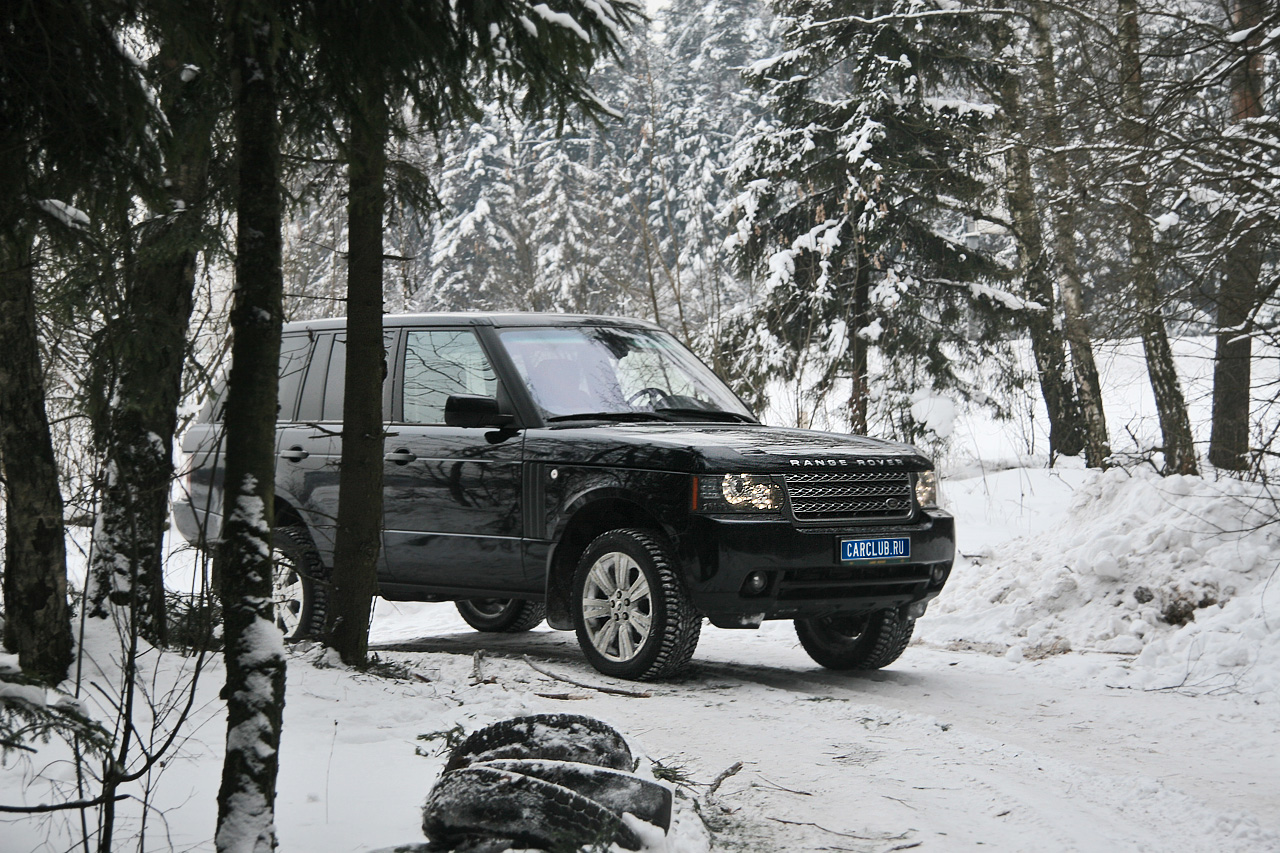 |
| The new gasoline V8 produces 510 hp. With such an engine, the heavy SUV reaches the first "hundred" in 6.2 seconds. |
Those who have driven a powerful car with a supercharger are familiar with the "cannonball effect": the car starts sluggishly, then builds up air and at some point fires with monstrous force. Here the process happens differently, much smoother. There are two serious innovations. The first is the system of dual independent variable valve timing (DIVCT). The second is a two-stage intake manifold with variable length, which competently distributes air flows and raises traction at low revs. Thanks to this, when working with the gas pedal, there is a complete feeling that the engine breathes like a sprinter in excellent shape.
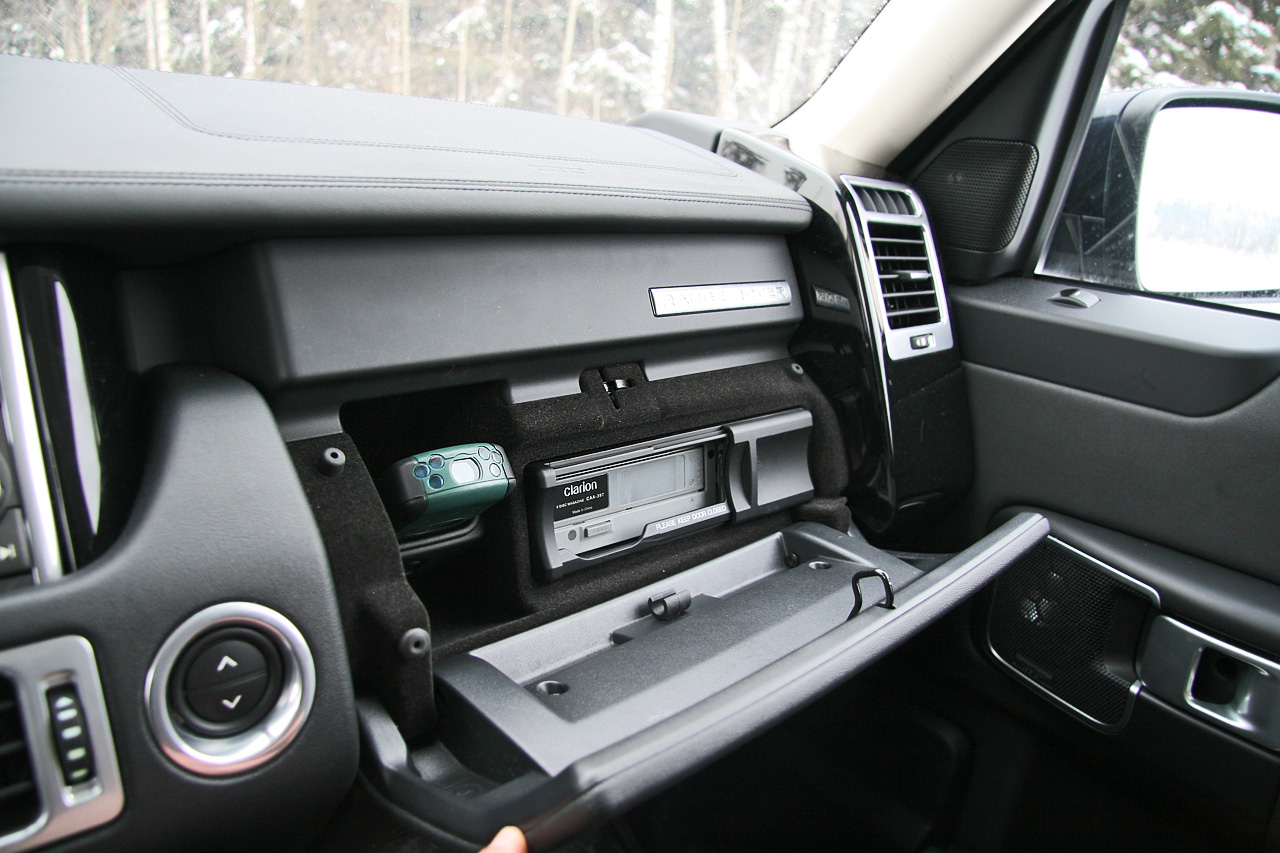 |
| In the secret glove box are hidden a CD-changer and a remote camera that can be held in your hand or placed, say, on the hood. On serious off-road, this thing is extremely useful. |
Thanks to all the engineering solutions embedded in this engine, the S/C version demonstrates surprisingly modest appetite: in the combined cycle it fits into 16 liters per hundred.
For fans of advanced technologies, the updated Range Rover will offer adaptive cruise control with clear controls, a blind spot monitoring system and automatic high beam switching (AHBA). This function itself notices cars going ahead or towards and instantly switches the headlights to low beam mode so as not to blind road users.
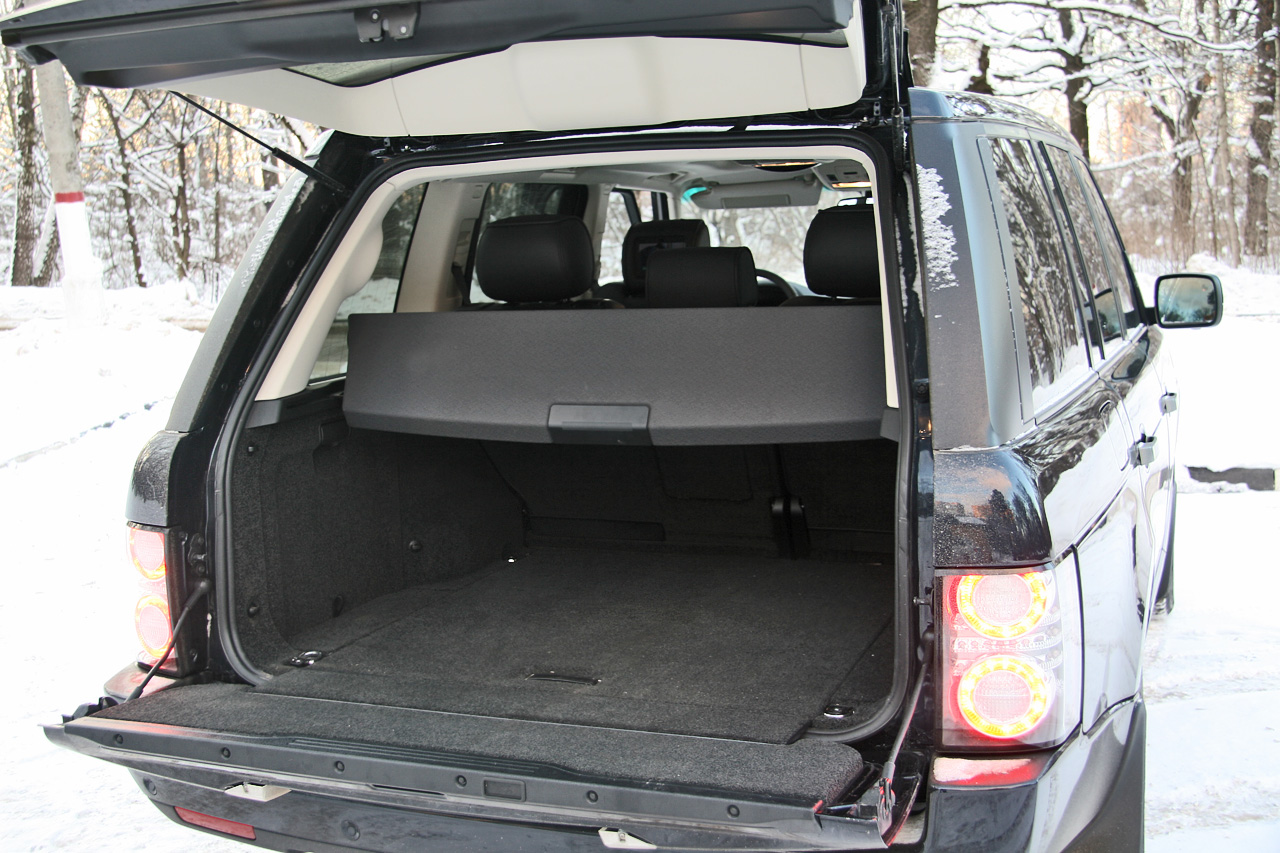 |
| The trunk with a horizontally divided two-leaf lid holds 535 liters. |
Special mention deserves the surround view cameras: five digital modules transmit an almost panoramic picture to the touchscreen. They are activated immediately after starting the engine, and the functions of selecting and zooming the image are very helpful when parking in limited space or when driving with a trailer.
Range Rover once again proved that it deservedly occupies the place of the flagship in the Land Rover lineup. The English brand is valued all over the world for its loyalty to its traditions and unique character, which it has preserved throughout its history. And one of such main values, undoubtedly, remains Range Rover — an SUV with a capital letter.
| Technical specifications (according to manufacturer data) | Range Rover 5.0 V8 Supercharged | Range Rover TDV8 |
|---|---|---|
| General data | ||
| Body | SUV | |
| Year of manufacture | 2009 | |
| Number of doors/seats | 5/5 | |
| Curb weight, kg | 2710 | 2774 |
| Gross weight, kg | 3200 | 3200 |
| Maximum speed, km/h | 225 | 200 |
| Acceleration time from standstill to 100 km/h, s | 6.2 | 9.2 |
| Trunk volume | 535/2091 | |
| Dimensions | ||
| Length | 4972 | |
| Width | 2034 | |
| Height | 1865 | |
| Wheelbase | 2880 | |
| Engine | ||
| Displacement (cc) | 4999 | 3628 |
| Engine type | Petrol with direct fuel injection, supercharger and intercooler | Diesel with Common Rail direct fuel injection, turbocharging and intercooler |
| Number of valves | 32 | 32 |
| Maximum power (hp at rpm) | 510/6500 | 272/4000 |
| Maximum torque I first saw this car at the stand in Geneva, and even then it made an indelible impression. But seeing a car on a podium and driving it on the road are two completely different things. When I was offered to test the new sedan in action, I agreed without hesitation. Now I am sitting behind the wheel in a comfortable leather seat, and under the hood a powerful diesel engine purrs. Ahead are several hundred kilometers of road, and I will finally be able to understand how good this car is in real life. The interior greets you with silence and calm. Even at idle, the diesel is practically inaudible, and vibrations are not transmitted to the steering wheel or seats. I set off and first of all note that acceleration is surprisingly easy for the car. The diesel engine delivers 630 Nm of torque in the range of 2000-2500 rpm, and this reserve is enough in almost any situation. Overtaking on the highway is done without the slightest strain, although the dynamics, of course, are not as impressive as the petrol version with 625 Nm at 2500-5000 rpm. The first thing that surprises you while driving is the suspension operation. Air struts on double wishbones of the front and rear wheels do their job: the car seems to float above the asphalt. Irregularities, joints and potholes are swallowed with such ease that it seems you are driving on a perfectly smooth road. At the same time, body roll in corners is minimal - the anti-roll bars perfectly cope with their task, keeping the body level even during active maneuvering. The steering is adjustable depending on speed: in the parking lot the wheel is very light, and on the highway it fills with a pleasant heaviness. The feedback is not ideal, but for a car of this class the steering wheel gives enough feedback. The brake mechanisms work flawlessly: ventilated discs with a diameter of 360 mm at the front and 354 mm at the rear provide confident deceleration in any situation, although the pedal seems a bit soft at the beginning of its travel. Fuel consumption pleased more than expected. During the test, the diesel version in the urban cycle consumed about 14.5 liters per hundred, and on the highway I managed to fit into 9.2 liters. The combined cycle showed 11.1 liters - for a car with permanent all-wheel drive and a curb weight of more than two tons, this is a worthy result. The petrol modification, judging by the passport data, is noticeably more voracious: 22.6 liters in the city and 10.4 on the highway, and in the combined cycle - 14.9 liters. Thanks to the 105-liter tank, the range of both versions is solid. The all-wheel drive here is permanent, and it is felt. The car confidently holds the road on wet surfaces, and if you overdo it with the gas on corner exit, the electronics gently pick up and return the car to the trajectory. The atmosphere in the cabin is a real refuge from the outside world. Sound insulation is excellent: neither wind, nor tires, nor engine operation penetrate inside. You can calmly talk at any speed without raising your voice. What this car lacks is emotion. It does everything right, quickly and comfortably, but at the same time it remains absolutely impartial. The driver here is just a passenger who has been trusted with the steering wheel. The sedan does not provoke active driving, but rather calms and relaxes. This is a car for those who prefer to get from point A to point B in complete isolation from road fuss, rather than enjoy the driving process. Summing up, I can say that we have a very high-quality, technologically advanced and comfortable premium car. It will surely find its buyers among those who value status and comfort above dynamics and drive. But for me it lacks that very spark that turns a trip into an event. However, perhaps this is just not my car - it has its own philosophy, and it has the right to exist. | ||