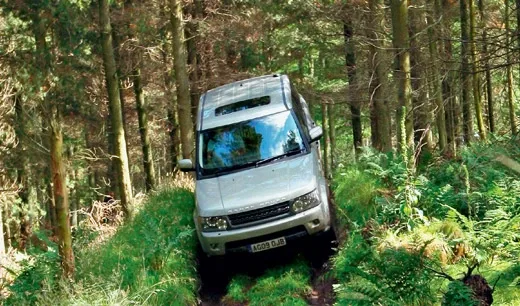
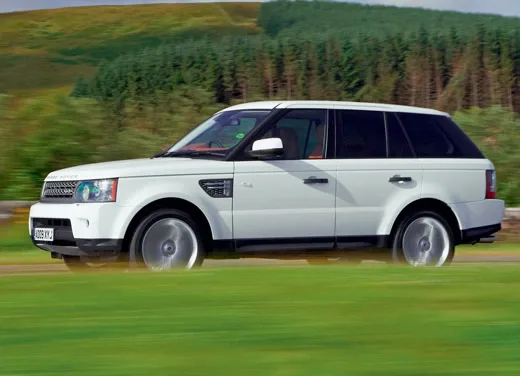
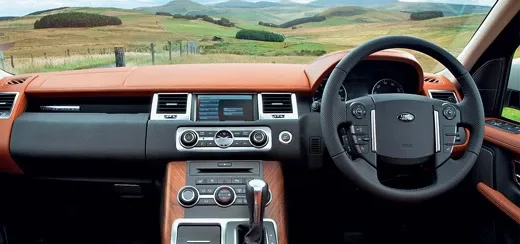
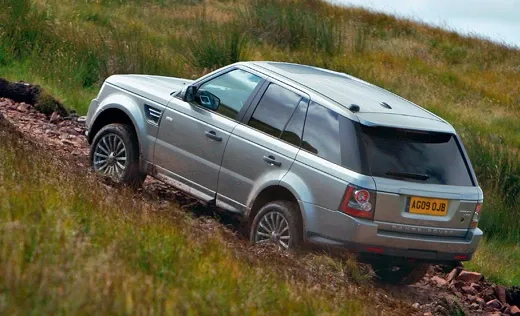
I'll start by saying that this car breaks one of the main postulates — that miracles don't happen in the world. It also knows how to awaken in the driver a dislike for the rest of the world. The car combines pronounced sportiness with excellent comfort. Driving it slowly is simply impossible, and because of this, you begin to perceive other road users as obstacles. You just want to install a loudspeaker on the roof and shout: "Make way! Trolleybuses, put away your horns, trams, squeeze to the right!" At the same time, in terms of off-road capability, the Range Rover Sport is in no way inferior to the new Discovery 4. An ideal option when you need to quickly cover a couple of hundred kilometers on the highway, and then easily venture into the forest thicket.
500 TIMES PER SECOND
In the updated version of the Range Rover Sport, there are many refinements, but the key one is the adaptive dynamic suspension. The previous model drove well, but the current one is simply magnificent. Flying through corners at high speed is a real pleasure, even on narrow Scottish roads with left-hand traffic. The only downside is that passengers don't realize how confidently the driver handles the car, and therefore sometimes whimper in fear. I'm sure that after the first such trip, your mother-in-law will refuse to get into the same car with you. She doesn't know that there's electronics here that, in a critical situation, will itself reduce speed before a bend (though, I haven't checked how effective it is — I didn't dare test it on public roads). So, about the adaptive system. It instantly reads the road surface condition and adapts to your driving style, continuously readjusting the shock absorbers. Not all at once, but each individually. The pressure in them changes at a frequency of 500 times per second. And it really works — the difference from the previous version is felt immediately.
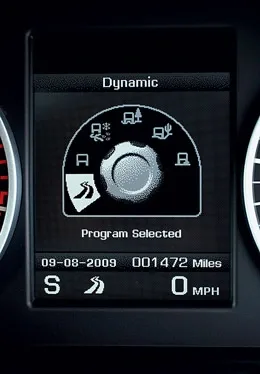
Another pleasant option is the "Dynamic" mode in Terrain Response. Let me remind you that this system previously skillfully readjusted the air suspension, traction control, engine response, and brakes for different surface types. Rocks, snow, gravel, ruts — all that was there. Now fast asphalt has been added. Also, as in the new Disco, a program for sand has appeared.
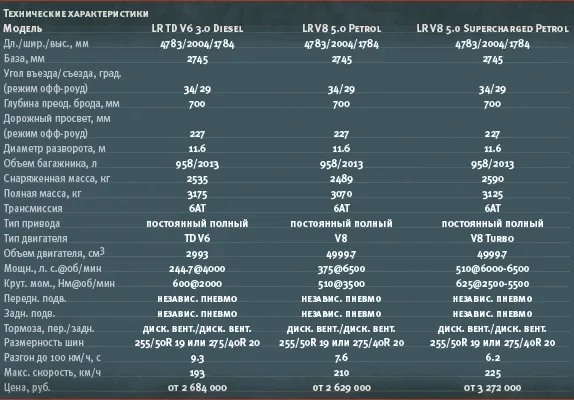
It's clear that the main interest in the facelifted RR Sport is the engines.
TOO MANY HORSES
About a couple of them — the LR TD V6 3.0 biturbo diesel and the petrol LR V8 5.0 — we already talked about in the Discovery 4 test. Both are torquey, flexible, and powerful, but in terms of emotions, I liked the petrol one more. It accelerates more cheerfully (7.9 seconds to 100 km/h versus the diesel's 9.6) and sounds noble. Plus, the model also retains the previous "beast" — the 3.6 turbo diesel V8, also an excellent unit. But besides these engines, the Range Rover Sport also received a new "supercharger" — a supercharged petrol engine. Now it's 5-liter, packed with modern solutions and almost a third more powerful than the previous 4.2-liter. But again, I prefer the naturally aspirated petrol. Because the Sport with the "supercharger" is overkill in temperament. I would take such a car as a third or fourth in the family, to occasionally race along an empty night highway. But for every day? No, thank you. By the way, the Supercharged version has ultra-powerful brakes, which we were given to try on a track organized right on the runway. It looked like this: a wave, pedal to the floor, after about eight seconds shields with the inscription "Brake!!!" appear from the side, you press the brake with all your might and hang on the belt with bulging eyes. And then the question sounds: "Well, impressive? Six-piston calipers at the front — that's not a toy! A joint development with Brembo." Seriously, yes, it's impressive. The updated Supercharged version decelerates significantly faster. However, on cars with other engines, the brakes were also improved — they have four-piston calipers at the front.
PERFECTION WITHOUT LIMITS
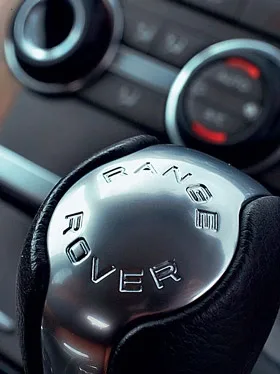
Off-road, everything is serious: the basic chassis elements and, accordingly, the capabilities here are almost like the Disco 4. Air suspension, adjustable ground clearance, refined Terrain Response, thoughtful water protection, low-range gear 1:2.9 — all this makes the Range Rover Sport an outstanding off-roader. And no compromise between handling and off-road capability.