Freelander 2 is almost the only crossover that the manufacturer itself directly recommends driving off-road. Of course, one can recall the Jeep Liberty (known as the Patriot on the American market), whose advertising also features off-road scenes, but that is more of a pretty picture than a real guide to action.
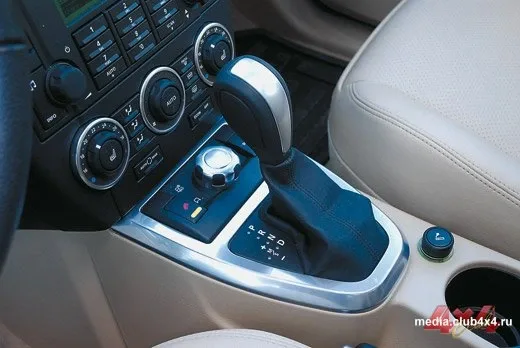
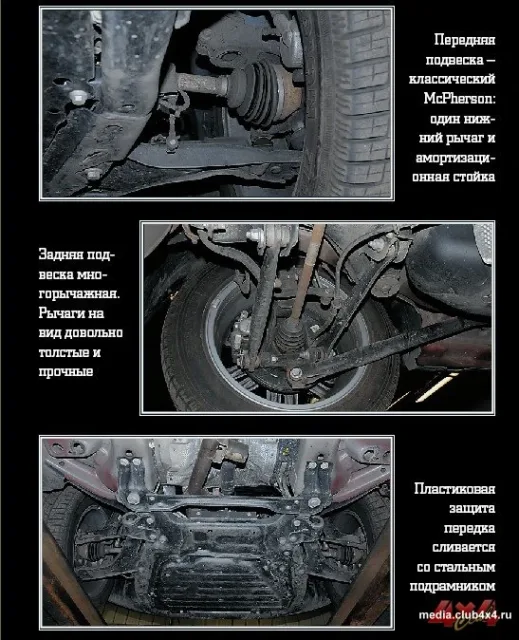
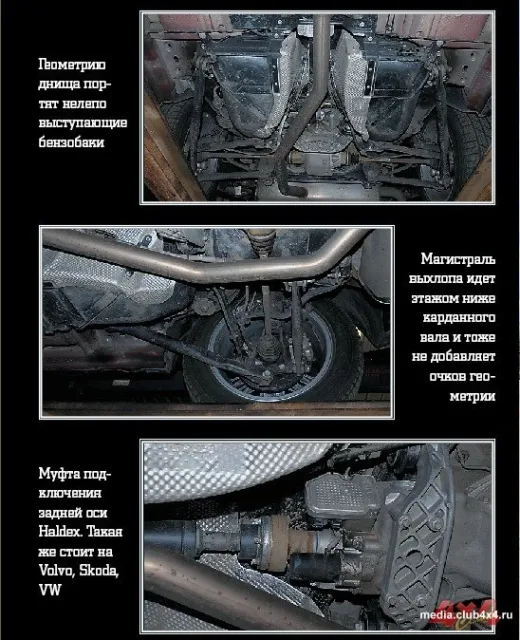
The Freelander 2 has front and rear overhangs shaped like a boat's hull, which is a legacy of the first Range Rover. The approach and departure angles are well chosen. Even if the British crossover gets stuck on an obstacle, there is a chance to painfully but still crawl over a dangerous section, sliding on the rounded underbody protection. The main thing is to protect the subframe and fuel tanks: they are the ones that most spoil the geometry of the underbody. The Freelander 2's transmission has four modes designed for snow, gravel, grass, ruts, mud, sand, and, of course, asphalt.
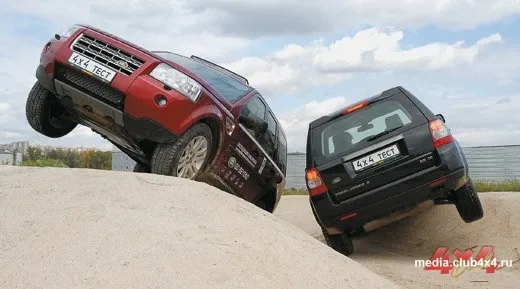
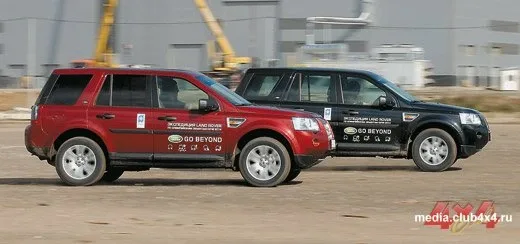
At the Land Rover representative office, this car is stubbornly not considered a crossover and is classified as an SUV. A bold statement. Or maybe a fair one? We have everything to check this: two Freelancers — one with a petrol engine, the second with a diesel. Plus a special Land Rover Experience track.
SPACIOUS INTERIOR
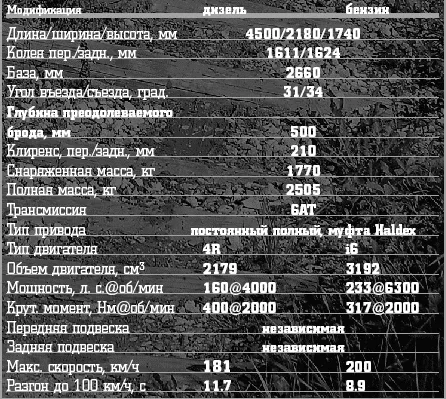
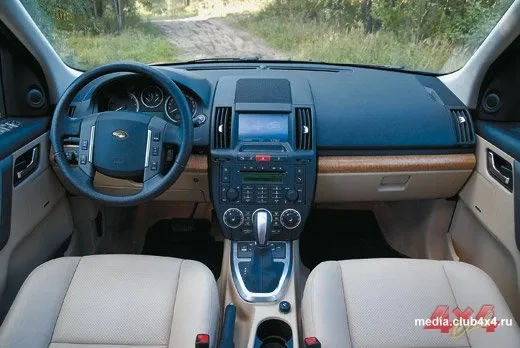
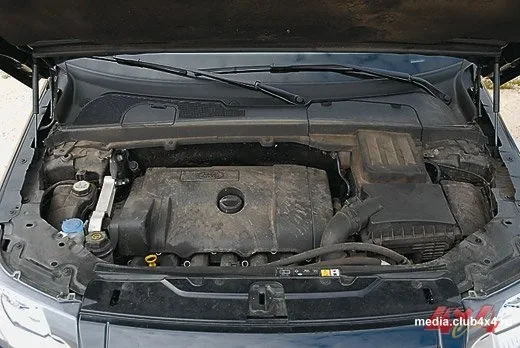
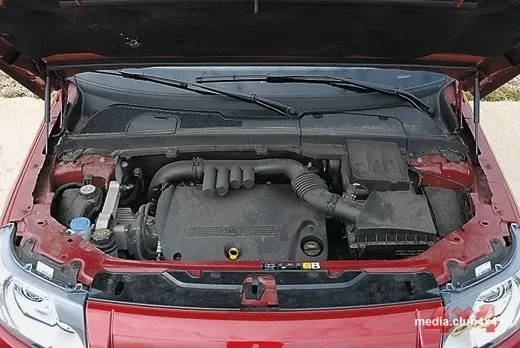
The diesel car in dark red is equipped with a four-cylinder engine that pleases with very attractive characteristics. A torque of 400 Nm and a power of 160 hp with a displacement of only 2.2 liters. Acceleration and fuel economy are excellent. The gearbox is automatic, as in the second car. The black petrol Freelander with an i6 engine producing 233 hp and 317 Nm of torque is even more dynamic, quieter, but noticeably more voracious. The differences between the cars are not only in the powertrains but also in equipment. The interior of the black version resembles a dark cave: without a large monitor, with blue upholstery on the seats and doors, which is unpleasant to the touch. The red car boasts light beige leather and a color display for the onboard computer. The screen is touch-sensitive, and with a finger you can find almost any function, but not Russian navigation or the Russian language. As usual, it is very disappointing for such a "trifle."
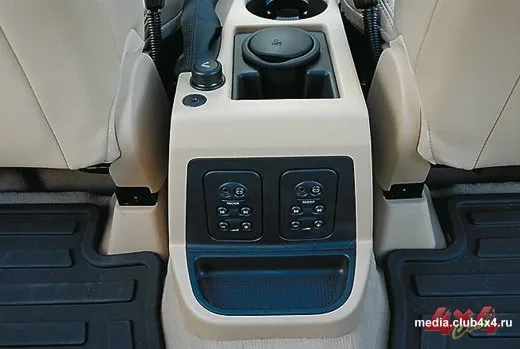
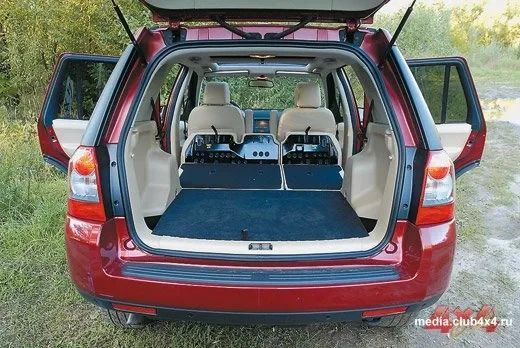
Looking into the interior, you are amazed at its spaciousness. There is so much free space that it even fits two folding armrests between the front seats, and at any height you can sit comfortably, almost preserving the signature "command" seating position of the Range Rover. Not a single crossover classmate (for now we will measure in the old way: if the body is load-bearing, the suspensions are independent, and there is no reduction gear, then it is a crossover) can boast the same spaciousness.
ON SAND — PARITY
The Land Rover Experience track is located right near the Moscow Ring Road and is designed to teach owners of British SUVs basic off-road driving skills. Here you can tilt the car to your heart's content, experiencing maximum rolls. There are obstacles for diagonal hanging, a large concrete bath for simulating a ford, a road made of logs, gravel, and sand. Mud appears only after rain, and in this sense we were lucky.
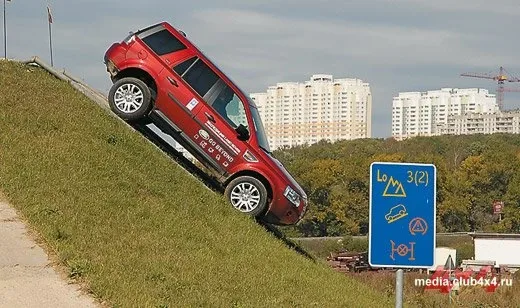
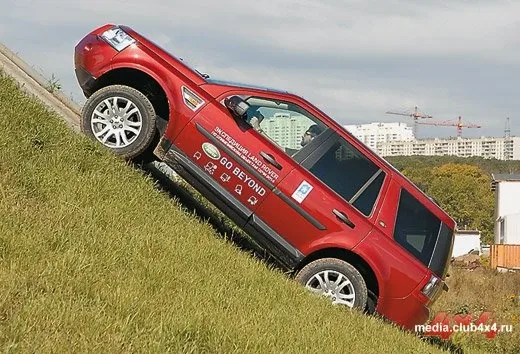
To begin with, both cars attempted to conquer a 45-degree incline. Despite the fact that the number seems not too large, in reality it is a 100 percent gradient, the limit for most modern all-wheel-drive vehicles. Neither car took the height. Almost reaching the top, they spun and rolled back. The diesel almost managed to do this trick in reverse, but in the end it also failed.
On the section simulating a twisted corduroy road — logs with a variable angle of attack — it turned out that the diesel car is more pleasant to control: it allows you to start smoother, without wheel spin. Going through the Terrain Response modes on the logs, we noticed that minimal wheel spin is achieved in the "snow-grass-gravel" mode, and maximum in the "sand" mode.
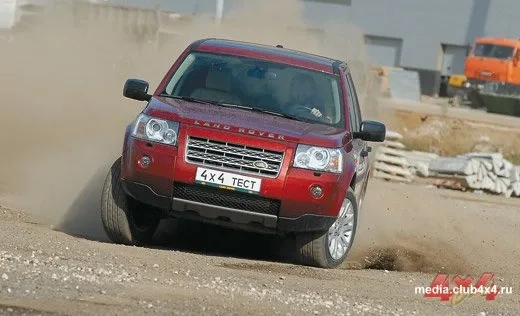
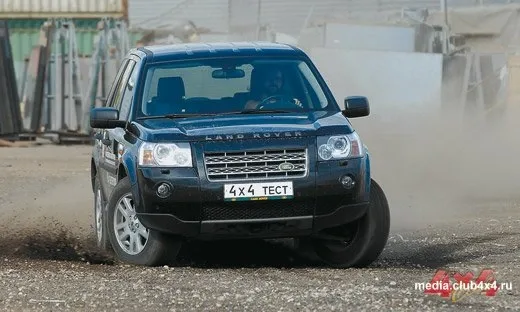
It was to the sand that we headed. It is not for nothing that for driving on the "beach" some wheel spin is allowed — it makes it easier to overcome the shifting sand crests that the front wheels push against. In the simplest "asphalt" mode of the transmission, the Freelander required constant attention and did not let you relax. You had to continuously steer and be extremely careful with the pedals. Switching to the "sand" mode, we confidently covered the section and even climbed a small sandy hill without extra effort.

On the sand, we did not feel a strong difference between the diesel and petrol versions. The petrol engine managed to rev up to high speeds, providing the necessary torque for moving on loose ground, while the diesel easily stayed in the optimal rev range.
SPECIFICATIONS: LAND ROVER FREELANDER 2
THE QUESTION OF COMFORT
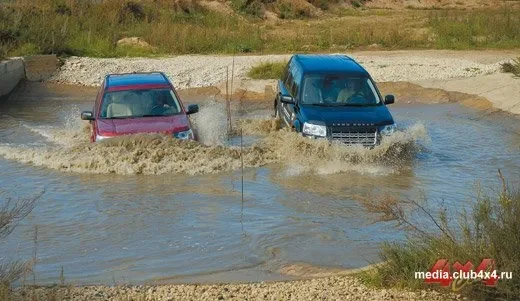
We could not resist driving into the mud bath. If you enter the water without easing off the gas, the car literally floats, lifting its wheels off the bottom. Not a drop gets into the cabin, although later water pours out of the door cavities. And when the cooling fan turns on, steam and splashes fly from under the hood — a spectacular sight. At this point, the experiments ended, and here is our verdict.
The adjustable transmission is a convenient thing, but for an experienced driver it is not essential. Using the car's inertia and skillfully working the gas and brake pedals, you can achieve the same result. It is a matter of comfort. Terrain Response does not solve global problems, but it helps inexperienced drivers quickly and easily get out of "traps." If only the Freelander's transmission had a low-range gear... Then it would be a real SUV, like the Disco.
Technical characteristics of Land Rover Freelander 2