
Land Rover Freelander Price: from $42,700 On sale: from May 2007
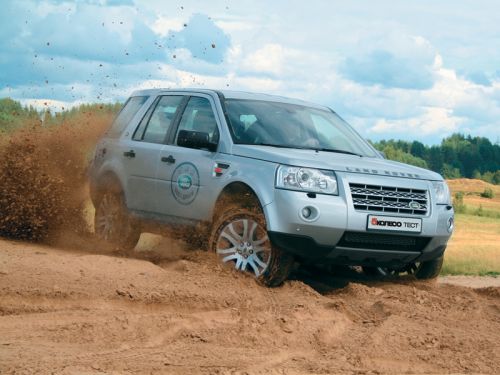
2007 Land Rover Freelander
© Photo: 5 Koleso
Diesel paired with a manual gearbox — can such a combination turn a crossover into a full-fledged off-roader? It was with this question that we took the Land Rover Freelander II in this specification for a test.
It so happens that the vast majority of crossovers on our market are offered exclusively with petrol engines. And this is understandable. After all, many of them are not destined even in their wildest dreams to reach a sandy beach. Their element is the city, high-speed highways, and smooth suburban asphalt. Why do they need a diesel? It makes noise, vibrates, and doesn't provide that very "spark."
Nevertheless, despite all the obvious drawbacks, it is the diesel unit that has always been considered a sign of a true off-roader. The logic is simple: while inferior to a petrol engine of similar displacement in power, a diesel always won in torque. And it was torque that decided the outcome of the struggle for the ability to keep moving. Manual transmission has also always been a faithful ally in extreme situations. It was it, by manipulating the gas and clutch pedals, that allowed rocking and rescuing a car that seemed hopelessly stuck. We should not forget that diesel, thanks to its efficiency, provided a greater range on one tank compared to its petrol counterpart — a factor that is also quite important.
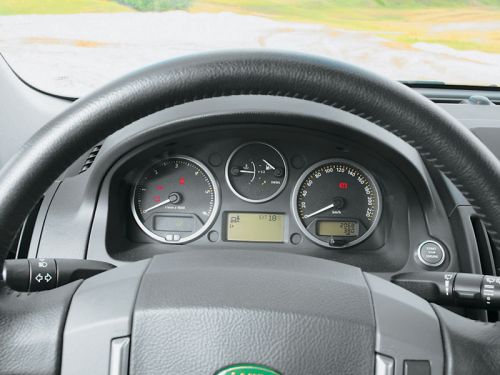
2007 Land Rover Freelander
© Photo: 5 Koleso
The Freelander II has already been tested by us, but in the version with a diesel and manual gearbox — for the first time. We simply could not help but test it on real off-road. Therefore, let's set aside talk about the design and interior trim and get down to business. However, before diving headlong into off-road adventures, we had to drive quite a bit on asphalt. And we must give credit — in everyday driving, we did not feel any inconvenience due to the fact that a 160-horsepower diesel was working under the hood. Both dynamics and comfort turned out to be at a quite decent level. On the highway, the Freelander also did not let us down. Speed is practically not felt in the cabin, so fast driving is not tiring. At times it even seemed that we were surrounded only by enemies: they were slowly crawling in the left lane in their "smokers" at a speed of 140 km/h, preventing us from enjoying dynamic driving.
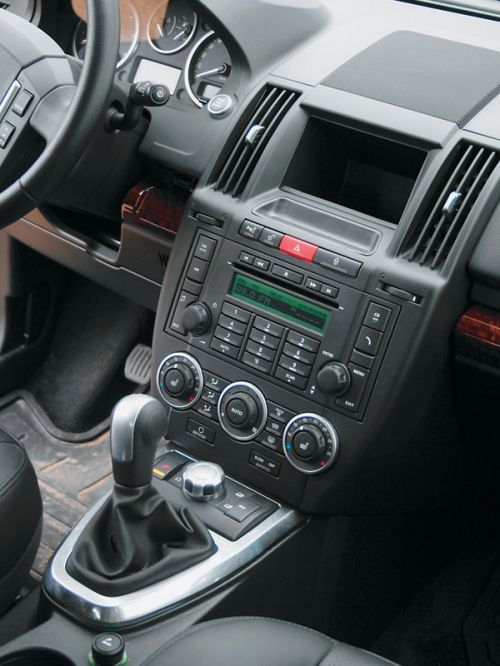
2007 Land Rover Freelander
© Photo: 5 Koleso
The diesel evoked completely different emotions off-road. At first, we were taken aback. How so? The diesel crawls through sand with such difficulty at low revs. The turbocharged engine clearly lacked low-end torque. The car reluctantly pulled away and noticeably lost ground when shifting to a higher gear. A couple of times we even managed to stall. The situation improved noticeably after the suspension mode selector was switched to "sand" mode. At the same time, the engine's operating algorithm also changes. But even in this case, a slight smell of burnt clutch did not disappear. What's the matter? Most likely, it's the turbo.
The fact is that a naturally aspirated diesel has excellent traction almost from idle, while a turbocharged engine needs to reach certain revs to get maximum torque. In our case, the claimed 400 Nm were available from 2000 rpm. And before that, the engine still had to be revved up. Hence the smell of clutch and the reluctance to pull away on sticky ground. But when the tachometer needle reached the required values, the car stopped noticing obstacles. The Freelander "plowed" like a beast. And then it became absolutely indifferent what was under the wheels: sand, mud, or a grassy slope. Off-road talents were limited only by the tires' grip. Perhaps, if the rubber had been more aggressive, we would have gotten even more pleasure from the test.
Driving
Good on the highway, and won't let you down off-road.
Interior
Solid and well-assembled. Although some elements, such as the monochrome audio system display, look outdated.
Comfort
The diesel in no way affected the level of comfort. Excellent sound insulation helps.
Safety
Everything necessary is present, up to the system of lateral stability control and assistance when starting on steep and slippery climbs.
Price
Quite reasonable.
| Dimensions, mm | 4500/2180/1775 |
| Engine | turbodiesel, 2179 cm3, 160 hp/4000 rpm |
| Transmission | manual, 6-speed |
| Dynamics 0-100 km/h, s | 11.7 s to 100 km/h |
| Maximum speed, km/h | 181 |
| Competitors | BMW X3 |
Advantages and disadvantages
+ Dynamic and predictable on the highway. Economical, high level of active and passive safety.
- Insufficient torque at low revs.
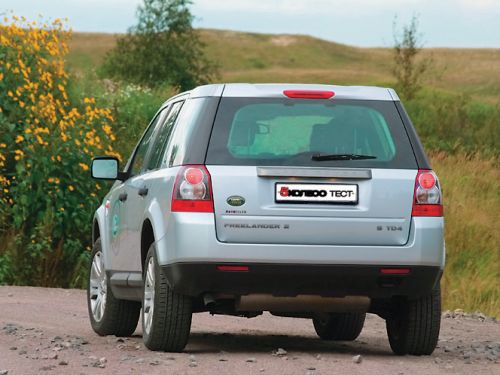
2007 Land Rover Freelander
© Photo: 5 Koleso
Our opinion
In the end, the diesel Freelander with a manual gearbox pleased us — both on asphalt and beyond. With the only difference being that on the highway it behaved like everyone else, while off-road it required a special approach. But who doesn't require that today? Especially if the approach is found, then the return is higher.
© 5 Koleso