
Three Bogatyrs
Last week, the Russian presentation of three updated Land Rover SUVs took place in Myachkovo near Moscow: Discovery, Range Rover Sport, and Range Rover. At first glance, the changes to these cars may seem insignificant. At least externally, the British limited themselves to a standard facelift — updating the grilles, headlights, and bumper shapes. However, inside all three vehicles, much more serious changes occurred. Moreover, the Discovery accumulated so many of them that it formally jumped from the third generation to the fourth.
During the presentation, Land Rover representatives emphasized the new powertrains: two five-liter V8 gasoline engines (naturally aspirated and supercharged) and a three-liter V-shaped diesel "six" with two turbochargers. But besides the engines, the cars demonstrated in Myachkovo can boast a number of other innovations. Among them are modern electronic equipment such as adaptive cruise control, a parking assistant with five video cameras providing a 360-degree surround view, and adaptive air suspension.
To implement all these options, all three models had to completely abandon the previous electrical architecture in favor of a more advanced one, which includes high-speed data transmission over fiber optics. Therefore, it is not surprising that the British spent 500 million pounds sterling — more than 800 million dollars — on what seemed like a simple "restyling."
Land Rover Discovery
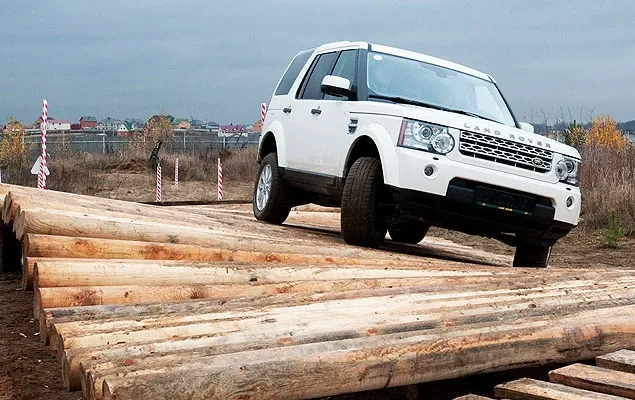
They worked especially thoroughly on the "Disco" in English Gaydon. This model received two new engines — a naturally aspirated five-liter V8 with 375 horsepower and a three-liter bi-turbo diesel TDV6 with 272 horsepower, which replaced the previous 2.7-liter TDV6 with 190 horsepower. In addition, specialists refined the suspension, steering, braking system, and electronic assistants of the "Disco," and also radically updated the interior.
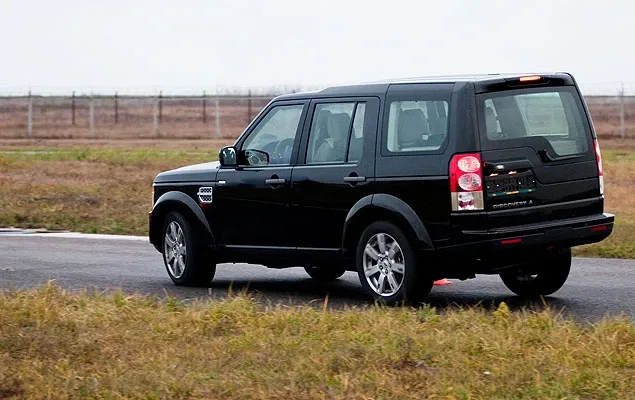
The main improvements in the Discovery's chassis are new steering knuckles, which allowed lowering the SUV's center of gravity closer to the roll axis, and a reinforced anti-roll bar. The goal of such modernization is to reduce body roll on winding roads. Judging by the behavior of the new "Disco" on the race track in Myachkovo, the British engineers succeeded: by feel, the fourth-generation Discovery "leans" noticeably less in corners than the third.
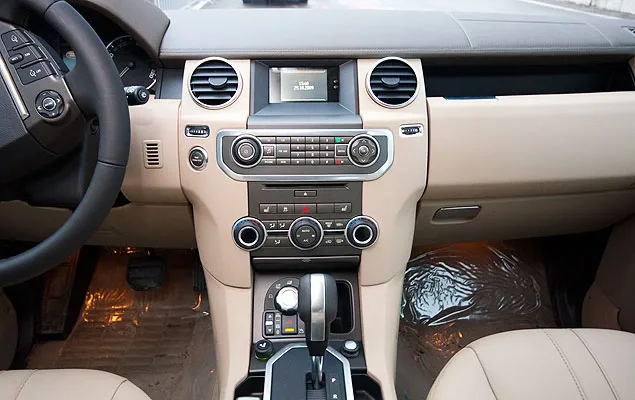
The round Terrain Response mode selector in the Discovery has moved from its usual place behind the automatic gearbox lever to a protrusion on the front console, while in the Range Rover Sport and Range Rover it remains in its previous position. However, the algorithms for the "Rock" and "Sand" programs were refined in Gaydon for all three models. In the first case, the electronics pre-tension the brake pads, reducing braking response time, and in the second, the traction control system, allowing only slight wheel spin, prevents the wheels from digging into loose soil.
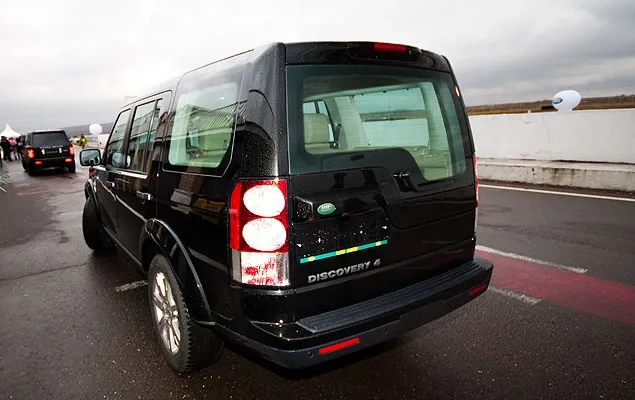
Of course, with the increase in engine power, the Discovery also received more serious brakes, borrowed from the new Range Rover Sport with the naturally aspirated five-liter V8. The diameter of the front ventilated discs is 360 millimeters, and the rear ones are 350 millimeters. Land Rover also has an even more high-performance braking system created jointly with Brembo: front ventilated discs with a diameter of 380 millimeters and rear ones of 365 millimeters. However, it is only available for Supercharged versions of the Range Rover Sport and Range Rover, equipped with the supercharged five-liter V8.
Range Rover Sport
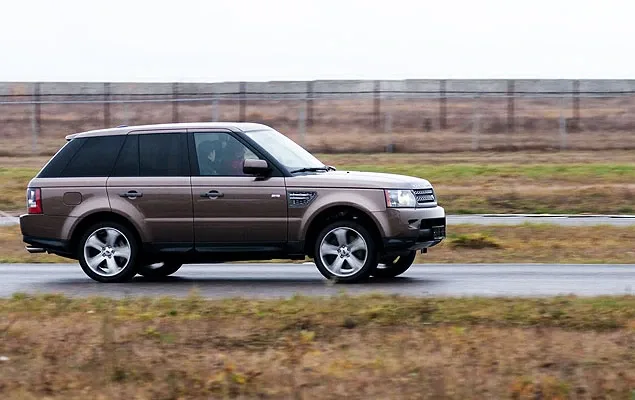
The Range Rover Sport and Range Rover can be ordered with a supercharged version of the new five-liter V8. This 510-horsepower unit, known from the "charged" Jaguar XFR and XKR, develops 625 Nm of torque and effortlessly accelerates any of the SUVs to 100 km/h in 6.2 seconds. True, on the "Sport," thanks to almost car-like steering settings and a stiff suspension, managing this power is noticeably easier.
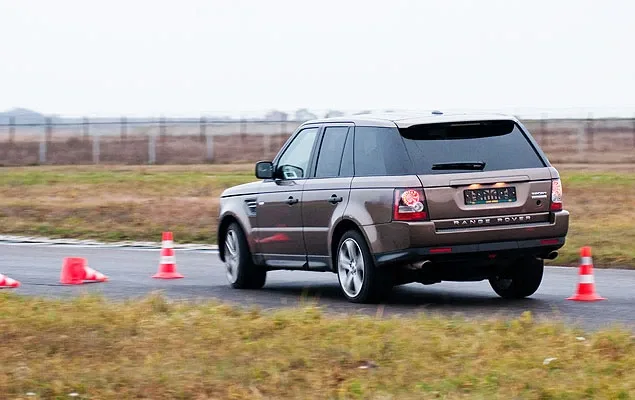
The adaptive air suspension Adaptive Dynamics System is available only for the Range Rover Sport and Range Rover. Its key feature is that the pressure in the air elements is controlled and changed in real time depending on road conditions and driving style. Moreover, ADS sensors perform 500 pressure measurements per second in each of the four air springs.
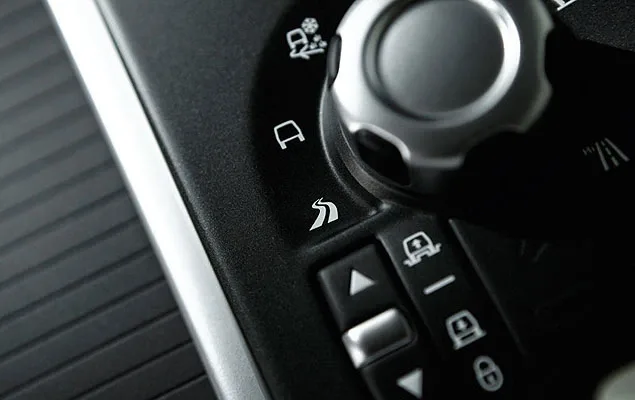
The Terrain Response system on the Range Rover Sport has acquired an additional "Dynamic" mode — for active driving on asphalt. In this mode, the air suspension "tightens," and the electronics responsible for fuel supply, automatic transmission, and stability control switch to sport mode.
Range Rover
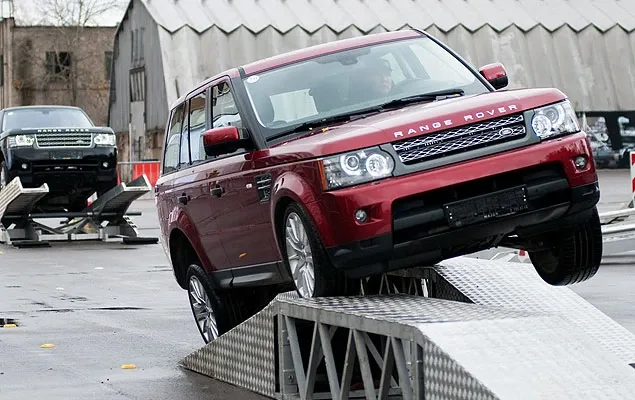
The flagship Range Rover is equipped with adaptive cruise control (ACC), which, when driving in traffic, uses radar to monitor the distance to vehicles ahead. To avoid a collision, ACC can not only release the throttle but also apply emergency braking. Interestingly, when setting up the adaptive cruise control, the driver sets not the distance but the time it takes to cover it — in the range from 1 to 2.2 seconds. By default, ACC is set to 1.8 seconds. During this time, a car traveling at 100 kilometers per hour covers 50 meters.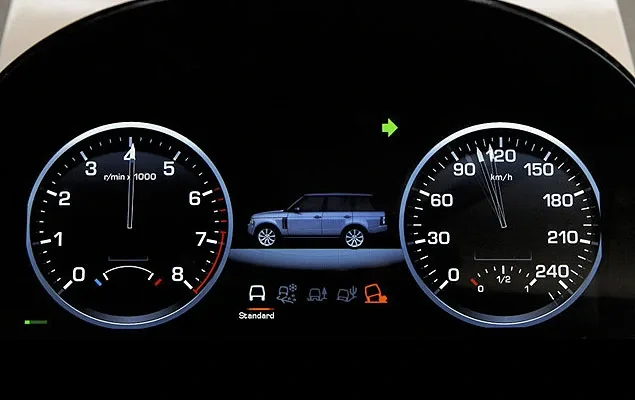
The first thing you notice when getting behind the wheel of the new Range Rover is the new instrument panel, which is a 12-inch LCD display. It shows speedometer and tachometer readings in real time. Thanks to realistic animation, they look exactly like the "round dials" of analog instruments. And another screen "with a secret" is located in the center of the front console. Thanks to technology using the parallax effect (separation of light streams), the image on this display differs for the driver and front passenger. Therefore, the former can follow navigation while the latter watches a DVD.
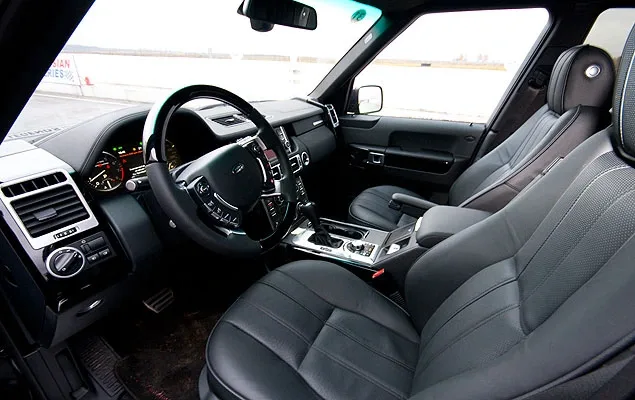
Although externally the new "Land Rovers" differ from their predecessors only in radiator grilles, bumpers, and headlights, inside all three SUVs have undergone significant changes: instead of angular shapes, smooth lines have appeared, the shape of the seats has changed, and new finishing materials have been added to the options list. For example, the top-end Range Rover now has the ability to adjust the lateral support of the driver's and front passenger's seats. In addition, all three models now have a new multifunction steering wheel with buttons for controlling the onboard computer, audio system, and cruise control.
Conclusion
After the restyling, all three SUVs have noticeably increased in price. For example, the cost of the "base" Range Rover with the five-liter naturally aspirated engine has grown from 3 million 149 thousand to 3 million 679 thousand rubles. However, the price increase is unlikely to affect sales of the new "Land Rovers" — queues for the new British cars have already formed at dealerships.
By the way, in England itself, which still remains the main sales market for Land Rover, LR sales have been growing for the second month in a row, and experts are confident that demand has increased precisely due to the appearance of the new model range. So, it seems the crisis is over. At least in the particular segment of premium SUVs.
Technical Specifications
| Discovery V8 | Range Rover TDV6 | Range Rover V8 Supercharged | |
| Length, mm | 4838 | 4783 | 4972 |
| Width, mm | 2022 | 2004 | 2034 |
| Height, mm | 1912 | 1784 | 1877 |
| Wheelbase, mm | 2885 | 2745 | 2880 |
| Engine displacement, cm3 | 4999 | 2993 | 5000 |
| Power, hp/rpm | 375/6500 | 245/4000 | 510/6000-6500 |
| Torque, Nm/rpm | 510/3500 | 600/1900 | 625/2000-2500 |
| Maximum speed, km/h | 195 | 193 | 225 |
| Acceleration from 0 to 100 km/h, s | 7.9 | 9.3 | 6.2 |
| DISCUSS | [ comments: NONE ] |