
 No matter how you look at it, they say it for a reason – every cloud has a silver lining. And our hero is a vivid example. After all, the legendary Land Rover owes its birth to World War II, namely the post-war situation in Great Britain. After the war, the Rover company had a problem: the destroyed production was moved from Coventry to an aircraft factory in Solihull, which had enormous capacity. But loading it with only the passenger car models that were produced at that time was not possible. Something new was needed. No matter how you look at it, they say it for a reason – every cloud has a silver lining. And our hero is a vivid example. After all, the legendary Land Rover owes its birth to World War II, namely the post-war situation in Great Britain. After the war, the Rover company had a problem: the destroyed production was moved from Coventry to an aircraft factory in Solihull, which had enormous capacity. But loading it with only the passenger car models that were produced at that time was not possible. Something new was needed. |
 The Wilks brothers, Maurice and Spencer, who at that time headed the board of directors of Rover, proposed the production of a utilitarian all-wheel-drive vehicle with a cheap and simple design, requiring a minimum of sheet steel for manufacturing (unlike aluminum, steel was in short supply). According to legend, the brothers were discussing the fate of the Jeep Willys, which the elder used to work on his estate on the island of Anglesey. – What will happen when it finally falls apart? – Spencer asked. – I'll buy the same one, – Maurice replied. The Wilks brothers, Maurice and Spencer, who at that time headed the board of directors of Rover, proposed the production of a utilitarian all-wheel-drive vehicle with a cheap and simple design, requiring a minimum of sheet steel for manufacturing (unlike aluminum, steel was in short supply). According to legend, the brothers were discussing the fate of the Jeep Willys, which the elder used to work on his estate on the island of Anglesey. – What will happen when it finally falls apart? – Spencer asked. – I'll buy the same one, – Maurice replied. |
 It is believed that it was at that moment that they came up with the idea of creating what later became the first Land Rover. The body was decided to be made of aluminum, a light and corrosion-resistant material that was in abundance after the war. Economy also played a big role in the design of the chassis. Its elements were decided not to be stamped, but welded from steel strips. The resulting side members and cross members were then welded into a single ladder-type frame, which became the hallmark of the Land Rover SUV for many years to come. It is believed that it was at that moment that they came up with the idea of creating what later became the first Land Rover. The body was decided to be made of aluminum, a light and corrosion-resistant material that was in abundance after the war. Economy also played a big role in the design of the chassis. Its elements were decided not to be stamped, but welded from steel strips. The resulting side members and cross members were then welded into a single ladder-type frame, which became the hallmark of the Land Rover SUV for many years to come. |
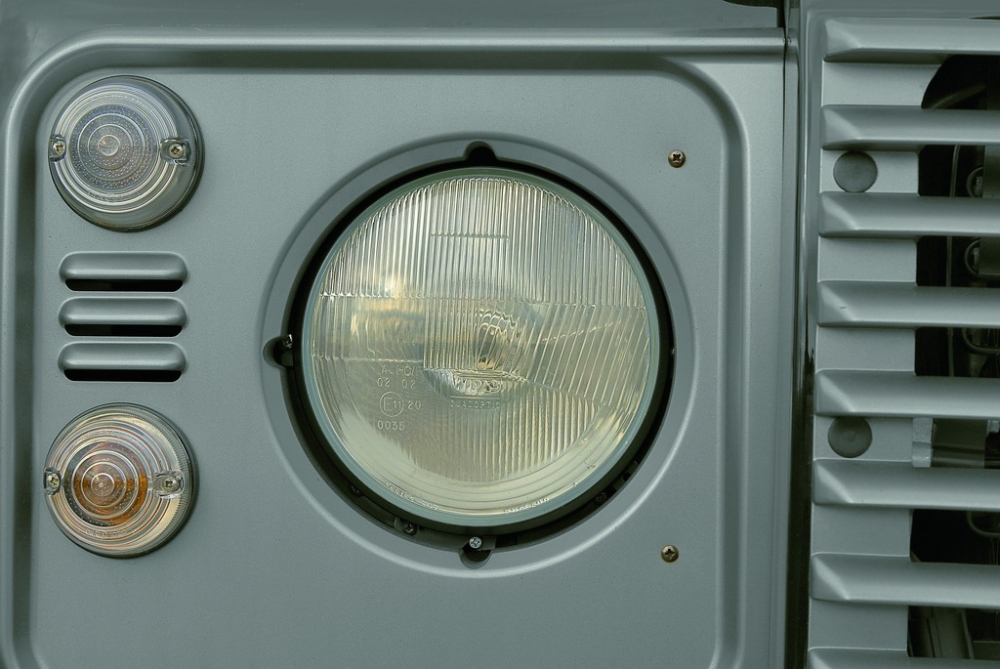
 By the end of 1948, a trial series of 48 units was produced with engines, gearboxes, and upgraded axles from Rover passenger models. And on April 30, 1948, the Land Rover was presented to the public at the Amsterdam Motor Show. It was an open car with flat body panels, only a front row of seats, and painfully familiar closely set headlights on the radiator grille (the version with an all-metal Station Wagon body appeared only in 1951, and the name Defender – after 1990). A real, uncompromising all-wheel-drive workhorse! That's what the "Def" remains to this day. Having lived such a long life, having undergone a number of modernizations, but, it should be noted, not having changed much, it is still in service and still in demand. And the figure of almost 2 million buyers speaks eloquently about this! By the end of 1948, a trial series of 48 units was produced with engines, gearboxes, and upgraded axles from Rover passenger models. And on April 30, 1948, the Land Rover was presented to the public at the Amsterdam Motor Show. It was an open car with flat body panels, only a front row of seats, and painfully familiar closely set headlights on the radiator grille (the version with an all-metal Station Wagon body appeared only in 1951, and the name Defender – after 1990). A real, uncompromising all-wheel-drive workhorse! That's what the "Def" remains to this day. Having lived such a long life, having undergone a number of modernizations, but, it should be noted, not having changed much, it is still in service and still in demand. And the figure of almost 2 million buyers speaks eloquently about this! |
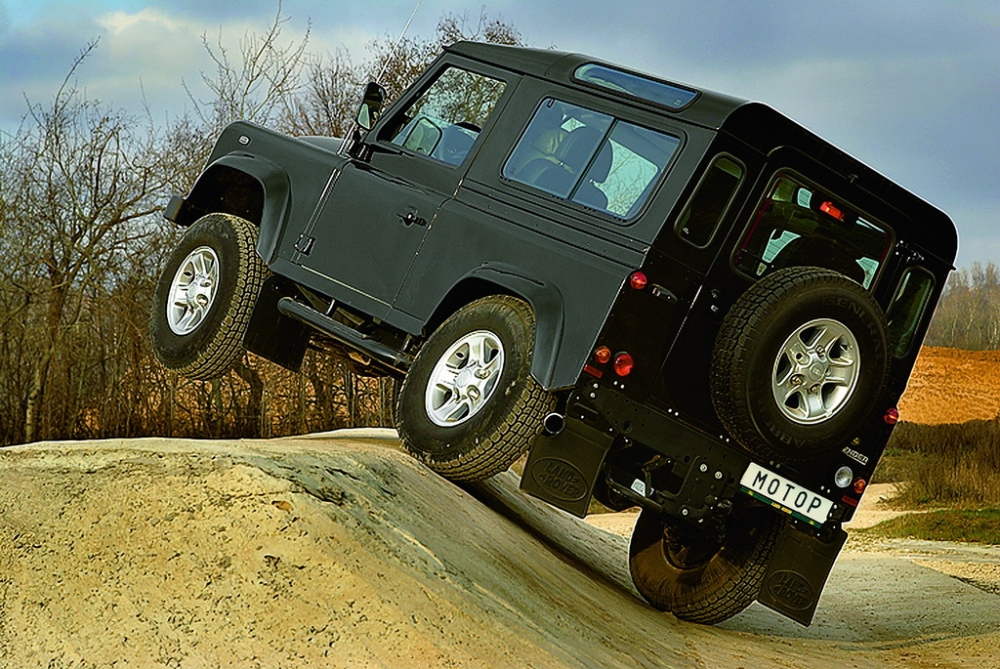 Today's Defender of the 2007 model year is the last in the history of Land Rover. They say that another model will replace it. Fans are grieving, and not without reason. And with them, farmers, utility workers, various non-governmental organizations (UN, Red Cross, etc.) and the Armed Forces of a number of states. This is not surprising, because legends are told about the incredible off-road capability and indestructibility of the car. Today's Defender of the 2007 model year is the last in the history of Land Rover. They say that another model will replace it. Fans are grieving, and not without reason. And with them, farmers, utility workers, various non-governmental organizations (UN, Red Cross, etc.) and the Armed Forces of a number of states. This is not surprising, because legends are told about the incredible off-road capability and indestructibility of the car. |
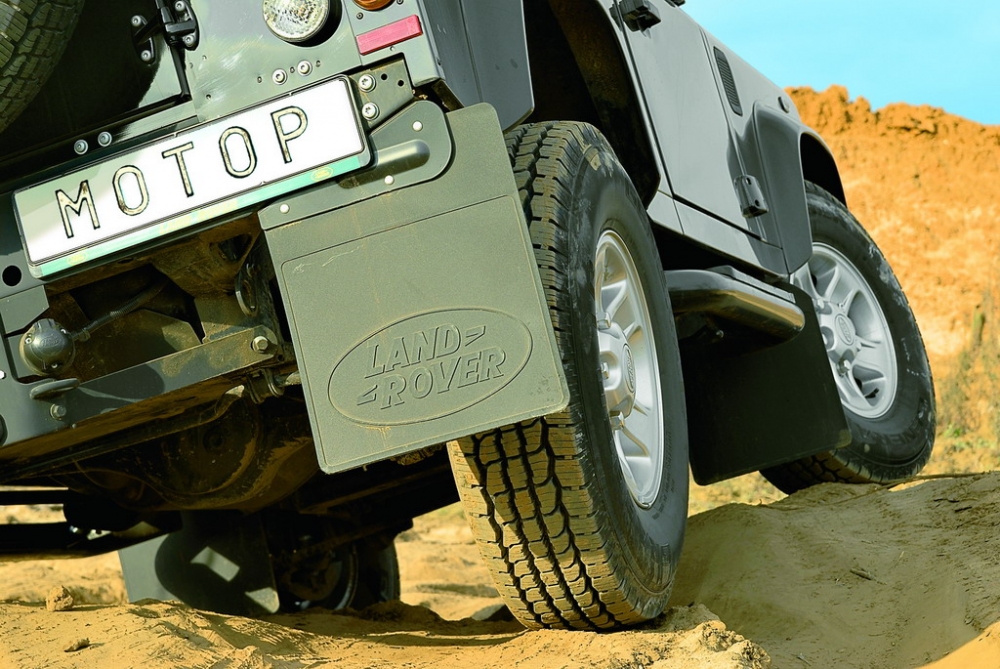 In the meantime, let's try to figure out what new things have appeared in this generation of Defender compared to the previous one, which was produced without major changes from 1990 to 2006. And has it lost its famous qualities? The Land Rover is visible from afar. Of course, almost 2 meters tall! And such flat-cubic shapes are not to be found in the automotive world nowadays. I approach the car, holding in my hand a key made of simple plastic with the same central locking remote. There is some trepidation in my soul. After all, the Defender has the strongest charisma! With all its appearance, it seems to declare: "I am history! I can do anything!" A man! In the meantime, let's try to figure out what new things have appeared in this generation of Defender compared to the previous one, which was produced without major changes from 1990 to 2006. And has it lost its famous qualities? The Land Rover is visible from afar. Of course, almost 2 meters tall! And such flat-cubic shapes are not to be found in the automotive world nowadays. I approach the car, holding in my hand a key made of simple plastic with the same central locking remote. There is some trepidation in my soul. After all, the Defender has the strongest charisma! With all its appearance, it seems to declare: "I am history! I can do anything!" A man! |
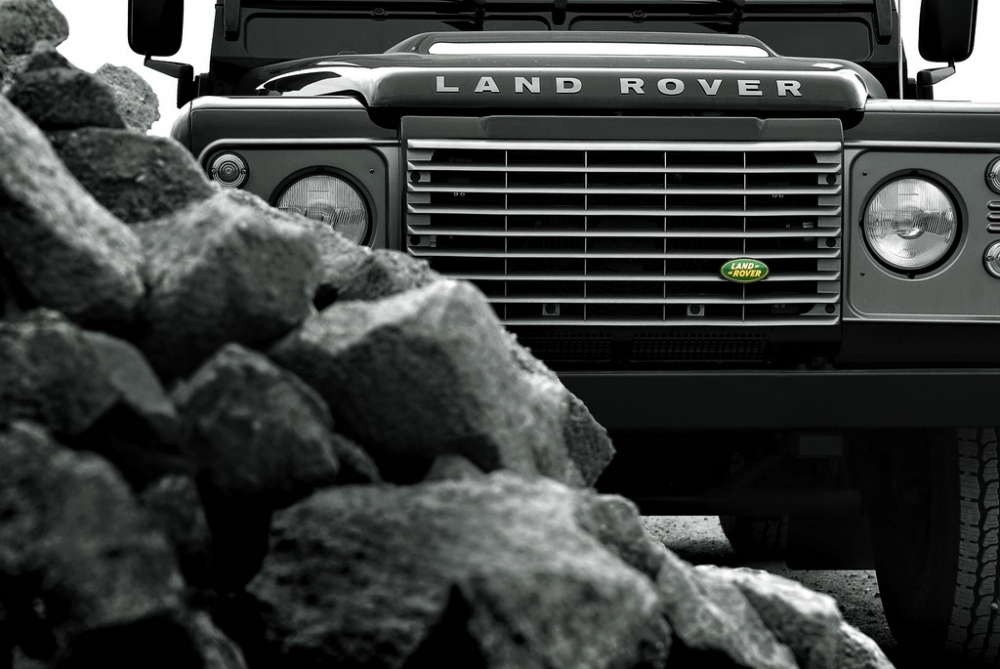
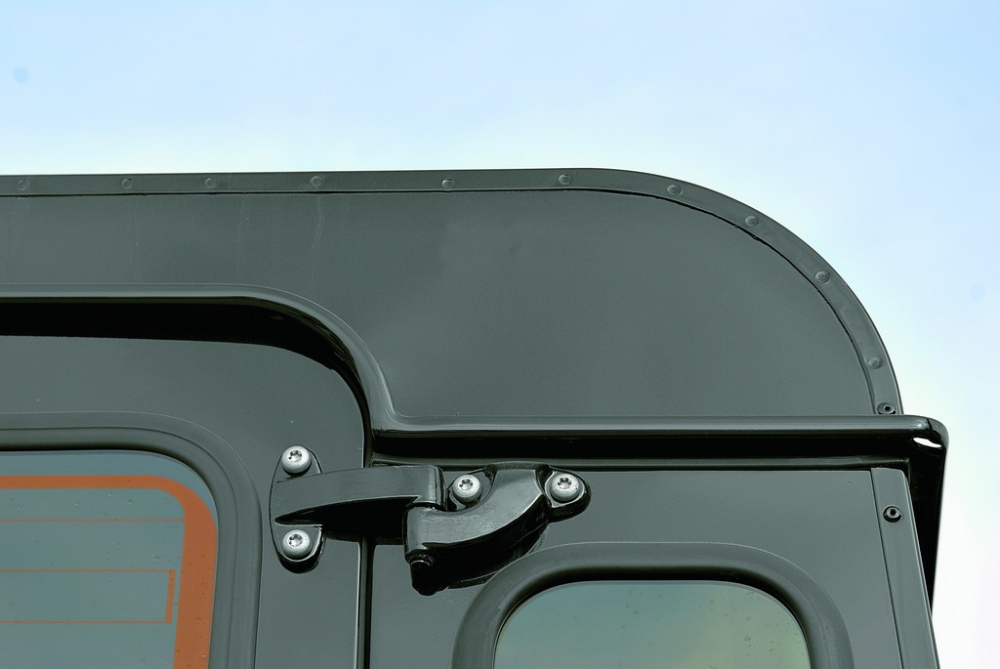
 I try to find at least some external differences from the previous one. Long research leads me to the Land Rover inscription on the humped hood, to a slightly modified radiator grille, and to the absence of ventilation windows under the windshield. Conservatism is one of the characteristic features of the "Def". Let's see what's inside. I open the thin and absolutely flat door and, with the help of a step, climb with difficulty onto the seat's height. I immediately notice the "update" – at the back, instead of "benches", two full-fledged seats have appeared. The passage to them is unique – through the rear door, for which a special step is provided. I try to find at least some external differences from the previous one. Long research leads me to the Land Rover inscription on the humped hood, to a slightly modified radiator grille, and to the absence of ventilation windows under the windshield. Conservatism is one of the characteristic features of the "Def". Let's see what's inside. I open the thin and absolutely flat door and, with the help of a step, climb with difficulty onto the seat's height. I immediately notice the "update" – at the back, instead of "benches", two full-fledged seats have appeared. The passage to them is unique – through the rear door, for which a special step is provided. |
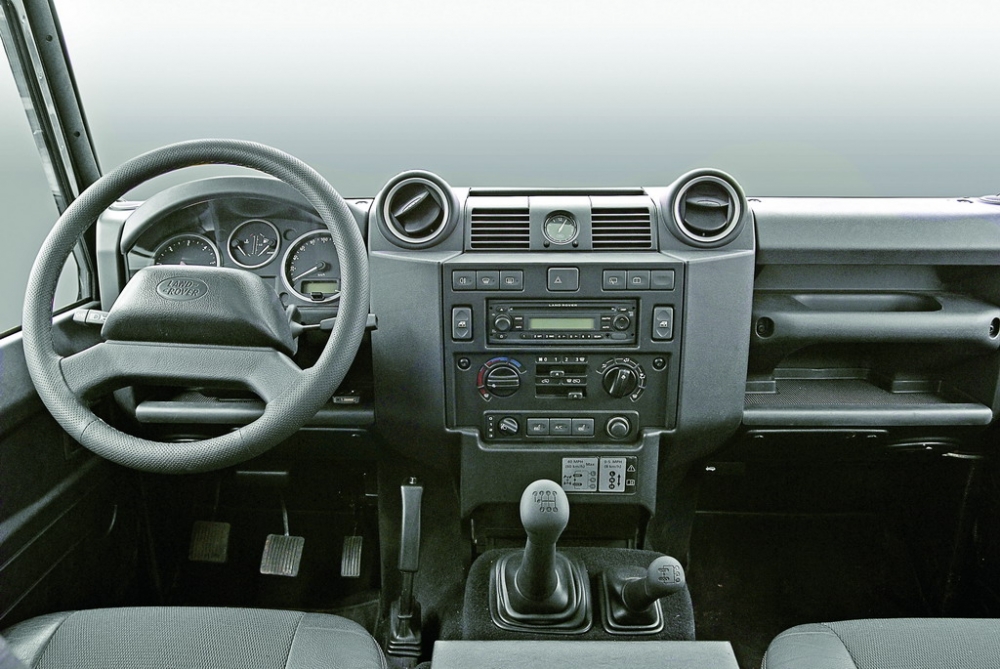 You have to sit half-turned, because under them are the wheel arches. But they can be cleverly folded, increasing the luggage compartment. The front seats are new, with heating. They are mounted, as before, on high angular podiums. Their profile is not bad, but nothing more. There are only two adjustments, and besides, the ranges are clearly insufficient for a height above 180 cm. The thing is that the seats simply rest against a steel pipe across the cabin, very similar to a roll cage. The steering column is not adjustable at all, and the pedal assembly is strongly shifted to the left, the clutch pedal is right next to the wall. Not only is there a catastrophic lack of space, but you also have to bend your legs in a bizarre way to "hit" the right pedals. You have to sit half-turned, because under them are the wheel arches. But they can be cleverly folded, increasing the luggage compartment. The front seats are new, with heating. They are mounted, as before, on high angular podiums. Their profile is not bad, but nothing more. There are only two adjustments, and besides, the ranges are clearly insufficient for a height above 180 cm. The thing is that the seats simply rest against a steel pipe across the cabin, very similar to a roll cage. The steering column is not adjustable at all, and the pedal assembly is strongly shifted to the left, the clutch pedal is right next to the wall. Not only is there a catastrophic lack of space, but you also have to bend your legs in a bizarre way to "hit" the right pedals. |
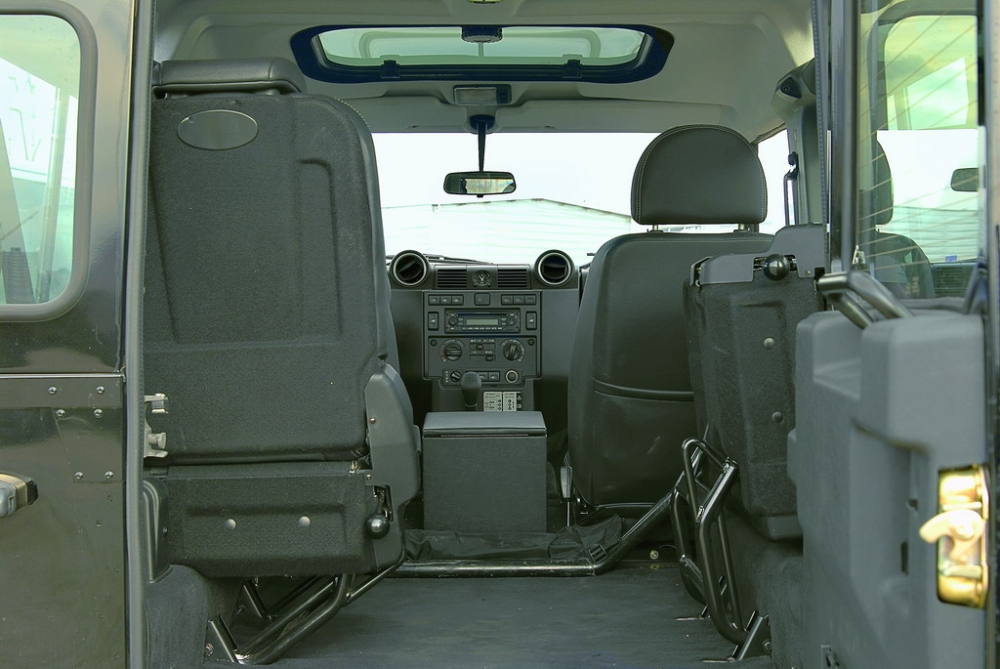 You sit, bent over three times. There's nowhere to put your left hand, you literally prop up the door with your shoulder. You can remember that there is a jeep-style option – elbow out the window, and while slightly sticking your head out, watch both the car's wheels and the extreme overall points on one side. For overcoming obstacles, this is very convenient, I don't argue, I was convinced of it later, but in cold weather you won't drive with an open window. With it closed, you have to use the "completely new heating and air conditioning system" (that's why, it turns out, the famous slots under the windshield disappeared). You sit, bent over three times. There's nowhere to put your left hand, you literally prop up the door with your shoulder. You can remember that there is a jeep-style option – elbow out the window, and while slightly sticking your head out, watch both the car's wheels and the extreme overall points on one side. For overcoming obstacles, this is very convenient, I don't argue, I was convinced of it later, but in cold weather you won't drive with an open window. With it closed, you have to use the "completely new heating and air conditioning system" (that's why, it turns out, the famous slots under the windshield disappeared). |
 The air conditioner was never needed in November, but the "heater"... That's quite a thing! The fan even at the "first" speed fills the cabin with serious noise. It's impossible to achieve the optimal temperature – either cold or hot. Those who have driven various cars of the domestic auto industry, like the "classics", will understand me well. The Defender, meanwhile, blew noticeably colder air to the right side of the cabin than to the driver's side. And in general, to warm up the "insides" takes time. The air conditioner was never needed in November, but the "heater"... That's quite a thing! The fan even at the "first" speed fills the cabin with serious noise. It's impossible to achieve the optimal temperature – either cold or hot. Those who have driven various cars of the domestic auto industry, like the "classics", will understand me well. The Defender, meanwhile, blew noticeably colder air to the right side of the cabin than to the driver's side. And in general, to warm up the "insides" takes time. |
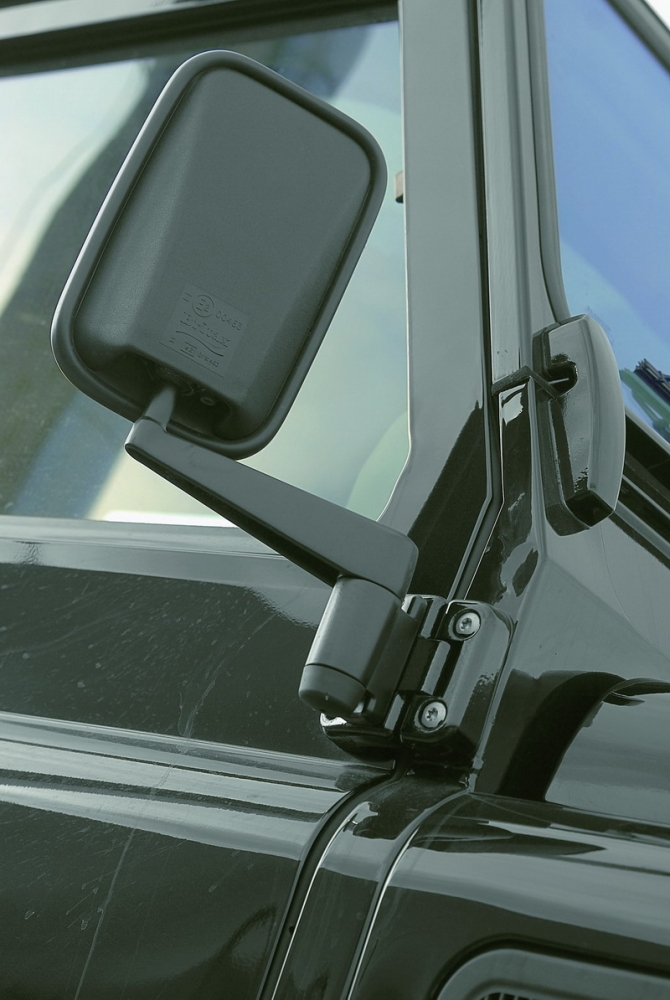
 It's not surprising that the aluminum body is still practically devoid of sound and heat insulation. It's better to warm up while driving. At "idle", the engine temperature drops, and with it the intensity of heating decreases. A living car! A real one! Well, to hell with comfort, it's time to understand why people buy this damn uncomfortable car? I manually adjust the mirrors, with difficulty pushing my hand with the key into the gap between the steering wheel, the door, and the steering column lever for turning on the "lights" (the ignition switch is on the left, the car was originally "right-hand drive"), pull the floor handbrake, put the long gear lever into "neutral" and, finally, start the engine. It's not surprising that the aluminum body is still practically devoid of sound and heat insulation. It's better to warm up while driving. At "idle", the engine temperature drops, and with it the intensity of heating decreases. A living car! A real one! Well, to hell with comfort, it's time to understand why people buy this damn uncomfortable car? I manually adjust the mirrors, with difficulty pushing my hand with the key into the gap between the steering wheel, the door, and the steering column lever for turning on the "lights" (the ignition switch is on the left, the car was originally "right-hand drive"), pull the floor handbrake, put the long gear lever into "neutral" and, finally, start the engine. |
 By the way, it's new. The 2.4-liter, 122-horsepower common rail turbodiesel, even though it's installed on the Ford Transit, wakes up in response to turning the key with the sound of a truck. Especially during a cold start. Vibrations are generously transmitted to the body, steering wheel, gear lever, and "transfer case". I warm up the engine for a long time. Well, the temperature gauge needle has barely moved, steam from my mouth is almost gone, it's time to hit the road. I press the heavy clutch, "stick" first gear, again of the new reinforced 6-speed gearbox, add gas. The Defender briskly starts off, but this briskness is illusory. It is due to the very "short" first gear. A jerk, and it's already time to engage second. And so I continue to pump the muscles of my left leg with the clutch, and with my right hand find gears in the gearbox. By the way, it's new. The 2.4-liter, 122-horsepower common rail turbodiesel, even though it's installed on the Ford Transit, wakes up in response to turning the key with the sound of a truck. Especially during a cold start. Vibrations are generously transmitted to the body, steering wheel, gear lever, and "transfer case". I warm up the engine for a long time. Well, the temperature gauge needle has barely moved, steam from my mouth is almost gone, it's time to hit the road. I press the heavy clutch, "stick" first gear, again of the new reinforced 6-speed gearbox, add gas. The Defender briskly starts off, but this briskness is illusory. It is due to the very "short" first gear. A jerk, and it's already time to engage second. And so I continue to pump the muscles of my left leg with the clutch, and with my right hand find gears in the gearbox. |
 This, I'll tell you, is work. Not for the weak. In Moscow traffic jams – sheer torment. Later, having gotten used to it, I realized that you need to start in second (first is exclusively for heavy off-road or when towing a trailer), and then you can immediately engage fourth, or even fifth. The torquey (360 Nm) and elastic diesel will calmly digest it, and it almost doesn't affect the dynamics. This, I'll tell you, is work. Not for the weak. In Moscow traffic jams – sheer torment. Later, having gotten used to it, I realized that you need to start in second (first is exclusively for heavy off-road or when towing a trailer), and then you can immediately engage fourth, or even fifth. The torquey (360 Nm) and elastic diesel will calmly digest it, and it almost doesn't affect the dynamics. |
 The Defender doesn't shine with dynamics. It accelerates unhurriedly, with the dignity of an English aristocrat. If you try, you can get it going, after an eternity, up to 140 km/h "downhill", but why? The "axles", tires with a profile of 85, a high center of mass, and a worm steering mechanism – not the best seasonings for fast driving. The car "bucks" on bumps, floats on a straight line. At the same time, the engine screams displeasedly, wind noise is everywhere, the "heater" howls, the suspension rattles. The sound system can only offer a lousy sound, and is unable to shout over this cacophony. Having decided to brake, you will once again feel like a man. The Defender doesn't shine with dynamics. It accelerates unhurriedly, with the dignity of an English aristocrat. If you try, you can get it going, after an eternity, up to 140 km/h "downhill", but why? The "axles", tires with a profile of 85, a high center of mass, and a worm steering mechanism – not the best seasonings for fast driving. The car "bucks" on bumps, floats on a straight line. At the same time, the engine screams displeasedly, wind noise is everywhere, the "heater" howls, the suspension rattles. The sound system can only offer a lousy sound, and is unable to shout over this cacophony. Having decided to brake, you will once again feel like a man. |
 The force on the pedal is truck-like, is there even a vacuum booster? The deceleration, despite disc brakes all around, leaves much to be desired, the 2-ton hulk yaws even more, you have to grip the "steering wheel" tightly. This is some kind of gym on wheels! You ask: – Well, what's the point? What's the use of this clumsy, slow lump? We went to find out at the Land Rover Experience off-road site, and then to one of the military training grounds of the Taman Division in the Moscow region. The force on the pedal is truck-like, is there even a vacuum booster? The deceleration, despite disc brakes all around, leaves much to be desired, the 2-ton hulk yaws even more, you have to grip the "steering wheel" tightly. This is some kind of gym on wheels! You ask: – Well, what's the point? What's the use of this clumsy, slow lump? We went to find out at the Land Rover Experience off-road site, and then to one of the military training grounds of the Taman Division in the Moscow region. |
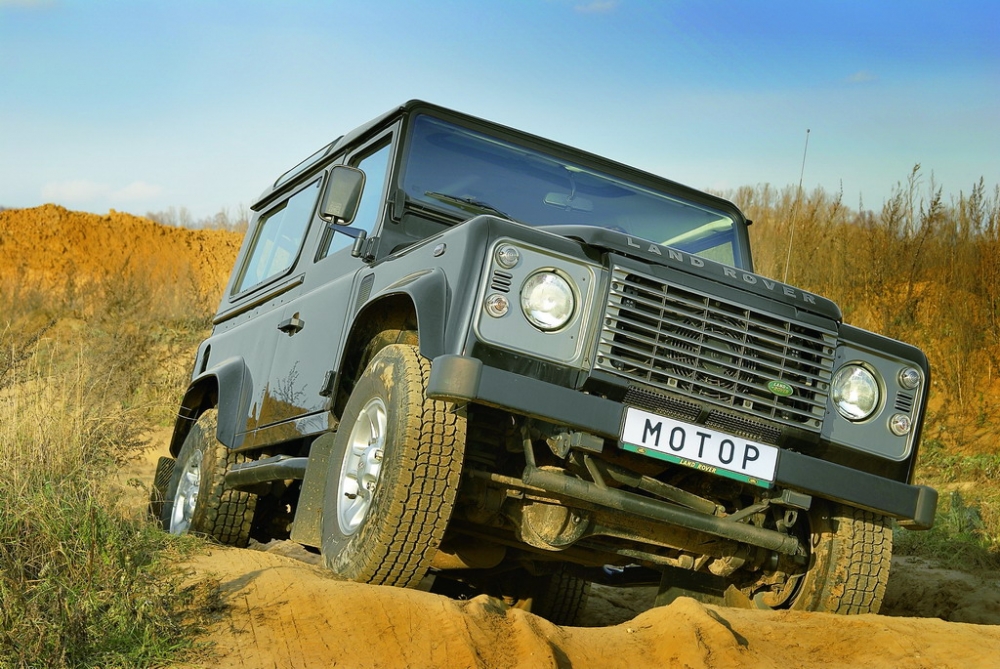
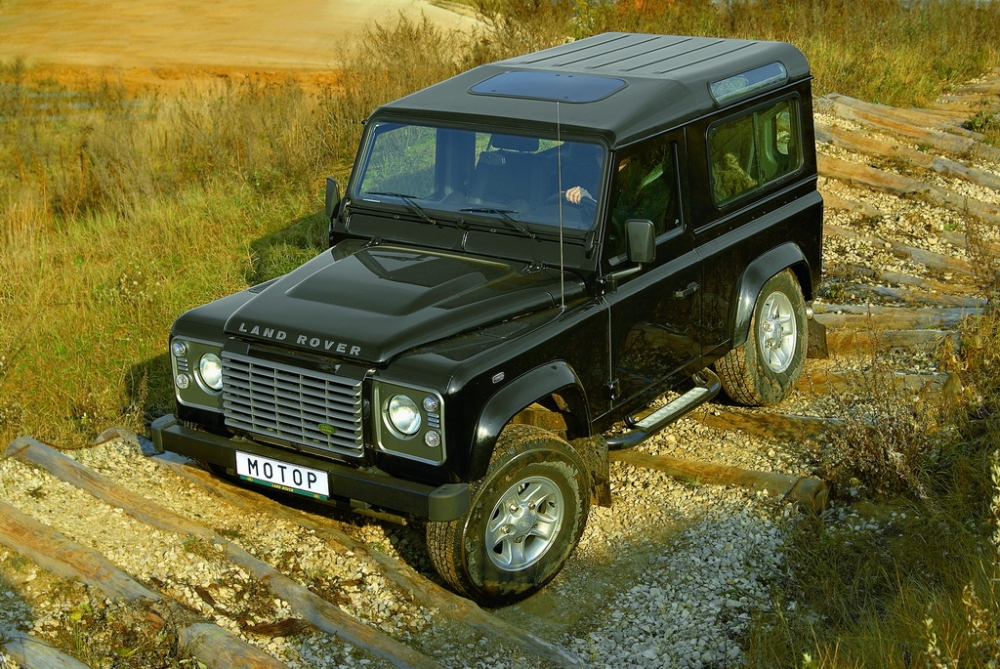
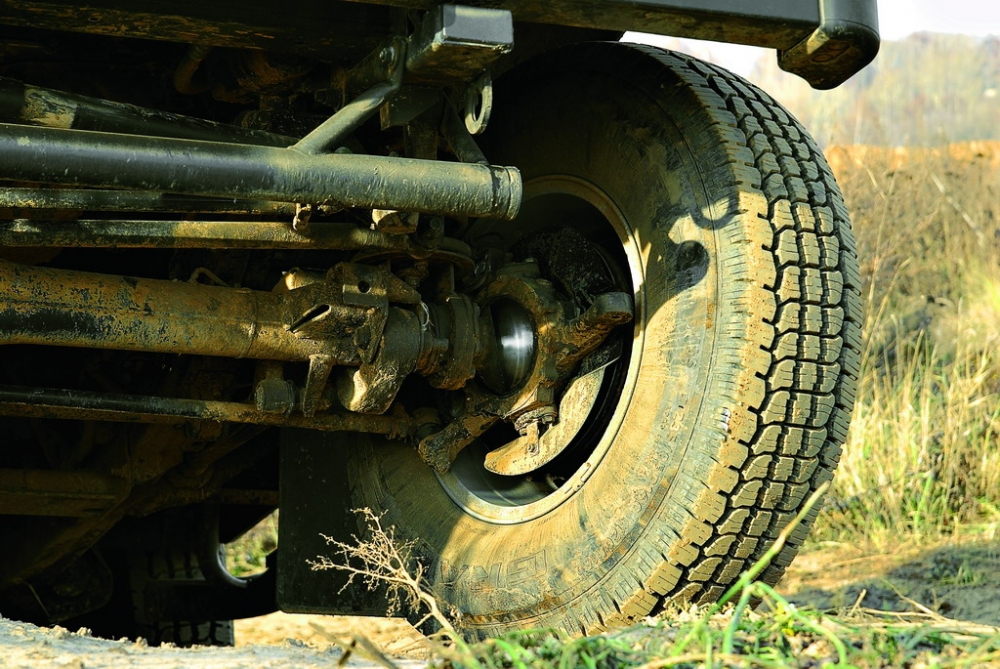
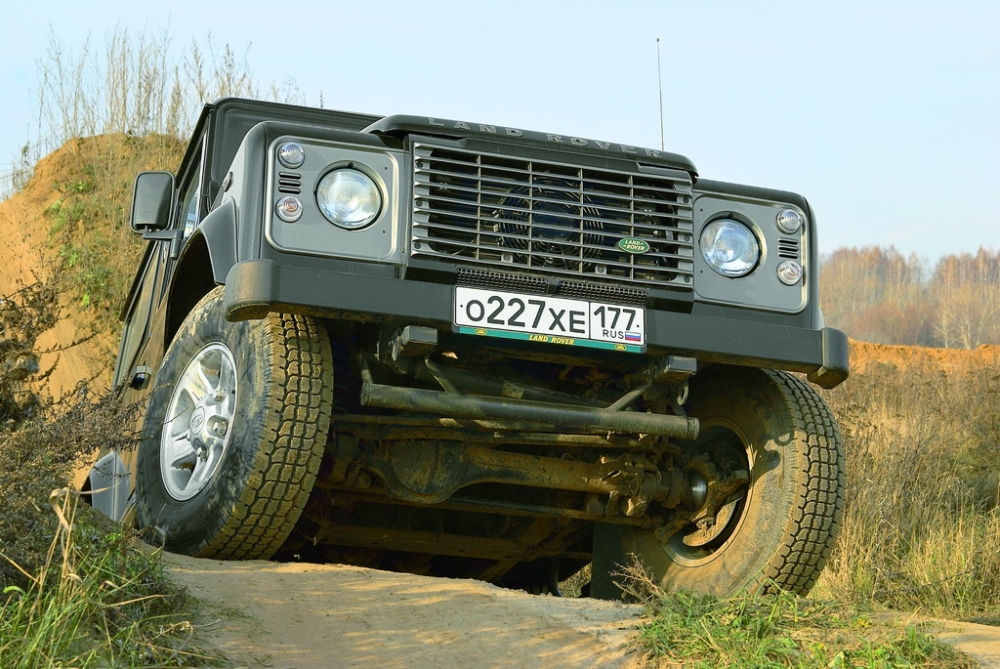
 Off-road... And not "parquet" like the road to the dacha, but real, seemingly impassable off-road. That's where the Defender shows itself in all its glory! That's where it demonstrates its most extreme qualities – off-road capability, reliability, indestructibility, tenacity, and amazing stability. The simple but rigid design, invented by the Wilks brothers back in 1948, remains unsurpassed to this day. Short overhangs and wheelbase, a powerful frame, huge suspension travel, and, of course, permanent all-wheel drive – a crazy off-road cocktail. All vital components are well hidden. Off-road... And not "parquet" like the road to the dacha, but real, seemingly impassable off-road. That's where the Defender shows itself in all its glory! That's where it demonstrates its most extreme qualities – off-road capability, reliability, indestructibility, tenacity, and amazing stability. The simple but rigid design, invented by the Wilks brothers back in 1948, remains unsurpassed to this day. Short overhangs and wheelbase, a powerful frame, huge suspension travel, and, of course, permanent all-wheel drive – a crazy off-road cocktail. All vital components are well hidden. |
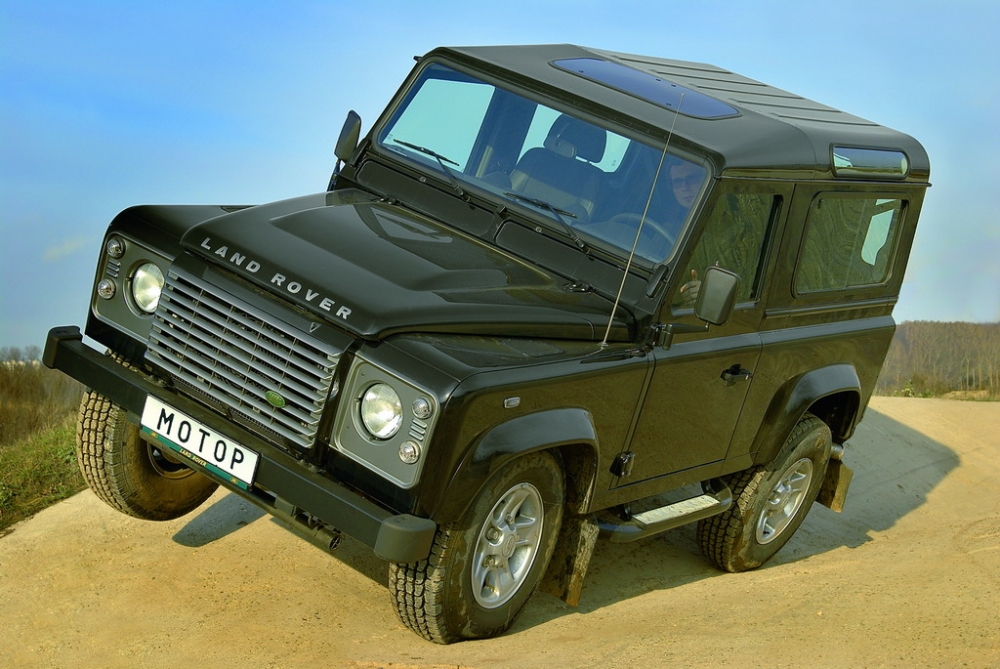
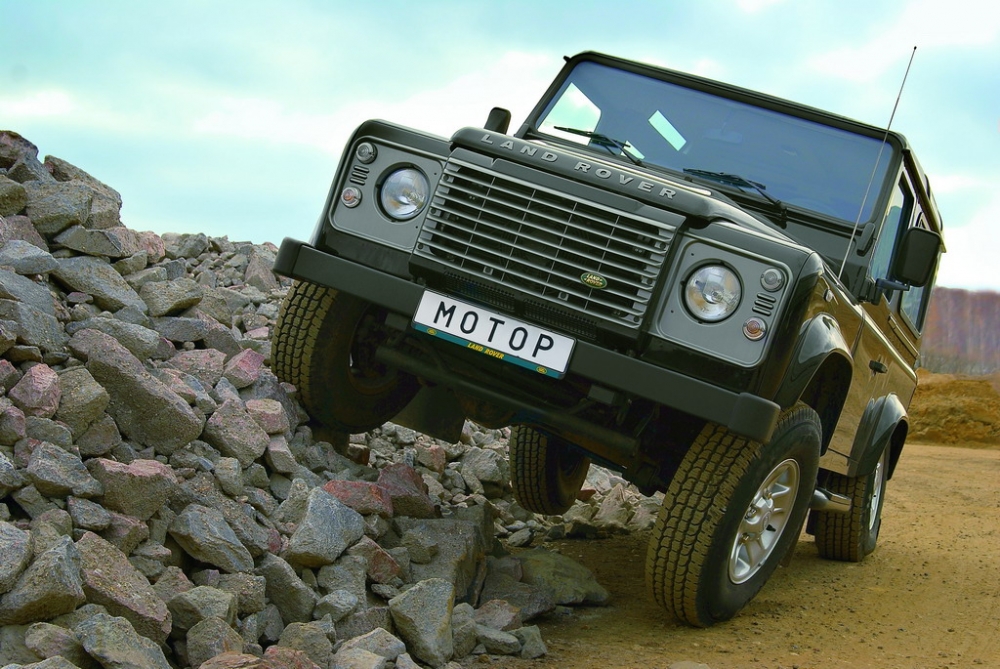
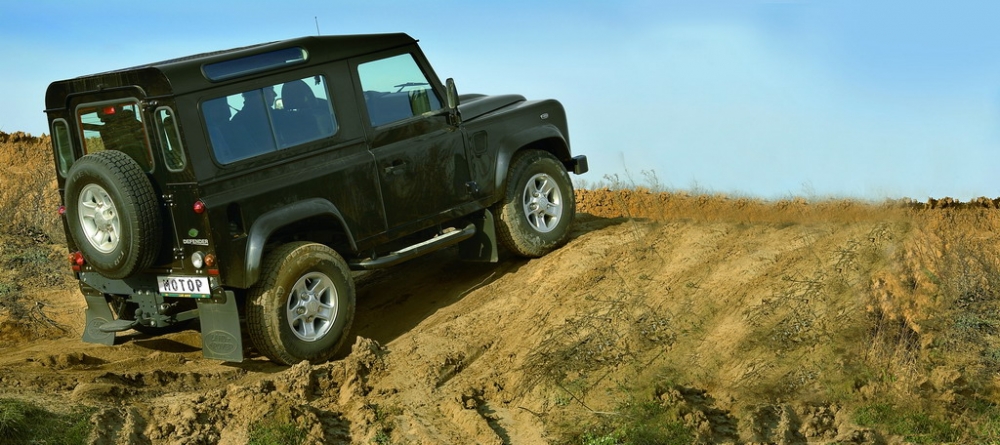 The lower points – the "axles", steps, and frame – that's not scary. What the Land Rover does in places where it's problematic to even move on foot, you have to see. Not even see, but feel. Sitting in the cabin on a monstrous longitudinal slope, my unprepared vestibular apparatus categorically refused to adequately perceive what was happening. The brain said that this was impossible, the car should have flipped over long ago, but it only continued to move forward imperturbably. On the terrible bumps of the training ground, sometimes alternating in a checkerboard pattern, the Defender demonstrated a huge angle of axle articulation. The lower points – the "axles", steps, and frame – that's not scary. What the Land Rover does in places where it's problematic to even move on foot, you have to see. Not even see, but feel. Sitting in the cabin on a monstrous longitudinal slope, my unprepared vestibular apparatus categorically refused to adequately perceive what was happening. The brain said that this was impossible, the car should have flipped over long ago, but it only continued to move forward imperturbably. On the terrible bumps of the training ground, sometimes alternating in a checkerboard pattern, the Defender demonstrated a huge angle of axle articulation. |
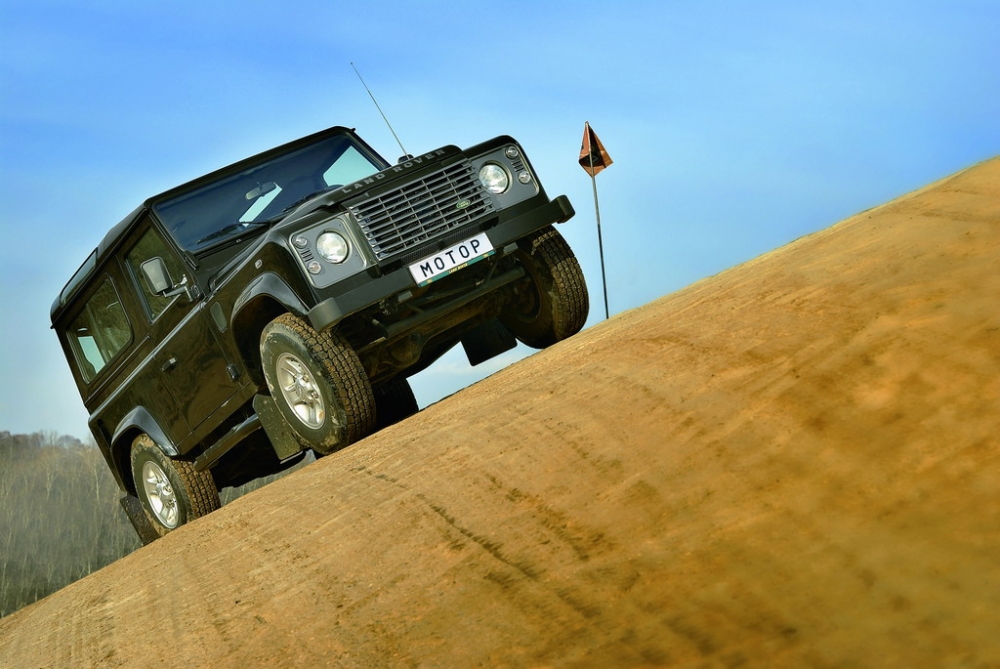 It's very difficult to hang it diagonally, one of the axles will always catch. Sometimes the front wheel hung in the air at a height of a meter above the ground. No problem. We engage the center differential lock, and forward. And Traction Control will back you up if anything. The approach and departure angles (47º) are almost equal to the maximum climb angle (45º). What does that mean? It means that if, having approached a slope, you haven't hit it with the bumper, you'll be able to climb it. Provided, of course, that traction is sufficient. And can you imagine what it's like to climb a 45-degree hill? From the cabin, it looks like you're climbing a sheer wall. It's very difficult to hang it diagonally, one of the axles will always catch. Sometimes the front wheel hung in the air at a height of a meter above the ground. No problem. We engage the center differential lock, and forward. And Traction Control will back you up if anything. The approach and departure angles (47º) are almost equal to the maximum climb angle (45º). What does that mean? It means that if, having approached a slope, you haven't hit it with the bumper, you'll be able to climb it. Provided, of course, that traction is sufficient. And can you imagine what it's like to climb a 45-degree hill? From the cabin, it looks like you're climbing a sheer wall. |
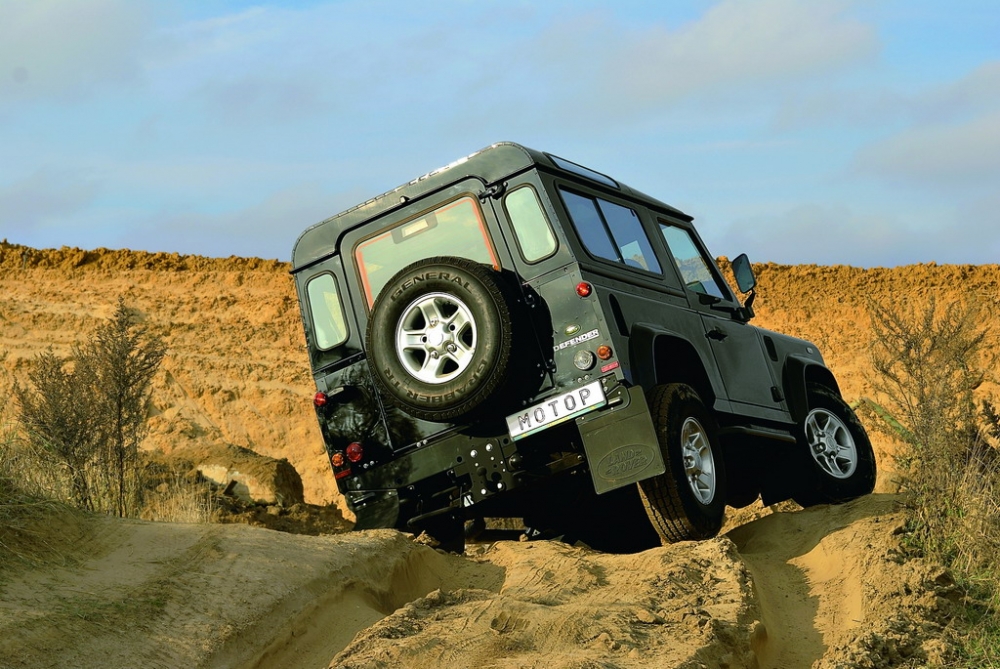 The same applies to descents – as if you're falling into an abyss! Very intense sensations, not for the faint of heart. The passenger to my right always sat with a stone face, clutching everything he could. But after overcoming the next obstacle, a stupid smile appeared on his face, he walked around the obstacle on foot, and in his eyes one could read: "This is impossible!" By the way, the Defender did all this on the regular "high" gear range. The "low" range for some reason engaged poorly, it kept popping out. However, it's hard to even imagine the places where a low range would be needed! The same applies to descents – as if you're falling into an abyss! Very intense sensations, not for the faint of heart. The passenger to my right always sat with a stone face, clutching everything he could. But after overcoming the next obstacle, a stupid smile appeared on his face, he walked around the obstacle on foot, and in his eyes one could read: "This is impossible!" By the way, the Defender did all this on the regular "high" gear range. The "low" range for some reason engaged poorly, it kept popping out. However, it's hard to even imagine the places where a low range would be needed! |
 Of course, the Land Rover Defender ideally should not be the only car in the family. Perhaps not even the second, but the third. A kind of toy. But a toy for adults, for men. The Defender is a car for the strong in spirit. For those who are ready to sacrifice comfort, dynamics, and handling in favor of amazing off-road qualities. For "jeepers" first of all. For those who love hunting and fishing. For those who have to operate the car in harsh conditions, for example, farmers. For those who just like to climb somewhere God knows where in a car. It's addictive, you know, feeling like the king of nature in a car. Of course, the Land Rover Defender ideally should not be the only car in the family. Perhaps not even the second, but the third. A kind of toy. But a toy for adults, for men. The Defender is a car for the strong in spirit. For those who are ready to sacrifice comfort, dynamics, and handling in favor of amazing off-road qualities. For "jeepers" first of all. For those who love hunting and fishing. For those who have to operate the car in harsh conditions, for example, farmers. For those who just like to climb somewhere God knows where in a car. It's addictive, you know, feeling like the king of nature in a car. |
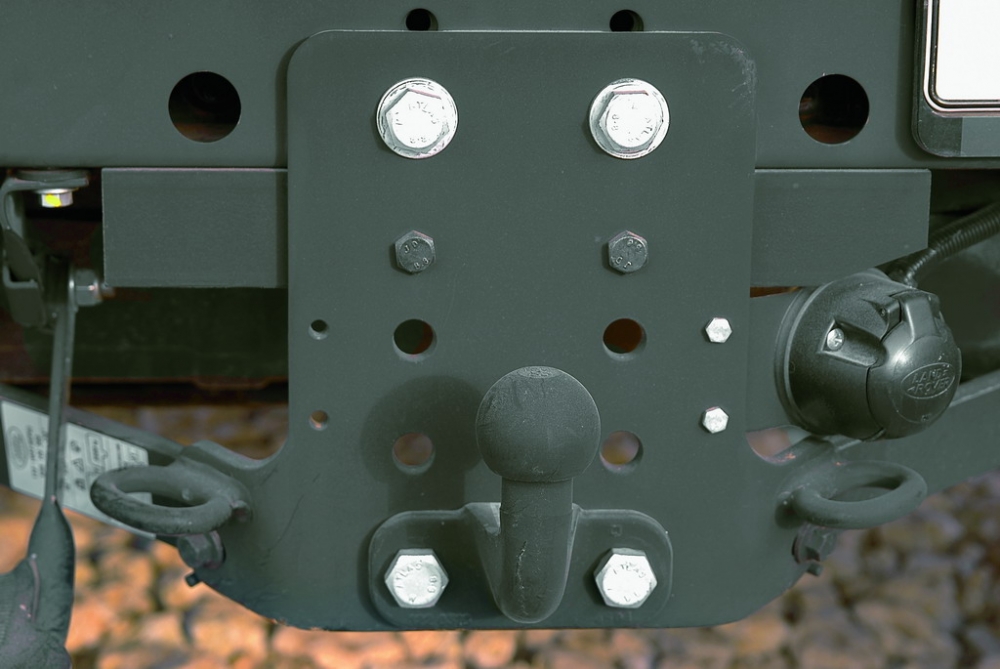
 PRICES AND TRIM LEVELS PRICES AND TRIM LEVELSIn Russia, in addition to the short-wheelbase 90 SW modification, two long-wheelbase versions are also available – 110 SW and 110 Crew Cab Pick Up. In the "base" trim, they are equipped only with the essentials: permanent all-wheel drive, a transfer case with a locking center differential, power steering, and seat belts. Optionally available are a manual sunroof, ABS + traction control system ETC, air conditioning, tow hitch, radio, alloy wheels with Grabber tires, heated front seats and windshield, front power windows, tinted windows, and central locking. Prices range from 820,000 rubles for the Land Rover Defender 90SW Td5 Base to 1,020,000 rubles for the 110SW Td5 Crew Cab Pick Up SE. |
King of nature
Land Rover Defender is a long-liver of the automotive world. Its history began almost 60 years ago, back in 1948. What explains such enduring popularity over all these years? To find out, we conducted a test drive of the updated 2007 model. Moreover, we chose the most extremely utilitarian short-wheelbase version for this.
Test drive photos
Comments
No comments yet. Say the first word.