Oleg Kalaushin
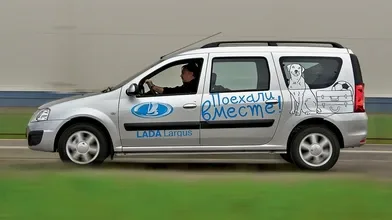 Lada Largus On sale: 2012 Photo: Igor Kuznetsov |
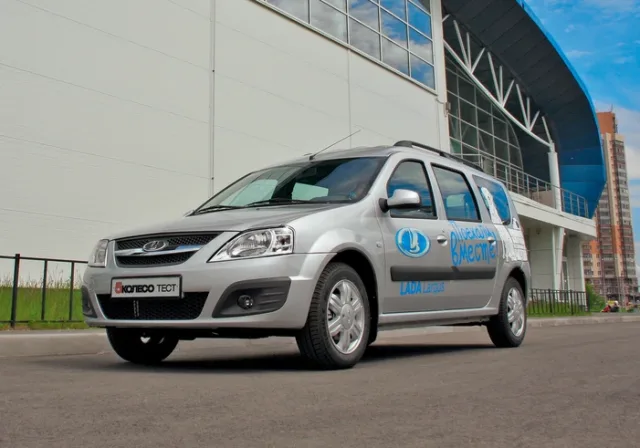
For the first time, the joint brainchild of the Volga Automobile Plant and the Renault-Nissan alliance was talked about in 2009. In 2010, the plant began reconstruction of the assembly line, and in early 2012, the first batch (one wants to write Renault) of Lada Largus rolled off the assembly line. This station wagon, in fact, became no less epochal for the plant than the Fiat 124 was in its time. The fact is that soon other alliance models, whose radiator grilles will be crowned with Renault and Nissan badges, will begin to come off the same line. The gesture on the part of the French, it must be said, is as beautiful as it is troublesome. The quality of the products of the Volga auto giant was, although at a level, but clearly did not reach European requirements, which means that now Renault-Nissan will have to try very hard so that it is not ashamed of what will leave the gates of the new business partner.
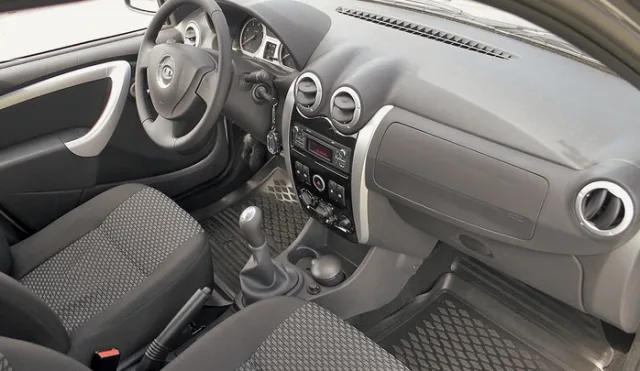
Quite modern interior However, let's get down to the car itself. So, we had at our disposal a seven-seat car in the "Lux" trim with a 16-valve engine with 105 horsepower. That is, the more powerful of the two available versions. The second engine is also 1.6-liter, but it has exactly half as many valves, and the power is 90 hp. Either way, both the first and second engines are still slightly more powerful than those installed on the Logan. Most likely, their power is increased by changing the engine control unit program, or, as people say, through chip tuning.
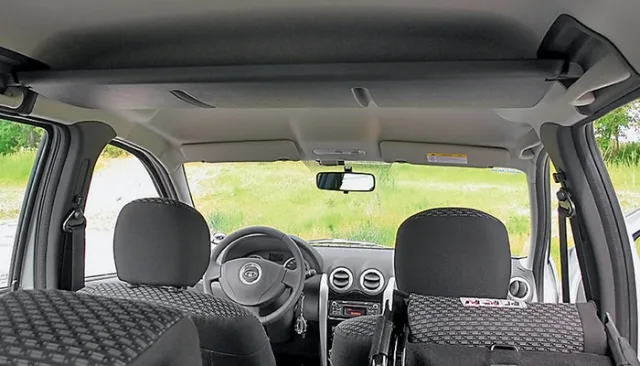
The shelf above the driver and front passenger is quite spacious After an external inspection, we unanimously came to the conclusion that in essence we have a Dacia MCV in front of us. The Largus differed from the Romanian bestseller by a slightly different front bumper, which, like on the Dacia, is combined with the radiator grille. Our new product, of course, was decorated with the Volga boat. The Togliatti residents, however, claim that they also significantly strengthened the anti-corrosion protection of the body, but this cannot be visually verified. And as for the sills, which are covered with anti-gravel before painting, on the Logan they are treated exactly the same from the very first batches. It is somewhat unclear why it was necessary to increase the thickness of the metal from which the front arms of the car are made. Apparently, at VAZ they decided that it would be better this way. However, on the Logan, over the entire period of operation, there were no complaints about this unit. But the rear brake drums with more developed fins for heat dissipation on a heavier car look quite appropriate.
There are much more changes in the interior. And although in essence the Largus in the front part is still the same old good Logan, but upon closer examination, differences still appear. Of course, first of all, this is the central console. The standard audio system, unlike the Logan's, is capable of providing wireless communication with a phone via "blue tooth", and the presence of a USB input significantly expands its capabilities. By the way, it plays quite decently. Let's move on. Those who operate the Logan will notice that the buttons of the central row also have a slightly different shape. The instrument panel has also changed slightly: it has more silver, and it received a visor similar to the one installed on the Duster. The driver's seat was also slightly modernized. Unlike the Logan, which was also equipped with this option at one time, the Largus has an adjustable lumbar support. The reason for abandoning such a useful function on the Logan was the unreliability of this device. Let's see how long it will last on the Largus. But the fact that the handle that allows you to change the height of the driver's seat has moved from under the seat to the left side is really convenient.
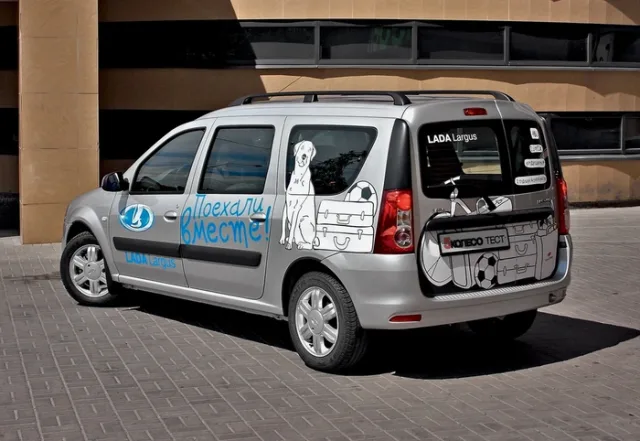
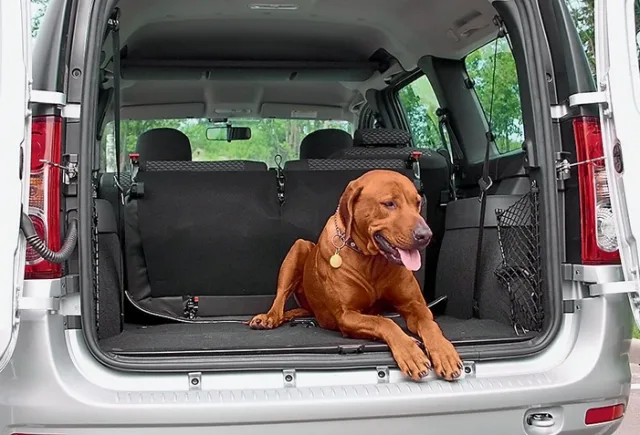
We move to the second row. Here, for me - a Logan driver with five years of experience - everything is new. Firstly, the second row is significantly higher than the first, but this does not create discomfort, because the roof of the Largus is slightly higher than that of the Logan. Secondly, above the driver's head, if you look from the position of a second-row passenger, a shelf of impressive size has appeared, where the car's operating instructions, a solid road atlas, and much more can easily fit. As expected, the second-row seats fold in a 2/3 ratio. Moreover, the smaller part is located on the right side. The solution is logical, because passengers usually board on this side, which means it will be more convenient for third-row passengers to get to their place from here: this part of the seat is lighter, so anyone can fold it without difficulty. And almost everyone will feel quite comfortable in the third row. There is surprisingly a lot of space here. Not only in width, but also for legs. In fact, there is as much of it here as for second-row passengers. Only the trunk in this case turns out to be small - only 135 liters. But it is worth abandoning the third row, and this can be done either by folding it and attaching it to the back of the second row, or by removing it altogether, as the cargo volume increases to 560 liters. If you also fold the second row, the car turns into an impressive-sized van, where you can easily put a two-chamber refrigerator. By the way, for the convenience of loading and unloading, the Largus has six doors: four regular and two rear swing doors - one slightly larger than the other. They can open both 90 degrees and all 180. The latter will certainly be appreciated by drivers of commercial vans, the start of which is scheduled for October this year. Well, what about movement? In fact, the Largus is very similar to the Logan in terms of driving characteristics. The same omnivorous suspension, the same fairly clear steering. And the brakes have not lost their effectiveness. The larger wheelbase also has a positive effect on directional stability. Only the dynamics leave much to be desired. 105 "horses" clearly cannot cope with the mass that they have to pull. And if at first the start from a standstill looks very dynamic (if desired, you can even spin the wheels), then with the set of speed it is not easy for the engine to pull a car that has become heavier by 200 kg, and this is provided that there were two of us in the cabin during the test. With the eight-valve engine, things are even sadder: it takes more than 15 seconds to exchange a hundred. Our verdictLada Largus is a quite modern, practical and truly inexpensive car. And as for quality, so far it is quite difficult to spoil anything in this model - localization has not yet reached its limit. So for now this is a fairly high-quality product, we hope it will remain so. ADVANTAGES AND DISADVANTAGES Spacious interior, seven seats, large trunk, comfortable suspension. adequate price.Insufficient engine power for truly dynamic driving. lack of rear parking sensors. Driving Interior Comfort Safety Price Wow! The belt for the middle passenger of the second row stretches all the way from the doors of the luggage compartment... Interesting ... and is attached there when not needed with a magnet. An interesting solution. TECHNICAL SPECIFICATIONS
|