
A year has passed since the previous major test drives in Tolyatti. In the spring and summer of 2012, the VAZ workers first presented the Largus station wagon, and then an automatic transmission, which was entrusted to the budget Granta. The success of each of these models was guaranteed from the start, as sales statistics confirm. The first simply has no competitors with similar capacity, while the second became a replacement for the "classic" born in the middle of the last century, without scaring off buyers with its price. The situation with the Kalina is more complicated. For its price, there are already analogues with alluring "foreign" emblems. Their number is growing almost every month, and it is increasingly difficult to attract a consumer who was once loyal.
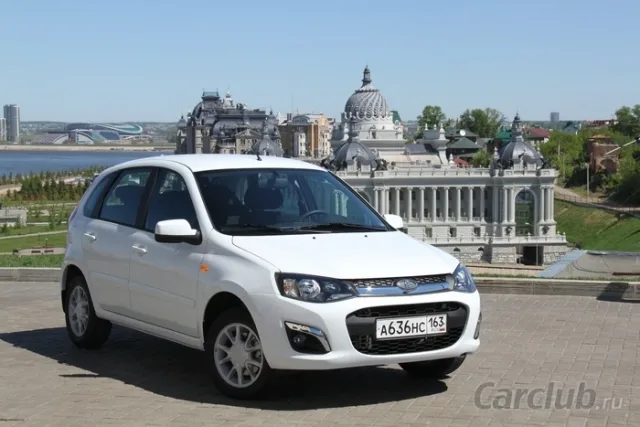 Compared to the not-so-elegant Granta, the Kalina looks much more attractive, doesn't it? The new headlights, bumper, and grilles successfully hide the result of unification: the hood and front fenders are taken from the budget sedan unchanged. Daytime running lights are included in the base trim.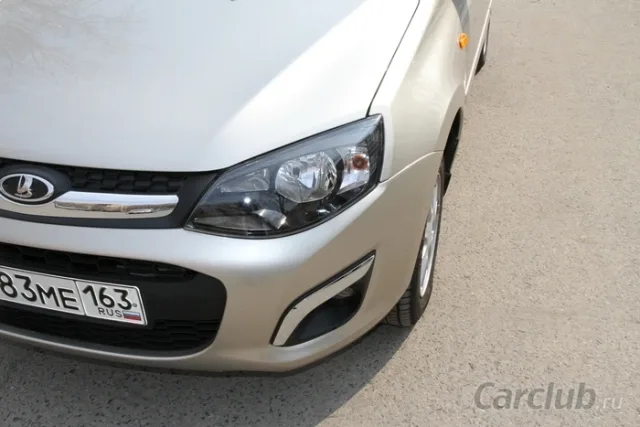
In Tolyatti, they understand this and have carried out a large amount of work. The partnership with Nissan was not in vain: the Japanese approach to improving a model has been borrowed. It states that before investing money in developing a completely new system or component, you need to squeeze the maximum out of the existing one, optimizing and improving it. This policy suited the Kalina perfectly. The technical basis of the car was imperfect, but by no means outdated. In addition, the new platform approach for AvtoVAZ saved considerable funds.
Let's start with the theory. In fact, under the familiar body contours lies a thoroughly modernized "cart." The front suspension is from the Granta, differing from the previous Kalina's with increased caster, a thicker stabilizer bar, and shock absorbers and springs with different characteristics. At the rear, a thicker stabilizer bar also appeared, negative camber, and the settings were changed for more composed behavior. During 2013, further changes to the chassis will be made in Tolyatti.
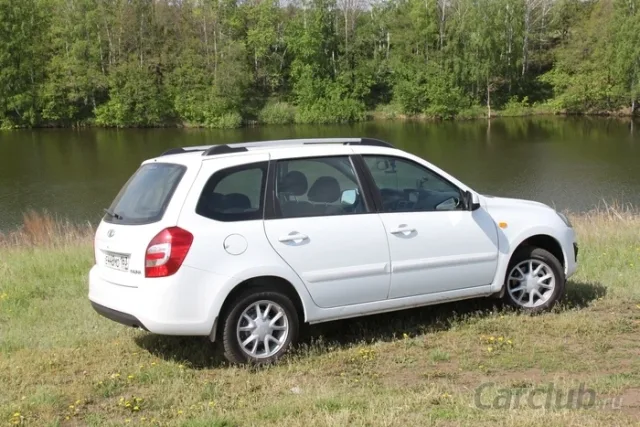 In profile, the station wagon has become more harmonious and even seems to have grown in length. Even in the previous generation, its share of production exceeded 50%, and now, with the departure of the sedan, it could reach 80%.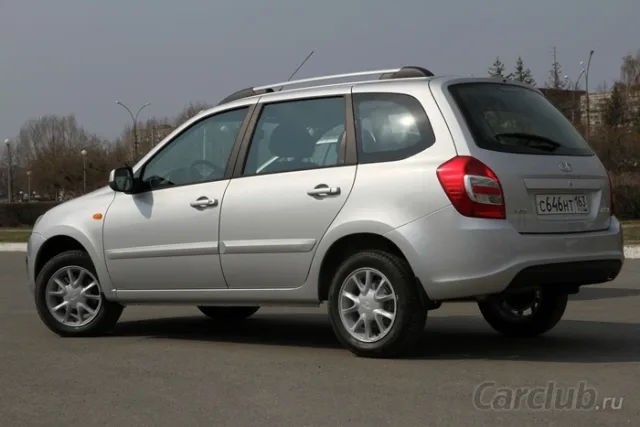
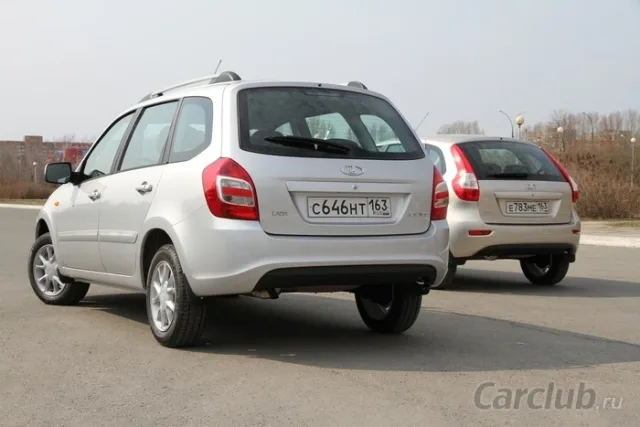 AvtoVAZ has separated the Granta and Kalina into different market niches not only by price. The former, in the form of a sedan and a future hatchback with a sloping rear door, serves as utilitarian and inexpensive transport, while the latter, in the form of a station wagon and a compact hatchback, is aimed at those who value comfort and the youth.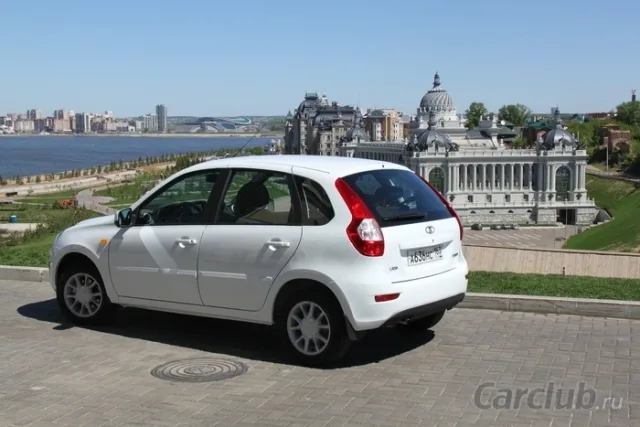
The steering mechanism is now attached to the body through a silent block on only one side. On the other side are rigid lugs. Combined with the changed settings of the electric power steering, this added composure and feedback, which the predecessor lacked so much. Among other innovations are improved sound insulation, an expanded list of options, and unified with the same Granta are the heater duct system, door trims, and front panel. We also expect an increase in consumer qualities due to revised requirements for suppliers. Front brake pads will go to the conveyor from Ferodo, and the imported heater fan has become quieter. Tolyatti residents are also familiar with problems buying spare parts in retail stores. Ladas can be criticized as much as you like for the quality of components, but parts bought as replacements in most cases turn out to be even less durable. The factory promises to solve this problem too.
But the main changes of the family are in the set of power units. Of the three engines, only one motor was previously familiar with the Kalina, a 16-valve engine with 98 hp. It became an intermediate option for the new model. The base is an 87-horsepower version with a lightweight connecting rod and piston group, and at the top "graze" 106 "horses." For the first time in history, a mass-produced Lada received an engine with a three-digit number in the "power" column! Created on the basis of a 1.6-liter engine with 16 valves, it received the index VAZ-21127. The increase was provided by variable intake. Transmissions are a 5-speed manual with cable drive or a 4-speed Jatco automatic. The version with two pedals appeared in the lineup for the first time, and the modernized "stick" was introduced in the fall.
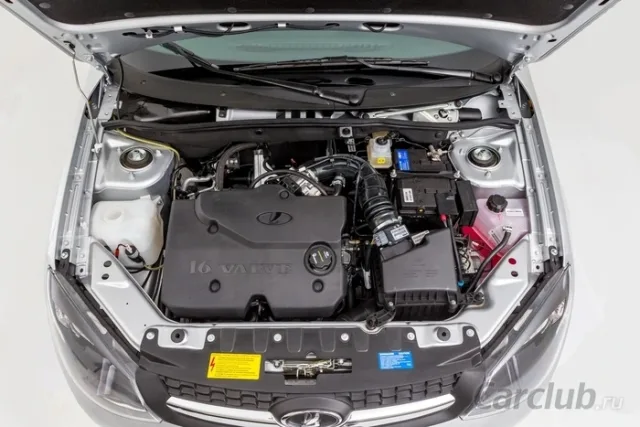 The front end's power structure is from the Granta. Among the differences is a radiator shifted slightly forward.
With this, we will end the correspondence acquaintance and evaluate the real car. The former kingdom of biodesign of the early to mid-1990s is perhaps reminded only by the rear of the hatchback. Changes affected it to a lesser extent, and from the first generation it is noticeably distinguished only by the bumper. But the station wagon's new lights added expressiveness: their shape has become more interesting. The front part of the body can be safely awarded the flattering epithet in Russia "like a foreign car." True, behind the attractive mask with a significantly increased area of the air intake grille, the radiator and cooling fan are defenselessly visible. They will be protected from flying stones by an insert made of fine mesh, which has become popular on our roads, but there is no protection from dirt and reagents. The solution of Peugeot and Citroen with a separate plastic shield for winter driving comes to mind.
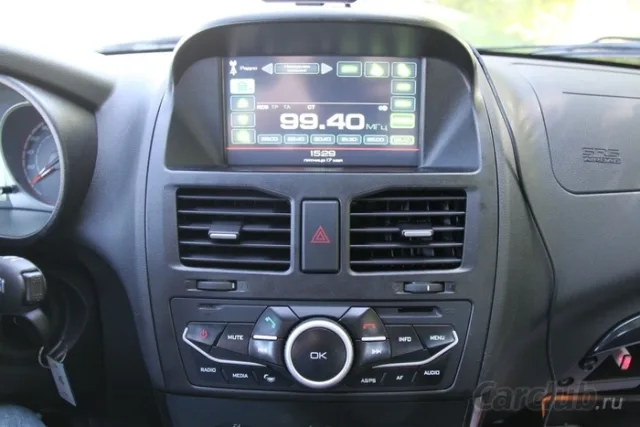 The test cars did not have navigation, but there were Bluetooth and a USB port. The system quickly and reliably made friends with my smartphone and flash drive. The touchscreen pleased with a clear response and pleasant graphics.
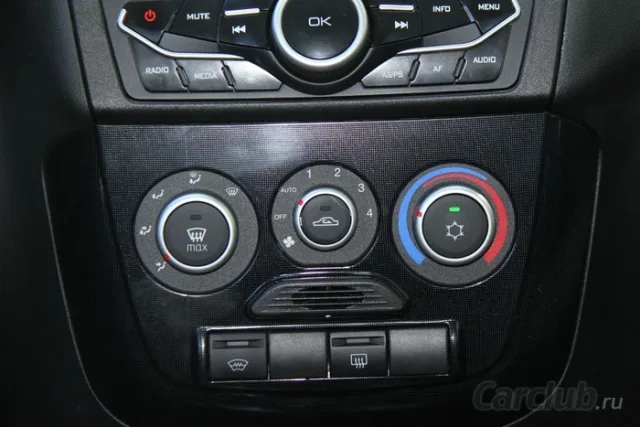 Convenient, functional, modern. A fully automatic climate control will soon appear, although even this one in "auto" mode worked without complaints in the heat.
From the perspective of front passengers, the Kalina-2 and Granta are practically twins. The differences are in the design of the instrument cluster and the central deflectors. The latter are rectangular in the Kalina, not round, and are topped with a mini glove box with a lid. But in the "luxury" trim, the status of the new model immediately shows itself in all its glory. The touchscreen monitor of the multimedia system, which has moved slightly below the heater grilles, is cramped. It looks good, but a fly in the ointment prevented an "excellent" rating: on some test cars, the display visor became the main source of squeaks in the cabin.
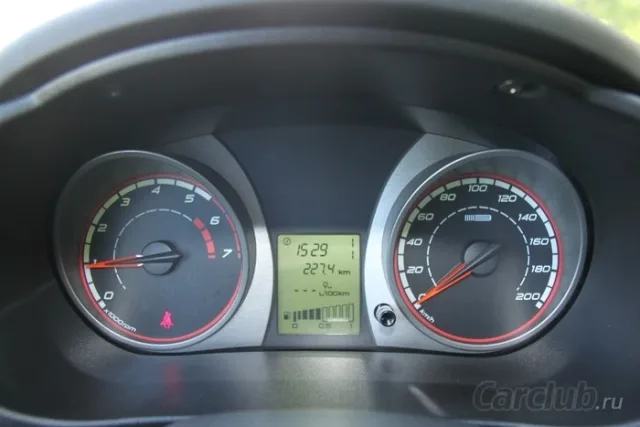 The instrument cluster differs from the Granta's in nuances: arrows, color scheme, font. The appearance and set of functions depend on the trim level.
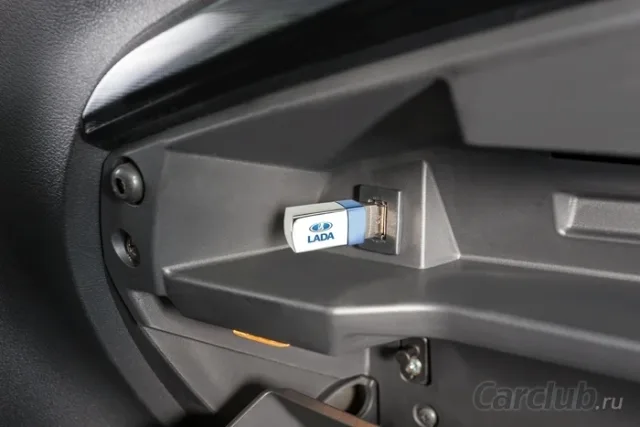 The two-tier glove box is good. In the upper left corner there is a slot for a flash drive with music and other data that the multimedia system will play.
In the back, the space reserve familiar from the predecessor is preserved. The trunk volume has not changed either. But the designers revised the shape of the side panels on which the rear shelf rests. They have become narrower, the places for speakers have moved to the door trim, and the squeaks that plagued owners of old Kalinas are gone. The station wagon has two hooks for bags on both sides of the cargo compartment: it looks convenient, although we could not test their strength. Finally, the button on the fifth door has gone into oblivion. Now it is opened simply by turning the key in the lock. In rich versions, there is an electric lock with buttons in the cabin and on the key fob.
The first day of the test drive was spent on a circle marked with cones. After a short straight, where even the version with a manual does not exceed 80 km/h, a sharp turn, a slalom, and the finish follow. The conditions are clearly not for a city budget car! Naturally, the Kalina's behavior was not ideal. However, even here, smaller rolls and more precise steering were evident. The latter, however, is still far from an acceptable level. The driver feels not feedback, but only increased effort, which does not add informativeness. One of my colleagues tormented the power steering of one of the cars to the point of complete failure. The ailment was cured by a "reboot." So I will warn you right away: for high-speed steering exercises, the car (who would have thought?!) is not intended.
But spending several hours in a row in 33-degree heat is an excellent testing ground for the climate system. Full-fledged climate control has not yet appeared in the Lada: the "auto" mode only regulates the air flow speed, maintaining the temperature based on readings from two temperature sensors in the cabin and another one that measures solar activity under the windshield. The control unit with electric damper drive pleases with precise efforts and is pleasing to the eye. The "standard" trim will get a simpler scheme from the Granta without air conditioning.
The almost 450-kilometer route ran through the Samara and Ulyanovsk regions and the Republic of Tatarstan, finishing in Kazan. The first kilometers already confirmed the developers' words about improved sound insulation. Up to the 100 km/h mark on the speedometer, the new Kalina rides comfortably. Engine noise is unobtrusive, the familiar buzzing and whining of the manual gearbox with the transition to the modernized unit are gone, and the standard Kama-Euro tires only bother on really rough asphalt. However, at higher speeds, wind noise dominates the cabin. It audibly hits the side mirrors and body pillars, and gets tangled in the seals. True, personally, this sound accompaniment seemed less intrusive to me than in budget foreign cars, where the engine or tires play the main part.
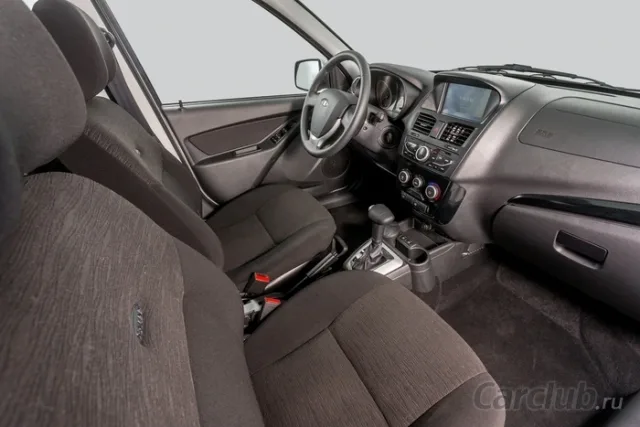 The seats look the same as before. The VAZ employees note that they have refined their profile. We'll take their word for it, because the seat feels the same: soft and without sufficient lateral support. However, over 450 kilometers, my not-so-healthy back had no complaints.
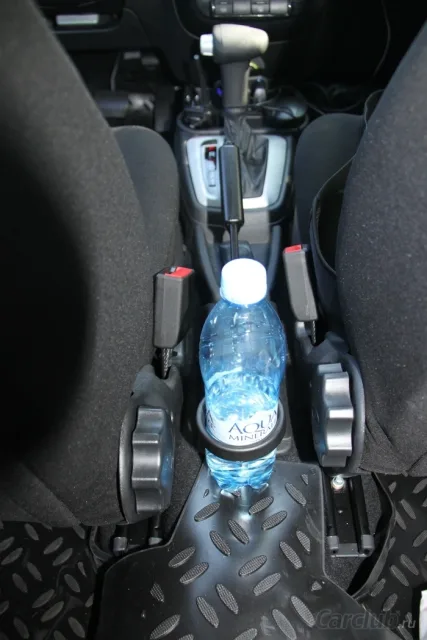 Rear passengers in cars of this class get a minimum of amenities. There is still no central armrest, but a cup holder has appeared on the handbrake lever trim, along with functional straps holding the seat belt buckles.
The combination of the 106-horsepower engine and the new manual gearbox, which I was among the first to try, left a pleasant impression. I'll immediately disappoint "city racers": the power looks impressive only on paper, because the increase over the simpler engine is only 8 hp. It's not worth revving it to the redline – there won't be any extra pull. However, the unit confidently pulls on level roads from as low as 1,500 rpm, saving unnecessary shifts. Although those shifts are exactly what the refined gearbox does excellently. The mechanism has finally gained decent selectivity and precision! It's not yet comparable to world names, but you don't have to spit while working the lever. It's just that this step should have been taken 10-12 years ago...
The 98 "horses" harnessed to the Japanese automatic are already familiar to me. The Kalina confirmed my first impression. The gearbox skillfully and quickly operates its four gears. If you approach highway overtaking sensibly, no additional modes are needed. And the advantages of two pedals over three in the city are simply not worth describing. I'll again complain only about the dim indicator of the selector position on the instrument cluster. There is progress compared to the Granta. The vibration noticed then on a stationary car with the selector in "drive" is absent on the hatchbacks and station wagons. I'll note fuel appetite as a drawback. Very leisurely driving at 90-100 km/h for 200 kilometers with a short city stretch at the end resulted in 7.9 liters. The manual promises about the same for mixed-cycle driving, which our route cannot be called. However, that's a lot for a compact station wagon.
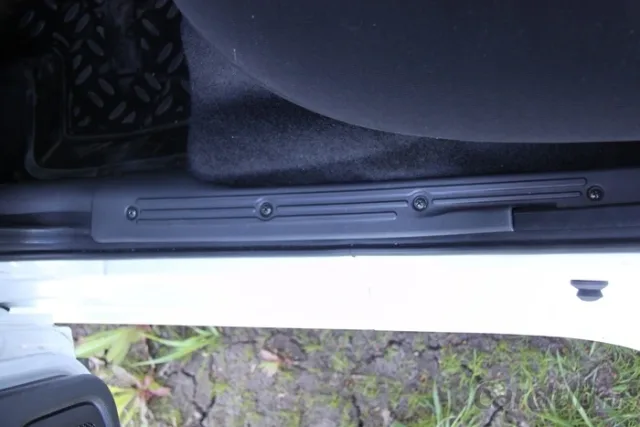 One of the echoes of the "past life" of Togliatti models is the attachment of the sill trim with shameful self-tapping screws. Is a couple of invisible clips really much more expensive to produce?
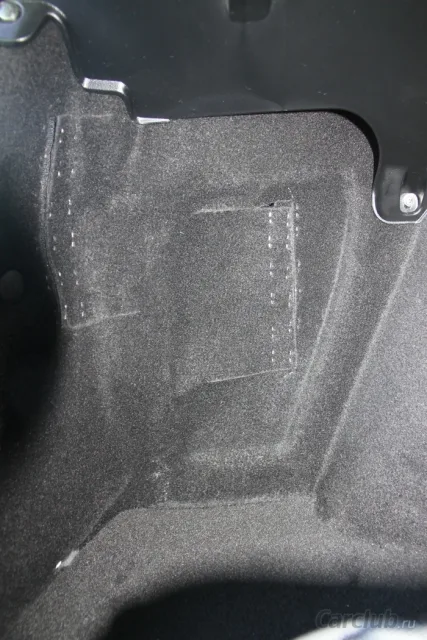 The Velcro roughly stapled in the trunk shocked me even more than the self-tapping screws on the sills. I hope this is some kind of workaround, not a production technology.
The suspension has not lost its energy intensity – a key quality on Russian roads. At the same time, body roll and steering lag have decreased. The car finally gives the impression of a product whose handling characteristics were thoughtfully worked on. There were no complaints about the brakes during the test. The pedal is informative, and braking is effective and predictable. During the "thrash" on the first day, I got the feeling that the ABS engages late, allowing significant wheel lockup. This suspicion needs to be checked under more suitable conditions, including on wet or icy roads.
The current version of the car is far from final. Already in the first production batches, the VAZ employees promised to take into account some comments from the first test drive. Work with suppliers, settings, and trim levels will continue. In such conditions, the buyer is to be pitied: how to choose the moment to buy when Togliatti constantly announces innovations? Despite all the improvements, there is still room for improvement in the Kalina. Besides the global and obvious imperfection with handling, there are a bunch of smaller issues concerning both individual solutions and overall quality. On uneven roads, the interior trim does not give the impression of a "monolith," although not every car reaches the point of outright "crickets." The open-door indicator on the instrument cluster only reacts to the driver's door: a strange decision, since the door switches that turn on the lights are on each door. The front door windows that don't lower all the way are also inherited from the old model. There are many such nuances in the car. All of them are a trace of the previous, pre-market era, when VAZ didn't yet think about full-fledged and fierce competition with foreign cars. Now the situation has changed, and how quickly the factory eradicates the shortcomings will determine its image in the eyes of consumers.
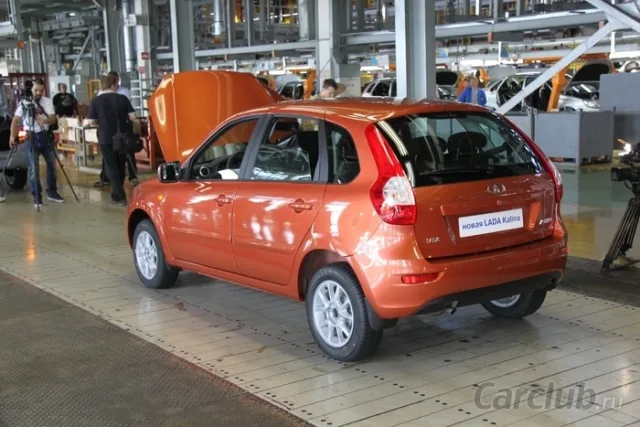 The ceremonial launch of the assembly line with the new model took place on May 16. The first car off the line was a hatchback with an automatic gearbox in the "magma" color, which is signature for the new family. A special compliment to the Ladas for their color palette: the presence of bright shades and their frequent changes pleasantly distinguish them from the silver-blue-black competitors.
Prices for the Lada Kalina-2 start at 324,000 rubles. That's what dealers will ask for a hatchback with an 87 hp engine and a new manual gearbox. In the basic "standard" trim - driver's airbag, electric power steering, front electric windows, daytime running lights. The "luxury" version (and these are the first cars to go on sale) costs from 408,000 rubles. For this amount, you get a 106-horsepower engine paired with a manual gearbox, two airbags, 14-inch alloy wheels, semi-automatic air conditioning, a multimedia system, ABS with BAS, an alarm, a power package, and heated seats. Cars with an automatic are 37,000 more expensive and additionally include a heated windshield. The surcharge for the station wagon is 7-7.6 thousand rubles depending on the version. A little later, the factory will announce the cost of individual options available for basic trims, and by the end of the year, completely new "goodies" for the Kalina will appear: stability control, climate control, side airbags, and 15-inch wheels. For now, the most loaded version – a luxury station wagon with an automatic – costs 452,600 rubles. The nearest competitors with a poorer set of equipment are about fifty thousand more. There is a head start – will today's discerning buyer appreciate it?