
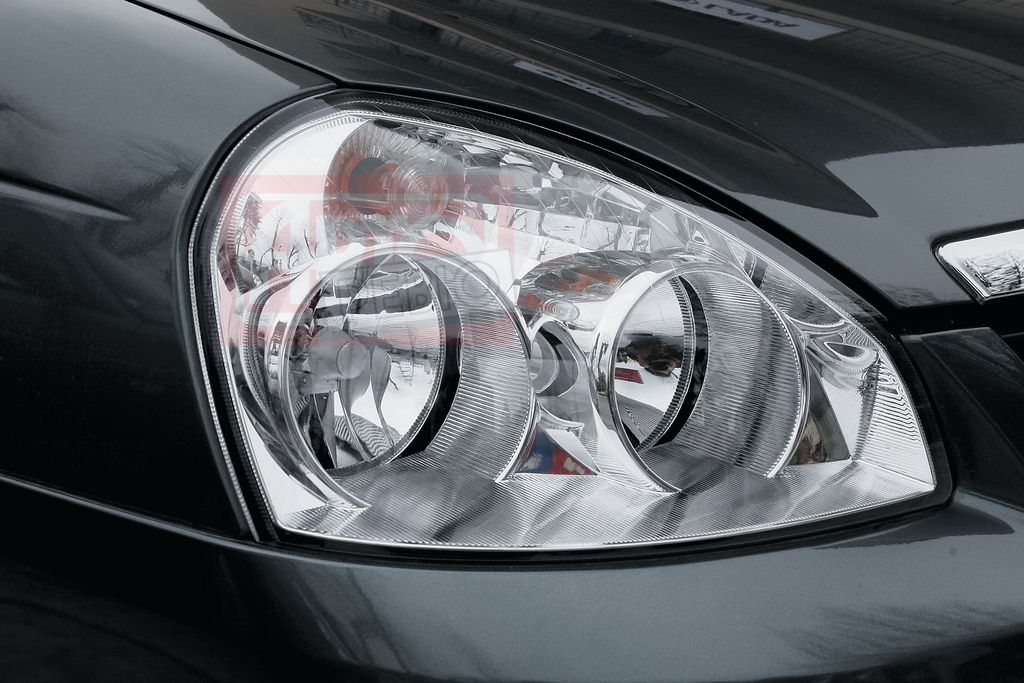
 In Sochi, where the test drive of the new Lada Priora sedan took place, there is the Tree of Friendship. Once it was an ordinary lemon tree that Michurinists turned into an unknown hybrid through countless grafts. The Tolyatti Priora is also a product of long-term selection. With the only difference that it remained a lemon.
The front-wheel-drive VAZ models have an unofficial anniversary: exactly three decades ago, work on the "eight" started in Tolyatti. Since then, the platform developed jointly with Porsche specialists has been grafted with everything possible, yielding various fruits: three- and five-door hatchbacks, sedans and station wagons, even convertibles and delivery vans. And the last graft was made by... Americans. In 2003, AvtoVAZ commissioned a certain US audit company to assess the state of the plant and propose possible development paths. The Americans advised restarting the "tenth" family.
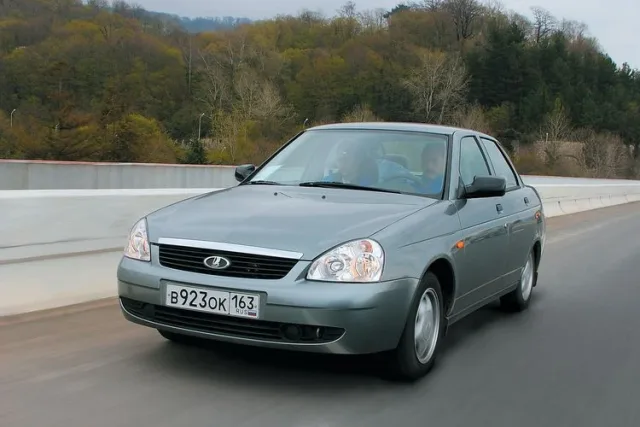
By "restart" they meant transferring paper drawings to "digital" while simultaneously working on previous mistakes, creating mathematical models for new stamps and tooling. This is not much easier than developing a car from scratch. The scale of work is easy to imagine: the "ten" has more than three thousand parts, the Kalina has only 1450 original parts, and the Priora has 1229.
All for the sake of improving quality. Moreover, they planned to update the "ten" gradually, node by node, without stopping the conveyor. The project 2170, as the Priora is designated in factory documentation, took about three years and 180 million dollars. Fortunately, they didn't have to think long about the exterior: a suitable design by Sergei Taranov was found in the NTZ reserves. And the most responsible work on the interior was entrusted to an Italian contractor - the firm AE, which placed the VAZ order at the Turin studio Carcerano.
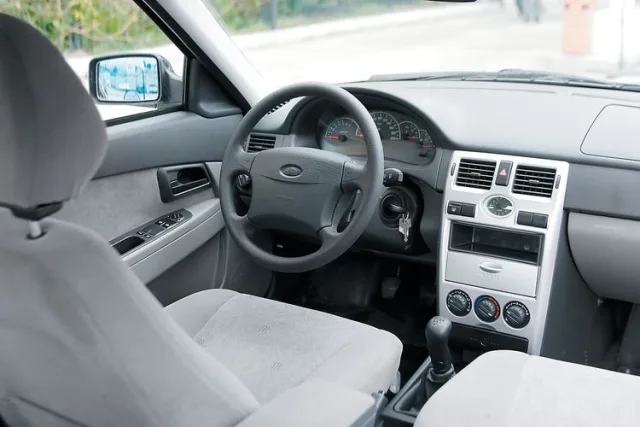
The interior was developed by designers of the Italian firm Carcerano. The result is a modern geometric panel and a console made of silver plastic. Climate control is managed by three rotating knobs
The Italians didn't work a miracle, but they did what they could. The front panel is now an average Euro-Asian one made of truly soft, pliable plastic. The light interior trim of the doors and the metallized overlay of the central console enliven the overall gray mood. And those cozy oval clocks! It's just that the phenolic smell still hits the nose and there's a lack of tactile quality. The heater knobs click toy-like when turned, the nicely drawn steering wheel is unpleasant to the touch. Same for the gear shift lever and the handbrake - these are all from the "ten". The seats are also still from the "ten", only the length adjustment lever has been moved to the front edge of the seat.
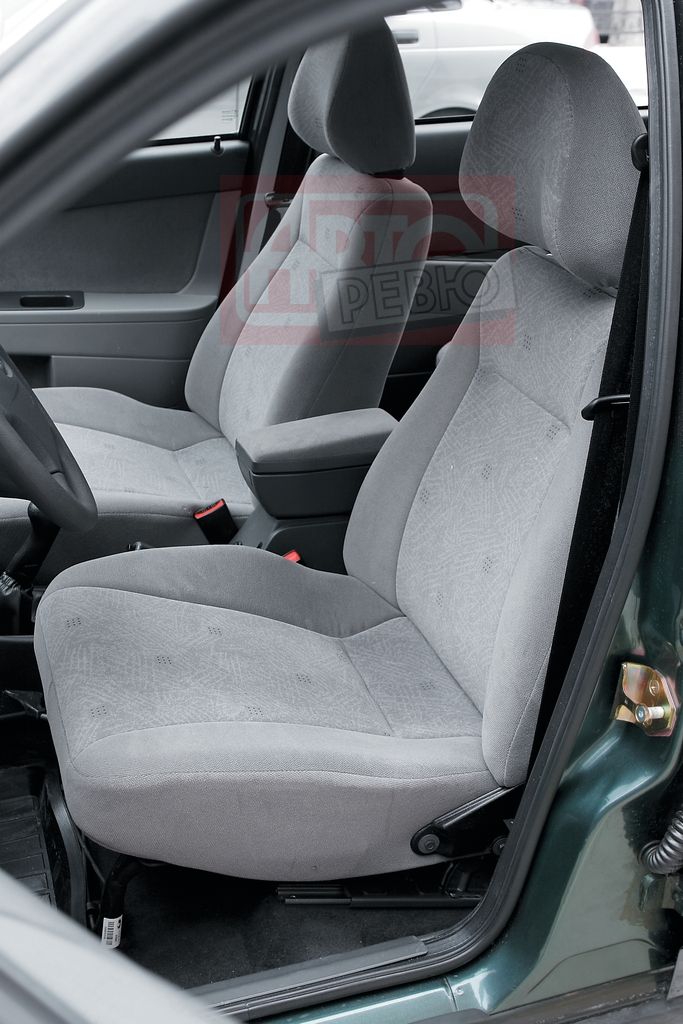 | 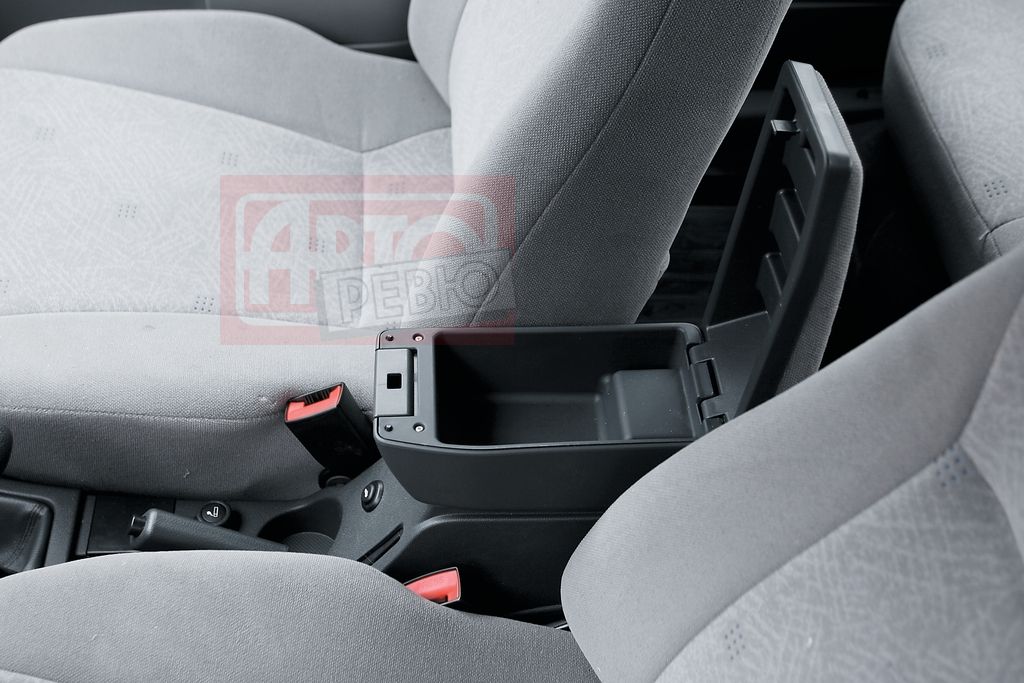 |
| The seats are from the "ten", but the longitudinal adjustment lever is now located at the front | At the base of the armrest box there is a trunk opening button |
And why is "open" stamped in huge letters on the lid of the small items compartment? As if it were designed by the Chinese, not the Italians. They might as well have written "Lada" again. Or "Priora" at the very least.
But despite all the assembly flaws, this is no longer the VAZ-2110. At least visually.
That's why there's no end to the Sochi jigits.
— What kind of car is this, eh?
— Lada Priora.
— The new "ten", right?
— Yes.
— And how much does it cost?
— 282,480 rubles, about eleven thousand dollars.
— Hmm... And what engine?
A million questions! In the Caucasus, where "Vaziki" make up most of the car fleet, the appearance of the Priora is an event. And on mountain roads, many try to measure strength with it. No way! Under the hood of the Priora is a modernized engine with a displacement of 1.6 liters, almost a hundred "horses". The main difference from the previous version is the lightweight connecting rod and piston group. On each pair of connecting rod and piston, they saved 400 grams. This reduced losses, and power increased by 9 hp. In addition, the engine meets Euro-3 standards, and in the "export" version with an "electronic" gas pedal it will fit into Euro-4. Moreover, work is currently underway to adapt the engine to Euro-5 standards.
The sound is like crushed crackers. But the engine pulls well: the tachometer shows barely 2000 rpm, but in fifth gear the heavier Priora accelerates from 70 km/h. After three thousand, the engine slightly comes alive and spins briskly up to the limit of 6400 rpm. The claimed acceleration time to 100 km/h is 11.5 seconds, the top speed is 183 km/h. There are no problems with dynamics. But with throttle control, there are constant difficulties. The vague throttle drive does not allow smooth dosing of traction, the "ten" gearbox does not allow easy engagement of second gear, and the lever with rowing-like movements constantly stumbles over something. And even though VAZ employees proudly claim that the Priora is the quietest Lada, and during acceleration the noise level in the cabin does not exceed 72 dB (with an allowable 74 dB), these decibels still seep through all the cracks. The noise and vibrations of the transmission do not let you forget: the Priora is, albeit modernized, still a "ten".
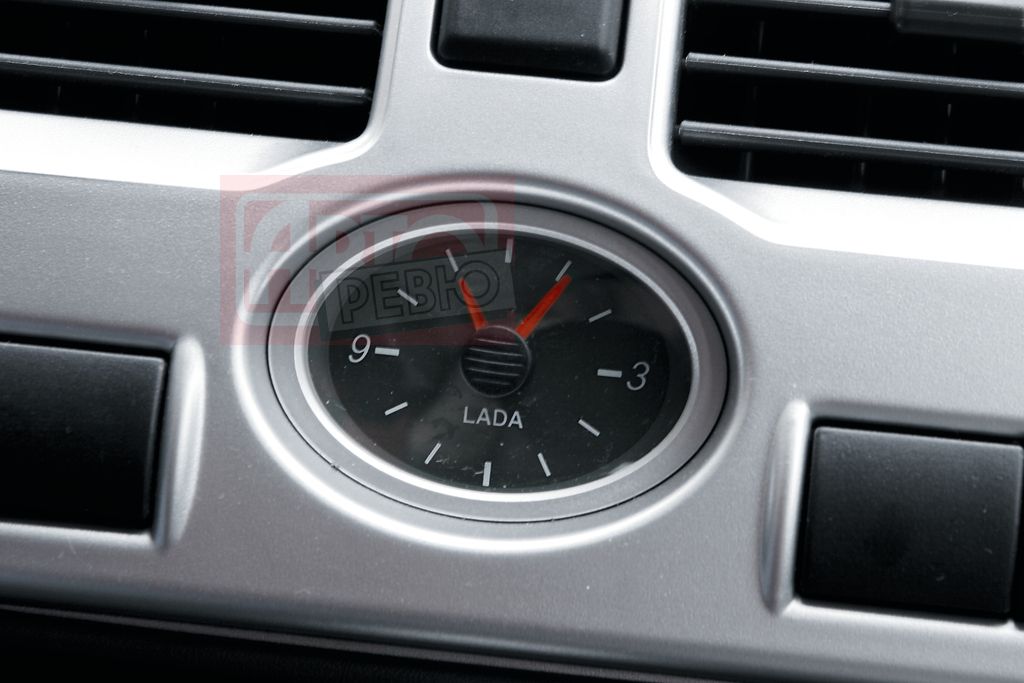 | ||
| On the right steering column switch there are buttons for controlling the trip computer - like on the Kalina | Oval quartz clocks are a stylish detail | Thanks to the multiplex wiring, the power window and mirror control unit has been moved to the driver's door |
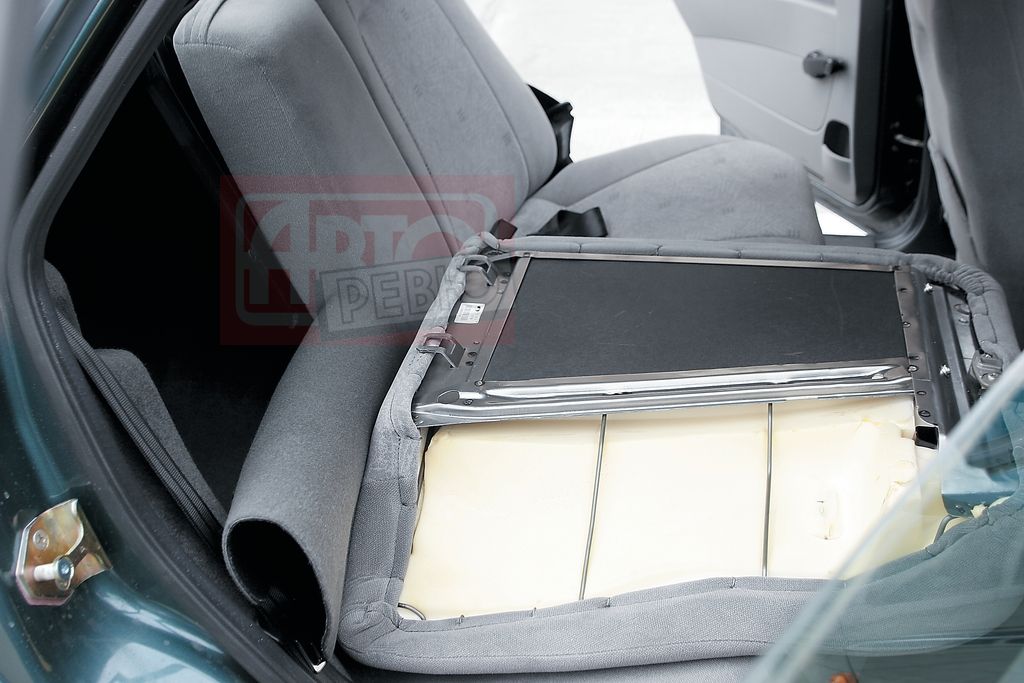 | 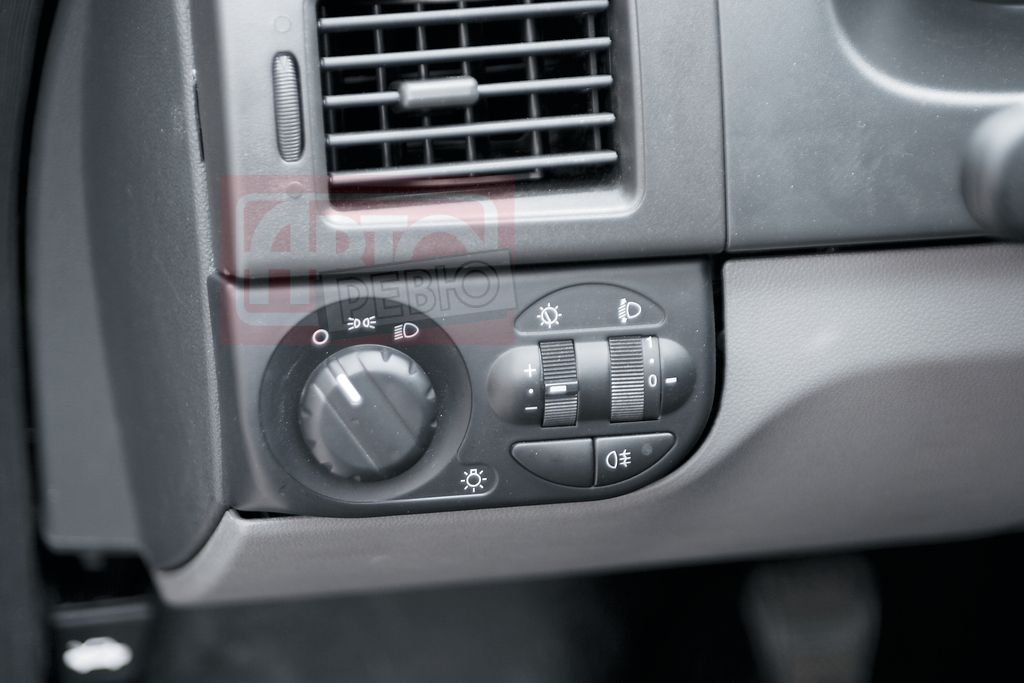 | |
| The instrument cluster is VDO (pictured) or from the Avtopribor plant | The rear seat backs are removed and put back with difficulty | To the left of the steering wheel is the light control unit |
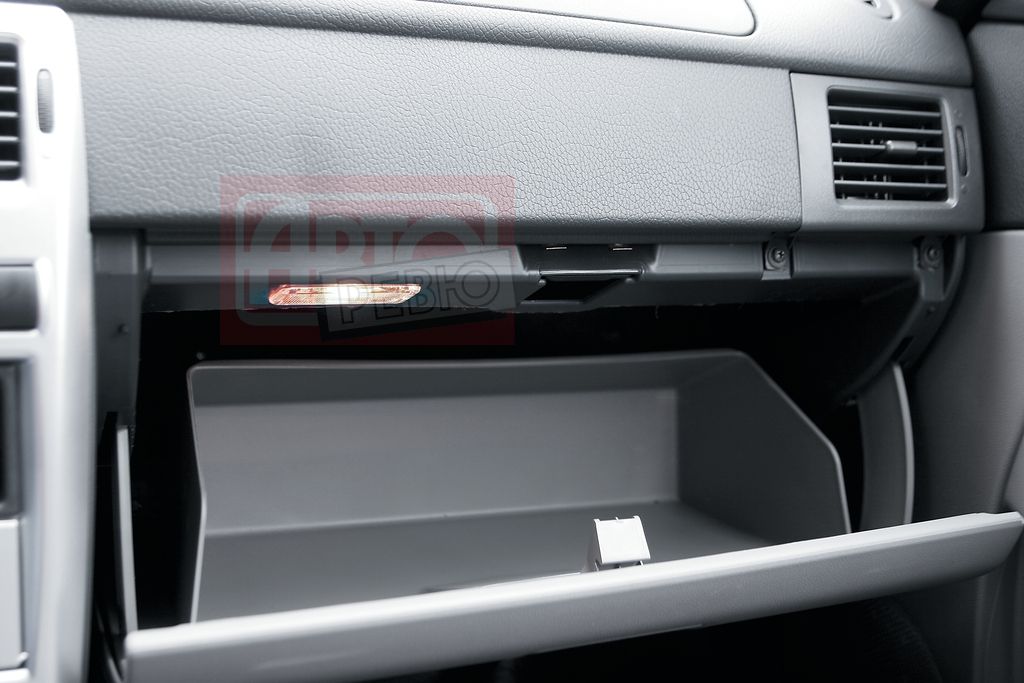 | 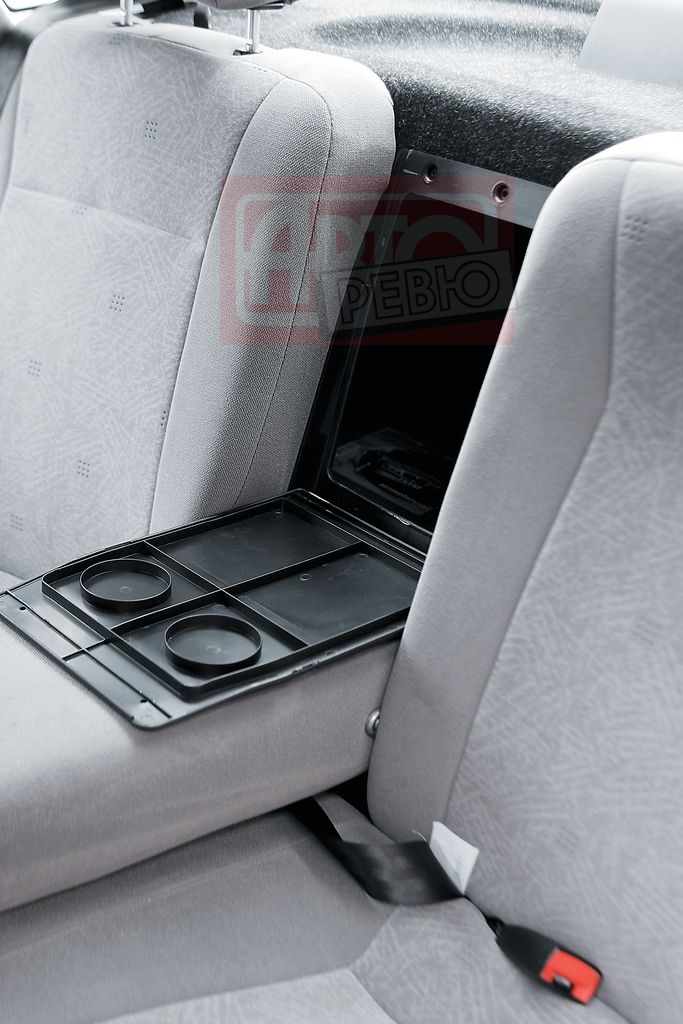 | |
| The glove box is spacious, but the latch is flimsy | There is a small ashtray in the back | Behind the armrest there is a hatch for transporting long items |
And VAZ employees also assure that the main advantage of the power unit is reliability.
— The guaranteed resource of the new engine is one hundred thousand kilometers, but with normal operation it will run all two hundred without major repairs, — says Sergei Kukel, head of the special tests department. — Of course, provided that you use quality lubricants and follow the maintenance schedule.
An indirect confirmation is the terms of the factory warranty: 50,000 km or 3 years.
Alas, more powerful modifications of the Priora should not be expected. Even though the new body is designed with an eye on several "foreign" engines. They no longer remember at AvtoVAZ about the new 1.8-liter engine either...
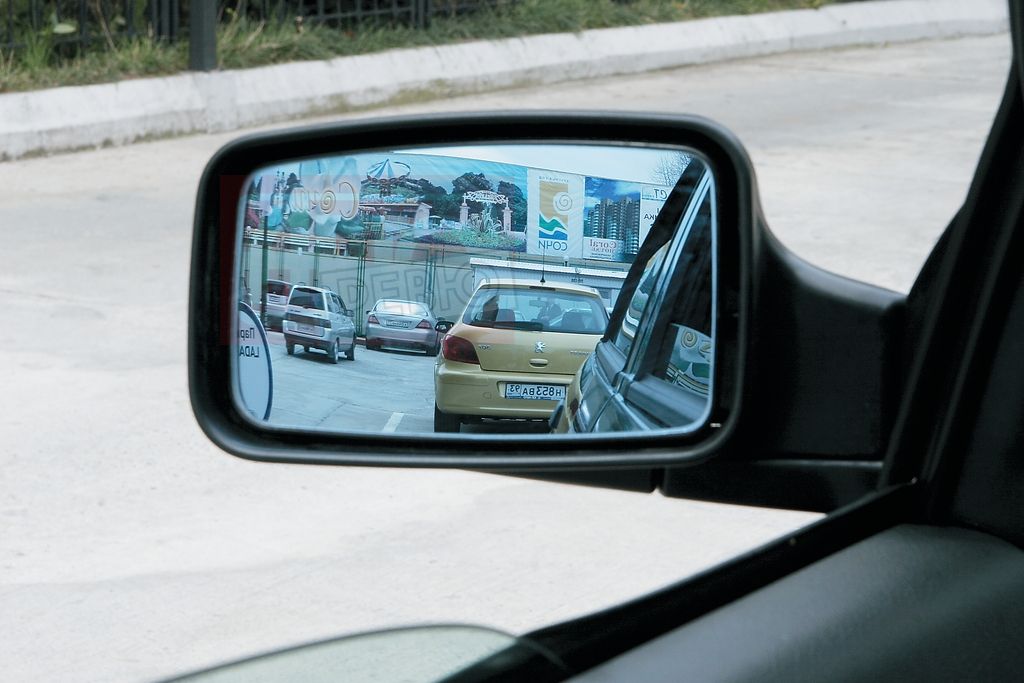 | 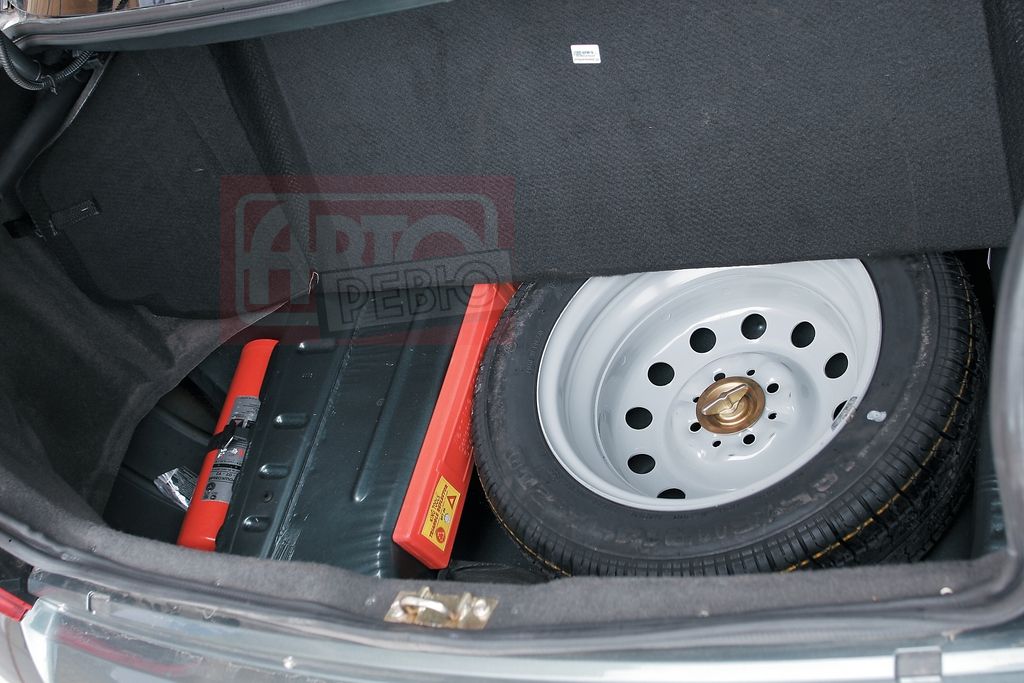 | |
| Large mirrors slightly distort objects but have almost no "dead" zones | The third brake light has LEDs | There is a lot of space under the trunk floor |
But all safety promises have been fulfilled: the Priora became the first domestic car where the driver's airbag is included in the base configuration! And at the beginning of next year, a luxury version will appear (about 20 thousand rubles more expensive) - with a passenger airbag and pretensioner seat belts. According to VAZ forecasts, this car will be able to score 12.6 points in a frontal crash test according to the EuroNCAP methodology. Although, according to VAZ employees, even with one airbag, the Priora fits into European certification requirements (UNECE regulations No. 94 and No. 95).
This is largely due to the stiffer body: the changes were not limited to "cosmetics" like open rear wheel arches. But that's not all: by 2008, the program to strengthen the body structure (a total of 36 new parts) will be completed, torsional rigidity will increase to 12,000 Nm/deg - and then the Priora will become noticeably stiffer than the Kalina.
Handling turned out to be a pleasant surprise. Both on the broken serpentines to Solokh-Aul and on the new highway towards Krasnaya Polyana, the Priora behaved quite predictably. It wasn't for nothing that they fiddled with the suspension in Tolyatti: a new stabilizer at the rear and different springs reduced body roll, and denser shock absorbers practically eliminated pitching. Understeer hasn't gone away, but in corners the car stands more confidently than the old "desyatka" and doesn't jump off the arc on uneven surfaces. Not a lemon, but rather a little lemon.
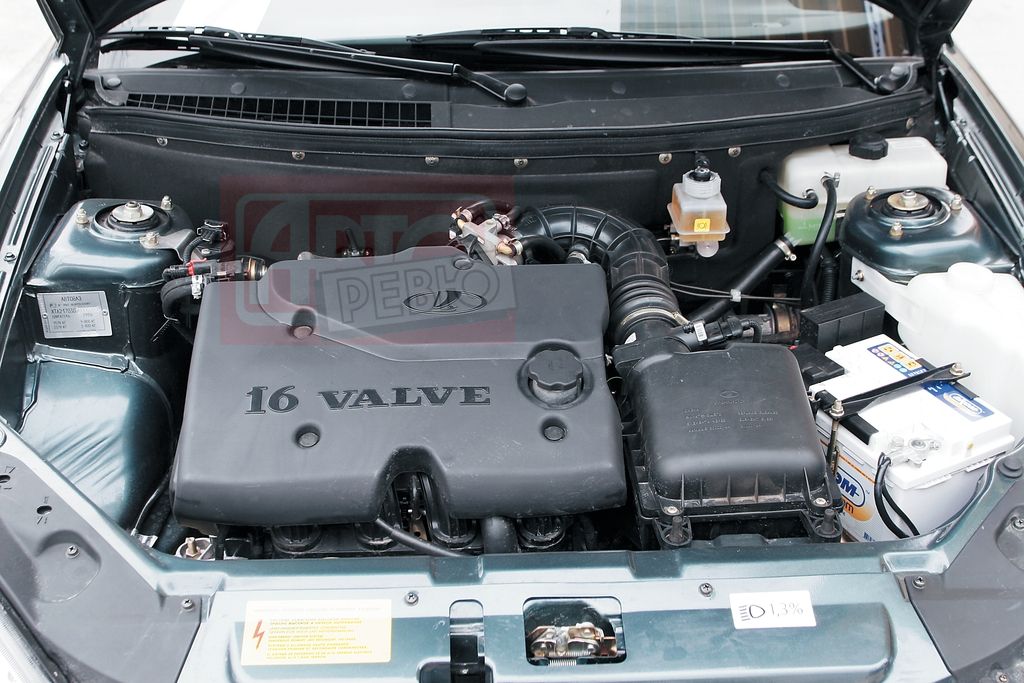 | 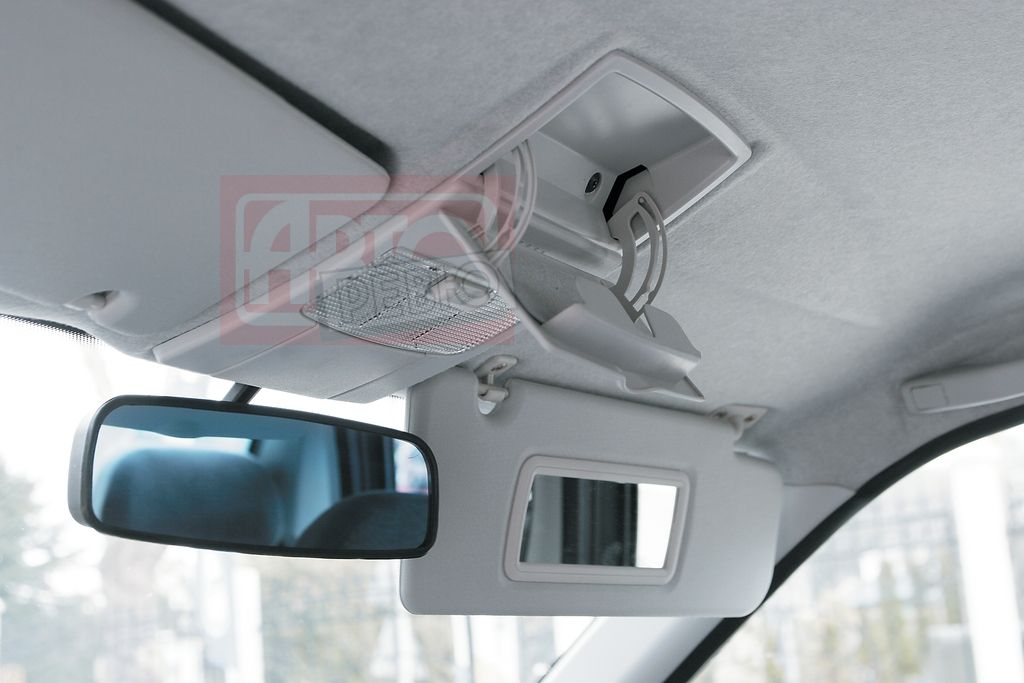 |
| Under the hood is a modernized 16-valve engine with a displacement of 1.6 liters. Pistons with shortened "skirts" are still imported, but soon their production will be established in Russia. The clutch is also imported — from Luk | On the ceiling — a flimsy glasses holder and a large "makeup" mirror |
The brakes also didn't let us down. When braking from three-digit speeds, they start to squeak, like a carousel in spring, but they slow down steadily. Braking on another washboard section, I even caught myself thinking that the absence of ABS here is for the better: on such a surface, the electronics would simply go crazy, and we would now be lying in a ditch. Although the electronic brake-force distribution system (EBD) would clearly lack stability here. The culprit is the slippery Kirov tires K-200 Barguzin-4 in size 185/60 R14. The Tolyatti folks themselves admit that this is a weak link: Kukel lamented that the test drive wasn't postponed. Literally the day after the cars were sent to Sochi, the "correct" Amtel tires in size 185/65 R14 went on the assembly line — they hold better and are more comfortable.
But for now, in terms of ride smoothness, the Priora noticeably loses to the "desyatka" — on small bumps it shakes "elastically." Kukel, as a person accustomed to driving, rejected our criticism: saying the chassis is assembled, but not teeth-rattling. But the lead designer of the entire "tenth" family, Valery Kozenkov (it was he who in 1977 adapted the rear semi-independent suspension from Volkswagen for the "vosmerka," and so successfully that partners from Porsche used it more than once), agreed that the settings of the rebound valves on compression still need work.
However, we like this stiffness more than the "desyatochnaya" looseness. Moreover, the Priora's suspension allows you to attack serpentines without lifting off the throttle before potholes and without braking before gravel patches in landslide areas. Extremely high energy intensity!
But what's this? Oh-oh... The next bend in the road turns out to be not a bend at all, but a washout. On the descent, the asphalt sank, and a "staircase" about a meter and a half high formed. The speed is low, but it's too late to brake... Bang! We fly down, imagining the front bumper tearing off, the oil pan splitting... Bang! — The Priora jumps off the last step and... rolls on. We stop — and, to our amazement, find not a single scratch on the bumper. And underneath everything is in place. Thanks to the metal engine protection, high ground clearance, and stiff suspension. Had the compression travel been freer, we'd now be attaching the bumper with grapevine and covering the scrapes with tea leaves...
And yet, the strongest impression was made by the new gearless electric power steering. After the Kalina, we didn't expect such successful settings. In parking lots and traffic jams, the steering wheel can be turned with one finger, and as speed increases, the power assistance fades away: after 85 km/h it turns off completely. Just what you need! Your hands don't get tired, and the connection with the car at speed doesn't disappear. And no artificial loads, no biting when turning sharply. And you have to turn — wow! The low sensitivity of the steering, alas, hasn't gone away: the steering wheel still makes almost four turns from lock to lock. By next year, though, they promise to make the rack "shorter" — three turns.
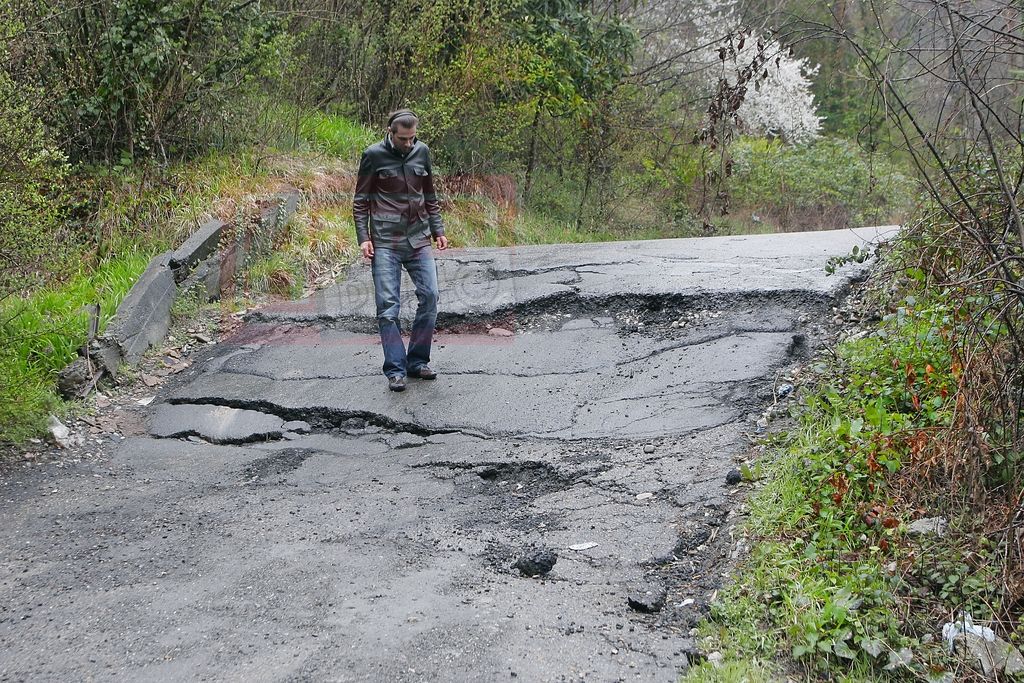 |  | |
| And from here we rolled down? Yes, the Priora is a sturdy car | The Priora's electric power steering lacks an intermediate gearbox — the rotor is located directly on the steering shaft. Mechanical failures are practically excluded: the main thing is that the Russian-made electronic control unit is reliable | The chief designer of the Priora, Valery Kozenkov, also worked on the "desyatka." His next project is the VAZ-2116, or Lada C, on a new platform |
What else do they promise! New seats and a heater with recirculation mode, air conditioning for the luxury version, a more precise gearbox drive. They say the body will become even stiffer after installing a new engine shield. Finally, eight years of experiments with different ABS systems will result in the installation of a system from Bosch...
In July, the Lada Priora will completely replace the "desyatka" on the assembly line, and from January next year, instead of the "dvenadtsataya," a Priora hatchback will appear. But an updated station wagon, most likely, won't be — making new stampings for a few thousand cars a year is unprofitable.
But let's be honest. All this will be meaningless if the new level of vehicle preparation for production isn't backed by better assembly quality and components. Even on test Prioras, there were quirks with immobilizers, non-closing glove boxes, and sinking power window buttons. So we'll hold off on conclusions until we get home. Especially since memories of another Sochi test drive are still strong — the Kalina, which differed from the one we later bought in Moscow like heaven and earth...
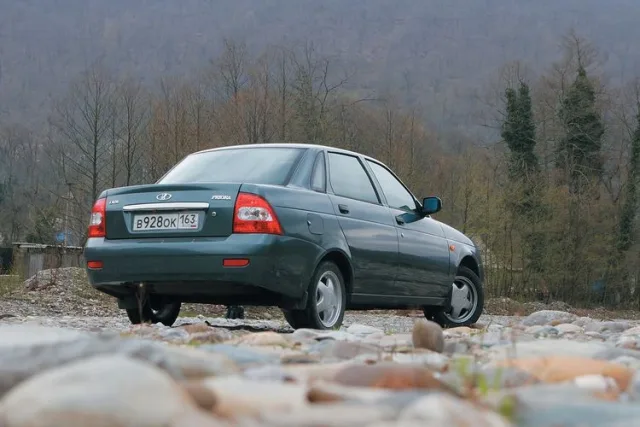
Sochi tour guides say that once there was no room left for grafts on the Friendship Tree. They had to plant a new lemon. Today, AvtoVAZ is squeezing the last juices out of the "vosmerochnaya" platform, and the current restyling is one of its ripest fruits. But, alas, the last one. The new car with index 2116 (we know it as the Lada C concept car), for which the same Valery Kozenkov is responsible, should be fundamentally different: larger, with a multi-link rear suspension...
But it may happen that in Tolyatti they won't breed anything else anymore. Because today's consumer doesn't need a lemon with the taste of an apple or melon. For the same money, he'll buy an apple or a melon. And a new VAZ car — whether created by their own efforts or with the help of foreign partners — will still turn out to be a modified lemon. Therefore, VAZ engineers don't really believe in the prospects of their developments, and the new management team doesn't spend extra money on fertilizer. They're just slowly, as they know how, looking for new seedlings.
| Specifications | |
| Parameters | Vehicle |
| Lada Priora | |
| Body type | 4-door sedan |
| Number of seats | 5 |
| Dimensions, mm | |
| length | 4350 |
| width | 1680 |
| height | 1420 |
| Wheelbase, mm | 2492 |
| Track front/rear, mm | 1410/1380 |
| Ground clearance, mm | 168 (165)* |
| Trunk volume, l | 430 |
| Curb weight, kg | 1088 |
| Gross weight, kg | 1578 |
| Engine | gasoline, with distributed fuel injection |
| Location | front, transverse |
| Number and arrangement of cylinders | 4, in-line |
| Displacement, cm³ | 1596 |
| Number of valves | 16 |
| Max. power, hp/kW/rpm | 98/72/5600 |
| Max. torque, Nm/rpm | 145/4000 |
| Gearbox | manual, 5-speed |
| Drive | front-wheel drive |
| Front suspension | independent, spring, McPherson, with stabilizer |
| Rear suspension | semi-independent, spring, with stabilizer |
| Front brakes | disc, ventilated |
| Rear brakes | drum |
| Tires | 185/65 R14 |
| Maximum speed, km/h | 183 |
| Acceleration time 0—100 km/h, s | 11.5 |
| Average fuel consumption, l/100 km | 7.2 |
| Fuel tank capacity, l | 43 |
| Fuel | AI-95 |
| * Data in parentheses — for vehicles on tires 185/60 R14 | |
Safety system diagram of the prospective Priora Lux (2008)
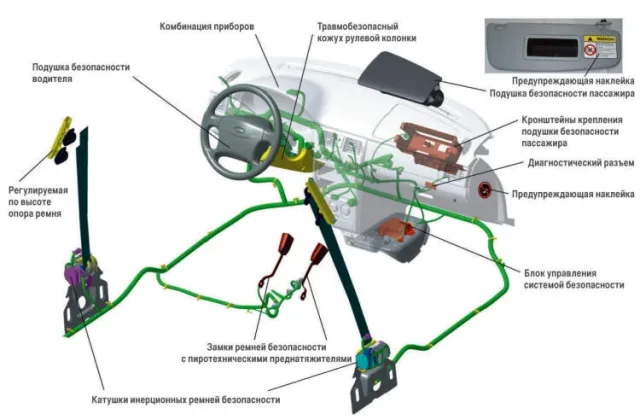
The automaker's plans indicated that in 2008 the Priora Lux would hit the market, equipped with a full safety package of four components: two front airbags and pretensioner seat belts on the front seats. Interestingly, a prototype of this modification with additional body reinforcement managed to score 11.3 points out of 16 possible in a frontal impact test according to the EuroNCAP methodology. However, the car that has now gone into production features a so-called "transitional" body, where there are no additional structural elements yet, and among the protection systems, only a driver's airbag. VAZ representatives claim that even in its current form, the Priora is noticeably more reliable than the "Tens", but they are in no hurry to disclose official crash test data for the production version. It seems they are waiting for "Autoreview" to conduct the tests?
| VAZ-2110 (crash test, 2005) 2.0 points | Experimental VAZ-2170 Priora (crash test 2006) 11.3 points | ||
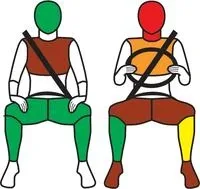 | 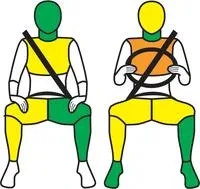 | ||
| Front passenger | Driver | Front passenger | Driver |