
Kalina, Kazakhstan, air conditioning
An ordinary guelder-rose blooms in late spring and bears berries by early autumn — it takes only a couple of months. But the Togliatti 'Kalina' bears fruit for three whole years: the first 'berries' in the sedan body with a 1.6-liter engine appeared in May 2005, and the last — station wagons — ripened only by April 2008. Now the family can finally be considered fully formed: three body types, two engines, three trim levels. Plus, for the first time in VAZ's history, ABS and air conditioning appeared in the options list.
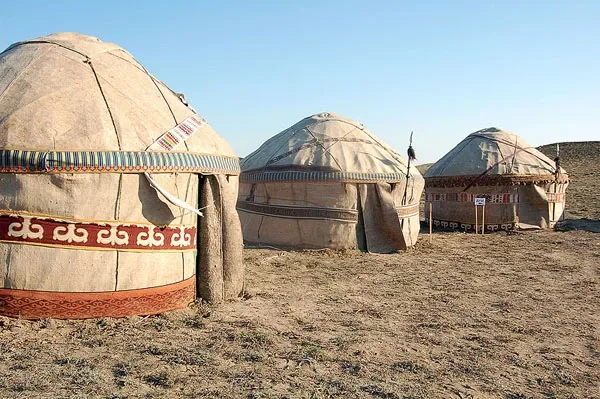
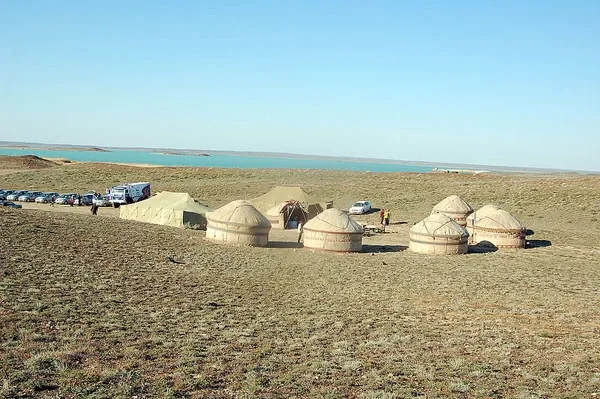
On fresh station wagons in top trim, we set off on a trip across Kazakhstan — from Almaty, the former capital, to the current Astana. Almost fifteen hundred kilometers, asphalt and dirt roads, an overnight stay in yurts by Lake Balkhash, the scorching southern sun, and snow that never melted. Read all the details right now — enough delaying!
Almaty
Flying from Moscow to Alma-Ata (now the city is called Almaty) takes about four hours. Regular flights are operated by two companies — Transaero and Air Astana. I wouldn't recommend Transaero to anyone: the flight resembles serving time in an administrative detention cell, only with stewardess-guards. Air Astana, according to colleagues, is much more pleasant, but its schedule didn't suit us.
So, we are in Alma-Ata. The city is green, well-kept, and in the background are the snow-capped peaks of the northern Tien Shan. Although the president, government, and all state bodies moved to Astana eleven years ago, Alma-Ata remains the largest and most modern city in Kazakhstan — the cultural and financial center of the republic.
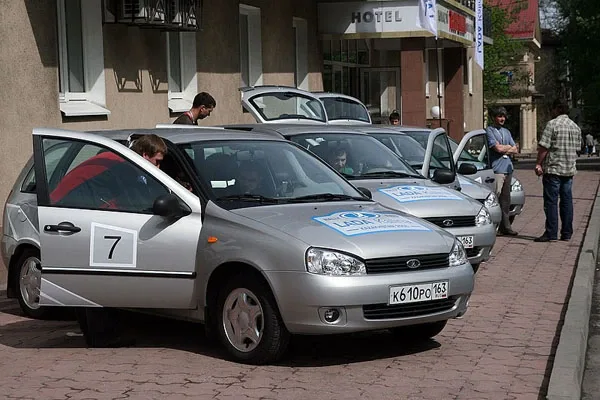
We didn't get to stroll around the city, though. Right after landing — a brief briefing, getting into the 'Kalinas' — and heading north to Astana.
Steppes-steppes-steppes
'Damn you, steppes, how good you are!' — Gogol exclaimed in 'Taras Bulba'. Many of us quoted these lines in school essays, loving the steppe by proxy, never having seen it. So I, too, heading to Kazakhstan, expected to meet that very Gogolian nature — expanses that 'the further they go, the more beautiful they become'…
But I missed one important detail. Gogol wrote about Ukraine, not Kazakhstan. Leaving Almaty, we saw nature more Chekhovian: 'The sun-scorched hills, brown-green, lilac in the distance, with their calm, shadow-like tones, the plain with a hazy distance and the sky overturned above them, which in the steppe, where there are no forests and high mountains, seems terribly deep and transparent, now appeared endless, numb with longing… How stuffy and dreary!'
'For variety, a white skull or a boulder will flash in the weeds; a gray stone woman or a dried willow with a blue roller on the top branch will grow for a moment; a gopher will run across the road — and again weeds, hills, rooks rush past the eyes… But, thank God, a cart with sheaves is coming towards us.'
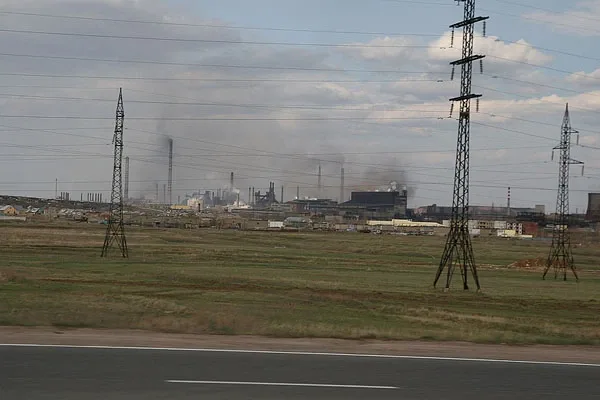
In the hundred years since Chekhov's time, the landscape has hardly changed. Only instead of a cart with sheaves — rare oncoming cars. And to the gophers, weeds, and birds, plastic bags and bottles have been added: the wind carries trash for dozens of kilometers, and now it has become part of the steppe landscape.
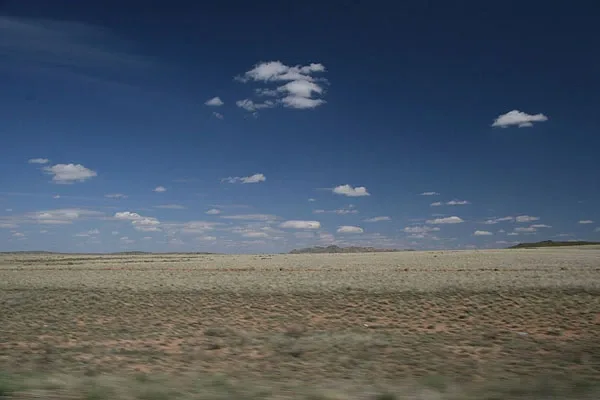
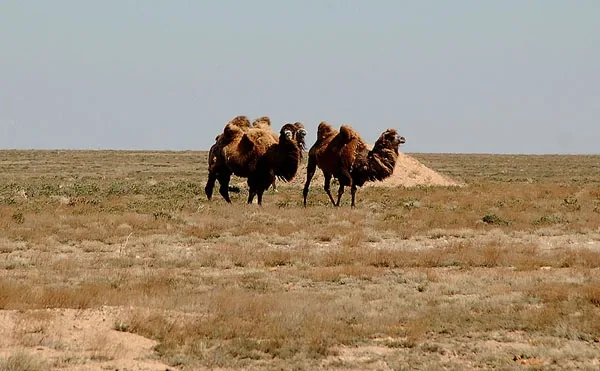
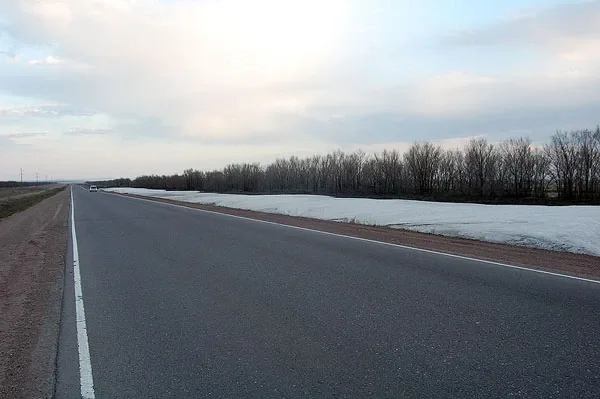
The road from Almaty to Astana is almost straight. In the south — a highway in the spirit of central Russian ones: sunken asphalt, ruts, potholes, and countless patches that, like tree rings, reveal the age of the surface. And closer to the capital — perfectly smooth pavement, fresh markings, and neat shoulders.
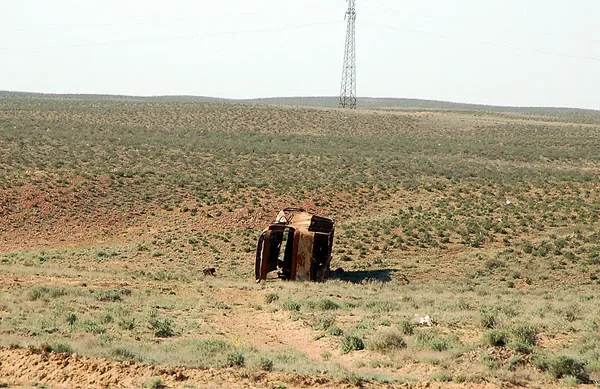
To the left and right — endless steppes, where auls are occasionally found. The picture is slightly enlivened by figures of wild animals on the roadsides (why they are placed there, we never figured out) and rusty hulks of cars, trucks, and buses about three hundred to five hundred meters from the road. Locals say: the drivers of those cars fell asleep at the wheel…
'Kalina'
The station wagon repeats the sedan in dimensions — the same 4040 millimeters in length, and in mass it is only 30 kilograms heavier than other versions: 1110 versus 1080 for the sedan and hatchback. And, as it seemed, in driving qualities it is almost no different from the cars we drove in Karelia. In short, the main advantages of the 'Kalina' are the phenomenal energy intensity of the suspension and decent ride smoothness. Just what is needed on roads outside Moscow.
True, the first batch of station wagons with air conditioners came with old eight-valve engines of 1.6 liters. And during the trip, we had to endure all their shortcomings: noise, dislike of high revs, and an appetite higher than that of the 1.4-liter unit. But, VAZ workers assure, it is much less sensitive to fuel quality. And for the Kazakh route, this is a significant plus.
From a practical point of view, the station wagon differs from the hatchback only in the trunk: 350 liters versus 235 with the rear seats folded, and 650 (up to the window line) with them folded down.
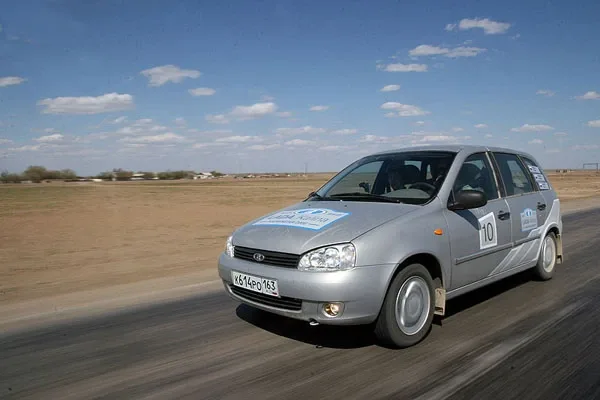
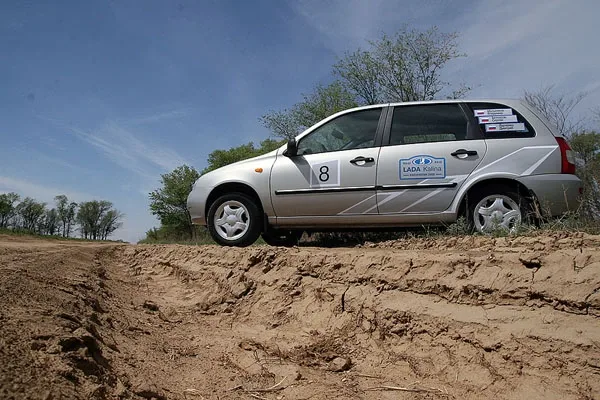
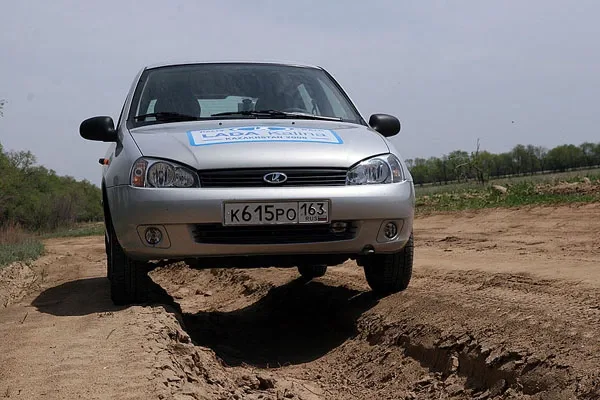
Finally, the 'Kalina' got an air conditioner. Its compressor is driven by a belt with a mechanical tensioner (an automatic one is promised soon) and is charged with R134A refrigerant, which does not harm the ozone layer. Along with the air conditioner, the base includes an electric drive for the heater damper, a cabin temperature sensor, a new cooling radiator, and a pair of electric fans under the hood.
In southern Kazakhstan, where the sun blazes during the day and at night two jackets at once don't save you from the icy wind, the car needs to… To have air conditioning and a powerful heater. There have almost never been complaints about the heaters of domestic cars, but air conditioners on VAZ are just starting to appear.
Formally, we have no complaints about the climate system. Press the button on the center console — the air conditioner turned on, cold air came from the deflectors. Press again — it turned off. There are, however, amusing little things. For example, the activation key is backlit, but the indicator doesn't work — the 'Kalina' doesn't yet have the necessary wiring or limit switch.
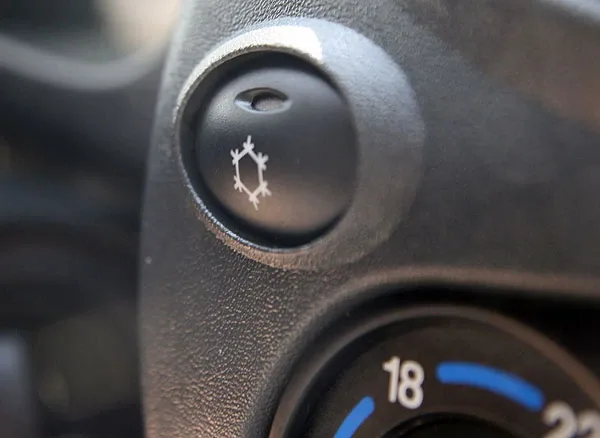
To save fuel, the electronics periodically disconnects the air conditioning clutch. This doesn't affect cooling, but the idle speed constantly jumps… The chief designer of the car, Vasily Batishchev, promised that they will sort this out in Togliatti soon.
Emotions
One of my colleagues aptly noted: the trip from Almaty to Astana is best described by the phrase 'when else would I have'… Indeed, such a route was not in my plans and would hardly have appeared. But I'm glad I went on this steppe raid, and now I can tell something interesting:
Many former USSR republics have redrawn their maps in recent years. They renamed cities, streets… So Alma-Ata became Almaty. As it turned out, this is not at all a translation from Russian to Kazakh, nor even a return to the historical name. The fact is that 'Alma-Ata' was invented by Soviet officials in the 20s, and in Kazakh it sounded absurd — 'Apple-grandfather'. But 'Almaty' sounds Kazakh and means 'apple'.
Lake Balkhash, on the shore of which we spent the night in yurts, is one of the largest in the region. A strait divides it into two parts: deep salty and shallow fresh.
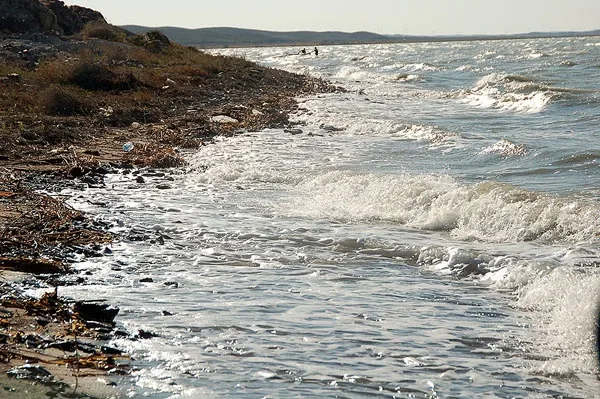
At night in the steppe it is very cold. Even in a yurt, in a sleeping bag.
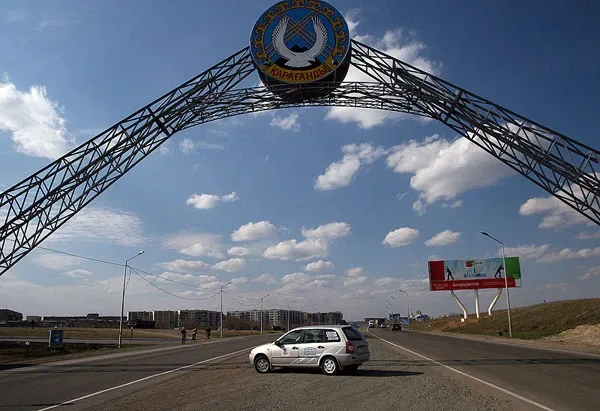
When we entered Karaganda, one of my colleagues, who had roaming problems, received a call from Beeline support. The operator, of course, asked: 'And where are you now?'. 'You won't believe it, but in Karaganda,' my acquaintance replied.
The city of Temirtau is not at all a place where you want to live.
Outside cities, Kazakh drivers behave exactly the same as Russian ones. The only difference is speed: they don't drive less than a hundred kilometers per hour. But in cities, especially in Almaty and Karaganda, you immediately understand that this is Asia. Almost no one observes lane markings there, and drivers constantly honk at each other. We tried to understand the logic by which they press the horn, but never figured it out. So we decided to just honk whenever we felt like it.
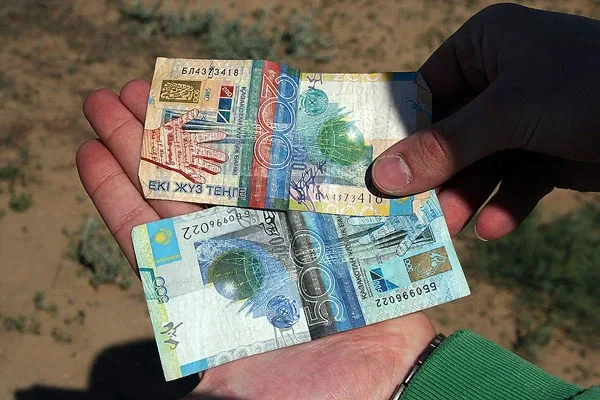
In the capital of Kazakhstan, drivers behave much more restrainedly and disciplinedly than in other cities of the country. Order here is monitored by "politsiyasy" — that's exactly what is written on their uniforms — in Chinese "Volkswagens". Control is very strict: one inspector spent about twenty minutes calling "driver of Mitsubishi 317" over the loudspeaker to approach the patrol car. We asked what was the matter and heard: "the car is parked at the wrong angle to the curb, let him re-park."
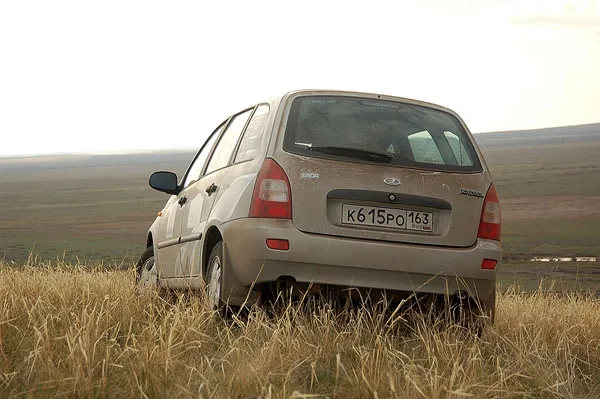
The "Kalina" station wagon costs from 247 to 297 thousand rubles depending on the trim level.
Video, day one.