
2006 Kia Rio
© Photo: Sergey Krestov, 5 Koleso
KIA RIO Price: 448,000 rubles On sale: from March 2007
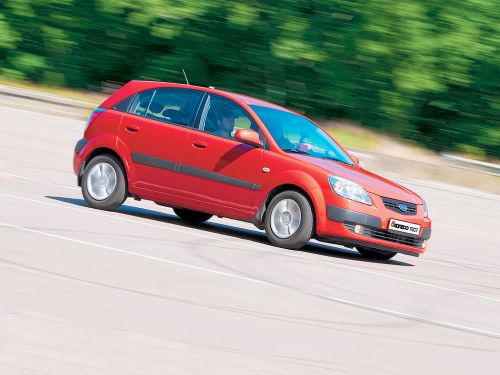
Our first acquaintance with the Izhevsk hatchback Kia Rio took place exactly a month ago and left positive impressions. But that was a subjective assessment of consumer qualities. For the sake of objectivity, the car was sent to the Dmitrov test site.
I won't abandon it anyway, because it's good. A little rhyme recently read to my son unexpectedly fit well into our "production" relationship with the bright red Izhevsk hatchback. After all, parting with it turned out to be impossible for two reasons at once.
Firstly, the car came to the editorial office for a long-term test, so whether you like it or not, we'll have to be friends for a long time. Well, and secondly, frankly speaking, there's no particular desire to do so.
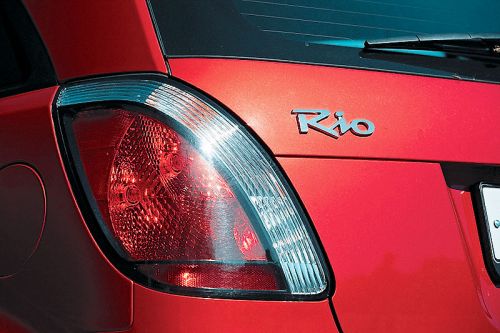
The cute compact car evoked positive emotions from the first minutes of acquaintance. And during subsequent operation, it didn't bring major disappointments. The modern appearance and decent driving qualities of the "Izhevsk" earned it a unanimous "four".
The positivity, of course, faded a bit after the price of the model became known... Therefore, the test of the Kia Rio at the Dmitrov test site became that very litmus test that, without focusing on the price list, allowed us to test the truth of our feelings.
First of all, the car demonstrates acceleration and elasticity indicators adequate for its modest engine displacement.
2006 Kia Rio
© Photo: Sergey Krestov, 5 Koleso
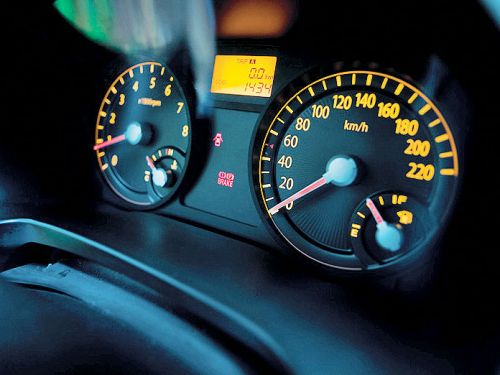
The fairly torquey 1.4-liter engine with 97 hp allows the Rio to easily keep up with the speed of dense city traffic without burdening the driver with constant up-and-down gear changes. Alas, even in the mid-range of revs (3500–4000), engine noise begins to press on the eardrums. A radio could be a saving grace, but it can only be installed for an extra charge. And this is in the luxury trim!
The top gear can be engaged already at 39 km/h. There will be no convulsions. Shifting from fifth to fourth gear is associated with a nervous search for the right slot in the gate. And reverse doesn't always engage properly. Its operation algorithm is such that to drive in reverse, you need to press the ring under the gearshift knob with two fingers, then push the lever left and forward.
2006 Kia Rio
© Photo: Sergey Krestov, 5 Koleso
The first action goes smoothly, but if during the subsequent movement the lever doesn't fully enter the groove, the gear simply pops out with a noticeable jolt to the hand. And among the potential buyers of the car, there are many fragile women who might find such handling fundamentally wrong for their manicure.
Despite its somewhat sporty appearance, the Kia Rio turns out to be quite calm in temperament. The car demonstrates truly pleasant acceleration dynamics only in second gear, reaching 60 km/h in 4.8 seconds. The hundred is achieved in third gear in 12 seconds. However, it's unlikely there will be staunch optimists who consider the Kia a Formula car. Although in our country, there will probably be some.
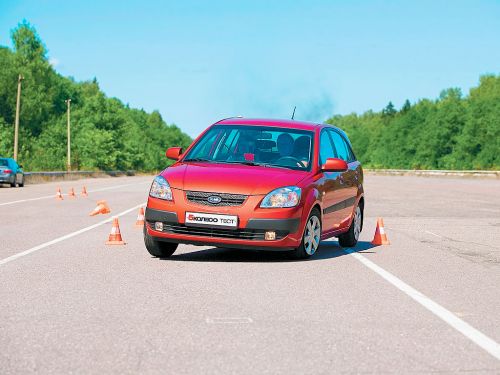
During handling tests, the hatchback earned many words of approval. When performing the long lane change according to the ISO method (adopted by the International Organization for Standardization), the "empty" car demonstrates adequate responses to steering wheel inputs and good directional stability. The Rio fits into the space between cones at 120 km/h, remaining under driver control and leaning slightly in corners.
In a loaded state, the situation changes a bit: the Kia develops understeer, causing it to lose speed. But at the same time, body roll in corners almost disappears.
2006 Kia Rio
© Photo: Sergey Krestov, 5 Koleso
The car also received a good rating for its behavior during the short lane change according to the VDA method, better known as the moose test, introduced by the German Association of Automobile Manufacturers.
In other words — avoiding an obstacle that suddenly appears in the path. Unlike the ISO test, during this exercise the driver, after the first two meters of the distance, takes their foot off the gas pedal and acts exclusively with the steering wheel in an attempt to keep the car on the trajectory.
The sharp steering and the Kia Rio's ability to hold the intended course give hope for a successful outcome when meeting a moose. Moreover, in a loaded state, the car handles a bit better, as evidenced by the kilometer difference in speed at the exit of the cone "corridor" (47 km/h versus 46).
During the slalom, the Rio, on the contrary, responds noticeably worse to driver inputs under load. The car demonstrates pronounced understeer.
If at the beginning of the snake the drift can still be controlled, then at the end of the 180-meter section, the amplitude of oscillations occurs literally on the edge of a foul. Conversely, with an empty trunk, the hatchback behaves more predictably. Even if you slightly overdo the speed, when the car begins to slide with the front wheels outward, handling remains predictable.
As the tests showed, the Kia Rio is well suited for calm driving, not burdened by high-speed maneuvers. In critical modes, the car should not be pushed, as this could lead to unexpected consequences. The same was confirmed by braking tests. Of the ten attempts to decelerate from 100 km/h, the first two went beyond the 42-meter mark, warning that you should be more careful with cold brakes. But as they warmed up, efficiency increased, and the remaining eight "runs" met the standard.
So the secret, as usual, becomes apparent. And what is unnoticeable in everyday use unexpectedly surfaces at the test site. As happened with the Kia Rio.
2006 Kia Rio
© Photo: Sergey Krestov, 5 Koleso
2006 Kia Rio
© Photo: Sergey Krestov, 5 Koleso

2006 Kia Rio
© Photo: Sergey Krestov, 5 Koleso
Body
+ Interesting appearance, spacious interior
- Modest trunk volume
Ride comfort
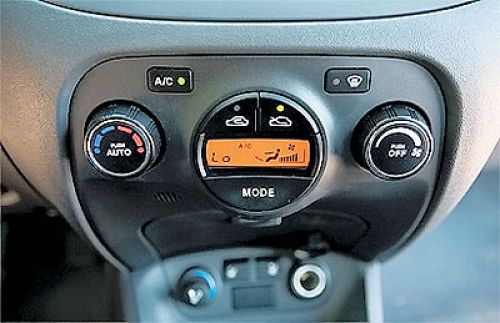
+ Comfortable seats, ergonomic controls, moderately stiff suspension
- Minor road irregularities are well felt in the cabin
Powertrain
+ Good elasticity and dynamic performance
- Imprecise gear shifts, noisy engine
Handling
+ Good steering response, small body roll in corners
- Understeer when the car is loaded
Safety
- Sparse active safety equipment, weak braking effectiveness with unheated brake mechanisms
Ecology
+ Engine meets Euro 4 standards, modest fuel consumption
© 5 Koleso