KIA Cerato
Engine — 1.6 L
Peak power — 126 hp
Max torque — 157 Nm at 4200 rpm
Top speed (km/h) — 182
0-100 km/h sprint — 12 seconds
Fuel consumption:
combined cycle — 7 L
4-speed automatic transmission
Curb weight — 1285 kg
Length — 4,597 mm
Width — 1,788 mm
Tires — 205/55 R16
Equipment:
Climate control, power steering, 4 power windows, fog lights, heated mirrors, multifunction steering wheel, audio system CD+Radio+MP3, AUX+USB, 6 speakers. Central locking, immobilizer, ABS, ESP.
Warranty — 5 years or 150,000 km.
Maintenance interval — 15,000 km
Maintenance 1 — 6,000 rub.
Maintenance 2 — 10,000 rub.
Maintenance 3 — 6,000 rub.
Maintenance 4 — 10,000 rub.
Maintenance 5 — 6,000 rub.
Maintenance 6 — 23,000 rub.
Maintenance 7 — 6,000 rub.
Price at the time of the test — 659,900 rubles,
starting version — 559,900 rubles.
Vadim Sadykov, «Autoclub-Kazan»
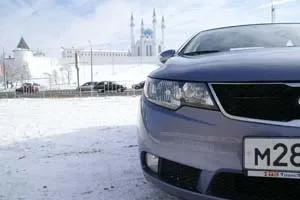
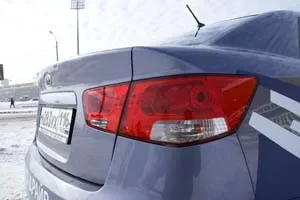
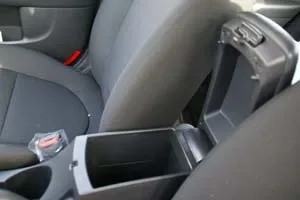
The car's exterior is a sight to behold. You wouldn't be embarrassed to be seen behind the wheel of such a car, whether you're a young fashionista or a respectable man. An excellent balance has been found: the interior is neither overloaded with archaic nor defiantly futuristic elements. This is exactly what a mass-market representative of the popular C-class should be. And the cabin also pleased at first acquaintance. It's assembled neatly, with no visible defects, and the trim materials are of a decent level. Sitting in the front passenger seat is very comfortable, especially in the «reclining» position: you slide the seat back, lower the backrest, and stretch your legs out. And surprisingly, having settled in the back «behind myself», I also felt fine. But after some time on the road, you start to catch small flaws with your eye. For example, there's nowhere to put your hand — the armrest is uncomfortable. From the rear sofa, the noise of the wheels is more audible. The lateral support of the seats is almost non-existent. However, one shouldn't be too demanding: this is an ordinary inexpensive car.
The suspension left a pleasant impression — it's balanced: on uneven surfaces, there's neither excessive shaking nor motion sickness, nor bottoming out. Its composure initially made Alfred and me hope for intelligible handling. Alas, reality turned out to be different. Even in leisurely turns, it's not worth accelerating above 60-70 km/h — this limit is felt clearly, and when exceeded, the rear starts to drift. I wouldn't recommend such a car to inexperienced speed enthusiasts. Especially since the stability control system engages with a noticeable delay. It remains to be understood whether such behavior is a drawback for a typical driver. To do this, it's worth taking a closer look at the engine and gearbox combination.
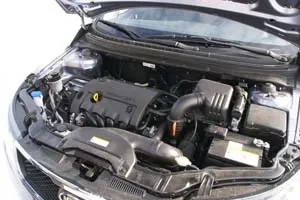
Take the modern 1.6-liter engine. Judging by the stated data, the peak power and torque are shifted to high revs: 126 hp at 6300 rpm and 157 Nm at 4200 rpm. I might be wrong, but this is most likely the familiar Hyundai unit (122 hp at 6000 rpm), only with a different electronic calibration. Cars with such «1.6 engine + automatic» combinations usually don't shine with dynamics, but they please with appetite. Take the same Hyundai i30 or Chevrolet Cruze. A similar picture is with the Ford Fiesta and Nissan Tiida. Fuel efficiency is a priority for modern models. This is a reaction both to the crisis and to the demands of environmentalists. Cerato follows the same philosophy. True, when starting from a standstill, it «shoots off» quite briskly, but then quickly cools down, trying to stay in the 1500-2000 rpm range. The key role here is played by the settings of the 4-speed automatic. As is known, four gears are always a search for a compromise between dynamics and economy (read more about this in the article «Gear Ratios of the Gearbox» on the «Autoclub-Kazan» website). The car doesn't like sharp accelerations, at the slightest opportunity it engages a higher gear, but our fuel consumption measurement was only 8.7 liters. A very decent indicator for such a sizable car with a 4-speed automatic.
Now let's return to handling. If the engine and 4-speed automatic combination is initially designed for leisurely and economical driving, then what's the point of installing a suspension designed for an aggressive style? Exactly. The car is a single whole, and every detail must correspond to the character that the designers intended.
A few words about the 4-speed automatic. There's a full-fledged «foolproof protection» here. For example, the «automatic» won't allow you to manually engage a lower gear if the revs are approaching 5000. Moreover, in «manual» mode, the gearbox will itself shift down at 1000 rpm or up when reaching the cutoff. I used the latter function on the highway when starting from a standstill: I selected first gear and — pedal to the metal. The 4-speed automatic itself went through all four gears, raising gears at the cutoff.
A few words about prices. The base version (Comfort) costs 559,900 rubles. In principle, it has everything necessary (ABS, air conditioning, etc.), but I would advise taking the «luxury» for 594,900 rubles, which already has ESP, climate control, fog lights, and other useful options. Quite inexpensive. And this is a huge plus of this model.
Alfred Mardanov, «Autoclub-Kazan»
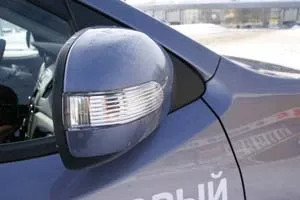
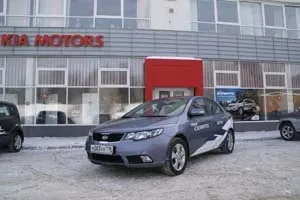
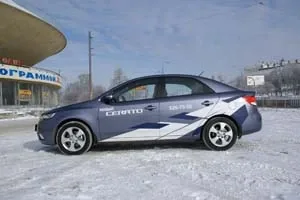
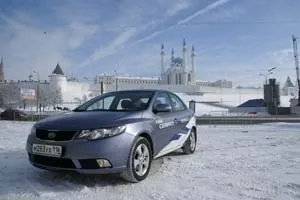
The second attempt to test this car finally succeeded. It was planned last year, but circumstances beyond our control prevented us from carrying out the plan. Nevertheless, the car hasn't lost its relevance and interest. The first thing that catches your eye is the appearance. You can feel that the Koreans approached the matter with all seriousness, it's not for nothing that they attracted the famous German designer who gave the world the Audi TT and other iconic models, his handwriting is visible immediately. If the Ceed made a real splash in Europe, showing that Korea has become closer and more understandable, then this car is like an indicator in a chemical reaction. It can quite rightly be considered the founder of the «KIA» corporate style, otherwise how to explain the similarity of the front end with the Sorento. I suspect that subsequent models will also use common design moves. The car looks stunning and modern, every detail is original and at the same time organically integrated into the overall image. The C-class, to which the Cerato belongs, is fortunately universal, and thank God, the range here is huge. As Vadim aptly noted, the car keys will look equally organic in the hand of a fragile girl and a large bearded man. Fortunately, both will be comfortable sitting behind the wheel. There are plenty of adjustments, visibility is good, mirrors are informative.
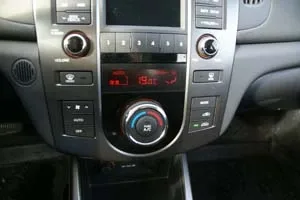
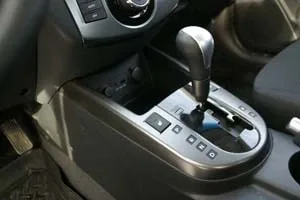
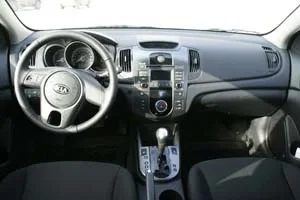
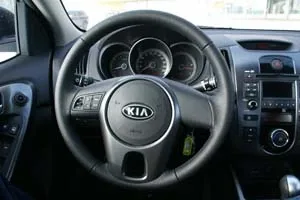
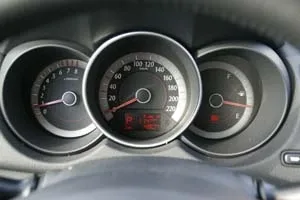
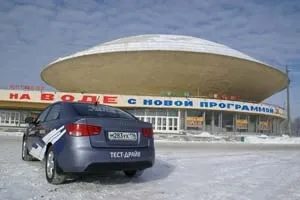
The first pleasant impression was reinforced by the excellent aesthetics of the interior. The materials, of course, are not premium level, but they look quite decent. And again I'll join Vadim: the build quality is typically Korean, impeccable. There's simply nothing to find fault with here. The instrument panel is three recessed wells with needle indicators and a small screen with bright red backlighting. It seems the Korean designers decided to borrow this shade from VW/AUDI. I noticed that the automatic transmission lacks a sport mode — there's only a standard manual one. I must definitely check the «foolproof» protection in the gearbox's operating algorithm. The presence of USB and iPod connectors is a pleasant bonus for music lovers, a modern touch from KIA. The plump steering wheel fits comfortably in the palm, it's time to hit the road — photos at the dealer center are taken, the city awaits. I never managed to fully feel the 126 horses. Already on a short stretch from the showroom to the circus, the character of the automatic transmission settings showed itself. Priority is economy and ecology, and here Vadim is right again. First gear briskly launches the car from a standstill, tearing off the top layer of asphalt with the studs, but then... We'll check what happens next on the highway. While I was photographing the car, I thought once again about how well it's put together, and that's great.
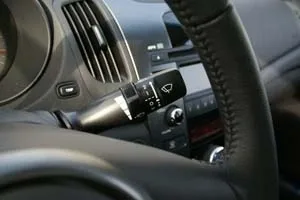
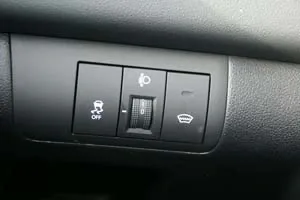
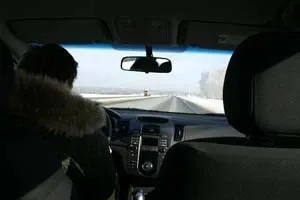
I move to the passenger seat, yielding the wheel to Vadim, and we set off across the entire city — to Yudino, passing Arakchino. This route, as everyone knows, is not distinguished by smooth asphalt, and, to my surprise, our test car handles all the potholes and bumps literally excellently. Mentally, I give it a big plus. The suspension handles unevenness very composedly, without a hint of bottoming out, and its dense and resilient operation inspires confidence. True, there's a slight creak audible in the cabin, coming from somewhere in the front. Later we found out its source — it's the panel laid along the windshield.
When Vadym put me back behind the wheel on a winding road, I immediately felt that the steering was overloaded. If during calm driving it's even pleasant — the car confidently holds the straight line — then in active maneuvering it complicates the task. We had exactly the same picture with the Sorento. The highway here is telling: first gear briskly launches the car, and then begins a prolonged "parachute jump." Overtaking stretches for long seconds, and honestly, you hardly believe it will ever finish.
Acceleration, frankly, is a bit heavy: if you plan to pull out into oncoming traffic, you need to calculate every meter in advance. As for sound insulation — honestly, at first I wanted to call it weak, but then I changed my mind. Perhaps it's worth approaching this philosophically: it's not a safety issue. You need to consider the car's class. Look at competitors: one seems to have no floor at all, another has the engine sound just living in the cabin. In other words, nitpicking about this doesn't make much sense. You can note that sound insulation leaves much to be desired, but no more than that. In the D-class, requirements are certainly higher, and that's important, but here, I think, it's not worth focusing on this now or in the future. As for handling and Vadym's remarks — everything here is logical and quite expected.
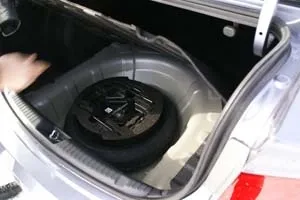
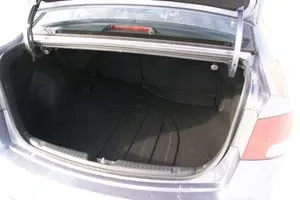
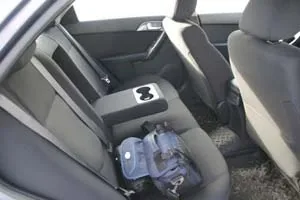
The car is built on a "cut-down" chassis of that very Ceed. At the rear, there's now a simple torsion beam instead of a multi-link — and that's exactly the secret of its "liveliness" in drifts. Inspired by Vadym's example, I definitely decided to move to the back row. It's quite comfortable there: spacious, not cramped at all, and if you lower the armrest with cupholders, two people can get almost limousine-level comfort. The trunk, however, impresses with its size, although the high sill is a bit inconvenient when loading. But on the other hand, who now carries potatoes by the hundredweight? If we assume that every car has its purpose, the conclusion suggests itself: this is a very solid, inexpensive, economical, and, importantly, noticeable car.