One of these crossovers is the absolute king of Russian sales, and only the Hyundai Tucson can rival it in popularity. The second one trails at the very bottom of the ratings and doesn't even try to compete with anyone—it just patiently waits for its one and only buyer. The first has won the hearts of all Russian women, while the second stays closer to a male audience.
SOFT AND OBEDIENT
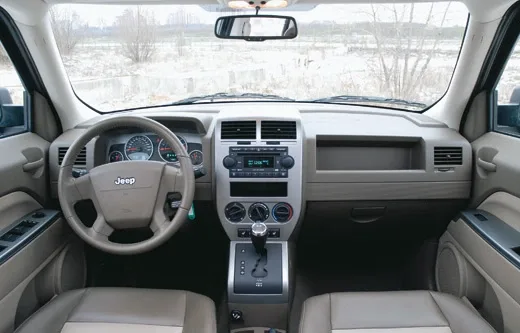
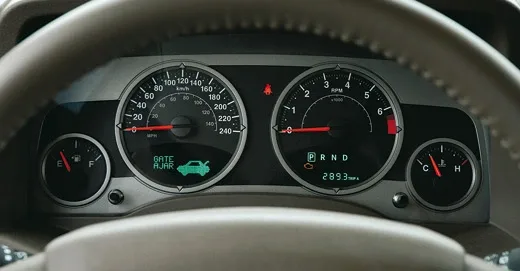
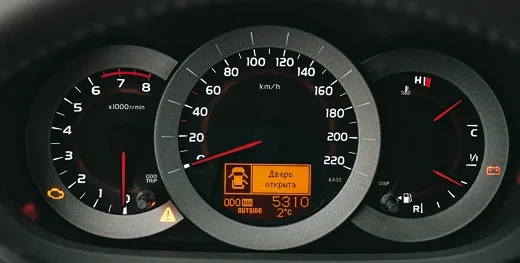
Standing in line for the Toyota RAV4, surrounded by ladies, I felt out of place when I got behind the wheel of the test car. But after just a hundred meters, all the awkwardness evaporated like morning fog. Women simply can't adore a bad car. The "Ravik" delivers exclusively positive emotions and nothing else! Even the hard plastic in the cabin trim couldn't spoil the harmonious picture—it looks much nicer than the materials in the Jeep.
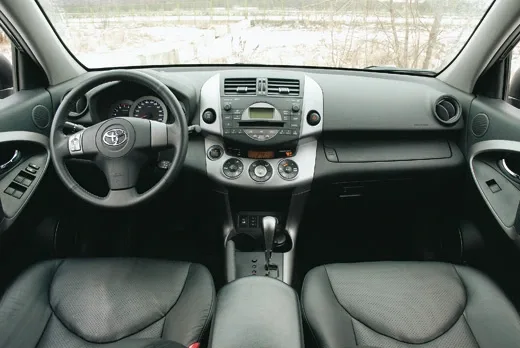
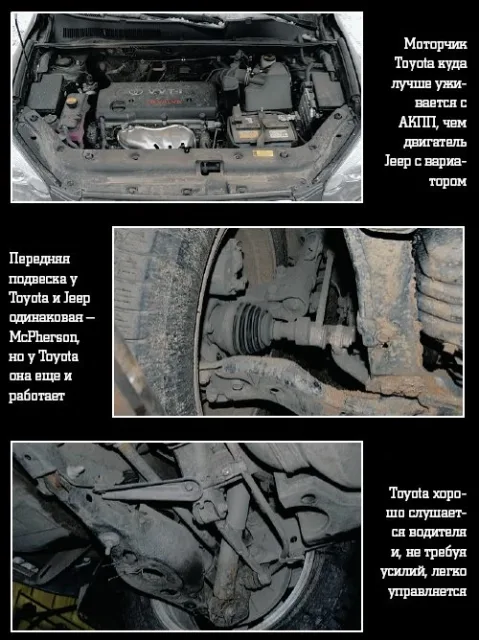
The RAV4 behaves docilely and absolutely predictably on the road. Steering responses are precise, but without the nervousness and sharpness that the Mitsubishi Outlander XL is known for. The Japanese car's suspension also found a golden mean: it doesn't allow the car to lean like the Nissan X-Trail, but it doesn't suffer from excessive stiffness like the Outlander. In every movement of the Toyota, you feel lightness—whether it's going over a speed bump, tackling a hill, or taking a corner...
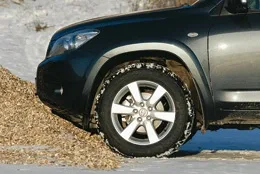
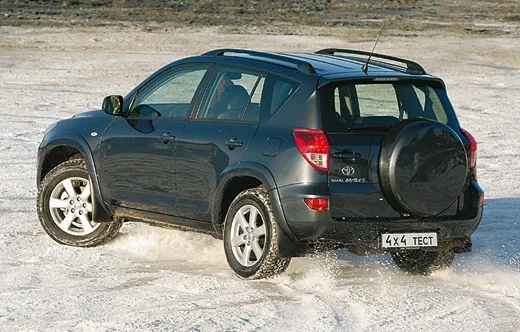
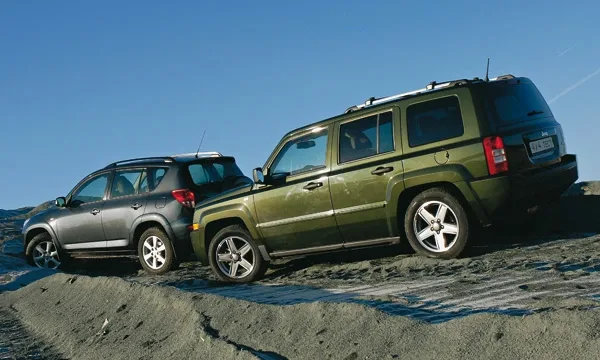
You can enjoy this "fluffy" character endlessly, not only on smooth asphalt but also on rough terrain, where lightness often becomes the main helper. I was convinced of this once again when I was climbing a snowy slope along someone else's track littered with frozen molehills. Without even scraping the underbody, the Toyota flew up and, deftly slipping between the pines, stopped opposite its rival. The Jeep Liberty accepted the challenge and moved to the starting position.
MOUNDS ARE NOT SCARY FOR THE JEEP
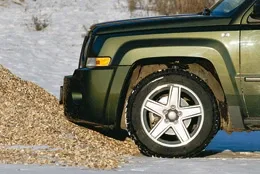
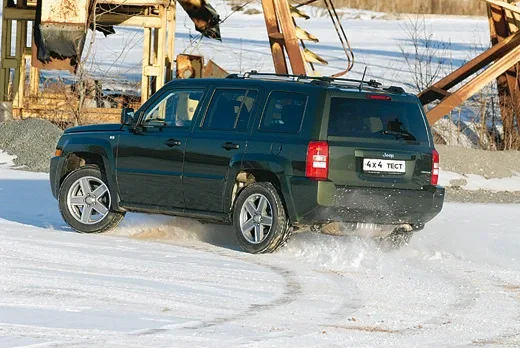
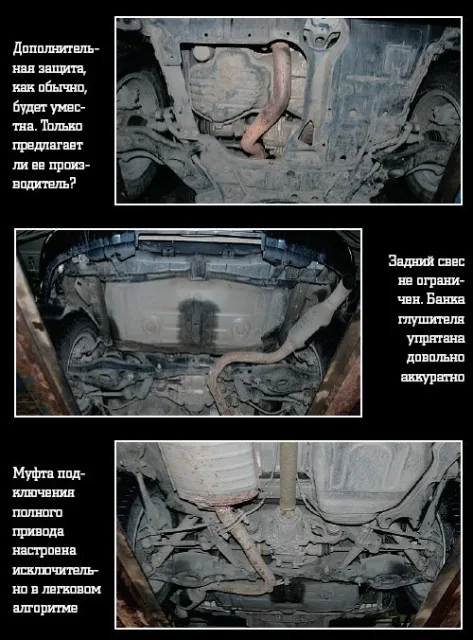
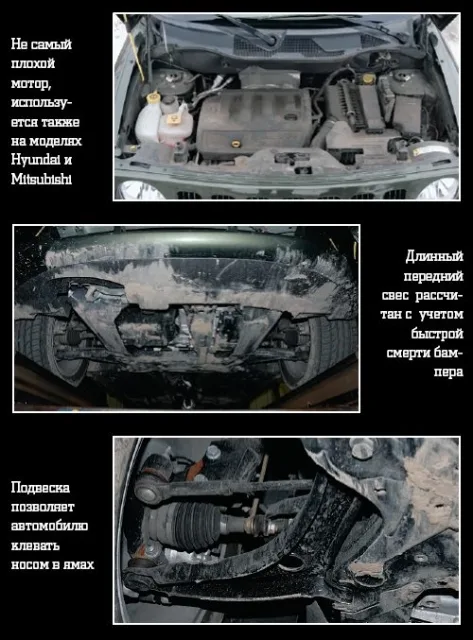
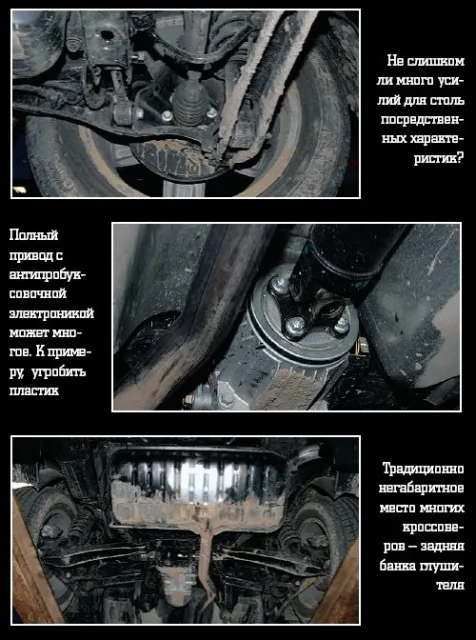
When I switched to the Jeep, the front bumper immediately started to worry me. The Toyota has noticeably better geometric off-road capability. Also, the rear overhang of the American is seriously limited by the muffler. Carefully climbing such slopes is a futile endeavor—nothing will work. You'll have to attack with a running start, keeping the revs higher. The CVT growled, then howled in unison with the engine, and the American crossover rushed along the Japanese car's tracks. After hitting the front overhang a couple of times and squeezing between the trees with difficulty, it also made it to the top.
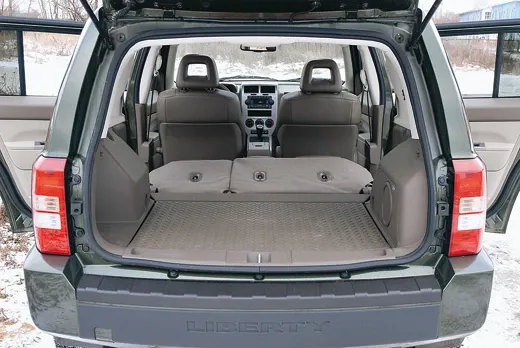
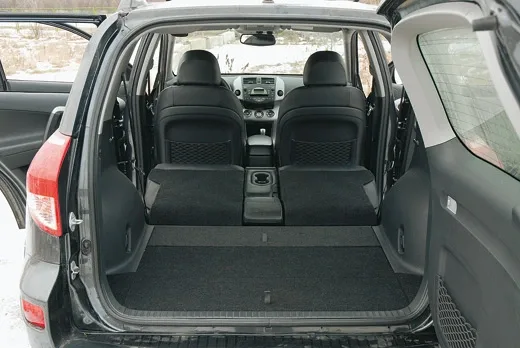
A short run—and you can already draw conclusions about the rivals. The "American" is heavy and dives its nose. The "Japanese" is light and doesn't touch anything. At the same time, in the Jeep you feel like you're in a real SUV doing its usual routine work. And the RAV4 is more like a passenger car that suddenly decided to perform a feat. But no matter how good the "Japanese" is, outside the test, it wouldn't even occur to me to have fun with it in a quarry. And against this backdrop, the Jeep easily turns its shortcomings into advantages. Well, almost all of them.
THE LEGEND DROWNS IN PLASTICINE
In the Toyota, when you press the gas, exactly what you expect happens—the car simply accelerates. The brake pedal also responds clearly and understandably. The steering wheel turns with clear effort and turns the wheels to the desired angle. The suspension works as it should. Now quickly switch to the Jeep—and you can't drive. You get the feeling that under the gas pedal lies a meter-thick layer of plasticine, and the same substance is in the power steering, suspension, and CVT. At least, that's how it seems after the contrast with the competitor. All that's left is to console yourself with being part of the legendary brand.
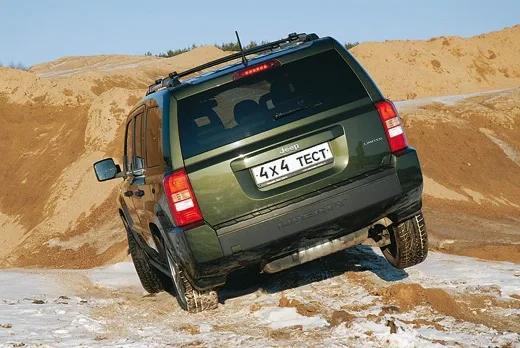
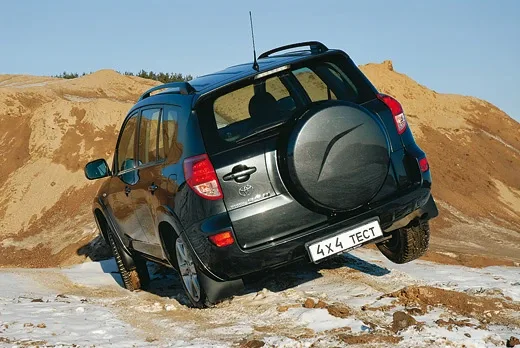
But the trials aren't over yet. Next up is a test of the traction control systems. The Toyota RAV4 had a wheel lifted, and then the Jeep Liberty was laughing. On the move, the "Japanese" might get through, but I'm not ready to tackle uneven ground in a near-passenger car. But the Jeep drove with a lifted wheel as befits a real Jeep. Its electronic assistants honestly worked off-road, while the RAV4's electronics are designed exclusively for asphalt.
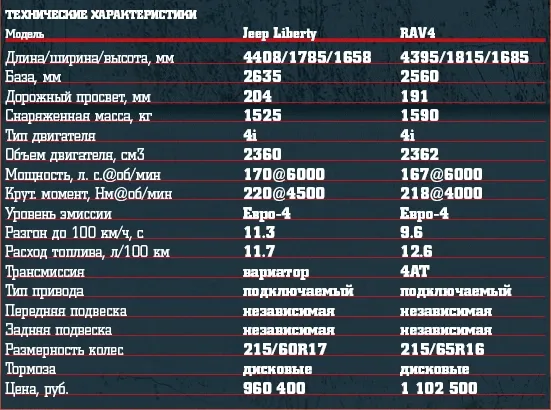
SPECS: TOYOTA RAV4
SPECS: JEEP LIBERTY
THINK FAST OR DRIVE FAST?
The final stage was the traditional paired races. We started from a standstill. While the Jeep was catching up to the Toyota, I was tormented by the question: is the claimed efficiency of the Liberty's CVT worth its sluggishness? After all, a CVT should think fast, right? And so it is. It works briskly, instantly sending the tachometer needle into the red zone. But compared to the rival, it doesn't go! The RAV4 with an automatic transmission and an engine of the same displacement as the Jeep's flies far ahead and waves goodbye.
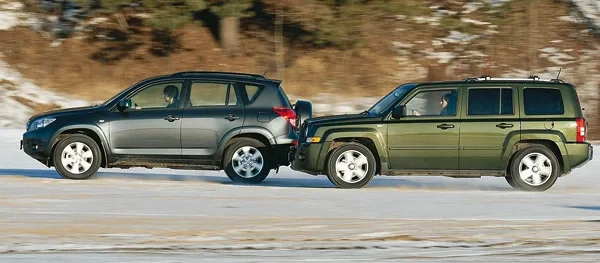
Given that the design of both crossovers is identical, the Toyota is much better thought out in every respect—both in dynamics and ergonomics. The Jeep driver who participated in our test summed it up with a strained smile: switching from a Jeep Liberty to a Toyota RAV4 is quite realistic. But going back—only if you vitally need a good traction control system. Or when finances are really tight and you just can't find that 140–150 thousand rubles difference in price between the "American" and the "Japanese."