The idea for this comparison belongs to Savva Safonov. For a long time, I couldn't grasp its essence: it sounds too mundane. But if you think about it, that's exactly what an ordinary person needs. Simple utility for a fair price. Nothing more. Personally, I'm not ready to overpay for image, designer flourishes, piles of trendy electronics, decorative plants in the cabin, or someone else's leather on the steering wheel. That kind of thing even makes me shudder. But paying an honest price for off-road capability, a sturdy construction, and the confidence they provide—that's a yes. Especially when all of that is complemented by at least some comfort, safety, and ergonomics. Because of that last point, Chinese and Russian cars drop out of the candidate list. Europeans are eliminated due to the price tag. That leaves the Japanese and Americans.
MARGIN OF SAFETY
At our disposal were a Jeep Cherokee in Limited trim (which is, in fact, the only one here) with a diesel engine—it currently costs 1,681,000 rubles, and a Mitsubishi Pajero Sport, which in a similar top-end configuration will set you back 1,569,000 rubles.
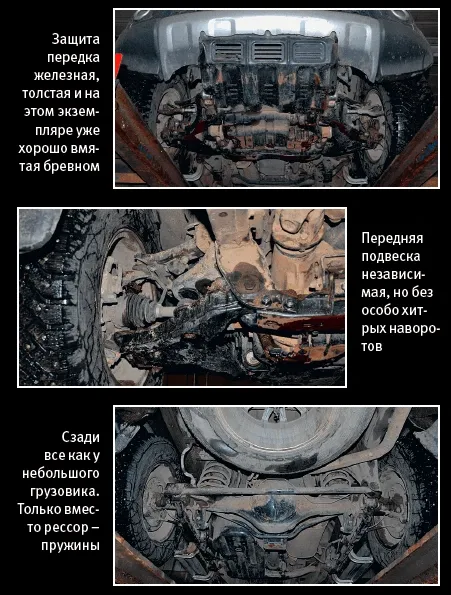
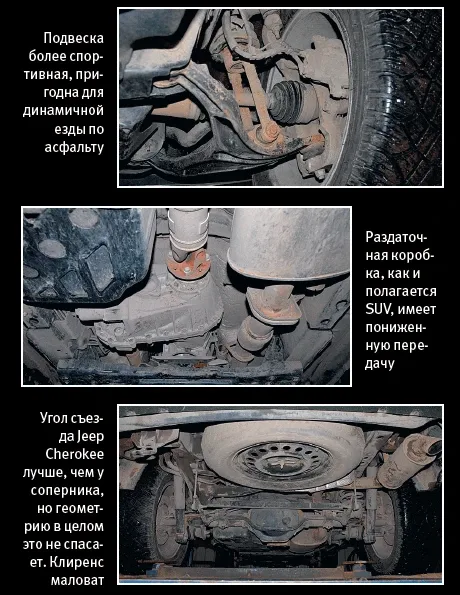
The Mitsubishi Pajero Sport's body sits on a sturdy ladder frame, and at the rear it has a robust solid axle. The Jeep Cherokee has no frame, but you can't call its body ordinary either: in the unibody construction, these two elements are integrated into each other and additionally welded for reliability. At the rear, the "American," like the "Japanese," has a solid beam axle. We classify such SUVs as universal due to the presence of a low-range gear. Both competitors, of course, have a two-speed transfer case with a reduction gear. And, naturally, we chose versions with diesel engines. The pinnacle of practicality has been found, marked on the map—all that's left is to climb it.
At our disposal were a Jeep Cherokee in Limited trim (which is, in fact, the only one here) with a diesel engine—it currently costs 1,681,000 rubles, and a Mitsubishi Pajero Sport, which in a similar top-end configuration will set you back 1,569,000 rubles.
The Mitsubishi Pajero Sport's body sits on a sturdy ladder frame, and at the rear it has a robust solid axle. The Jeep Cherokee has no frame, but you can't call its body ordinary either: in the unibody construction, these two elements are integrated into each other and additionally welded for reliability. At the rear, the "American," like the "Japanese," has a solid beam axle. We classify such SUVs as universal due to the presence of a low-range gear. Both competitors, of course, have a two-speed transfer case with a reduction gear. And, naturally, we chose versions with diesel engines. The pinnacle of practicality has been found, marked on the map—all that's left is to climb it.
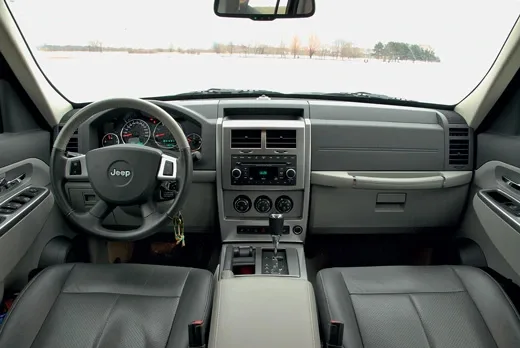
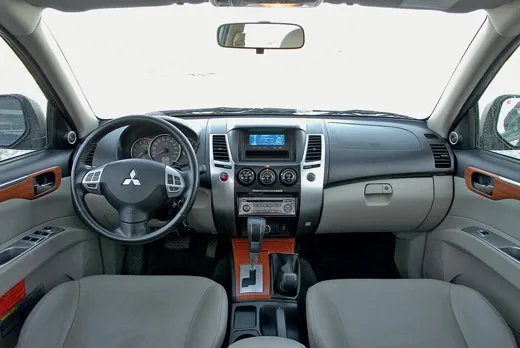
Ergonomics are there! The screen is high, the climate control knobs are raised, and the air vents are on the sides, but if you want to listen to music, get into the Jeep
On the "Jeep's" dashboard, functions are simply stacked on top of each other. However, the climate control knobs are convenient and grippy
DON'T FORGET THE LOCKER
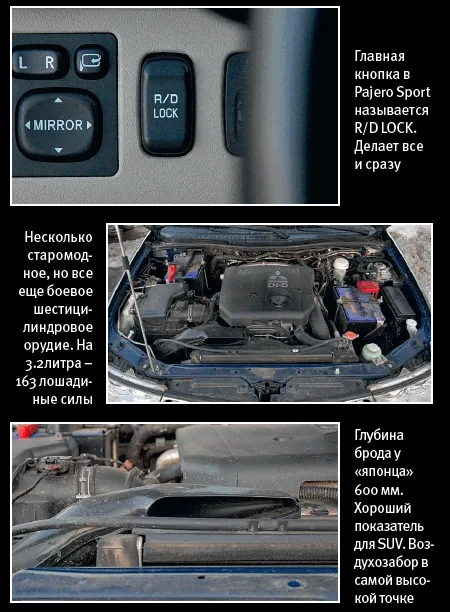
I want to start with admiration. So I will. How good is the Mitsubishi Pajero Sport off-road! It's simply a miracle how it plows through heavy March snowdrifts, boldly storms hills and fords. The ground clearance and front-end shape allow you to confidently tackle any reasonable obstacle, and the engine's torque and two lockers in the drivetrain are so effective that you can drive around all the quarries in the Moscow region and return home with clean shoes. The claimed 600 mm wading depth is also a substantial figure. I've encountered this "Japanese" before, and its capabilities are no secret, but they surprise again and again. Especially the magic button that commands the rear differential to lock. It's located to the left of the steering wheel, in the blind spot. Some owners completely forget about it and sell the car without ever using this option. How much they miss out on!
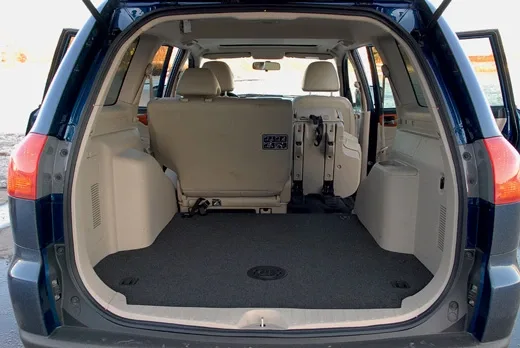
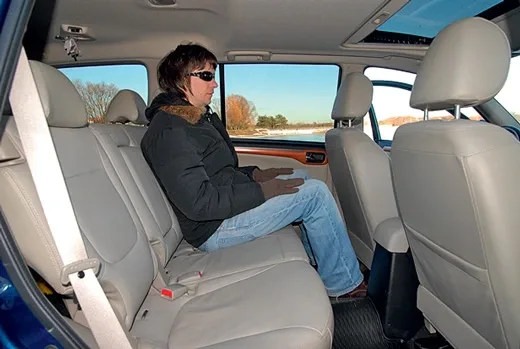
There's more space here, but the item must be narrow and long—for example, like an inflatable crocodile
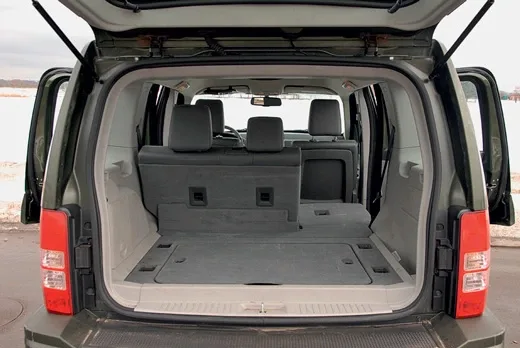
In the "American," the trunk floor is raised higher. But the top of the opening is wider: a small child's piano will fit without disassembly
Imagine a slippery hill that you can't climb even with a running start more than a quarter of the way up. The incline isn't just slippery, but also riddled with bumps and potholes that cause wheels to hang. So, by pressing that button, you'll reach the summit as easily as if you were driving on asphalt. That's why the Mitsubishi Pajero Sport has no traction control electronics. After all, a rigid rear-axle locker successfully replaces it. That's the right move. All electronic systems were originally designed for "asphalt work." Their subsequent integration into SUVs was accompanied by such squealing that owners' teeth are still set on edge to this day. They work well as long as you keep the steering wheel straight. The moment you turn it enough, driving over some treacherous terrain—like sand—the engine gets choked, and the brake pads clamp onto the wheels for dear life. No, of course, there are exceptions, but they're in a different price range.
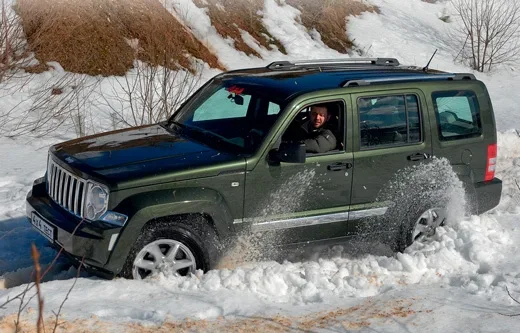
On the Jeep Cherokee, you can remove the front bumper "skirt," and then the approach angle increases to 36 degrees
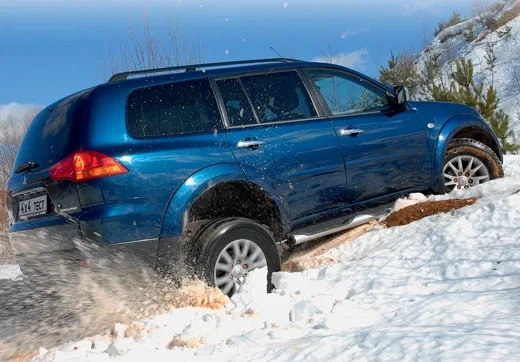
The Mitsubishi Pajero Sport is one of the few current vehicles specifically designed for off-road. It lives up to all expectations
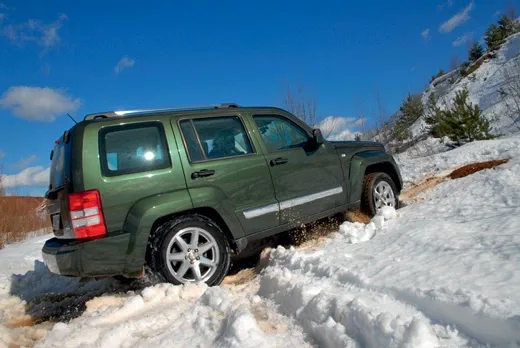
Here, the electronic traction control system is a major hindrance
300 KG AND 2 SECONDS
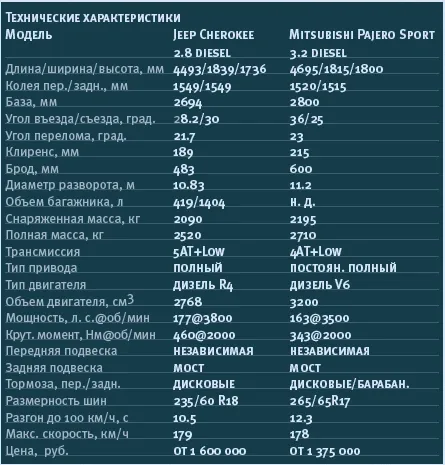
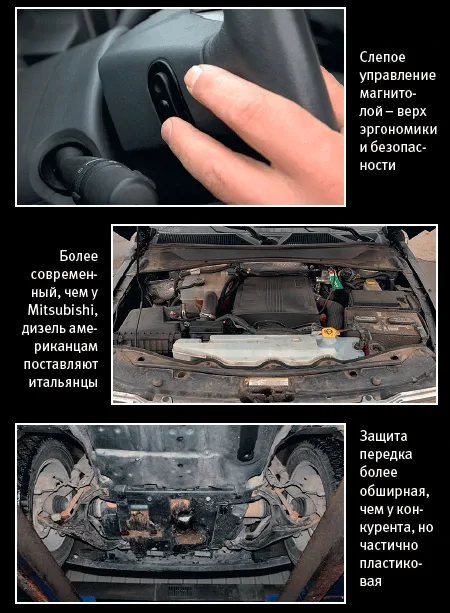
The Jeep Cherokee has electronics. It can be turned off, but, alas, not completely. The system works even when low range is engaged, although the ESP off icon lights up on the dashboard. The only thing that can justify the traction control hysteria in the Jeep Cherokee is the hefty diesel torque that needs to be controlled somehow. Looking at its specs, you realize how feeble the Japanese rival's figures are. With a displacement of 3.2 liters, the Mitsubishi diesel can produce 343 newton-meters, while the Jeep's 2.8-liter unit has a might of 460 Nm. But there's no such thing as too much torque, Chrysler is sure. And so, the Jeep Cherokee can tow a massive trailer, into which you can load 300 kg more than in the "Japanese," and it accelerates to 100 km/h faster, winning by almost two seconds.
However, all these advantages show up on asphalt. It lost the off-road test due to intrusive electronic assistants and poor geometric off-road capability: ground clearance is only 189 mm, approach angle is 28 degrees (the "Japanese" has 215 mm and 36 degrees, respectively). Where the Pajero Sport still passes without fear or reproach, the Cherokee is already scraping its belly. Am I really ready to claim that the Jeep loses to the Mitsubishi? Only under the influence of sophisticated samurai torture. Otherwise, I'll say: off-road, the Cherokee is better. Its steering is much lighter. It's more convenient to maneuver on rough terrain. It's not afraid of deep fords, and although the permitted water depth is only 480 mm, the air intake has a giant water separator. Well, can the archaic Pajero Sport with its heavy steering and monstrous turning radius compare to that?
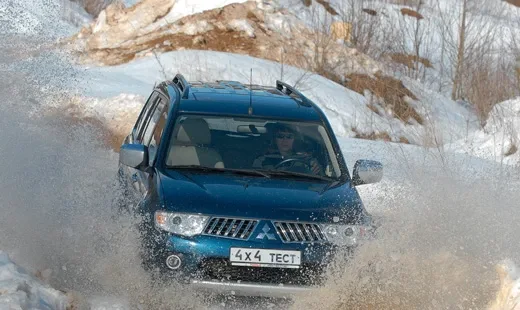
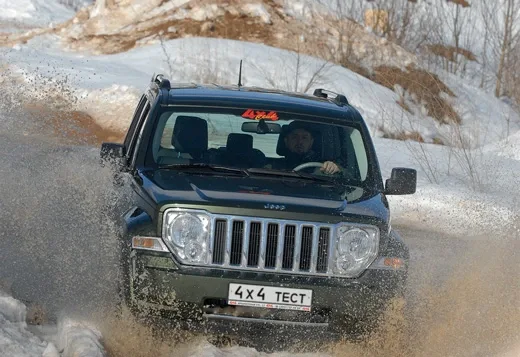
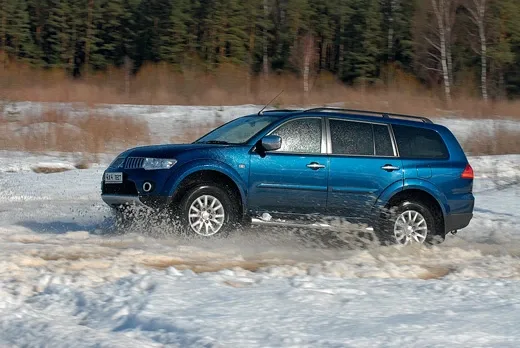
In such conditions, the suspension is good, but on asphalt...
WHERE ARE THE STEERING AND BRAKES?
When switching from the Jeep to the Mitsubishi, the first thing you look for is the steering and brakes. And when you don't find them, you just drive without them. The drums on the rear axle of the Pajero Sport are supplied to the Japanese from Brazil. You can tap out a samba or maracatu on them, but stopping a heavy SUV with them... probably not. The compact steering wheel for the Pajero Sport is taken directly from the Outlander XL. But it needs a more substantial wheel to make steering easier. The trouble is that a larger-diameter wheel would hit the driver's knees in the Mitsubishi. So, we've greatly underestimated the problem—this car needs a new body.
SPECS: MITSUBISHI PAJERO SPORT
THE BASICS: JEEP CHEROKEE
Some of my observations I again kept for a rainy day — in case I get captured by samurai. Put away the bamboo sticks, and listen carefully: doesn't it seem funny to you that Chrysler engineers spent 30 whole years fighting longitudinal and lateral sway? No? Then here's what's truly funny: after so many years of work, they were suddenly told that there is also vertical pitching. And they couldn't handle that one.
Unfortunately, the samurai are not destined to land near our editorial office. The bottom line is this: the "Japanese" with the "sport" prefix is an undisputed leader off-road, while the celebrated Jeep feels noticeably more confident on asphalt.