Jaguar X-Type. Manual and no cat on the hood
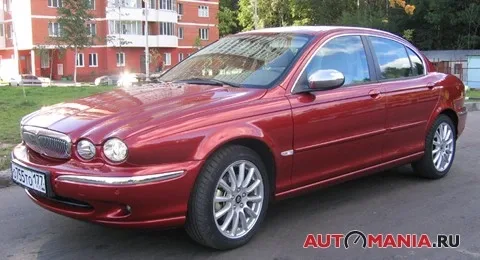
"It can't be — a Jaguar with a stick shift, and a diesel at that!" — that was roughly the reaction of guys who peeked into the windows of the parked car I was testing. Their surprise is understandable: only recently did the British start bringing the X-Type with a two-liter turbodiesel and manual gearbox to Russia, dropping the "automatic."
At the end of 1989, the brand, which many associated with Sherlock Holmes, the Thames, and Buckingham Palace, was on the brink of survival. Then Ford Motor Co. took it under its wing. And it immediately became clear: from now on, models would be built on platforms familiar from Fords.
The first to feel the unification was the S-Type — it got the base from the Lincoln L8. But the most compact and affordable X-Type was made the heir to the Ford Mondeo: the same platform, and assembly was set up at a plant where the Escort was once produced. But despite this kinship, the X-Type managed to retain London chic — it remained elegant and graceful. This is the last work of British designer Geoff Lawson, who passed away on the eve of the new millennium and never saw his creation in person.
Upon closer inspection, I notice: the chrome figurine of a predator frozen in mid-leap has disappeared from the hood. Instead, there's a modest "patch" with the face of an African cat. The same snarl adorns the center of the steering wheel. At first, I thought someone had simply unscrewed the statuette — it's often stolen, and kids love to rip off the beautiful emblem. But it turned out the reason is different: Jaguar decided to drop the figurine for pedestrian safety — so that in a collision it wouldn't cause additional injuries. Sounds reasonable, but still a pity. The cat on the hood of a Jaguar is like the deer on a Volga. How can you do without it?
The interior of the new X-Type is no longer what it was in the last century. The cost-cutting shows: natural wood inserts sit alongside frankly cheap plastic. The expensive Connolly leather — the same one from the royal court supplier — comes only in light shades, and only on the front part of the seats. The side bolsters and backrests are upholstered in leatherette. Although, perhaps, this leather shouldn't have been put here at all. The seats turned out slippery, and they have virtually no lateral support. Such leather would be more suited to a Rolls-Royce, and for the budget X-Type, it's unnecessary luxury.
However, the nine-inch touchscreen LCD monitor is a true adornment of the center console in the top trim, which is exactly what I had for the test. It's an attractive and unusual feature. The screen displays a wealth of information: the list of FM stations, climate control airflow settings, TV, and mobile phone management. Everything is done with a simple touch of a finger — easy and convenient. True, the screen quickly gets covered in fingerprints, and it's unclear how it will behave in the cold. Jaguar assures there will be no problems — we'll check when the occasion arises!
The designers tried to give the X-Type the look of a cat crouched before a leap — graceful and swift. It looks beautiful, but because of this, the cabin turned out lower than one would like. You have to duck when getting into the front seat to avoid hitting your head. In the back, it's even worse: the door opening is narrow, and the opening angle is insufficient. It's better not to seat a third passenger — there's nowhere for their legs. But the trunk pleases: a full 450 liters of useful volume.
What do we get in the end? The X-Type is a car primarily designed to satisfy the aesthetic needs of its future owner. It could have made an excellent "driver's" car if it had different engines, an automatic, and all-wheel drive. Then there would be no complaints.
But with this weak little diesel, the X-Type clearly doesn't qualify as a "driver's" car. Acceleration is sluggish, the clutch is too stiff, and gear changes are not crisp. But this diesel has a plus — it's completely inaudible in the cabin, with no vibrations.
Technical specifications:
| Dimensions (mm) |
4670x1790x1390 |
| Wheelbase (mm) |
2710 |
| Curb weight (kg) |
1502 |
| Gross weight (kg) |
2015 |
| Maximum power (hp) |
128 |
| Max. torque (Nm/rpm) |
244/3500 |
| Engine displacement (cc) |
1998 |
| 0-100 km/h acceleration (s) |
9.9 |
| Maximum speed (km/h) |
201 |
| Average fuel consumption (l/100 km) |
7.5 |
| Fuel tank capacity (l) |
62 |
| Tires |
205/50 R17 |
| Turning circle (m) |
10.8 |
| Price (RUB) |
1,418,000 |
Dmitry Shavyrin
We thank Jaguar Land Rover Russia for providing the test vehicle.
Source — AUTOMANIA.RU
