

Quite recently, a brand relatively new to us, JAC, known previously for its trucks, announced its entry into the Ukrainian market. Now, under this brand, passenger cars, including the S5 crossover, will be produced in Cherkasy. It's this car that we took for a test first, as this class of vehicles is very popular in Ukraine and other post-Soviet countries.
Watch our video test of the new model:
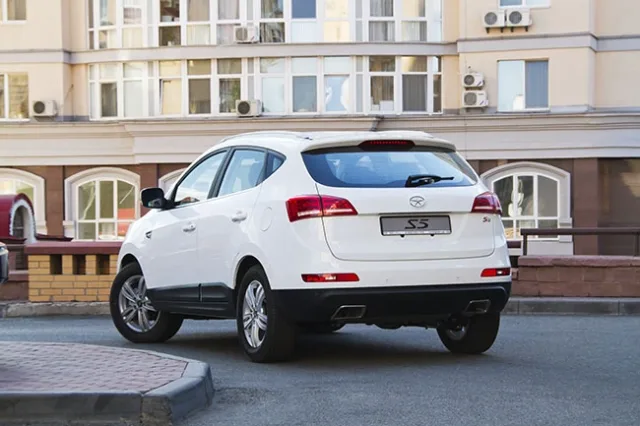
Honestly, it's hard to tell at first glance that this car's homeland is China. It looks more like a product of Korean designers. An inexperienced person could easily mistake it for a Hyundai. In terms of design, the car resembles the popular here ix35.
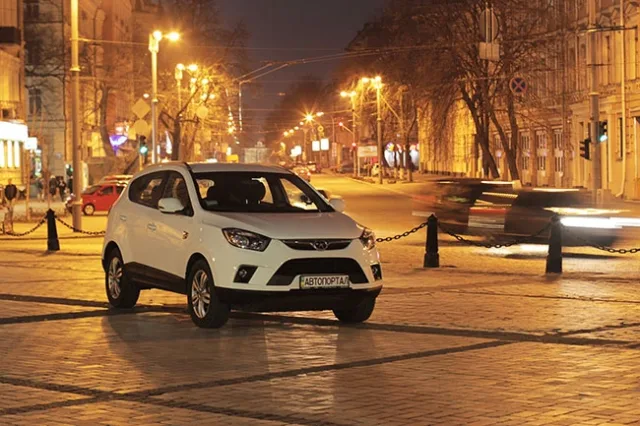
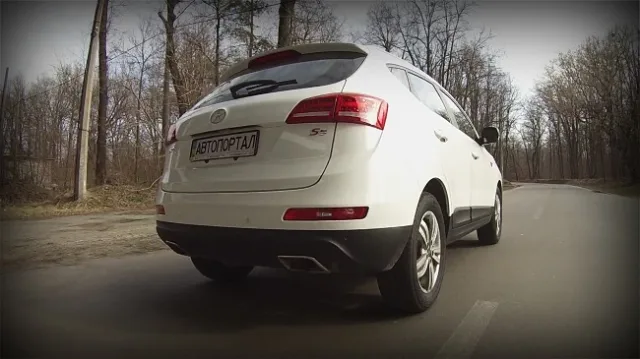
So much so that many passersby asked what those badges were on a car they recognized. But we're used to the similarity of Chinese cars to other models from world brands, and what's wrong with that for the customer? The main thing is that it's liked. By the way, pay attention to the rear lights. Doesn't it remind you of the Audi Q5? Especially at night.
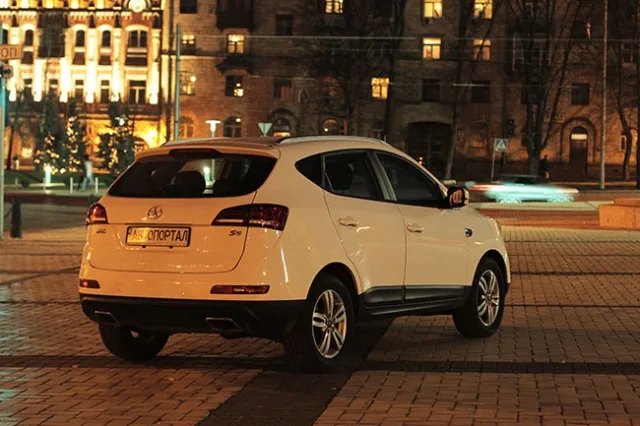
As the manufacturer claims, they have serious prospects for this model in entering foreign markets. Proof of this is the fact that JAC and the S5 model in particular became official cars of the World Cup.
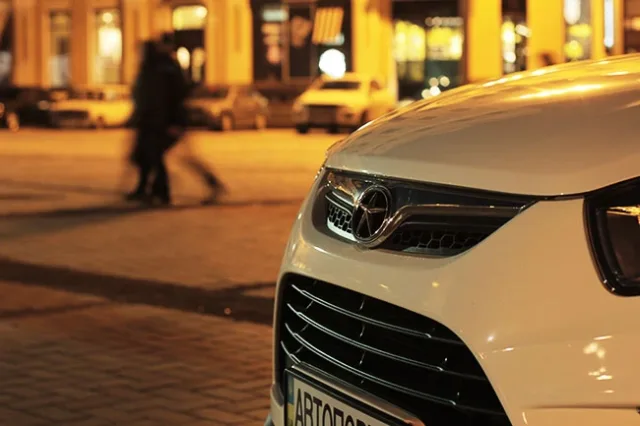
After inspecting the car from the outside, you really understand that the wishes of the not very rich but spoiled European consumer were, in principle, taken into account. No obvious shortcomings related to build quality or materials used could be found. All body panels are carefully fitted, gaps are even, and the paintwork is quite good. At least at first glance.
Next, we move to the interior and understand - the prospects of entering foreign markets are a good incentive for our brothers from the Celestial Empire to take into account the wishes of local buyers. Visually, everything looks very good. Anyone with experience owning a Japanese or Korean car will not see anything unusual or new in the JAC S5 interior.
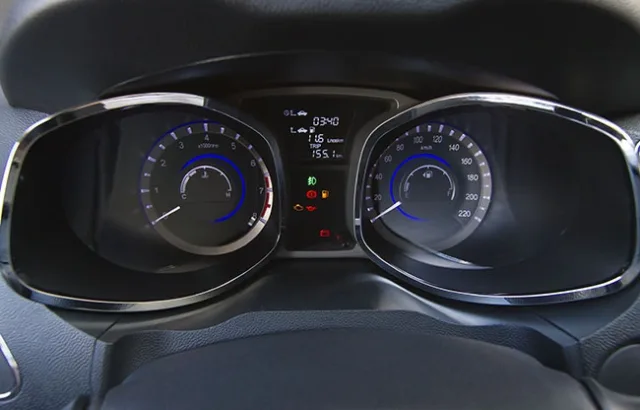
And that's true, why invent something new when you can rely on the experience of reputable companies? They spent years achieving certain ergonomic standards and spent enormous resources on studying consumer demand. The Chinese are grateful to them for that, so they rely on the experience of foreign colleagues, adding their own touches. Taking the driver's seat, we see: a dashboard with an integrated LCD screen for the onboard computer
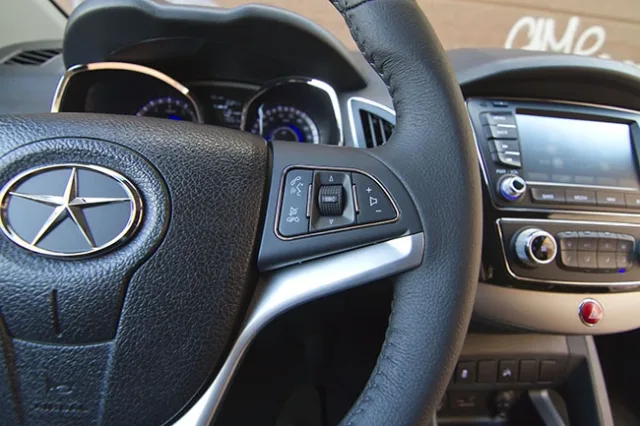
...a luxurious multimedia system, a modern steering wheel with audio system and cruise control controls
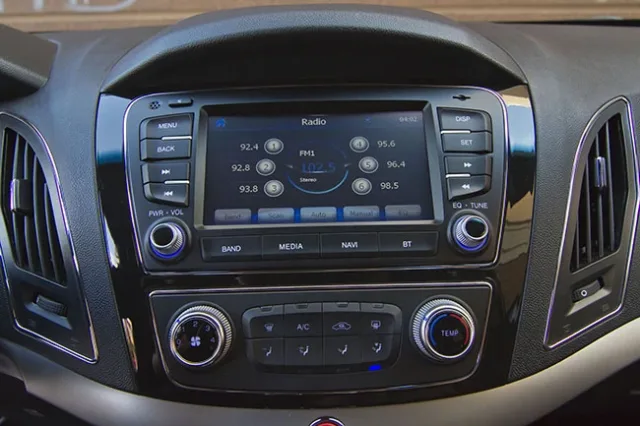
...a control unit for the heating and air conditioning system, a la climate control. If you remove the JAC logo, you could easily convince passengers that they are in at least a Korean car.
The perception of good build quality is reinforced by the quality of the seat upholstery materials
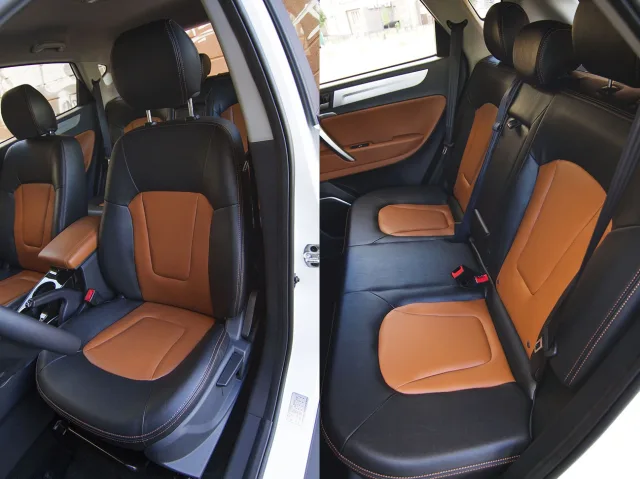
...and the perfect seams of the decorative stitching.
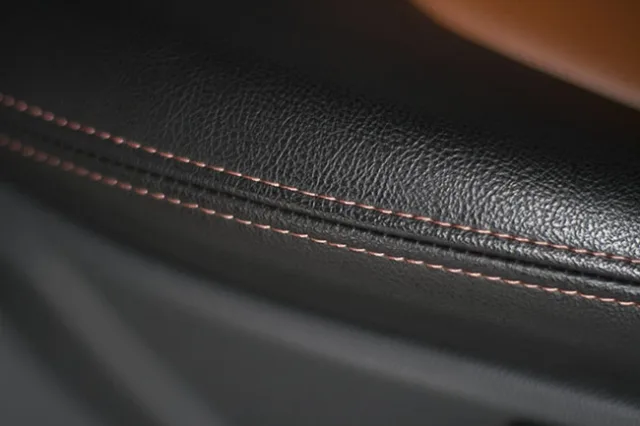
The plastic, although hard, is not noisy. In general, there's no smell of Chinese cheapness here. Both literally and figuratively...
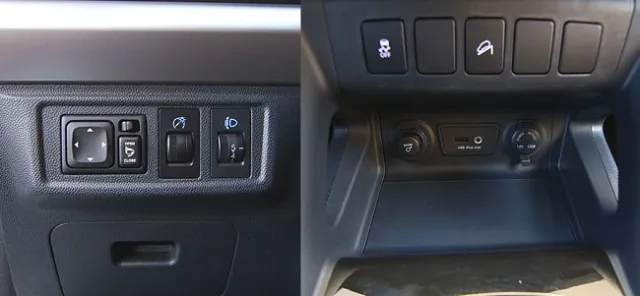
We got a Chinese-made car with about 4,000 kilometers on the odometer for our test. We drove on roads of all surface types, including cobblestones and dirt roads. There were no noises caused by interior parts. But we must note that the Chinese did save on overall sound insulation. This mainly concerns the engine compartment and transmission insulation. However, aerodynamic sounds are not annoying - at 140 km/h you can talk without raising your voice.
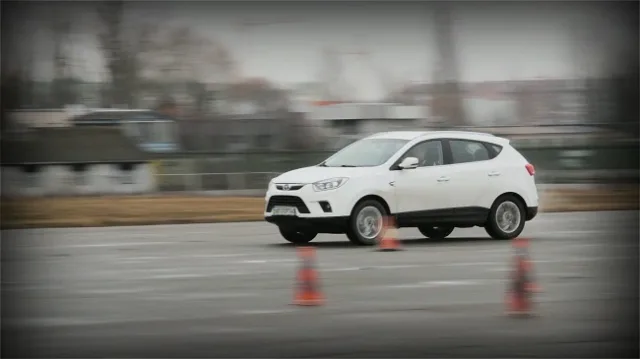
The engine impressed us the most. The tested JAC S5 has a two-liter turbocharged unit producing 176 horsepower. In terms of acceleration dynamics, the car can easily give a head start to many European and Japanese counterparts. And that's no joke... Fuel consumption is up to 12 liters with active driving. Over two weeks of testing with driver changes, we got 11.5 liters in the city and about 8 liters on the highway.
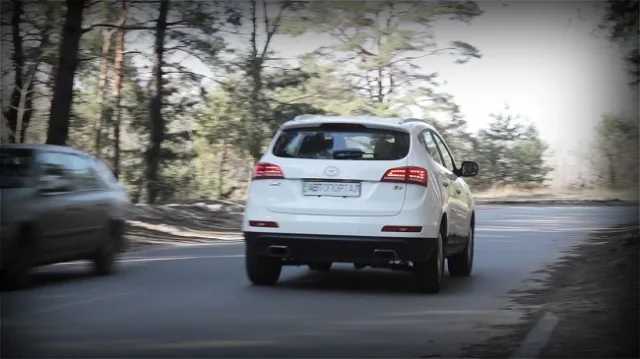
When driving, one might complain about the lack of feedback from the steering wheel. When maneuvering on a flat road, there are no complaints about the car - everything is clear and predictable. On the highway, you can travel at a fairly high speed, and the car holds its trajectory well. Trips of 100-200 kilometers on the highway do not cause fatigue. Disadvantages include vibrations from the suspension transmitted to the steering wheel and body. They occur on road surfaces commonly called a washboard. Individual potholes, joints, and bumps are felt as body shudders.
The six-speed gearbox has fairly short lever throws, and shifts are precise. Although a consumer accustomed to German cars might complain about excessive lightness. One oddity we noticed is a whine from the transmission at speeds from 40 to 70 km/h. But most likely, this feature is specific to this particular car, not the model as a whole.
No matter how you look at it, JAC with its S5 model has brought the quality and level of equipment close to Korean and inexpensive European crossovers. But of course, to assert this, one must track how their cars behave during long-term use. If reliability is confirmed and there are no major complaints, JAC could well conquer Europe as quickly as Dacia/Renault did, having once offered the scandalously affordable Duster. By the way, today it no longer looks so scandalously affordable, while the JAC S5, on the contrary, does. Given the rising car prices in Ukraine, in terms of equipment level and the price of $19,000 for the tested car, this vehicle has virtually no real rival. Well, except maybe the BYD S6, also from the Celestial Empire. If compared with Europeans, cars in similar configuration to the JAC will cost significantly more.
You can analyze and compare the cost of the JAC S5 with competitors in our catalog of new cars on AUTOPORTAL.UA