
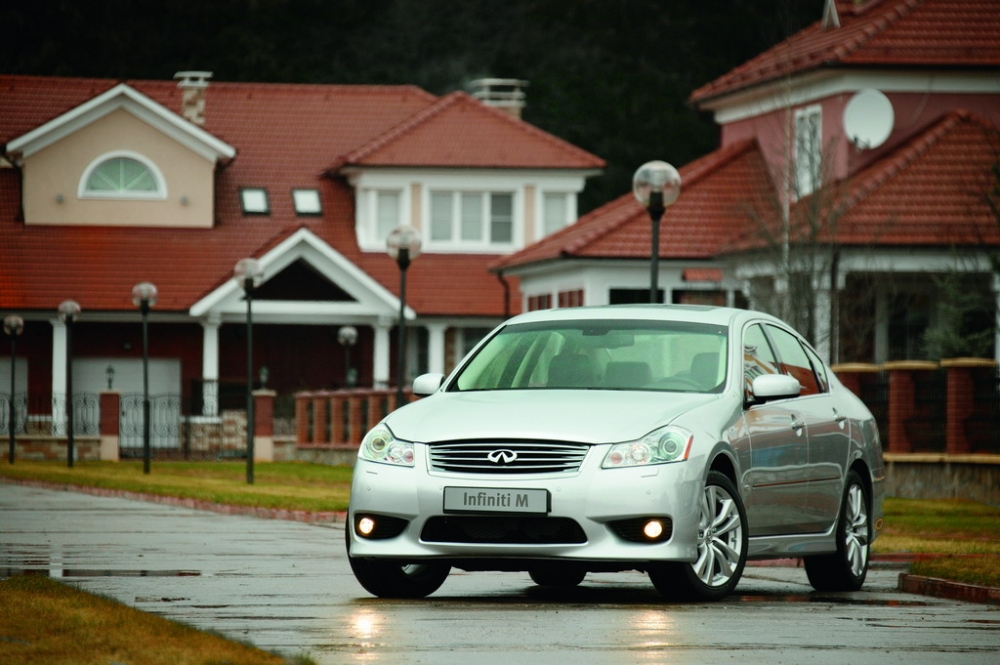
 In economics, there is a concept of "catch-up development" — this is how they talk about countries that realized later than others that capitalism is the road to a bright future. A similar situation is with Infiniti: the Japanese luxury brand has to constantly prove that their cars are no worse than the German premium trio. And what are Audi, BMW, and Mercedes currently luring Russian buyers with? There are many options, but one of the freshest features is satellite navigation that works in our country. Infiniti decided not to reinvent the wheel and simply presented the updated M-series sedan as a restyled version with a Russian-language navigator and a couple more surprises. In economics, there is a concept of "catch-up development" — this is how they talk about countries that realized later than others that capitalism is the road to a bright future. A similar situation is with Infiniti: the Japanese luxury brand has to constantly prove that their cars are no worse than the German premium trio. And what are Audi, BMW, and Mercedes currently luring Russian buyers with? There are many options, but one of the freshest features is satellite navigation that works in our country. Infiniti decided not to reinvent the wheel and simply presented the updated M-series sedan as a restyled version with a Russian-language navigator and a couple more surprises. |
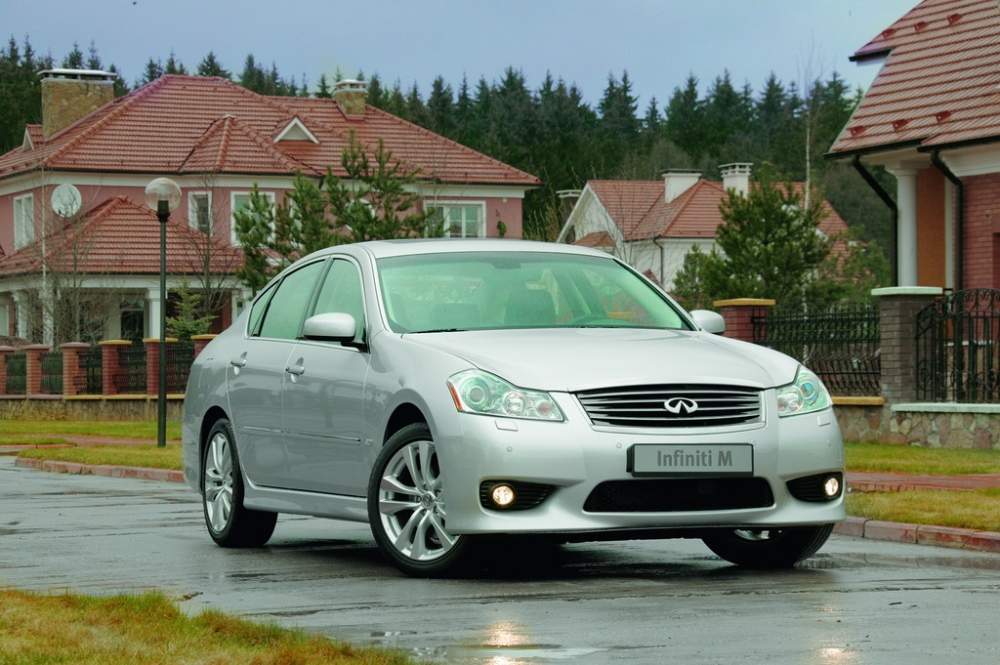
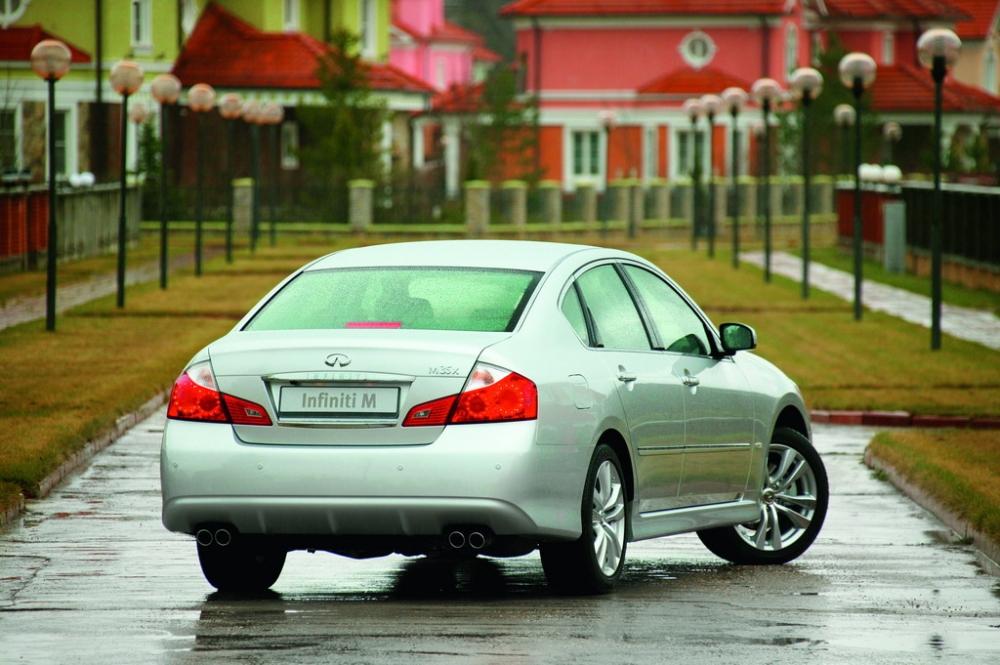 Under the "couple of surprises" are rather modest tweaks to the exterior and interior. But blaming the Japanese from Nissan's luxury division for this is not worth it: they clearly worked on the principle of "do no harm" and touched only what really needed improvement. For example, more elegant bumpers at the front and rear visually lightened the massive silhouette and at the same time added individuality to the car. The same role is played by sill trims, a slightly modified radiator grille, and new rear lights. In general, this is not a restyling for the sake of restyling, but a thoughtful and successful work on the image, albeit a targeted one. Under the "couple of surprises" are rather modest tweaks to the exterior and interior. But blaming the Japanese from Nissan's luxury division for this is not worth it: they clearly worked on the principle of "do no harm" and touched only what really needed improvement. For example, more elegant bumpers at the front and rear visually lightened the massive silhouette and at the same time added individuality to the car. The same role is played by sill trims, a slightly modified radiator grille, and new rear lights. In general, this is not a restyling for the sake of restyling, but a thoughtful and successful work on the image, albeit a targeted one. |
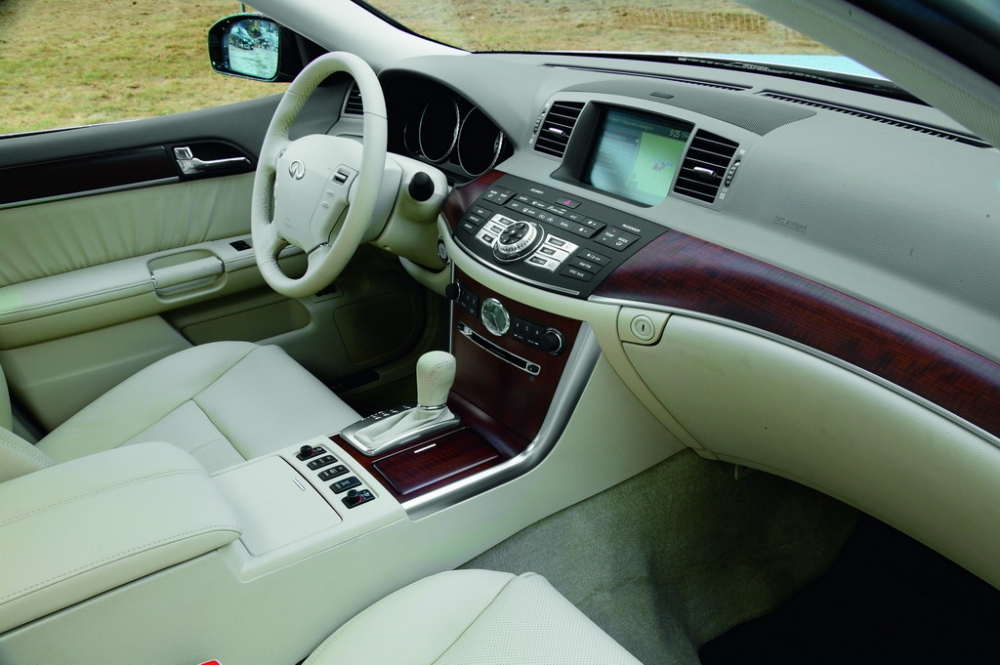
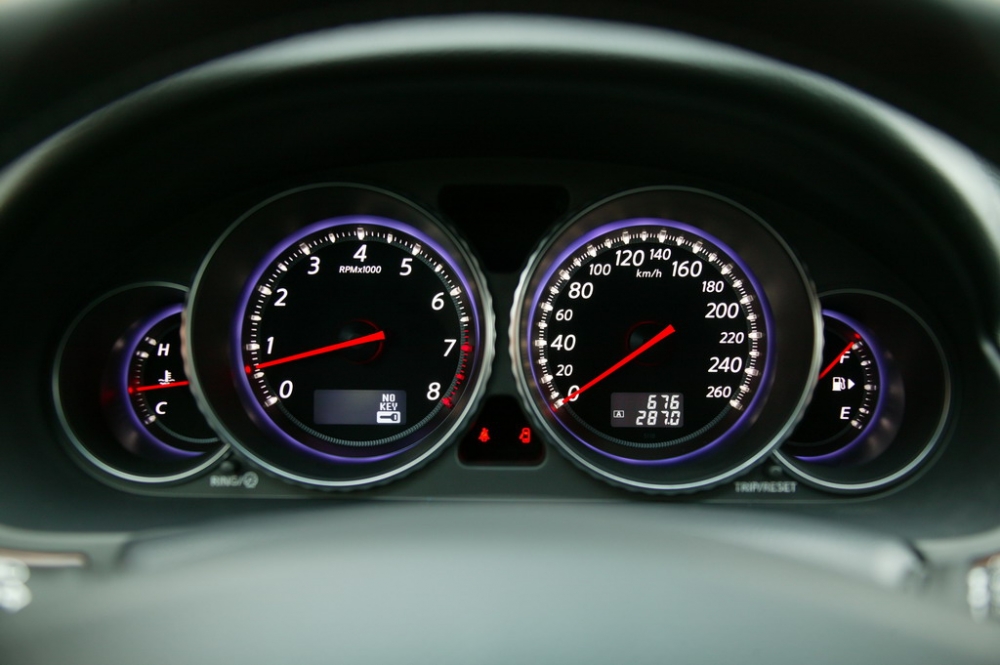
 A similar story is with the interior of the updated Infiniti M. Everything here is just as solid and stylish, but it has become a little better. The signature palisander "wood" trim now looks more natural, the blue-violet instrument panel backlighting looks much more interesting than the previous bright orange, and the decent audio system has acquired additional speakers in the front seat backs — however, this is an option. Another paid option is an entertainment complex for rear passengers with a 7-inch screen that folds down from the ceiling. Competitors usually offer such "TVs" only on flagship models, but the Japanese seem to hint that their "M" is above the business class. And if we look ahead, with quite decent driving qualities, the Infiniti M is especially good from the right rear seat — as a car for trips with a chauffeur. Only one thing upsets: in some places in the cabin there is frankly "Nissan-like" hard plastic, which does not suit a car aiming to rival the Germans. Already from the interior it is clear that in some things Infiniti confidently surpasses competitors, while in others it just as noticeably loses. A similar story is with the interior of the updated Infiniti M. Everything here is just as solid and stylish, but it has become a little better. The signature palisander "wood" trim now looks more natural, the blue-violet instrument panel backlighting looks much more interesting than the previous bright orange, and the decent audio system has acquired additional speakers in the front seat backs — however, this is an option. Another paid option is an entertainment complex for rear passengers with a 7-inch screen that folds down from the ceiling. Competitors usually offer such "TVs" only on flagship models, but the Japanese seem to hint that their "M" is above the business class. And if we look ahead, with quite decent driving qualities, the Infiniti M is especially good from the right rear seat — as a car for trips with a chauffeur. Only one thing upsets: in some places in the cabin there is frankly "Nissan-like" hard plastic, which does not suit a car aiming to rival the Germans. Already from the interior it is clear that in some things Infiniti confidently surpasses competitors, while in others it just as noticeably loses. |
 But let's return to the main premiere — navigation. As explained in the Russian office of Infiniti, the system works only on GPS signals and does not have a gyroscope that would physically track the movement of the car. On the one hand, this makes the solution cheaper (the navigator comes in a single package with the top Bose 5.1 acoustics for about 80 thousand rubles), on the other hand, perhaps it is precisely because of the lack of a gyroscope that the system sometimes warns too late about an approaching turn. Although, maybe this is just a feature that you need to get used to. But in terms of informativeness and interface convenience, Infiniti navigation is unlikely to yield to German counterparts. But let's return to the main premiere — navigation. As explained in the Russian office of Infiniti, the system works only on GPS signals and does not have a gyroscope that would physically track the movement of the car. On the one hand, this makes the solution cheaper (the navigator comes in a single package with the top Bose 5.1 acoustics for about 80 thousand rubles), on the other hand, perhaps it is precisely because of the lack of a gyroscope that the system sometimes warns too late about an approaching turn. Although, maybe this is just a feature that you need to get used to. But in terms of informativeness and interface convenience, Infiniti navigation is unlikely to yield to German counterparts. |
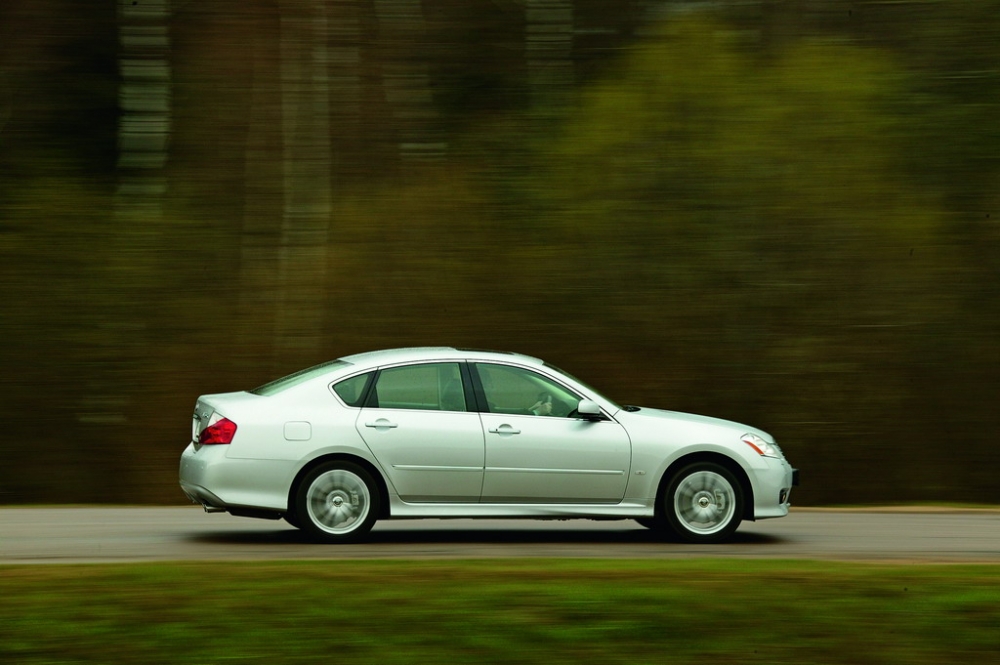
 But with the non-auxiliary, but main technology, everything in the Infiniti M is unchanged. The sedan is still available in two versions: M35 with a V6 producing 280 horsepower and M45 with a V8 producing 339 horsepower. The younger modification can be all-wheel drive, while the older one in the Sport trim is equipped with a sport suspension and rear-wheel steering. Oddly enough, the modest all-wheel-drive M35x looks more convincing of the pair. And it's not even about the all-wheel drive, which helped out perfectly in the rain during the test. It's just that the ostentatious "sport" is not needed for this heavy car weighing almost two tons, and it copes with the duties of a business sedan with 280 horsepower, accelerating to 100 km/h in 7.1 seconds (the rear-wheel-drive version — in 6.9). Of course, the M45 is faster and its reactions are a bit sharper, but it is not a classic sports sedan, but simply a large fast car: the stiff suspension and low-profile tires mainly only worsen ride smoothness. The handling of the Infiniti M can hardly be called boring, but there are no revelations in it that you expect from a brand unofficially calling itself the "Japanese BMW". But with the non-auxiliary, but main technology, everything in the Infiniti M is unchanged. The sedan is still available in two versions: M35 with a V6 producing 280 horsepower and M45 with a V8 producing 339 horsepower. The younger modification can be all-wheel drive, while the older one in the Sport trim is equipped with a sport suspension and rear-wheel steering. Oddly enough, the modest all-wheel-drive M35x looks more convincing of the pair. And it's not even about the all-wheel drive, which helped out perfectly in the rain during the test. It's just that the ostentatious "sport" is not needed for this heavy car weighing almost two tons, and it copes with the duties of a business sedan with 280 horsepower, accelerating to 100 km/h in 7.1 seconds (the rear-wheel-drive version — in 6.9). Of course, the M45 is faster and its reactions are a bit sharper, but it is not a classic sports sedan, but simply a large fast car: the stiff suspension and low-profile tires mainly only worsen ride smoothness. The handling of the Infiniti M can hardly be called boring, but there are no revelations in it that you expect from a brand unofficially calling itself the "Japanese BMW". |
 So can this car catch up with those brands for rivalry with which Nissan actually created Infiniti? Of course, only a comparative test will give the final answer, but some conclusions can be drawn already after getting acquainted with the updated "M". The Infiniti M does not so much compete with the Germans as it moves on a parallel course — and moves quite worthily. The car has some "status" shortcomings, but they are insignificant, and the advantages are obvious: a very spacious interior both in front and in the back, a rich base configuration, and an excellent ratio of power and price. To appreciate all this and get into the spirit, you just need to discard some "national" stereotypes. So can this car catch up with those brands for rivalry with which Nissan actually created Infiniti? Of course, only a comparative test will give the final answer, but some conclusions can be drawn already after getting acquainted with the updated "M". The Infiniti M does not so much compete with the Germans as it moves on a parallel course — and moves quite worthily. The car has some "status" shortcomings, but they are insignificant, and the advantages are obvious: a very spacious interior both in front and in the back, a rich base configuration, and an excellent ratio of power and price. To appreciate all this and get into the spirit, you just need to discard some "national" stereotypes. |
Catch-up development
In two years on the Russian market, the business-class sedan Infiniti M, unlike other models of the brand, did not become a hit. Maybe we just haven't 'acquired a taste' for this car? If so, then the updated 'M' has additional chances to appeal to the public, spoiled by German 'premium'.

Test drive photos
Comments
No comments yet. Say the first word.