
 This fashion is for brands that previously did not have a reputation for being prestigious and luxurious, but today are very eager to achieve such status. Recently, Hyundai joined this list. The Koreans got tired of sharing the modest budget segment, producing cheap and inconspicuous models all over the world. They took the plunge and launched a new stage of their development, the starting point of which was the Genesis — the first car in the brand's history that its creators unashamedly call luxury. This fashion is for brands that previously did not have a reputation for being prestigious and luxurious, but today are very eager to achieve such status. Recently, Hyundai joined this list. The Koreans got tired of sharing the modest budget segment, producing cheap and inconspicuous models all over the world. They took the plunge and launched a new stage of their development, the starting point of which was the Genesis — the first car in the brand's history that its creators unashamedly call luxury. |
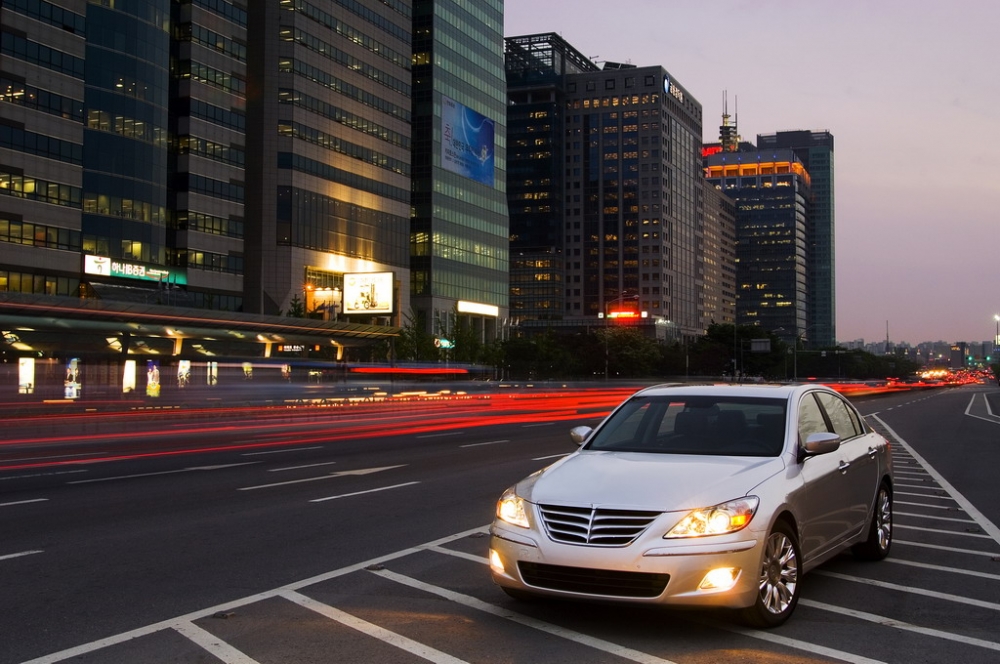 After eight hours of flight, morning Seoul greets us. The sky seems hazy, with blue visible only at the zenith. But we do not plan to linger in the capital of South Korea. The first stop is Namyang, located thirty kilometers from the city. There is the company's ultra-modern technical center, where the Genesis was born. After eight hours of flight, morning Seoul greets us. The sky seems hazy, with blue visible only at the zenith. But we do not plan to linger in the capital of South Korea. The first stop is Namyang, located thirty kilometers from the city. There is the company's ultra-modern technical center, where the Genesis was born.Under the influence of jet lag, we doze off at the press conference, then get on the bus and, without coming to our senses, go to the Seoul suburbs. The program is clearly not for the faint-hearted — it was compiled by Koreans who, according to rumors, work 16 hours a day and rest only five days a year. |
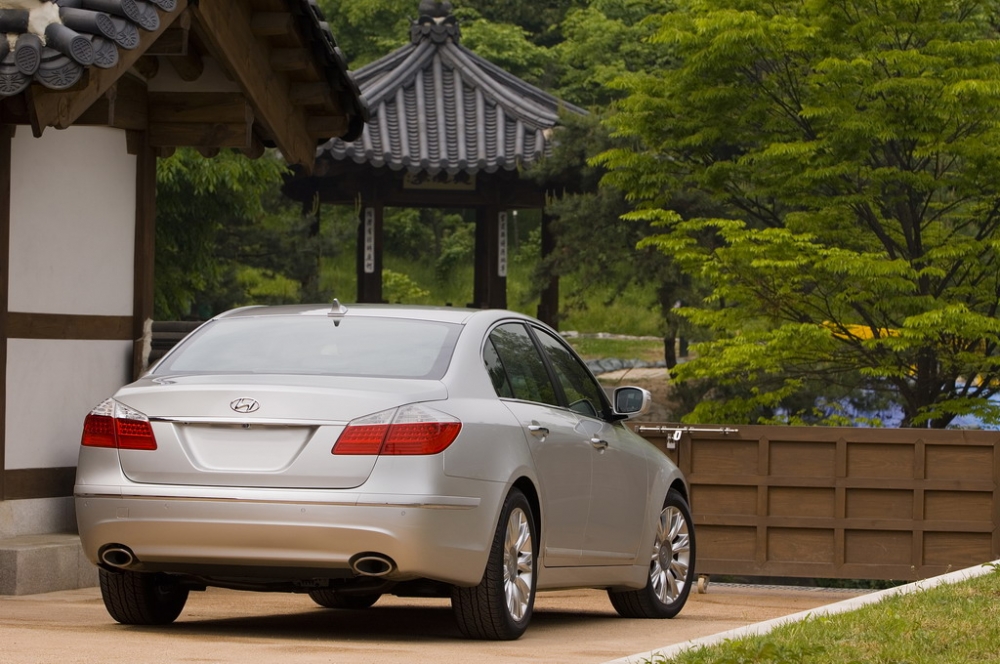 It is clear that Hyundai people want not just to show the new product, but also to demonstrate the conditions in which it was created. It is a pity that at the entrance to the test site our cameras were confiscated — prototypes of future Hyundai and KIA cars are driving around the territory, and we could have shot a couple of scenes for interesting materials. It is clear that Hyundai people want not just to show the new product, but also to demonstrate the conditions in which it was created. It is a pity that at the entrance to the test site our cameras were confiscated — prototypes of future Hyundai and KIA cars are driving around the territory, and we could have shot a couple of scenes for interesting materials.Namyang has everything needed for a full cycle of development, refinement, and testing of cars. After a short tour, we meet the Genesis for the first time. |
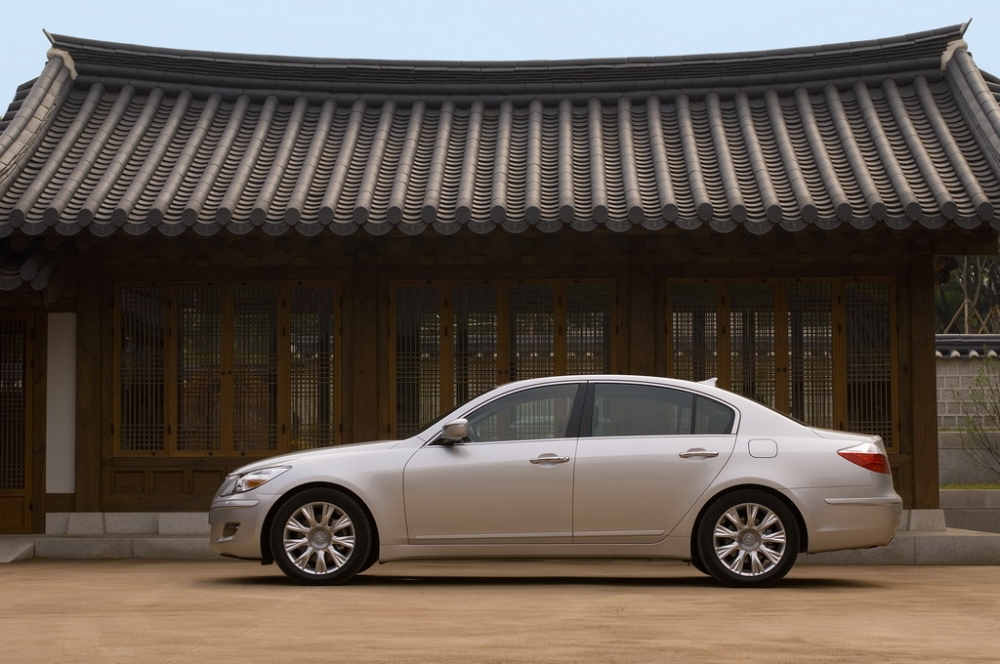 On a large asphalt area inside the test ring with banked turns, a "moose test" is marked out. The entry speed is about 90–110 km/h. The rear-wheel-drive car behaves predictably: at the entrance, the front end understeers, and after avoiding the obstacle, it smoothly oversteers, and the steering wheel corrects the trajectory in one or two moves. Interestingly, for the "moose test" we were given American versions — they have regular springs in the suspension. But modifications with air suspension will come to Russia... On a large asphalt area inside the test ring with banked turns, a "moose test" is marked out. The entry speed is about 90–110 km/h. The rear-wheel-drive car behaves predictably: at the entrance, the front end understeers, and after avoiding the obstacle, it smoothly oversteers, and the steering wheel corrects the trajectory in one or two moves. Interestingly, for the "moose test" we were given American versions — they have regular springs in the suspension. But modifications with air suspension will come to Russia... |
 The Genesis developers have something to be proud of. The flagship is made taking into account the strictest requirements that are currently imposed on premium E-class sedans. When creating the Genesis, the Koreans implicitly competed with the best business sedans of Europe and Japan. The goal was one — to make it no worse, and if possible, better. The Genesis developers have something to be proud of. The flagship is made taking into account the strictest requirements that are currently imposed on premium E-class sedans. When creating the Genesis, the Koreans implicitly competed with the best business sedans of Europe and Japan. The goal was one — to make it no worse, and if possible, better. |
 If you analyze the car component by component, you have to admit: the set of technologies is first-class. The stiffest body in its class, consisting of 74 percent high-strength steel. Modern engines — two V6s and one V8. Gearboxes from renowned manufacturers — Aisin and ZF. Excellent aerodynamics — only 27 Cx! Almost perfect weight distribution (52/48). Eight airbags. Dimensions corresponding to the class... If you analyze the car component by component, you have to admit: the set of technologies is first-class. The stiffest body in its class, consisting of 74 percent high-strength steel. Modern engines — two V6s and one V8. Gearboxes from renowned manufacturers — Aisin and ZF. Excellent aerodynamics — only 27 Cx! Almost perfect weight distribution (52/48). Eight airbags. Dimensions corresponding to the class... |
 In theory, all this looks convincing. But why do competitor cars constantly appear in the presentation videos? Why do the Koreans make direct comparisons with them at the press conference? In Europe, this is not customary... But we are in Korea. And it can be assumed that the Genesis was developed in close "cooperation" with cars of potential rivals disassembled to the last screw. The Koreans themselves mentioned this, once describing the Genesis as "a car the size of a BMW 7 Series, which looks like a 5 Series, and costs like a 3 Series." People need to be explained what this new Genesis is that appeared out of nowhere in the old system of automotive coordinates. Who is it standing next to according to its creators' intention? Who is it emulating? In theory, all this looks convincing. But why do competitor cars constantly appear in the presentation videos? Why do the Koreans make direct comparisons with them at the press conference? In Europe, this is not customary... But we are in Korea. And it can be assumed that the Genesis was developed in close "cooperation" with cars of potential rivals disassembled to the last screw. The Koreans themselves mentioned this, once describing the Genesis as "a car the size of a BMW 7 Series, which looks like a 5 Series, and costs like a 3 Series." People need to be explained what this new Genesis is that appeared out of nowhere in the old system of automotive coordinates. Who is it standing next to according to its creators' intention? Who is it emulating? |
 The full test took place even further from Seoul — on one of the most beautiful islands of Korea, Jeju. The flight there takes exactly an hour. The Koreans themselves call Jeju the island of wedding couples, lazy men, and brave women divers. The latter carry out their duty until the age of 60–70, and many, thanks to daily exercise, easily live to a hundred. I saw them on the coast — ordinary elderly women. But unlike ours, they effortlessly dive to depths of up to 12 meters, retrieving seafood from the bottom, which they immediately clean on the shore and, for a moderate fee, feed raw to Korean tourists. It is unusual for a European to watch this. For a Russian, it is disgusting. Good thing they wash it all down with the local 24-degree "vodka" Soju. At least in some ways they can be understood. The full test took place even further from Seoul — on one of the most beautiful islands of Korea, Jeju. The flight there takes exactly an hour. The Koreans themselves call Jeju the island of wedding couples, lazy men, and brave women divers. The latter carry out their duty until the age of 60–70, and many, thanks to daily exercise, easily live to a hundred. I saw them on the coast — ordinary elderly women. But unlike ours, they effortlessly dive to depths of up to 12 meters, retrieving seafood from the bottom, which they immediately clean on the shore and, for a moderate fee, feed raw to Korean tourists. It is unusual for a European to watch this. For a Russian, it is disgusting. Good thing they wash it all down with the local 24-degree "vodka" Soju. At least in some ways they can be understood. |
 But the Koreans' approach to creating the exterior and interior of the Genesis is easy to understand and explain. Eastern peoples have always been distinguished by a love of copying. The Japanese once drew inspiration for Lexus from the Germans. The Chinese brazenly and without a twinge of conscience copy everything they see. And the Koreans act more delicately — they take a little from everywhere. Therefore, in the Genesis you can find elements of many Japanese and European competitors. But the Koreans' approach to creating the exterior and interior of the Genesis is easy to understand and explain. Eastern peoples have always been distinguished by a love of copying. The Japanese once drew inspiration for Lexus from the Germans. The Chinese brazenly and without a twinge of conscience copy everything they see. And the Koreans act more delicately — they take a little from everywhere. Therefore, in the Genesis you can find elements of many Japanese and European competitors. |
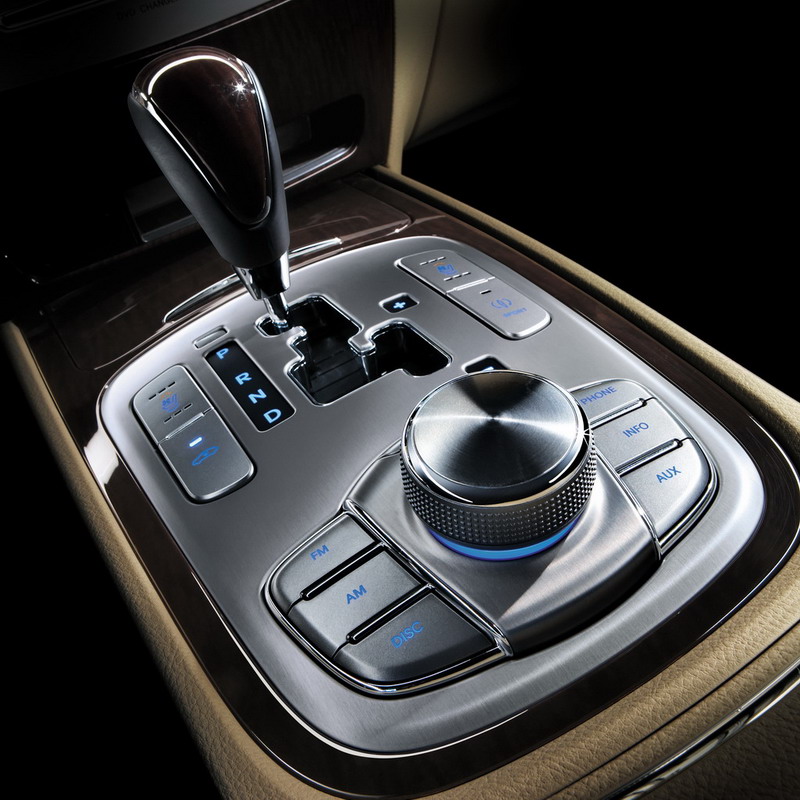
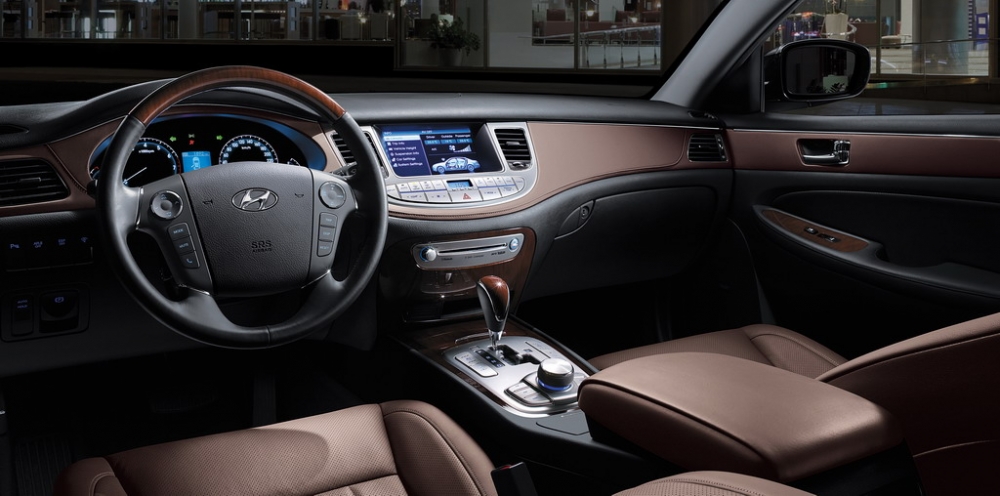
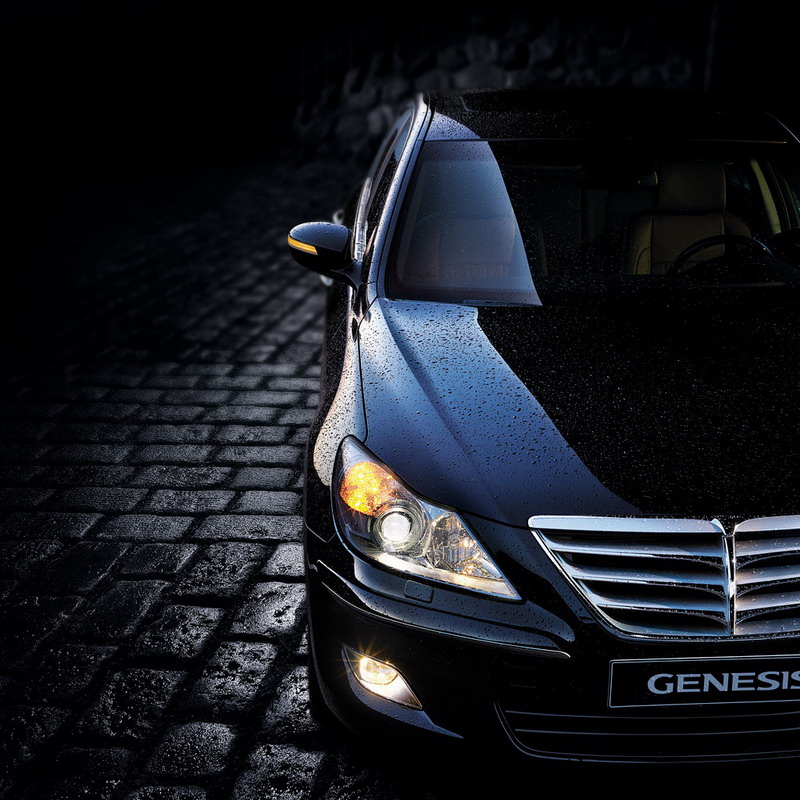
 Borrowings are noticeable in the interior. Moreover, Japanese motifs are especially evident, in particular — Lexus. Nothing surprising: this Japanese brand is the most in-demand in the world and is very popular in South Korea. A sense of déjà vu is created by the fonts, the design of the instrument panel, the interface of the multimedia system. Even the shape of the ashtray! And the engine is started with a round button very similar to the one Toyota installs in its cars. I put my hands on the steering wheel and feel a slightly viscous feedback. GS or LS? Borrowings are noticeable in the interior. Moreover, Japanese motifs are especially evident, in particular — Lexus. Nothing surprising: this Japanese brand is the most in-demand in the world and is very popular in South Korea. A sense of déjà vu is created by the fonts, the design of the instrument panel, the interface of the multimedia system. Even the shape of the ashtray! And the engine is started with a round button very similar to the one Toyota installs in its cars. I put my hands on the steering wheel and feel a slightly viscous feedback. GS or LS? |
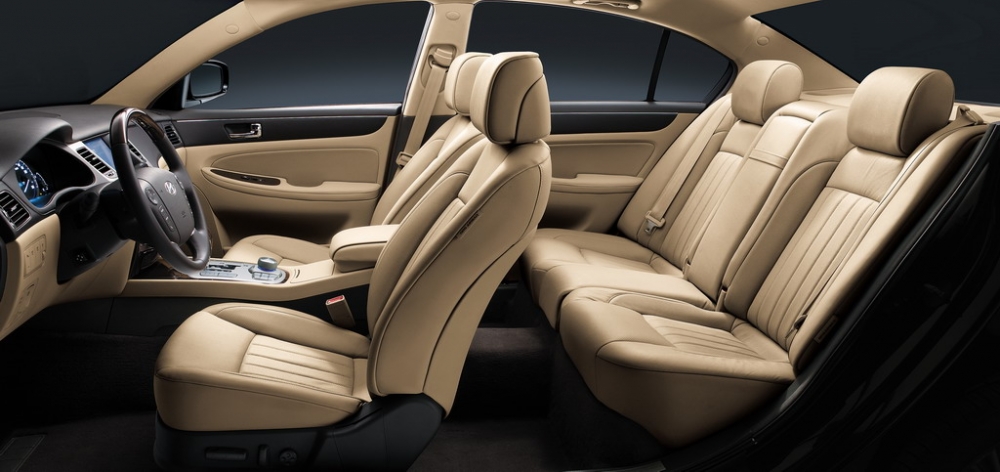
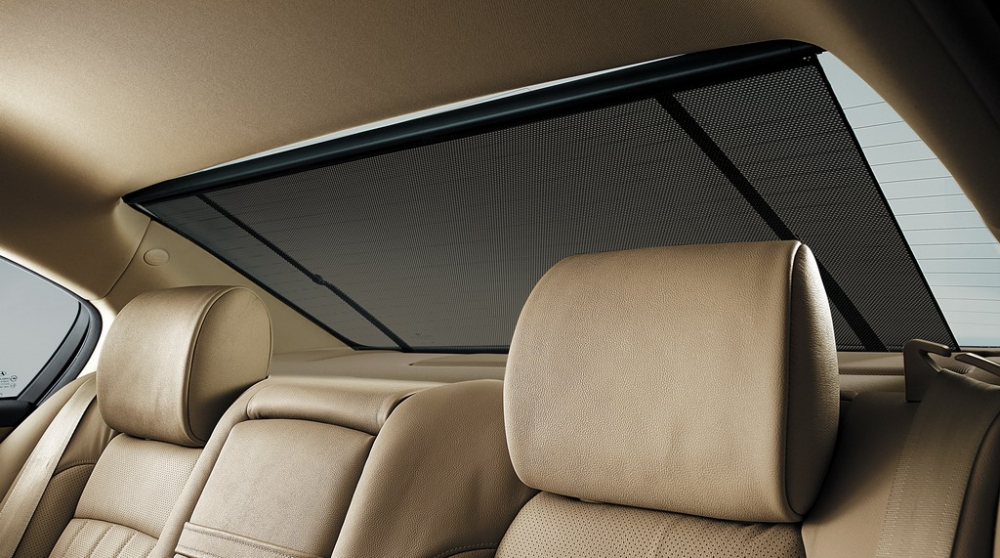
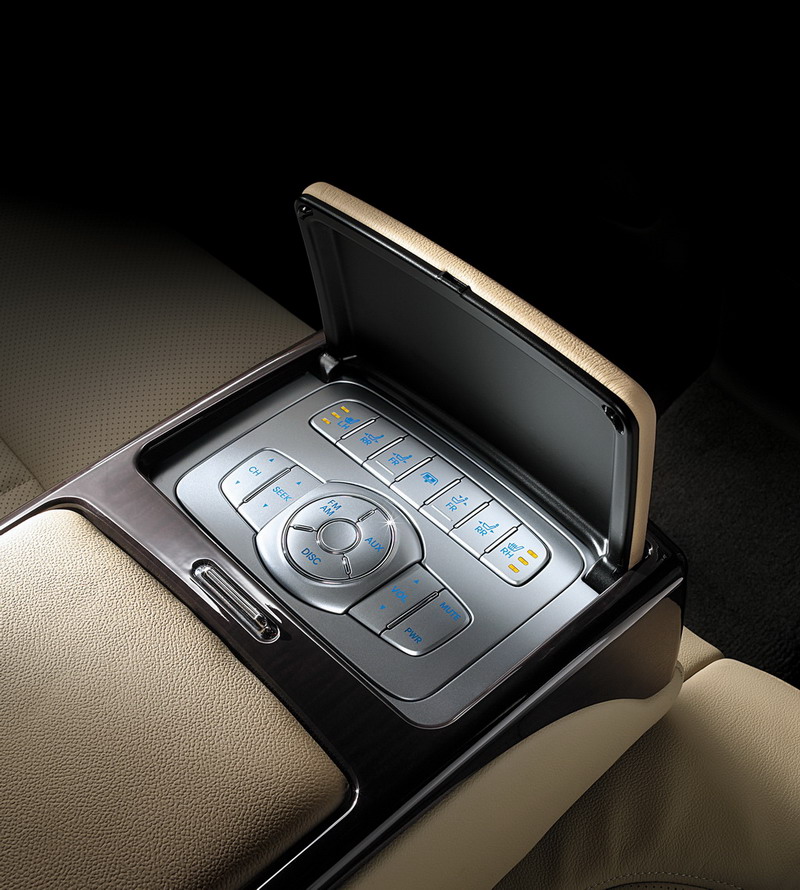
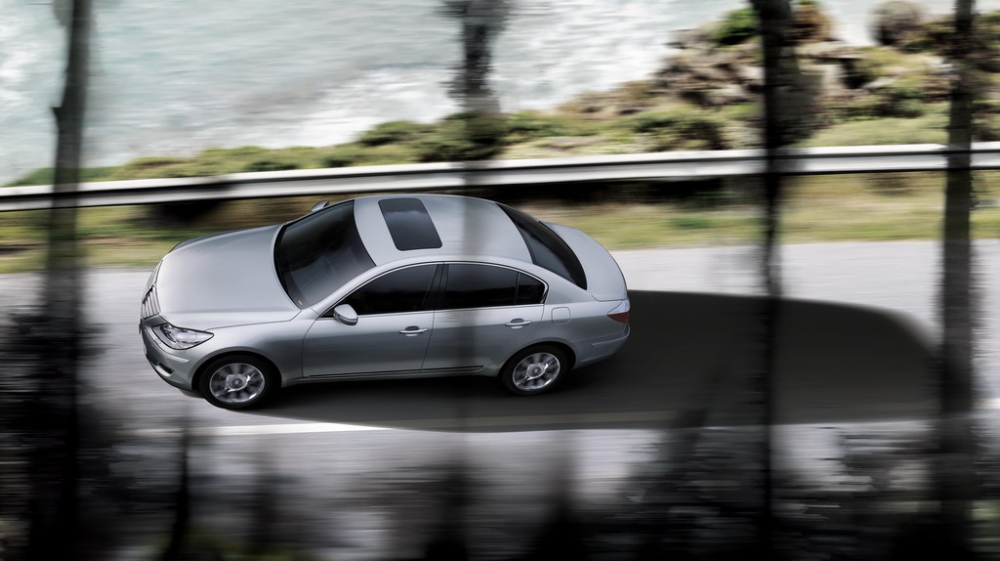
 Does this mean that the Genesis interior is completely devoid of individuality? No, but it lacks it. And, it seems, everything is in its place. The front panel is upholstered in leather, on the tunnel there is a multimedia system control dial in the style of i-Drive, the front seats have not only heating but also ventilation, and the rear seats are even equipped with electric adjustments — like in the executive class. Everything is good individually, but the details do not form a coherent picture. The Genesis does not yet have its own aura, its own zest. This is a matter of time and generational change. Well, the drawbacks are the simple black steering wheel, the insufficient range of adjustments for the front seats (with my 190 cm, I wanted to sit lower) and the imprecise operation of the multimedia system dial. And I would also probably advise the designers to liven up the color scheme a bit. Does this mean that the Genesis interior is completely devoid of individuality? No, but it lacks it. And, it seems, everything is in its place. The front panel is upholstered in leather, on the tunnel there is a multimedia system control dial in the style of i-Drive, the front seats have not only heating but also ventilation, and the rear seats are even equipped with electric adjustments — like in the executive class. Everything is good individually, but the details do not form a coherent picture. The Genesis does not yet have its own aura, its own zest. This is a matter of time and generational change. Well, the drawbacks are the simple black steering wheel, the insufficient range of adjustments for the front seats (with my 190 cm, I wanted to sit lower) and the imprecise operation of the multimedia system dial. And I would also probably advise the designers to liven up the color scheme a bit.The roads on Jeju Island are simply a fairy tale for a driver. The road markings are excellent, and there are no traffic jams at all. There are both high-speed highways and regular two-lane roads that either gently curve or wind into long bends. You will hardly encounter any potholes or damaged sections here. For the test, we were given cars assembled specifically for the Russian market: a 3.8-liter gasoline engine, a six-speed automatic transmission, and air suspension. At first, I decided not to get behind the wheel but to settle into the back seat, asking a colleague to switch the electronic shock absorbers to comfort mode. There is a lot of space in the back — my knees don't even come close to touching the back of the front seat. And if I were a basketball player as tall as Sabonis, I could easily slide the front seat forward: this car has another purely "executive" function for rear passengers. The Genesis rides softly and smoothly. The cabin sound insulation is at the highest level. And the Lexicon audio system sounds simply magnificent. As a VIP passenger with a personal driver, I was very comfortable, and the car perfectly fulfilled the role of a "people carrier." But spending the entire test on the rear sofa is an unforgivable luxury, so at a short stop, I finally moved to the driver's seat. I think you've already guessed what I did first when I got behind the wheel? Of course, I turned on the sport mode of the suspension. I press the gas pedal to the floor — and the sedan takes off under the velvety baritone of the V6. The engine is excellent! It pulls confidently from the very bottom and smoothly builds power across the entire rev range. But the "automatic" is not ideal. During calm driving, it behaves like a good partner — shifts are smooth and imperceptible. But as soon as you start driving at a fast, jerky pace, the gearbox starts to lag. There are also complaints about the manual mode: responses to moving the selector are vague, and to ensure the gear engages reliably, you have to hold the lever slightly. This is extremely inconvenient when every fraction of a second counts. The suspension remains composed even in comfort mode. At least at a speed of about two hundred kilometers per hour on asphalt waves, the large sedan does not sway. In sport mode, the handling character does not change radically — the car becomes slightly more composed, and body roll in corners decreases. It's hard to believe that the Genesis was created not for Europe with its high demands on handling, but for such omnivorous markets as America, the Middle East, Korea, and partly Russia. With such manners, the Koreans would not be ashamed to enter the Old World, but for now, they do not risk it. However, the Genesis still does not reach the title of a full-fledged driver's car. And its creators did not set themselves the goal of making an "ideal car for the driver." But they managed to combine high comfort with decent handling. Over the past five years, the Koreans have done a tremendous job and created a car of a completely new level for themselves. It stands several steps higher in the automotive hierarchy than, say, the Grandeur — even a pie seller at the metro would notice the difference. But the Genesis faces other, more complex and interesting tasks. The newcomer will have to compete with recognized masters who have honed their skills for decades. It is necessary to break stereotypes about the budget brand Hyundai. And it is impossible to do this in one dash. The battle will be long: forming a new image takes years, and for a demanding audience to start looking at the brand differently — decades. This is a new round in Hyundai's evolution, and the first step on this path has already been taken. FOR YOUR INFORMATION The front features a double-wishbone suspension, and the rear uses a five-link scheme. Thanks to the air elements, the car can change its ground clearance. It can be forcibly lowered by 30 mm (when reaching a speed of 70 km/h, the body returns to its original position). At speeds above 120 km/h, the clearance automatically decreases by 15 mm. The front features a double-wishbone suspension, and the rear uses a five-link scheme. Thanks to the air elements, the car can change its ground clearance. It can be forcibly lowered by 30 mm (when reaching a speed of 70 km/h, the body returns to its original position). At speeds above 120 km/h, the clearance automatically decreases by 15 mm. The model is equipped with two V6 and one V8 from the Lambda family. Versions with a 3.3 or 3.8-liter V6 will go to Russia. And the V8 will be sold only in America, Korea, and the Middle East. The engine cylinder blocks are aluminum. The engines have variable valve timing on intake and exhaust, as well as an intake manifold with variable geometry. The car is equipped with eight airbags and electronically controlled active headrests. The Genesis body, according to the Koreans, is 12-14 percent stiffer than that of rivals such as the BMW 5 Series, Mercedes-Benz E-Class, and Lexus LS. This indicator is achieved, in particular, through a special production technology: the most loaded joints are connected not by spot welding but by gluing, which provides a stronger chemical bond. After that, spot welding is performed. |
Reference point
In the world of cars, as in any other sphere of human activity, there are trends. The latest and most striking examples of fashion trends are crossovers and the color white. Not so long ago, another one emerged. Its name is premium.

Test drive photos
Comments
No comments yet. Say the first word.