
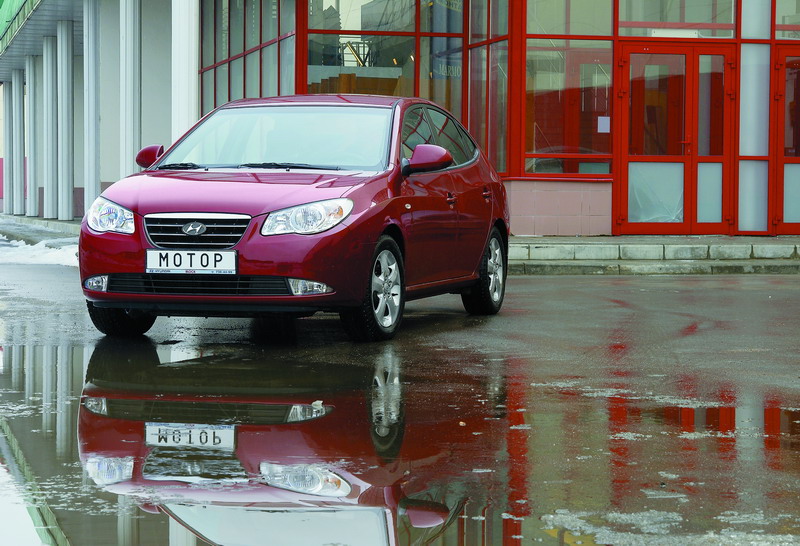
 In Russia, the previous Elantra cost from $13,790 and could well compete with poorly equipped Ford Focus and Mitsubishi Lancer. Now the minimum price has risen to $17,790 — that's what they ask for the version with a 1.6-liter engine and manual transmission. Apparently, Hyundai is targeting a buyer with higher income, for whom the brand image is more important than flashy looks or generous equipment. It is noteworthy that the company is not carrying out such a "rebranding" everywhere: in North America, prices for the new generation have practically not changed compared to the predecessor. In Russia, the previous Elantra cost from $13,790 and could well compete with poorly equipped Ford Focus and Mitsubishi Lancer. Now the minimum price has risen to $17,790 — that's what they ask for the version with a 1.6-liter engine and manual transmission. Apparently, Hyundai is targeting a buyer with higher income, for whom the brand image is more important than flashy looks or generous equipment. It is noteworthy that the company is not carrying out such a "rebranding" everywhere: in North America, prices for the new generation have practically not changed compared to the predecessor. |
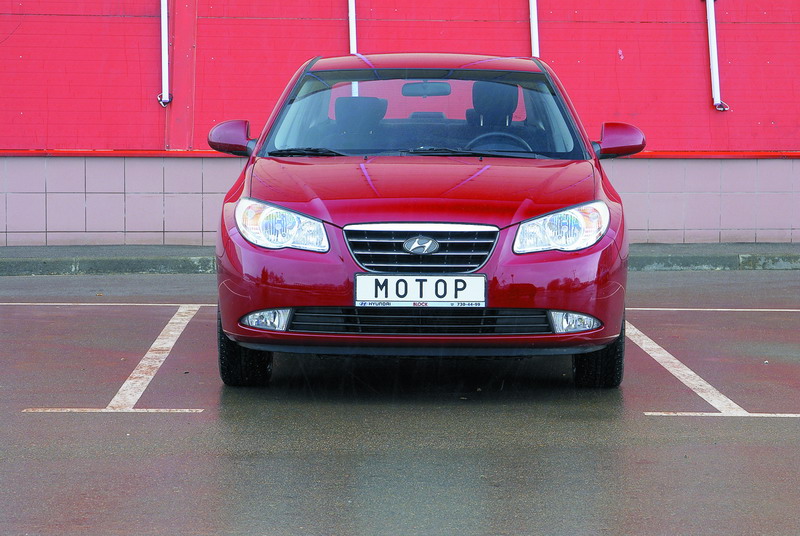
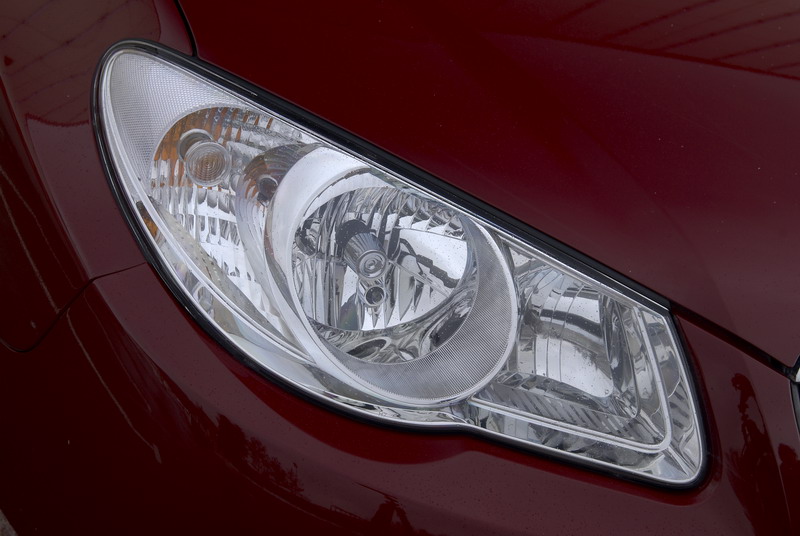
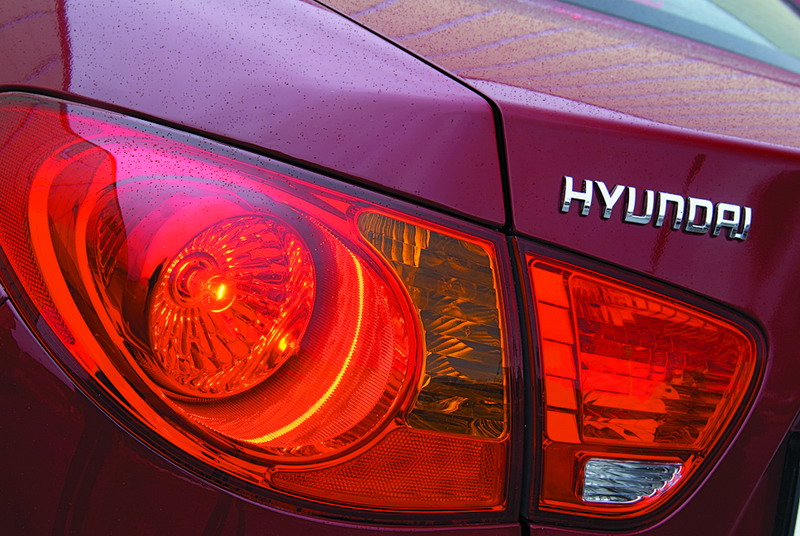
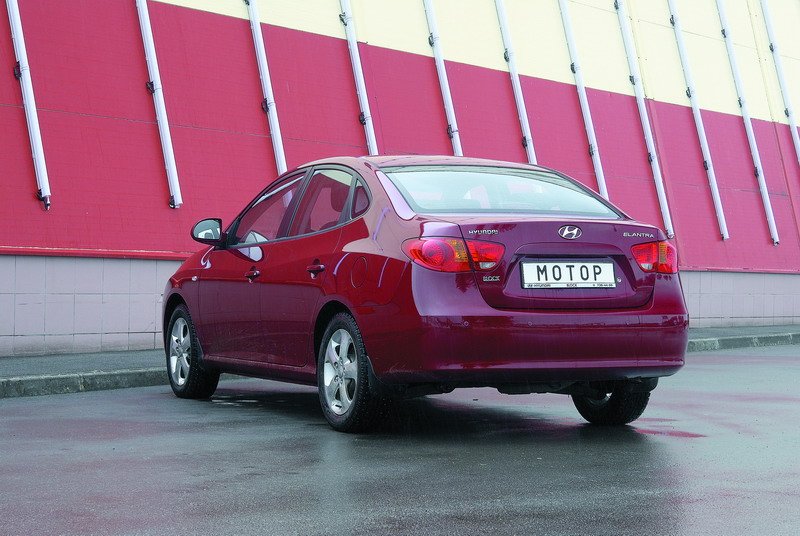 If you remember how simple and unpretentious the design of the old model was, then the current changes can safely be called revolutionary. Smooth body lines, energetic stamping on the sides, slanting headlights — all this adds up to the new Hyundai corporate style, which skillfully mixes solutions borrowed from popular Japanese and European cars. If you remember how simple and unpretentious the design of the old model was, then the current changes can safely be called revolutionary. Smooth body lines, energetic stamping on the sides, slanting headlights — all this adds up to the new Hyundai corporate style, which skillfully mixes solutions borrowed from popular Japanese and European cars. |
 However, money is asked not only for the appearance. Compared to the previous generation, the wheelbase has grown by 40 mm — from 2610 to 2650 mm, which already exceeds the average for the golf class. The car has become taller — 1490 mm. The output of the 1.6-liter gasoline engine has increased from 105 to 122 hp. It was this engine that was under the hood of our test car, paired with a four-speed automatic transmission. However, money is asked not only for the appearance. Compared to the previous generation, the wheelbase has grown by 40 mm — from 2610 to 2650 mm, which already exceeds the average for the golf class. The car has become taller — 1490 mm. The output of the 1.6-liter gasoline engine has increased from 105 to 122 hp. It was this engine that was under the hood of our test car, paired with a four-speed automatic transmission. |
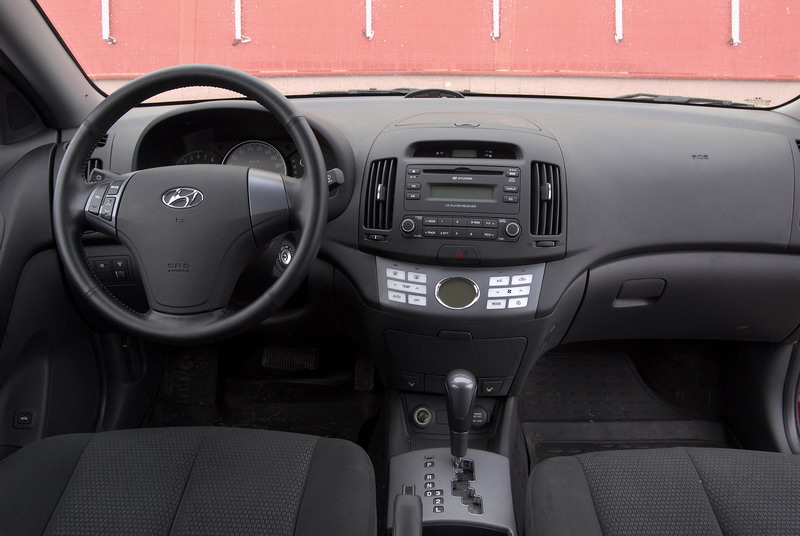
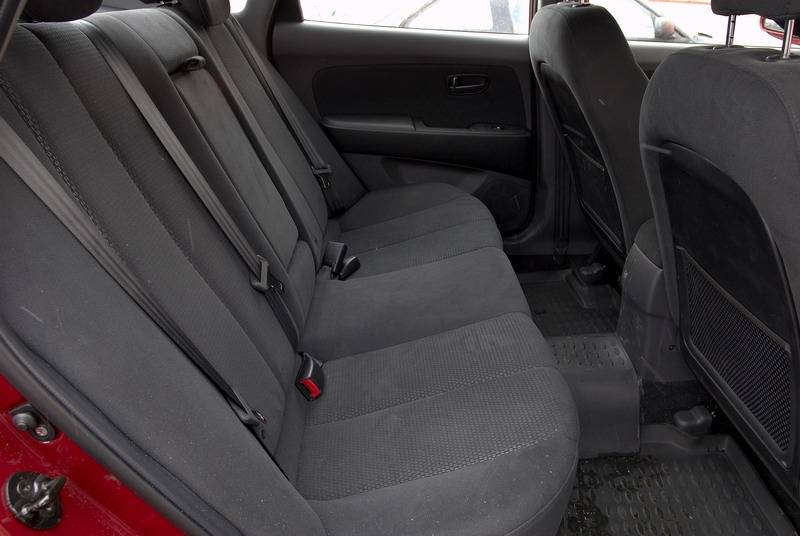
 The interior has also been noticeably redesigned: the front panel is now made of soft plastic, the parts are fitted neatly, the center console looks elegant. There is a place for glasses in the ceiling, and illuminated mirrors in the sun visors. True, the abundance of black plastic makes the interior somewhat gloomy, but the situation is saved by the bright blue backlighting of the instruments, displays and buttons — very similar to the Golf. Many shelves and boxes are provided for small items. Between the front seats there is a short armrest and a podium with two cup holders. In the back, there is quite enough legroom by C-class standards. The interior has also been noticeably redesigned: the front panel is now made of soft plastic, the parts are fitted neatly, the center console looks elegant. There is a place for glasses in the ceiling, and illuminated mirrors in the sun visors. True, the abundance of black plastic makes the interior somewhat gloomy, but the situation is saved by the bright blue backlighting of the instruments, displays and buttons — very similar to the Golf. Many shelves and boxes are provided for small items. Between the front seats there is a short armrest and a podium with two cup holders. In the back, there is quite enough legroom by C-class standards. |
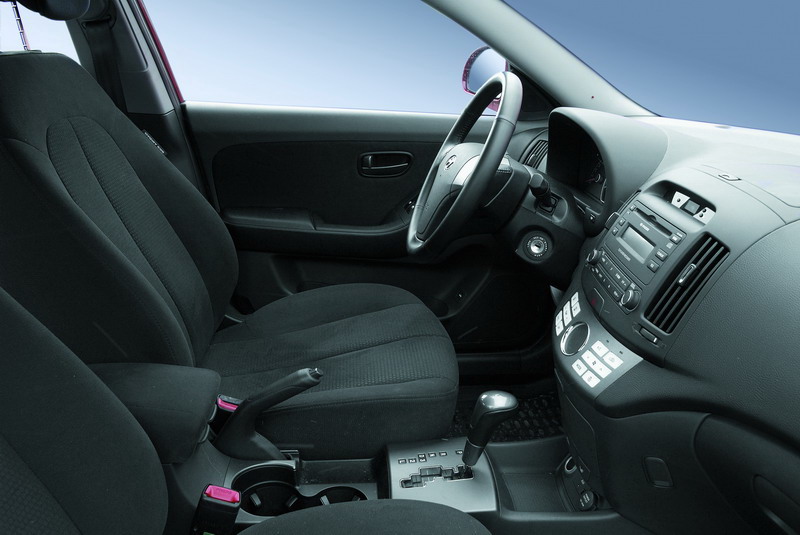
 The driver's seat height adjustment is now carried out with a long "jack" handle, as on European cars. If you raise the cushion to the stop, the feeling is almost like in a crossover. But the seats themselves cannot boast of pronounced lateral support. And with this shape of the backrest, lumbar support is very much lacking, which is not even in the options list. The steering wheel is adjustable both for reach and tilt. Despite the decent adjustment ranges, it is not easy to find a comfortable seating position: either the steering wheel is too close, or you can't reach the pedals. The driver's seat height adjustment is now carried out with a long "jack" handle, as on European cars. If you raise the cushion to the stop, the feeling is almost like in a crossover. But the seats themselves cannot boast of pronounced lateral support. And with this shape of the backrest, lumbar support is very much lacking, which is not even in the options list. The steering wheel is adjustable both for reach and tilt. Despite the decent adjustment ranges, it is not easy to find a comfortable seating position: either the steering wheel is too close, or you can't reach the pedals. |
 Unlike many fresh classmates, the Elantra does not try to seem "sporty"; here the emphasis is on comfort. The engine and gearbox accelerate the car without haste, even if you press the pedal to the floor in "kickdown" mode. The engine is ready to roar up to 6500 rpm, but the effect is more noise than dynamic. When shifting down, the automatic noticeably hesitates and works with noticeable jerks. During the test in the urban cycle, fuel consumption was about 11 liters per hundred. Unlike many fresh classmates, the Elantra does not try to seem "sporty"; here the emphasis is on comfort. The engine and gearbox accelerate the car without haste, even if you press the pedal to the floor in "kickdown" mode. The engine is ready to roar up to 6500 rpm, but the effect is more noise than dynamic. When shifting down, the automatic noticeably hesitates and works with noticeable jerks. During the test in the urban cycle, fuel consumption was about 11 liters per hundred. Those who are used to active driving are unlikely to like even the top two-liter version. The Elantra's suspension is soft, on bumps the car noticeably rocks in the longitudinal plane, and in corners it rolls like a classic family "American". |
| The steering wheel with power steering makes as many as 3.13 turns from lock to lock and feels too light. On the highway, the car reacts to steering turns with a delay and reluctantly. If you sharply swing the steering wheel at a speed of 60–80 km/h, the Elantra begins to "float" on the asphalt, as if driving on snow. However, in the corner itself, the behavior is quite predictable: when exceeding the speed, the car smoothly slides outward with all four wheels. Recall that ESP is provided only for the version with a two-liter engine. |
| At idle, vibrations are not felt either on the steering wheel or on the automatic transmission selector. Up to 3000 rpm, the cabin is quiet enough, but with increasing speed, the noise becomes intrusive — the main sources are the tires and huge mirrors, because of which the car looks "lop-eared". |
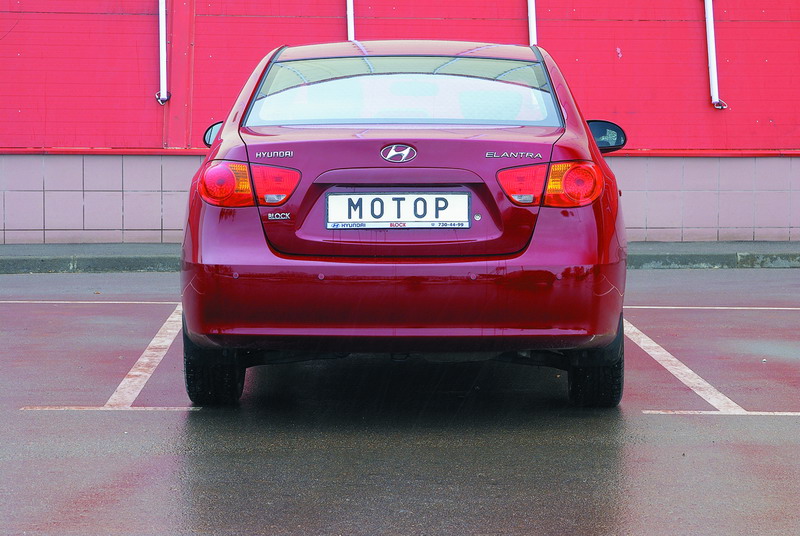
 The trunk has grown to an impressive 460 liters, and it is well thought out in terms of loading and transformation. As with older Hyundai models, the rear seat backrest folds in a 60/40 ratio. Both parts are "unlocked" from the trunk and fold easily, forming an arched opening. In a large niche under the false floor there is not a full-size spare wheel, but a "doughnut", so you can also place some useful things nearby. The only inconvenience is that the trunk lid has no inner handle, so you have to get your hands dirty. The trunk has grown to an impressive 460 liters, and it is well thought out in terms of loading and transformation. As with older Hyundai models, the rear seat backrest folds in a 60/40 ratio. Both parts are "unlocked" from the trunk and fold easily, forming an arched opening. In a large niche under the false floor there is not a full-size spare wheel, but a "doughnut", so you can also place some useful things nearby. The only inconvenience is that the trunk lid has no inner handle, so you have to get your hands dirty. |
 Prices and trim levels of Hyundai Elantra Prices and trim levels of Hyundai ElantraThe base version CF0011E with a 1.6-liter engine and five-speed manual includes ABS, EBD, power windows all around, adapted suspension, power steering, air conditioning, front airbags and "audio preparation" with four speakers. Such a car costs $17,790. The test car with automatic transmission in the CF1012E trim received climate control, six airbags, an on-board computer and active front head restraints — they ask $20,990 for it. The top version CF1121E with a two-liter engine (143 hp) is priced at $24,890. |
 |
Large crayfish
The Russian price tag for the new generation of the Hyundai Elantra sedan brings to mind the famous 'crayfish' routine by Roman Kartsev. Yesterday they were big at five rubles, and today they are small at three. Only with the Elantra it's the other way around...
Test drive photos
Comments
No comments yet. Say the first word.