
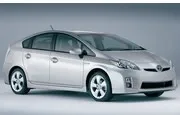
In the early nineties, a small team of engineers gathered at Toyota's office to discuss a secret project codenamed G21 — the letter symbolized "global," and the number pointed to the 21st century. That's how the Prius prototype was born, which caused a sensation in 1997 by demonstrating that hybrid technology was quite feasible for production cars.
Soon Honda picked up the baton by releasing the Civic IMA. Today, any major automaker looks strange if it doesn't have a hybrid in its lineup or at least plans to create one. But the palm of primacy still belongs to the Japanese.
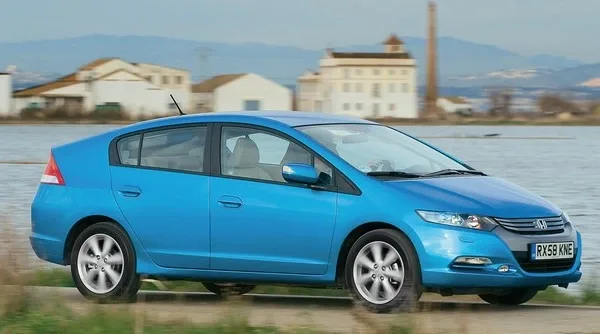
In January of this year, Toyota introduced the third-generation Prius — with larger batteries and a 1.8-liter engine instead of the previous 1.5-liter. Honda, meanwhile, showed its boldest hybrid project — the Insight, which the company plans to sell in quantities of 200,000 cars annually.
The Insight will appear in European showrooms at the end of April with a price tag of about 20,000 euros — so far the minimum amount for a hybrid. The Prius will cost noticeably more, and you'll have to wait until autumn for it. Despite the external resemblance to the Prius, these cars are ideologically completely different.
ELECTRIC CONFRONTATION
When creating the new Insight (in the 90s, that was the name of a compact hybrid coupe), Honda engineers set the task of squeezing the maximum out of the gasoline engine by adding a light and compact electric motor to it. The internal combustion engine received all advanced technologies — for example, the VTEC system can close all valves, "sealing" the cylinders, which allows the gasoline unit to rotate in passive mode from electricity with minimal energy consumption. This is a fairly simple solution, because no clutch is provided here to disconnect the electric motor.
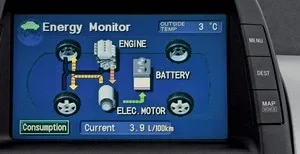
Toyota's approach is fundamentally different: the role of the power plant (gasoline four-cylinder engine plus electric motor and generator) and transmission has been radically revised — there is no gearbox as such at all. Unlike the Honda scheme, there is no rigid connection between the internal combustion engine and the electric motor.
Despite all the differences in approaches, behind the wheel the difference is not felt so acutely. An inattentive driver will only notice that the Prius has an electric drive button — it allows you to start and drive at low and medium speeds exclusively on electricity until the batteries run out. The Insight's design is simpler: electricity is used only during steady motion in the range of 15–45 km/h. Therefore, the Prius hypothetically has a better chance of becoming a plug-in — a hybrid with charging from the mains.
However, given the modest storage capabilities of nickel-metal hydride batteries (NiMH), there is not much sense in this yet. The Insight, on the other hand, would require much more serious modifications to become "chargeable." The strengths of the Honda system are compactness, lightness, and, as a result, a lower price compared to Toyota. Both manufacturers are in no hurry to switch to lithium-ion batteries — besides issues of durability and fire hazard, they are too expensive compared to NiMH. For example: 18 kg of lithium-ion batteries (without a steel shell) for the S400 BlueHybrid cost Mercedes-Benz about 1,000 euros. It becomes obvious that Honda and Toyota are simply waiting for prices on these elements to drop, which experts predict by 2011–2012.
MODES FOR EVERY TASTE
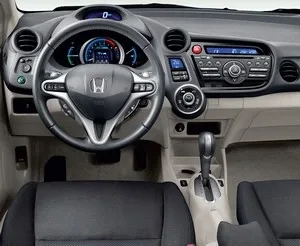
We tested the Insight on Spanish roads near Valencia. While in the cabin, one cannot shake the feeling that Honda was sponsored by an association of Japanese flower growers — there are too many floral motifs on the dashboard.
For example, to the left of the steering wheel there is a green button with a flower image — it switches the engine and CVT control program. Pressing it deprives the internal combustion engine of a few horsepower (a 4% reduction is not felt), but curbs its appetite. The CVT then uses lower gear ratios, not allowing the engine to rev up much. The response to the gas pedal also changes: if you are used to pressing sharply or holding the pedal still on the highway — the ECON mode is for you. Additionally, it activates energy-saving climate control and increases current to the batteries for better recuperation during braking.
SAVINGS IN GREEN
The Insight driver has a mass of ways to save — so many that to study the hints you have to be distracted from the road too often. Even the dashboard background changes from blue to green depending on whether you are burning fuel or driving economically. Plus — a series of glowing flowers: economy fans will surely strive to light up all five. We got four and a half. In numbers, this means an average consumption of 5.4 to 6.5 liters per 100 km in the city, on suburban roads and highways — according to the on-board computer. Not bad for a four-meter gasoline car with three passengers and decent luggage.
The figures are comparable to a turbodiesel, but with one difference — the cabin is unusually quiet. Even at high speeds, no rumbling comes from under the hood — until you want to drive more sportily or perform a series of overtakes. Then the small engine works at its limit, and its voice is clearly audible in the cabin. The CVT also contributes to the "vocal abilities": with a sharp press on the gas, the engine sound freezes at a high note.
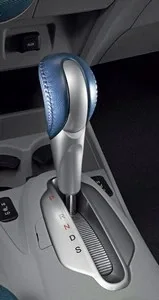
Want silence and minimal consumption? Then you will have to strictly follow the dashboard prompts. But if you overcome your frugality, it turns out that the Insight is very easy to drive — thanks to the automatic and the responsive pair of engines: electric (14 hp, 78 Nm) and gasoline (88 hp, 121 Nm).
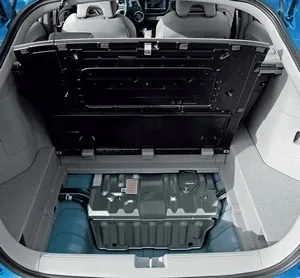
The larger-capacity batteries are hidden in a niche under the trunk floor — so the cargo space is used to the fullest. This is a weighty argument in favor of turning the hybrid from an exotic toy into a car for the mass buyer.
WHY ARE THEY SO SIMILAR?
Hybrid systems save fuel during frequent accelerations (the electric motor helps the gasoline one) and braking (the electric motor recharges the batteries). When driving at a constant speed, the hybrid system is useless — on the contrary, the weight of batteries and electricals increases consumption. The only way to compensate for this drawback on the highway is to reduce aerodynamic drag, which depends on the body shape and frontal area. That is why the Prius and Insight received the same maximally streamlined shape — a "torpedo" with a cut-off stern.
Toyota Prius: electric motor, generator, and no gearbox
PRIUS CONCEPT
In the third-generation Prius design, the motor and generator have no rigid connection to the gasoline engine. Combined with a powerful electric motor, this made it possible to create a simple and efficient transmission with a planetary gear. The car has no gearbox in the usual sense.
TRIUMPH OF HIGHTECH
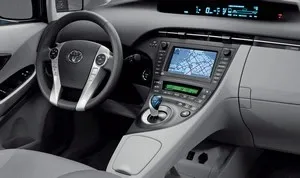
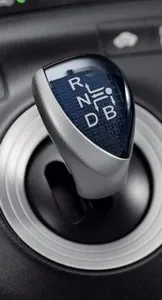
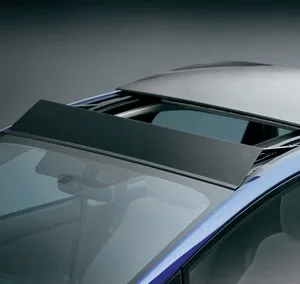
The Toyota Prius dashboard looks futuristic. The car is equipped with an automatic transmission, and photovoltaic elements are installed on the roof.
 |  | ||
 |  |
Honda Insight: generator in the engine
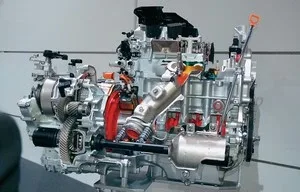 |
HOW THE INSIGHT IS DESIGNED The engineers installed one electric motor that combines the functions of a traction unit and a generator. Since there is no clutch between it and the gasoline engine, both shafts always rotate synchronously: one starts — the second spins too. Due to this design feature, the car cannot start or accelerate using only electricity. On pure electric traction, only steady motion at speeds from 15 to 45 km/h is available. |
WHAT HAD TO BE SACRIFICED
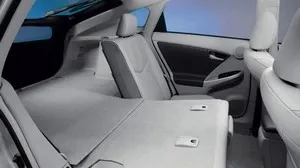
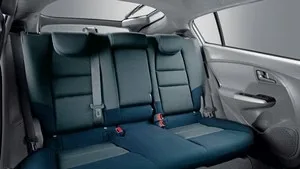
The roof sloping down at the rear creates problems when getting into the second row — tall passengers have to bend considerably. But the cargo volume is pleasing: the battery is tucked into a niche under the floor, so the trunk turned out to be spacious.
 |  | |||
 |  |
|
THE ECONOMY GAME The Insight's dashboard can change its backlight from blue to green — this way the system hints to the driver that they have switched to the most economical driving style. Additionally, five glowing icons resembling flowers appear on the Eco display. The more carefully you work the gas pedal, the more such "flowers" bloom on the screen. | 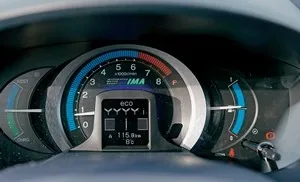 |
Electric cars of the future
PROJECTS FROM MERCEDES-BENZ AND TOYOTA
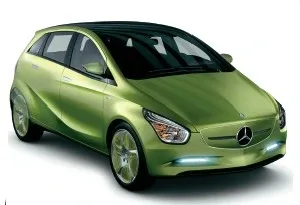 |
HYBRID IN REVERSE The Mercedes-Benz BlueZero concept implies a so-called "reverse" scheme: the main work is taken over by a powerful electric motor, and a compact internal combustion engine only recharges the batteries. |
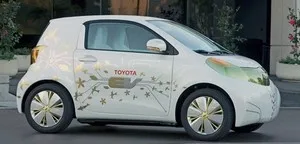 |
Currently, automakers are mainly betting on small electric cars capable of traveling 100 to 200 km without recharging. The first to come out this year should be the electric Smart, and in 2012 it will be joined by the Toyota iQ on electric traction. Later, larger cars will also be switched to the "socket". Thus, the Mercedes-Benz BlueZero will get an electric motor paired with a low-power gasoline unit for recharging. In addition, a modification on hydrogen fuel cells is provided. An eco-friendly version of the B-class may also appear. |