
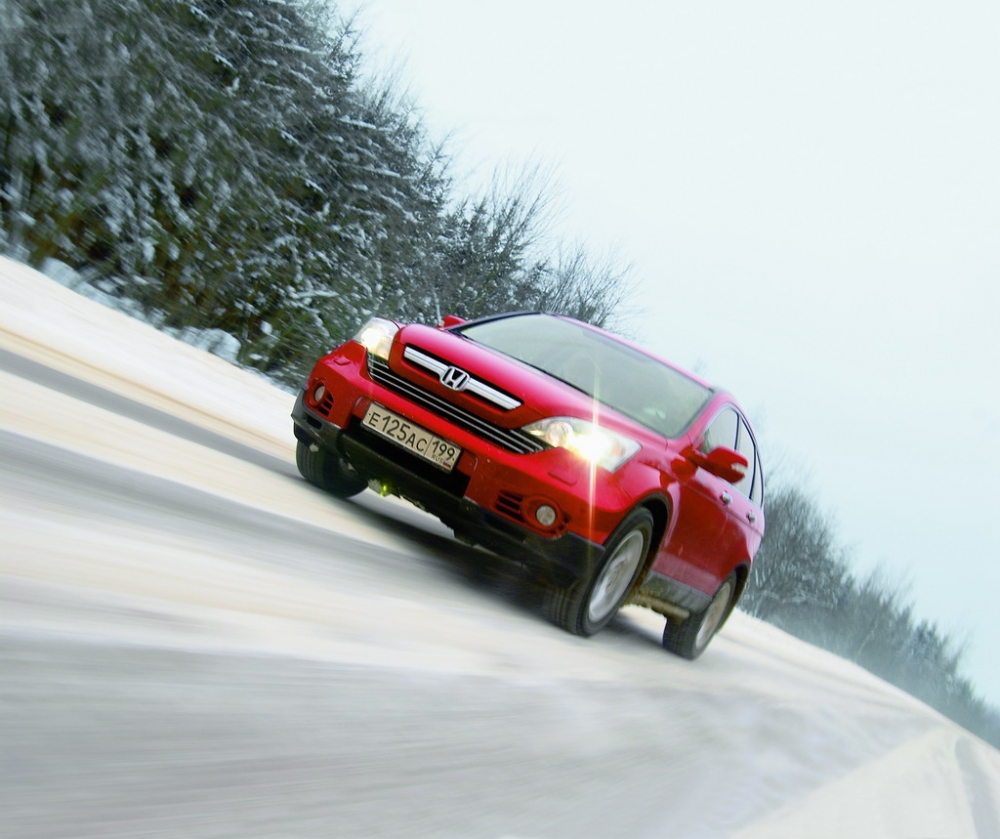
 If I were a fan of haiku, then on a January morning, when I set off for the presentation and test drive of the updated CR-V in the hilly outskirts of Yakhroma near Moscow, I would surely have recalled something from Matsuo Basho. For example: If I were a fan of haiku, then on a January morning, when I set off for the presentation and test drive of the updated CR-V in the hilly outskirts of Yakhroma near Moscow, I would surely have recalled something from Matsuo Basho. For example: |
 And who knows, in such a state of mind I might have composed something in the spirit of: And who knows, in such a state of mind I might have composed something in the spirit of: |
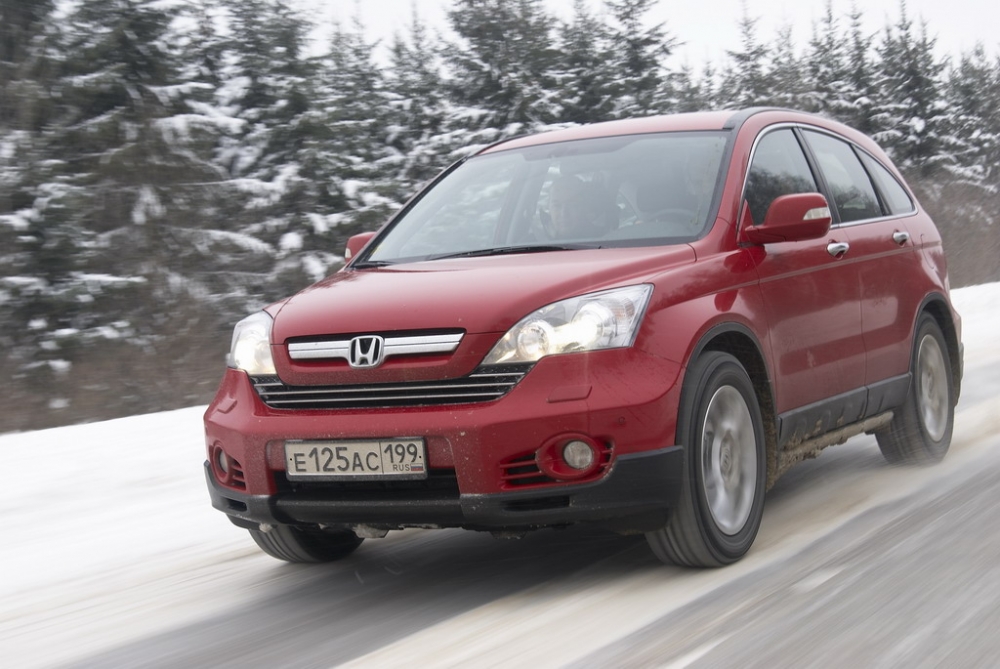
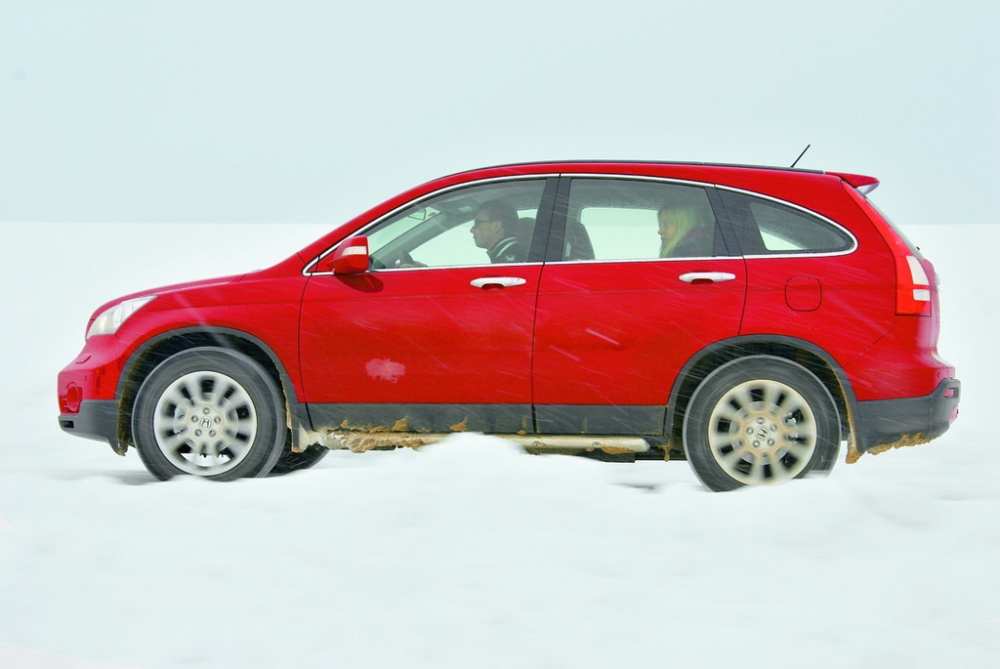
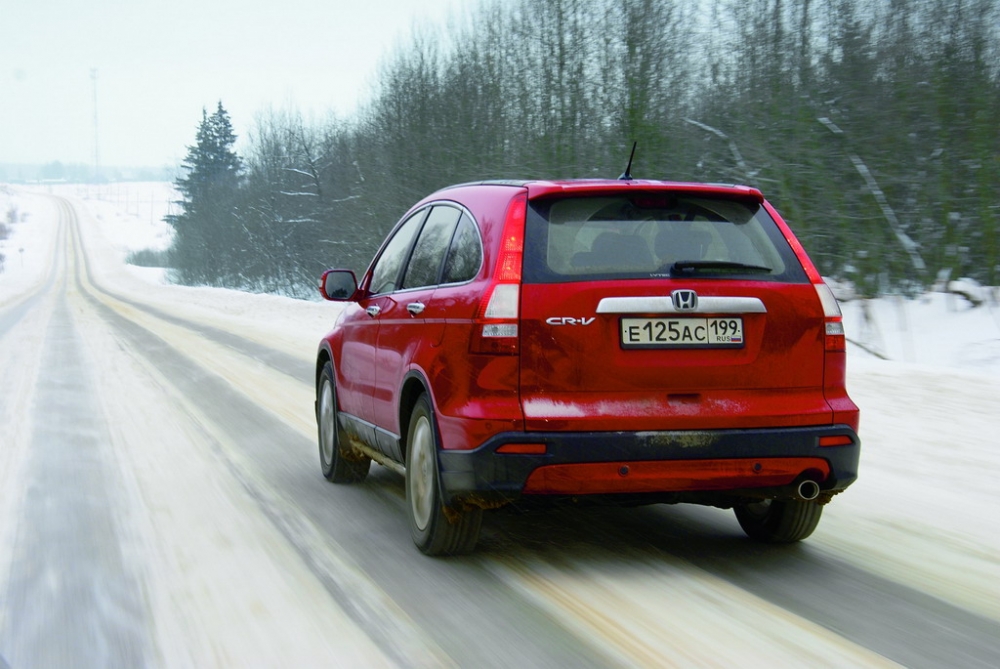 A flower? And why not. Honda knows how to create not just reliable, but truly attractive cars. Having amazed the world in 1995 with the first-ever "soft-roader" and giving life to a new class of vehicles, the followers of Soichiro Honda eleven years later further strengthened the position of the CR-V: the third generation noticeably surpassed its plain predecessor in terms of appearance. I understood this immediately, when I first saw the new CR-V at the Paris Motor Show two autumns ago – it became brighter, more stylish, more dynamic, and sportier. Perhaps it does not possess the refined beauty that, say, coupes are famous for – after all, the "style" is not the same – but it looks devilishly attractive. A flower? And why not. Honda knows how to create not just reliable, but truly attractive cars. Having amazed the world in 1995 with the first-ever "soft-roader" and giving life to a new class of vehicles, the followers of Soichiro Honda eleven years later further strengthened the position of the CR-V: the third generation noticeably surpassed its plain predecessor in terms of appearance. I understood this immediately, when I first saw the new CR-V at the Paris Motor Show two autumns ago – it became brighter, more stylish, more dynamic, and sportier. Perhaps it does not possess the refined beauty that, say, coupes are famous for – after all, the "style" is not the same – but it looks devilishly attractive. |
 Matsuo Basho, when starting work on a poem, sought to penetrate the "inner life," to comprehend the "soul" of an object or phenomenon, and then convey it in the laconic form of haiku – that is, to see the "inner beauty" expressed in simple, even sparse forms. Soichiro Honda, when creating his cars, perhaps adhered to similar principles and passed them on to his followers. In any case, Honda's marketers once managed to look into the souls of potential buyers and accurately calculated the success of a new type of car, using simple formal solutions for this. Roughly the same was achieved a hundred and fifty years earlier by old Levi Strauss, who ultimately dressed the world in comfortable and practical pants that equalize and equally adorn both a laborer and a millionaire – jeans. The Honda CR-V, in essence, is the same jeans, only four-wheeled and with an engine. "Wearing" this car is convenient and practical. Matsuo Basho, when starting work on a poem, sought to penetrate the "inner life," to comprehend the "soul" of an object or phenomenon, and then convey it in the laconic form of haiku – that is, to see the "inner beauty" expressed in simple, even sparse forms. Soichiro Honda, when creating his cars, perhaps adhered to similar principles and passed them on to his followers. In any case, Honda's marketers once managed to look into the souls of potential buyers and accurately calculated the success of a new type of car, using simple formal solutions for this. Roughly the same was achieved a hundred and fifty years earlier by old Levi Strauss, who ultimately dressed the world in comfortable and practical pants that equalize and equally adorn both a laborer and a millionaire – jeans. The Honda CR-V, in essence, is the same jeans, only four-wheeled and with an engine. "Wearing" this car is convenient and practical. |
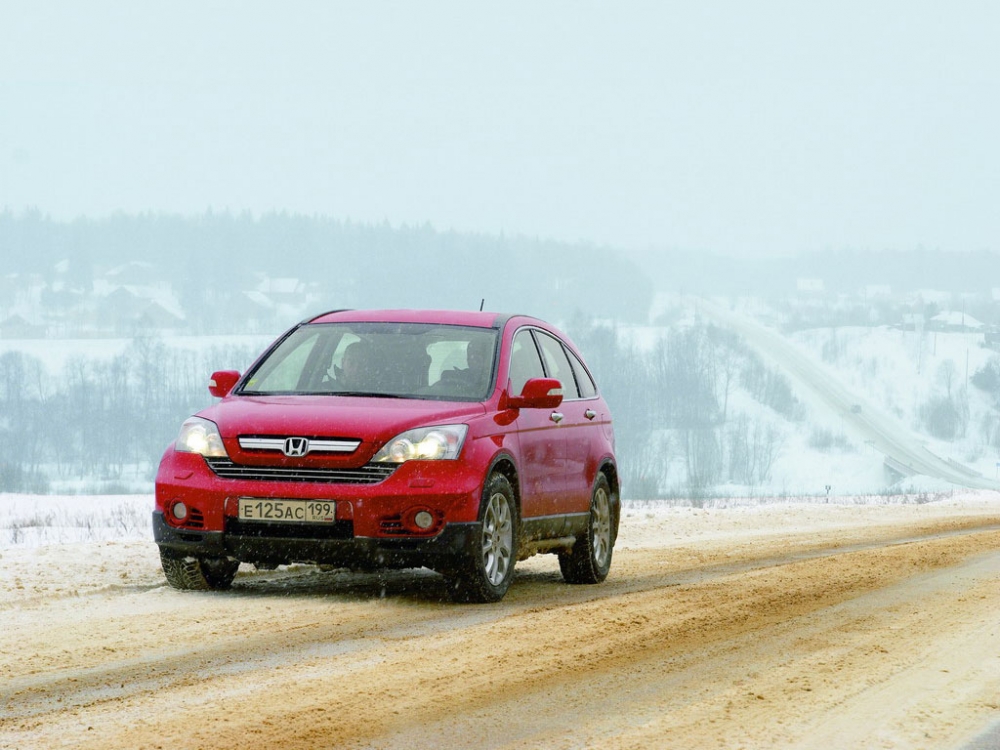 Of course, the new Honda crossover is not at all as simple structurally as its practical and quite democratic essence. It is a modern car equipped with appropriate technical content. Suffice it to mention the innovative automatic all-wheel drive system Real Time 4WD, with which it can be equipped and which provides faster acceleration and climbing on slippery and snowy surfaces, more confident starts, high-speed cornering, and active maneuvering. The work on modernizing the suspension was also aimed at this. However, all this and much more is already known from last year's tests of the 2-liter version. Of course, the new Honda crossover is not at all as simple structurally as its practical and quite democratic essence. It is a modern car equipped with appropriate technical content. Suffice it to mention the innovative automatic all-wheel drive system Real Time 4WD, with which it can be equipped and which provides faster acceleration and climbing on slippery and snowy surfaces, more confident starts, high-speed cornering, and active maneuvering. The work on modernizing the suspension was also aimed at this. However, all this and much more is already known from last year's tests of the 2-liter version. |
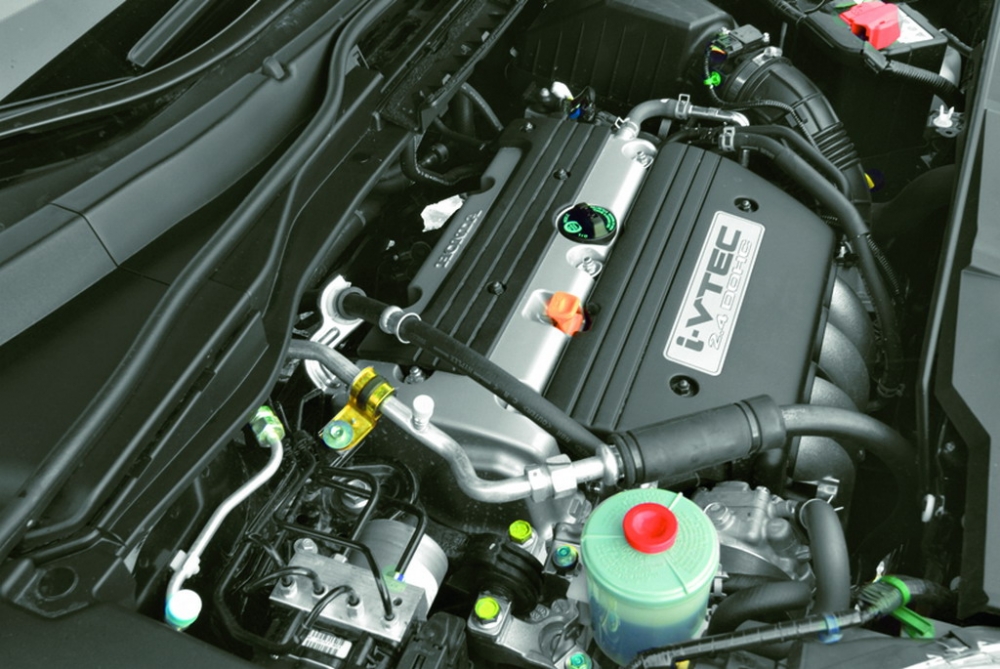
 One thing this car lacked when it arrived in Russia exactly a year ago was character. The culprit was precisely the 2-liter engine with 150 hp – then the only possible option and frankly weak for a car of this type and, moreover, with such a perky (or aggressive – depending on taste) appearance. And now under the hood of this "beauty" something more substantial has appeared – a 2.4-liter engine. Thanks to this, power has not increased all that significantly – only up to 166 hp, but torque has increased by a more noticeable 28 Nm, with 80% of its maximum value achieved already at 2000 rpm. As a result, the new CR-V has started to move. Speed records, however, are still beyond its reach: 11 seconds to 100 km/h and a top speed of 190 km/h – not much to write home about. It could probably be a bit quicker. But, as they say, does it need to be? What matters is something else – the engine has become confidently tractive and demonstrates excellent elasticity, which makes driving this Honda, if not super-dynamic, then extremely pleasant. The car has acquired proper organicity. One thing this car lacked when it arrived in Russia exactly a year ago was character. The culprit was precisely the 2-liter engine with 150 hp – then the only possible option and frankly weak for a car of this type and, moreover, with such a perky (or aggressive – depending on taste) appearance. And now under the hood of this "beauty" something more substantial has appeared – a 2.4-liter engine. Thanks to this, power has not increased all that significantly – only up to 166 hp, but torque has increased by a more noticeable 28 Nm, with 80% of its maximum value achieved already at 2000 rpm. As a result, the new CR-V has started to move. Speed records, however, are still beyond its reach: 11 seconds to 100 km/h and a top speed of 190 km/h – not much to write home about. It could probably be a bit quicker. But, as they say, does it need to be? What matters is something else – the engine has become confidently tractive and demonstrates excellent elasticity, which makes driving this Honda, if not super-dynamic, then extremely pleasant. The car has acquired proper organicity. |
 The new, more powerful version of the CR-V is offered exclusively with a 5-speed automatic transmission, which interacts with the engine, again, quite organically. When asked why, in accordance with modern fashion, it does not provide a manual shift mode, the Honda representatives present at the presentation reasonably responded with another question: "How often, objectively speaking, does the need arise to use such a mode if the 'automatic' already performs its function well?" And that is true – over the entire 50-kilometer route offered for the test drive, which ran both along the highway and through city streets and country dirt roads, I generally had neither such a need nor even a particular desire to shift gears manually. The automatic transmission is indeed quite good in combination with the new engine: its operating algorithm allows keeping the revs in the most efficient range and, accordingly, effectively controlling the car through traction – in addition to the highly interactive and sufficiently sharp steering. The new, more powerful version of the CR-V is offered exclusively with a 5-speed automatic transmission, which interacts with the engine, again, quite organically. When asked why, in accordance with modern fashion, it does not provide a manual shift mode, the Honda representatives present at the presentation reasonably responded with another question: "How often, objectively speaking, does the need arise to use such a mode if the 'automatic' already performs its function well?" And that is true – over the entire 50-kilometer route offered for the test drive, which ran both along the highway and through city streets and country dirt roads, I generally had neither such a need nor even a particular desire to shift gears manually. The automatic transmission is indeed quite good in combination with the new engine: its operating algorithm allows keeping the revs in the most efficient range and, accordingly, effectively controlling the car through traction – in addition to the highly interactive and sufficiently sharp steering. |
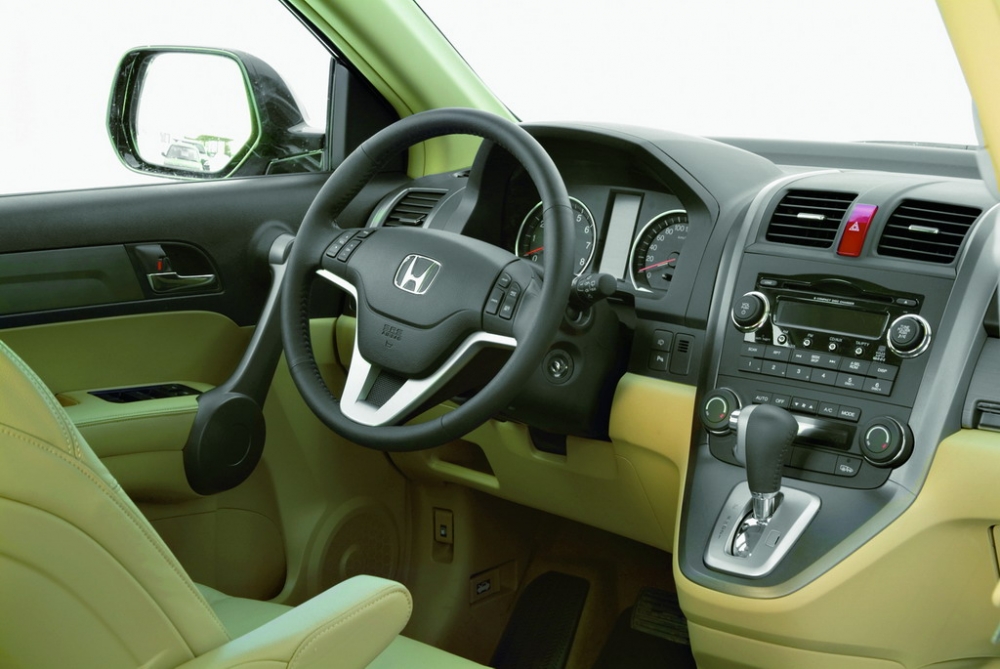
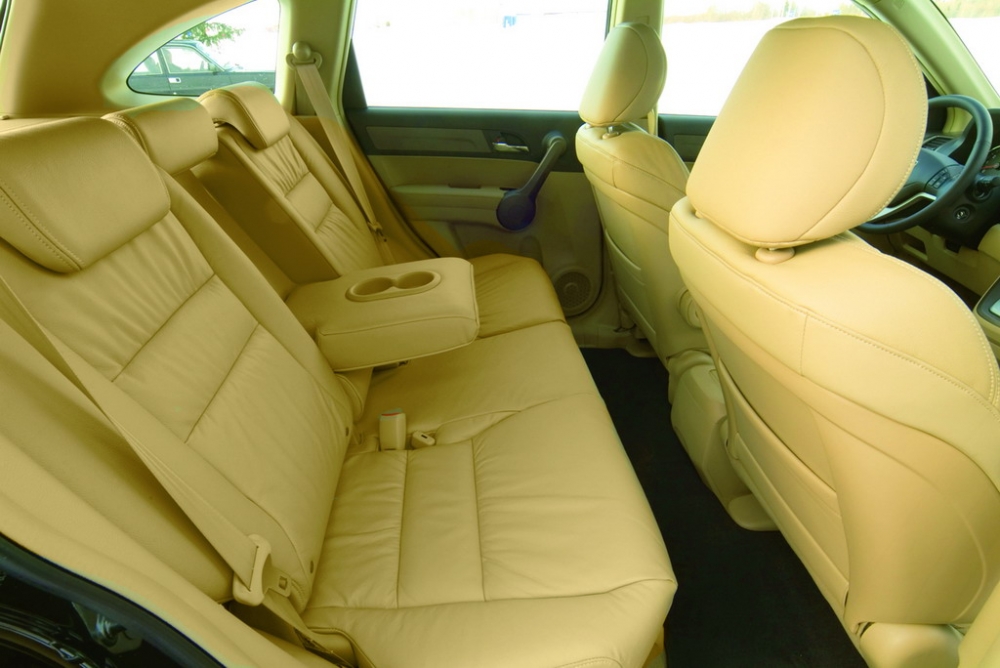
 The foot controls are also good: the accelerator pedal doses the "gas" very smoothly and precisely, allowing the engine to demonstrate its high elasticity in all its glory, and the brake pedal is equally transparent and provides intuitive interaction with the braking mechanisms – the car stops exactly where and how you wanted it to stop. But there is no particular desire to stop it either – it drives so much more fun compared to the sleepy 2-liter version. On light off-road and snow, the CR-V also rolls easily and effortlessly. It's just that it shakes quite noticeably, including on uneven asphalt. But the somewhat stiff suspension is a reasonable price for good handling. Moreover, this small annoyance is more than compensated by the exceptionally comfortable sport seats – the kind from which, as they say, you don't want to get out. And finally, the cabin space surrounding these seats completes the picture – everything here is beautiful, stylish, and also very convenient. The foot controls are also good: the accelerator pedal doses the "gas" very smoothly and precisely, allowing the engine to demonstrate its high elasticity in all its glory, and the brake pedal is equally transparent and provides intuitive interaction with the braking mechanisms – the car stops exactly where and how you wanted it to stop. But there is no particular desire to stop it either – it drives so much more fun compared to the sleepy 2-liter version. On light off-road and snow, the CR-V also rolls easily and effortlessly. It's just that it shakes quite noticeably, including on uneven asphalt. But the somewhat stiff suspension is a reasonable price for good handling. Moreover, this small annoyance is more than compensated by the exceptionally comfortable sport seats – the kind from which, as they say, you don't want to get out. And finally, the cabin space surrounding these seats completes the picture – everything here is beautiful, stylish, and also very convenient.In a word, presenting the new product under the slogan "Evolution of the Leader," the Honda people, perhaps, did not exaggerate. |
Jeans with a motor
Classical Japanese haiku poetry connects the mundane and the spiritual, the small and the great, the natural and the human, the fleeting and the eternal. The Honda CR-V, which has also become a classic of its genre, essentially combines the same ingredients. Plus, now it also has a new 2.4-liter i-VTEC engine.

Test drive photos
Comments
No comments yet. Say the first word.