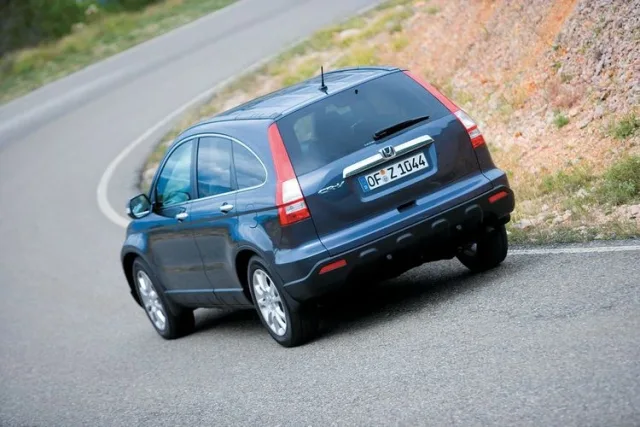
Honda has again gone its own way. Others make each new model longer and taller, but the Honda CR-V has become shorter and lower! However, the track has been widened (by 25 mm at the front and 5 mm at the rear), the center of mass has moved 35 mm closer to the ground, the suspension has become stiffer, and the steering is sharper... Could it be that the Japanese have decided to turn a utilitarian crossover into an adrenaline generator? On the mountain serpentines near Barcelona, this was easy to check.
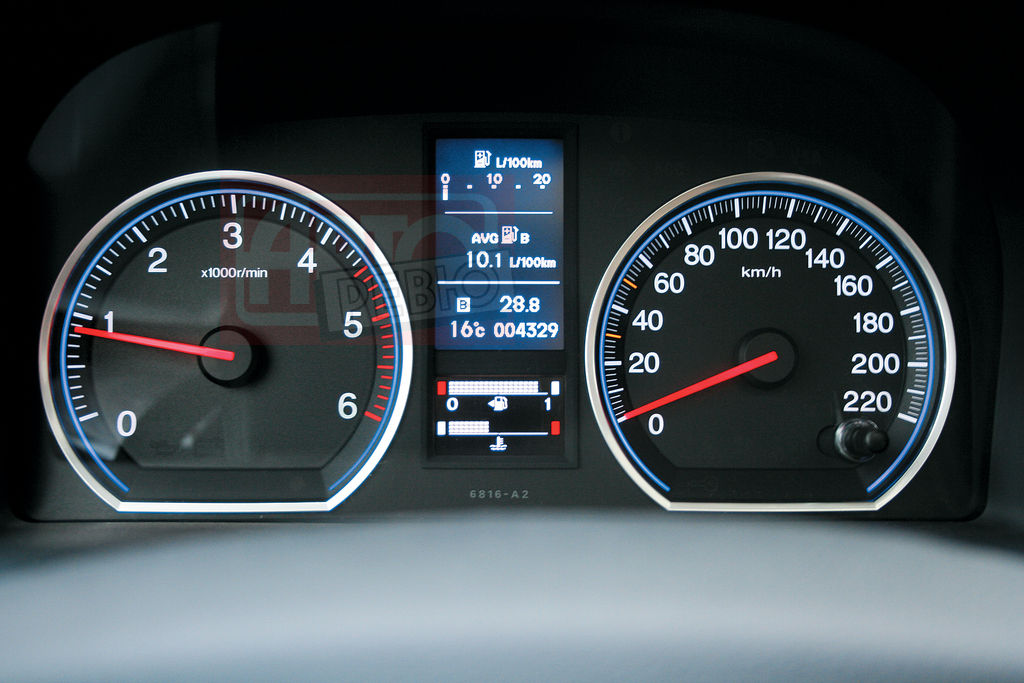 |
| New instruments — with moon-like needles and horizontal "strips" for fuel level and coolant temperature indicators |
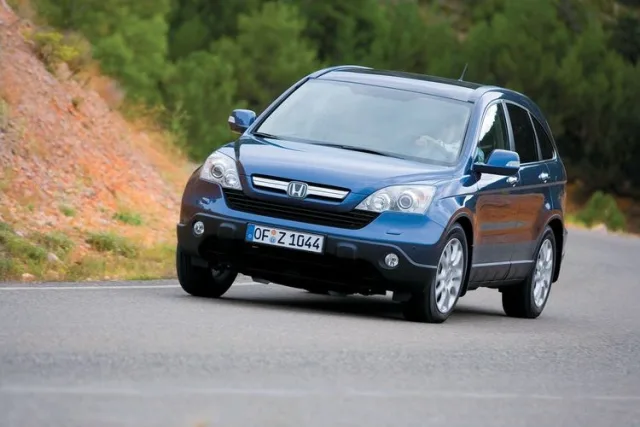
From the front, the Honda CR-V is aggressive. The wide bumper, topped with a huge air intake, resembles the "shovels" of the nose fairings of the Tyrrell Formula-1 cars from the early 70s (by the way, the current Honda Formula team is the former Tyrrell). Above it is a wedge-shaped hood with slanted headlights and a narrow radiator grille, as if the body of the previous Civic was mounted on a Formula chassis. But you approach from the side or rear — and the dynamic image is lost: an ordinary station wagon with a high roof and large wheels. Moreover, the hint of "off-road capability" is now barely perceptible: the wheel arches have "deflated," and the spare tire has moved from the tailgate to under the floor.
Inside, however, the car is as airy and spacious as before. The hollow plastic has given way to interesting multi-textured polymers — ribbed plastic is combined with slightly rough or "metal-look" painted surfaces.
The ergonomics are good. The front seats distribute load excellently and adjust over a wider range (plus 20 mm in length and 15 mm in height). The excellent leather steering wheel adjusts in two directions — both fans of a high "urban" seating position and those preferring a lower, "sporty" one will be satisfied. The "American" lever of the automatic transmission has disappeared — the selector is now on the protrusion of the center console. And climate control is like in the new Civic: two knobs set the temperature, and buttons handle other settings of the dual-zone climate control. The only downside is that the rear-view camera screen glares. But previously, the CR-V didn't have this feature at all.
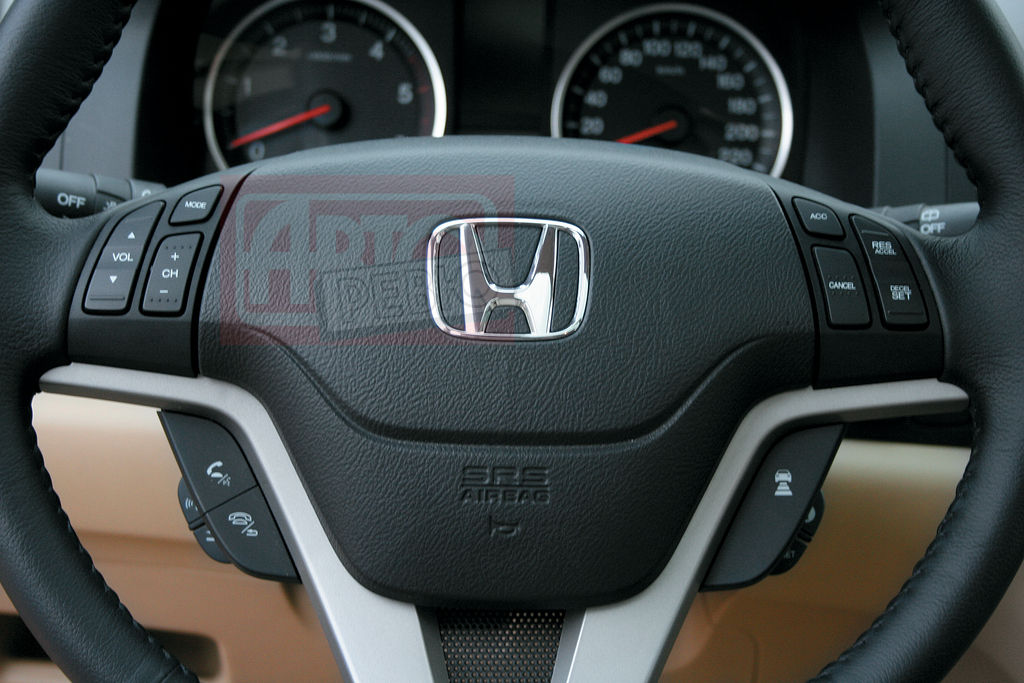 | 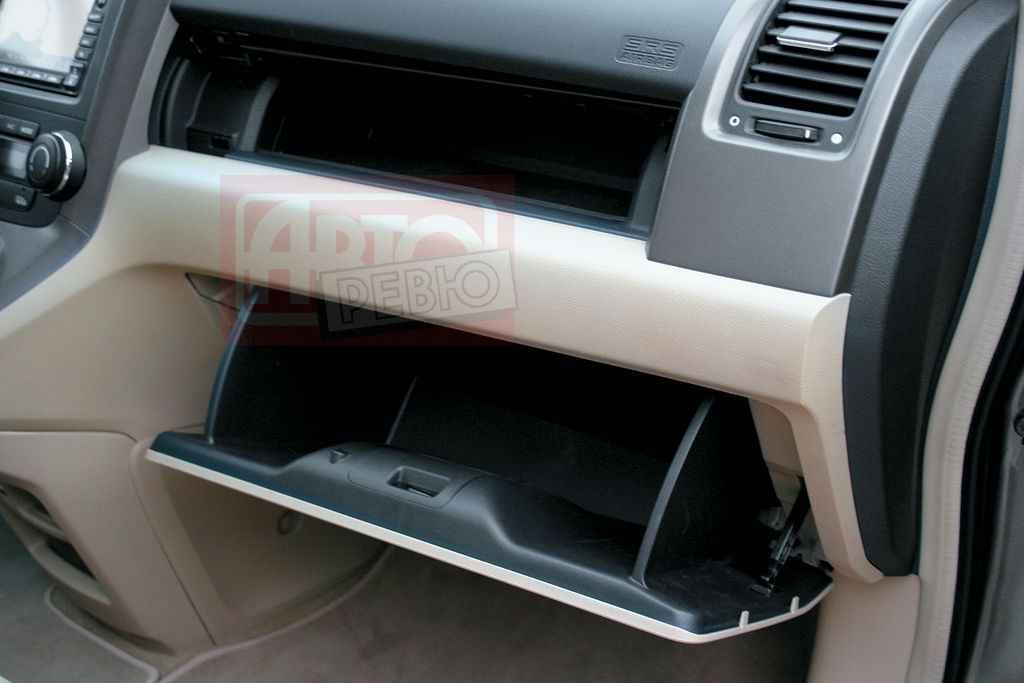 |
| The abundance of buttons on the steering wheel makes your eyes water — it's like the steering wheel of a Formula-1 car | There are now two glove boxes, but they are small |
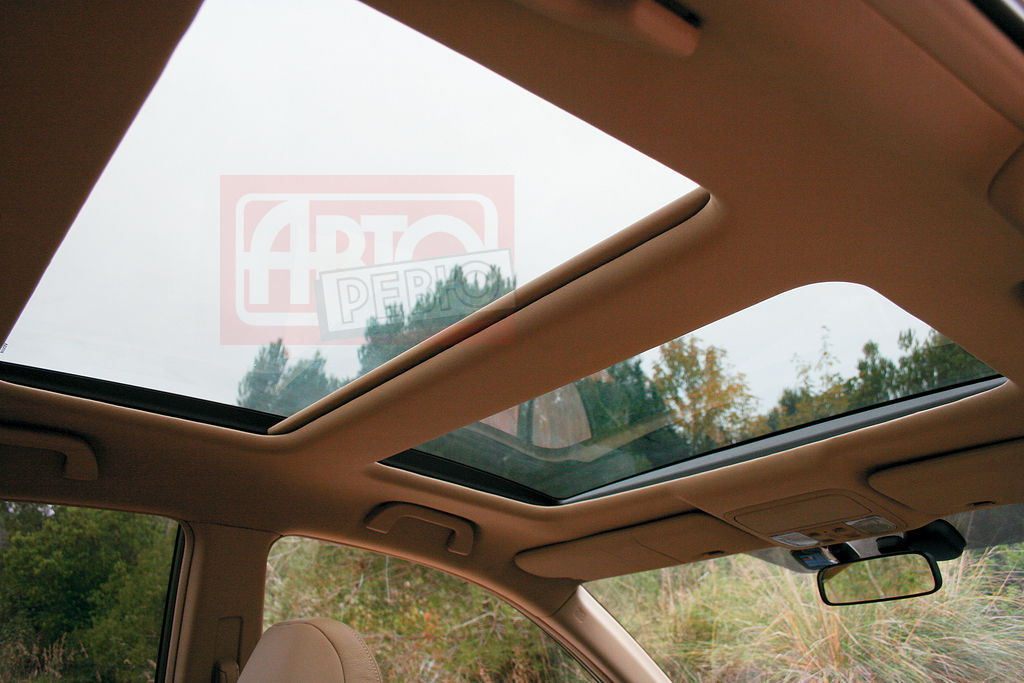 | |
| The glass roof turns the CR-V into an observatory | A useful option for parents — a panoramic mirror in the sun visor: it shows the entire cabin |
If it weren't for the wide rear pillars (the price for the sloping upper window line), the visibility could be considered exemplary. The large pentagonal mirrors are especially good — the little corner in the middle catches part of the side, and overall the viewing area becomes wider.
The first "driving" impression was slightly spoiled by the new five-speed automatic: gear changes are stretched out over speed and time as if the torque converter never locks up. I even suspected these might be pre-production cars with the old four-speed automatic. The D3, 2, and 1 modes are all like in the predecessor, where the gearbox also didn't impress with its responsiveness. "No, no! All cars are production models, and their gearboxes are new, five-speed!" the Japanese protested. Well, then it would be good to continue refining the automatic transmission — on the RAV4, for example, it works much more lively, even though it has only four gears and the gearbox itself, with minor changes, came from the previous "Rav4."
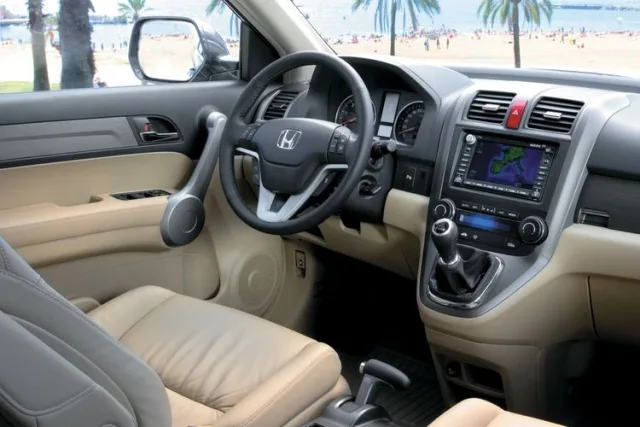
The interior is beautiful and spacious, and the "metal-look" painted door handles and the perforated lower steering wheel spoke only add optimism. Experiments with the "handbrake" continue: now it's L-shaped and more convenient to use than the previous lever on the console
In the end, to "savor" the new 2.0-liter petrol engine, I took a Honda with a six-speed manual. And it's a delight! The enlarged synchronizers click into place like cogs in a good racing transmission, smoothly and precisely. The idyll is slightly marred by the somewhat large movements of the lever and clutch pedal. Also, on cars with a manual, a noticeable vibration was concerning — I deliberately sat in other cars and made sure it wasn't a defect of a single example.
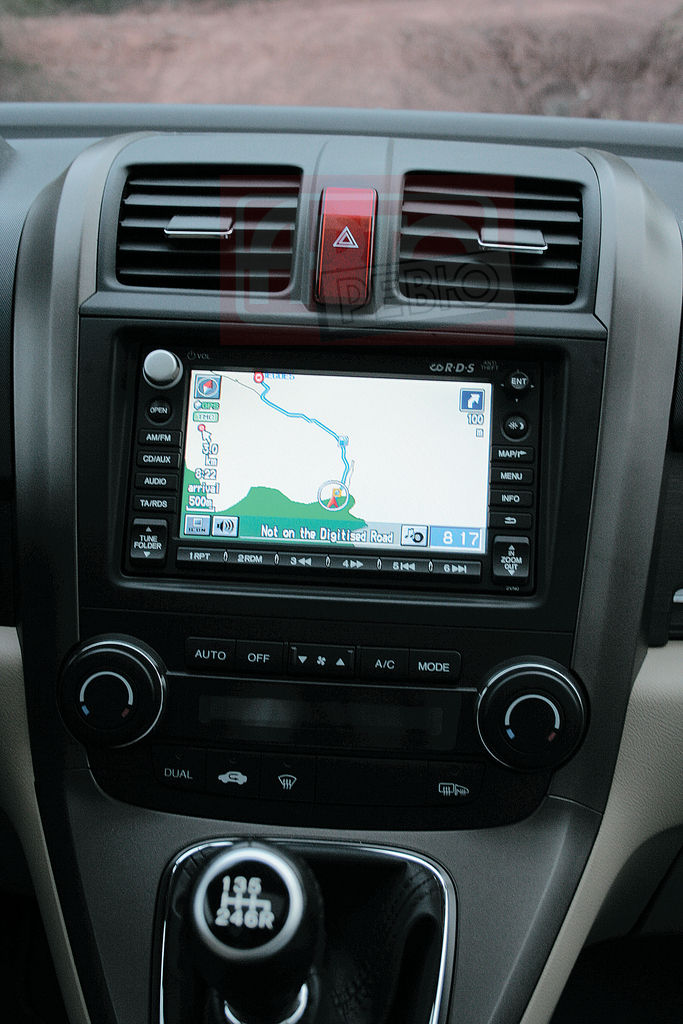 | 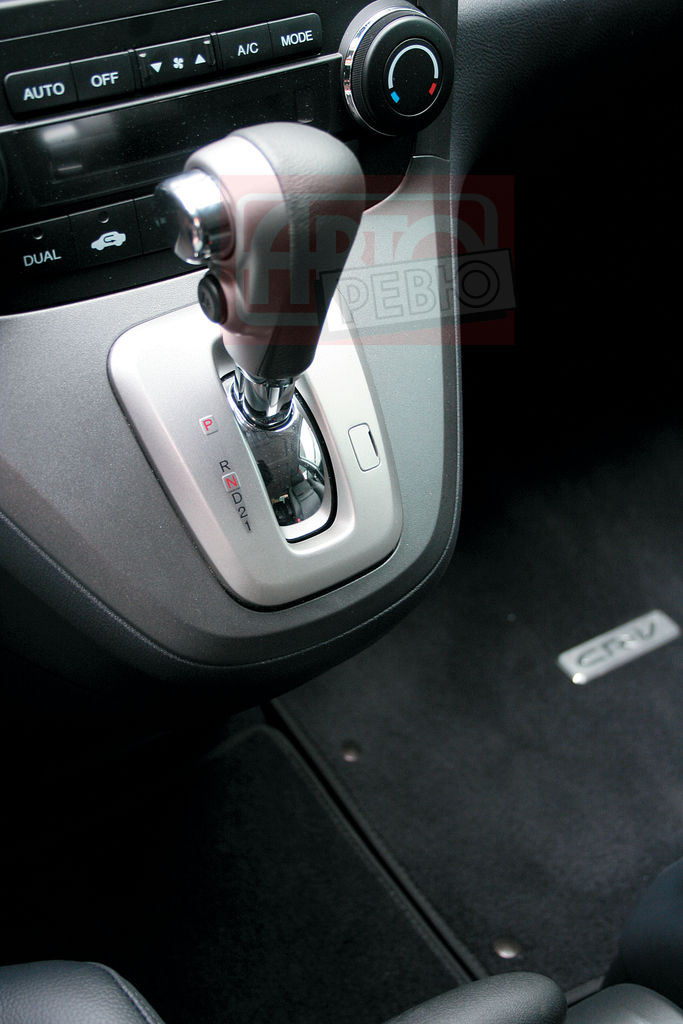 |
| The navigation screen glares. By summer, the system should appear on Russian cars | The new five-speed automatic is not very responsive |
The new engine is based on the Civic's 1.8-liter unit, with the displacement increased by lengthening the piston stroke: 96.9 mm versus 87.3 mm. In theory, a long-stroke engine should be more torquey. But it turns out it's inferior to its predecessor in torque, with its maximum 190 Nm at 4200 rpm instead of 192 Nm at 4000 rpm before. Fortunately, the power hasn't changed — still 150 hp, but it's achieved at 6200 rpm instead of 5500. That is, contrary to expectations, the engine has become more "high-revving." Why?
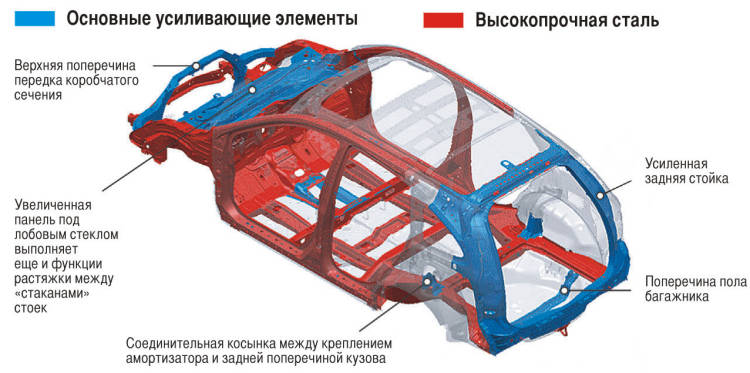 | 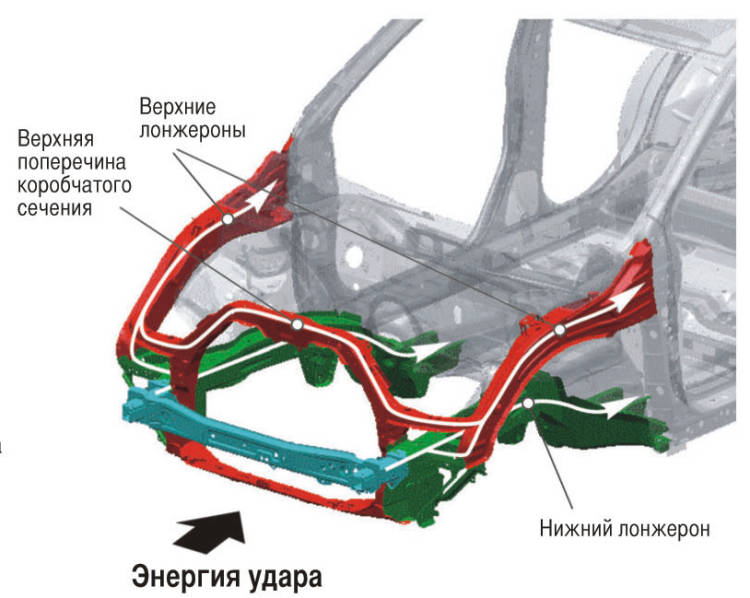 | |
| The AFS system can turn the light beam following the front wheels by up to 20 degrees | Thanks to the wider use of high-strength steels, the body mass was reduced by 32 kg. Torsional rigidity increased by 85% — also due to additional reinforcements: these are overlays on the rear pillars, a cross member in the trunk floor, and a panel under the windshield | The upper cross member, combined with the rigid and strong connection of the upper and lower "power belts," allows efficient redistribution of energy in an oblique frontal impact |
Everything is explained by the new "ideology" of the i-VTEC system. As before, each intake valve has two cam lobes. But now one is "power" and the other is "economy." The first works across the entire rev range when the gas pedal is pressed more than halfway. And when driving in a "feather-footed" style, the "economy" lobe comes into play, widening the intake phase and reducing pumping losses in the range from 1000 to 3500 rpm. And why don't the Japanese do something similar to the "throttle-less" Valvetronic injection on BMW engines? Honda says that for now it's too complex and expensive, while i-VTEC is more reliable and provides solid savings: compared to the old engine, from 9% to 12% depending on driving modes.
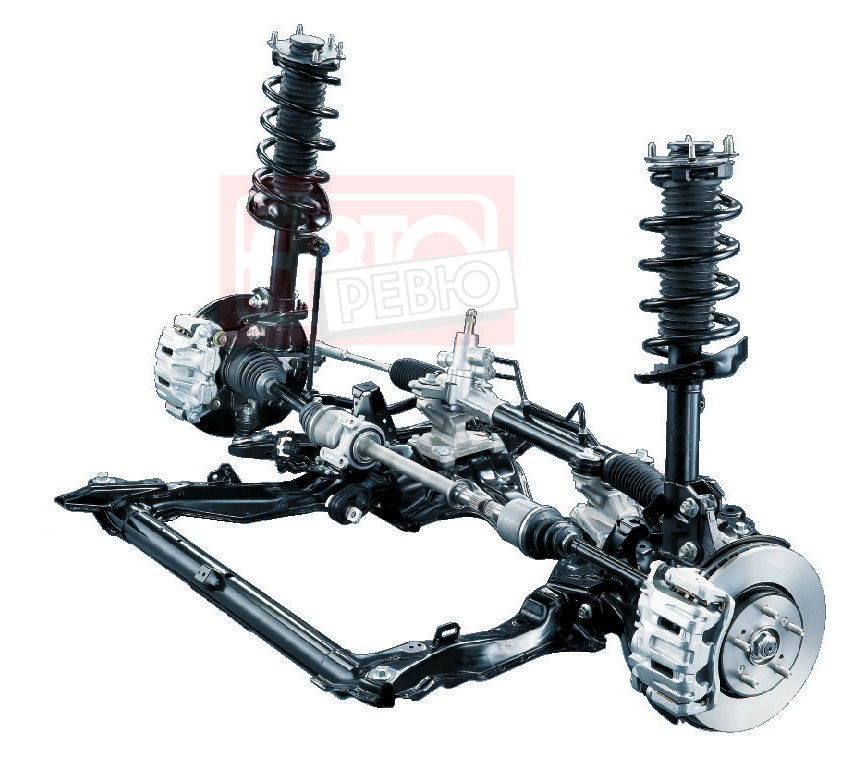 | 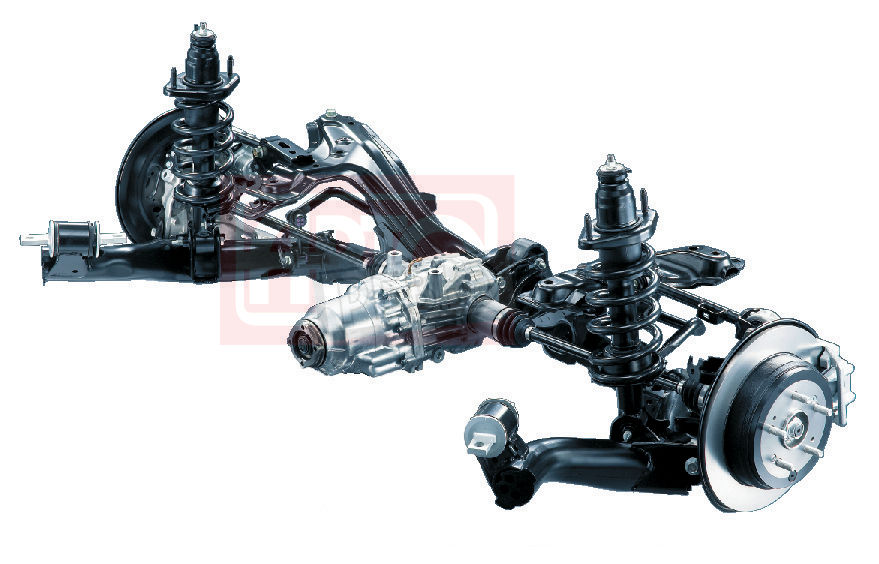 |
| The suspensions have not undergone fundamental changes, and minor "geometry" adjustments are aimed at suppressing nose dives during braking and "nose lifting" on acceleration. The silent blocks are now softer, which increased the steering effect of elastokinematics. The diameter of the rear stabilizer bar was increased from 18 to 19 mm | |
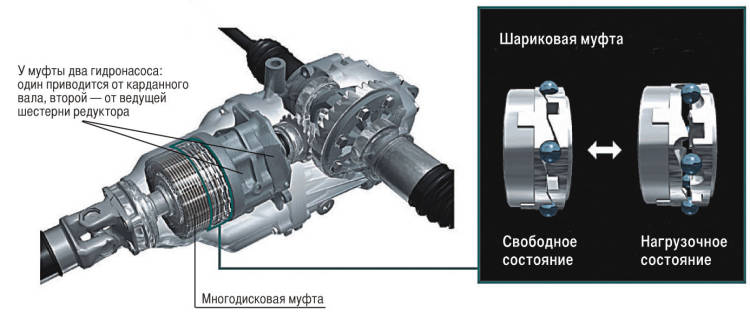 |
| The ball cam clutch, which speeds up the transfer of torque to the rear wheels, was introduced into the all-wheel drive system in 2005 on the second-generation CR-V |
But the Honda CR-V rarely needs such assistance — the chassis is excellently tuned! The car rushes into steep turns without hesitation, with no hint of rear-end swing — just like a Civic. The 85% increase in body rigidity and precise suspension kinematics have yielded excellent results. Body roll is no more than that of a regular station wagon (it's no wonder the center of mass is lower!), and the steering wheel is filled with clear and rich effort — both in "mother-in-law's tongues" and in gentle curves. No problems on the autobahn either: the car irons the road with the steadfastness of a courier train.
I only regretted that the Honda CR-V is essentially a front-wheel-drive car (torque to the rear axle is supplied only when the front wheels slip) when I started to frolic on a gravel road: it's very difficult to throw the car into a drift. Although why this "rally style" when the CR-V so unquestioningly carves through corners at speeds that most crossovers never even dream of!
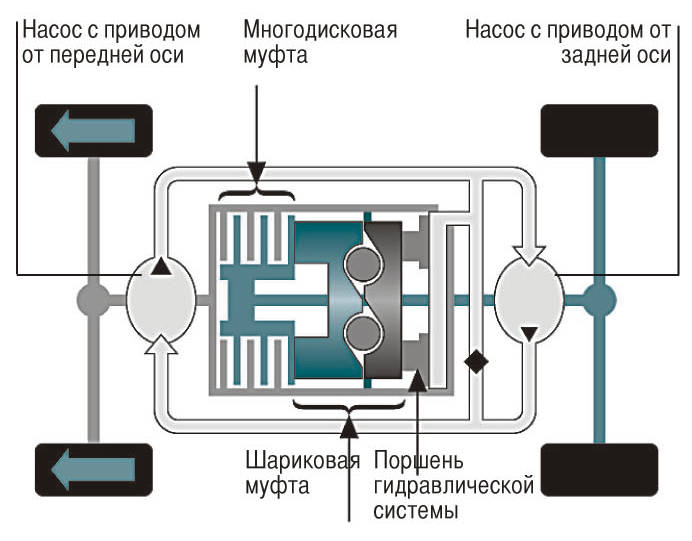 | 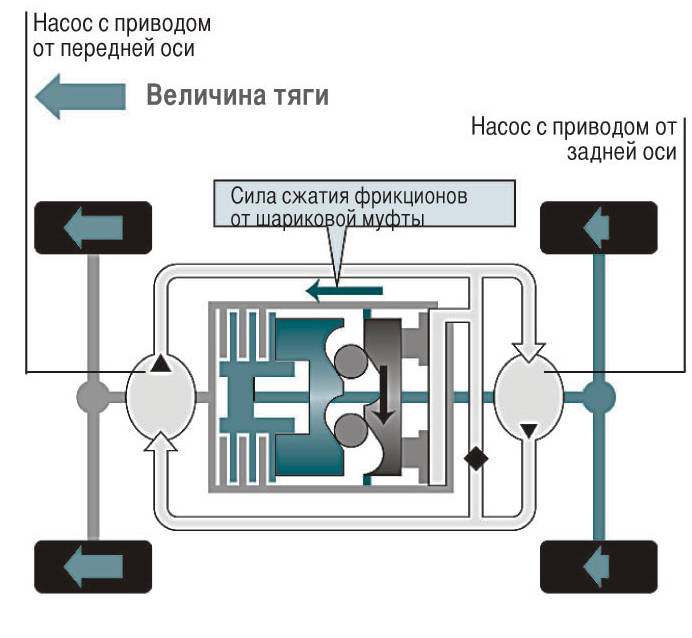 | 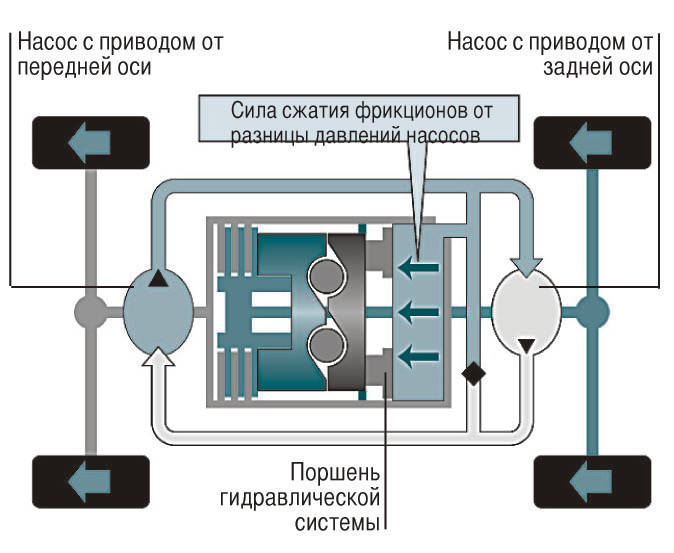 |
| On dry asphalt, when the wheel speeds of the front and rear axles are equal, the Honda CR-V is a strictly front-wheel-drive vehicle | On slippery surfaces, with slight slipping of the front wheels, the ball coupling creates a small preload in the main clutch and up to 35% of the supplied torque is sent to the rear wheels. The sensitivity of the ball coupling to the difference in rotation angles of the driveshaft and the drive gear of the rear differential is only 90 | During intense front-wheel spin, hydraulics come into play — a pump driven by the driveshaft (front axle) creates more pressure than the pump rotated by the rear differential. The pressure difference moves the pressure piston and the clutch locks. Response time is 0.1 s |
Off-road capability? It wasn't a strong point of the CR-V before either. The compression force of the friction plates of the hydraulically controlled clutch, and therefore the torque delivered to the rear axle, directly depends on the difference in rotational speeds of the front and rear wheels. The more the front slips, the more traction on the rear wheels. And that's where I got caught. Hanging the rear wheel on a rocky platform for a spectacular shot, I thought that the torque on the front wheels, firmly standing on dry surface, would be enough to climb a 15-degree incline. It wasn't. I had to call colleagues with a tow rope, fortunately the rear towing eye on the CR-V is in the most visible place.
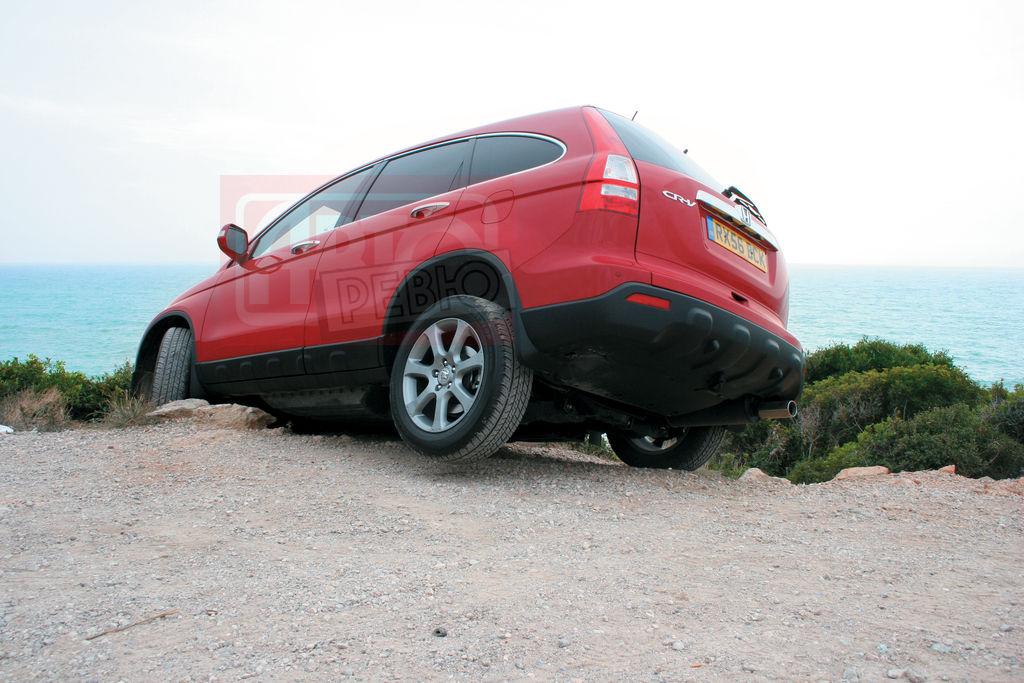 | 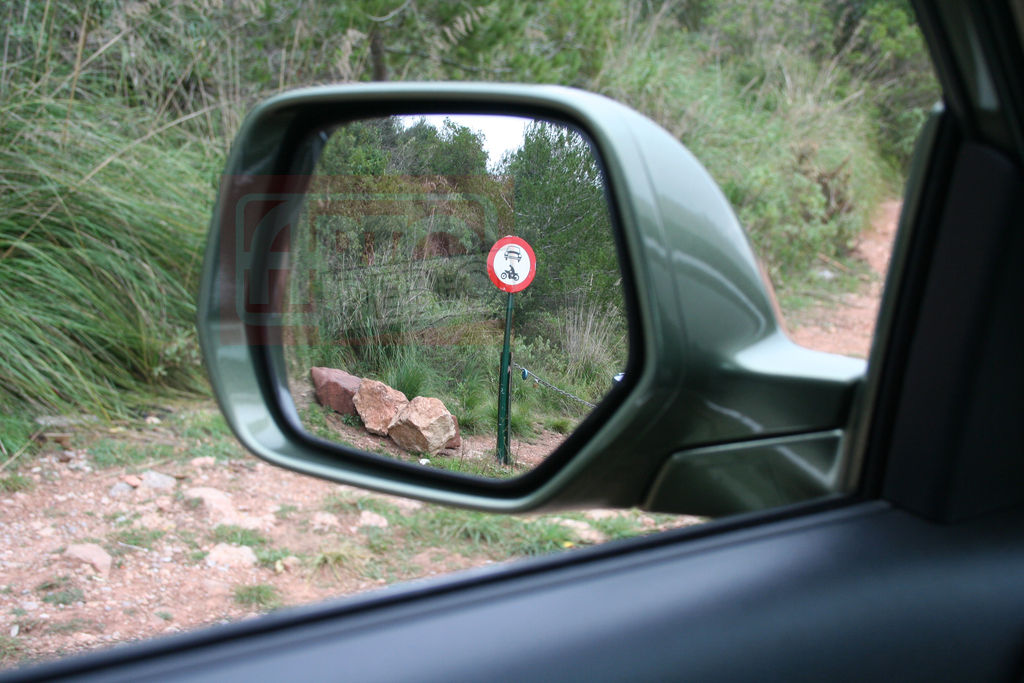 |
| Even demo off-road can be a serious test for crossovers — that's why the Honda had to be pulled out | Visibility through the large mirrors is amazing |
I spent the last ten kilometers of the Spanish switchbacks in the back seat. Getting in there is no harder than into a regular station wagon: the opening is wide, the sill is low, the wheel arch doesn't protrude, and the door opens to a generously large angle. The rear seats can be moved forward and backward: if you want to free up more space for luggage, you ride in economy class, pressing your knees against the front seats; less cargo — welcome to business class, with space like in a large sedan. But the ride comfort, of course, is not the same: a considerable share of it has been sacrificed for handling. However, CR-V owners are insured against seasickness — there's no pitching on waves. And acoustic comfort is in order: the engine works monotonously but quietly, "aerodynamics" doesn't bother up to 120 km/h, and the sound of pebbles hitting the arches and underbody is well muffled.
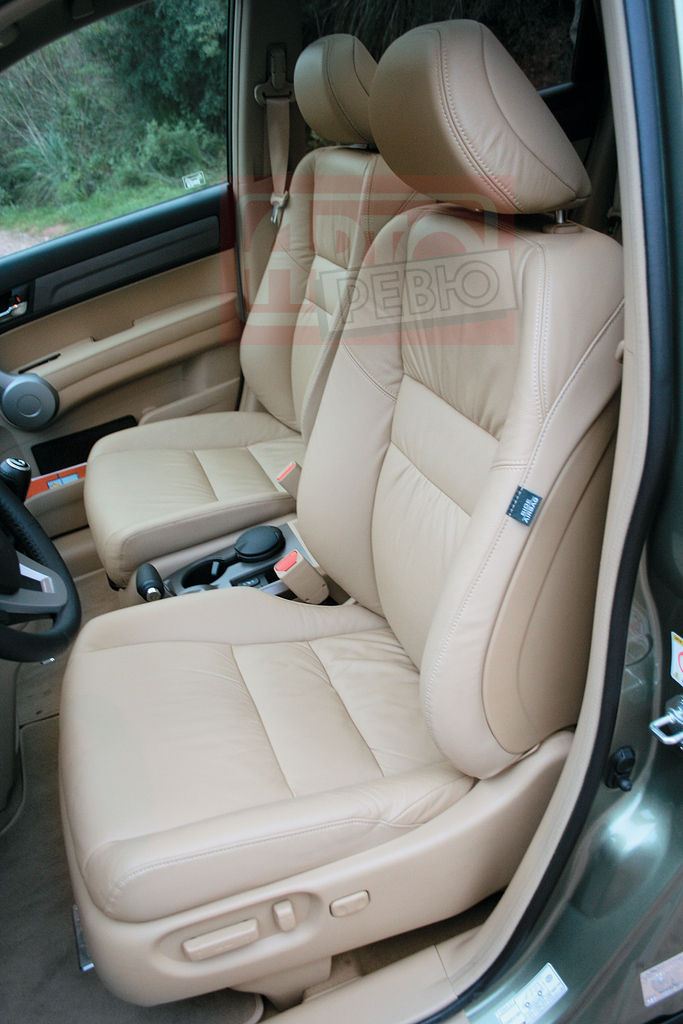 | 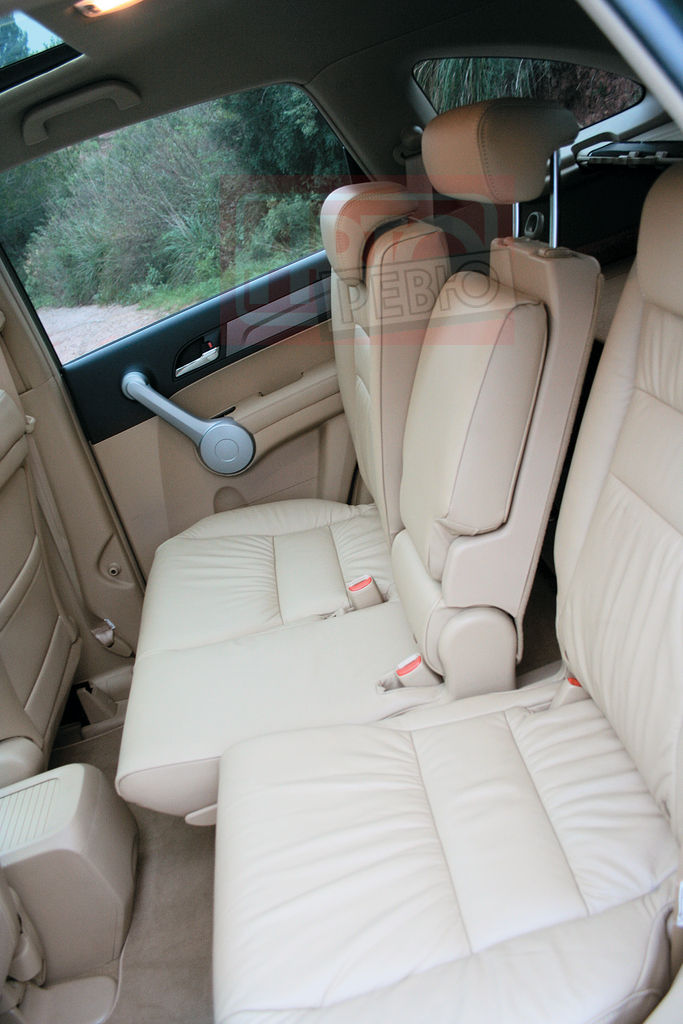 |
| Leather seats hold well in corners, and the lumbar support doesn't push the back out | There's plenty of space in the back, and all three backrests have angle adjustment — like in the RAV4 |
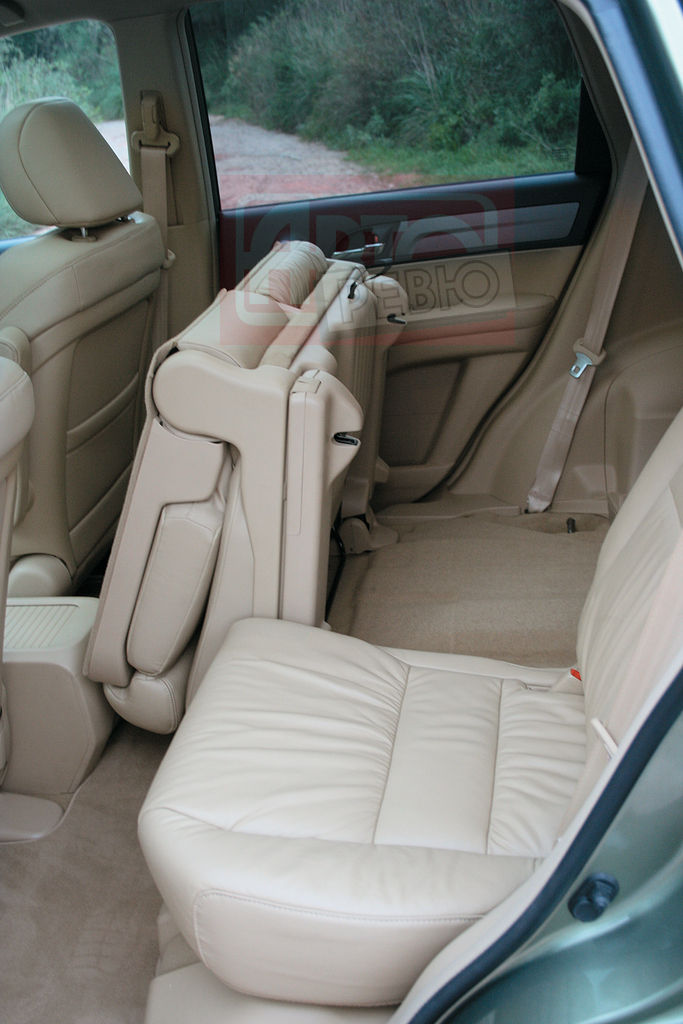 | 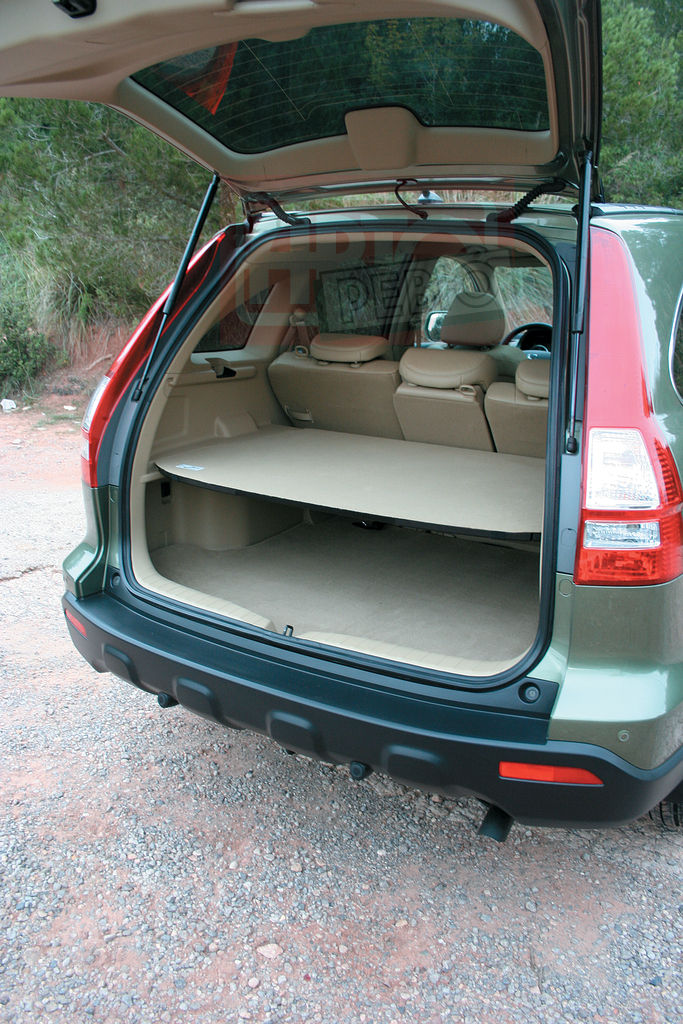 |
| The rear seats fold easily — you just need to slide them back all the way | The huge trunk can be turned into a two-tier one — with a rigid partition |
Will the new Honda CR-V manage to push the RAV4 off the throne of the most popular "ladies' car" in Russia? Hardly — at most, it might nudge it aside: the Russian price of $37,000 for the base version of the CR-V is, perhaps, too much. On the other hand, who else besides Honda can offer so much driving pleasure, backed by a spacious cabin and slightly increased off-road capability? Perhaps the Opel Antara. But the Opel is larger: it won't suit everyone for city driving. And the Honda CR-V is truly versatile. For $42,000, you can buy a car with swiveling headlights, a rear-view camera, a glass roof, and navigation. It's possible that those who, like Honda, prefer to go their own way won't find this price prohibitive. After all, Honda is always a bit of an exclusive, and "uniqueness" is now more valuable than ever. All that remains is to be patient: Russian sales will begin in March next year.
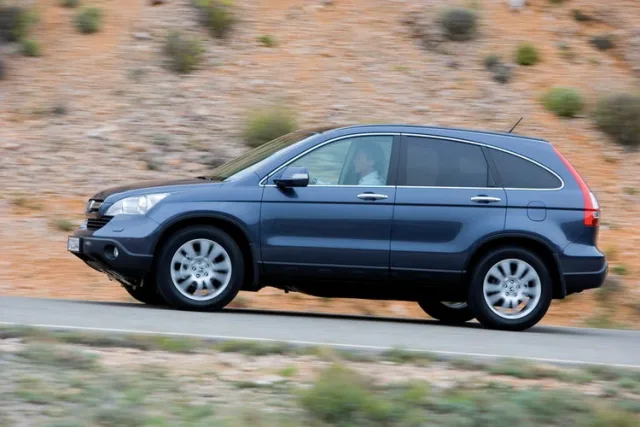
The most popular Honda in Russia
The abbreviation CR-V stands for Compact Recreational Vehicle — a compact car for recreation. The first "crossover" of the Honda brand with a unibody and independent double-wishbone suspension on all four wheels appeared on the Japanese market in 1996, two years later than the Toyota RAV4. Like the Toyota, the Honda CR-V could be in front- and all-wheel-drive versions. But only all-wheel-drive versions were officially supplied to Russia. Torque to the rear wheels of the all-wheel-drive modification was transmitted by a multi-disc clutch, engaged by a hydraulic drive from the pressure difference created by two hydraulic pumps. This scheme (dual pump) of automatically engaged rear drive when the front wheels slip has been preserved to this day. The two-liter engine with 126 hp for the first-generation CR-V was made on the basis of the 1.8-liter engine from the Honda Integra model.
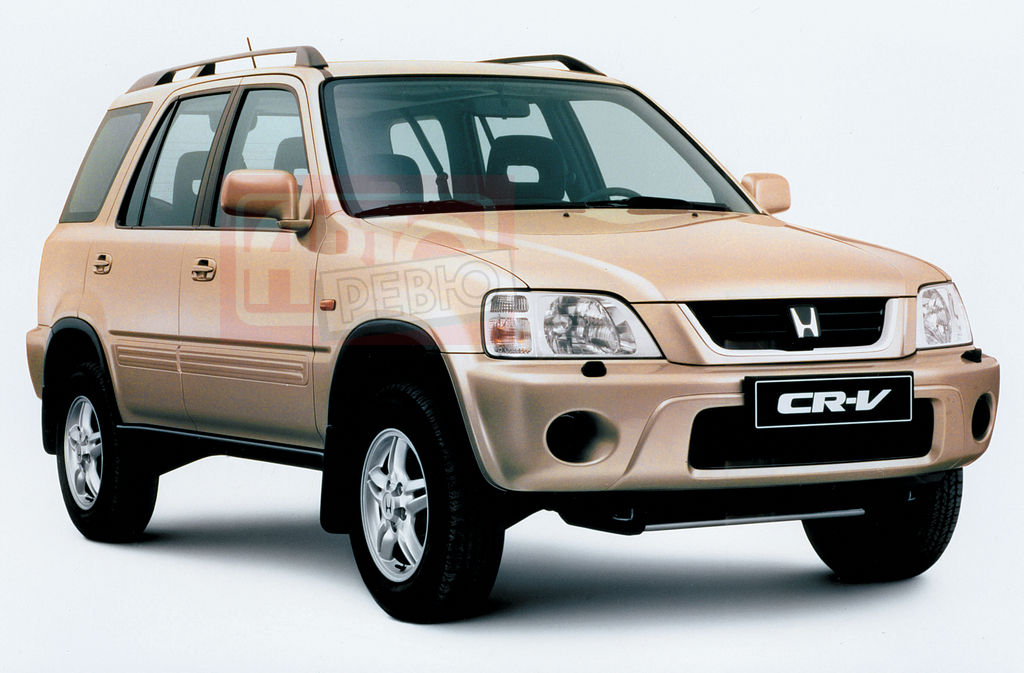 | 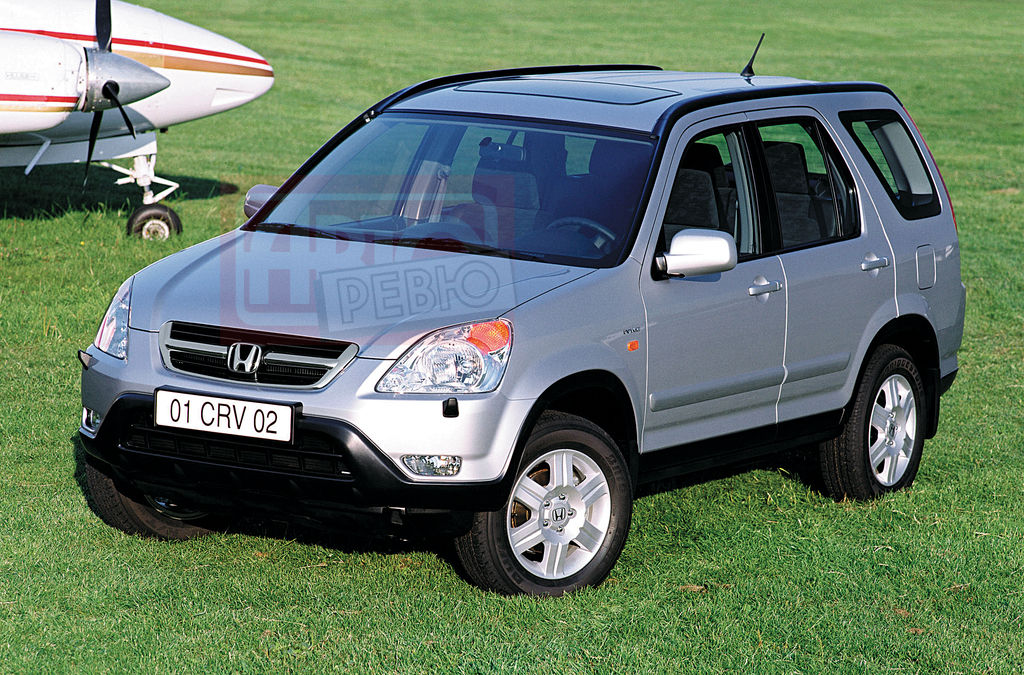 |
| Honda CR-V of the first generation after the 1999 restyling: bumpers lost their protruding "chins," emblems became larger | Honda CR-V of the second generation (2002) — on the platform of the Civic passenger model |
Unlike the RAV4, the Honda CR-V never had a three-door modification. On the European market, the Honda CR-V appeared in 1997.
In 1999, a light restyling was done. The emblem on the radiator grille became larger, and the bumpers became more rounded. By increasing the compression ratio from 8.8:1 to 9.6:1, the engine power was raised to 140 hp.
The Honda CR-V of the second generation, which appeared at the end of 2001, was already based on the platform of the "seventh" Civic. From it, a new 150-hp engine equipped with the first-generation i-VTEC system was also borrowed. On the American market, the CR-V also began to be offered with a 2.4-liter engine (160 hp). The car grew a bit: 25 mm in length, 35 mm in width, and 5 mm in height. And it became heavier by 62 kg. The front "double-wishbone" was replaced by McPherson, and the rear suspension gained a self-steering effect: when braking, both wheels turned inward for better directional stability — towards positive toe-in.
Along with the debut in 2005 of the first diesel engine of Honda's own design in the company's history (2.2 i-CDTi, 140 hp, common-rail injection at a pressure of 1600 bar), a facelift was also carried out. Cars from 2005-2006 are easily distinguished by two horizontal bars of the radiator grille instead of one, transparent turn signal lenses, and 16-inch wheels instead of 15-inch ones.
In almost 11 years, nearly 2.5 million Honda CR-V crossovers have been sold worldwide, with only 17% going to Europe. Russia also contributed to this statistic — 12,528 cars. Despite the relatively modest figure, until the arrival of the latest generation Accord in 2003, the lion's share of Honda car sales in Russia came from the CR-V.
The third-generation Honda CR-V is based on the same platform as the Acura RDX. The choice of engines, as well as the type of suspension, remains the same: a 2.4-liter gasoline engine for America, a 2.2 i-CDTi diesel for Europe, and a two-liter gasoline engine common to all markets. In Russia, only cars with the latter engine will be officially supplied.
Forbidden safety
| The CMBS collision mitigation system and the headlight turning mechanism can be switched off with buttons to the left of the steering wheel |
For an extra charge, the Honda CR-V can be equipped with active radar cruise control. The system itself is not new: for example, on the Mercedes S-Class it debuted under the name Distronic back in 1998. The first "European" Honda with such a system was the Legend model, and now — the CR-V.
All would be well, but the radar operates at a frequency of 37 MHz, which is prohibited for "civilian" use in Russia, and therefore active cruise control is unavailable to Russians. Meanwhile, cruising down the highway with such a thing is a pleasure. The main thing is not to change lanes sharply so that the car does not lose its "target": the radar has a fairly narrow "viewing" angle — only 60 degrees. It is clear that on mountain roads the likelihood of losing the "target" is especially high.
The same radar underlies the CMBS collision mitigation system (we talked about it in AR No. 21, 2003). It also first appeared on Honda Legend cars.
The system constantly compares the speed and acceleration of the car with the current distance to the "leader." As soon as the time to a possible collision is reduced to three seconds, CMBS beeps a warning and lights up the "Brake" message on the instrument panel. If the driver continues to "sleep," then two seconds before contact, the Honda CR-V will begin braking itself (with a deceleration of 2.45 m/s²) and slightly tighten the driver's seat belt. When there is one second left before a possible collision, the electric drive tightens the belts on both front seats, and the intensity of deceleration increases to 5.9 m/s².
We were able to evaluate the operation of the CMBS system at the test site. Several CR-Vs of the previous generation drive around the oval at a speed of 10 km/h, with "soft" targets suspended on special brackets to their sides. Our task is to accelerate to 50-60 km/h and hit a hinged bar wrapped in foam rubber. In such greenhouse conditions, the system works perfectly: CMBS brakes on its own and even leaves the opportunity not to reach the bar with the bumper by slamming the brake as hard as possible when the belts have already pulled you tightly to the seat.
But as soon as we got onto a real road, a worm of doubt set in. It's not even about the psychological aspect, although rolling up to the rear bumpers of peaceful Spanish citizens with a speed difference of 30-40 km/h on the highway was somewhat scary. It seems that CMBS does not quite understand that the braking distance from 130 to 100 km/h is somewhat longer than the braking distance from 40 to 10 km/h. Therefore, when I was already braking hard to avoid slamming into another Seat, the system only issued the first warning. I stopped further experiments. CMBS will certainly help "avoid" catastrophic impacts at city speeds when the driver is distracted or feels unwell, but on the highway its effectiveness is doubtful. And still, it's a pity that Russian CR-Vs will not be equipped with this system.
Honda on heavy fuel
The first Honda turbo diesel of its own design, the 2.2 i-CDTi, appeared under the hood of the Honda Accord at the end of 2004. And only in 2005 did it begin to be installed in second-generation CR-V crossovers. At the same time, it was awarded the title of Engine of the Year in the 2.0 to 2.5 liter category. Its development was led by Kenichi Nagahiro, the author of the VTEC system. The four-cylinder 2.2 i-CDTi engine is made with the latest in passenger car diesel engineering: all-aluminum, with four valves per cylinder, with an undivided combustion chamber and accumulator injection at pressures up to 1600 bar. The engine develops 140 hp and 340 Nm, meeting Euro 4 emission standards.
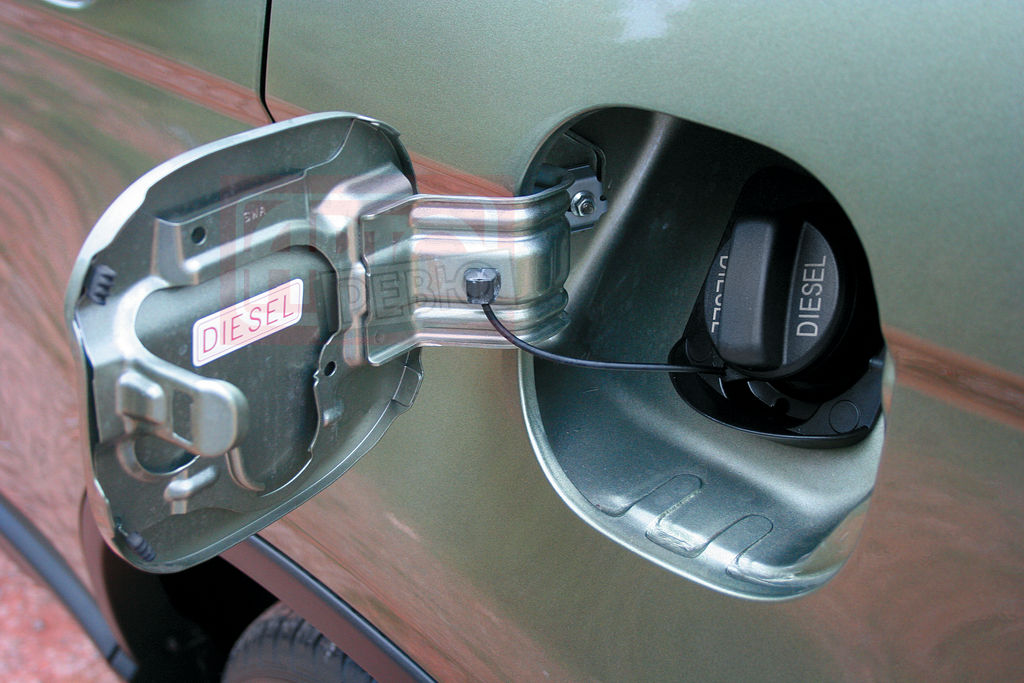 | 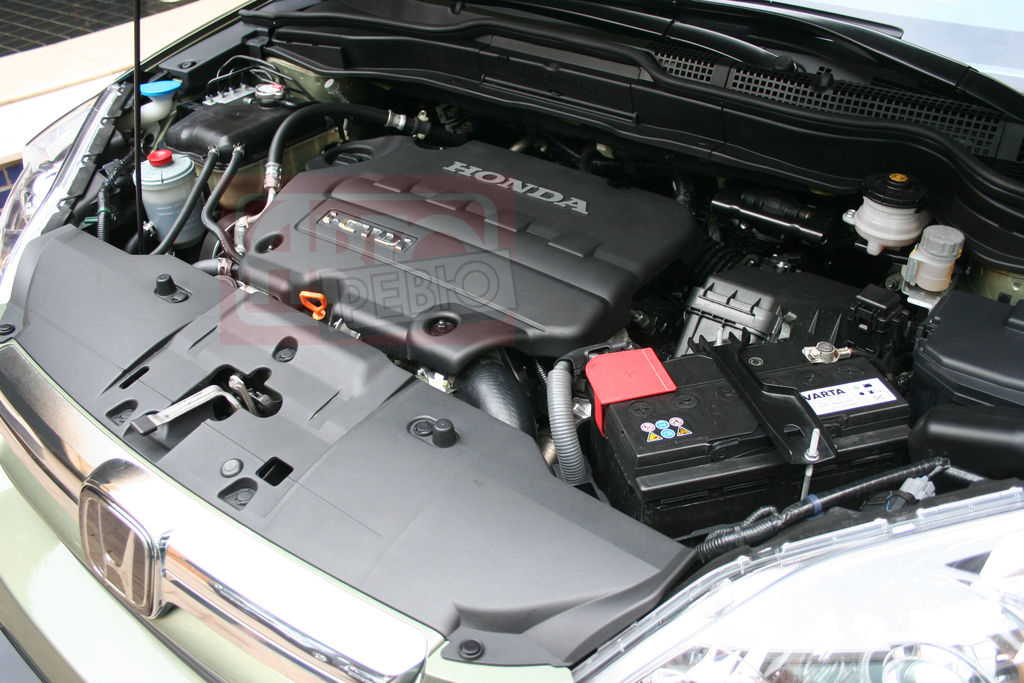 |
| The Honda 2.2 i-CDTi diesel is very demanding on fuel quality. The Japanese believe that Russian diesel fuel with a high sulfur content and poor lubricating properties will not suit it | |
On the third-generation CR-V, it has not undergone any design changes, and the improvement in efficiency was achieved only by reducing the car's drag coefficient by 12% and reducing tire rolling resistance.
About 70% of all new "soft-roaders" sold in Europe will run on heavy fuel. But this does not apply to Russia. The Japanese still look skeptically at the quality of our diesel fuel. Nevertheless, I also took a ride in a diesel car. Compared to its gasoline sibling, this engine is a bit noisy, especially at high revs under full throttle, and in character it is very similar to the Ford TDCi engine: it pulls well at the "bottom," shoots in the range from 1700 to 3000 rpm, and calmly revs up to the limiter at 5000 rpm.
There is also a difference in the chassis settings, since the diesel engine is heavier. The front suspension is stiffer, and instead of an electric power steering, a traditional hydraulic one is installed. The ride smoothness, as well as the nature of the handling, have not fundamentally changed in the diesel car. But the feedback on the steering wheel differs: in sharp turns, the steering wheel of the diesel car frighteningly dips, depriving the driver of confidence. But in all other modes, everything is fine.
| Specifications | ||
| Vehicle | Honda CR-V | |
| Modification | 2.0 i-VTEC | 2.2 i-CDTi |
| Body type | 5-door wagon | 5-door wagon |
| Length, mm | 4530 | 4530 |
| Width, mm | 1820 | 1820 |
| Height, mm | 1680 | 1680 |
| Wheelbase, mm | 2620 | 2620 |
| Track front/rear, mm | 1565/1565 | 1565/1565 |
| Trunk volume, l | 556—955 | 556—955 |
| Curb weight, kg | 1498(1533)* | 1617 |
| Gross weight, kg | 2050 (2080) | 2160 |
| Engine | gasoline | turbo diesel |
| Location | front, transverse | front, transverse |
| Number and arrangement of cylinders | 4, in-line | 4, in-line |
| Displacement, cm³ | 1997 | 2204 |
| Number of valves | 16 | 16 |
| Cylinder bore/piston stroke, mm | 81.0/96.9 | 85.0/97.1 |
| Compression ratio | 10.5:1 | 16.7:1 |
| Maximum power, hp/kW/rpm | 150/110/6200 | 140/103/4000 |
| Maximum torque, Nm/rpm | 190/4200 | 340/2000 |
| Gearbox | manual, 6-speed (automatic, 5-speed) | manual, 6-speed |
| Gear ratios | ||
| I | 3.64 (2.79) | 3.93 |
| II | 1.88 (1.68) | 2.04 |
| III | 1.21 (1.13) | 1.19 |
| IV | 0.97 (0.77) | 0.93 |
| V | 0.78 (0.59) | 0.78 |
| VI | 0.66 (—) | 0.65 |
| reverse | 3.58 (2.0) | 4.01 |
| final drive | 5.33 (4.5) | 4.11 |
| Drive | all-wheel drive, with pluggable multi-disc clutch drive to the rear wheels | |
| Front suspension | independent, spring, McPherson | |
| Rear suspension | independent, spring, on transverse arms and longitudinal links | |
| Front brakes/disc diameter, mm | disc, ventilated/293 | |
| Rear brakes/disc diameter, mm | disc, ventilated/302 | |
| Steering | rack and pinion, with electric power steering | rack and pinion, with hydraulic power steering |
| Tires | 225/65 R17, 225/60 R18 | 225/65 R17, 225/60 R18 |
| Ground clearance, mm | 185 | 185 |
| Maximum speed, km/h | 190 (177) | 187 |
| Acceleration time 0—100 km/h, s | 10.2 (12.2) | 10.3 |
| Fuel consumption, l/100 km | ||
| urban cycle | 10.4 (10.9) | 8.1 |
| extra-urban cycle | 6.7 (6.7) | 5.7 |
| combined cycle | 8.1 (8.2) | 6.5 |
| Fuel tank capacity, l | 58 | 58 |
| Fuel | gasoline AI-95 | diesel (Euro 4) |
| * In parentheses — data for cars with automatic transmission | ||