
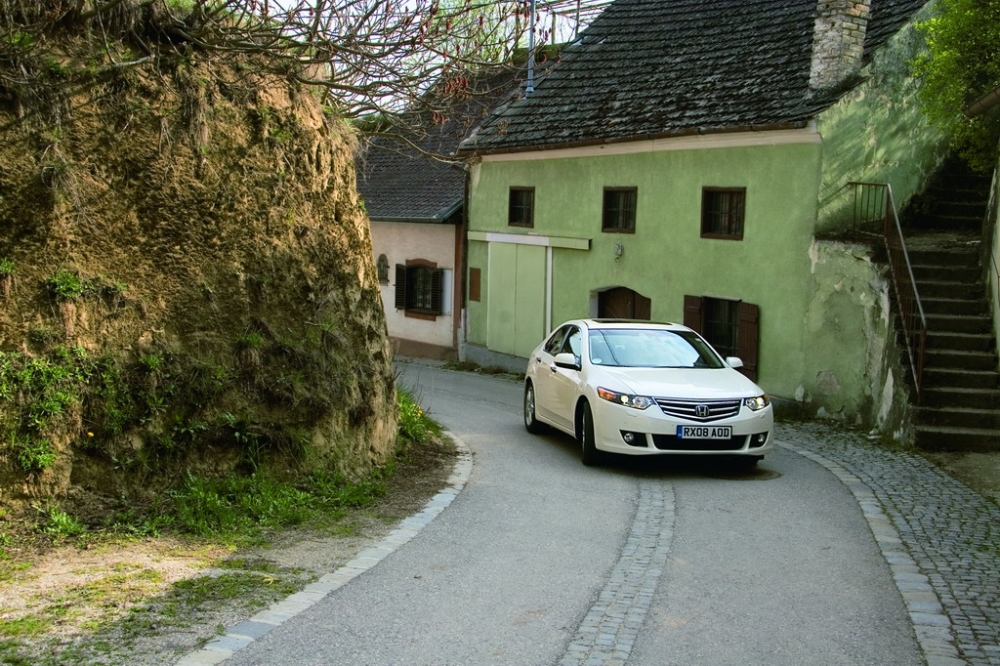
 The word "accord" in most languages goes back to the Italian "accordo" and means harmony, agreement, and proportionality of parts. In music, an accord is a consonance of three or more tones that sound simultaneously and are perceived as a single whole, not reducible to a simple sum of notes. Agree, a car with such a name simply must meet the most inflated expectations, it cannot be otherwise. The word "accord" in most languages goes back to the Italian "accordo" and means harmony, agreement, and proportionality of parts. In music, an accord is a consonance of three or more tones that sound simultaneously and are perceived as a single whole, not reducible to a simple sum of notes. Agree, a car with such a name simply must meet the most inflated expectations, it cannot be otherwise. |
 Probably, precisely because the Accord never disappointed owners and remained in demand, it has survived to the eighth generation. That is more than 30 years of history! The first Accord appeared in 1976 following the Civic — first as a hatchback, and a year later a sedan version was added. Even in its very first incarnation, with a 1.6-liter engine producing only 80 hp, it was a serious front-wheel-drive car. By 1980, the company had sold its millionth example. Since then, the model's popularity only grew, including in our country, especially in recent years. True, popularity has a downside: the Honda Accord in Russia has become one of the most stolen cars, if not the most stolen… Probably, precisely because the Accord never disappointed owners and remained in demand, it has survived to the eighth generation. That is more than 30 years of history! The first Accord appeared in 1976 following the Civic — first as a hatchback, and a year later a sedan version was added. Even in its very first incarnation, with a 1.6-liter engine producing only 80 hp, it was a serious front-wheel-drive car. By 1980, the company had sold its millionth example. Since then, the model's popularity only grew, including in our country, especially in recent years. True, popularity has a downside: the Honda Accord in Russia has become one of the most stolen cars, if not the most stolen… |
 But they say that even bad publicity is publicity. If thieves are so actively hunting for a specific model, it means it is in high demand on the market. And if so, then most likely it is really good. Although such logic does not always work, in the case of the Honda Accord it is perhaps fair. So we get agreement. A solid accord, in a word. And why it is big, major, and dominant — we will figure out now. It is no coincidence that Honda arranged the premiere test drive of the new sedan in the homeland of Mozart and Strauss. But they say that even bad publicity is publicity. If thieves are so actively hunting for a specific model, it means it is in high demand on the market. And if so, then most likely it is really good. Although such logic does not always work, in the case of the Honda Accord it is perhaps fair. So we get agreement. A solid accord, in a word. And why it is big, major, and dominant — we will figure out now. It is no coincidence that Honda arranged the premiere test drive of the new sedan in the homeland of Mozart and Strauss. |
 Let's start with "big." The car has grown noticeably: by 66 mm in length and 80 mm in width, with unchanged height and a weight gain of about one and a half hundred kilograms — mainly due to strengthened safety body structures. The Accord still has not caught up in size with the BMW "five," Audi A6, or Volvo S80, but at the same time it has significantly outpaced its classmates: the "three," A4, and S60. So the increase in dimensions is not an attempt to reach for the business class, but rather an intention to set a new bar in the premium segment of class D and further break away from budget counterparts. Let's start with "big." The car has grown noticeably: by 66 mm in length and 80 mm in width, with unchanged height and a weight gain of about one and a half hundred kilograms — mainly due to strengthened safety body structures. The Accord still has not caught up in size with the BMW "five," Audi A6, or Volvo S80, but at the same time it has significantly outpaced its classmates: the "three," A4, and S60. So the increase in dimensions is not an attempt to reach for the business class, but rather an intention to set a new bar in the premium segment of class D and further break away from budget counterparts. |
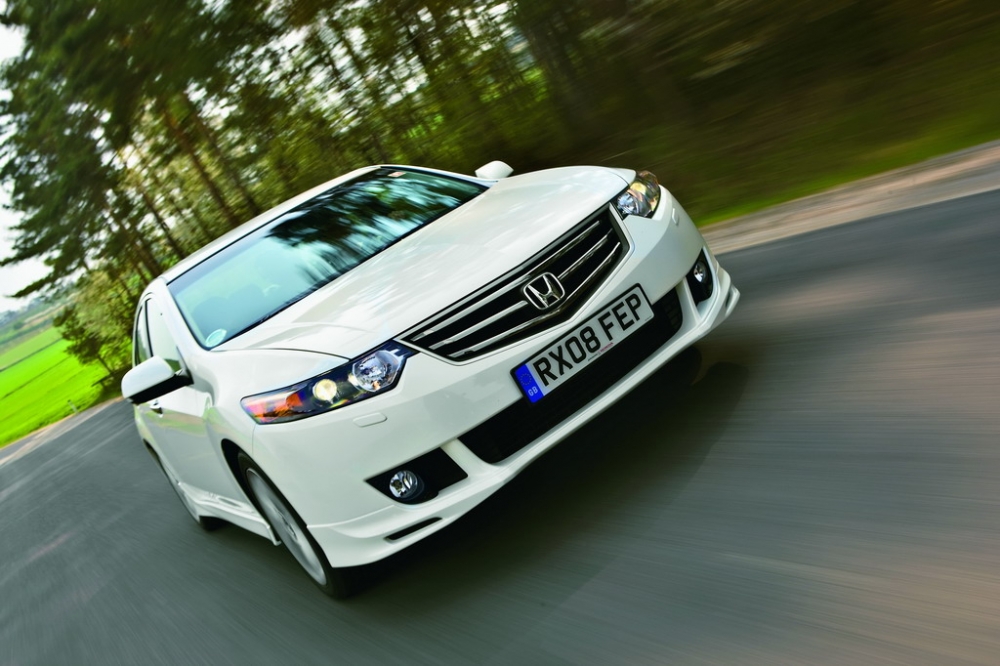
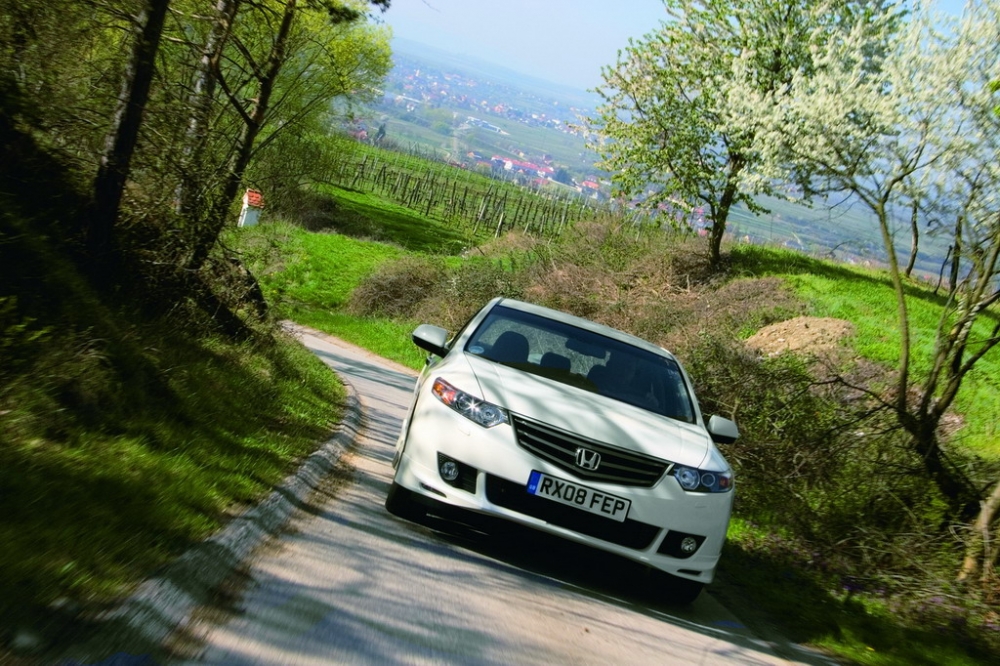
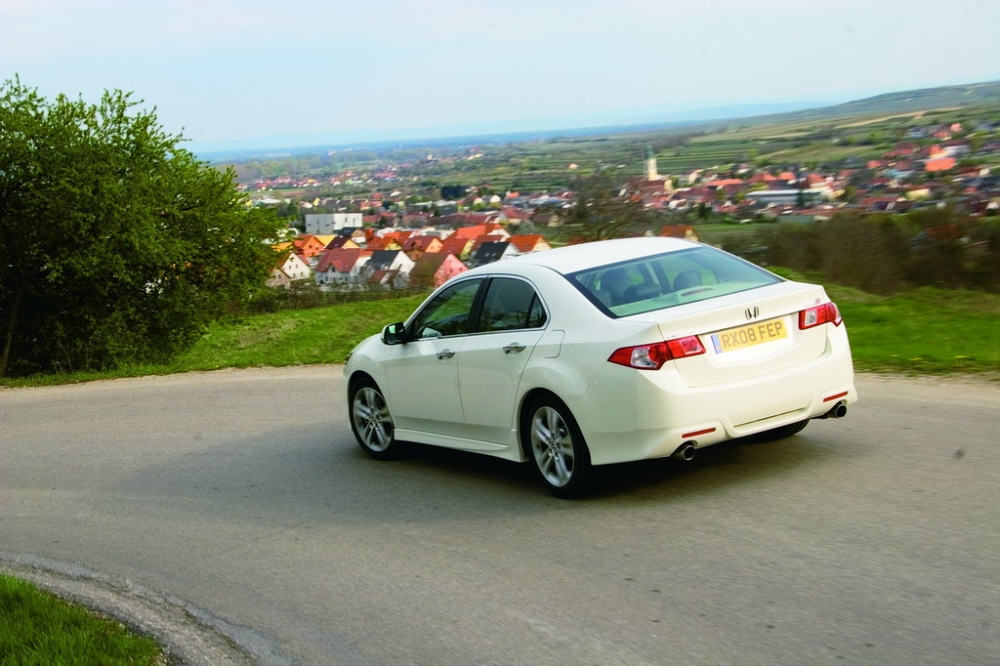
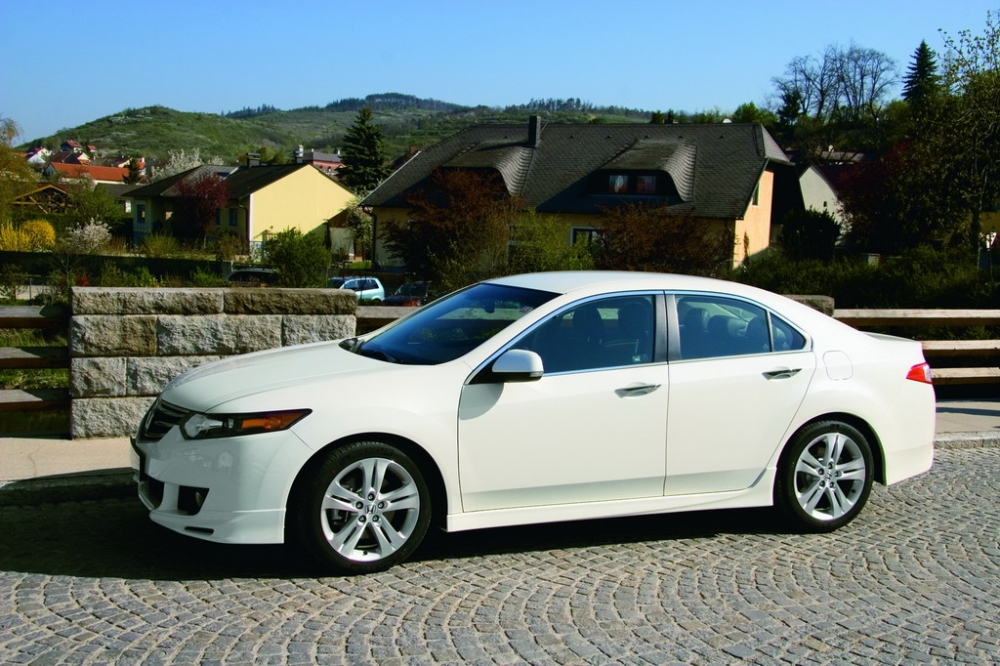
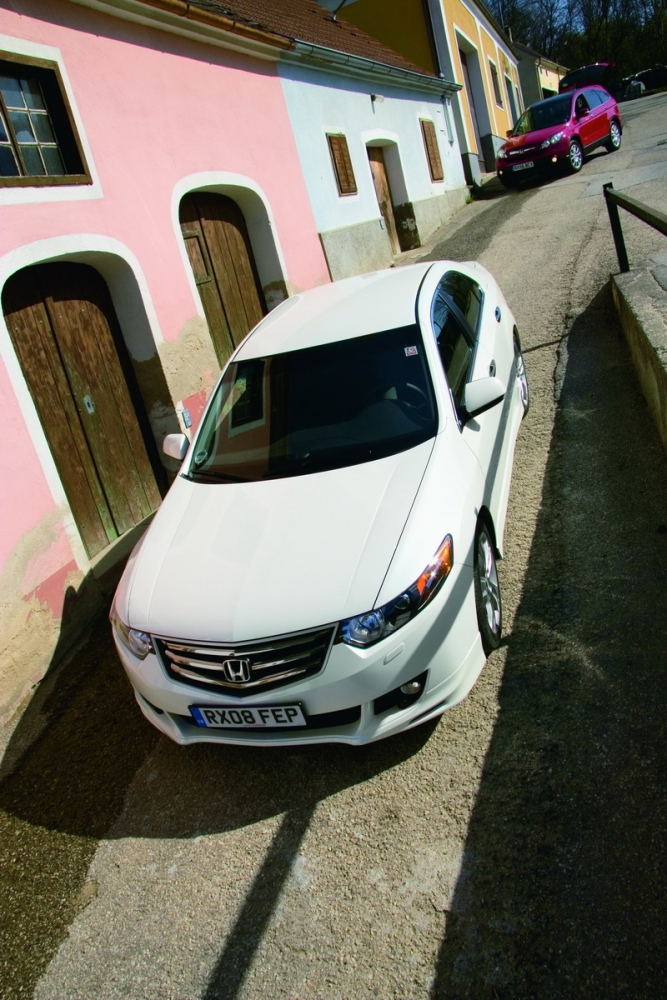 Externally, the new Accord, although it does not make passersby turn around, looks noticeably more solid, more presentable, and more "premium" than its predecessor. At the same time, it is unmistakably recognizable as an Accord — if only thanks to the signature "tooth" of the radiator grille. The new configuration of the front headlights with their narrow "squint" has made the car's "face" more expressive and, as is now fashionable, more dynamic and sporty. The same "tooth" (or, if you will, a "heraldic" contour stretched wide) is repeated at the rear — in the form of a stamping under the license plate. Overall, the "stern" stylistically continues the front part and is perhaps one of the strongest aspects of the exterior. The new sedan is also very good in profile — solid and energetic at the same time. The spectacular rear arch combined with the rear roof pillar is simply a clot of energy! Let's return to etymology. The word "major" has two main meanings: "dominant" and "cheerful, vigorous." Both definitions directly apply to our test subject. It is not even that the creators plan to move up the class ladder and demand no less than for the predecessor, but that the new Accord is capable of delivering even more pleasure than the old one. With all the external and internal changes, the main thing — the lively and interactive character of the sedan — has remained unchanged. Externally, the new Accord, although it does not make passersby turn around, looks noticeably more solid, more presentable, and more "premium" than its predecessor. At the same time, it is unmistakably recognizable as an Accord — if only thanks to the signature "tooth" of the radiator grille. The new configuration of the front headlights with their narrow "squint" has made the car's "face" more expressive and, as is now fashionable, more dynamic and sporty. The same "tooth" (or, if you will, a "heraldic" contour stretched wide) is repeated at the rear — in the form of a stamping under the license plate. Overall, the "stern" stylistically continues the front part and is perhaps one of the strongest aspects of the exterior. The new sedan is also very good in profile — solid and energetic at the same time. The spectacular rear arch combined with the rear roof pillar is simply a clot of energy! Let's return to etymology. The word "major" has two main meanings: "dominant" and "cheerful, vigorous." Both definitions directly apply to our test subject. It is not even that the creators plan to move up the class ladder and demand no less than for the predecessor, but that the new Accord is capable of delivering even more pleasure than the old one. With all the external and internal changes, the main thing — the lively and interactive character of the sedan — has remained unchanged. |
 But there is one significant "but" here: what has been said applies to a greater extent to the version with the 2.4-liter engine and to a much lesser extent to the two-liter one. The difference between them is the same as between the CR-V versions with engines of similar displacements ("MOTOR," March 2008): the "choked" by Euro 5 standards "two-liter" is clearly not capable of anything noticeably more than most sedans-competitors that do not claim sportiness. A rather boring option. And the true Accord in all its dynamic glory is, of course, the 2.4-liter. I will tell you more about it, especially since it is on it that the "Honda people" quite reasonably place their bet on the Russian market. But there is one significant "but" here: what has been said applies to a greater extent to the version with the 2.4-liter engine and to a much lesser extent to the two-liter one. The difference between them is the same as between the CR-V versions with engines of similar displacements ("MOTOR," March 2008): the "choked" by Euro 5 standards "two-liter" is clearly not capable of anything noticeably more than most sedans-competitors that do not claim sportiness. A rather boring option. And the true Accord in all its dynamic glory is, of course, the 2.4-liter. I will tell you more about it, especially since it is on it that the "Honda people" quite reasonably place their bet on the Russian market. |
 By the way, the overseas twin of the Honda Accord — the Acura TSX — is sold in the USA exclusively with the 2.4-liter engine. After all, a car with a "weak-willed" two-liter engine would simply be ridiculed by "proper" Americans. And this is, as they say, a matter of principle, because where would they race there, with their strict speed limits? But for a much less pious, but much more ecology-obsessed Europe, such an engine is just right, like incense for a priest. Although, as is known, the share of cars in the overall atmospheric pollution is negligible and pales in comparison with emissions from factories and thermal power plants. By the way, the overseas twin of the Honda Accord — the Acura TSX — is sold in the USA exclusively with the 2.4-liter engine. After all, a car with a "weak-willed" two-liter engine would simply be ridiculed by "proper" Americans. And this is, as they say, a matter of principle, because where would they race there, with their strict speed limits? But for a much less pious, but much more ecology-obsessed Europe, such an engine is just right, like incense for a priest. Although, as is known, the share of cars in the overall atmospheric pollution is negligible and pales in comparison with emissions from factories and thermal power plants. |
 The 2.4 iVTEC unit itself is not new, but due to an increased compression ratio and reduced exhaust system resistance, it has gained 10 hp and 10 Nm of torque compared to the previous incarnation. This did not affect the top speed, but improved acceleration dynamics by 0.1 seconds. As before, this inline "four" 2.4 loves high revs, and, as before, the Accord with this engine gives a feeling of "lightness on the rise." Perhaps, more is not needed for a well-balanced front-wheel-drive sedan (even with the sporty ambitions traditional for the Honda brand). Even so, few classmates with a naturally aspirated engine can boast such a character.
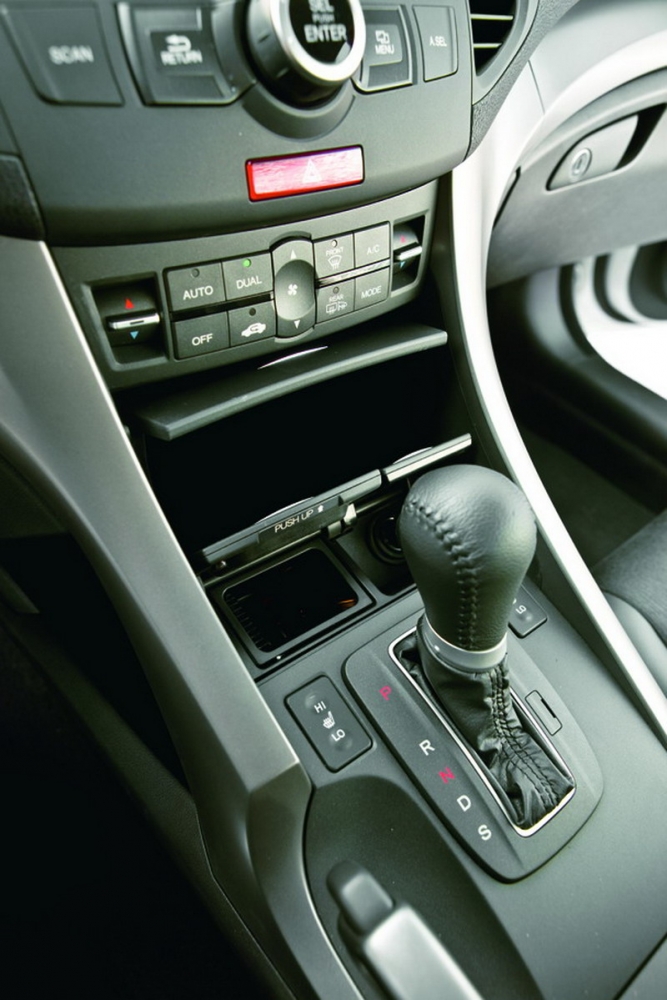
The automatic 5-speed gearbox works, I would say, "moderately thoughtful," that is, it does not irritate too much with delayed reactions, but becomes significantly more adequate in sport and manual modes. In essence, this is how the transmission should work in the standard Drive mode, but it, in accordance with the trends of the time, is tuned to ensure maximum fuel economy, and the numbers confirm this (see the table), and in the old days, "automatics" were much more wasteful than "mechanics"! The automatic of the new Accord is also "trained" to make downshifts when overtaking and in other cases when required.
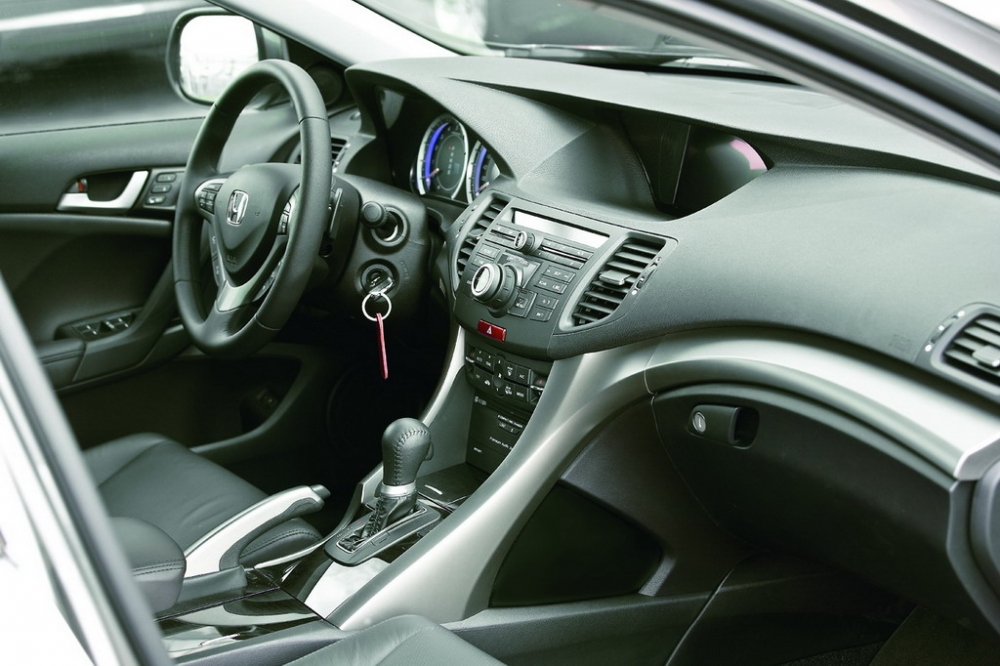
Still, the 6-speed manual gearbox provides a more direct connection of the driver both with itself and, accordingly, with the engine, and driving a car equipped with it is significantly more exciting. The shift lever is unusually short, but extremely convenient, with precision-accurate strokes. For adherents of economy and environmental cleanliness, again, in the lower part of the speedometer, as engine revs grow, hint numbers from 1 to 6 light up, urging to shift to the next gear, but if you follow these calls, you will drive long and boringly. However, in Russia, the demand for manual transmissions, especially in the case of cars of this class, is steadily falling (and later on the secondary market the price of such a car will be lower), and the main emphasis in sales will be on the 2.4 version with the automatic transmission. And, by the way, only Russia will receive the Type S version with the corresponding body kit and badges on the body. Oh, whatever the Russian "child" amuses itself with…
The steering wheel, at first impression, remained as light as in the previous generation model, while not suffering from emptiness and not being subject to the parasitic influence of torque. The car steers clearly and timely, allowing you to maintain straight-line movement without fuss and accurately navigate corners. Moreover, in addition to the usual dosing of effort on the steering wheel depending on conditions — less during parking, more when driving at speed on the highway — the automatic also takes on more complex tasks. The 2.4 iVTEC unit itself is not new, but due to an increased compression ratio and reduced exhaust system resistance, it has gained 10 hp and 10 Nm of torque compared to the previous incarnation. This did not affect the top speed, but improved acceleration dynamics by 0.1 seconds. As before, this inline "four" 2.4 loves high revs, and, as before, the Accord with this engine gives a feeling of "lightness on the rise." Perhaps, more is not needed for a well-balanced front-wheel-drive sedan (even with the sporty ambitions traditional for the Honda brand). Even so, few classmates with a naturally aspirated engine can boast such a character.
The automatic 5-speed gearbox works, I would say, "moderately thoughtful," that is, it does not irritate too much with delayed reactions, but becomes significantly more adequate in sport and manual modes. In essence, this is how the transmission should work in the standard Drive mode, but it, in accordance with the trends of the time, is tuned to ensure maximum fuel economy, and the numbers confirm this (see the table), and in the old days, "automatics" were much more wasteful than "mechanics"! The automatic of the new Accord is also "trained" to make downshifts when overtaking and in other cases when required.
Still, the 6-speed manual gearbox provides a more direct connection of the driver both with itself and, accordingly, with the engine, and driving a car equipped with it is significantly more exciting. The shift lever is unusually short, but extremely convenient, with precision-accurate strokes. For adherents of economy and environmental cleanliness, again, in the lower part of the speedometer, as engine revs grow, hint numbers from 1 to 6 light up, urging to shift to the next gear, but if you follow these calls, you will drive long and boringly. However, in Russia, the demand for manual transmissions, especially in the case of cars of this class, is steadily falling (and later on the secondary market the price of such a car will be lower), and the main emphasis in sales will be on the 2.4 version with the automatic transmission. And, by the way, only Russia will receive the Type S version with the corresponding body kit and badges on the body. Oh, whatever the Russian "child" amuses itself with…
The steering wheel, at first impression, remained as light as in the previous generation model, while not suffering from emptiness and not being subject to the parasitic influence of torque. The car steers clearly and timely, allowing you to maintain straight-line movement without fuss and accurately navigate corners. Moreover, in addition to the usual dosing of effort on the steering wheel depending on conditions — less during parking, more when driving at speed on the highway — the automatic also takes on more complex tasks. |
Large major dominant ACCORD
In fact, in music theory and practice, a major dominant seventh chord does not exist. You can take either a major chord or a dominant seventh chord. But in the practice of global automotive manufacturing, such a thing has appeared. This is the Accord. The new Honda Accord.

Test drive photos
Comments
No comments yet. Say the first word.