

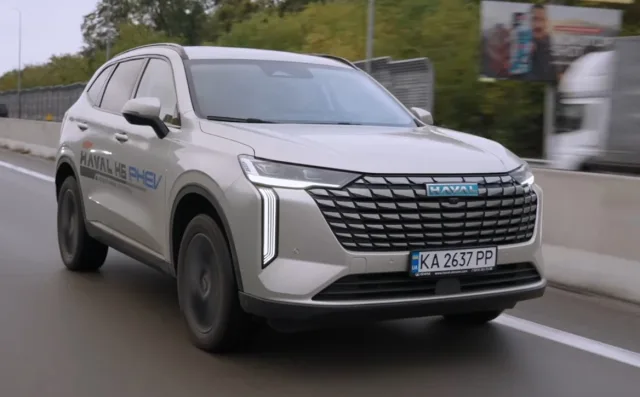
During the test, the Haval H6 PHEV covered about 1600-1700 km on highways, mountain serpentines and off-road in the Carpathians. The car covered a significant part of the route with an almost discharged battery, which made it possible to test it as an ordinary hybrid as well.
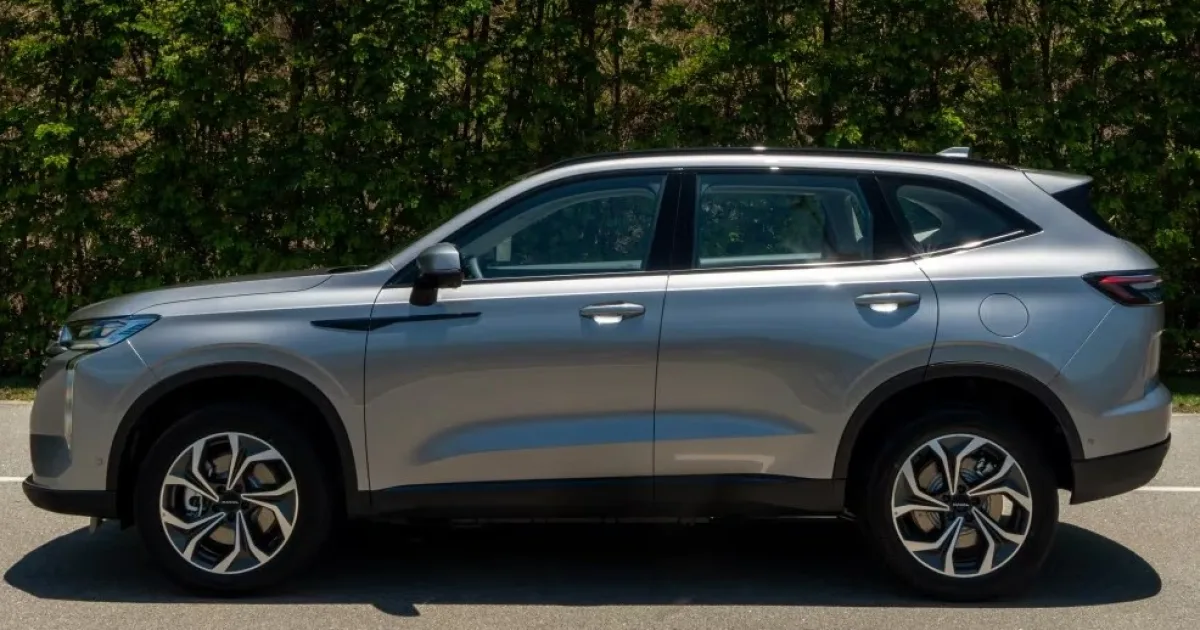
Haval H6 PHEV got 364 hp and three engines
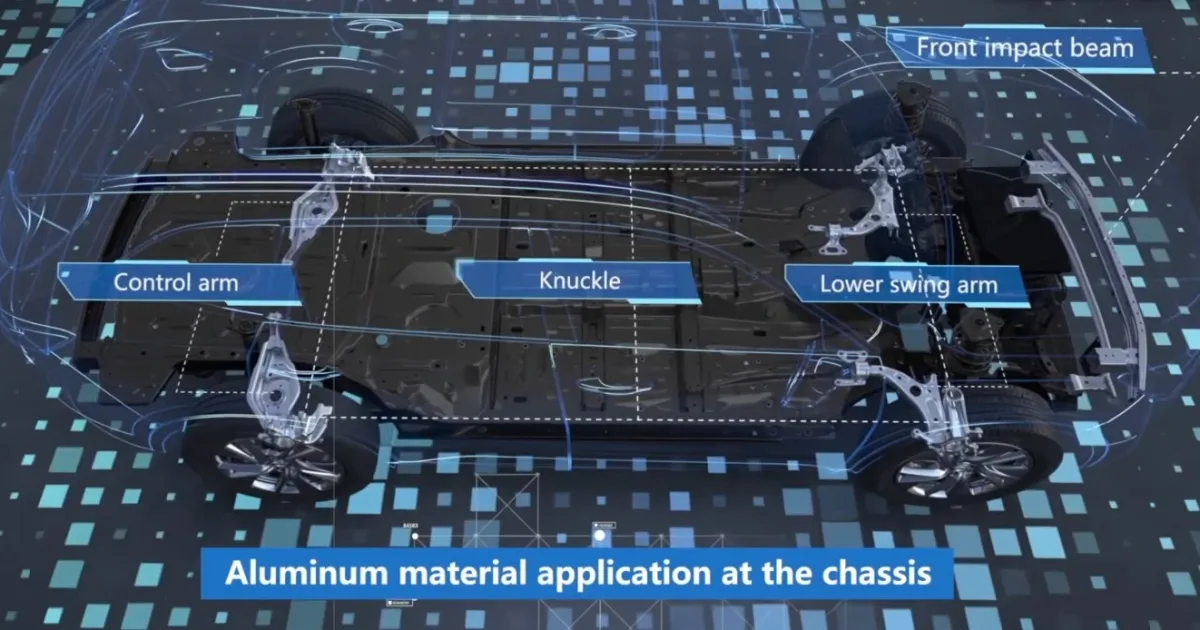
The Haval H6 is built on the modular Lemon platform, designed for conventional and hybrid powertrains. The traction battery is integrated into the floor, so it practically does not interfere with using the trunk.
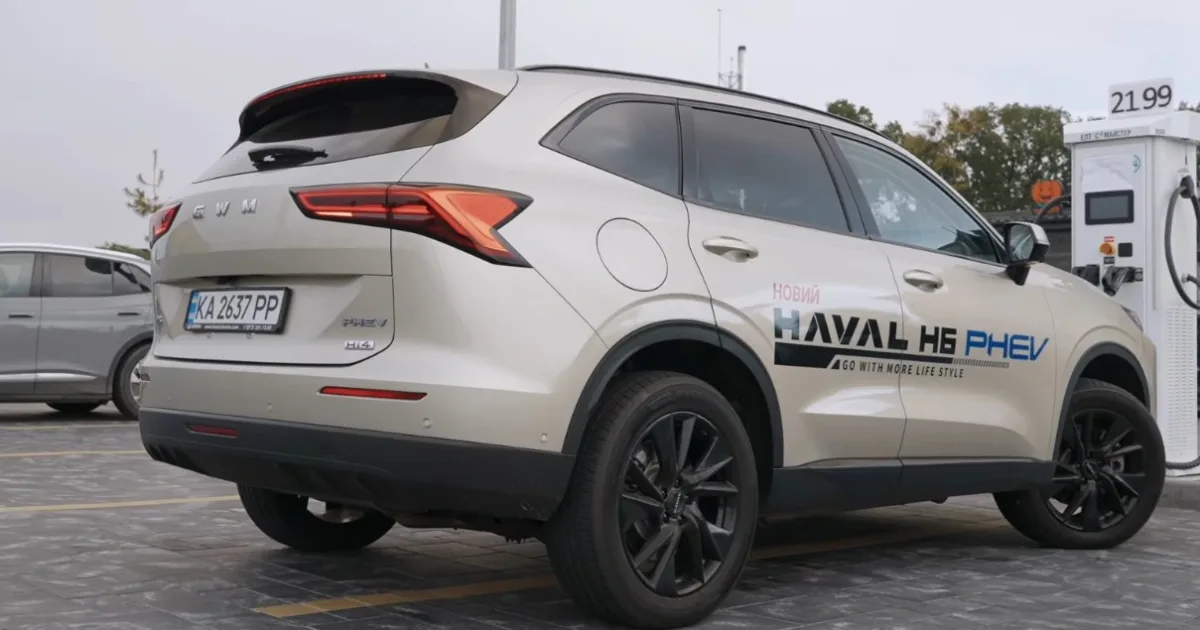
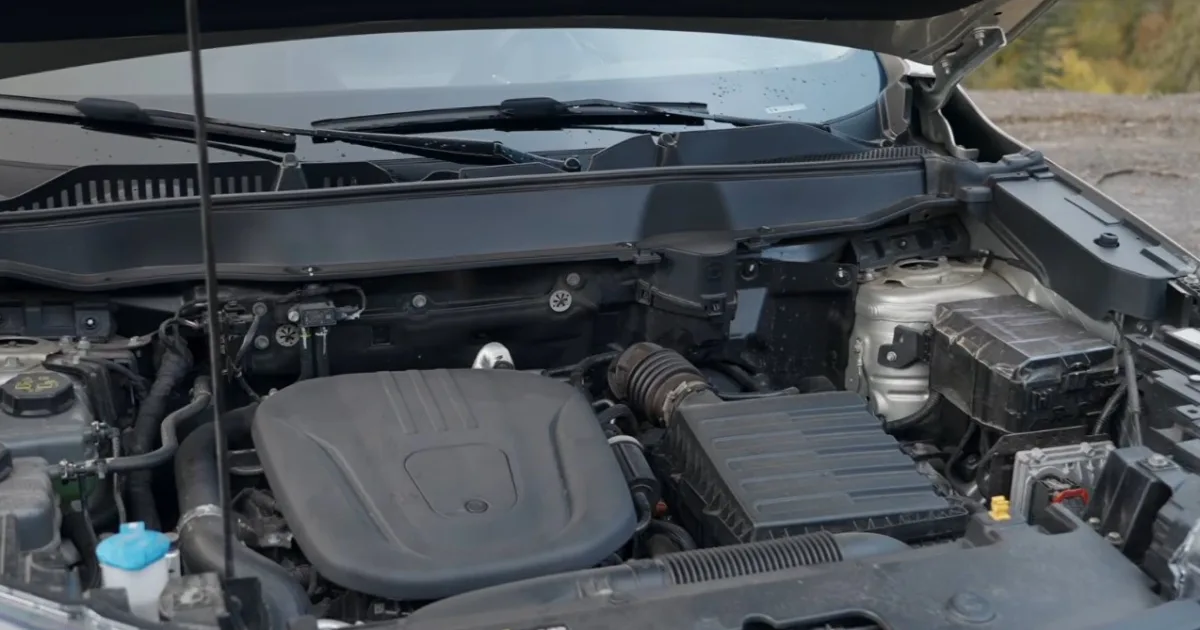
The plug-in hybrid combines a 1.5-liter turbo engine with 150 hp with two electric motors. The front one produces 109 hp, the rear one - 204 hp. The total system output is 364 hp and 760 Nm.
Main specifications of the Haval H6 PHEV:
1.5-liter gasoline turbo engine - 150 hp;
two electric motors and all-wheel drive;
total power - 364 hp and 760 Nm;
4-speed hybrid transmission.
The gasoline engine has an aluminum block and head, a chain-driven timing system and direct injection. It operates on the economical Miller-Atkinson cycle.
How the Haval H6 PHEV hybrid works
The driver can select a fully electric EV mode, electric traction priority or the regular hybrid algorithm. Depending on conditions, the internal combustion engine charges the battery or participates in driving the wheels.
The intensity of regenerative braking is adjusted in three levels. Eco, Normal, Sport, AWD and Snow modes are also available.
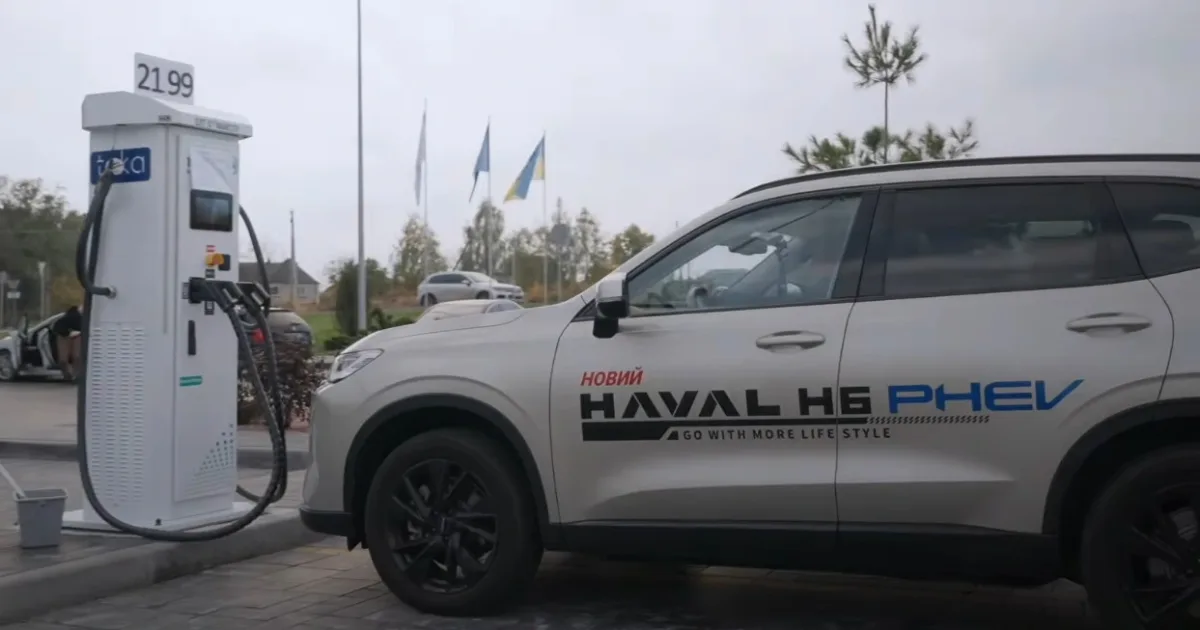
One of the advantages of a PHEV manifested itself during the trip. Due to power outages and the lack of available chargers, for most of the route the Haval H6 effectively operated as an ordinary hybrid and did not depend on charging infrastructure.
Dynamics depend on battery charge
With sufficient charge, 364 hp and 760 Nm provide the Haval H6 PHEV with a serious reserve of traction. For maximum dynamics during the test, AWD mode was used.
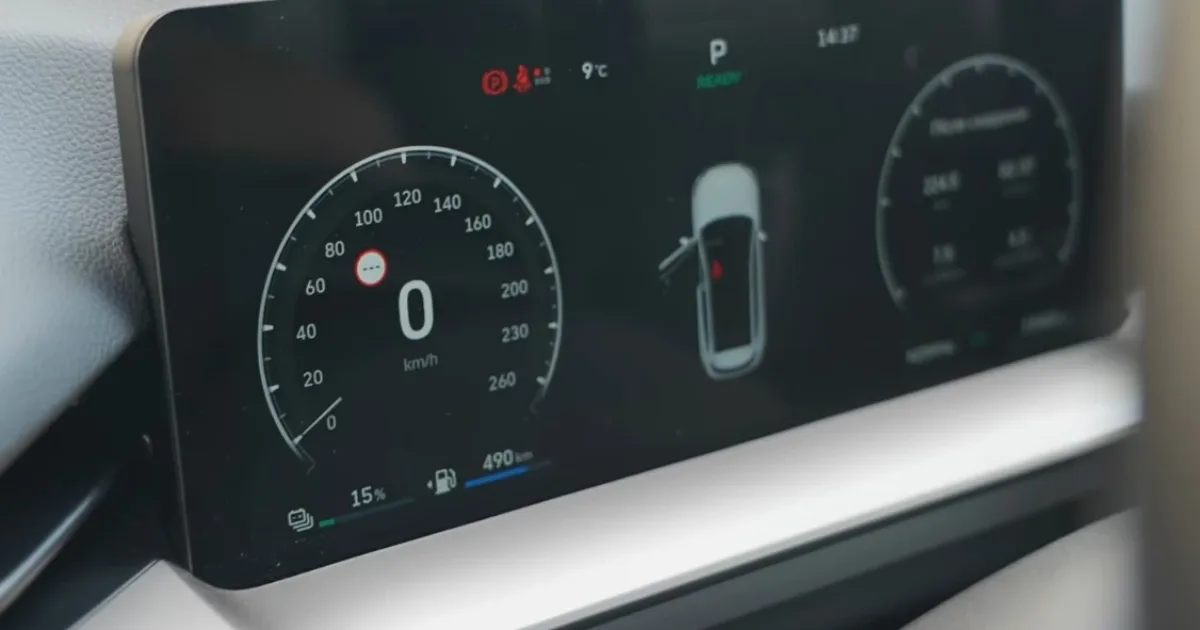
However, after the battery discharges, the behavior changes. Its charge was mostly maintained at the level of 10-20%, so during overtaking the electric motors did not always provide the expected assistance.
As a result, acceleration became uneven. In one case the Haval H6 responded quickly to the accelerator, in another one had to wait for speed to build up.
Haval H6 surprised with its handling
One of the strongest sides of the crossover turned out to be its behavior on winding roads. The Haval H6 PHEV confidently holds its trajectory and allows fast cornering.
McPherson suspension is installed at the front, an independent double-wishbone at the rear. There are no adaptive shock absorbers, so on uneven surfaces the operation of the suspension can be heard, but on mountain serpentines the chassis performed well.
The driver's seat is not ideal. During a long trip, there was not enough steering wheel reach adjustment range and the ability to change the angle of the seat cushion.
All-wheel drive helped in the Carpathians
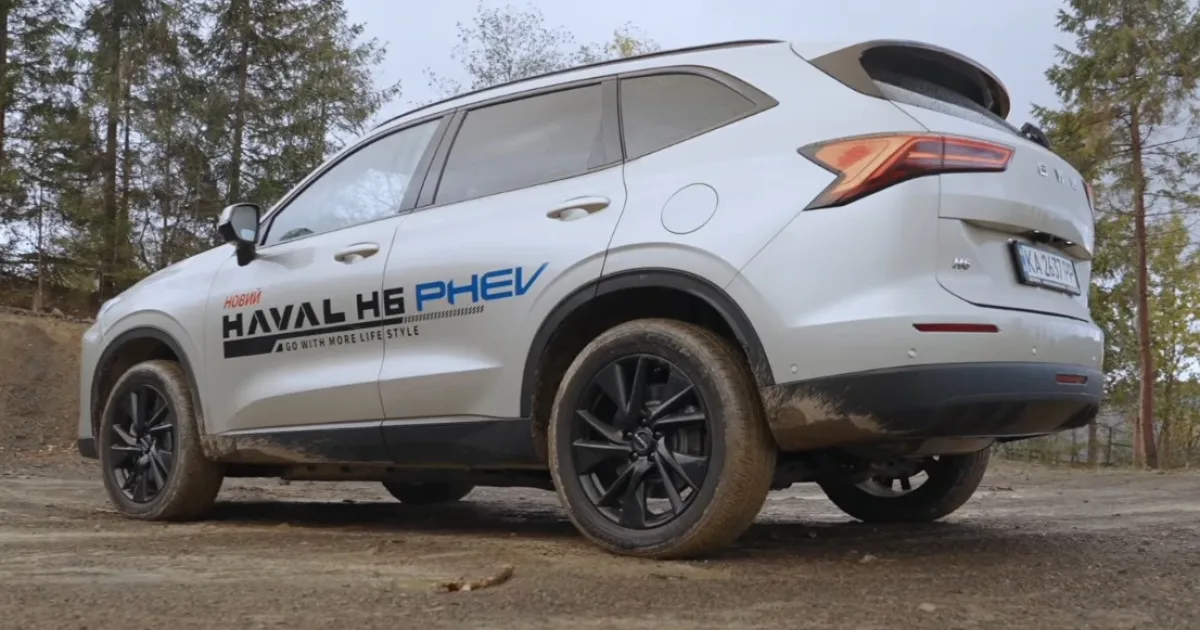
During the test, the Haval H6 PHEV had to climb wet clay on ordinary highway tires. Despite the absence of a low-range gear, the car handled the route.
For light off-road driving it has:
all-wheel drive with a rear electric motor;
AWD and Snow modes;
adjustable regenerative braking;
electronic traction control systems.
This is not a classic off-roader, but for dirt roads, wet climbs and trips to the mountains the capabilities of the Haval H6 PHEV turned out to be sufficient.
Haval H6 interior has almost gotten rid of buttons
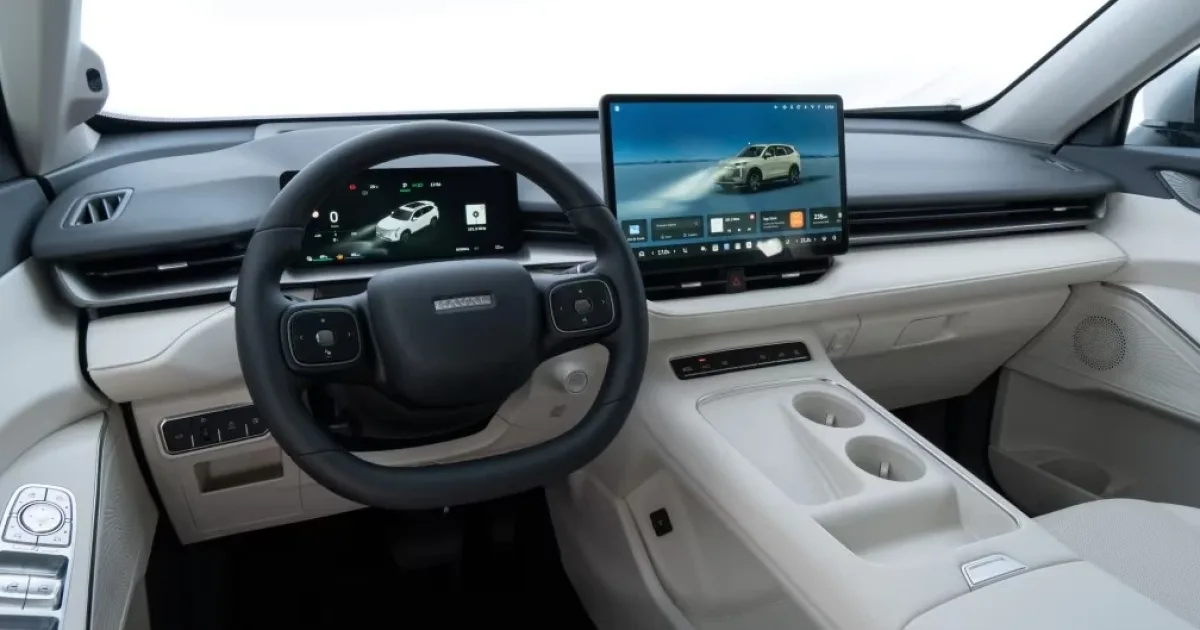
The interior is made of soft materials and eco-leather. In front of the driver is a compact digital panel, and most functions have been moved to the large central display.
The multimedia system works quickly and supports wireless Apple CarPlay and Android Auto. There is wireless charging, a head-up display, surround-view cameras, a panoramic roof, ventilation and heating of the front seats.
The main complaint is excessive dependence on the screen. Even the control of lighting and part of the climate functions is hidden in the menu. The climate control itself during the test also required constant temperature adjustment.
The equipment of the Haval H6 PHEV includes:
adaptive cruise control;
blind spot monitoring and lane keeping;
360-degree cameras and a head-up display;
seat heating and ventilation.
The adaptive cruise control did not always work predictably. On curves, the system sometimes reacted to cars in the neighboring lane and slowed down without obvious necessity.
There is a lot of space in the second row

Behind a 192 cm tall driver, there remains a good reserve of knee room. The rear bench is soft, there is a central armrest, two USB ports and three-level heating of the outer seats.
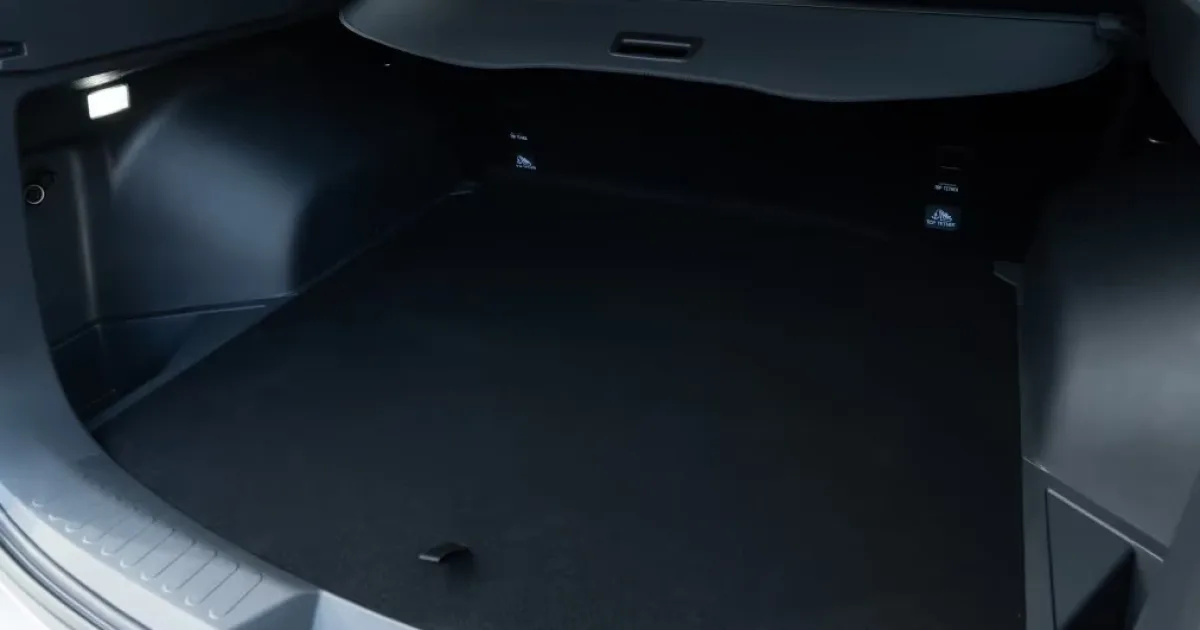
The trunk has retained its normal shape thanks to the battery's location in the floor. Under the false floor are a subwoofer, electronics and a repair kit. There is no spare wheel or space-saver.
Another interesting feature is the ability to use the Haval H6 PHEV as a source of electricity for external devices. The car can even start the gasoline engine to maintain power supply.
How much the Haval H6 PHEV consumes on the highway
It was not possible to fully assess the efficiency of a charged PHEV during the test. After the first battery discharge, it was not possible to regularly charge the car.
At a speed of about 128 km/h with an almost discharged battery, consumption was approximately 8-8.5 l/100 km. After an active drive to the Carpathians, the onboard computer showed about 9.5 l/100 km.
With very fast driving at a speed of about 150 km/h and accelerations up to 183-185 km/h, the figure rose to 12.5 l/100 km.
By contrast, an economical run at a speed of 76 km/h showed 2.6 l/100 km of gasoline and 8.5 kWh/100 km of electricity. That is, the result depends greatly on the battery charge and driving mode.
What was revealed after 20,000 km
The test Haval H6 had a mileage of a little more than 20 thousand km. The most noticeable drawback was vibrations during intensive braking, which the author of the test linked to overheated and deformed brake discs.
During light deceleration, the problem is masked by regenerative braking. The panoramic roof also made extraneous sounds, and a knocking appeared at the front left on a bad road. The author suggested a problem with the stabilizer link, but no diagnostics were carried out.
At the same time, it is worth considering that this is a test car that was operated much more harshly than an ordinary private vehicle.
How much the Haval H6 PHEV costs in Ukraine
The Haval H6 PHEV with a 1.5-liter engine, all-wheel drive, 364 hp and 760 Nm is offered in the Deluxe trim. At the time of the test, its price was UAH 1,747,100.
Hybrid versions come with an 8-year or 160 thousand km warranty. For regular gasoline Haval H6 models it is 7 years or 150 thousand km.
Autoportal conclusion
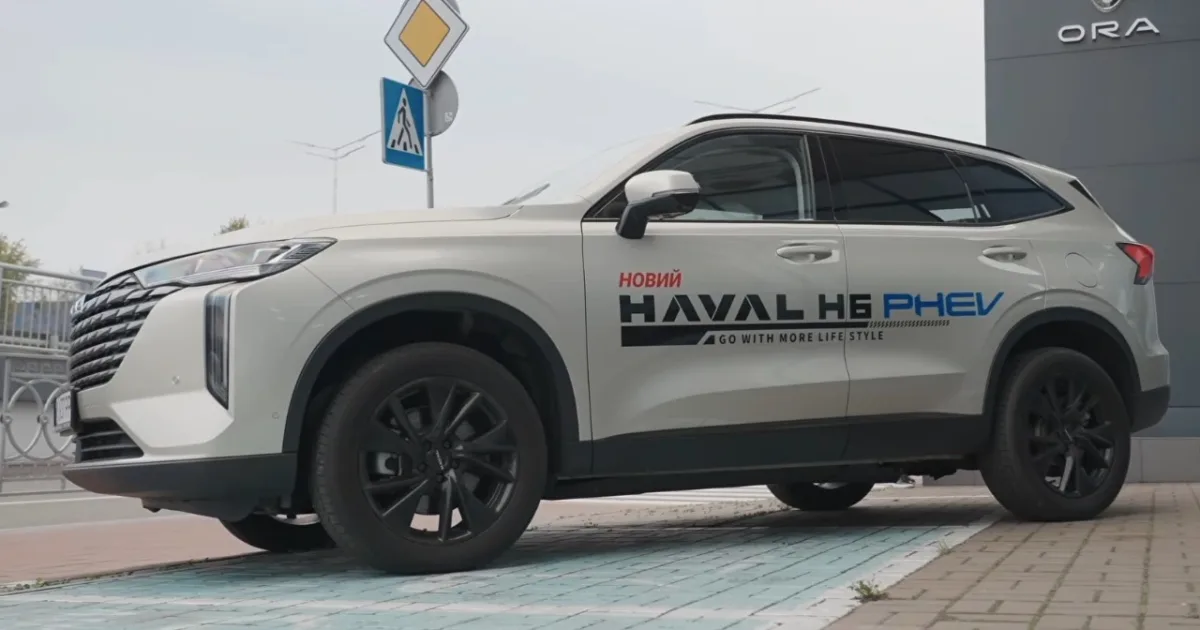
The Haval H6 PHEV combines 364 hp, all-wheel drive, a spacious interior and rich equipment. While the battery is charged, the owner gets a powerful electrified crossover with the ability to drive on electric traction. When there is no charging, the car continues to move as an ordinary hybrid.
Its strengths include handling, equipment and interior space. After 1600-1700 km, questions were left by the brakes, extraneous sounds, the operation of certain electronic assistants and the excessive transfer of functions to the multimedia system.
The main nuance concerns the very concept of a PHEV. Without regular charging, its advantages noticeably diminish: on a fast highway, the Haval H6 turns into a heavy hybrid with consumption of about 8-9.5 l/100 km.