
About the Ford brand
United States founded in 1903 Model range
General Information
Ford Motor Company, an American automotive company, specializes in the production of passenger cars under the brands Ford, Mercury, Lincoln, trucks, and various agricultural machinery. Ford owns the company Jaguar.
The headquarters is located in Dearborn (Michigan), not far from where Henry Ford's parents once had a farm.
Corporate History
The company was founded by Henry Ford in 1903 and, according to its creator's idea, was immediately intended for the mass production of cheap cars. Initially, this was the Model "A", in 1908 - the Model "T", nicknamed "Tin Lizzie" by cartoonists. The success of the new model was so great that Ford's constantly expanding plants could not cope with orders. In the first year of production of this model, 10,660 cars were sold, breaking all records in the automotive industry at that time.
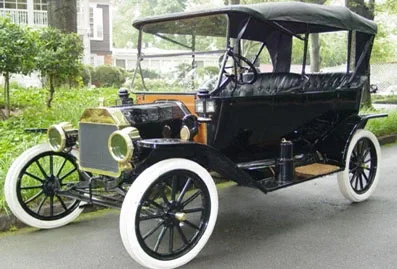
In 1913, Ford Motor introduced for the first time in the world the method of standardization of interchangeable parts and the assembly line technology for car production, which allowed increasing labor productivity by 40-60% in just one year.
By mid-1914, 500 thousand Model "T" cars had been produced; by 1923, every second car in America was made at Ford Motor plants.
In 1922, Ford Motor acquired the Lincoln company, the management of which was entrusted to Edsel Ford. The authoritarian management style of the elder Ford became a favorite target of the leftist press; Ford's refusal to tolerate unions at his enterprises sparked a campaign of outright persecution. At the same time, by the end of the 1920s, Americans had grown tired of the monotonous Model "T". Competitors from General Motors surged ahead; Ford Motor responded with the Model "Ford A", whose popularity still lagged behind Chevrolet and Buick.
The Great Depression of 1929 sharply reduced car sales. Wages fell by half.
In 1932, mass production of V-shaped 8-cylinder engines began. Ford Motor Company became the first company to produce a monolithic 8-cylinder block. The Ford car and its reliable engine became favorites of practical Americans.
The Mercury line of cars, launched in 1938, was successful. The company was nominally managed by Edsel Ford, but his authority was not comparable to that of his father. A period of stagnation began in business, lasting until the start of World War II, when military orders improved matters.
From 1942 to 1947, the production of civilian cars sharply stopped, as the company directed all its efforts to military needs.
After a brief rule by old man Ford (Edsel died in 1943), in 1945 power passed to Henry Ford II, who breathed new life into the company.
Ford Jr. reorganizes the personnel recruitment system, applies the "brainstorming" methods known to him from the war to develop the company's strategy, inviting a group of systems analysts.
In 1949, Ford Motor Company sold approximately 807,000 cars, almost doubling its sales. Henry Ford II's reorganization program quickly restored the company's health. The result was the construction of 44 manufacturing plants, 18 assembly plants, 32 parts warehouses, two huge test tracks, and 13 engineering research laboratories in the United States.
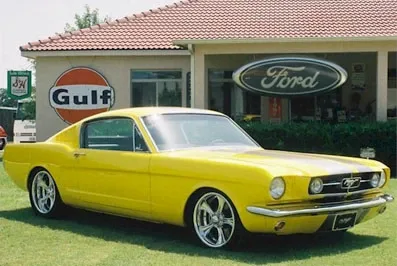
The launch of the Thunderbird series in 1955 and the Mustang, which have now become classics, strengthened Ford Motor's financial position. The attractive 4-seat 1965 Mustang became America's favorite. In the first 100 days, 100,000 of these cars were sold.
In 1968, the first 1.6-liter Escort Twin Cam model began its sports career, successfully opening the season and winning the circuit race in Ireland, the Dutch Tulip, the Austrian Alps, the Acropolis, and the Rally of Scotland within eight weeks. By the end of its first season, the Escort won the famous Rally of the 1000 Lakes in Finland, which helped Ford secure a strong position in the World Rally Championship for new cars.
The Western European model Ford Taunus/Cortina was very common in the 1970s-1980s. Production of the Ford Taunus/Cortina station wagon family (Kombi) began back in 1970.
Since 1976, with the start of production of the new generation of hooded passenger-cargo models Ford Econoline E-series, elements of the chassis, engines, and transmission similar to those of SUVs and F-series pickups began to be used. In 1992, a new range of comfortable 7-, 8-, 12-, and 15-seat all-metal minibuses and four-door vans with a body were introduced to the market.
The Fiesta family has existed for over 20 years - the first generation appeared back in 1976. The life path of the current generation models, which began at the Geneva Motor Show in 1989, is nearing its end. Over 11 years, the Fiesta family underwent two major restylings (in 1995 and 1999), thanks to which it remains quite modern to this day.
Crown Victoria is one of the popular models in the USA (in police, taxi, rental, and secondary markets).
The full-size station wagon Bronco of 1980 was a four-wheel drive pickup with a shortened wheelbase. Its off-road capability was quite high, so the model remained popular for a long time (particularly in Alaska), even after the appearance of more modern models.
Ford Escort is produced in the USA and Europe, as well as in Argentina, in three body styles. Production of the American Ford Escort and Mercury Lynx continued until the summer of 1990. They were replaced by models developed on the platform of the Japanese Mazda 323.
In September 1982, models of the rear-wheel drive Sierra family with five-door hatchback and station wagon (Kombi) bodies appeared on sale, and production of the three-door all-wheel drive model (XR4x4) began.
In November 1986, the launch of the 4x4 version of the Ford Scorpio. At the very end of 1991, the presentation of the spacious Scorpio Turnir station wagon took place. In the summer of 1998, production of the Scorpio was discontinued, and the European division of Ford decided to make the Mondeo model the flagship of the company.
Since the mid-1980s, the Taurus has been produced. This model was named Car of the Year in 1986, and in 1987 it became a bestseller in America. The sleek, futuristic-design cars with beautiful names Taurus and Sable became a major milestone in Ford's transition to producing a new generation of cars in the 1980s - economical, high-tech, and aesthetically perfect.
In the same year, the purchase of 75% of the shares of Aston Martin-Lagonda took place.
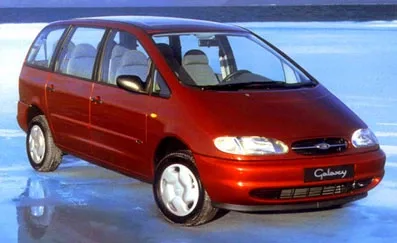
The purchase of Jaguar in 1990 further increased the range of Ford models, which in terms of comfort bear no resemblance to the "Tin Lizzie", and a year later, a joint venture with the German corporation Volkswagen was created to produce the multi-purpose vehicle Ford Galaxy.
The company is open to innovation and change; interestingly, Ford Motor, a pioneer in introducing the assembly line, was also the first among large corporations to abandon it, as modern workers perform work with greater efficiency when there is an element of independent creativity.
In 1993, the Ford Mondeo model was released, which immediately set new safety standards in its class. The following year, this car was named Car of the Year in Europe and became a favorite among buyers.
In the same year, the purchase of the remaining shares of Aston Martin-Lagonda took place.
Ford Windstar was first shown in January 1994. In 1998, the model underwent a restyling. It is produced in Canada.
The first showing of the Ford EUROPE Galaxy model took place in February 1995 in Geneva. At the Geneva Motor Show 2000, a modernized model with an updated design was presented.
In 1996, the 250-millionth car rolled off the company's assembly line. Sales of the Ka model began.
Ford EUROPE Puma, a small-class sports coupe based on the Ford Fiesta, was first presented at the Geneva Motor Show in March 1997.
Ford Focus, which by long tradition bears the name Turnier. The European premiere of the car with a hatchback body took place in early 1998 in Geneva.
In 1998, Ford Motor Company became the 2nd largest manufacturer of passenger cars and trucks in the world in terms of total output.
In 2000, an international jury of 126 automotive journalists, summing up the results of the unprecedented Car of the Century competition, chose the legendary Ford T as the "Car of All Times and Peoples". Tin Lizzie became the first car whose assembly was established on a conveyor belt on a mass scale. It was the assembly line that made the car a means of transportation accessible to everyone. And the first in the series of truly mass-produced cars was the Ford model.
The compact SUV Ford Escape was first presented as a prototype in January 2000 in Detroit. Development was carried out jointly with Mazda. Production of the cars is carried out at a plant in Kansas City.
Ford EUROPE Maverick, a compact all-wheel drive SUV, the European analogue of the Ford Escape. Since 2000, it has been produced jointly with Mazda based on the Mazda Tribute. The new Ford Maverick combines the features of an SUV and a highway car.
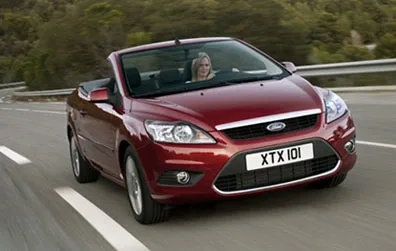
In 2001, the company introduced a fundamentally new Ford Mondeo model. Its appearance can be considered a revolutionary event. This car, developed by the European division of Ford Motor Company, was created on the basis of fundamentally new design technologies. The essence of this technical revolution is a powerful software product called C3P, which is a complex of computer design systems, automated design, and an extensive information database. One of the latest models presented by the company is the Ford Focus Coupe-Cabriolet.
Today, Ford Motor Company has its own production, assembly, and sales centers in 30 countries around the world. The company annually produces millions of passenger cars, trucks, and tractors and is a leader in car sales outside North America. Ford Motor Company sells more than 70 different car models worldwide, produced under the brands Ford, Lincoln, Mercury, Jaguar, and Aston Martin. The company also has a stake in Mazda Motor Corporation and Kia Motors Corporation.
In the "Big Three" of the American automotive business, Ford Motor holds an honorable second place in terms of sales volume.
Ford in Ukraine
The official distributor of Ford cars in Ukraine is Winner Imports Ukraine, which was one of the first to start working on the Ukrainian car market as an official distributor.
In 1991, one of Ford's executives suggested to Ivan Ginyansky, the owner of Winner dealerships in Delaware and Pennsylvania (USA), to open another one in Ukraine. The prospect of helping Ford create a dealer network in Ukraine interested Ginyansky.
At the end of 1992, Winner was appointed the official distributor of Ford Motor Co. in Ukraine. Dealer points and service centers were opened throughout Ukraine.