
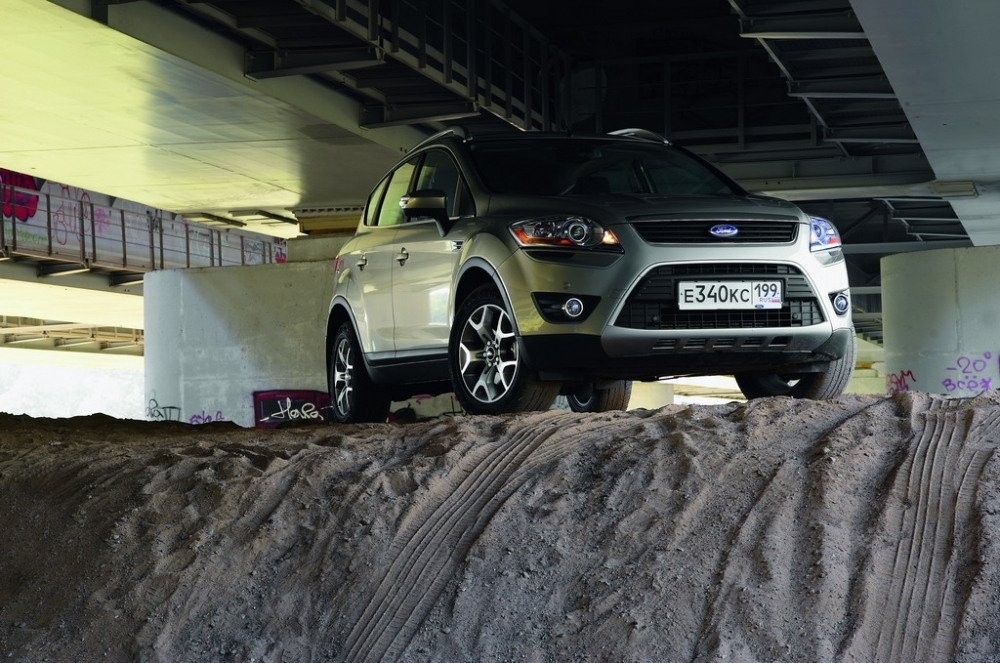
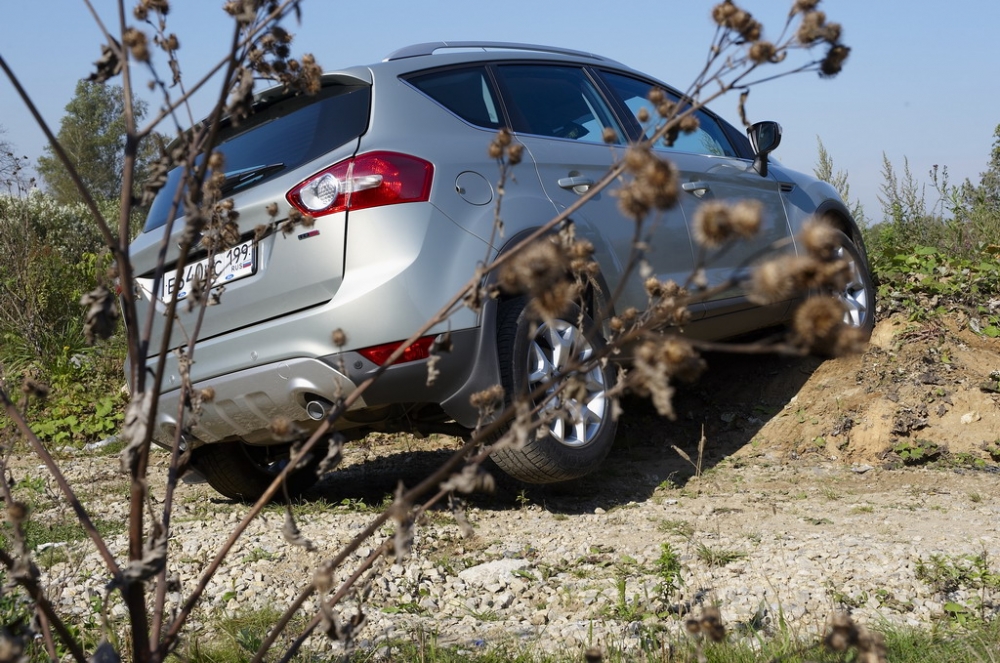
 I found this "Kuga" without any problems – I checked the numbers against the documents. The car's paint, frankly, is unusual. I would describe it as reed-colored or even marsh-colored, because in Dahl's dictionary, "kuga" is a marsh plant with a round stem, without leaves, used for weaving baskets and wrapping chairs, a kind of spongy reed or bulrush. I doubt the creators of the name consulted a dictionary, but, one way or another, the Kuga turned out to be the color of its name. I found this "Kuga" without any problems – I checked the numbers against the documents. The car's paint, frankly, is unusual. I would describe it as reed-colored or even marsh-colored, because in Dahl's dictionary, "kuga" is a marsh plant with a round stem, without leaves, used for weaving baskets and wrapping chairs, a kind of spongy reed or bulrush. I doubt the creators of the name consulted a dictionary, but, one way or another, the Kuga turned out to be the color of its name. |
 It's interesting what kind of "basket" the masters at Ford came up with. The seeds of this "reed" were sown by marketers, grown by technologists and engineers who prepared an extended and refined platform from the C-Max and all-wheel drive with a Haldex coupling, fertilized by designers, and then sales departments began to weave their nets from it. The car's exterior is so distinctive that it attracts glances, but at the same time does not make you scrutinize individual elements. It's interesting what kind of "basket" the masters at Ford came up with. The seeds of this "reed" were sown by marketers, grown by technologists and engineers who prepared an extended and refined platform from the C-Max and all-wheel drive with a Haldex coupling, fertilized by designers, and then sales departments began to weave their nets from it. The car's exterior is so distinctive that it attracts glances, but at the same time does not make you scrutinize individual elements. |
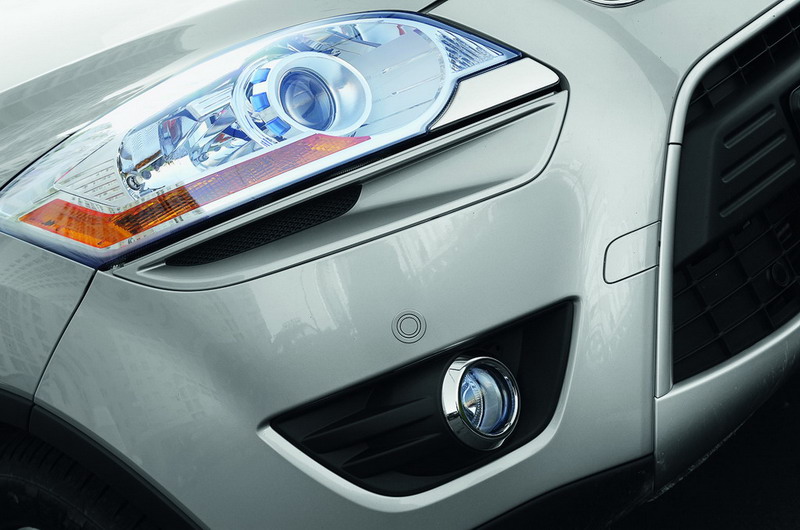
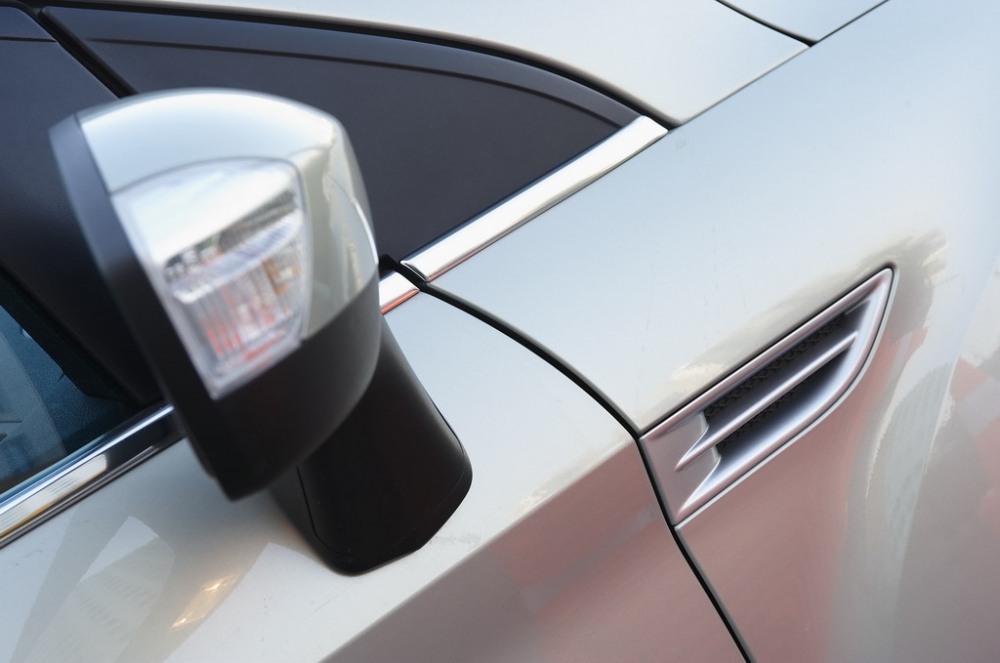
 Everything is done in a single style, cohesive and clear – both the signature headlights, and two parallel ribs on the hood, and excellent stampings on the sides, and a large trapezoid of the radiator grille, and a moderate amount of "aluminum-look" plastic, and a pair of exhaust pipes. Not an aggressor, but not an inconspicuous gray mouse either. As Lermontov wrote: "He does not heed and does not want to push away..." Inside, the dashboard and steering wheel are from the Mondeo, a familiar Sony audio system, and a handbrake from the C-Max. And the seating position is exactly like in that minivan – high but comfortable, just right for a crossover. The seats were clearly not woven from kuga – they hold the body perfectly, lateral support is good but not intrusive. There are no complaints about build quality or materials. I even liked the interior more than the Mondeo's at a comparable price. Everything is done in a single style, cohesive and clear – both the signature headlights, and two parallel ribs on the hood, and excellent stampings on the sides, and a large trapezoid of the radiator grille, and a moderate amount of "aluminum-look" plastic, and a pair of exhaust pipes. Not an aggressor, but not an inconspicuous gray mouse either. As Lermontov wrote: "He does not heed and does not want to push away..." Inside, the dashboard and steering wheel are from the Mondeo, a familiar Sony audio system, and a handbrake from the C-Max. And the seating position is exactly like in that minivan – high but comfortable, just right for a crossover. The seats were clearly not woven from kuga – they hold the body perfectly, lateral support is good but not intrusive. There are no complaints about build quality or materials. I even liked the interior more than the Mondeo's at a comparable price. |
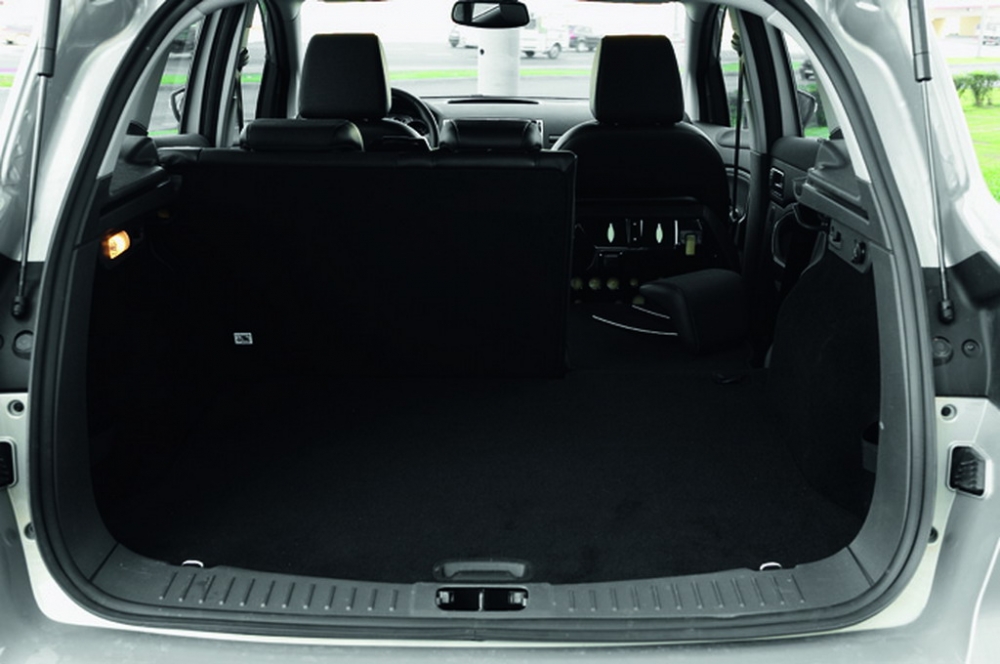
 In the second row, there is noticeably more space. The only limitation here is the ceiling – the seats are installed amphitheater-style, noticeably higher than the front ones – but there is plenty of legroom and shoulder room. And this limitation is not critical: a person about 190 cm tall can easily sit behind themselves. But the trunk turned out to be more modest than expected – only 360 liters. However, the second row folds down easily, and items can be loaded through the separately opening glass of the fifth door. In the second row, there is noticeably more space. The only limitation here is the ceiling – the seats are installed amphitheater-style, noticeably higher than the front ones – but there is plenty of legroom and shoulder room. And this limitation is not critical: a person about 190 cm tall can easily sit behind themselves. But the trunk turned out to be more modest than expected – only 360 liters. However, the second row folds down easily, and items can be loaded through the separately opening glass of the fifth door. |
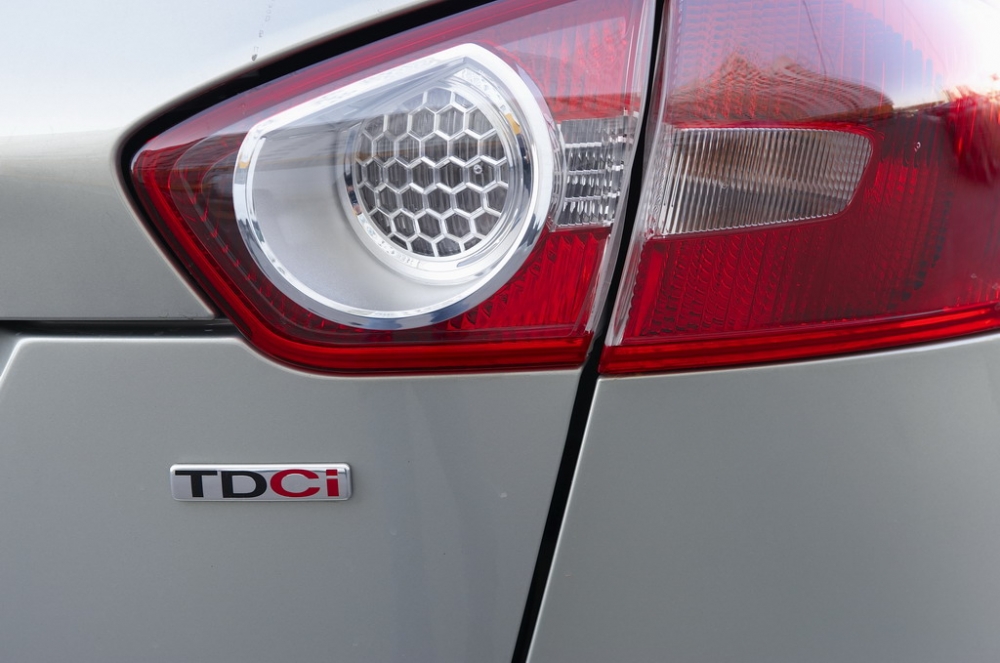
 What did they manage to weave from the two-liter turbodiesel, six-speed manual, and Haldex coupling between the axles (there is also a more affordable front-wheel-drive version)? Even though the TDCi is not a newcomer, it fits right in. Noise and vibrations are minimal, and 300 Nm of torque, available at almost any rpm, accelerates the Kuga exactly as expected for its class. The choice of "short" gears surprised me: first gear pulls up to 40 km/h, second up to just over 80. Why such fuss? After all, the turbodiesel, as I already noted, has a wide working range. What did they manage to weave from the two-liter turbodiesel, six-speed manual, and Haldex coupling between the axles (there is also a more affordable front-wheel-drive version)? Even though the TDCi is not a newcomer, it fits right in. Noise and vibrations are minimal, and 300 Nm of torque, available at almost any rpm, accelerates the Kuga exactly as expected for its class. The choice of "short" gears surprised me: first gear pulls up to 40 km/h, second up to just over 80. Why such fuss? After all, the turbodiesel, as I already noted, has a wide working range. |
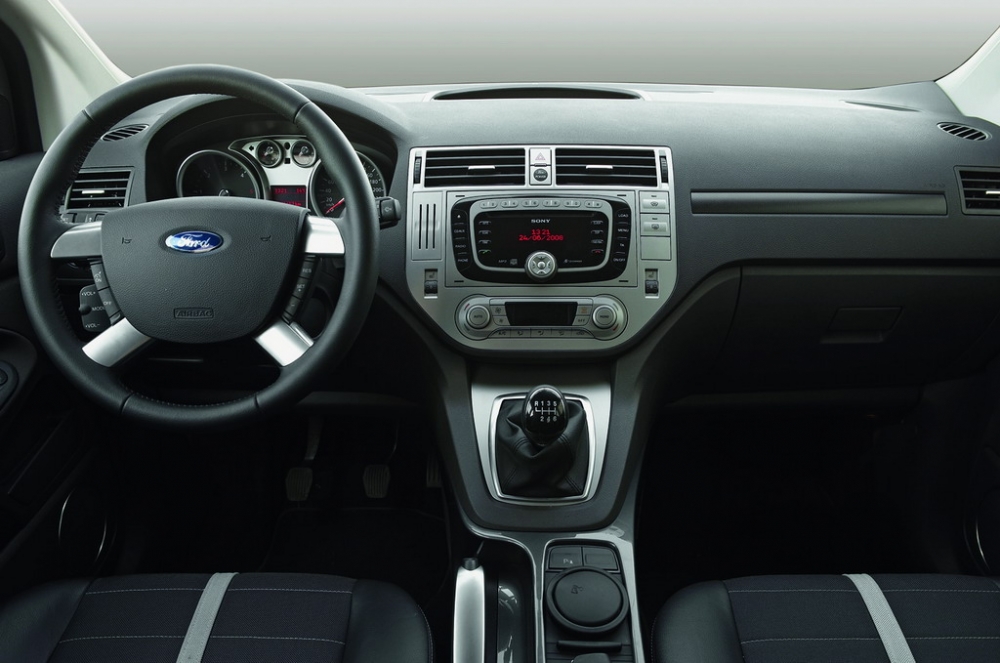 But if you get used to the lever from the Mondeo – with its precise but long throws – then you can drive the Kuga quite briskly. However, it is unlikely to compete with the gasoline turbocharged 2.5-liter version with an automatic (which will appear next year). All-wheel drive on such a car is not mandatory – most owners will not leave the asphalt. But I would still advise taking the car with four driven wheels. But if you get used to the lever from the Mondeo – with its precise but long throws – then you can drive the Kuga quite briskly. However, it is unlikely to compete with the gasoline turbocharged 2.5-liter version with an automatic (which will appear next year). All-wheel drive on such a car is not mandatory – most owners will not leave the asphalt. But I would still advise taking the car with four driven wheels. |
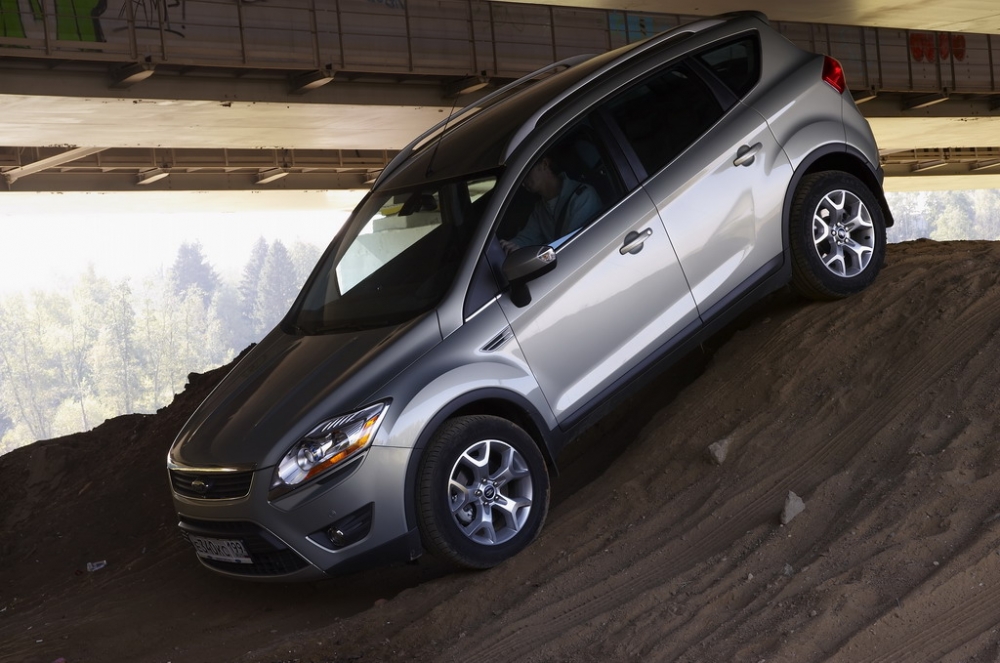
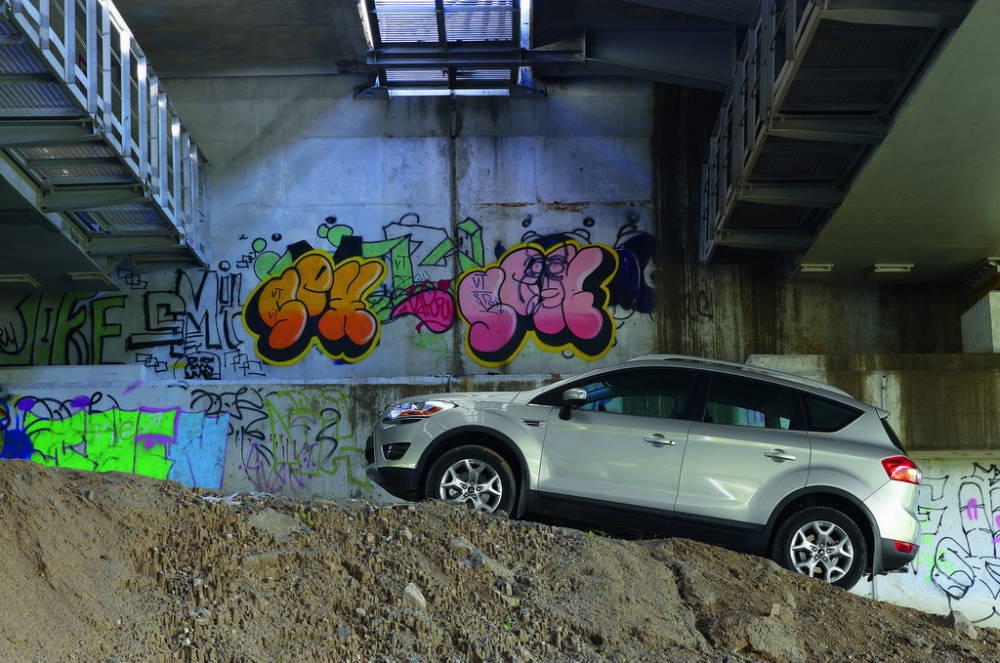
 The thing is, the crossover has decent geometric off-road capability. High ground clearance, small overhangs and, as a result, large approach and departure angles for such a "toy," plus a wading depth of 450 mm. So the Kuga is quite capable of luring you somewhere where you can't do without all-wheel drive. Even if it is "parketnik" with an automatically connected rear axle. Together with ESP, which roughly brakes the spinning wheel, this is good support on light off-road. The thing is, the crossover has decent geometric off-road capability. High ground clearance, small overhangs and, as a result, large approach and departure angles for such a "toy," plus a wading depth of 450 mm. So the Kuga is quite capable of luring you somewhere where you can't do without all-wheel drive. Even if it is "parketnik" with an automatically connected rear axle. Together with ESP, which roughly brakes the spinning wheel, this is good support on light off-road. |
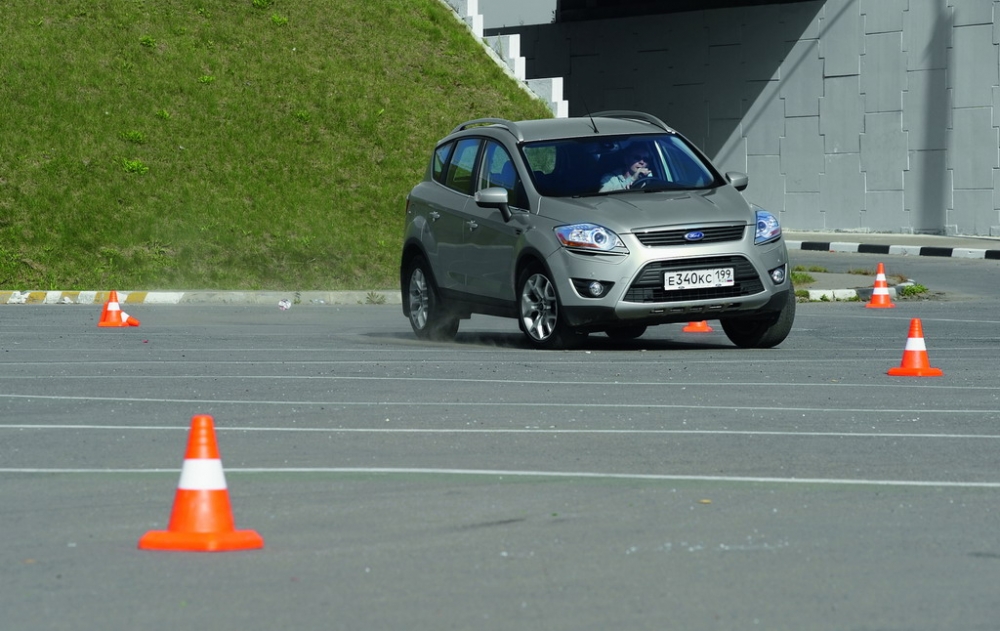
 The Kuga's suspension is definitely tuned for asphalt. Some may find it stiff when it starts to meticulously count every crack. But this is a conscious sacrifice for car-like handling and minimal body roll. I won't say the Kuga is super sharp, but on winding country highways it doesn't get lost, remains under control, and doesn't scare you with either a calm understeer or a barely noticeable oversteer when lifting off the throttle. And the steering wheel is informative. Moreover, the level of this information does not depend on which of the three modes of the electro-hydraulic power steering – Comfort, Standard, or Sport – it operates in, only the effort changes. The Kuga's suspension is definitely tuned for asphalt. Some may find it stiff when it starts to meticulously count every crack. But this is a conscious sacrifice for car-like handling and minimal body roll. I won't say the Kuga is super sharp, but on winding country highways it doesn't get lost, remains under control, and doesn't scare you with either a calm understeer or a barely noticeable oversteer when lifting off the throttle. And the steering wheel is informative. Moreover, the level of this information does not depend on which of the three modes of the electro-hydraulic power steering – Comfort, Standard, or Sport – it operates in, only the effort changes. |
 On dirt roads, the main thing is the energy intensity of the suspension. And it is at its best, despite the short travel. You can rush without particularly choosing the road. True, rear passengers should protect their heads, and luggage is better secured. So what's the conclusion? Here's what. The "wickerwork" turned out well both for Ford and for those who want a crossover. All canons are observed: it is agile and obedient on asphalt, and it will take you to a lawn for shashlik along with fishing rods and a barbecue. Don't like the "stick"? Not satisfied with the diesel? Then you'll have to wait until next year. Although, of course, there are other options – competition in this segment is fierce. On dirt roads, the main thing is the energy intensity of the suspension. And it is at its best, despite the short travel. You can rush without particularly choosing the road. True, rear passengers should protect their heads, and luggage is better secured. So what's the conclusion? Here's what. The "wickerwork" turned out well both for Ford and for those who want a crossover. All canons are observed: it is agile and obedient on asphalt, and it will take you to a lawn for shashlik along with fishing rods and a barbecue. Don't like the "stick"? Not satisfied with the diesel? Then you'll have to wait until next year. Although, of course, there are other options – competition in this segment is fierce. |
 |
 |
 |
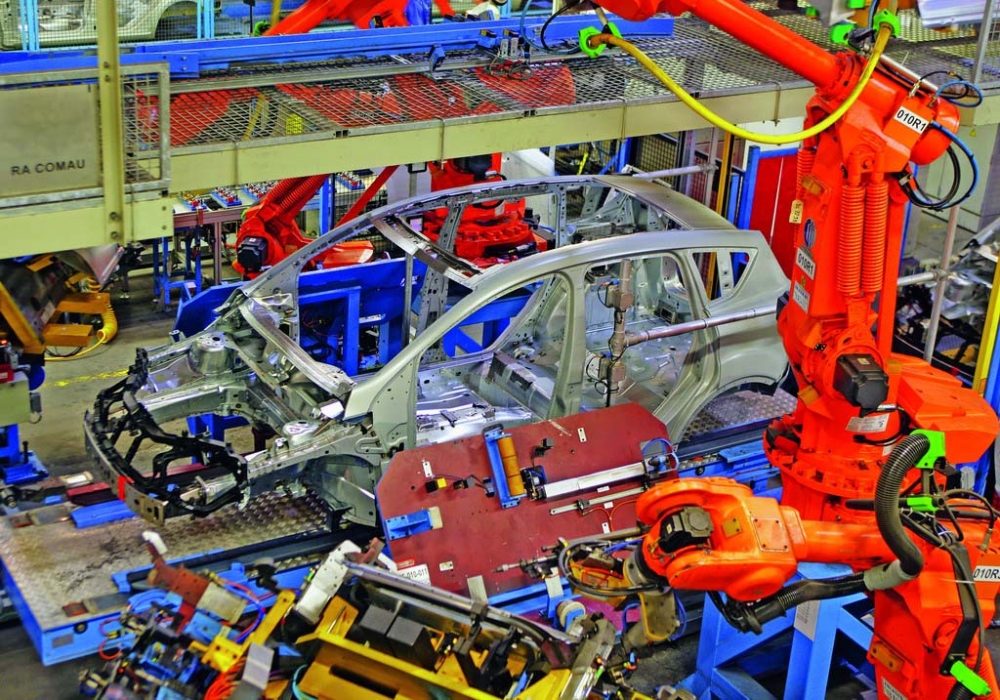 FOR YOUR INFORMATION FOR YOUR INFORMATIONBody Kuga production is established at the German plant in Saarlouis, where Focus and C-Max are also assembled. The all-welded galvanized body widely uses high-strength steel parts that form a rigid safety capsule. There are crumple zones at the front and rear that absorb impact energy. To reduce weight, the front and rear fenders are made of plastic. The lower part of the body is unified for front- and all-wheel-drive versions. Aerodynamics are not the best – the drag coefficient is 0.379. |
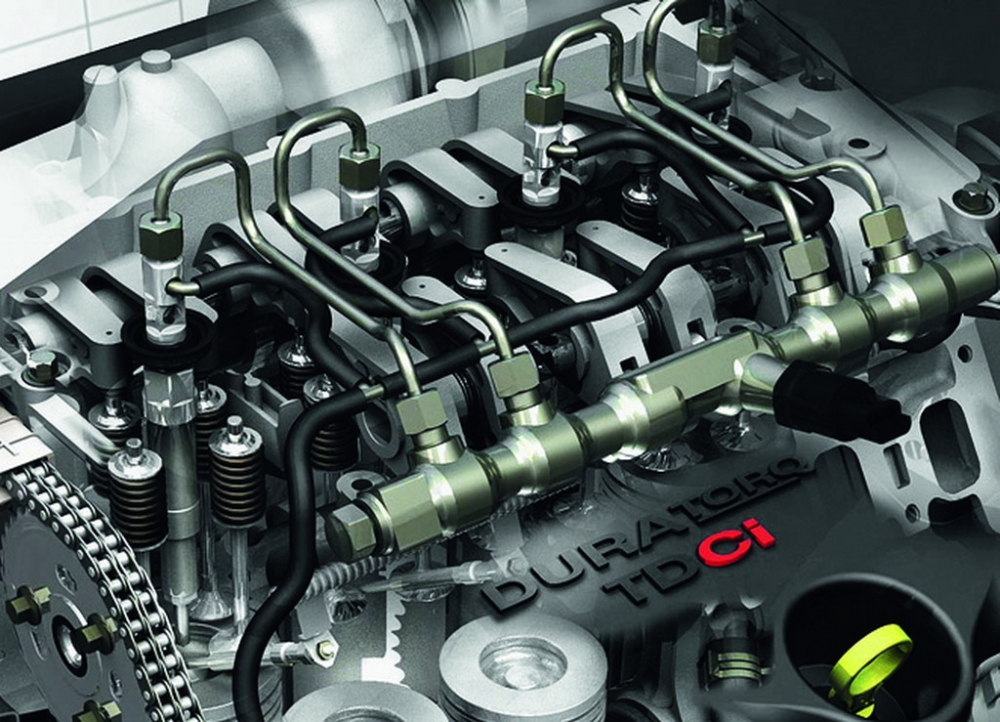 Engine EngineDuratorq 2.0L TDCi Currently, the Ford Kuga is offered exclusively with the two-liter TDCi turbodiesel, known from the Mondeo, C-Max, S-Max, and other models. The engine uses a common rail injection system with a maximum pressure of 1650 bar. To meet Euro 4 standards, the engine is equipped with a catalytic converter with an exhaust gas recirculation (EGR) system and a diesel particulate filter (DPF). With a power of 136 hp at 4000 rpm and a solid torque of 320 Nm at 2000 rpm, this unit is content with just 6.3 liters of diesel per 100 km. The service interval is 20,000 km. |
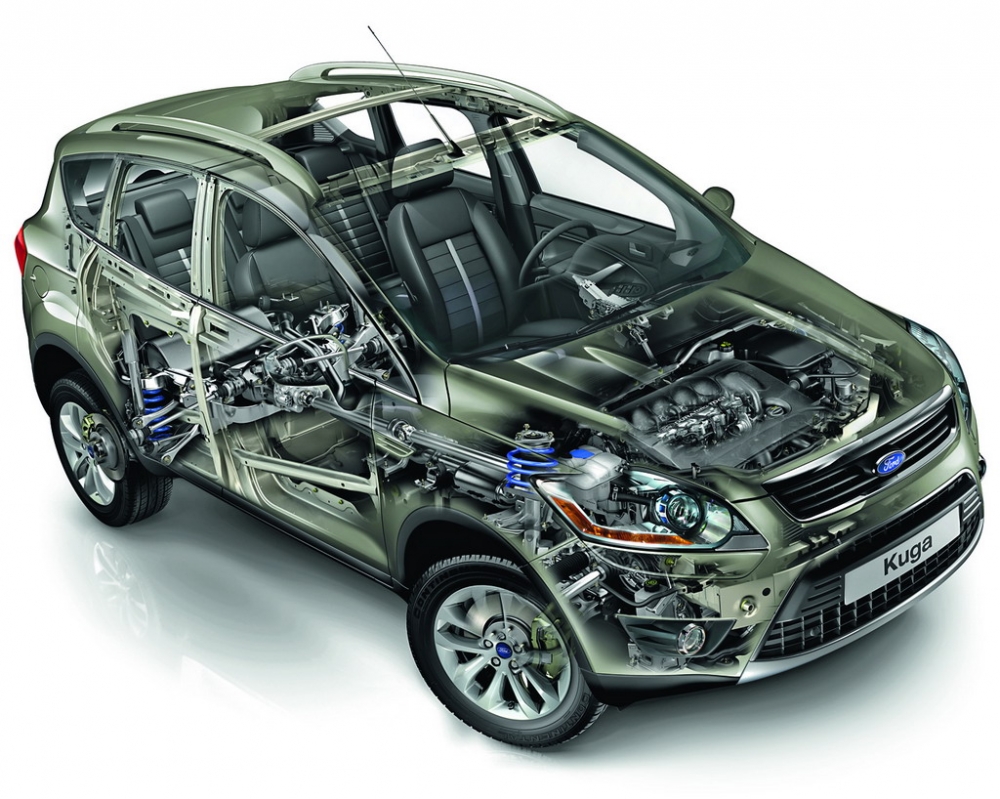 Chassis ChassisThe Ford Kuga is based on the C-Max minivan platform, which was lengthened and seriously reworked for the crossover, including for the installation of an all-wheel-drive system with a Haldex coupling. The front MacPherson suspension with L-shaped lower arms, optimized front bushings, and rear hydraulic mounts is mounted on a reinforced subframe. The rear Control Blade multi-link suspension features large shock absorbers and springs and, again, provides for the possibility of rear-wheel drive. All Kugas come standard with electro-hydraulic power steering (EHPAS) with three levels of effort. Up front are ventilated disc brakes with a diameter of 300 mm, at the rear – non-ventilated, with a diameter of 302 mm. |
Braided basket
Having scanned the huge parking lot in search of a beige Kuga – since that's what was written in the vehicle registration certificate – I began to doubt that I wasn't colorblind. There were no cars of that color there at all.

Test drive photos
Comments
No comments yet. Say the first word.