
The Focus III family is a truly global product of the Ford corporation. Focuses will be produced in Germany, Spain, China, Thailand, and, of course, in Russia and the USA. And they will be sold in 129 countries. The transition to a unified standard is a forced measure to reduce development and production costs. How effective it is, time will tell. Most importantly, the new car is for the North American market, where modernized first-generation Focuses are still being produced.
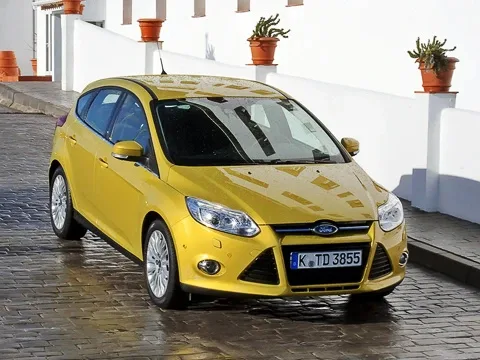
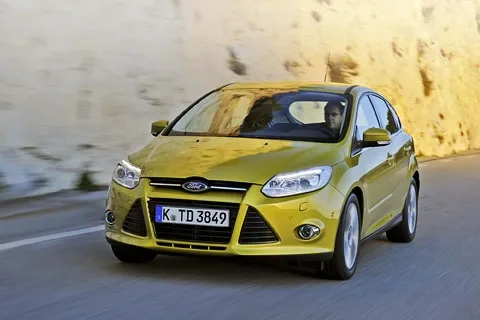
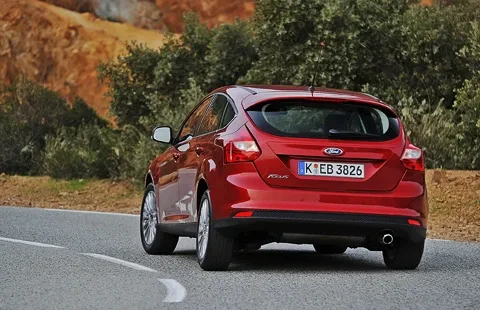
The Focus design is guilty of excess. I circled the car for an hour but never found a definitively good angle for a photo. I decided to use the most truthful shot.
Our current "second" Focus is a product of computer optimization of the "first." And the "third" is the result of another revision of a time-tested design. Apparently, the old good C platform still has potential. The dimensions of the newest Focus and the current hatchback are similar. The wheelbase increased by an invisible eight millimeters, and the increase in length came from the front overhang, which is due to pedestrian safety concerns. In addition to the new Focus and the C-Max compact van, we can expect eight more models on the modernized C-platform.
In Russia, the Focus is more than just a car. Thanks to it, we realized that seemingly incompatible things can coexist in one body: a spacious interior, reliability, unpretentiousness, and refined handling. The Focus opened the door to the world of new foreign cars for the average Russian, proving that European manners can cost an acceptable amount. We ultimately got freedom of choice — the Focus set the bar for competitors, forcing them to change their product and pricing policies. This is well understood in Vsevolozhsk, which is why they are in no hurry to announce prices. The list of various auxiliary systems and additional equipment is long, but configurations for Russia have not yet been approved. "We will try to do without tricks," Sergei Bogdanov, vice president of marketing and sales at Ford Russia, let us know.
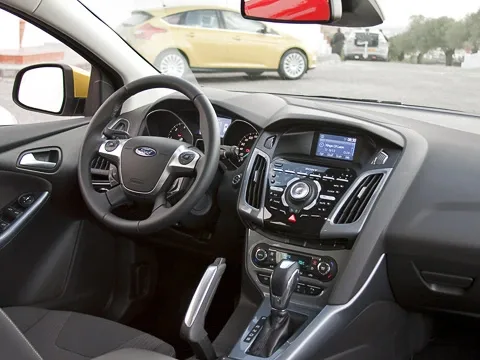
The trim materials have become more quality, and there is less hard plastic. It would seem that the front panel architecture is completely different, but the eyes and hands themselves find the steering column switches, the climate control unit, and door handles. Everything is in its usual places!
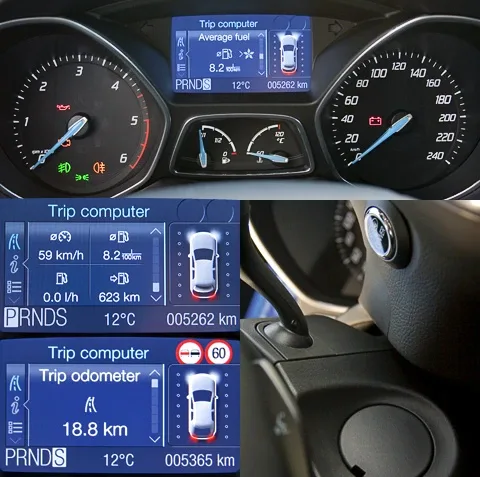
- The central display shows road signs, lane departure warning readings, and recommended gear prompts... The trip computer can simultaneously show four most important menus in split-screen mode. Note that the abundance of information does not impair its perception.
- While you are moving in a restricted zone, a reminder "reddens" on the instrument cluster screen: speed 60 km/h, overtaking prohibited. Very disciplining.
- Following the "charged" RS version, the Focus acquired a starter button, but Russian versions will most likely retain the traditional ignition key.
Most likely, in the base configuration of a Russian-assembled car, as before, there will be only the essentials. Pleasant excesses will remain the prerogative of more expensive trim levels. Or they may disappear altogether. Why, for example, in Russia, where there is mostly no road marking at all, a system that monitors its compliance? The camera that recognizes road signs is also questionable. Besides the non-standardized chaotic placement of signs on our roads, the high price of such an option could be an obstacle.
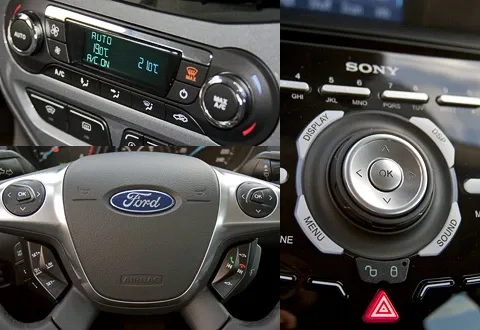
- The separate climate control unit gets by with a minimum of buttons. But why are the numbers on the large display so small?
- The convenient steering column joystick for controlling the "music" is a thing of the past. On the new Focus, the auxiliary system buttons, 23 in number, are located on the super-multifunctional steering wheel.
- A huge knob selects the submenu of the Sony stereo system, which sounds powerful and clean. The door lock and hazard warning buttons have meanwhile faded into the background. I would prefer the opposite.
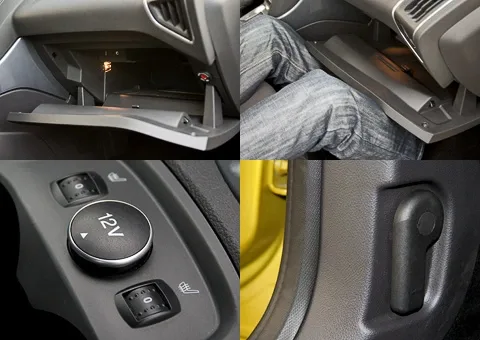
- The glove box can hold A4 papers, as well as a bunch of CDs with favorite songs. But note: when opened, its lid falls on the front passenger's legs with a sharp edge.
- The Ford emblem on the false radiator grille no longer hides the hood lock keyhole. It now opens in the traditional way — with a handle from the cabin.
But it is already clear that the engine lineup for Russia was formed on the principle of reasonable sufficiency. The choice of power units does not promise to be rich: we will be offered the not-young 1.6 engine in two tuning variants (105 hp or 125 hp) and the well-known two-liter "four," which now develops five more "horses" — exactly 150. For the younger engine, only a manual transmission is provided, while for more powerful versions, the Powershift "robot" will be available as an option. And what about EcoBoost turbo engines? We will not have them. At least for now.
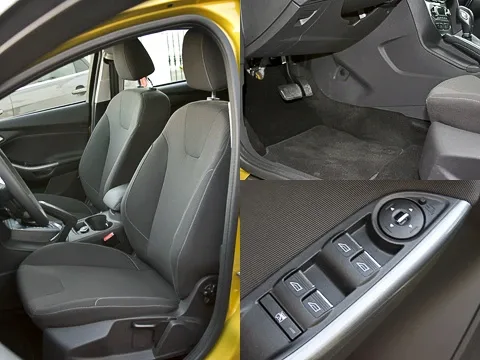
- The front seats have become more comfortable, although the cushion is still a bit short.
- The longitudinal adjustment range of the driver's seat is such that, having moved it back to the maximum, at a height of 178 cm I can barely reach the pedals.
- All four window lift buttons work in "one touch" mode.
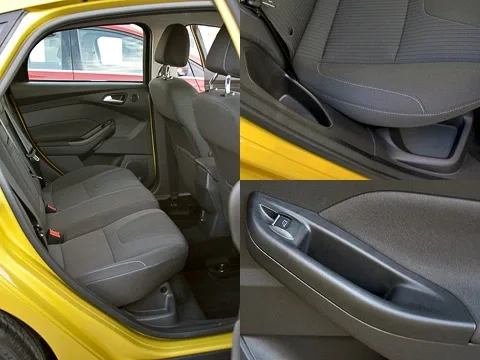
- In terms of rear space, the previous Focus was not a record holder. In the new car, the same situation: not much space, but enough.
- Two pockets on the back of the front seats are supplemented by compartments at the edges of the sofa.
- The rear door handle has sharp edges on the underside that cut the palm.
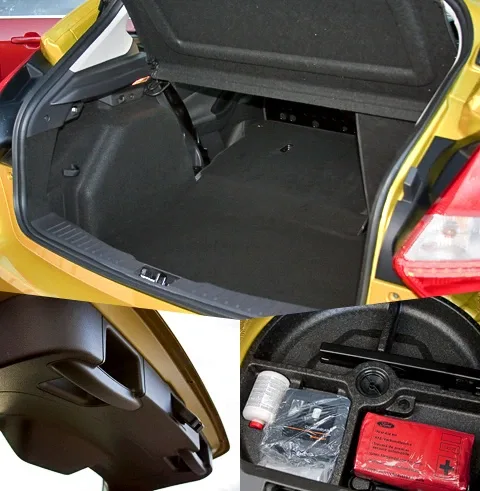
European versions of the Focus have only a repair kit with sealant. Russian cars will get a full-size spare tire. But this led to a significant reduction in trunk volume from 363 to 277 liters. Maybe at least the floor will level out.
The only new engine for the Russian Focus will be the two-liter 140-horsepower Duratorq turbodiesel. True, Ford people allocate only one percent of total sales to it. But the whole point is that in Spain there were no cars even with such an unpopular engine! We drove cars that have a very indirect relation to our market. The most powerful 163-horsepower 2.0 version, paired with the preselective Powershift "robot," stood in for the diesels. And the gasoline Focus turned out to be with a "manual" and a 150-hp EcoBoost 1.6 turbo-four. We drool.
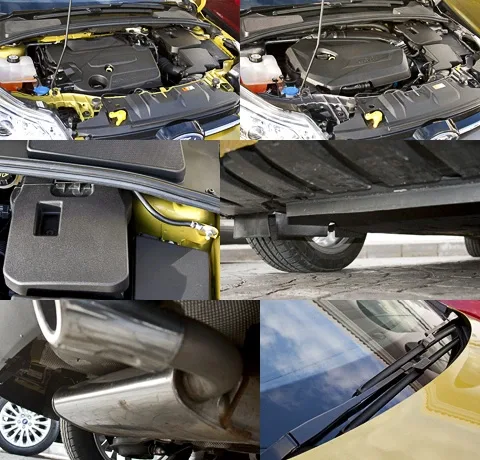
- Under the hood of the diesel Focus (top left), it is tighter than the gasoline one. In both cases, you can only get to the oil filter (for the diesel, it is a replaceable cartridge) from below.
- The battery is hidden in a plastic casing. Only the positive terminal is visible. And an additional "ground" contact is screwed to the left fender liner.
- The engine compartment is covered from below with a plastic screen, and aerodynamic shields are installed not only in front of the wheels but also on the sides.
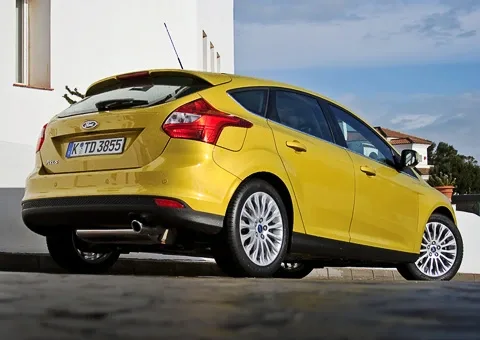
- On the hatchback, the muffler is located across the rear overhang and, in case of overload, may become the lowest point of the car. That is if you suddenly decide to go for potatoes.
- The pantograph wipers provide a larger windshield cleaning area.
The turbocharged gasoline Focus is docile and generous. It is not at all necessary to listen to the prompts that appear on the instrument panel — they are for economical driving. The computer suggests shifting to a lower gear when the elastic engine still pulls perfectly on the current one. On sixth gear from idle, it will, of course, not pull. But if you do not let the tachometer needle drop below 1500 rpm, then in response to pressing the accelerator, acceleration begins to build, and closer to two thousand, the Focus finally wakes up. At the same time, the active zone extends to six thousand. However, the engine hits the rev limiter somewhat roughly, with a noticeable jerk.
The six-speed manual disappointed. The lever throws are a bit long, and the selectivity is mediocre: I engaged fifth instead of third more than once or twice. Some colleagues also complained about this issue. But the new robotic Powershift transmission with dual dry clutches works smoothly and is also responsive. It can only be faulted for a certain thoughtfulness when you need rapid acceleration with a downshift of two or more gears. This maneuver takes over a second. But if you don't engage kickdown, the 'robot' downshifts on its own as needed. For example, approaching a corner in fourth, by the exit the Focus is already in second, ready for acceleration.
The only thing better than mountains is mountains. Better than Powershift is Powershift in sport mode. Here the delays are mere milliseconds, and the transmission keeps the engine on its toes longer, not rushing to shift up. One problem: someone decided it was a good idea to place the manual shift buttons right on the main selector. On the side of the knob! To hell with the buttons, who uses them anyway? But a couple of times I accidentally engaged manual mode with a casual touch, and only discovered it when the car got stuck in a higher gear on corner exit and refused to accelerate. Then you have to press all the way to kickdown...
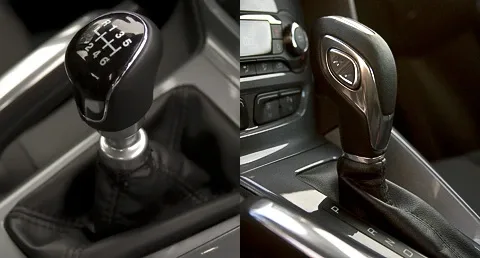
The place of the old four-speed automatic will be taken by the preselective six-speed Powershift gearbox (its selector on the right). Those who pay extra for such a 'robot' definitely won't regret it! But the manual with the same number of gears is the most ordinary.
The previous Focus was good not only for its pure handling, but also for how it disguised itself as a sheep until you wanted to race. The new one also hides its driver talent for the time being, but then... Compared to the previous generation car, body roll has decreased, and the lateral loads experienced by passengers have increased. The steering effort is juicier. I'd even say more delicate. The new electric power steering, which replaced the 'electro-hydraulic' system, has made the steering more transparent.
- The advanced stability control system simulates a locking differential by braking the spinning wheel. Ford engineers emphasize the unobtrusiveness of this intervention. Indeed, under power the Focus actively screws into the corner, but there's no feeling of artificiality.
- Thanks to the extensive use of high-strength steel, body rigidity has increased by 15%. With the same handling character, the new Focus is more precise and slightly sharper than its predecessor.
The Focus suspension is resilient. Although on asphalt waves the body does rock now and then. Bumps like speed bumps are transmitted into the cabin distinctly, but on small potholes comfort is decent. The diesel car, which is very similar to the petrol in smoothness of response and differs only in a slightly more pronounced turbo surge, rides a bit firmer. Specifically, the tauter front suspension here follows the road profile in more detail. The on-center zone on the steering wheel of the diesel Focus is less pronounced, although with steering input everything returns to normal... But wait! Could it turn out like with the current Focus, where the Russian suspension adaptation led to journalists driving one set of cars during the presentation and raving about them, while buyers got completely different cars and didn't understand what the fuss was about? Bogdanov cuts off mid-sentence: 'No.' The adaptation had more downsides than upsides. So there will be no more Russian suspension.
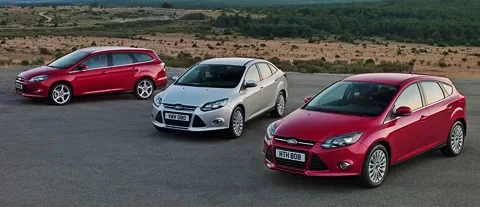
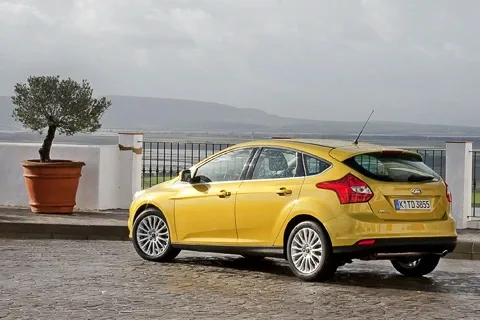
From now on, the Focus will exist in three guises: sedan, wagon, and five-door hatchback. But there will be no more three-door. A pity. Even the new Focus ST is strictly five-door. The fate of the coupe-cabriolet is still unknown.
Perhaps the most serious drawback of the second-generation Focus was cabin noise. In particular, the cheaper versions were guilty of this. I drove various Vsevolozhsk modifications, so I have something to compare the well-equipped test 'third' Focus with. I can say it has become quieter. The petrol engine is almost inaudible in the cabin. And the diesel doesn't really bother either. It's just that the timbre of its voice is coarser.
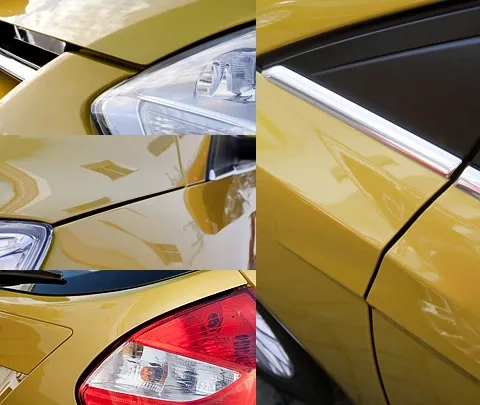
The impressive gap at the junction of the hood and front bumper, according to engineers, is due to the fact that the engine cover can be slammed from any height without fear of damage. But what justifies the other gaps?
Ford engineers point out that they didn't limit themselves to traditional measures for quietness like thicker glass and denser soundproofing mats. They seriously worked on aerodynamics, in particular optimizing the 'noisy' airflows under the floor. However, the wind still hums: at 120 km/h the mirrors 'sing' distinctly. Noise also comes from under the rear wheel arches. Besides the pinging of stones, tires are clearly audible from the rear seat. And in the rain, the overall cacophony starts to press on the ears. Another source of extra sounds is the gaps between body panels. They, according to engineers, have become smaller. But in reality, I didn't see that. Particularly disheartening was the junction of the tailgate with the rear wing, through which the rubber seal is visible.
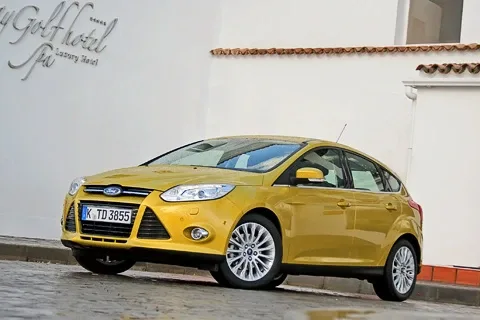
Ford is still silent about expected sales volumes in Russia. But they hope that in 2012–2013 many of the owners of those 750,000 Focuses of two generations already on our roads will return to showrooms for such an upgrade.
In short, although the Focus has become better in many ways, it remains a Focus. People from Audi can sleep peacefully. Our Focus is no match for premium cars like the A3. It has other rivals. 'Not the Polo sedan,' Bogdanov is categorical, 'but European classmates: Volkswagen Golf VI, Opel Astra, and Peugeot 308. None of them can boast such equipment...' The first production Focuses will appear in early autumn, but demonstration cars will be at dealers as early as June. Prices will be announced simultaneously with the start of order acceptance. The main thing is that there are no tricks here.
Specifications
* For version with Powershift robot.
** In Overboost mode.
| Ford Focus | 1.6 EcoBoost | 2.0 TDCi |
|---|---|---|
| Body | ||
| Body type | hatchback | hatchback |
| Number of doors/seats | 5/5 | 5/5 |
| Length, mm | 4358 | 4358 |
| Width, mm | 1858 | 1858 |
| Height, mm | 1484 | 1484 |
| Wheelbase, mm | 2648 | 2648 |
| Track front/rear, mm | 1544/1534 | 1544/1534 |
| Curb weight, kg | 1333 | 1421 (1461)* |
| Gross weight, kg | 1900 | 2050 |
| Trunk volume, l | 277–1062 | 277–1062 |
| Engine | ||
| Type | petrol with direct fuel injection and turbocharging | turbodiesel |
| Location | front transverse | front transverse |
| Number and arrangement of cylinders | 4, in-line | 4, in-line |
| Number of valves | 16 | 16 |
| Displacement, cc | 1596 | 1997 |
| Max power, hp/rpm | 150/5700 | 163/3750 |
| Max torque, Nm/rpm | 240/1600–4000 (270/1900–3500)** | 340/2000–3250 |
| Transmission | ||
| Gearbox | manual, six-speed | manual, six-speed (six-speed robotic)* |
| Drive | front | front |
| Chassis | ||
| Front suspension | independent, spring, McPherson | independent, spring, McPherson |
| Rear suspension | independent, spring, multi-link | independent, spring, multi-link |
| Front brakes | disc, ventilated | disc, ventilated |
| Rear brakes | disc | disc |
| Tires | 205/55 R16 | 215/50 R17 |
| Performance characteristics | ||
| Maximum speed, km/h | 210 | 218 (215)* |
| Acceleration time 0–100 km/h, s | 8.6 | 8.6 (8.9)* |
| Fuel consumption, l/100 km | ||
| — urban cycle | 7.7 | 6.3 (6.8)* |
| — extra-urban cycle | 5.0 | 4.2 (4.4)* |
| — combined cycle | 6.0 | 5.0 (5.3)* |
| Emission standard | Euro-5 | Euro-5 |
| Fuel tank capacity, l | 55 | 53 |
| Fuel | AI-95 | diesel |
** In Overboost mode.
Technology 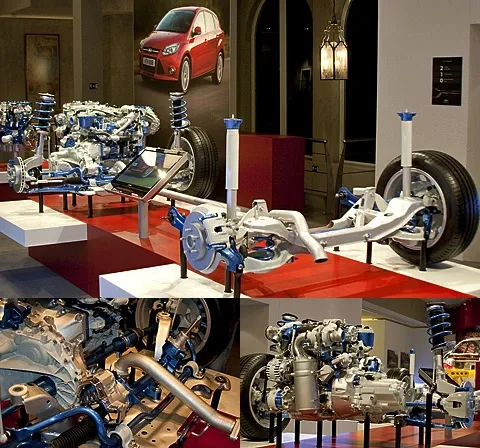
The McPherson struts at the front and the four-link setup at the rear remained the same as on the predecessor, but the front track increased by 13 mm, while the rear track decreased by three. Stiffer subframe mounting bushings are used. The previous electro-hydraulic power steering gave way to an electric one (bottom photo on the left), where the gearbox is mounted on the steering rack. This allowed the Focus to gain features such as lane-keeping assist and self-parking.
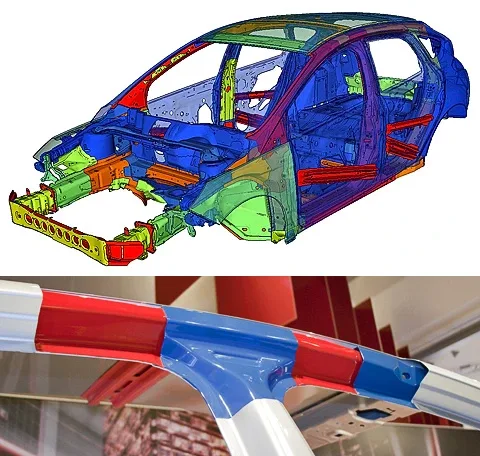
The share of high-strength steel compared to the predecessor model increased by 50%, and ultra-high-strength steel by 26%. In total, the body of the third-generation Focus uses seven grades of rolled steel with thicknesses from 1.5 to 2.7 mm. As a result, body rigidity increased by 15%.
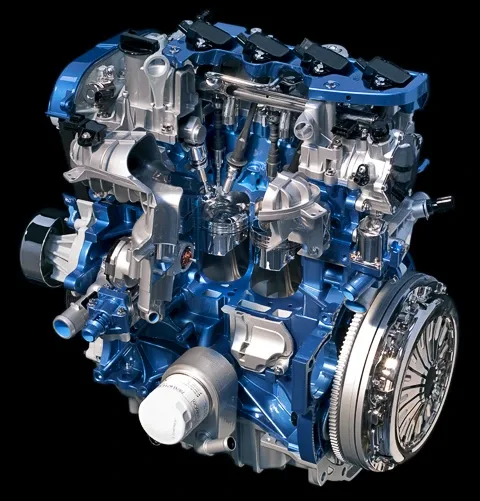
The third-generation Ford Focus is equipped with an EcoBoost engine with a displacement of 1595 cc. The aluminum engine with variable valve timing on intake and exhaust develops 150 or 182 hp depending on the modification. But the torque is the same — 240 N•m with a temporary increase to 270 N•m. The four-cylinder is equipped with a Honeywell Garrett turbocharger and a direct injection system with an operating pressure of 100 bar (manufactured by Bosch). All this allows the engine to meet Euro-5 environmental standards and be very economical. For example, with moderately fast driving in the city and on the highway, the 150-horsepower Focus consumed 8.2 liters of gasoline per 100 km, which is 2.2 liters more than the official figure. Initially, in Europe, the Focus 1.6 EcoBoost will be sold only with a six-speed manual, and it is unclear when it will appear here.
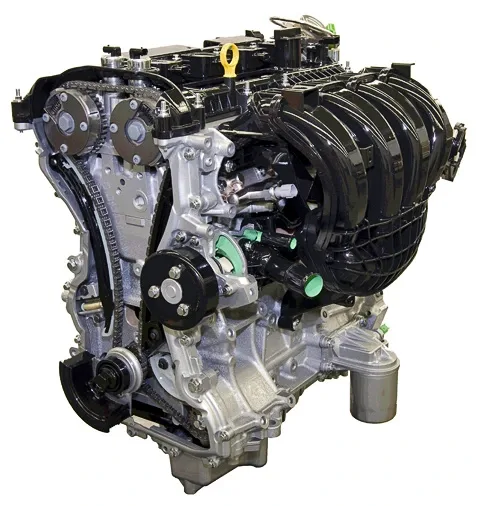
Frankly speaking, the 2.0 TDCi diesel engine is not the freshest. The PSA DW10 four-cylinder with a cast-iron block and aluminum head was developed by Peugeot engineers in the early 2000s for vehicles of the PSA Peugeot Citroen and Ford groups. It was first installed on the Focus in 2005: output was 136 hp and 340 N•m. The latest modification with an optimized combustion chamber shape is equipped with a Garrett turbocharger with variable geometry and a second-generation common rail fuel system (2000 bar, injectors with eight holes), available in three tuning options: 110 hp (300 N•m), 140 (320), and 163 (340). If the most powerful option is under the hood, such a hatchback reaches 100 km/h in 8.6 seconds, and fuel consumption in the combined cycle should not exceed five liters per 100 km. The car with the "robot" is slower in acceleration (8.9 seconds to 100 km/h) and consumes a bit more (5.3 l/100 km). In reality, the Focus 2.0 TDCi with the "robot" consumed at least 6.3 l/100 km.
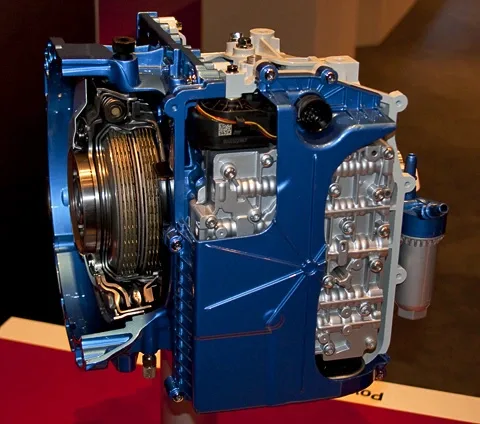
The robotic Powershift gearbox is the result of collaboration between the Ford concern and Getrag. The preselective "robot" operates on the same principle as Volkswagen's DSG gearbox. The gears of the even and odd rows are located on different shafts and are engaged by separate clutches without interrupting the power flow. Like DSG, Powershift prefers economical driving. In normal mode, the "robot" tries to quickly engage sixth gear.
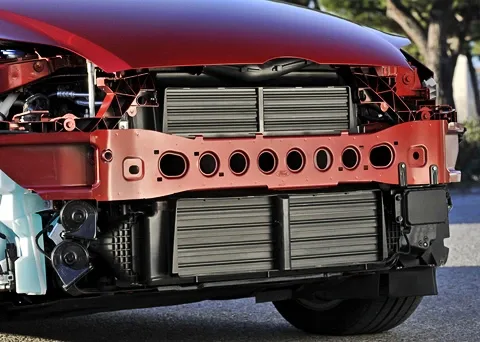
Another innovation of the third-generation Focus is automatic shutters in front of the radiator. On a cold engine, they remain closed, reducing warm-up time, which lowers harmful emissions. As the engine reaches operating temperature, the shutters open automatically.
Design 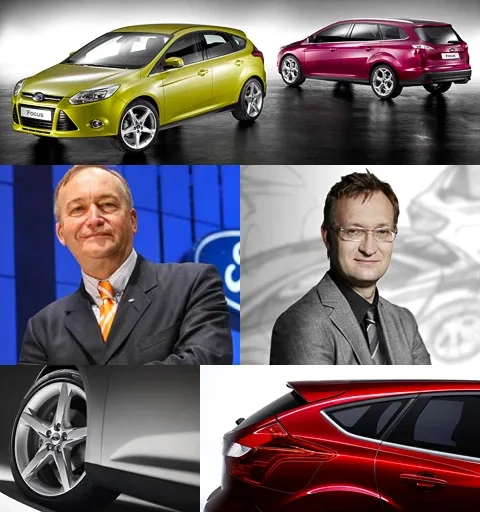
You listen to Ford's chief designer Martin Smith (in the photo on the left) and marvel at how one can confuse simple things. "The basis of the design genetics of the third-generation Focus is the latest evolution of the kinetic design language. The car must move forward even when it is standing still and its wheels are motionless." Wow! Smith's right hand, Stefan Lamm, is a romantic by nature and more eloquent. He believes that the world is ready to fall in love with the sleek silhouette, well-defined body, and innovative face of the new-generation Focus. Whether you take a liking to the new Focus at first sight or hate it, there will be no indifferent people!
History (Robert Yesenov) 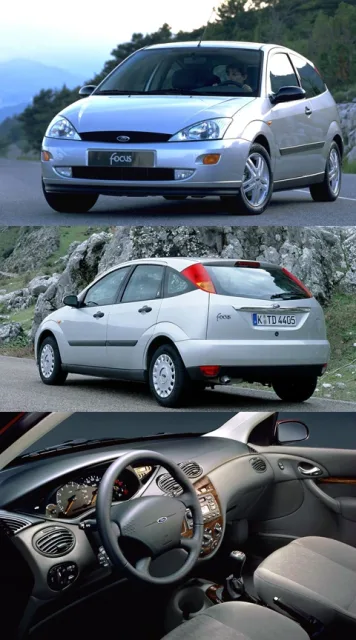
Ford began showing its Focus models in 1998. The first generation was developed by the company's European division in Cologne. A year later, the model was named "European Car of the Year." In 2000, the Focus reached the North American market. It was an interesting car, to say the least — from the design in the then New Edge style and the corresponding interior, to excellent handling. The latter was largely made possible by the rear Control Blade suspension with a self-steering effect, the development of which was overseen by Ford's leading engineer Richard Parry-Jones. The car owed its popularity to a variety of body styles and a wide range of engines, consisting of eight gasoline and diesel engines with power from 75 to 215 hp. Enthusiasts loved the "hot" ST 170 (170 hp) and RS (215 hp) modifications. First-generation Focuses were produced in six countries, including Russia, where the car became truly popular.
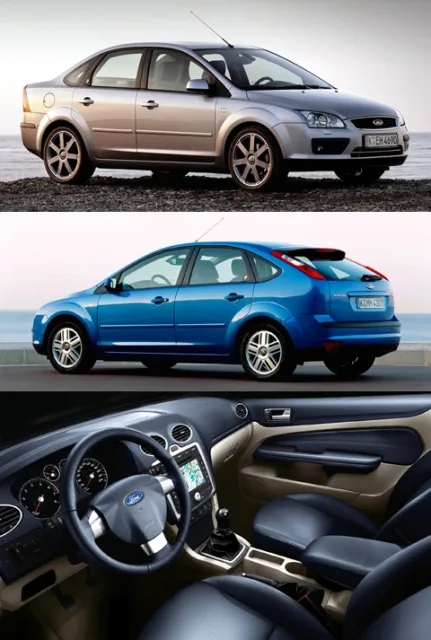
In 2004, at the Paris Motor Show, Ford focused the public's attention on the second-generation car. The image lost all its angular zest, and the interior angles were replaced by calm lines. The Focus settled down, gaining 168 mm in length and 25 mm in wheelbase. Decent handling was still a hallmark of the "American European," but it also lost its former sharpness, especially on the localized suspension in Russia. The choice of body types became more complicated — a coupe-cabriolet was added to all the others. The previous gasoline engines became more powerful (80–305 hp), a supercharged Volvo 2.5 five-cylinder (on ST and RS versions) and modernized TDCi diesels appeared. The latter were paired with a manual and a robotic gearbox with two clutches, Powershift. Ford's European plants have already produced about five million cars of two generations. By the way, the second Focus, familiar to us in this form, was not supplied to the USA. The Yankees were content with a modified first-generation car.
Behind the scenes 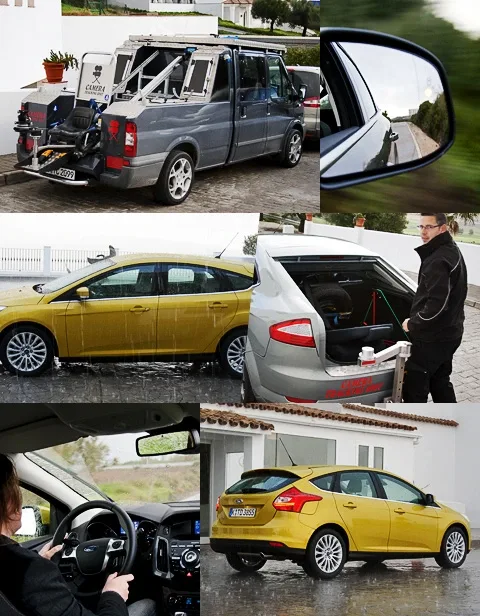
What was memorable about Jerez? An absolutely deserted airport, where Russian journalists were strolling. Also, two advanced camera cars that were never used due to a sudden hurricane. The strongest wind with rain and hail knocked down trees and almost blew our little yellow Focus off the road. The airport terminal, by the way, also suffered. Part of its roof collapsed.