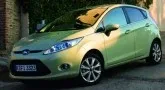
|
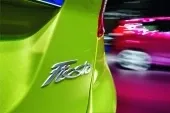 What fun to drive is there here — in the next hall, a Fiesta chassis is displayed on a pedestal, and there are no surprises: a 1.5-liter engine, the familiar five-speed manual, McPherson struts, a torsion beam, and drum brakes at the rear. It immediately brings to mind the VAZ "eight" from the distant nineties. And fun to look at? What could be attractive about the design of a B-class car the size of a large washing machine, even if that design is called "kinetic"? What fun to drive is there here — in the next hall, a Fiesta chassis is displayed on a pedestal, and there are no surprises: a 1.5-liter engine, the familiar five-speed manual, McPherson struts, a torsion beam, and drum brakes at the rear. It immediately brings to mind the VAZ "eight" from the distant nineties. And fun to look at? What could be attractive about the design of a B-class car the size of a large washing machine, even if that design is called "kinetic"? |
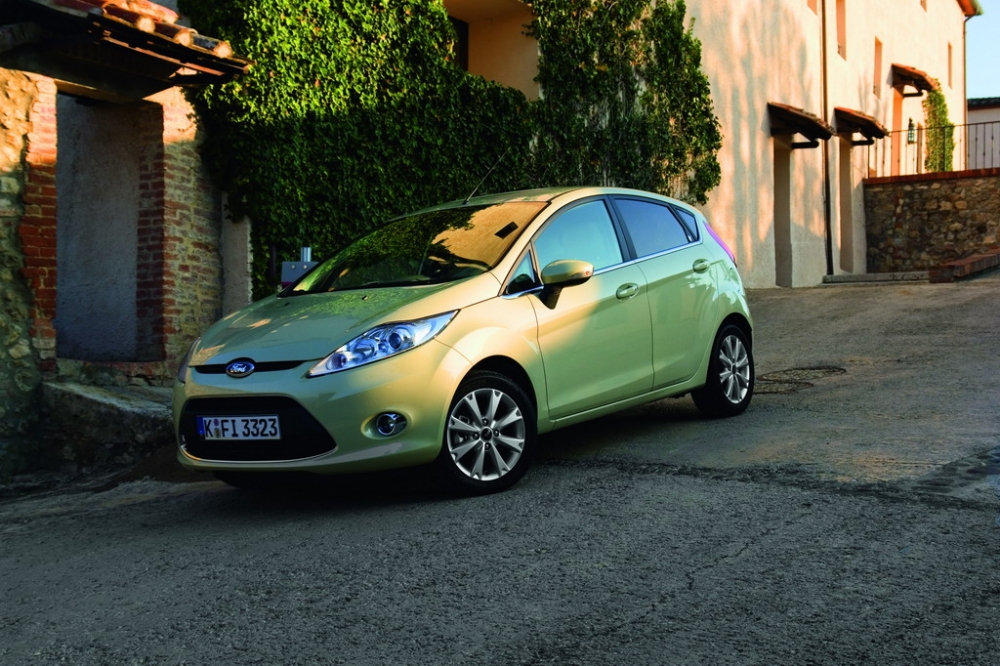
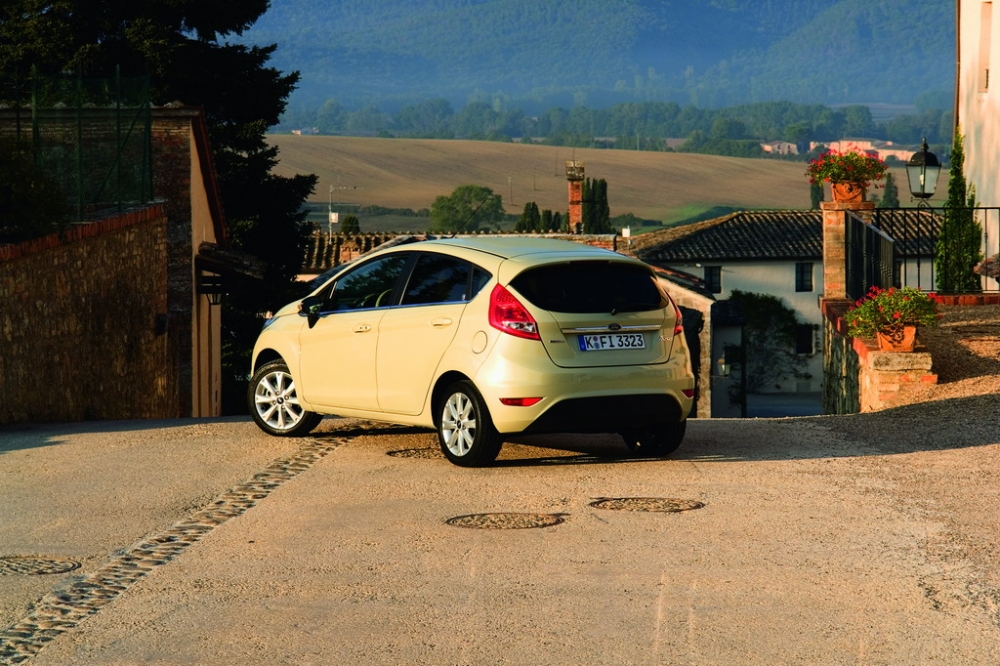
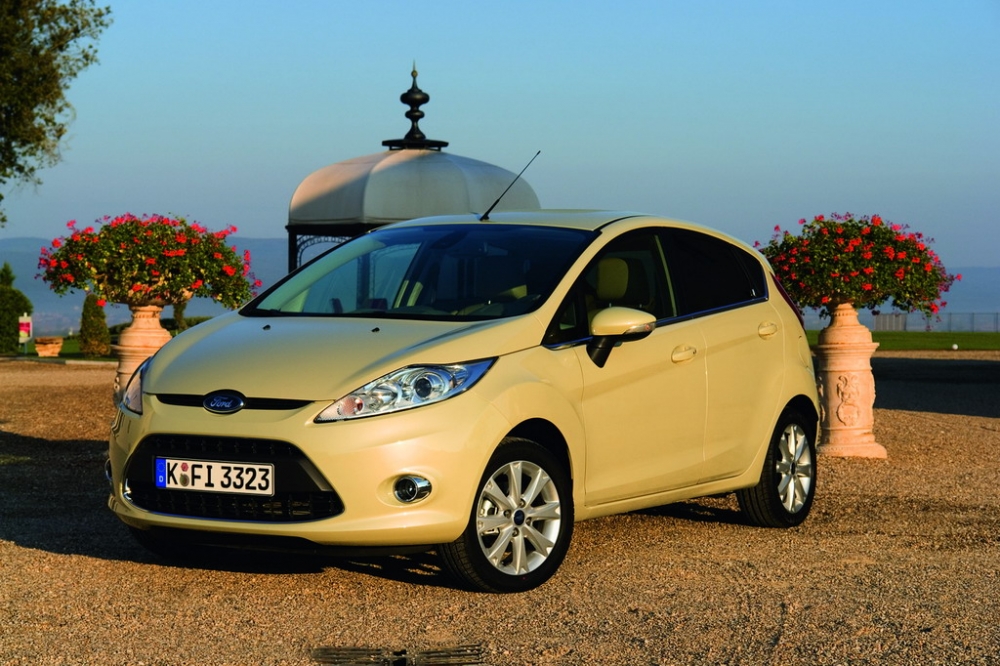
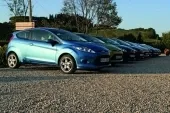 Perhaps that is exactly what I would have reasoned if the Ford folks had decided to hold the presentation before we got behind the wheel. But, fortunately, the order was the opposite. We had our fill of driving along Tuscan roads, where straight sections are rare, and turns are strung one after another with an ideal profile. And every time we stopped for a photo session against the backdrop of picturesque hills and got out of the car, it became clear: you can truly appreciate the Fiesta's appearance only in the open space. When it is locked in a showroom or even in a huge exhibition pavilion, the little one loses half of its charm! So the developers' compliments to their own creation did not seem empty — we thought exactly the same ourselves! Perhaps that is exactly what I would have reasoned if the Ford folks had decided to hold the presentation before we got behind the wheel. But, fortunately, the order was the opposite. We had our fill of driving along Tuscan roads, where straight sections are rare, and turns are strung one after another with an ideal profile. And every time we stopped for a photo session against the backdrop of picturesque hills and got out of the car, it became clear: you can truly appreciate the Fiesta's appearance only in the open space. When it is locked in a showroom or even in a huge exhibition pavilion, the little one loses half of its charm! So the developers' compliments to their own creation did not seem empty — we thought exactly the same ourselves! |
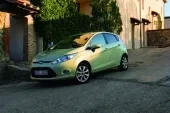 The Ford Fiesta is the company's first model created under the new "Global Product Development System" (GPDS). Thanks to this, the car will be sold on all continents. About ten years ago, the very idea of a worldwide small car seemed absurd. In the East, the foreign car market was tiny, and in America, people never liked cars that couldn't seat the whole family and still have room for a couple of dozen suitcases. But times are changing: somewhere the economy has changed, somewhere the worldview... As a result, compacts have become needed by the whole world. That's what Ford thinks. And not without reason! The Ford Fiesta is the company's first model created under the new "Global Product Development System" (GPDS). Thanks to this, the car will be sold on all continents. About ten years ago, the very idea of a worldwide small car seemed absurd. In the East, the foreign car market was tiny, and in America, people never liked cars that couldn't seat the whole family and still have room for a couple of dozen suitcases. But times are changing: somewhere the economy has changed, somewhere the worldview... As a result, compacts have become needed by the whole world. That's what Ford thinks. And not without reason! |
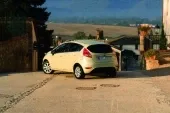 At the same time, the company's specialists understand that different corners of the planet have their own requirements for handling. Therefore, the European Fiesta will differ from the "Fiesta" for China or the USA. Individual suspension and electronics settings will give the cars their own character. I have no doubt that the Ford folks will succeed. The proof is the "Fiesta" itself. The engineers even managed to make completely different cars within the European lineup. Here, for example, is the three-door in the Sport version. It behaves noticeably sharper on the road than the regular five-door modification. Fine tuning! The most powerful 120-horsepower engine, wheels an inch larger, suspension lower and stiffer. The Sport prefix is fully justified. The "Fiesta" in this version is a little provocateur! At the same time, the company's specialists understand that different corners of the planet have their own requirements for handling. Therefore, the European Fiesta will differ from the "Fiesta" for China or the USA. Individual suspension and electronics settings will give the cars their own character. I have no doubt that the Ford folks will succeed. The proof is the "Fiesta" itself. The engineers even managed to make completely different cars within the European lineup. Here, for example, is the three-door in the Sport version. It behaves noticeably sharper on the road than the regular five-door modification. Fine tuning! The most powerful 120-horsepower engine, wheels an inch larger, suspension lower and stiffer. The Sport prefix is fully justified. The "Fiesta" in this version is a little provocateur! |
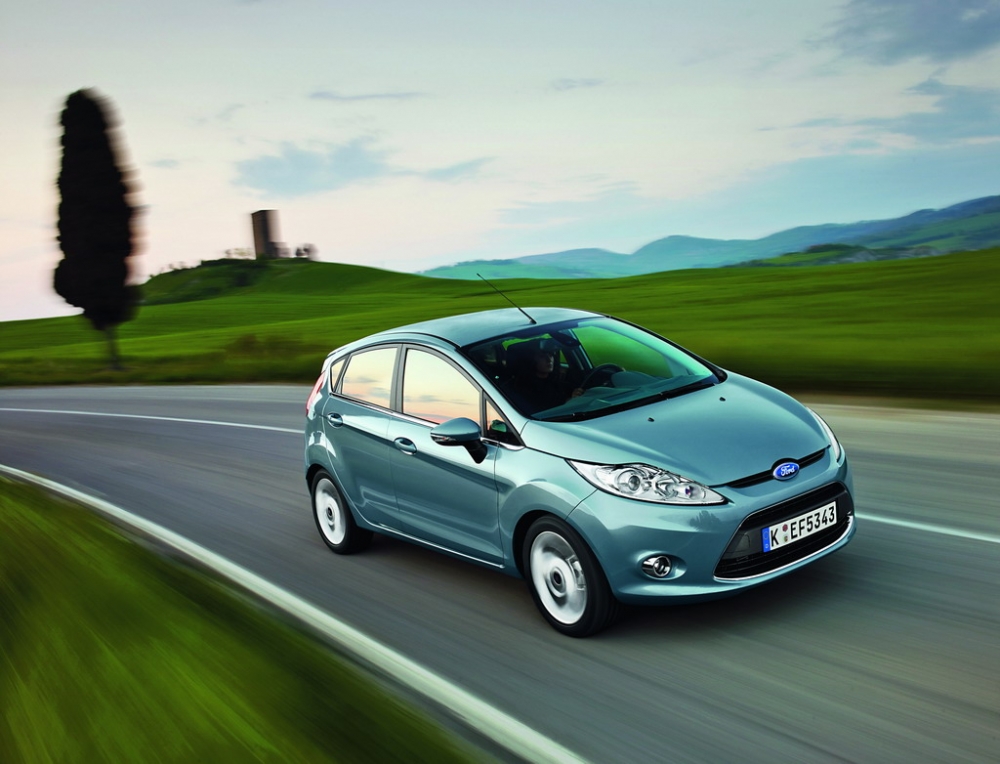
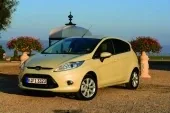 It took courage to hold the presentation on the rural roads of Italy — narrow and whimsically winding. Not every car will show itself in the best light in such conditions. But the new "Fiesta" has nothing to fear — this is its element. It provokes with everything: with its appearance with a large rear spoiler, and with the amazing grip of the chassis. You want to enter each next turn faster and faster. And you shouldn't be afraid of that — the car is obedient, with proper soft front-wheel-drive manners. Even a beginner can transition from slight understeer on entry to oversteer, simply by instinctively lifting off the throttle. It took courage to hold the presentation on the rural roads of Italy — narrow and whimsically winding. Not every car will show itself in the best light in such conditions. But the new "Fiesta" has nothing to fear — this is its element. It provokes with everything: with its appearance with a large rear spoiler, and with the amazing grip of the chassis. You want to enter each next turn faster and faster. And you shouldn't be afraid of that — the car is obedient, with proper soft front-wheel-drive manners. Even a beginner can transition from slight understeer on entry to oversteer, simply by instinctively lifting off the throttle. |
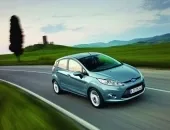 And how it responds to the accelerator! Even though the engine meets Euro 4 standards, there is no talk of sluggish reactions to the gas pedal. And if you like to add not only fuel to the cylinders but also adrenaline to your blood, then every time you will cause a slight drift of the rear axle by sharply lifting off the gas and turning the steering wheel. And on exit — minimal course correction, full throttle, and to the cheerful song of the engine, the "Fiesta" flies forward, to the next turn. And so kilometer after kilometer, turn after turn. Refined automotive pleasure! Fun to drive without flaws. "Look, Shura, what can be made from an ordinary Singer sewing machine." The simplicity of the design, dictated by the need to keep the price in this class, did not affect the polished handling in any way. And how it responds to the accelerator! Even though the engine meets Euro 4 standards, there is no talk of sluggish reactions to the gas pedal. And if you like to add not only fuel to the cylinders but also adrenaline to your blood, then every time you will cause a slight drift of the rear axle by sharply lifting off the gas and turning the steering wheel. And on exit — minimal course correction, full throttle, and to the cheerful song of the engine, the "Fiesta" flies forward, to the next turn. And so kilometer after kilometer, turn after turn. Refined automotive pleasure! Fun to drive without flaws. "Look, Shura, what can be made from an ordinary Singer sewing machine." The simplicity of the design, dictated by the need to keep the price in this class, did not affect the polished handling in any way. |
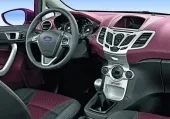 The turbodiesel version cooled the ardor a bit. The 1.6-liter TDCi engine with 90 hp cannot be called weak for a car weighing about a ton. But compared to the gasoline "firecracker" of the same volume, it is frankly boring. The fun evaporates somewhere. You no longer need to downshift before a turn — there is more than enough torque. And the exhaust sound here is, let's say, functional. Moreover, it is often drowned out by the rumbling of the diesel. So you just "rumble" along calmly. Squealing tires? No, thank you. Such a "Fiesta" is phlegmatic and attracts buyers with other values — all of an economic nature. The turbodiesel version cooled the ardor a bit. The 1.6-liter TDCi engine with 90 hp cannot be called weak for a car weighing about a ton. But compared to the gasoline "firecracker" of the same volume, it is frankly boring. The fun evaporates somewhere. You no longer need to downshift before a turn — there is more than enough torque. And the exhaust sound here is, let's say, functional. Moreover, it is often drowned out by the rumbling of the diesel. So you just "rumble" along calmly. Squealing tires? No, thank you. Such a "Fiesta" is phlegmatic and attracts buyers with other values — all of an economic nature. |
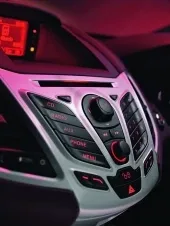 But all "Fiestas" have one constant fun — that very "to look at." After all, it's not often in this segment that cars are bought to fulfill driving ambitions. Most people just need a pretty face. And the Ford folks counted on that not in the last place. In general, you should choose a "Fiesta" not with your brain and a calculator, but with your soul and sense of beauty. The main thing is to forget at the moment of purchase that for comparable money, instead of this little one, you could take a Focus or Fusion. Well, if you couldn't forget — then you're in line for a different joy and a different queue. But all "Fiestas" have one constant fun — that very "to look at." After all, it's not often in this segment that cars are bought to fulfill driving ambitions. Most people just need a pretty face. And the Ford folks counted on that not in the last place. In general, you should choose a "Fiesta" not with your brain and a calculator, but with your soul and sense of beauty. The main thing is to forget at the moment of purchase that for comparable money, instead of this little one, you could take a Focus or Fusion. Well, if you couldn't forget — then you're in line for a different joy and a different queue. |
 FOR YOUR INFORMATION FOR YOUR INFORMATION
32 years of the "Fiesta"…
|
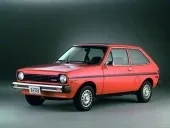
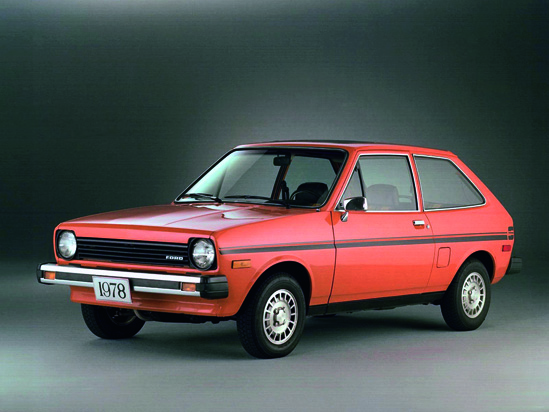
Despite the fact that Henry Ford had no particular fondness for compact cars, it was under his leadership that on December 3, 1973, the board of directors of Ford Motor Company gave the green light to the Bobcat project. The car that eventually appeared became the first model in the brand's history with a transversely mounted engine, and at the end of 1975 it was given the name Fiesta. In 1976, the first generation (Mark I) of this small car went into production.
Three-door hatchbacks were equipped with four-cylinder engines of 1.0 L (40 hp) and 1.1 L (53 hp). The suspension layout — MacPherson struts at the front and a semi-independent torsion beam at the rear — has largely survived to this day, as have the drum brakes on the rear axle.
The second generation (Mark II) was the result of a major modernization carried out in 1983. In addition to an updated exterior and interior, the Fiesta received new petrol engines (1.0–1.4 L, 45–75 hp), and also for the first time gained a diesel (1.6 L, 45 hp) and an automatic gearbox (from 1985). The sporty XR2 version was equipped with a 1.6-liter engine producing 95 hp. The cargo version was called Kasten.
In 1989, the Fiesta Mark III debuted, becoming the first car in its class with ABS. The range of body styles expanded: to the three-door hatchback and the Katsen cargo version were added a five-door hatchback and the Courier estate. There were several sporty modifications of the MkIII — XR2i (1990), RS Turbo (1992), and RS1800 (1993, 1.8 L 16V, 130 hp). In 1994, the driver's airbag became standard equipment. In the last year of production, new petrol engines of the Zetec SE family appeared (1.25 L, 75 hp and 1.4 L, 90 hp).
These same engines became the main ones for the fourth generation Mark IV, released in 1995. True, if desired, one could also choose more budget-friendly older Endura E units with a volume of 1.3 L and power of 50 or 60 hp. The Endura-D diesel (1.8 L, 60 hp) received an injection version developing 75 hp.
The 1999 restyling marked the appearance of the fifth Fiesta — Mark V, which already carried the features of Ford's corporate style of that time, known as New Edge. In 2000, the Sport version was released with a 1.6-liter 16-valve engine producing 103 hp, a "shortened" gearbox, and a stiffer suspension. Such a Fiesta accelerated to 100 km/h in less than 10 seconds.
The sixth generation Fiesta was first shown to the public in Frankfurt in 2002. The Mark V was equipped with Duratec petrol engines ranging from 1.3 to 1.6 L (from 58 to 100 hp), as well as a 1.4 L turbodiesel (68 hp). In 2003, Ford's sports division TeamRS introduced the Fiesta ST version with a 2-liter 150-horsepower engine. The cargo modification, produced from 2004, was called Fiesta Van. Over its 32-year history, more than 12 million Fiestas of all generations were sold, of which 130 thousand were in Russia. The model boasts such prestigious awards as Car Of The Year 1989, Best Small Car In The World, Smartest Small Car, and Best City Car.
**Model generations**
1. Mk I, 1976-1983
2. Mk II, 1983-1989
3. Mk III, 1989-1995
4. Mk IV, 1995-1999
5. Mk V, 1999-2002
6. Mk VI, 2002-2008
**Body**
The body consists of more than 55% high-strength and ultra-high-strength steel, which, with slightly increased dimensions and increased rigidity, made it possible to reduce the vehicle's weight by an average of 40 kg. Particular attention should be paid to the structure around the door opening, known as Door Ring Reinforcement (middle and side pillars, sills, longitudinal roof rails). Its essence is to create a strongest frame that effectively resists the penetration of another vehicle into the Fiesta's cabin and redistributes loads during various impacts.
**Engines**
The cars at the presentation were equipped with top-of-the-line 1.6-liter 4-cylinder units — the petrol Duratec Ti VCT and the turbodiesel TDCi. In addition to them, another 1.4 L turbodiesel (68 hp and 160 Nm) and three petrol engines are available: 1.25 L (60 hp and 109 Nm), 1.4 L (82 hp and 114 Nm), 1.4 L (96 hp and 128 Nm), with the latter capable of being paired with a four-speed Durashift automatic. All Ford engines require an oil change every 20,000 km or once a year.
1. **Duratec 1.6L Ti VCT** — a petrol engine with aluminum head and cylinder block, equipped with the Ti VCT (Twin Independent Variable Camshaft) system. It develops 120 hp at 6000 rpm and 152 Nm at 4050 rpm. As the name implies, the engine has two camshafts and a variable valve timing system on intake and exhaust. It is installed on the Sport modification. Despite the power increase of 20 hp compared to the previous 1.6-liter Fiesta engine, the new unit has become more economical and environmentally friendly. It is also used on Focus II and Mondeo models.
2. **Duratorq 1.6L TDCi** — a turbodiesel with an aluminum cylinder block. It develops 90 hp at 4000 rpm and 204 Nm at 1750 rpm. It is equipped with a Common Rail injection system with a maximum pressure of 1600 bar, a function for short-term torque increase (for example, during intensive overtaking), and an intelligent idle speed control system depending on load. The main trump card of the turbodiesel is high fuel efficiency: only 4.2 L per 100 km in the combined cycle. It is also used on Focus II and C-Max models.
**Suspension**
The photo clearly shows that the Fiesta's suspension is as simple as an orange: MacPherson at the front and a torsion beam at the rear. The same design was already on the first generation in 1976. Its undoubted advantage is maintainability and ease of service. And the only drawback in the form of possibly boring and uninteresting handling was completely eliminated by Ford engineers with well-chosen settings — the Fiesta handles superbly!
Upon closer inspection of the front suspension, it becomes clear that progress does not stand still — things like an aluminum subframe and electric power steering the first Fiesta could only dream of. Handling is affected by the increased to 22 mm diameter of the anti-roll bar, a stiffer rear beam, as well as "European" springs, shock absorbers, and silent blocks — for Asian and US markets the settings are different.

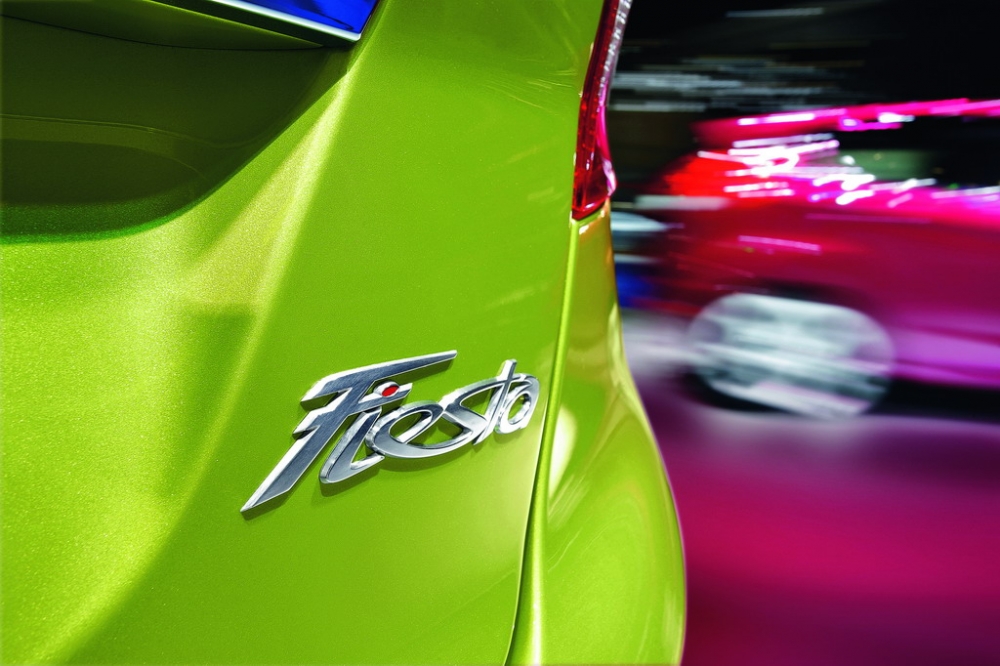 What fun to drive is there here — in the next hall, a Fiesta chassis is displayed on a pedestal, and there are no surprises: a 1.5-liter engine, the familiar five-speed manual, McPherson struts, a torsion beam, and drum brakes at the rear. It immediately brings to mind the VAZ "eight" from the distant nineties. And fun to look at? What could be attractive about the design of a B-class car the size of a large washing machine, even if that design is called "kinetic"?
 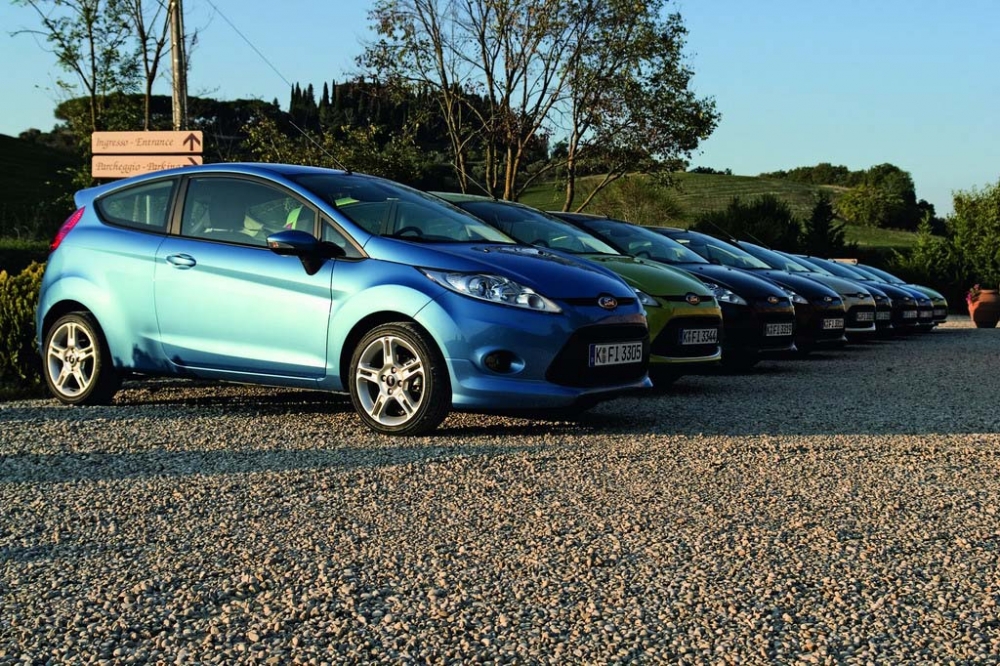 Perhaps that is exactly what I would have reasoned if the Ford folks had decided to hold the presentation before we got behind the wheel. But, fortunately, the order was the opposite. We had our fill of driving along Tuscan roads, where straight sections are rare, and turns are strung one after another with an ideal profile. And every time we stopped for a photo session against the backdrop of picturesque hills and got out of the car, it became clear: you can truly appreciate the Fiesta's appearance only in the open space. When it is locked in a showroom or even in a huge exhibition pavilion, the little one loses half of its charm! So the developers' compliments to their own creation did not seem empty — we thought exactly the same ourselves!
  The Ford Fiesta is the company's first model created under the new "Global Product Development System" (GPDS). Thanks to this, the car will be sold on all continents. About ten years ago, the very idea of a worldwide small car seemed absurd. In the East, the foreign car market was tiny, and in America, people never liked cars that couldn't seat the whole family and still have room for a couple of dozen suitcases. But times are changing: somewhere the economy has changed, somewhere the worldview... As a result, compacts have become needed by the whole world. That's what Ford thinks. And not without reason!
  At the same time, the company's specialists understand that different corners of the planet have their own requirements for handling. Therefore, the European Fiesta will differ from the "Fiesta" for China or the USA. Individual suspension and electronics settings will give the cars their own character. I have no doubt that the Ford folks will succeed. The proof is the "Fiesta" itself. The engineers even managed to make completely different cars within the European lineup. Here, for example, is the three-door in the Sport version. It behaves noticeably sharper on the road than the regular five-door modification. Fine tuning! The most powerful 120-horsepower engine, wheels an inch larger, suspension lower and stiffer. The Sport prefix is fully justified. The "Fiesta" in this version is a little provocateur!
  It took courage to hold the presentation on the rural roads of Italy — narrow and whimsically winding. Not every car will show itself in the best light in such conditions. But the new "Fiesta" has nothing to fear — this is its element. It provokes with everything: with its appearance with a large rear spoiler, and with the amazing grip of the chassis. You want to enter each next turn faster and faster. And you shouldn't be afraid of that — the car is obedient, with proper soft front-wheel-drive manners. Even a beginner can transition from slight understeer on entry to oversteer, simply by instinctively lifting off the throttle.
  And how it responds to the accelerator! Even though the engine meets Euro 4 standards, there is no talk of sluggish reactions to the gas pedal. And if you like to add not only fuel to the cylinders but also adrenaline to your blood, then every time you will cause a slight drift of the rear axle by sharply lifting off the gas and turning the steering wheel. And on exit — minimal course correction, full throttle, and to the cheerful song of the engine, the "Fiesta" flies forward, to the next turn. And so kilometer after kilometer, turn after turn. Refined automotive pleasure! Fun to drive without flaws. "Look, Shura, what can be made from an ordinary Singer sewing machine." The simplicity of the design, dictated by the need to keep the price in this class, did not affect the polished handling in any way.
 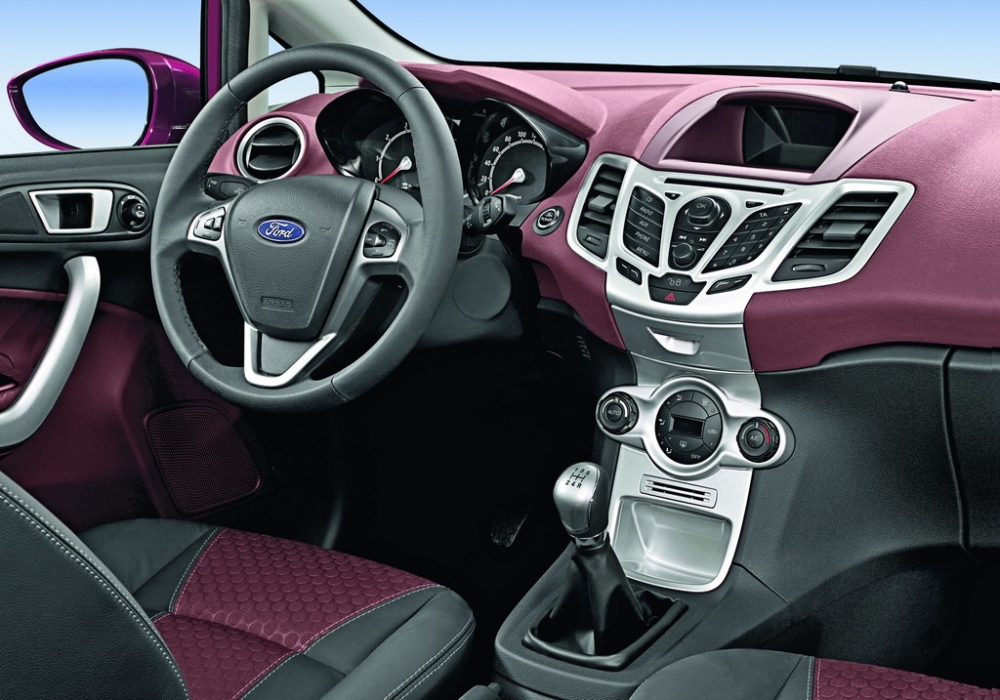 The turbodiesel version cooled the ardor a bit. The 1.6-liter TDCi engine with 90 hp cannot be called weak for a car weighing about a ton. But compared to the gasoline "firecracker" of the same volume, it is frankly boring. The fun evaporates somewhere. You no longer need to downshift before a turn — there is more than enough torque. And the exhaust sound here is, let's say, functional. Moreover, it is often drowned out by the rumbling of the diesel. So you just "rumble" along calmly. Squealing tires? No, thank you. Such a "Fiesta" is phlegmatic and attracts buyers with other values — all of an economic nature.
 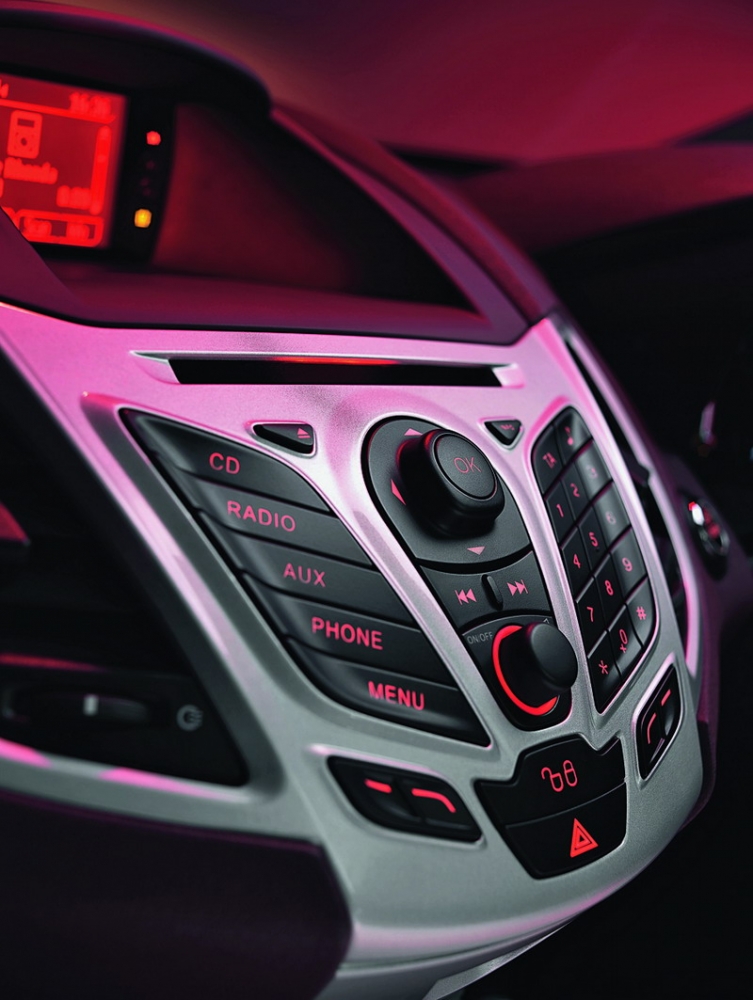 But all "Fiestas" have one constant fun — that very "to look at." After all, it's not often in this segment that cars are bought to fulfill driving ambitions. Most people just need a pretty face. And the Ford folks counted on that not in the last place. In general, you should choose a "Fiesta" not with your brain and a calculator, but with your soul and sense of beauty. The main thing is to forget at the moment of purchase that for comparable money, instead of this little one, you could take a Focus or Fusion. Well, if you couldn't forget — then you're in line for a different joy and a different queue.
  FOR YOUR INFORMATION