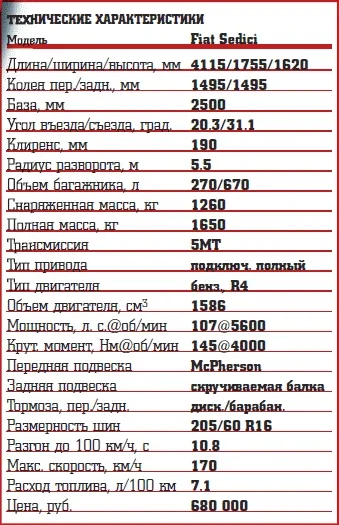
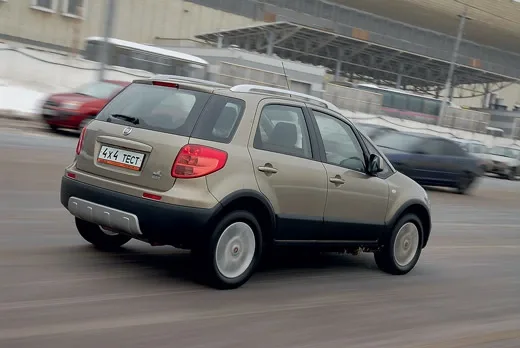
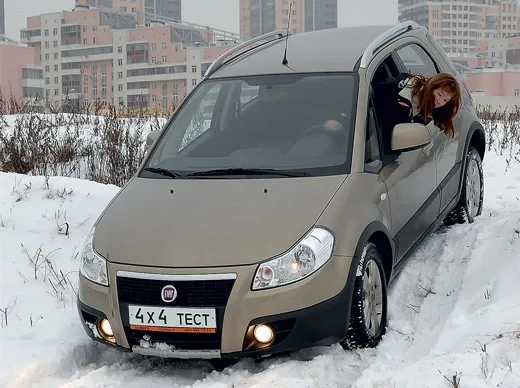
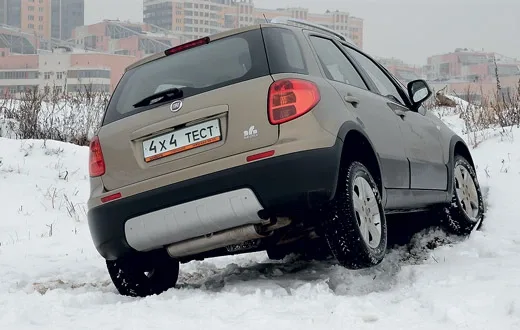
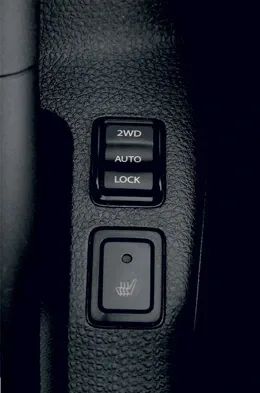
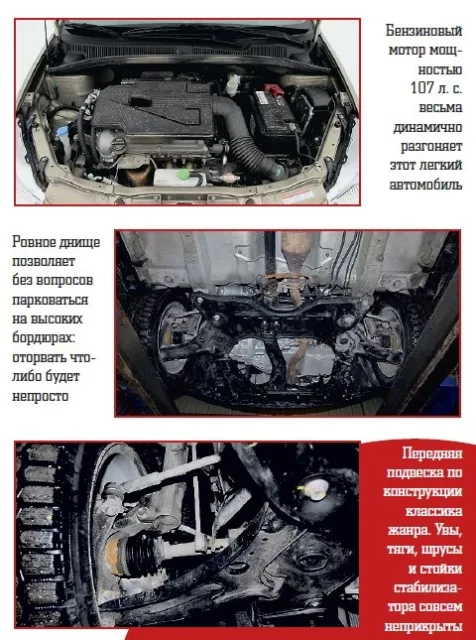
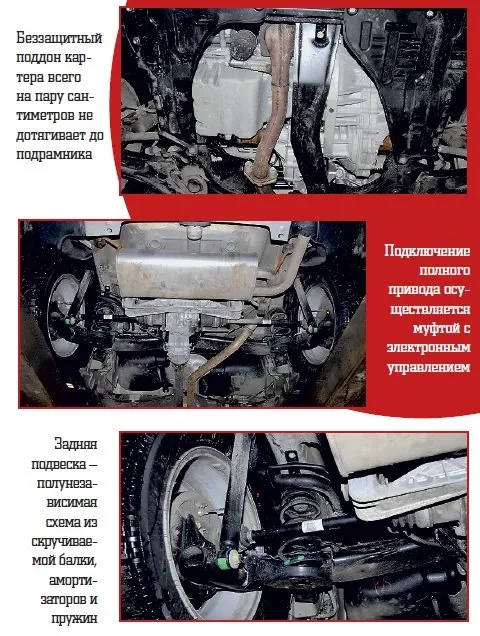
The car has three transmission modes: 2WD, 4 Auto, and 4 Lock. It all seems serious, but... The power of the 1.6-liter engine is clearly not enough to confidently carry the car on all four wheels even on snow about ten centimeters deep. The torque of 145 Nm, available only at 4000 rpm, is a tear for off-road. And 107 "horses" do not save the situation. They are more racehorses than draft horses: the thrust wakes up only by the middle of the rev range and grows towards the top. In the city and on the highway, if you shift gears in time, everything is fine. But on a dirt road, the poor thing starts to slip, smells of burnt clutch, valves clatter, and the car is clearly suffering. If only there were a diesel, a low-range gear, or just a shorter first gear. Alas, none of that is available. One might object: what about the version with an "automatic"? Well, all-wheel drive is paired exclusively with a manual gearbox. Whether it's a marketing ploy or a production complexity is unclear. But even in the two-wheel-drive version, the Sedici is not bad: a ground clearance of 190 mm, a flat bottom, and low weight allow you not to fear high obstacles on the road. Although for hilly terrain with icy roads, the all-wheel-drive version is just the thing.
WELL EQUIPPED
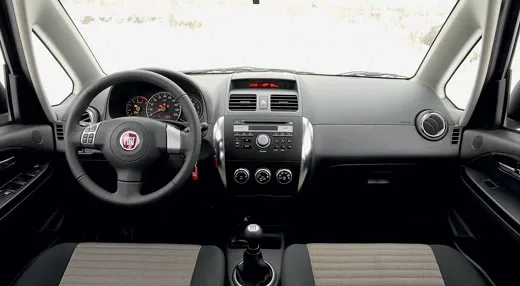
For 680 thousand rubles (price at the beginning of February), the Fiat is generously equipped. There are electric windows, heated mirrors and seats, and power-adjustable mirrors. The central locking with a key fob opens the doors in two stages: first the driver's, then all the rest. The steering wheel is adjustable for tilt, the seat for height, and there are fog lights. Plus climate control, four airbags, and a six-disc audio system with steering wheel controls. True, the stereo only understands CDs, and the buttons on the steering wheel do not cycle through stations saved in memory but start a new search each time. There is also a proprietary Fiat-code anti-theft system — essentially an immobilizer with a floating code.
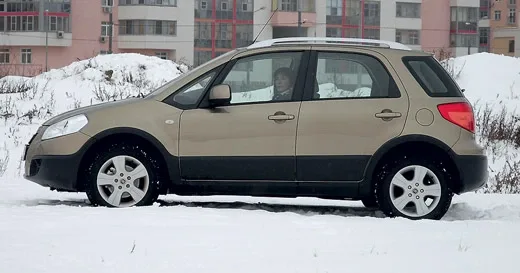
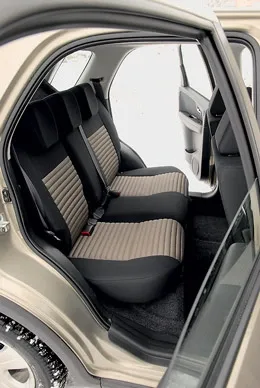
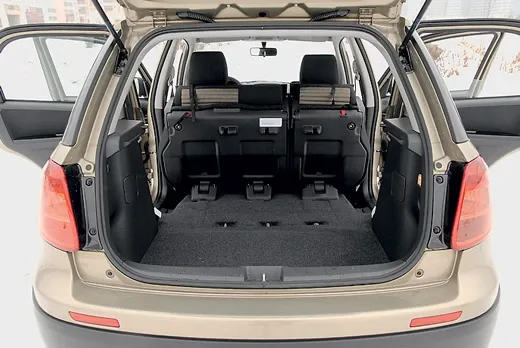
Inside, there is a nice, bright seat upholstery, and the material is not cheap at all. The rear bench folds in parts, and not only the backrest but also the cushion. The trunk is spacious, with a spare wheel under the false floor. There are four sturdy hooks for securing cargo. When the tailgate is opened, the trunk light comes on, and the door itself has an inner handle for convenient closing.
QUESTIONS OF PRICE
There is no rear suspension as such: a simple twist-beam U-shaped axle with springs and shock absorbers. Up front, it's the usual McPherson. Despite drum brakes at the rear, the car brakes quite decently. ABS works correctly: on both dirt and asphalt, it doesn't overreact. The Fiat has no other electronic assistants, and this is its main difference from the clone SX4, which has ESP as standard. And if you compare these two brands, both outside and inside, apart from the badges, they are practically twins. True, the all-wheel-drive Suzuki additionally has side curtain airbags and a stereo with MP3 support. At the same time, it is more expensive by over a hundred thousand rubles and is also assembled in Europe, at Suzuki's Hungarian plant.
TECHNICAL: FIAT SEDICI
RUTS — THE ENEMY
On the highway, I was immediately unpleasantly surprised by the behavior in ruts. The car literally sinks into worn ruts and drives along them like a train on rails. When trying to steer out of a rut, it reacts with a delay and jumps out sharply. You can get used to it, but it's tiring. Although, perhaps, it's the winter studded tires. The electric power steering is well tuned: at speed, the wheel fills with heaviness, and in parking, it becomes light. Overall, the impressions of the Sedici remained pleasant, especially if you remember its price. It is truly convenient in the city and suburbs, economical: according to the onboard computer, consumption did not exceed 10 liters. The dynamics are quite decent: 0-100 km/h in 10.8 seconds. And both sound insulation and ergonomics are in order. Of course, Fiat is not the most popular brand here, but in a crisis, money matters, and here it works in its favor.