
Fiat Bravo
Love or calculation?
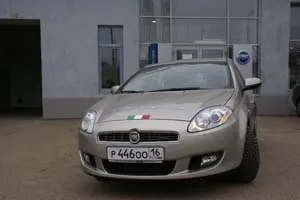
Engine: 1.4 16v T-Jet 150
Max power 150 hp/5000
Max torque
Nm/rpm 230/3000
Max speed: 212 km/h
Acceleration 0-100 km/h: 8.2 sec.
Transmission: 6 MT
Fuel consumption:
Urban cycle 9.3
Extra-urban cycle 5.8
Combined cycle 7.1
Length 4336 mm
Width 1792 mm
Height 1498
Tires 205/55 R16
Curb weight 1275
Full equipment
(ABS with EBD, ASR, MSR, ESP+Hill Holder, 7 airbags, etc.)
Price: $22,613 (UAH 180,900)
+$287 (UAH 2,295) metallic paint
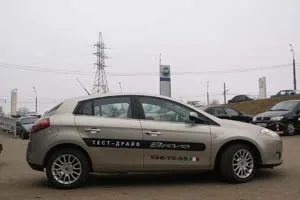
Today, FIAT is not just a brand, but a whole empire uniting a huge number of enterprises. In fact, the entire Italian automotive industry rests on this concern. Under its wing are such legendary brands as Alfa Romeo, Ferrari, Maserati and Lancia, known worldwide. The concern's path was thorny: factories were destroyed and rebuilt more than once. But despite all the difficulties, FIAT cars continue to be produced, and they are consistently in demand thanks to a successful combination of price and technical characteristics. When the popular Tipo model left the scene, in mid-1995 it was replaced by a new series — two almost identical small-class hatchbacks. The idea itself was not new, but for the first time in the concern's history, each model was given its own name: the three-door version was called Bravo, and the five-door — Brava. In fact, this family did not appear out of nowhere — a year earlier, similar cars named 145 and 146 had already appeared at Alfa Romeo. The new FIATs largely lived up to expectations, and the Bravo immediately received the prestigious title of Car of the Year in 1996. In the same year, the Marea sedan was created on the same base, which quickly gained recognition in Western Europe. In essence, it was a Brava that had grown into a full-fledged representative of the middle class D.
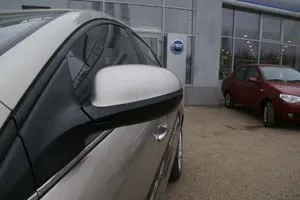
In 1998, a special Arctic modification of the Marea was developed for the Russian market. The Stilo became the successor to the Brava, but this model did not achieve particular success — it stood out too much from FIAT's emotional style. The company believes that every new model should be a logical continuation of the brand's history. Therefore, when creating the new Bravo, designers looked back at the glorious past, completely erasing the Stilo from the list of benchmarks. Instead of cold lines tailored to German competitors, the Italians returned to their element — smooth, streamlined shapes reminiscent of feline movements, and curious details. Interestingly, the process was led by Austrian Christofer Reitz, whose track record included Audi and Nissan. Perhaps it was the outside perspective that allowed him to highlight and emphasize truly Italian features. With the new Bravo, FIAT gained not only a fresh design but also a new emblem — the company says this is the beginning of a new era. However, appearance is far from the only trump card. This car is perhaps the quietest in its class. It feels as if all noises have been sealed in an airtight container and left far behind. The cabin assembly is also impressive — no gaps or flaws. How reliable the hardware will prove over time, practice will show, but management has a special attitude towards this model — it should become the new face of the brand.
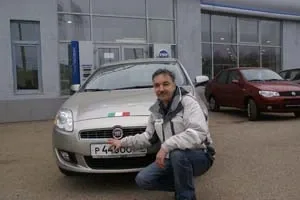
Vadim Sadykov
Alfred will tell you much more eloquently about how good Fiat cars are. I will approach the issue more pragmatically. The first thing that surprised me even in the showroom was that the Bravo has only one engine and a single trim level. I would call it luxury: it has almost everything except leather upholstery and an automatic transmission. And the price is corresponding: 678.5–687 thousand rubles (plus a surcharge for metallic). For a golf-class car, this is perhaps a bit much. However, the dealer promises that later a less powerful engine (120 hp) and more affordable versions will appear. For comparison: the Volkswagen Golf 1.4 turbo (140 hp) starts from 520 thousand, and the 170-horsepower version is estimated at 740 thousand rubles.

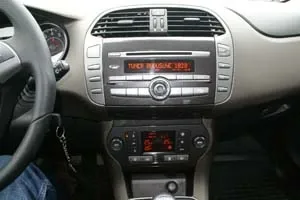
Now let's figure out what the buyer gets for this money. The exterior is bright — FIAT has always been strong here. Inside, everything is done solidly and, I dare say, expensively. Pleasant-to-touch plastic, a successful combination of materials and colors. I was especially pleased with the combined upholstery of the seats. For rear passengers, a separate air duct with adjustment is provided. There is not much knee room in the back — after all, it's class C — but it's quite enough. There is a full electric package, a radio with MP3 support and climate control. And also a whole arsenal of electronic assistants. The equipment is truly luxurious.
So far, only one engine is available — a 1.4 turbo with 150 hp, and only paired with a 6-speed manual. Of course, such a hot hatch has all the necessary active safety systems: ABS+EBD, traction control and stability control. The absence of a rear independent suspension was a bit puzzling — for active driving it seems mandatory. However, this fits perfectly into the concept: maximum comfort, smooth smoothing of bumps and just a touch of drive as a seasoning. We drove the Bravo on the same roads where we had recently tested the new Mazda6. This FIAT handles potholes and bumps a bit stiffer, but even broken asphalt does not disturb the calm of the occupants. We took our favorite turn on the Northern Bypass at 120 km/h: the car behaves predictably, without unpleasant sharp longitudinal jerks for passengers. Overtaking trucks can be confidently started from 2500 rpm, except for the sixth highway gear — there, up to 3000 rpm, the car seems to sleep. On the highway, I would give the Bravo a solid five plus: softness, excellent sound insulation, a decent reserve of traction. But on a series of winding turns, the picture deteriorated a bit. On the Mazda6, we took them at a hundred, and it felt like extreme. The Bravo at 110 km/h remained reliable and safe, but there was no that thrilling screwing into the corner. I think the lack of a rear independent suspension is taking its toll. Let me emphasize: we are not chasing speed records. As they say at the Dmitrovsky test site, the main thing in a test is to understand the car's behavior in everyday life, with an ordinary driver. The new Bravo has become more solid and calmer than the previous one.
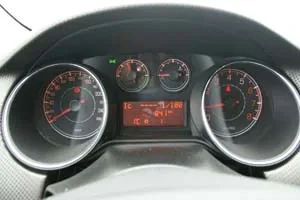
In city traffic, the car makes a mixed impression. Subconsciously, you want to keep the tachometer needle above 3000 and really step on it. I admit, this is not my usual style — I prefer the 2000–2500 rpm range. Let's try driving the Bravo the same way. The soft suspension allows for a leisurely, comfortable ride. But here's the problem: below 2500 rpm there is no life — without downshifting, you won't achieve sharp acceleration. Nothing can be done, these are the features of a turbo engine. Even though this 1.4 is not inferior to the atmospheric 2.0 in maximum power, at low revs the small displacement is clearly felt. And one more important point — consumption. The specifications state 9.3 l/100 km in the city. We reset the on-board computer readings and after mixed trips got 9.6 l. Of course, the BC is not a benchmark of accuracy, but the overall picture is clear: the appetite is not frightening, and that's pleasing.
I'm not sure that young people will line up for this hot hatch — the price may scare off — but for an active person around thirty, this is a very worthy option.
Alfred Mardanov
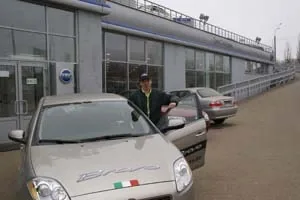
Having solid experience owning Fiats — first a Brava from 1996, and now a Grande Punto — I tried to approach the test as objectively as possible. It's like this with Italian cars: love arises instantly and forever, or not at all. This is not my invention, but an axiom. All purchases of Italians in Russia are pure emotion. They are taken with all the pros and cons, like a beautiful girl who urgently needs to be taken to the registry office. This Bravo demonstrates a completely new approach to development. Thanks to the use of mathematical models and parallel technological chains with short links, the path from drawing to production line took only 18 months.
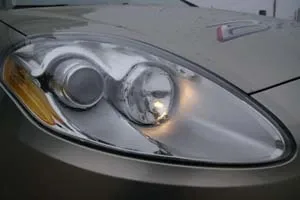
Virtual prototypes of components and assemblies appeared in the digital space, and in parallel, production was already preparing for their release — the logistics of assembly line production were calculated right away. It sounds like science fiction: a car exists only as a computer model, but parts for it are already being put into production. Of the 170 mandatory crash tests, about a hundred were conducted using mathematical simulations — this saved a lot of time and money. The path from the first sketch to a full-size mockup took only 6 weeks, which would be an impressive result even for the Japanese. With such haste, the design does not look raw or hastily assembled at all. The front end hints at Punto features — this is a new take on Giugiaro's creation, but now it's Fiat's own design center development. The Bravo features a new emblem with a red backing and a propeller-shaped grille — a nod to the brand's aviation past. There seems to be no flashy detail, but you look and understand that it's beautiful. But the most interesting part awaits inside, in the cabin.
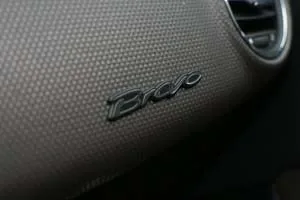
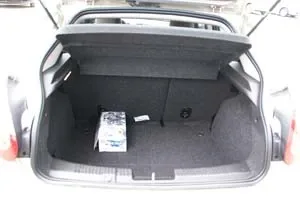
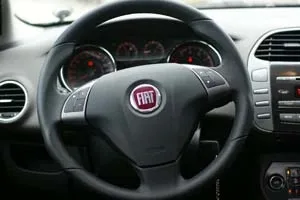
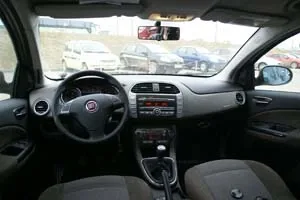
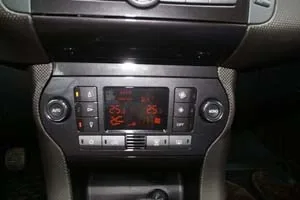
It seems that the Italians tried to use as many modern materials as possible, but without falling into bad taste and chaos. They succeeded, and quite admirably. The front panel is trimmed with soft carbon-look plastic that feels more like rubber to the touch. The top of the door cards is dense, rough plastic, and below are velour inserts. The center stack and climate control unit are made of glossy plastic with an unusual texture. The head unit of the audio system and round air vents, slightly angled in Mazda style and located at the top of the center console, are framed with an aluminum-look insert. The seats are upholstered in the same velour — the fabric is grippy, pleasant to the touch, holds the body well, and provides some lateral support in corners. The Bravo's cabin is one of the most spacious in its class, and its trunk is larger than many competitors': 400 liters in normal state and 1175 with the seats folded. At the same time, there was room inside for a full-size spare wheel on an alloy rim. Now that's generosity! True, the trunk has no exterior handles (as on the Punto), and in our conditions, where dirt seems to fall from the sky, getting your hands dirty is all too easy. The leather steering wheel is simply superb: with comfortable grips and music control buttons. It adjusts for both rake and reach. The seat also has a wide range of adjustments, so even a very tall driver can easily find a comfortable position.

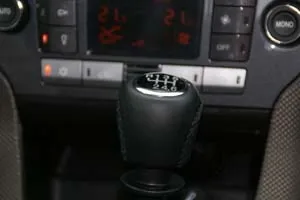
Now it's time to get to the main highlight — the 150-horsepower turbo engine. The Bravo simply must drive excellently. After short test drives, I understood the character of this car: the engine is torquey at low revs, but truly wakes up after 2800–3000 rpm. The gearbox has short ratios, and during acceleration you have to shift quickly, as if in street racing, and the feeling is like falling down while gaining speed. The engine purrs gratefully when you rev it toward the red zone, and the speedometer needle easily goes past 160 km/h. With the six-speed gearbox, I'd prefer shorter throws in a sporty style, but gear selection is excellent. Another feature is the very, very soft pedals. Usually the clutch pedal is made stiffer, but here everything is equally soft. The brakes are very adequate and precisely dosed. Such a wild character, despite the modest 1.4 liters, needs serious brakes — and everything is in order here. However, the steering feel is lacking. This is more of a common issue with electric power steering, not specific to this model: most of them are uncommunicative. The Bravo's suspension handles road irregularities well; there's none of the shaking I feared. Body roll in corners is minimal, and the car handles well. It feels like you're driving a ball made of dense rubber — soft but elastic, it bounces but doesn't lift far off the surface.
I'll separately note the excellent sound insulation — maybe even a bit overdone. They could have let some noble engine sound into the cabin. In the rear seats, even with studded tires and nearly bare asphalt, noise discomfort is quite tolerable — I expected worse. On the highway, the car is very pleasant, though I never got to use sixth gear except when coasting. But the city turned out to be even more interesting. No one expected such provocation: it's hard to resist the temptation to fly like a bullet from traffic light to traffic light. Andiiieeee, fun! While driving, wheelspin often occurs when shifting into second and third gears. This is visible on the stability control indicator. In general, the car is simply a generator of good mood and drive. Stylish design, stylish interior, spirited engine — what more is needed for success? With a fairly rich trim level, the price is 670,000 rubles. This is not the cheapest option in its class, so it will only be bought out of love. Out of love — for individuality and non-triviality, without losing comfort, safety, and drive. And love at first sight has the right to exist: take another look at the Bravo — do you feel a rush of adrenaline?