
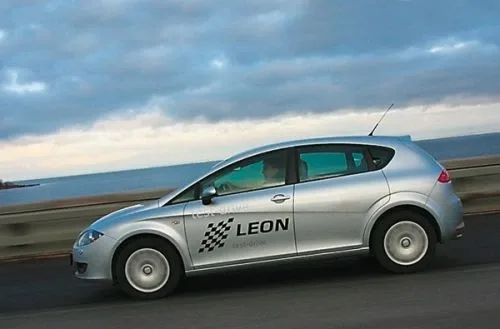
Fiat Bravo and Seat Leon are cars that are undeservedly overlooked. Their characteristics are quite comparable to more famous competitors, but buyers somehow pass them by. Perhaps it's a matter of stereotypes or poor positioning. We decided to find out which of this pair really deserves a place in the garage by arranging a face-to-face meeting.
Seat Leon. Price: from 572,500 RUB. On sale: since 2005.
2005 Seat Leon
© Photo: Igor Kuznetsov, 5 Koleso
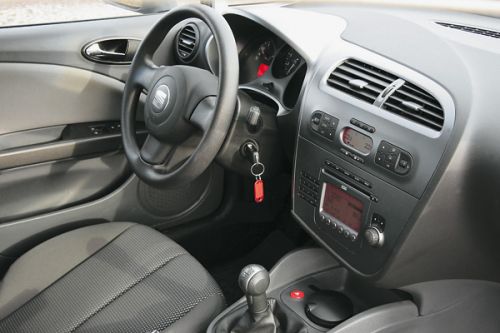
2005 Seat Leon
© Photo: Igor Kuznetsov, 5 Koleso
Fiat Bravo. Price: from 655,000 RUB. On sale: since 2007.
Bravo is a purchase more for the soul than for the mind. But if you set aside emotions, it turns out that the Italian can be practical: it has a spacious cabin, a roomy trunk, and in Emotion and Sport versions, a powerful turbo engine under the hood.
While we're stopped at a traffic light, I catch interested glances from drivers of neighboring cars. No wonder — both models are rare on our roads. It feels like joining a new team: until you get acquainted, everyone is sizing you up, deciding whether you'll be a friend, an enemy, or just a neighbor. There are definitely no indifferent people around us. And that's understandable: both cars were created by people who clearly put passion above rationality. Their design has not a drop of conservatism or utilitarianism — only emotions. Therefore, I won't judge who is more beautiful: feelings are either shared or not, and comments here are superfluous.
2005 Seat Leon
© Photo: Igor Kuznetsov, 5 Koleso
2007 Fiat Bravo
© Photo: Igor Kuznetsov, 5 Koleso
Let's look inside. The trunk organization is almost the same for both: a high sill, folding backrests in a 40:60 ratio, and there's also an underfloor compartment. Subjectively, the Leon's trunk seems larger, but the numbers say otherwise: the Bravo has 400 liters versus 341 for the Spaniard. However, everything falls into place if you look at the dimensions. The Bravo, though not by much, is larger than the Leon in all parameters, hence the deceptive impression.
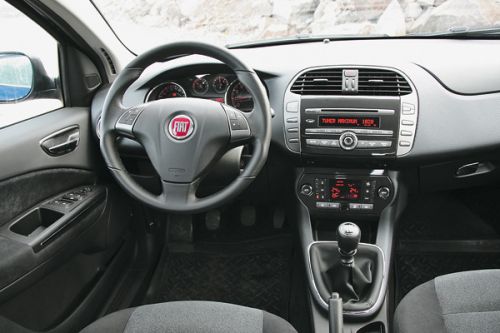
2007 Fiat Bravo
© Photo: Igor Kuznetsov, 5 Koleso
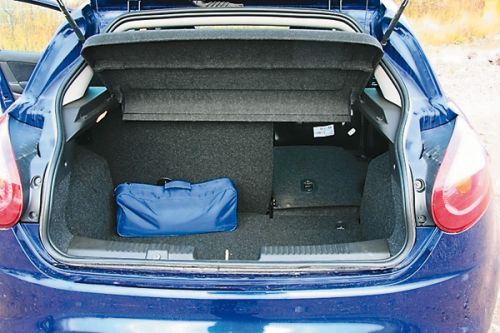
2007 Fiat Bravo
© Photo: Igor Kuznetsov, 5 Koleso
It mixes everything: materials, colors, shapes, but it's done so harmoniously and professionally that it looks impressive. And ergonomics don't let you down: all buttons and levers are understandable without instructions, on an intuitive level. Only one thing is unclear: how, with larger dimensions and a longer wheelbase, is the Bravo's second row more cramped than the Leon's, which is smaller in all parameters? In the Spaniard, it's definitely more spacious in the back, and getting in there is more convenient — the pillar doesn't interfere. In the Bravo, to sit down, you have to almost tuck your feet between the seat and the pillar.
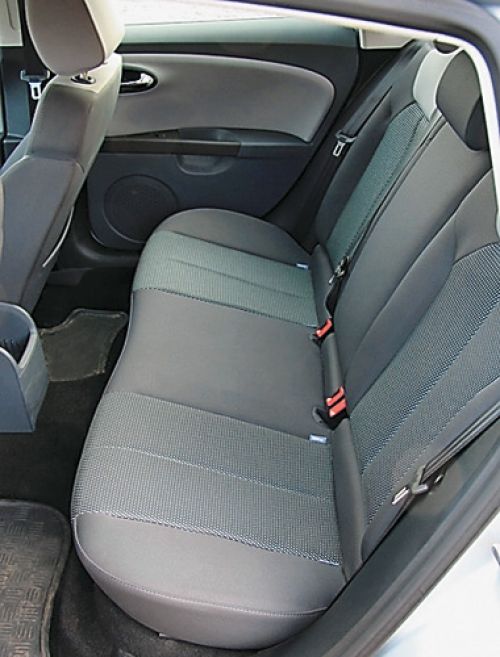
2005 Seat Leon
© Photo: Igor Kuznetsov, 5 Koleso
Fiat Bravo
Driving
The car is composed, at high speed it handles without extra effort.
Interior
Pleases the eye and is made of quality materials. Easily accommodates four people plus the driver.
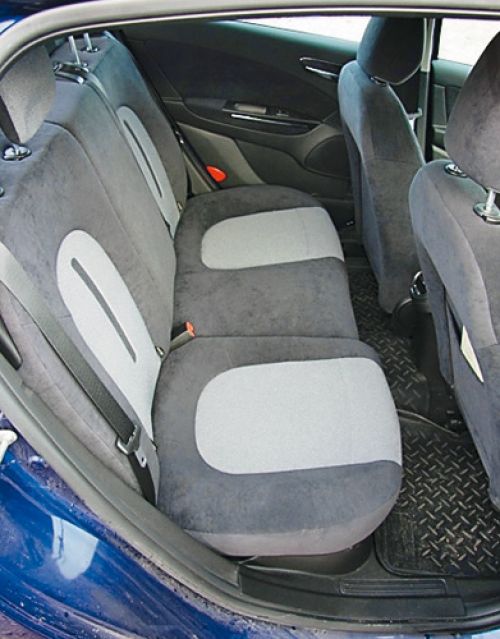
2007 Fiat Bravo
© Photo: Igor Kuznetsov, 5 Koleso
Good sound insulation and dual-zone climate control make long trips easy.
Safety
Standard: ABS, EBD, and two airbags.
Price
Adequate.
Seat Leon
Driving
Fully matches its image: dynamic, sharp steering, and with stability control off — a real rebel.
Interior
Practical and comfortable, but the abundance of cheap plastic and utilitarian design don't please.
Comfort
Everything would be fine, but sound insulation is clearly lacking.
Safety
The base version has all the necessary set of systems.
Price
Acceptable.
We didn't go on this trip in vain — now we can confidently say: if you're tired of seeing an endless string of identical cars on the roads and don't want to blend into the gray mass, this pair is definitely worth considering. At almost the same price and similar equipment as competitors, they stand out noticeably from the crowd. And it's not just about their individuality — which is sometimes worth a lot — but also about the set of systems that come standard here, not for an extra charge.
© 5 Koleso