
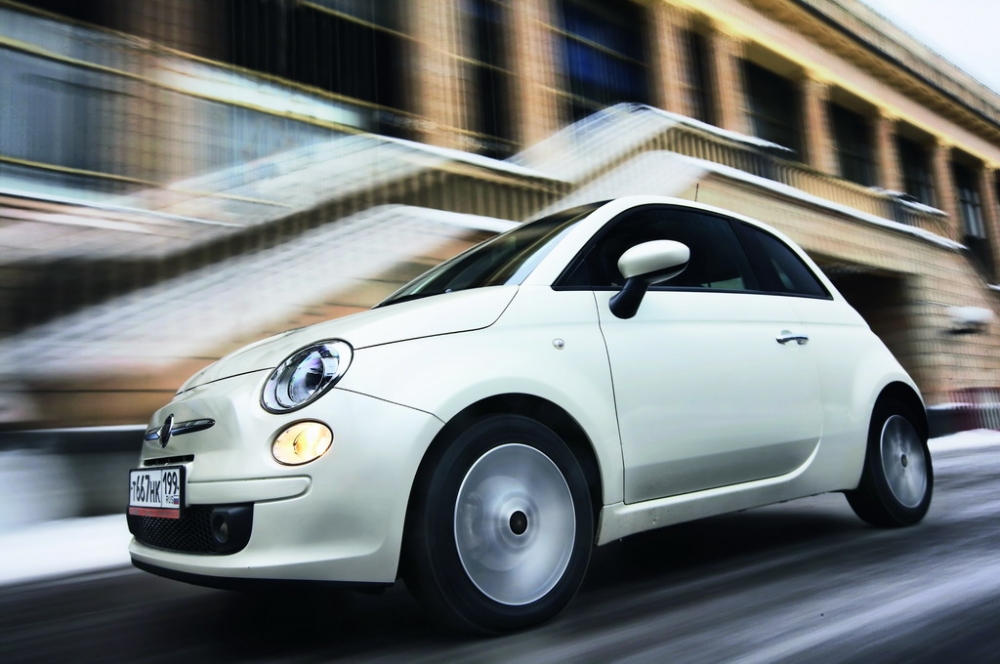
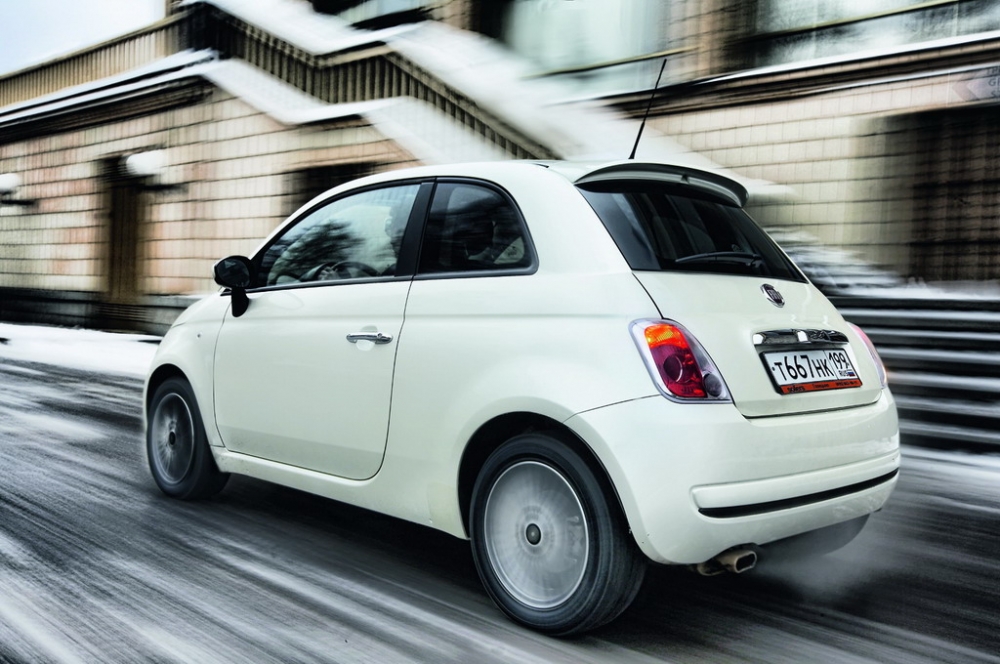
 Almost every time I left this car's cabin, I had to have the same conversations. It seems no other car attracted so much attention from passersby. Moreover, both men and women showed interest equally often. This Fiat attracts glances like a magnet! My mom never tires of repeating that she adores cars and buses from the fifties — in her words, they look "animated, like people." The headlight-eyes are about to wink, and the radiator grille spreads into a friendly smile. Of course, these days John Lasseter and Joe Ranft, the creators of the animated film "Cars," have been the best at bringing cars to life. But that's animation, while here it's reality. FIAT's designers managed to breathe a soul into this little one — it's truly alive! Almost every time I left this car's cabin, I had to have the same conversations. It seems no other car attracted so much attention from passersby. Moreover, both men and women showed interest equally often. This Fiat attracts glances like a magnet! My mom never tires of repeating that she adores cars and buses from the fifties — in her words, they look "animated, like people." The headlight-eyes are about to wink, and the radiator grille spreads into a friendly smile. Of course, these days John Lasseter and Joe Ranft, the creators of the animated film "Cars," have been the best at bringing cars to life. But that's animation, while here it's reality. FIAT's designers managed to breathe a soul into this little one — it's truly alive! |
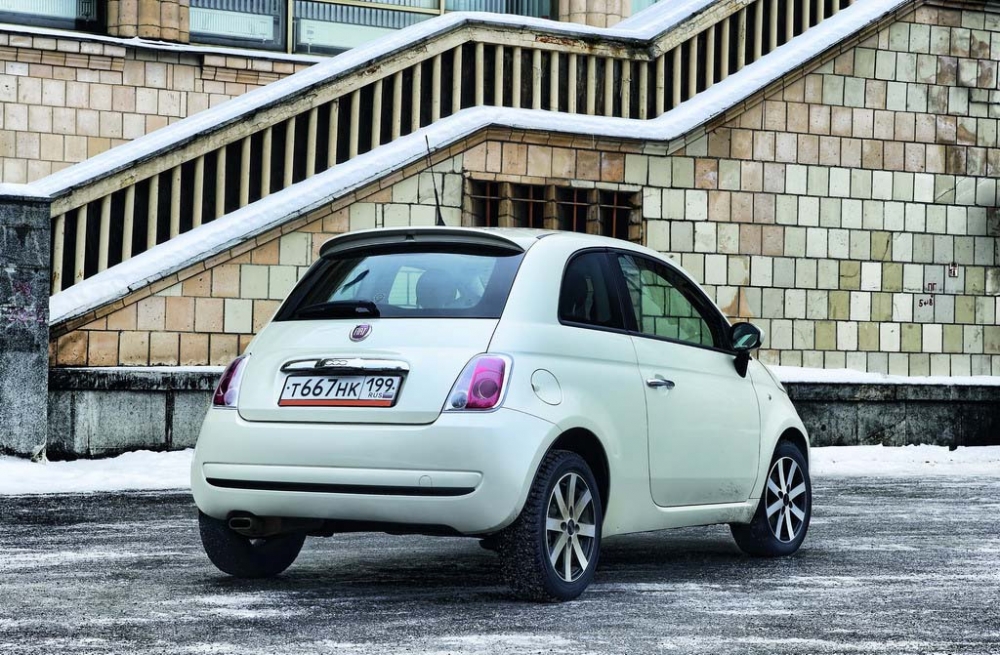
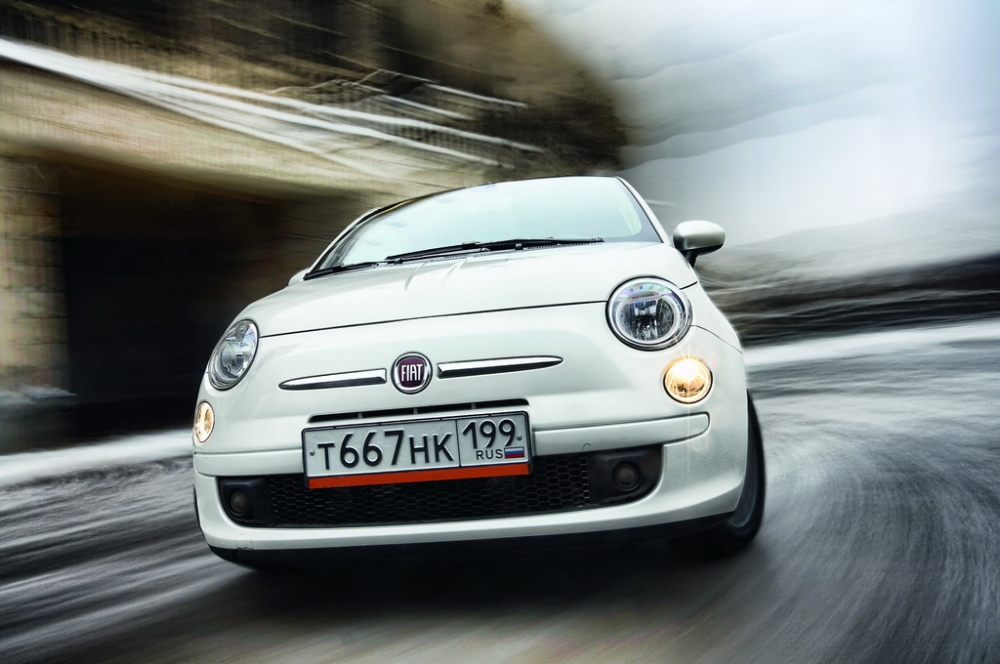 Perhaps such cheerfulness of the "five hundredth" is explained by the fact that its "ancestor" is exactly from the era of the 50s — that very generation of cars with "faces." Everyone knows that the modern Fiat 500 is created based on the legendary Italian "people's car." But half a century has passed, and the world has changed — both psychologically and technologically. Therefore, FIAT deserves another praise for the courage to undertake such a transformation. Let the little Fiat lose its main trump cards, which it flaunted in the mid-last century: simplicity, economy, and accessibility for all. But it managed to retain attractiveness and brightness. For some reason, we tend to call this glamour. This is precisely the reason for universal love. We adore glamorous things, even if there is little use from them. Perhaps such cheerfulness of the "five hundredth" is explained by the fact that its "ancestor" is exactly from the era of the 50s — that very generation of cars with "faces." Everyone knows that the modern Fiat 500 is created based on the legendary Italian "people's car." But half a century has passed, and the world has changed — both psychologically and technologically. Therefore, FIAT deserves another praise for the courage to undertake such a transformation. Let the little Fiat lose its main trump cards, which it flaunted in the mid-last century: simplicity, economy, and accessibility for all. But it managed to retain attractiveness and brightness. For some reason, we tend to call this glamour. This is precisely the reason for universal love. We adore glamorous things, even if there is little use from them. |
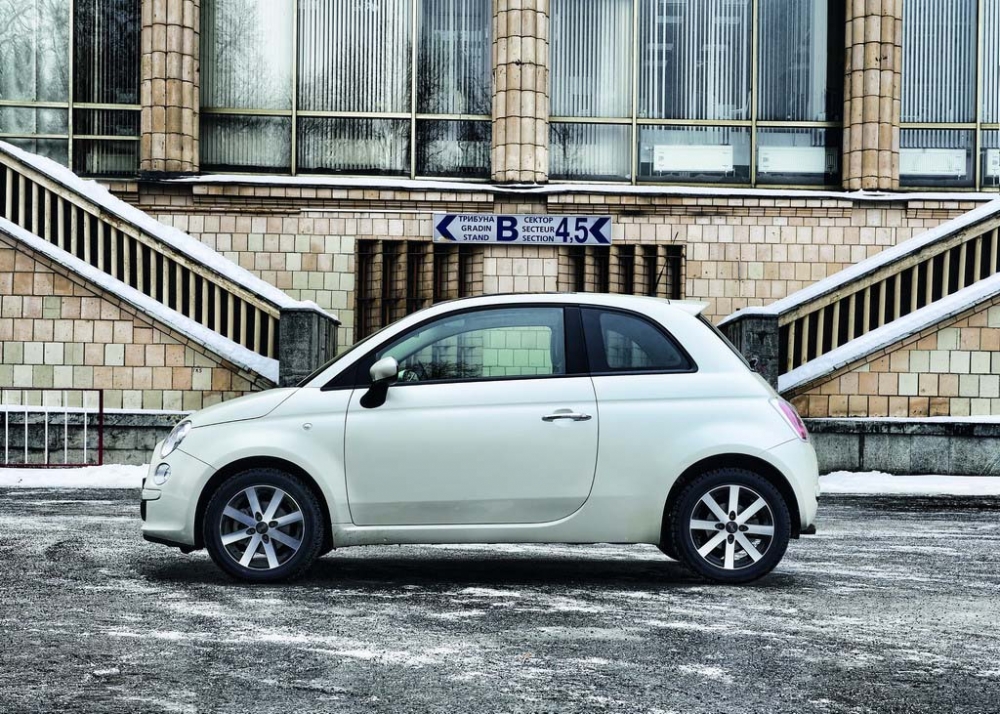
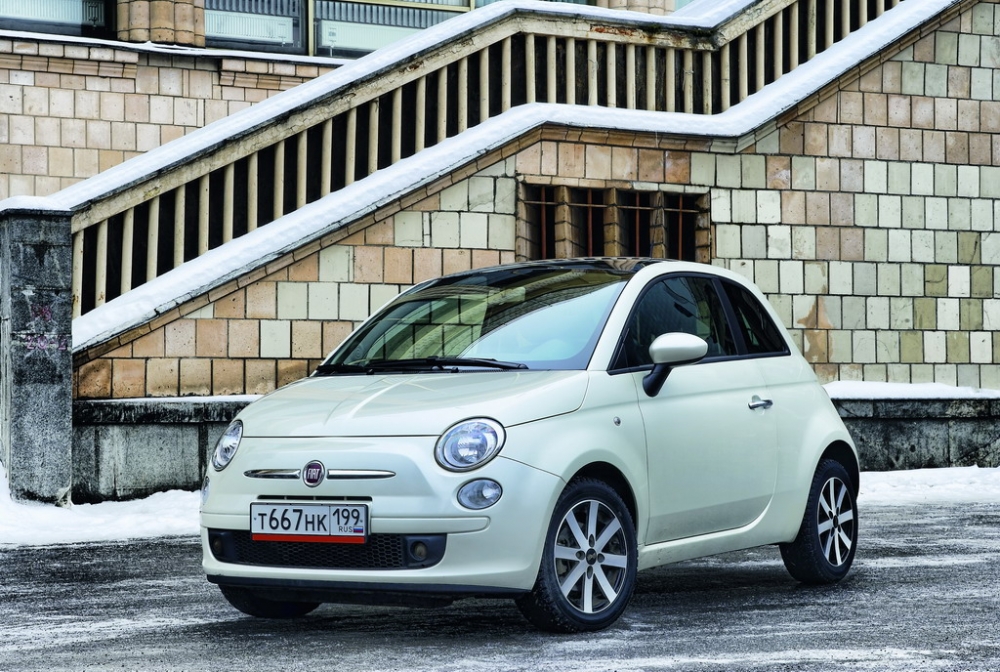 And is there much of it from the Fiat 500? Honestly, apart from aesthetic pleasure — not very much. First of all, due to its ultra-compact dimensions. We must give credit to modern designers: they have learned to arrange cars of the junior A-class so that four people can fit in them. But you shouldn't count on full comfort for four adults in a car 3.5 m long and 1.6 m wide. Up front, it's still tolerable. Of course, ergonomics are far from ideal — for example, you sit as if in a tractor, almost standing, and constantly hit your neighbor with your elbows. And is there much of it from the Fiat 500? Honestly, apart from aesthetic pleasure — not very much. First of all, due to its ultra-compact dimensions. We must give credit to modern designers: they have learned to arrange cars of the junior A-class so that four people can fit in them. But you shouldn't count on full comfort for four adults in a car 3.5 m long and 1.6 m wide. Up front, it's still tolerable. Of course, ergonomics are far from ideal — for example, you sit as if in a tractor, almost standing, and constantly hit your neighbor with your elbows. |
 But here too, glamour takes over. You glance at all these fashionable details like chrome handles or the saucer-shaped instrument panel with two needles chasing each other, touch the pleasant perforated leather on the armrest, hold onto the convenient (also leather) gear knob, and think: "Forget ergonomics! But how cute and original it all is!" Turn the music up louder and more cheerful to drown out the numerous noises (tires, engine, wind at speed), and off you go! But here too, glamour takes over. You glance at all these fashionable details like chrome handles or the saucer-shaped instrument panel with two needles chasing each other, touch the pleasant perforated leather on the armrest, hold onto the convenient (also leather) gear knob, and think: "Forget ergonomics! But how cute and original it all is!" Turn the music up louder and more cheerful to drown out the numerous noises (tires, engine, wind at speed), and off you go! |
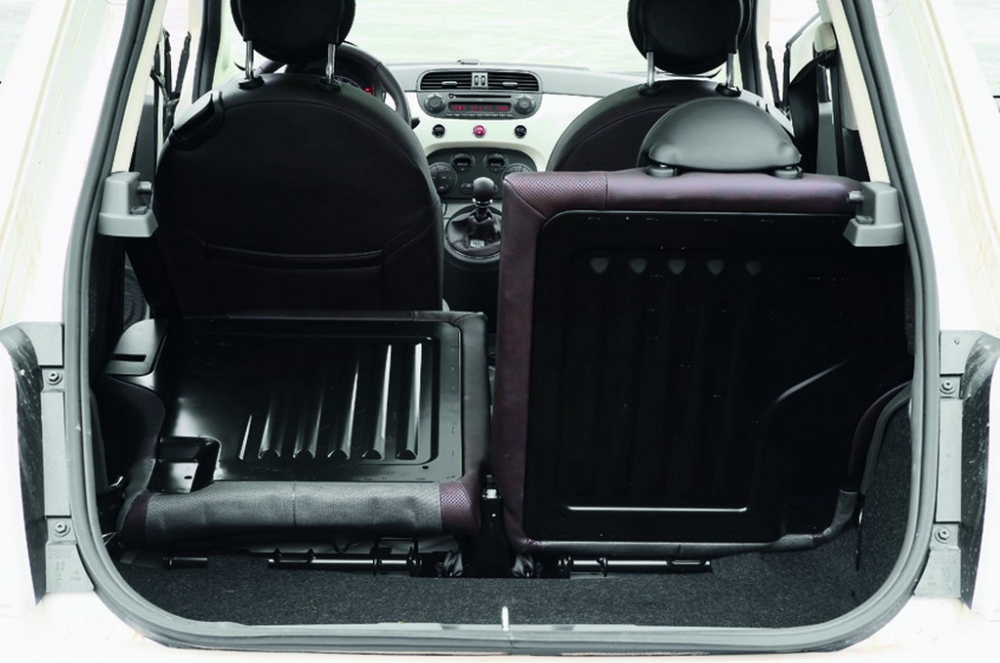
 Yes, the Fiat 500 can take two adult passengers on board. But this is associated with a number of obvious inconveniences. For example, these two will have to squeeze through a narrow opening, bending over backwards. Then, sitting in the back is possible, but also not too comfortable: legroom and shoulder room are tight, and the sloping roof presses down, the inability to quickly exit causes claustrophobia, which intensifies with increasing speed and the number of potholes — the rear shakes considerably. Talking to front passengers while moving is practically impossible — they don't hear you, and you don't hear them. In general, rear passengers have a hard time, and they don't get any glamour either — only leather upholstery on flat seats. So it's better to use the little car for its intended purpose, namely, to drive no more than two people. Yes, the Fiat 500 can take two adult passengers on board. But this is associated with a number of obvious inconveniences. For example, these two will have to squeeze through a narrow opening, bending over backwards. Then, sitting in the back is possible, but also not too comfortable: legroom and shoulder room are tight, and the sloping roof presses down, the inability to quickly exit causes claustrophobia, which intensifies with increasing speed and the number of potholes — the rear shakes considerably. Talking to front passengers while moving is practically impossible — they don't hear you, and you don't hear them. In general, rear passengers have a hard time, and they don't get any glamour either — only leather upholstery on flat seats. So it's better to use the little car for its intended purpose, namely, to drive no more than two people. |
 And in the maintenance of the little Fiat, there is no trace of the simplicity of its progenitor. Here you have a new 1.4-liter engine with a hundred "horses," a six-speed "gearbox," electric power steering, and disc brakes on all wheels. There is a clear substitution of ideology: from an affordable car for everyone, it has turned into a fashionable high-tech toy. Italians have always known how to teach their cars proper road behavior, regardless of size. In addition to the extremely favorable sensations it is ready to deliver when admired, the Fiat 500 will also please the driver. I'll immediately disappoint some young ladies who, upon seeing photos of the 500th, will immediately reach for their husbands' credit cards — unfortunately, the version with the most powerful 1.4-liter engine is only available with a manual. But with the 1.2-liter 70-horsepower engine, you can order a "robot." Although, most likely, the lower power won't be an obstacle, because "it's so cute!" And in the maintenance of the little Fiat, there is no trace of the simplicity of its progenitor. Here you have a new 1.4-liter engine with a hundred "horses," a six-speed "gearbox," electric power steering, and disc brakes on all wheels. There is a clear substitution of ideology: from an affordable car for everyone, it has turned into a fashionable high-tech toy. Italians have always known how to teach their cars proper road behavior, regardless of size. In addition to the extremely favorable sensations it is ready to deliver when admired, the Fiat 500 will also please the driver. I'll immediately disappoint some young ladies who, upon seeing photos of the 500th, will immediately reach for their husbands' credit cards — unfortunately, the version with the most powerful 1.4-liter engine is only available with a manual. But with the 1.2-liter 70-horsepower engine, you can order a "robot." Although, most likely, the lower power won't be an obstacle, because "it's so cute!" |
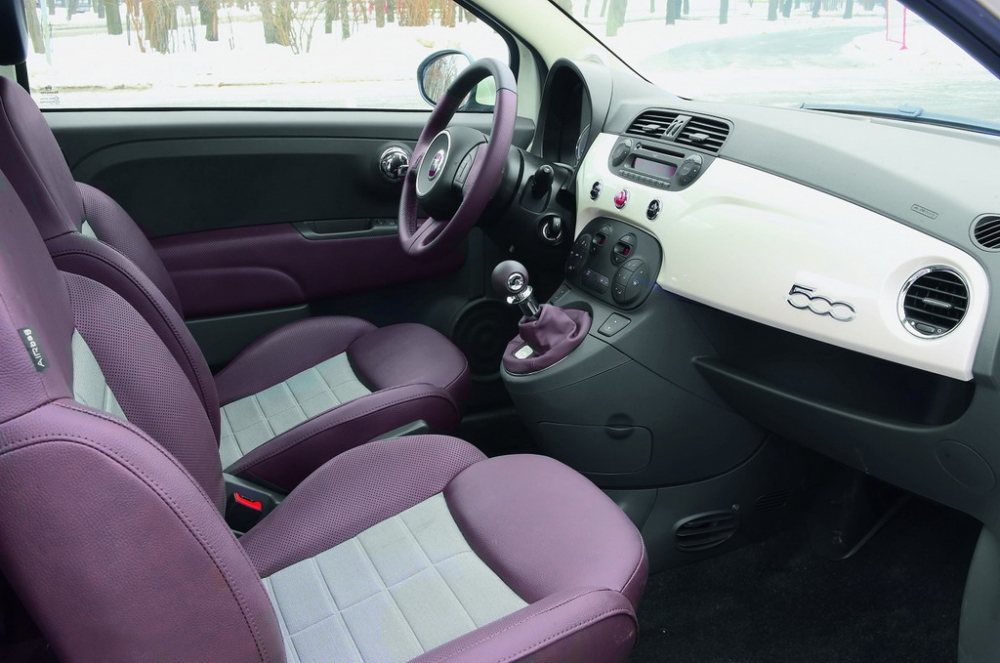 Having "bent" under Euro-5, the 100-horsepower engine has noticeably become dull. It would seem that a hundred forces for this little one should be more than enough. But that's not the case. The engine is choked, the response to pressing the gas pedal is extremely damped, the gears are stretched incredibly (in third gear you can accelerate to almost 160 km/h). All this leads to moderate acceleration. Pressing the Sport button on the front panel adds sharpness to the gas pedal. It also makes the steering heavier; in the Lounge version, instead of sport, an ultra-light City mode is activated. I wouldn't call this a necessary measure for active driving — it would be better to have more feedback. Having "bent" under Euro-5, the 100-horsepower engine has noticeably become dull. It would seem that a hundred forces for this little one should be more than enough. But that's not the case. The engine is choked, the response to pressing the gas pedal is extremely damped, the gears are stretched incredibly (in third gear you can accelerate to almost 160 km/h). All this leads to moderate acceleration. Pressing the Sport button on the front panel adds sharpness to the gas pedal. It also makes the steering heavier; in the Lounge version, instead of sport, an ultra-light City mode is activated. I wouldn't call this a necessary measure for active driving — it would be better to have more feedback. |
 But despite all these again glamorous-ecological hassles, it's pleasant to drive the Fiat. Wheels placed at the corners, elastic suspension. And modest dimensions and a decent steering wheel allow you to feel both the dimensions and the angle of the wheels perfectly. Down with glamour, give us hard drive! The Fiat, arching its already hunched back even more, rushes forward. In corners, it behaves like an adult — handling is close to neutral. But you can also drift. It's a pity that ESP cannot be completely turned off. The little one is so understandable and easy to control that this is annoying. Especially when exiting a slide, when you need to open the throttle properly, and ESP still "grunts" with the ABS system and cuts off the fuel supply. For its modest acceleration potential, the Fiat fully compensates with excellent suspension. It provides excellent comfort for a small car, and allows you to be quite nimble. Bumps and potholes are smoothed out perfectly. In corners, irregularities hardly affect the trajectory. Of course, at high speeds the car becomes a bit twitchy, but that's more the fault of the short wheelbase than the suspension. But despite all these again glamorous-ecological hassles, it's pleasant to drive the Fiat. Wheels placed at the corners, elastic suspension. And modest dimensions and a decent steering wheel allow you to feel both the dimensions and the angle of the wheels perfectly. Down with glamour, give us hard drive! The Fiat, arching its already hunched back even more, rushes forward. In corners, it behaves like an adult — handling is close to neutral. But you can also drift. It's a pity that ESP cannot be completely turned off. The little one is so understandable and easy to control that this is annoying. Especially when exiting a slide, when you need to open the throttle properly, and ESP still "grunts" with the ABS system and cuts off the fuel supply. For its modest acceleration potential, the Fiat fully compensates with excellent suspension. It provides excellent comfort for a small car, and allows you to be quite nimble. Bumps and potholes are smoothed out perfectly. In corners, irregularities hardly affect the trajectory. Of course, at high speeds the car becomes a bit twitchy, but that's more the fault of the short wheelbase than the suspension.Glamour is expensive these days, so it's somehow awkward to talk about economy. But it's necessary. Especially since consuming 10 liters per hundred with active driving is not a problem for the 500th. A lot? Again, you're counting money! That's pointless. Better count the number of glances cast at the Fiat and index fingers pointed in its direction. I look at the new Fiat 500 outside the window, and on the computer — a photo of its ancestor from far-off 1957. Much has changed: more technology, more gadgets, and more money at the end. But hardly anyone today will say that the idea of the original "five hundredth" is perverted and its essence is wrong. The reincarnation could not have been different. Look at the same Mini! The Fiat 500 is the embodiment of history, traditions, a brand recognizable for decades. Today, it is customary to overpay for originality with such a powerful historical background. This is a normal order of things. |
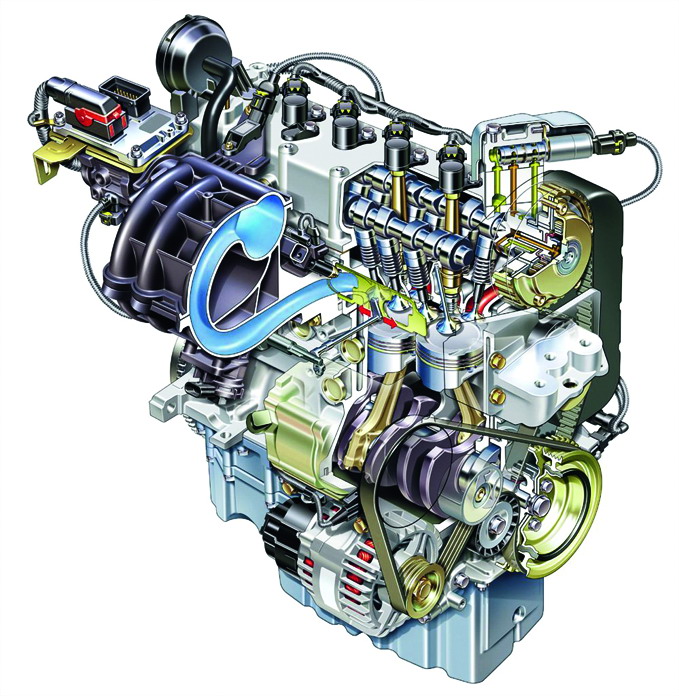 FOR YOUR INFORMATION FOR YOUR INFORMATIONEngine The car provided for the test was equipped with the "top" 1.4-liter inline four-cylinder engine of the FIRE family (formerly StarJet, also installed on the Grande Punto) with two camshafts and 16 valves. The working volume of the combustion chamber was 1368 cm³ with a piston diameter of 72 mm and a stroke of 84 mm. Some may think that 100 hp and 131 Nm are outstanding results for a naturally aspirated engine of such a small volume. In fact, Alfa Romeo, part of the FIAT concern, back in the late 80s of the last century equipped some of its models (for example, the 33) with 1.4-liter engines that already developed 90 horsepower then. So progress is not so great. Moreover, with a car weight of about a ton, 100 hp is more often too little than too much. At the same time, there is an even less powerful modification with a FIRE 1.2-liter engine (69 hp). Apparently, for those who are never in a hurry. Both of these engines meet the upcoming Euro-5 environmental requirements. For the European market, of course, a diesel version with a 1.3-liter MultiJet engine is also offered. This turbodiesel with a common rail system develops 75 hp and 145 Nm. |
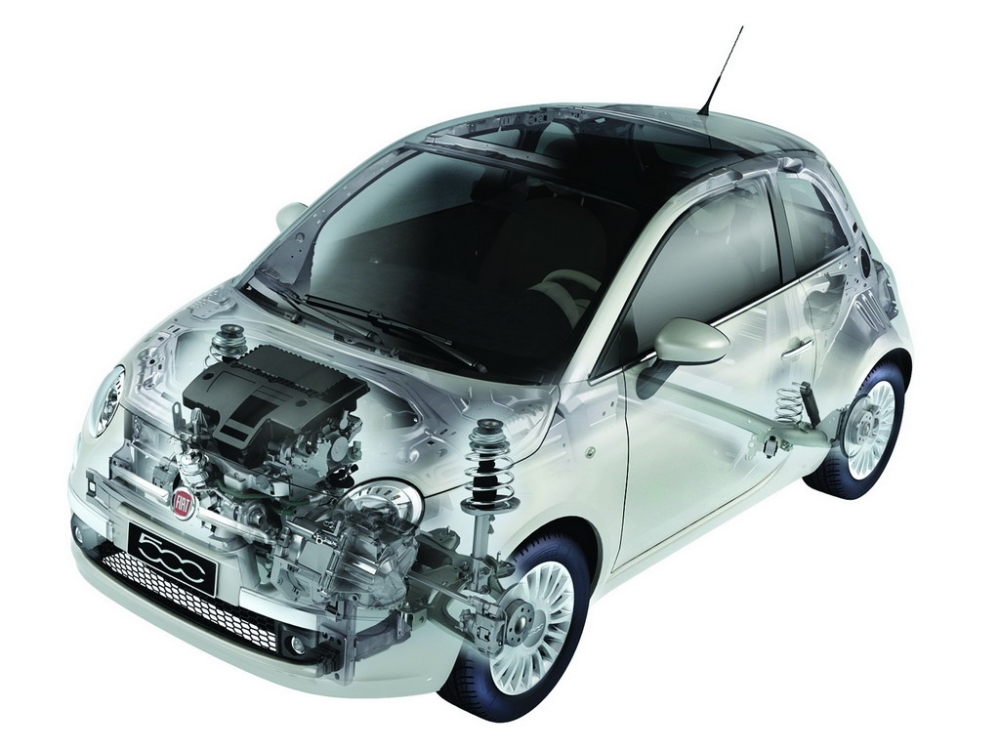 Chassis Chassis |
Adjusted for time
- Oh, what a cutie! Oh, how cute! Ah, what a sweet face! Is this yours? - Yes, thank you, I like it too. - No, just look, what a darling! What is it called? - Fiat 500... - Fiat? Well, I never! And how much does it cost? - 670 thousand rubles! - Wow! And why so expensive? - You see, glamour is expensive these days!
Test drive photos
Comments
No comments yet. Say the first word.