
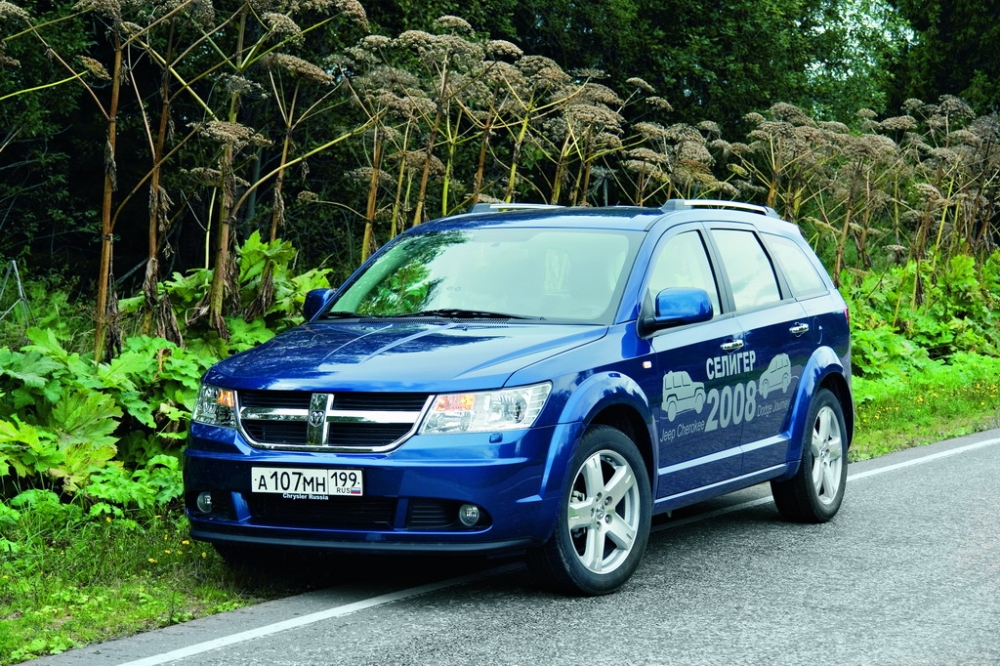
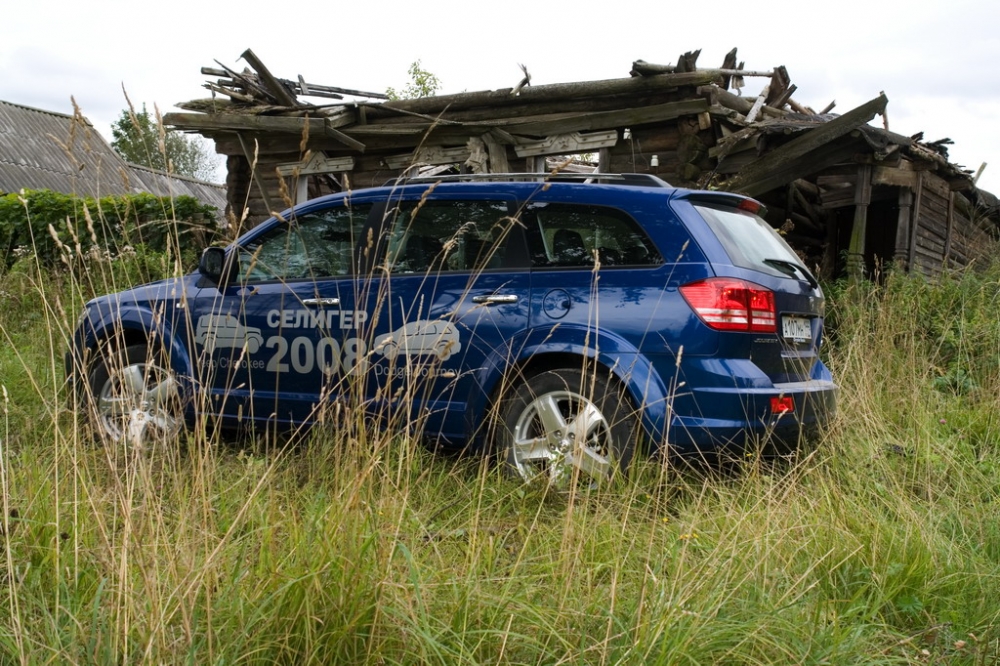
 We got acquainted with the new Dodge on the way from Seliger: together we had about 400 km to thoroughly study the "fresh album" called Journey. The body of this car is pure heavy metal. More than a third of its mass is high-strength steel. Those who are indifferent to "heavy stuff" will also find a pleasant bonus: the front and middle pillars are made by hot stamping, which made the top of the car lighter by 14 kg and lowered the center of gravity. The rear door here is not solid but composite — this saved weight and also simplified its opening. At the front, there are programmed deformation zones that protect the cabin's structural frame in a frontal impact. And for increased seam strength, a special elastic adhesive is used. We got acquainted with the new Dodge on the way from Seliger: together we had about 400 km to thoroughly study the "fresh album" called Journey. The body of this car is pure heavy metal. More than a third of its mass is high-strength steel. Those who are indifferent to "heavy stuff" will also find a pleasant bonus: the front and middle pillars are made by hot stamping, which made the top of the car lighter by 14 kg and lowered the center of gravity. The rear door here is not solid but composite — this saved weight and also simplified its opening. At the front, there are programmed deformation zones that protect the cabin's structural frame in a frontal impact. And for increased seam strength, a special elastic adhesive is used. |
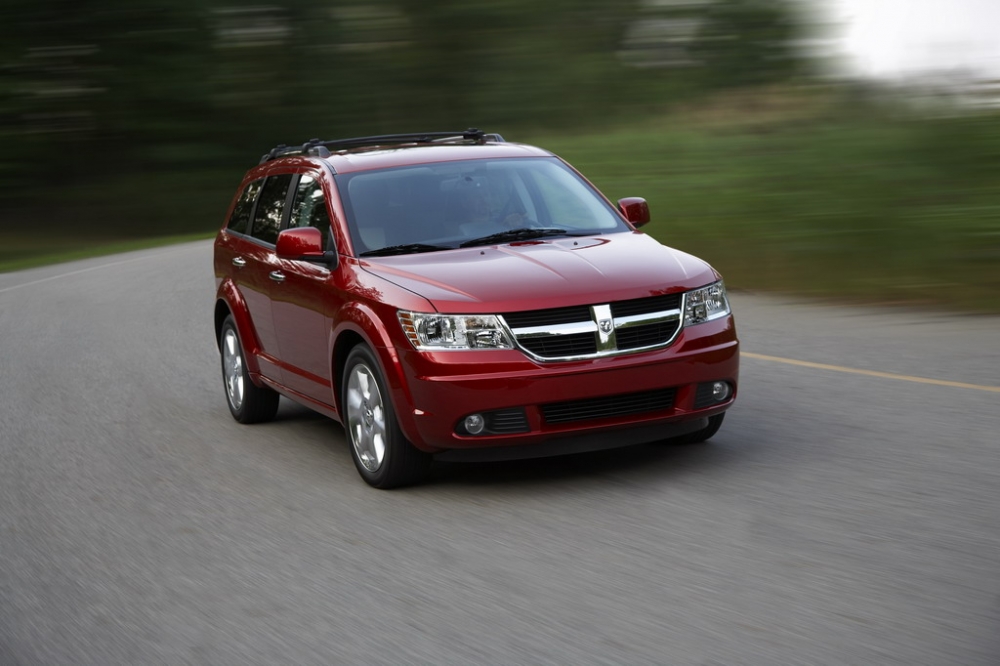
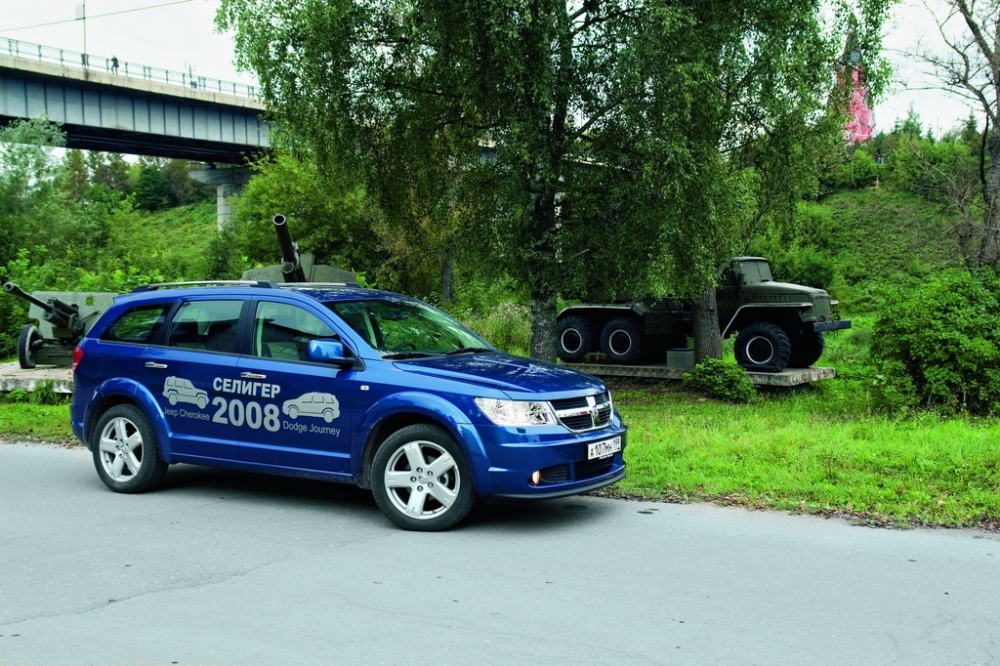 But that's all internal stuff. On the outside, we see a bizarre mix: the signature Dodge grille, sharp edges, and massive bumpers in an industrial style coexist with rounded wheel arches and chrome handles — here it already smacks of funk. As a result, the concept looks blurred. So what is it — industrial or funk, minivan or crossover? At Chrysler, they all say in unison: "Both!" So it's fusion! Essentially, Journey is much closer to a minivan, and the increased ground clearance and 19-inch wheels in the R/T version are not yet a reason to classify it as an SUV. After all, it's based on the platform from the Avenger sedan, and even with a longer wheelbase. Moreover, there will be no all-wheel drive in Russia — such a variant with a 3.5-liter V6 is available only to Americans, and this version won't come to our market. But that's all internal stuff. On the outside, we see a bizarre mix: the signature Dodge grille, sharp edges, and massive bumpers in an industrial style coexist with rounded wheel arches and chrome handles — here it already smacks of funk. As a result, the concept looks blurred. So what is it — industrial or funk, minivan or crossover? At Chrysler, they all say in unison: "Both!" So it's fusion! Essentially, Journey is much closer to a minivan, and the increased ground clearance and 19-inch wheels in the R/T version are not yet a reason to classify it as an SUV. After all, it's based on the platform from the Avenger sedan, and even with a longer wheelbase. Moreover, there will be no all-wheel drive in Russia — such a variant with a 3.5-liter V6 is available only to Americans, and this version won't come to our market. |
 We get exclusively front-wheel-drive cars. The base SE is equipped with a 2.4-liter World Engine with four cylinders. From this unit, especially paired with the only available four-speed gearbox (like on the same Avenger), I didn't expect anything exciting, so I first got behind the wheel of the R/T with a 2.7-liter V6 and a six-speed automatic. Maybe such a Journey will play livelier? After a dozen kilometers, it becomes clear: there will be no jazz today. Even with an extra 15 horsepower and a couple of additional cylinders, the engine provides only adequate dynamics — and nothing more. And in this, by the way, a significant credit goes to the modern six-speed automatic, which shifts very smoothly. It's just that the engine's voice is so-so — it reminds me of the peacock from the Munchausen cartoon. What jazz is that! Rather, it's a mournful chanson that drags along in time with the periodic howls of the engine at high revs. We get exclusively front-wheel-drive cars. The base SE is equipped with a 2.4-liter World Engine with four cylinders. From this unit, especially paired with the only available four-speed gearbox (like on the same Avenger), I didn't expect anything exciting, so I first got behind the wheel of the R/T with a 2.7-liter V6 and a six-speed automatic. Maybe such a Journey will play livelier? After a dozen kilometers, it becomes clear: there will be no jazz today. Even with an extra 15 horsepower and a couple of additional cylinders, the engine provides only adequate dynamics — and nothing more. And in this, by the way, a significant credit goes to the modern six-speed automatic, which shifts very smoothly. It's just that the engine's voice is so-so — it reminds me of the peacock from the Munchausen cartoon. What jazz is that! Rather, it's a mournful chanson that drags along in time with the periodic howls of the engine at high revs. |
 But the simplest SE modification is pure blues: the four long steps of the "automatic" manage the 170-horsepower potential so leisurely and measuredly. Closer to 120 km/h, psychedelic notes begin to appear in this blues — the gearbox starts nervously jumping from fourth to third and back, making the engine cry out for a second and then fall silent again. I force myself not to press the gas more than halfway. In this mode — peace and quiet, excellent blues in the spirit of Howlin' Wolf! Just what a family car needs! But then I notice that the guitarists inside the car are increasingly pressing the fuzz, gradually moving to rhythm and blues, and then to hard rock. All because the road became more winding and the surface less smooth. The suspension kicked in at full capacity. And it kicked in perfectly! Excellent energy intensity and elasticity are beautifully combined with enviable ride smoothness. If only there were a bit more feedback on the steering wheel — and the handling of this not-small car could be set as an example to many classmates. In my opinion, this is the best suspension among all Chrysler models to date. Solid, good hard rock. So close to Deep Purple. But the simplest SE modification is pure blues: the four long steps of the "automatic" manage the 170-horsepower potential so leisurely and measuredly. Closer to 120 km/h, psychedelic notes begin to appear in this blues — the gearbox starts nervously jumping from fourth to third and back, making the engine cry out for a second and then fall silent again. I force myself not to press the gas more than halfway. In this mode — peace and quiet, excellent blues in the spirit of Howlin' Wolf! Just what a family car needs! But then I notice that the guitarists inside the car are increasingly pressing the fuzz, gradually moving to rhythm and blues, and then to hard rock. All because the road became more winding and the surface less smooth. The suspension kicked in at full capacity. And it kicked in perfectly! Excellent energy intensity and elasticity are beautifully combined with enviable ride smoothness. If only there were a bit more feedback on the steering wheel — and the handling of this not-small car could be set as an example to many classmates. In my opinion, this is the best suspension among all Chrysler models to date. Solid, good hard rock. So close to Deep Purple. |
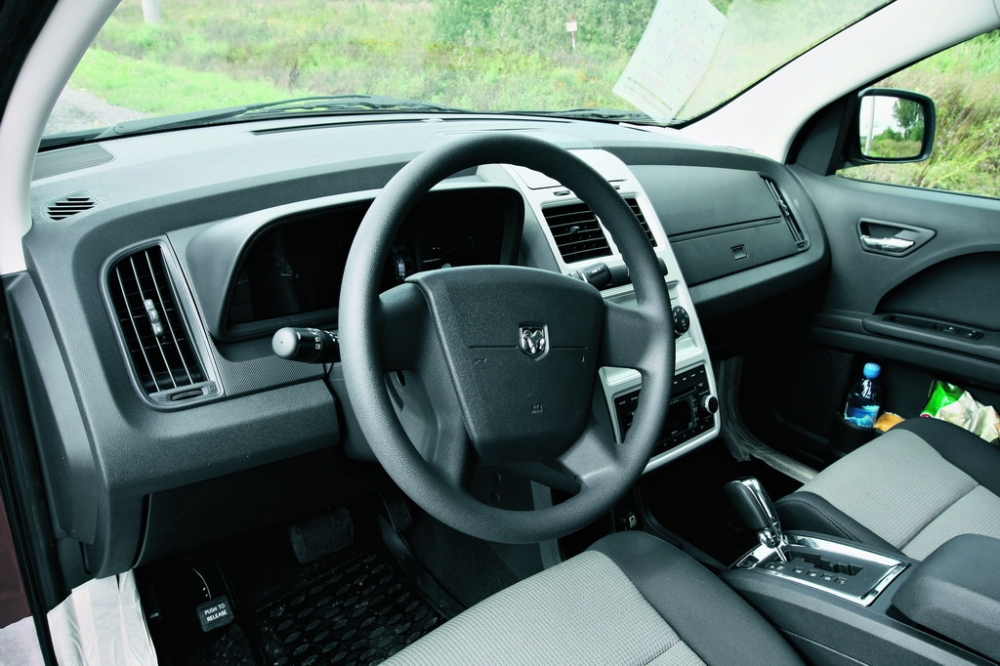
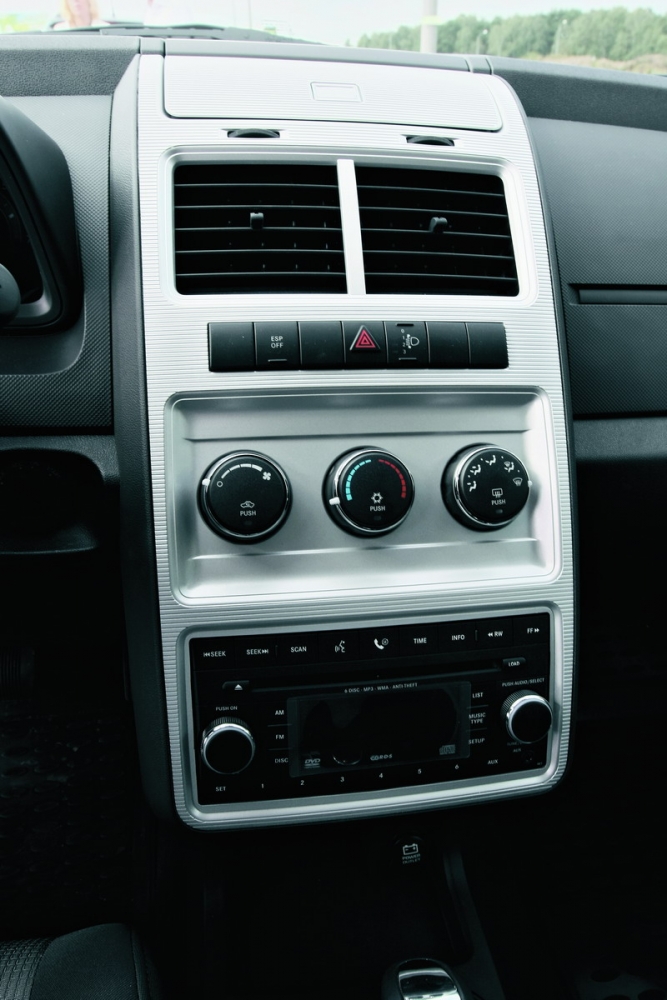
 Now let's look inside. At first, it seemed I had landed at an 80s disco — the dashboard is like from that era. But the quality of materials, the original center console, and the optional MyGIG multimedia system screen with ParkView rearview camera, navigation, and DVD playback brought me back to the 21st century. And when I got to the various pockets, compartments, and containers for small items and experimented with the seats, I realized: this is real rock and roll! What isn't there! Cooled boxes and large "bottle holders" have already become common for many cars, but the folding front passenger seat cushion (with another storage underneath), huge niches under the second-row passengers' feet, and instantly folding "into the floor" seats are not available in many. For Dodge Journey, built-in Child Booster seats are offered for the first time: they raise the seating position in the second row by 102 mm. This is very convenient — you can buckle the child with standard belts, and it's more comfortable to look out the window. Moreover, each subsequent row of seats is initially positioned slightly higher than the previous one. Everything in the cabin is really well thought out. This kind of music is to my liking. Now let's look inside. At first, it seemed I had landed at an 80s disco — the dashboard is like from that era. But the quality of materials, the original center console, and the optional MyGIG multimedia system screen with ParkView rearview camera, navigation, and DVD playback brought me back to the 21st century. And when I got to the various pockets, compartments, and containers for small items and experimented with the seats, I realized: this is real rock and roll! What isn't there! Cooled boxes and large "bottle holders" have already become common for many cars, but the folding front passenger seat cushion (with another storage underneath), huge niches under the second-row passengers' feet, and instantly folding "into the floor" seats are not available in many. For Dodge Journey, built-in Child Booster seats are offered for the first time: they raise the seating position in the second row by 102 mm. This is very convenient — you can buckle the child with standard belts, and it's more comfortable to look out the window. Moreover, each subsequent row of seats is initially positioned slightly higher than the previous one. Everything in the cabin is really well thought out. This kind of music is to my liking. |
 It's just a pity that most of these interesting and useful things are available only in the R/T version, which is at least $11,000 (!) more expensive than the simplest one. So those who want to save money will have to settle for blues. And connoisseurs of real rock need to prepare their wallets — real rock and roll is rare these days, and therefore expensive. It's just a pity that most of these interesting and useful things are available only in the R/T version, which is at least $11,000 (!) more expensive than the simplest one. So those who want to save money will have to settle for blues. And connoisseurs of real rock need to prepare their wallets — real rock and roll is rare these days, and therefore expensive. |
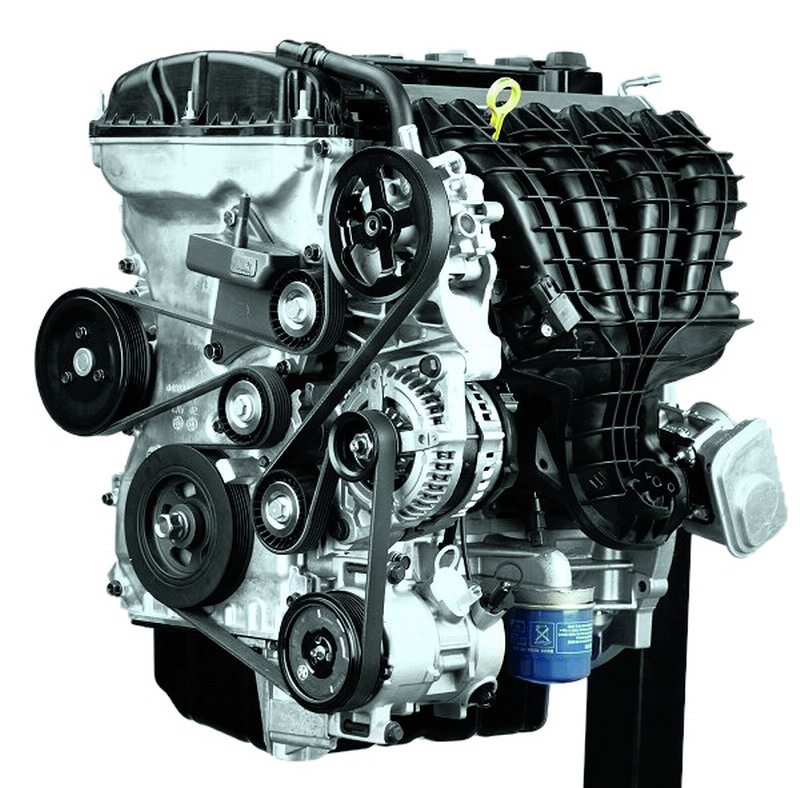 Engines EnginesBoth engines installed on the Dodge Journey are well known from other Chrysler models. The 2.4-liter 16-valve "four" is already used on the Dodge Avenger, Chrysler PT Cruiser, and Chrysler Sebring. The World Engine is equipped with variable valve timing (VVT), airflow control valves on the intake manifold, sound-absorbing cylinder heads and oil pan, as well as twin balance shafts. The engine produces 170 hp and 220 Nm. Its only drawback is that it is paired only with a four-speed automatic. |
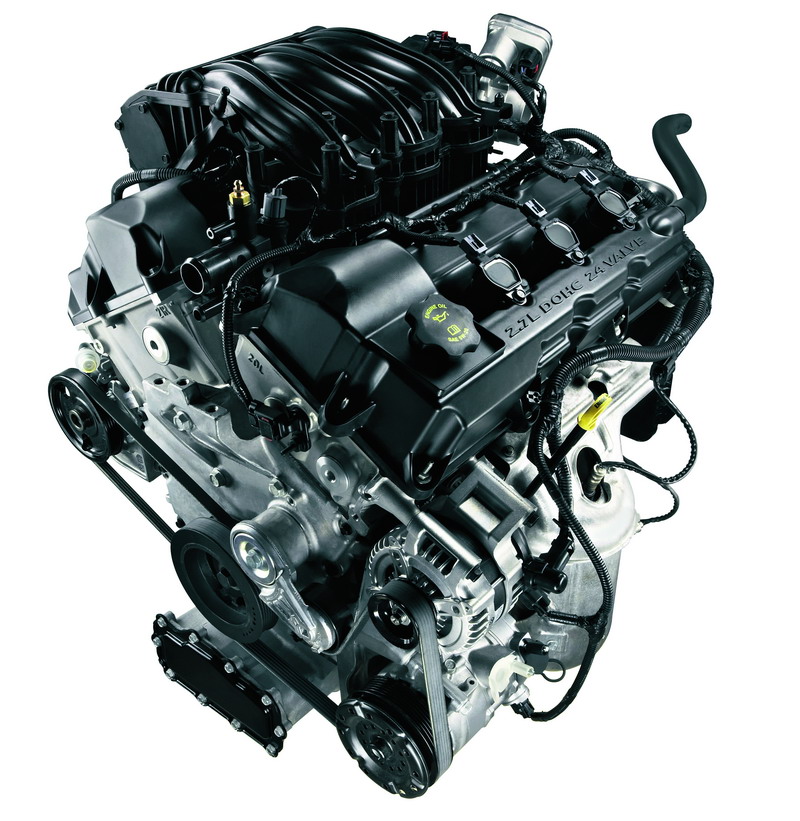 The six-cylinder 2.7-liter unit is familiar from the Chrysler 300C and Sebring. Its advantages are the smoothness typical of a V6, slightly more power (185 hp) and torque (256 Nm), as well as operation paired with a six-speed automatic. The six-cylinder 2.7-liter unit is familiar from the Chrysler 300C and Sebring. Its advantages are the smoothness typical of a V6, slightly more power (185 hp) and torque (256 Nm), as well as operation paired with a six-speed automatic. |
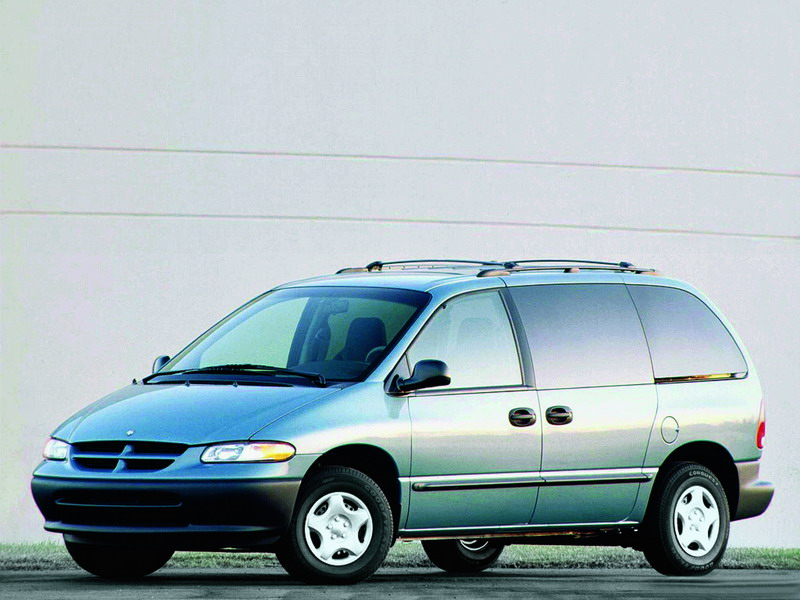
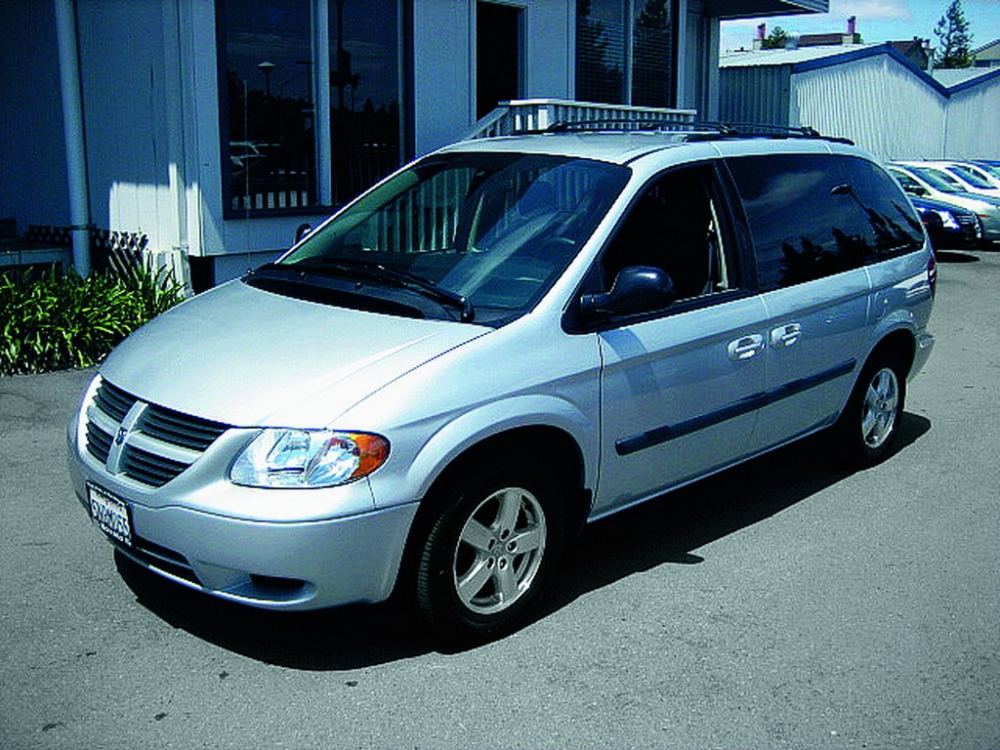
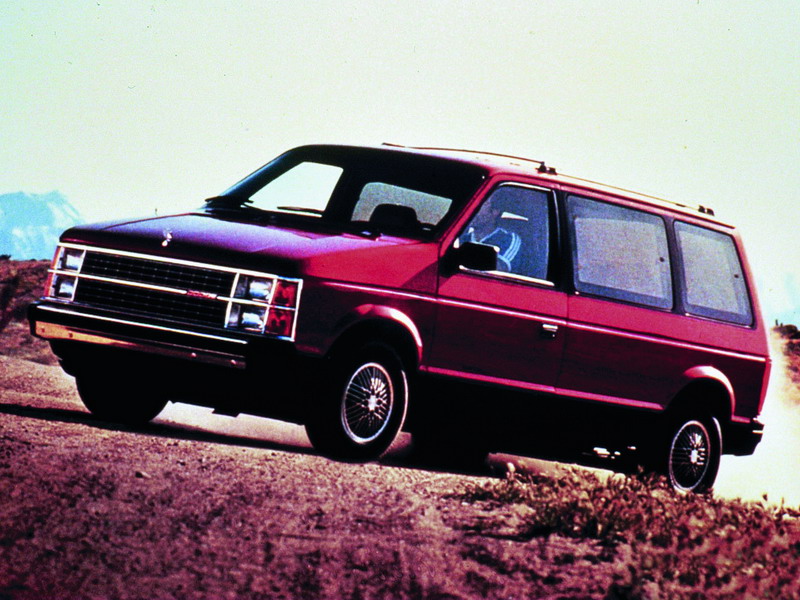 History HistoryThe first Dodge Caravan, like its "twin brothers" Chrysler Town & Country and Plymouth Voyager, appeared in 1984. It is this trio that is considered the founder of the minivan class. The first generation was hugely popular worldwide and, with several facelifts, survived until 1990, when the next generation came out. The current Journey to some extent replaces the Caravan, which was produced from 2000 to 2006. |
 |
 |
Wandering orchestra
It would seem that just a couple of days ago one of the most memorable presentations of the Moscow Auto Show came to an end – the unveiling of the Dodge Journey: a crowd of painted girls with guitars, dancing around the Journey to energetic music. At the Chrysler representative office, they say that Dodge is the most musical brand. Let's see what rock and roll Journey will play for us.

Test drive photos
Comments
No comments yet. Say the first word.