
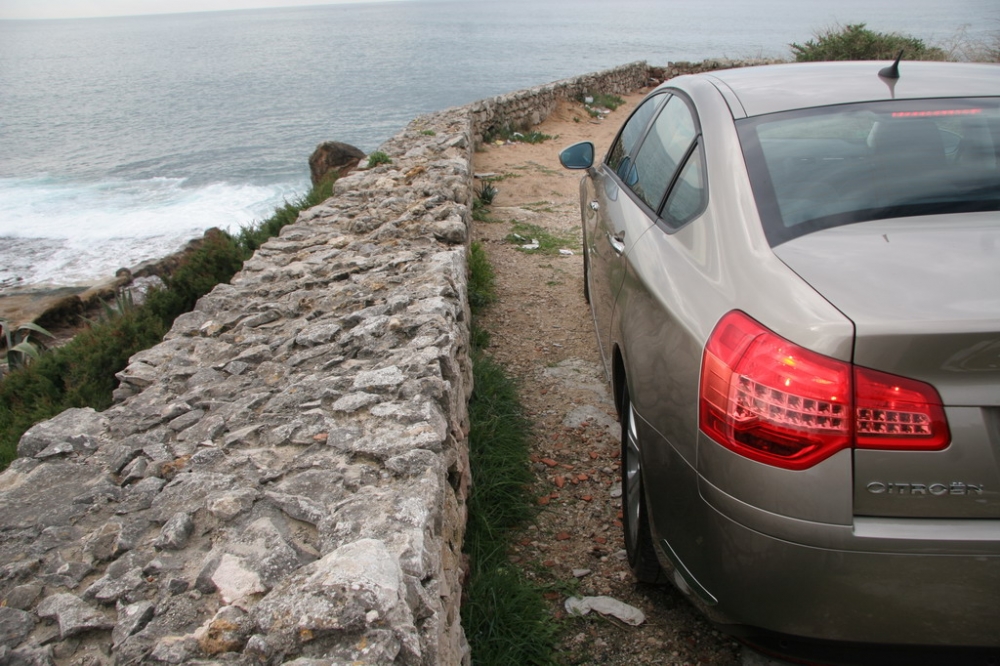
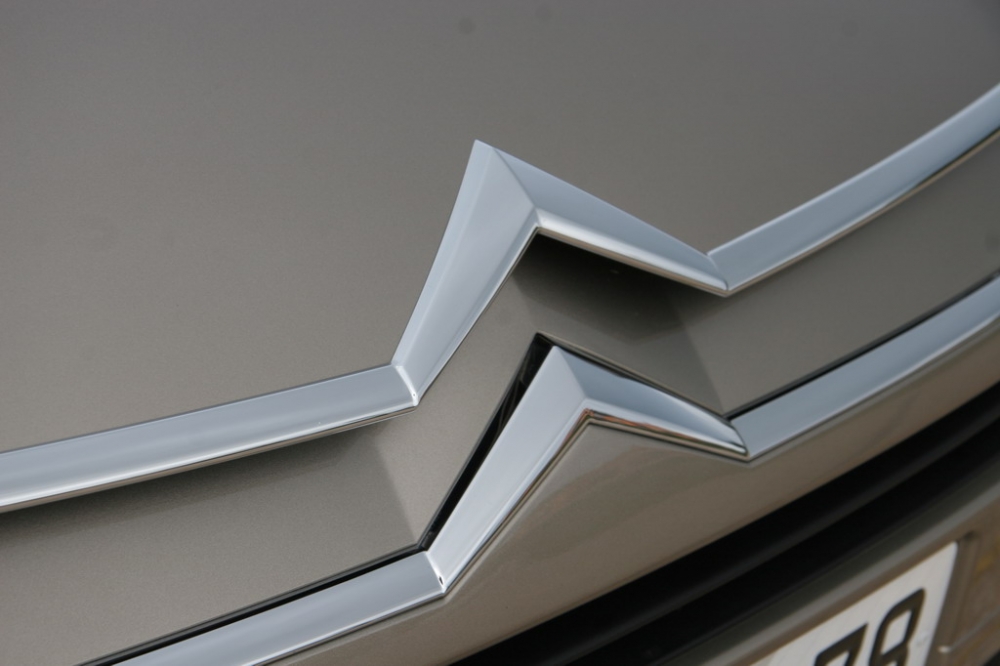
 No one expected this. In the midst of the reshuffle in the D-segment (among mass-market models) between the new Ford Mondeo, Mazda6 and Renault Laguna, Citroen C5 unexpectedly and unannounced staked its claim to be if not the leader, then an equal rival. And with its very appearance it seemed to say: “Guten Morgen, meine liebe Damen und Herren!” Yes, yes, in the purest German, only with a slight French accent. No one expected this. In the midst of the reshuffle in the D-segment (among mass-market models) between the new Ford Mondeo, Mazda6 and Renault Laguna, Citroen C5 unexpectedly and unannounced staked its claim to be if not the leader, then an equal rival. And with its very appearance it seemed to say: “Guten Morgen, meine liebe Damen und Herren!” Yes, yes, in the purest German, only with a slight French accent. |
 And it is not by chance, and by no means due to creative exhaustion, that I returned in the subtitle to the same “culinary” theme that I used in the previous issue of “MOTOR” in relation to the new Renault Laguna. This time it is even more serious. A clear confirmation of this is the commercial shot for the Western European market: in it, during the movement of a certain car, typical Aryans, the Alps, typical castles and villages, various Teutonic symbols, buxom frauleins, beer with fried sausages, a road sign with the inscription Berlin, the Brandenburg Gate and... only at the very end does the “double chevron” decorating the “nose” of the car appear in close-up, followed by the credits: “New Citroen C5. Made in France. Unmistakably German.” And it is not by chance, and by no means due to creative exhaustion, that I returned in the subtitle to the same “culinary” theme that I used in the previous issue of “MOTOR” in relation to the new Renault Laguna. This time it is even more serious. A clear confirmation of this is the commercial shot for the Western European market: in it, during the movement of a certain car, typical Aryans, the Alps, typical castles and villages, various Teutonic symbols, buxom frauleins, beer with fried sausages, a road sign with the inscription Berlin, the Brandenburg Gate and... only at the very end does the “double chevron” decorating the “nose” of the car appear in close-up, followed by the credits: “New Citroen C5. Made in France. Unmistakably German.” |
 So what happened? Did the Germans secretly take over Citroen? No, it is much simpler: after many years of rather fruitless struggle for stylistic originality, the French found the courage to “compromise their principles” and start playing by the rules dictated by their closest competitors. And these rules, in turn, are based on the tastes and requirements of buyers, who believe that a D-class car should have an attractive but conservative design. The previous C5 was too extravagant. Making a “stunning” first impression, its design seemed increasingly controversial upon further examination, and its quirkiness quickly became tiresome, which further exacerbated the depreciation of this car when sold on the secondary market. As a result, out of approximately 300 thousand D-class cars sold annually in Europe, the C5 accounted for only 10 thousand. I myself, at one time, initially captivated by its appearance, nevertheless quickly cooled off, came to my senses and bought another, less extravagant – German, again – car... So what happened? Did the Germans secretly take over Citroen? No, it is much simpler: after many years of rather fruitless struggle for stylistic originality, the French found the courage to “compromise their principles” and start playing by the rules dictated by their closest competitors. And these rules, in turn, are based on the tastes and requirements of buyers, who believe that a D-class car should have an attractive but conservative design. The previous C5 was too extravagant. Making a “stunning” first impression, its design seemed increasingly controversial upon further examination, and its quirkiness quickly became tiresome, which further exacerbated the depreciation of this car when sold on the secondary market. As a result, out of approximately 300 thousand D-class cars sold annually in Europe, the C5 accounted for only 10 thousand. I myself, at one time, initially captivated by its appearance, nevertheless quickly cooled off, came to my senses and bought another, less extravagant – German, again – car... |
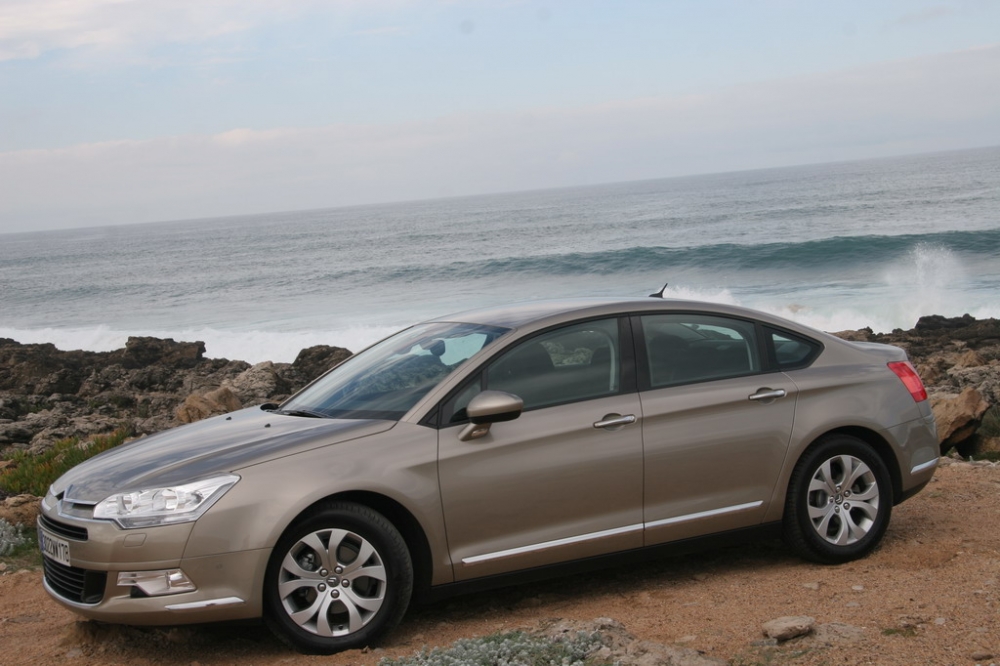
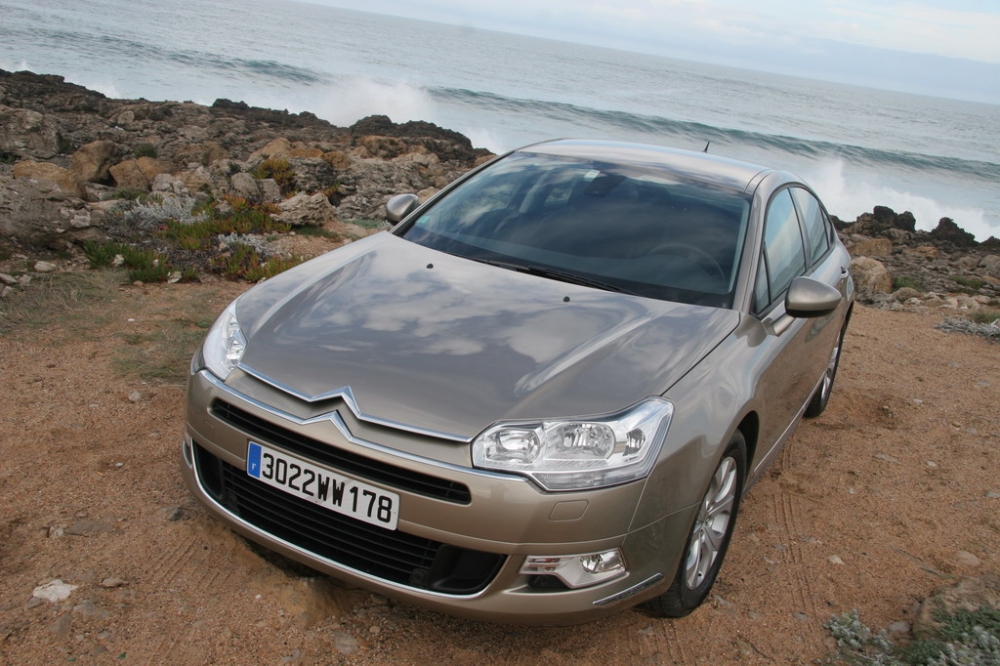
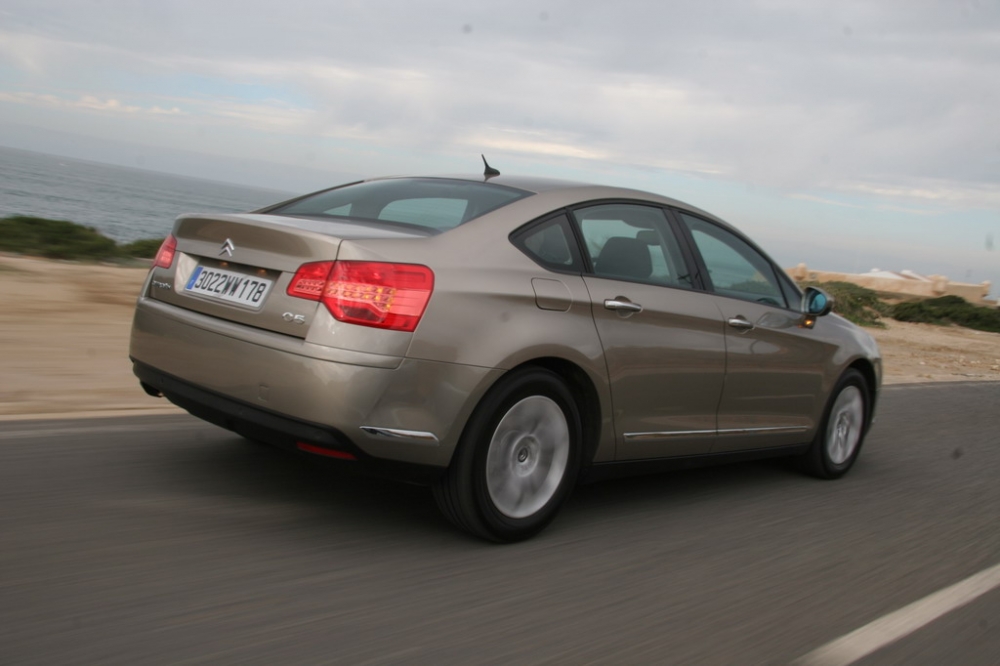 The French learned this lesson well: when you see the new C5 in front of you, only from the front is it unmistakably recognizable as a Citroen, but from the side, depending on the angle, it resembles an Audi or a BMW... No, of course, this is not about direct borrowings or “quotes,” but the desire of the designers of this car to be “one of their own among strangers” is obvious, and it is not even hidden at the official level... And, if we return to culinary comparisons, this is by no means just a decent but ordinary steak, like those served in a pub on the corner of two streets. This is an excellent, refined German steak prepared by the best French chefs according to all the rules of “haute cuisine”! What is the signature “Citroen” seasoning worth alone in the form of a concave rear window, familiar from the classic CX and the recent C6. In the design of the new C5, the styling tested a couple of years earlier on the flagship C6 has been successfully used, and the platform is the same, but the “younger brother” is more proportionally built, looks more organic, and is not so flashy as truly beautiful. The French learned this lesson well: when you see the new C5 in front of you, only from the front is it unmistakably recognizable as a Citroen, but from the side, depending on the angle, it resembles an Audi or a BMW... No, of course, this is not about direct borrowings or “quotes,” but the desire of the designers of this car to be “one of their own among strangers” is obvious, and it is not even hidden at the official level... And, if we return to culinary comparisons, this is by no means just a decent but ordinary steak, like those served in a pub on the corner of two streets. This is an excellent, refined German steak prepared by the best French chefs according to all the rules of “haute cuisine”! What is the signature “Citroen” seasoning worth alone in the form of a concave rear window, familiar from the classic CX and the recent C6. In the design of the new C5, the styling tested a couple of years earlier on the flagship C6 has been successfully used, and the platform is the same, but the “younger brother” is more proportionally built, looks more organic, and is not so flashy as truly beautiful. |
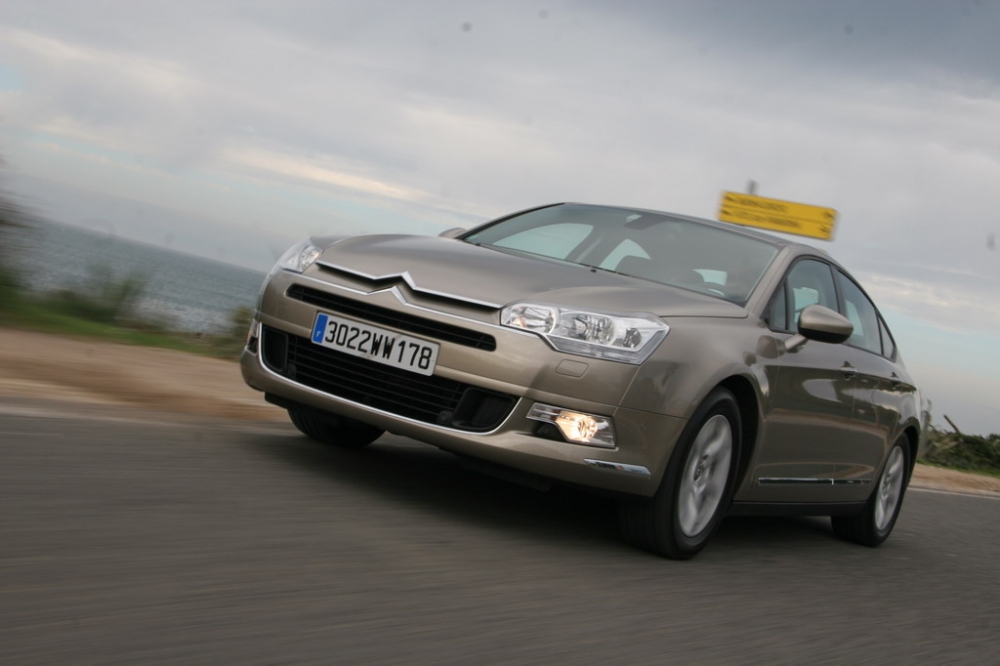 Just like the competing cars listed at the beginning of the article, the new C5 is seriously stepping on the heels of premium-class models, so it is not only more solid on the outside, but inside it is perceived more as a slightly shortened C6 than as an elongated classmate, “platform mate” and direct “relative” of the Peugeot 407. Compared to the previous model, the car has become 40 mm longer, 30 mm lower, and its wheelbase has increased by 60 mm, which has made the interior noticeably more spacious. And at the same time, contrary to the modern trend (reflected in the same new Renault Laguna), it has turned from a hatchback into a classic sedan. Just like the competing cars listed at the beginning of the article, the new C5 is seriously stepping on the heels of premium-class models, so it is not only more solid on the outside, but inside it is perceived more as a slightly shortened C6 than as an elongated classmate, “platform mate” and direct “relative” of the Peugeot 407. Compared to the previous model, the car has become 40 mm longer, 30 mm lower, and its wheelbase has increased by 60 mm, which has made the interior noticeably more spacious. And at the same time, contrary to the modern trend (reflected in the same new Renault Laguna), it has turned from a hatchback into a classic sedan. |
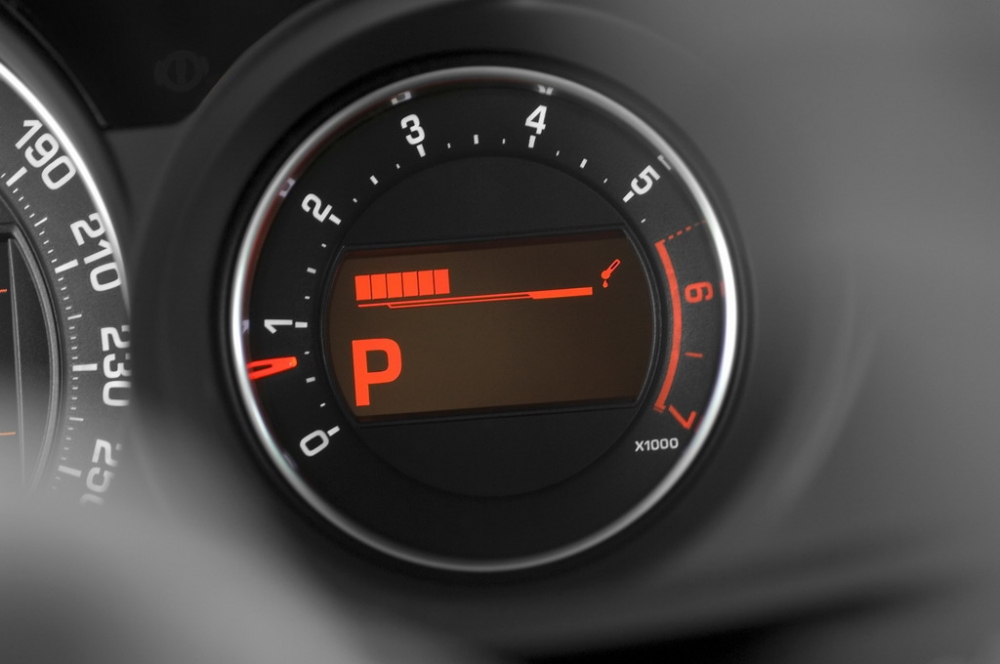
 The interior of the new C5, without much exaggeration, can be called a kingdom of, if not luxury, then certainly excellent “German” quality. There is no place for cheap hard plastic here – all panels are noble in appearance and soft to the touch. The high-tech decorative trim is also a match, looking no less beautiful and solid than the elements made of natural matte wood that adorn the Laguna interior, and certainly more attractive and appropriate than the cheap wood imitation in the trim of the top version of the Mondeo. One of the most irritating elements in the previous version of the car was the quirky “double-humped” front panel, abounding in arched lines. The front panel of the new C5, on the contrary, makes the most favorable impression, and the strict and perfectly readable instrument cluster with “perimeter” needles again evokes associations with the products of the German “auto industry” – this time, perhaps, the Mercedes brand. The interior of the new C5, without much exaggeration, can be called a kingdom of, if not luxury, then certainly excellent “German” quality. There is no place for cheap hard plastic here – all panels are noble in appearance and soft to the touch. The high-tech decorative trim is also a match, looking no less beautiful and solid than the elements made of natural matte wood that adorn the Laguna interior, and certainly more attractive and appropriate than the cheap wood imitation in the trim of the top version of the Mondeo. One of the most irritating elements in the previous version of the car was the quirky “double-humped” front panel, abounding in arched lines. The front panel of the new C5, on the contrary, makes the most favorable impression, and the strict and perfectly readable instrument cluster with “perimeter” needles again evokes associations with the products of the German “auto industry” – this time, perhaps, the Mercedes brand. |
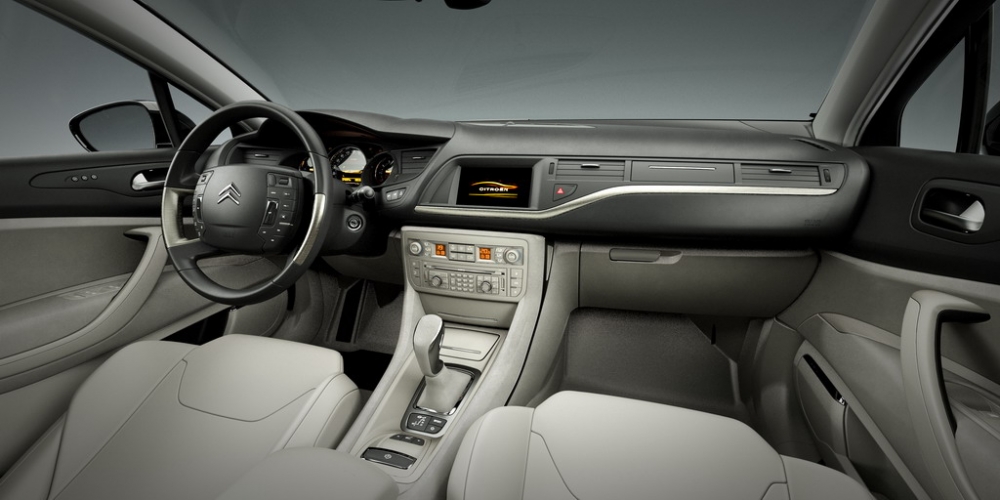 At the same time, despite all this “Germanism,” you know exactly that you are sitting behind the wheel of a Citroen: this is reminded by the very steering wheel of an unusual design, already familiar from the new C4 and C4 Picasso – with a fixed hub. The seats, depending on the version, can be either “Citroen-style” familiarly soft or somewhat stiffer. Overall, they are good, but the narrowness of the backrest caused annoyance, because of which the side bolsters made themselves felt throughout the entire trip. This is all the more strange, since comfort is one of the trump cards in Citroen’s deck, and these cars are designed not for skinny youths, but, as a rule, for mature men with fairly wide backs. And even the massage function, which is provided for seats with electric adjustments, will not be a joy here. At the same time, despite all this “Germanism,” you know exactly that you are sitting behind the wheel of a Citroen: this is reminded by the very steering wheel of an unusual design, already familiar from the new C4 and C4 Picasso – with a fixed hub. The seats, depending on the version, can be either “Citroen-style” familiarly soft or somewhat stiffer. Overall, they are good, but the narrowness of the backrest caused annoyance, because of which the side bolsters made themselves felt throughout the entire trip. This is all the more strange, since comfort is one of the trump cards in Citroen’s deck, and these cars are designed not for skinny youths, but, as a rule, for mature men with fairly wide backs. And even the massage function, which is provided for seats with electric adjustments, will not be a joy here. |
 The new C5 is offered with a fairly wide range of engines – three petrol, from a 1.8-liter 127-horsepower to a 3-liter 215-horsepower, and four diesel, from a 2-liter 110-horsepower to a 2.8-liter with a capacity of 208 hp (a joint development with Ford, well known from Jaguar and Land Rover), and diesel versions will also be supplied to Russia. But perhaps the most revolutionary (or anti-revolutionary, if you will) feature of the 2008 C5 is the rejection of the classic Citroen hydropneumatic suspension, whose history spans half a century, in favor of a traditional spring suspension! The reason is obvious: with all the wonderful properties of “hydropneumatics,” the complexity and high cost of its maintenance also did not contribute to sales growth (in particular, in Russia), and the “Citroen people” came to a reasonable decision – better simpler but better. The new C5 is offered with a fairly wide range of engines – three petrol, from a 1.8-liter 127-horsepower to a 3-liter 215-horsepower, and four diesel, from a 2-liter 110-horsepower to a 2.8-liter with a capacity of 208 hp (a joint development with Ford, well known from Jaguar and Land Rover), and diesel versions will also be supplied to Russia. But perhaps the most revolutionary (or anti-revolutionary, if you will) feature of the 2008 C5 is the rejection of the classic Citroen hydropneumatic suspension, whose history spans half a century, in favor of a traditional spring suspension! The reason is obvious: with all the wonderful properties of “hydropneumatics,” the complexity and high cost of its maintenance also did not contribute to sales growth (in particular, in Russia), and the “Citroen people” came to a reasonable decision – better simpler but better. |
 They did not, however, completely abandon their “classics”: the C5 can be taken with either the new spring suspension or the latest generation hydropneumatic suspension Hydractive 3 Plus. It is assumed that the more expensive versions with “hydropneumatics” will be in demand among adherents of such from among long-time fans of the brand, while the more affordable spring versions will please owners of corporate fleets and rental companies, and will also attract new buyers oriented towards traditional solutions. In a conversation over dinner, a Citroen representative responsible for the Eastern European market sector explained that the distribution of demand for versions with one or another suspension is expected to be approximately 50:50. Although, it seems, if the spring version from Citroen appeals to the people, this ratio could change quite noticeably in favor of this particular option, and if the game is worth the candle, then in the future a complete abandonment of “hydropneumatics” is possible: profit is more expensive than exotic “family” values. They did not, however, completely abandon their “classics”: the C5 can be taken with either the new spring suspension or the latest generation hydropneumatic suspension Hydractive 3 Plus. It is assumed that the more expensive versions with “hydropneumatics” will be in demand among adherents of such from among long-time fans of the brand, while the more affordable spring versions will please owners of corporate fleets and rental companies, and will also attract new buyers oriented towards traditional solutions. In a conversation over dinner, a Citroen representative responsible for the Eastern European market sector explained that the distribution of demand for versions with one or another suspension is expected to be approximately 50:50. Although, it seems, if the spring version from Citroen appeals to the people, this ratio could change quite noticeably in favor of this particular option, and if the game is worth the candle, then in the future a complete abandonment of “hydropneumatics” is possible: profit is more expensive than exotic “family” values. |
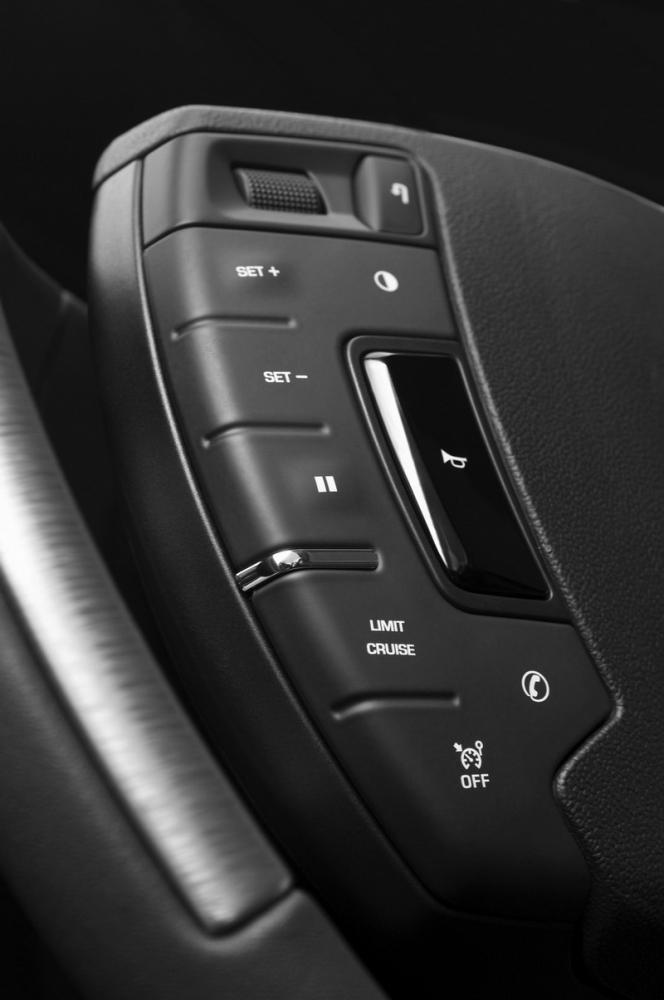 Nevertheless, paying tribute to these very values, I choose for the test the version with hydropneumatic suspension and the optimal two-liter power unit with a capacity of 143 hp in combination with an automatic transmission. The fact that the suspension is hydropneumatic is indicated by a small elegant bracket of the automatic parking brake instead of the usual “handbrake” on the central tunnel. It engages itself when the engine is turned off, adjusts the force necessary to hold the car in place, and disengages when the driver presses the accelerator pedal. It also helps to start moving calmly and confidently on a slope of more than 3º, holding the car in place for 2 seconds. On the move, the “hydropneumatic” C5 is typically lullingly soft, the chassis’s manners are cat-like insinuating, it swallows any surface irregularities, and it seems that the car is not driving on asphalt, but relaxed floating on a water – no, even on some kind of jelly – surface. However, there is also a typical uncertainty in behavior when cornering, the steering wheel reactions with quite adequate effort are damped as if by the same “jelly.” The steering wheel itself also did not seem convenient. Its innovative design causes no complaints: it is very convenient when all control keys remain in place together with the hub, and do not rotate first in one direction, then in the other. Agree, few people would think of or desperately need to urgently switch to another radio station or increase the volume of the audio system exactly at the moment when the steering wheel in a turn is turned “upside down” – you would only get confused. But when all the buttons are constantly in place, it is much more convenient. But the diameter of the steering wheel, dictated, probably, precisely by the design with a fixed hub, so that fingers do not touch its edges when rotating, seemed excessive, which further exacerbates the lack of interactivity of control, its transparency and response. Moreover, the automatic stiffening of the suspension when taking fast turns does not particularly change the situation. Nevertheless, paying tribute to these very values, I choose for the test the version with hydropneumatic suspension and the optimal two-liter power unit with a capacity of 143 hp in combination with an automatic transmission. The fact that the suspension is hydropneumatic is indicated by a small elegant bracket of the automatic parking brake instead of the usual “handbrake” on the central tunnel. It engages itself when the engine is turned off, adjusts the force necessary to hold the car in place, and disengages when the driver presses the accelerator pedal. It also helps to start moving calmly and confidently on a slope of more than 3º, holding the car in place for 2 seconds. On the move, the “hydropneumatic” C5 is typically lullingly soft, the chassis’s manners are cat-like insinuating, it swallows any surface irregularities, and it seems that the car is not driving on asphalt, but relaxed floating on a water – no, even on some kind of jelly – surface. However, there is also a typical uncertainty in behavior when cornering, the steering wheel reactions with quite adequate effort are damped as if by the same “jelly.” The steering wheel itself also did not seem convenient. Its innovative design causes no complaints: it is very convenient when all control keys remain in place together with the hub, and do not rotate first in one direction, then in the other. Agree, few people would think of or desperately need to urgently switch to another radio station or increase the volume of the audio system exactly at the moment when the steering wheel in a turn is turned “upside down” – you would only get confused. But when all the buttons are constantly in place, it is much more convenient. But the diameter of the steering wheel, dictated, probably, precisely by the design with a fixed hub, so that fingers do not touch its edges when rotating, seemed excessive, which further exacerbates the lack of interactivity of control, its transparency and response. Moreover, the automatic stiffening of the suspension when taking fast turns does not particularly change the situation. |
 Turning on the special Sport mode button somewhat improves the situation, providing more freedom to the active driver, but at the cost of vagueness in behavior at low speeds. To top it all off, the car generally gives the impression of a heavyweight with insufficiently developed muscles – acceleration and bursts of speed are given to it with visible strain. And the point here is not at all in the “extra” 60–70 kg of weight compared to the previous model due to additional safety features. So, is the engine that bad? No, it is quite good. The whole point is in the anachronistic four-speed “automatic,” which spoils the whole picture, especially in combination with hydropneumatics (although the more powerful and expensive versions are equipped with a new six-speed automatic transmission). Turning on the special Sport mode button somewhat improves the situation, providing more freedom to the active driver, but at the cost of vagueness in behavior at low speeds. To top it all off, the car generally gives the impression of a heavyweight with insufficiently developed muscles – acceleration and bursts of speed are given to it with visible strain. And the point here is not at all in the “extra” 60–70 kg of weight compared to the previous model due to additional safety features. So, is the engine that bad? No, it is quite good. The whole point is in the anachronistic four-speed “automatic,” which spoils the whole picture, especially in combination with hydropneumatics (although the more powerful and expensive versions are equipped with a new six-speed automatic transmission). |
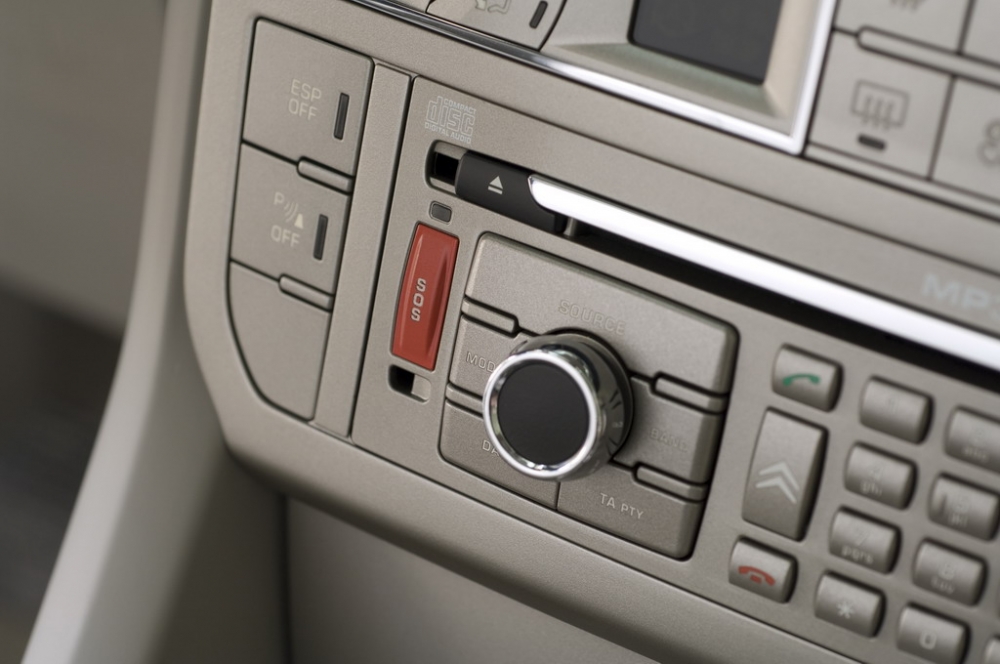
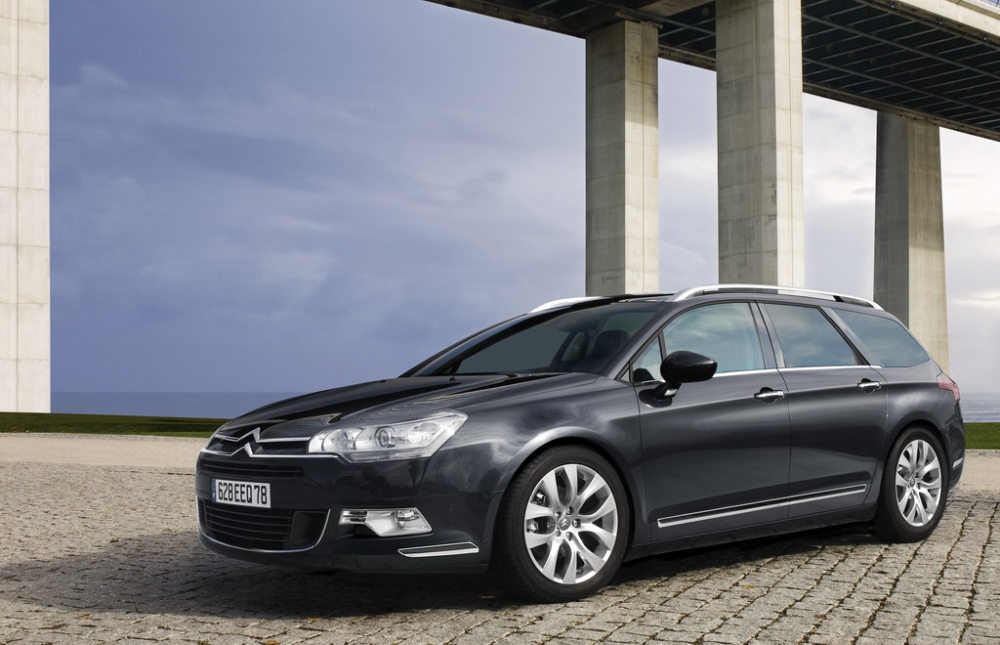
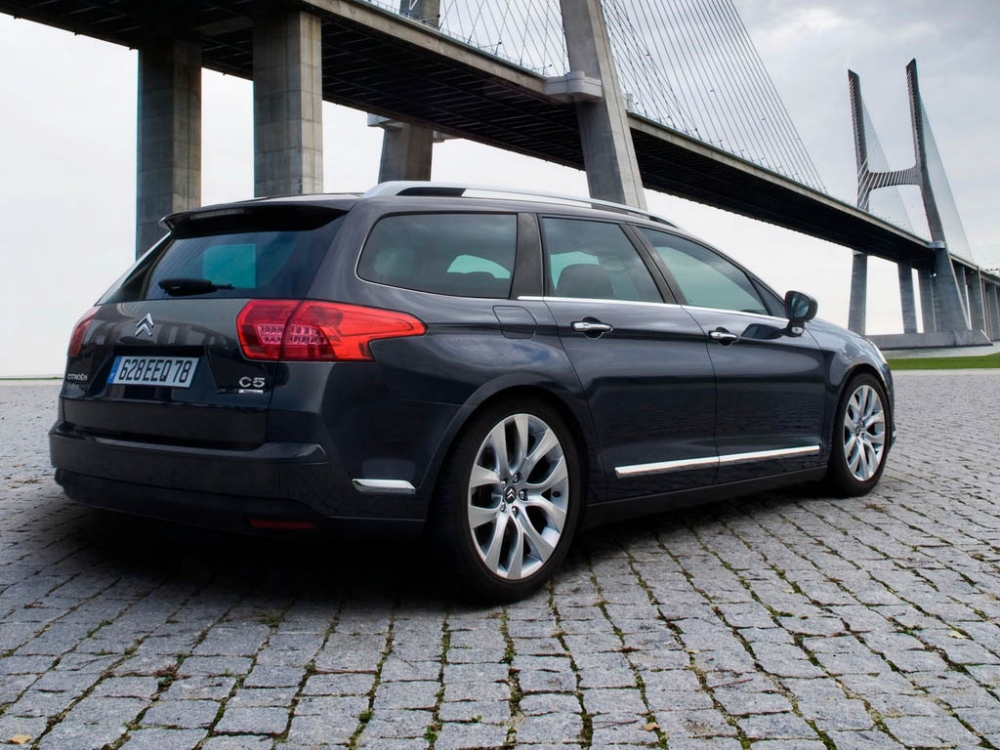 The manual gearbox completely changes this picture even in combination with the same engine, and with the biturbo diesel, even if not the most powerful, and in the version with spring suspension, the C5 is completely transformed. This is a completely different car! It seems to lose its weight and acquire almost balletic lightness, acceleration becomes assertive, intense, not “under duress,” the accelerator reactions acquire a pleasant liveliness, and gears shift clearly and easily. The manual gearbox completely changes this picture even in combination with the same engine, and with the biturbo diesel, even if not the most powerful, and in the version with spring suspension, the C5 is completely transformed. This is a completely different car! It seems to lose its weight and acquire almost balletic lightness, acceleration becomes assertive, intense, not “under duress,” the accelerator reactions acquire a pleasant liveliness, and gears shift clearly and easily.As for the spring suspension, although the designers tried to give it the signature Citroen softness, and it is noticeable, of course, you no longer feel that exceptional smoothness of ride that hydropneumatics provides; when driving quickly on uneven roads, the car behaves more nervously and faithfully informs your rear end about surface defects, but all this is compensated by a much clearer feel of the road, much greater interactivity and transparency of handling. Perhaps the spring C5 is more similar in behavior and balance not to its former self, but to the Peugeot 407 with a slightly softer ride: the car holds the road just as confidently, and its front wheels do not tend to live their own life. In general, in this version, the new C5 on the move also shows its German character. And this also applies to sound insulation, the operation of the climate and multimedia systems – everything is at the highest level. Special mention should be made of the brakes: they have a fairly progressive algorithm of action, but, fortunately, do not lead to such exhausting jerking as in the case of the C4. After the completion of the official test drive program, which took place in the vicinity of Lisbon, I undertook a private-business trip behind the wheel of this C5 that I liked so much (there are such successful cars that you don't want to part with them!) around the Portuguese capital, which I know well, including its very cramped historic center, and as a result, I was even more pleased with the new five from Citroen, appreciating along the way the convenience of such additional devices as the lane departure warning system and the parking space measurer (like the C4 Picasso). At the presentation accompanying the test drive, the C5 was also shown in the station wagon version, which, due to its beauty and elegance, one cannot bring oneself to call the slang word barn. Among the most notable elements of its exterior design are the rear lights, whose unusual shape resembles a boomerang, and a metal molding stretched along the upper edge of the doors and unexpectedly breaking off under the rear pillar, which gives the car a more airy and dynamic look. From the mechanical filling, attention is drawn to the optional function of automatic opening/closing of the tailgate via buttons, the function of memorizing the opening angle of this door (with a low ceiling in the garage, for example), and the trunk light that can be removed and used as a portable lamp. Sales of the new C5 will start very soon, no later than May, and there is every reason to believe that, unlike food products, the genetic modification that turned it from a Frenchman into a German will only benefit its popularity. |
Cosmopolitan or German beefsteak from French chefs
Lose the battle to win the war – this tactic has long become a classic. At Citroen, they seem to have decided to do the opposite: lose the war between the distinctive French and conservative German approach to design and consumer properties of a car, in order to try to win a specific battle for strong positions, if not leadership in the D segment.

Test drive photos
Comments
No comments yet. Say the first word.