
Citroen C4 new. A typical family middle-class car
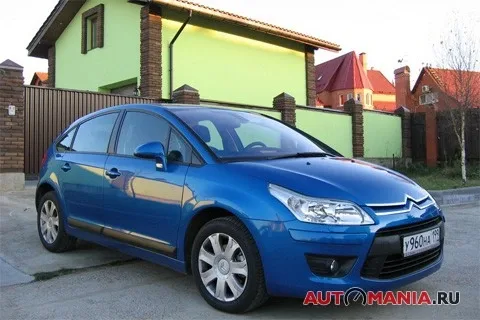
In August, the world premiere of the new Citroen C4 took place at the Moscow Auto Show. In September, the first cars arrived at dealer showrooms, and a little later, the "C4s" appeared in the press fleet of the Peugeot Citroen Rus office and were given to automotive journalists for review.
Even during the premiere at the auto show, it was puzzling why the updated C4 was so loudly called a "world premiere." After all, the facelifted version doesn't have much new — regardless of body type. It turned out to be simple — the slightly spruced-up model was shown for the first time in Moscow, and since Citroen is not sold overseas at all, the Moscow premiere automatically became both a "European" and a "world" one.
So what's new in the C4? Can the new model at least slightly improve the sales situation, which has been steadily declining in Russia year after year? Of course, not as rapidly as Alfa Romeo sales, but still noticeably.
They decided not to overcomplicate the exterior
The debut of the first-generation C4, which replaced the Xsara model in 2004, was received with enthusiasm. In 2006, the car even received a prestigious award for best design. The appearance of the three-door coupe seemed to many to be a new word in automotive design. The five-door hatchback was met more coolly, and sales of the two body types of the "C4" were distributed in a ratio of 80 to 20 in favor of the coupe. You can see proof of this by observing the flow of cars on the streets of Moscow. The coupe exudes a certain sporty aggression, which is given to it by the glazed shortened rear, while the hatch looks like a balanced, friendly family man.
In 2008, they decided not to radically change the exterior design. Looking at the cars from the side, you will hardly distinguish a new car from a four-year-old one. But the front end has become different. And the most important change is that the place for the license plate has finally taken its usual and traditional position for Russians — in the center of the bumper. So now the license plate doesn't dangle very low near the road, like on the Peugeot 308, and there's a better chance of keeping it intact when parking. The shape of the hood, front fenders, and optics has changed. The air intake has increased in size, and from the front, the C4 has become very reminiscent of its older brother — the C5 model. The rear of the body was not changed at all, only the three-door got a transparent central section.
Inside the cabin, there are even fewer changes. The main highlights of the interior have been preserved, including the fixed steering wheel hub and the digital speedometer in the center of the upper part of the dashboard. The tachometer has been moved from above the steering column to a liquid crystal panel next to the speedometer. The quality of trim materials has been slightly improved, but manual seat adjustments, 4 airbags, and low-functionality drawers with velvet inserts on the front of the dashboard, created for unclear purposes, remain. Everything is as before. Unlike the C-Crosser crossover, the electric buttons for opening windows and adjusting mirrors are now illuminated. The steering wheel adjusts for height and reach. The seats are hard, with some unclear shape. Nevertheless, they are quite comfortable and do not tire you on the road.
Not the most pleasant "surprises"
The designers also prepared a couple of "surprises," not always pleasant. The first surprise was called "try to find it!" and referred to the button that unlocks the doors. I couldn't find it in the usual places; I had to carefully study the manual to find out that this button is hidden behind the right steering column stalk to the left of the onboard computer display. Why it had to be stuffed there is unclear; the location is very inconvenient, and it's almost impossible to reach without touching the wiper stalk.
The process of refueling the car did not add positive emotions. The fuel filler cap is locked with a key. You cannot remove the key from the cap after opening it. The cap itself is not attached to the car body in any way. So you have to, after opening the fuel tank, trudge to the cashier to pay with the keys and cap in hand. You look and feel like a complete idiot. The fuel tank opens exactly the same way on the Citroen C5 business sedan, and for it, this is completely unforgivable.
Controlling the onboard computer is not easy at first, not like in Audi or VW. On the display in the center above the receiver, the mileage on remaining fuel, current consumption, and a mysterious icon resembling a flag used to give the finish signal in races are shown. After certain manipulations, you can display readings of daily mileage, average fuel consumption, and average speed for positions 1 and 2 on the display, which can speak almost any European language except Russian. These readings do not reset to zero by themselves, as sometimes happens. Just below — dual-zone climate control and audio system buttons with microscopic labels — you can't see them without a magnifying glass. And that very "finish flag" turns out to be needed to set a distance from 100 to 3000 km. You set the distance, and a countdown begins, with numbers appearing next to the flag showing how many kilometers are left to that very finish. Well, tell me, when and who might need this? And this thing also costs money!
There are quite a few buttons on the steering column. On the right is cruise control, on the left — sound and station settings. There are also "surprise" buttons here. Moreover, unlike the "flag," they are quite useful. One button with a diamond-shaped logo extinguishes the backlight of all instruments in the cabin at night, leaving only the numbers on the speedometer visible. Something similar exists in Saab. The second is called "DARK." It performs almost the same function but leaves the tachometer readings, mileage, and outside temperature illuminated. The receiver display goes dark. The function is interesting and probably useful from a safety point of view. It seemed to me that the cabin becomes unusually dark, making you want to lie down and sleep.
Engines from BMW
Let's look under the hood. What's new here in the "world premiere"? Of course, the engines. There are seven in total, but Russia is once again put in the position of a "poor relative," and the "C4" will not yet receive diesels with 92 hp, 110 hp, and 138 hp (as in the C5). It also won't get 2-liter engines with 143 hp and 180 hp (turbo). The 1.4-liter unit has gone by the wayside. So for now, you and I will have to be content with new 1598 cc engines developed together with BMW engineers (the same ones are installed on the Mini Cooper and Peugeot 308). These are a naturally aspirated engine with 120 hp and a turbocharged one with 150 hp.
We tested a 5-door car with an automatic transmission and a 120-horsepower engine. In general, for a car weighing 1348 kg, its power is quite enough for measured city driving. The engine has good elasticity and provides decent dynamics. But the automatic is still a bit dull and does not perceive kick-down mode at all (only with a strained roar). The suspension cannot be called ideal. It is somewhat stiff for cobblestones or gravel and suffers from bottoming out on any serious unevenness. The steering wheel has good feedback. The brakes are informative, but the pedal still seemed too soft. So in traffic, it's a typical city middle-class car that doesn't even try to provoke the driver into aggressive driving. Fuel consumption is also quite adequate to the engine's characteristics. In our test, it amounted to 9.5 — 10.6 liters per 100 km.
Prices for the Citroen C4 are gentle, especially since there are significant discounts before the New Year. The price of the car in basic trim starts from 475,000 rubles. For 560,610 thousand, you can get a decent trim. A leather interior will cost you an additional 63,000 rubles. Xenon headlights cost 30 thousand, and a glass roof will cost 27 thousand rubles. "Metallic" paint — 10,000, alloy wheels — 22,000 rubles.
Dmitry Shavyrin
We thank the Peugeot Citroen Rus office for providing the car for the test.
Technical specifications
| Dimensions (mm) | 4260 x 1773 x 1471 |
| Wheelbase (mm) | 2608 |
| Curb weight (kg) | 1378 |
| Gross weight (kg) | 1761 |
| Trunk volume (l) | 320/1023 |
| Tires | 205/55 R16 |
| Ground clearance (mm) | 120 |
| Engine displacement (cm3) | 1598 |
| Max. power (hp) | 120 |
| Max. torque (Nm/rpm) | 160/4250 |
| Max. speed (km/h) | 187 |
| Acceleration 0-100 km/h (s) | 11.9 |
| Fuel tank capacity (l) | 60 |
| Fuel | A-95/98 |
| Fuel consumption (avg. l/100 km) | 6.9-10.1 |
| Turning circle (m) | 10.7 |
| Price (basic) (rub.) | from 558,000 |
Source – AUTOMANIA.RU