
Mon ami
Spoken French, which can be heard on the streets of megacities, is surprisingly similar to Russian in its tone and volume. The guttural "r" in ordinary conversation does not catch the eye and does not irritate the ear at all. It lacks those combinations of sibilants and voiceless consonants that set the rigid rhythm of the German language. Nor does it have the deliberate intonation characteristic of the inhabitants of Foggy Albion. Moreover, most French people, especially in the northern regions of the country, speak measuredly, in a low voice, and do not actively wave their hands, unlike their Italian or Spanish neighbors. Therefore, among locals engaged in casual conversation, say, in a cafe, you often feel if not unusual, then quite cozy.
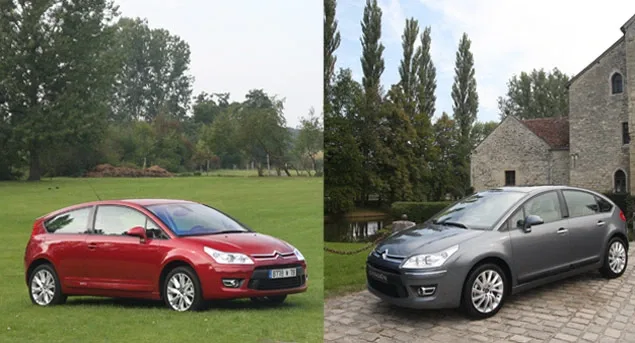
I experienced similar emotions when a couple of years ago I first got behind the wheel of the C4 Coupe. At first, of course, I was pleased with the bold exterior of the car. The futuristic three-door body with a sloping roof transitioning into the rear window at an acute angle initially seemed large, as befits a representative of the "C" class. However, from the driver's seat — both in dense traffic and when parking — the C4 feels quite compact.
Later it turned out that you quickly get used to the non-standard "cockpit" layout with digital instruments placed on a display in the center of the front panel. The petrol engine with 143 horsepower was more than enough for city driving, and the well-tuned suspension provided almost complete absence of body roll in corners, which gave a pleasant sense of confidence. In the end, our acquaintance turned out to be pleasant and, importantly, gave fresh sensations — like the first sip of soda in childhood, when your nose suddenly tingled from the bubbles.
This car was loved not only by me — today in Russia the C4 accounts for half of all Citroen sales, and worldwide over 900 thousand units have already been sold. The news of the upcoming restyling of the "four" gave fans hope for another bright design (there were even drawings circulating on the internet where artists' imagination turned the new C4 into something between the first generation and the BMW "three"). But it soon became obvious: the planned update would not bring radical changes. The car shown at the Moscow Auto Show (for the first time in the world) indeed differed from its predecessor only in nuances.
At the front, a new air intake grille appeared in the bumper (in the style of the C5), the optics changed, and the stiffening rib on the hood disappeared. Inside, there are even fewer differences from the first generation. The only thing that immediately catches the eye is the tachometer, which moved from behind the steering wheel to the central display under the windshield, along with the other instruments. But under the hood of the "four," two new petrol engines have settled — 1.6-liter units created by PSA together with BMW and already familiar from the Peugeot 308 and 207.
To get acquainted with the new product, the organizers prepared both three-door and five-door modifications in the suburbs of Paris. Lined up in a row in the hotel parking lot, the cars did not attract the interest of passing drivers. The changes to the "four's" appearance are indeed so insignificant that no one would think of taking the test cars for a new generation of the model that made a splash three and a half years ago. After all, it was in 2005 that the C4 was awarded the title of World Car of the Year.
Sitting behind the wheel of the hatchback with the new 120-horsepower naturally aspirated 1.6-liter engine, the feeling of inconspicuousness only intensifies — you can't call this unit fiery. True, it is worth noting that the new engine pulls noticeably more briskly than the previous 110-horsepower 1.6i. It is hard to believe that the difference in torque between them is only 13 Newton-meters. Moreover, thanks to the variable valve timing system, the new VTi officially consumes six percent less fuel than its predecessor.
But the coupe in the VTR version with the 150-horsepower turbo engine THP 150 is a completely different story. The engine with a Twin-Scroll turbo pulls the car forward with diesel-like persistence, regardless of crankshaft speed. And these are not just subjective feelings — it is enough to look at the beautiful "shelf" on the torque graph. The THP 150 delivers 240 Newton-meters in the range from 1400 to 4000 rpm. At the same time, the C4 VTR (Vitesse Tres Rapide) accelerates to 100 km/h in 8.4 seconds. As a result, the slightly "warmed up" hatchback has a sufficient reserve of traction on any gear to feel confident even during risky overtaking on narrow country highways. However, the pleasure of the excellent engine dynamics is spoiled by the sloppy six-speed manual and the overly sensitive clutch with a long pedal travel. Of course, over time you get used to everything, but at first acquaintance such "little things" can upset.
By the way (or rather, inopportunely), the C4 Coupe with the VTR package will now become the "hottest" version — the French stubbornly refuse to confirm that an even more powerful modification, the VTS (Version Tres Sportive), will ever see the light of day. At least in the distant future.
Of course, it makes no sense to put the old 180-horsepower 2.0i 16V in the new C4 VTS — with it, the coupe reaches "a hundred" only a tenth of a second faster than the "warmed up" VTR of the second generation. Moreover, this engine emits 200 grams of CO2 per kilometer, so in the eyes of the "greens," it accelerates not only the car but also the onset of global warming (and with Greenpeace, jokes are bad now — it presses on the sore spot, that is, on buyers). However, the "old" engine is not needed — PSA already has an excellent unit for the "charged" C4 — the THP 175. It belongs to the same line of engines developed by Peugeot and Citroen together with BMW, and with a volume of 1.6 liters it develops 175 horsepower. The Peugeot 308, which is a hundredweight heavier than the C4, reaches 100 km/h in 8.3 seconds with this engine.
But perhaps Citroen believes that the C4 does not need to "get out of eight seconds." After all, this car, in my opinion, is not too suited for aggressive driving. The steering lets you down — in a sharp turn, the hatchback's steering wheel sometimes unexpectedly goes light, making your palms sweat. And the simple suspension design — MacPherson struts at the front and a torsion beam at the rear — for some reason cannot simultaneously provide stability in corners and comfort on rough roads. The result: the C4 almost does not roll in corners, but every pothole responds with such impacts on the body that it seems the car will not survive a month on Russian roads. Perhaps the "four" should not chase sports records at all?
After all, this car is created primarily to give the owner peace of mind. It is no coincidence that the C4 is positioned as a compact hatchback with the richest set of options in its class. Laminated glass, front and rear parking sensors, bi-xenon swivel headlights, and a lane departure warning system — all this, as a rule, is not needed by real athletes. Look at the base configuration of the Civic Type-R — there isn't even air conditioning. And as the Russian proverb says, the slower you go, the further you'll get.
Anton Belov