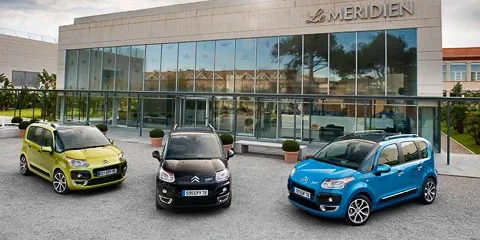
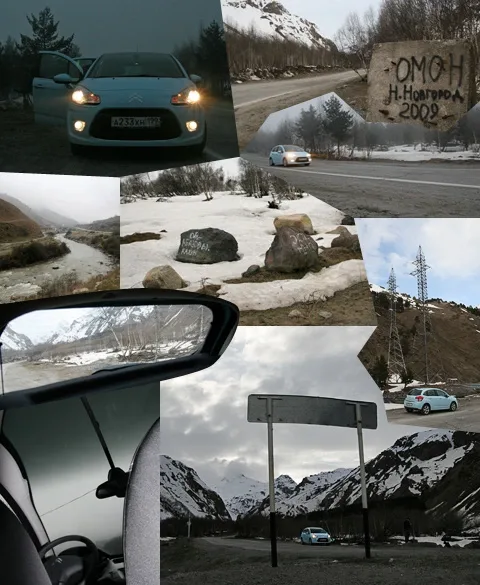
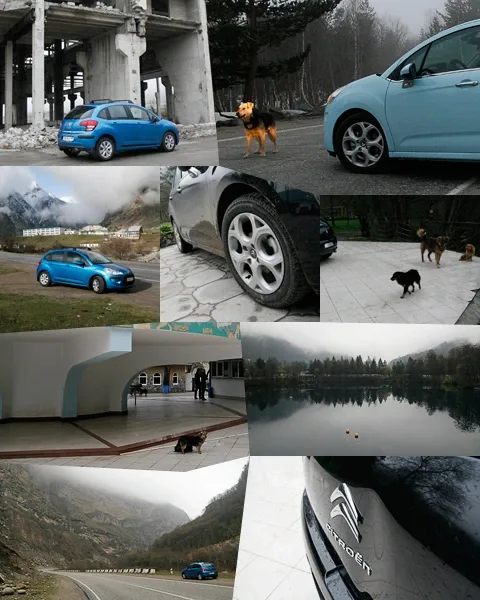
Surrounded by mountain peaks, in the lobby of the "Seven Peaks" hotel, company representative Oksana Vershinina explains why the C3 was brought to the broken, cow- and horse-infested serpentines of the Elbrus region. The answer is simple: from here, it's convenient to admire the peaks through the Zenith — a panoramic glass roof that seems huge for such a small car. The main thing to know about it: you truly appreciate it only after switching to a car with a regular roof. The Zenith offers as much as 108 degrees of vertical visibility, while without it, only 28 remain, which is, of course, sad.
At the foot of Elbrus, the organizers prepared two cars: a fully equipped version with a 1.6 engine producing 120 horsepower, a four-speed automatic transmission, and that very Zenith, as well as a more modest hatchback with a manual gearbox and a 95-horsepower 1.4 engine. It seems that the buyer will be torn between these two. Manufacturer statistics show that in Russia, 40% of Citroens are sold with a manual transmission. So it's no surprise that a test drive of the manual version could be done alone, while in the automatic car, there was no room to spare.
The panoramic roof slides back unhurriedly. To cover it with a rigid shade, you have to pull it by the handle from inside; there's no electric drive. The process itself resembles lowering the visor of a knight's helmet. Whoosh — and the cabin is flooded with light. Whoosh — and you're back in hiding. At first, not only the roof "moves," but also your head: the sun visors at a certain point press right against the driver's back of the head.
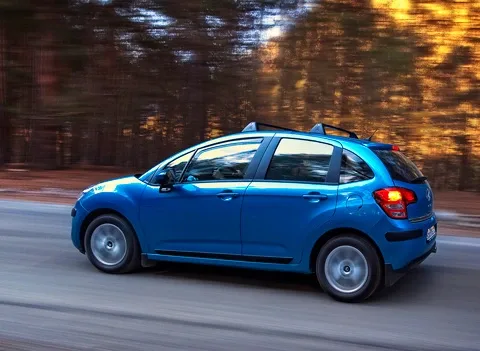
On the smaller Citroens, including the new C3 and C3 Picasso, the emblem does not serve as the edge of the hood. Because of this, the "two-story mustache" of the logo seems to put the car in quotation marks. It creates the feeling that the car's name is somehow frivolous. However, the brand representative unexpectedly calls the design "aggressive"! They say the first C3 from 2002 was rounded and feminine, but now... Okay, maybe not aggressive, but you can't deny it a dynamic appearance.
Compared to its predecessor, the new C3 has grown nine centimeters in length (to 3941 mm) and become six centimeters wider (1728 mm). The height changed the least: 1538 mm versus the previous 1519. At the same time, the hatchback remained in the same weight category, with its mass ranging from 1030 to 1135 kg.
Externally, from the previous generation, essentially only the name remains. A predatory "face," a swift and memorable silhouette, and you can no longer say it's a purely girly car — rather, a healthy unisex. By the way, 70% of Russian Citroen buyers are men. To check, we mentally put an artist, a painter, a guitarist, a homosexual, a journalist behind the wheel of the C3 and look at the knights — they all fit perfectly. And those men who only notice small cars in "Mr. Bean" are unlikely to read these lines at all.
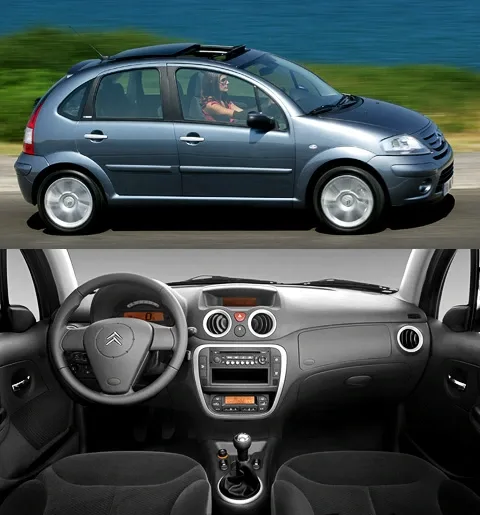
The "C-three" greets you with an open visor, hiding nothing. It gives the driver a "flower" on a glass stem — this is an air freshener built into the right side of the steering wheel. The interior looks modern, youthful, and with humor. Triangular buttons are grouped into circles, a round climate control display, round instrument pods, round beads of the audio system keys. The cabin could well be called "Smeshariki-style," if not for the completely round steering wheel and the air vents. The latter look like silver plastic stingrays perched on the dashboard. With a monochrome display and symmetrical central locking and hazard light buttons that glow in the dark. The visor above the instruments is also good, hovering like a palm placed to the forehead — the C3 seems to be peering at the driver.
Acceleration dynamics, whether with the "automatic" in manual mode or the "manual," won't please a hooligan. And it's not invited into this impassive seat. A person with glasses, however, is quite satisfied with the acceleration and studies the speed limiter with interest. The obedient and light steering wheel, almost complete absence of body roll in corners, confident flight — so confident that you want to get out and check if you're really driving a small Citroen. And if the energy-intensive suspension has honorably digested the terrible roads of Kabardino-Balkaria, where good asphalt is a rarity, then on the winding Moscow streets it will be even easier.
Up to 60 km/h on a flat road, the cabin is quiet. As speed increases, the engine becomes audible but unobtrusive. Beyond a hundred, wind noise appears near the front pillars (regardless of the presence of the Zenith) and a slight mid-frequency whistle. The audio system with six speakers sounds excellent, no complaints. The "C-three" is an obedient player of sounds and aromas that you choose yourself.
The second most popular sign in Kabardino-Balkaria after "No Overtaking" turned out to be six live horsepower on my lane. Honking at them is not worth it — they'll get scared. The brake pedal of the "C-third" is noticeably more responsive than the gas, which can sometimes be pressed and released without any reaction. The clutch travel is intuitively understandable and free of quirks. The "manual" could add joy but requires a bit more effort on the lever than expected. First gear engages through a step, and you can miss reverse. Nevertheless, the manual version would be ideal for a driving school: the display suggests which gear to engage: 40 km/h — fourth. Economical. Despite the abuse of the engine in the mountains, the little Citroen stayed within the official 6–7 l/100 km in the combined cycle.
Perhaps because of the "three" in the name, there are exactly three trim levels and three engines. The base Dynamique with a 75-horsepower 1.4 engine and a five-speed manual starts at 487 thousand rubles. The "middle" Tendance (from 568,000) is available with a 95-horsepower 1.4 or a 120-horsepower 1.6. Moreover, with the latter, and only with it, you can order a four-speed "automatic." This results in the most expensive trim, Exclusive (from 604,500 to 640,500 rubles), which includes the Zenith glass roof.
When it comes to buying the "golden mean" — a C3 version with an "automatic" and a 95-horsepower engine, which would be more than enough in the city — Citroen representatives just throw up their hands. Nor should you expect a C3 Picasso with an automatic transmission. The company consoles by saying that the "Exclusive" trim comes out 2–6% cheaper than similar offers from competitors, and overall, the new C3 should be 3–5% more affordable than rivals. It is through pricing that Citroen hopes to bring the not-too-popular "C-third" into the top ten of its class.
A set of options like ESP, heated seats and electrically adjustable mirrors, light and rain sensors, rear parking sensors, side airbags, alloy wheels, metallic paint, and LED lighting brings the price of the top version to 728,500 rubles.
The manufacturer calls the new model "a car for the free-spirited." What that means is unclear, but something else is clear. The C3 is not afraid of our harsh everyday life and does not require an alternative reality. At the same time, the small hatchback carries within it that very quirky fairy-tale world you sometimes so want to escape to. In this sense, it resembles a virtual reality helmet: you put on the Citroen — and you're already in another dimension. Perhaps it is for this that the "C-three" can make you fall in love with it so much that parting with it will seem unnatural — as if some monster came down from the mountains and took away your beloved car.
Technical Specifications
| Citroen C3 | 1.4 VTi | 1.6 VTi |
|---|---|---|
| **Body** | | |
| Body type | hatchback | hatchback |
| Number of doors/seats | 5/5 | 5/5 |
| Length, mm | 3941 | 3941 |
| Width, mm | 1728 | 1728 |
| Height, mm | 1538 | 1538 |
| Wheelbase, mm | 2466 | 2466 |
| Track front/rear, mm | 1465/1467 | 1465/1467 |
| Curb weight, kg | 1075 | 1135 |
| Gross weight, kg | 1576 | 1612 |
| Trunk volume, l | 300–1000 | 300–1000 |
| **Engine** | | |
| Type | petrol | petrol |
| Location | front, transverse | front, transverse |
| Number and arrangement of cylinders | 4, in-line | 4, in-line |
| Number of valves | 16 | 16 |
| Displacement, cm³ | 1397 | 1598 |
| Max power, hp/rpm | 95/6000 | 120/6000 |
| Max torque, N•m/rpm | 136/4000 | 160/4250 |
| **Transmission** | | |
| Gearbox | manual, five-speed | automatic, four-speed |
| Drive | front | front |
| **Chassis** | | |
| Front suspension | independent, spring, McPherson | independent, spring, McPherson |
| Rear suspension | semi-independent, spring | semi-independent, spring |
| Front brakes | ventilated disc | ventilated disc |
| Rear brakes | drum | disc |
| Tires | 185/65 R15 | 185/65 R15 |
| **Performance Characteristics** | | |
| Maximum speed, km/h | 184 | 190 |
| Acceleration 0-100 km/h, s | 10.6 | 10.9 |
| Fuel consumption, l/100 km | | |
| — urban cycle | 7.6 | 9.6 |
| — extra-urban cycle | 4.6 | 5.3 |
| — combined cycle | 5.8 | 6.9 |
| Emission standard | Euro-5 | Euro-5 |
| Fuel tank capacity, l | 50 | 50 |
| Fuel | AI-95 | AI-95 |
The 1.4 and 1.6 engines (95 and 120 hp) are the result of a joint effort between PSA Peugeot Citroen and BMW. Both units are equipped with variable intake valve lift and variable valve timing on intake and exhaust. The main advantage is fuel savings, especially under partial loads, reduced emissions, and a very flat torque curve: already at 2000 rpm, 88% of the maximum value is available.
The C3 is entirely assembled in France — at the plants in Aulnay and Poissy. Citroen's product director Vincent Besson said that suppliers were tasked with analyzing every component for weight reduction. Many parts had to be replaced. As a result, the bare body became 50 kilograms lighter than its predecessor.
The engineers also reduced the number of individual parts: the front bumper now consists of fewer elements. A lot of effort went into sound insulation — the suspension kinematics were refined specifically to combat noise.
Chief designer Mark Lloyd admits: "This is the first car in my practice whose design was actually dictated by its predecessor. When we started the 'C-third' project, we immediately understood: nothing needed to be changed drastically." The Citroen people themselves call the appearance stylish, matured, but cheerful.
The main accents are quality, refinement, and fun. The C3 is positioned as a family car that is more likely to become the first car in the household than the second. "It is still recognizable and stands out in the segment. The rounded shapes remain, but now it's easier for us to appeal to men as well," says project leader Pierre Boudard.
Euro NCAP crash tests in the summer of 2009 brought the C3 four stars out of five. Protection for adults and children was rated well — 83% and 74%, respectively. However, for pedestrian protection, the "Frenchman" received only 33%: experts did not like the hood edge. The equipment of the base version with electronic assistants satisfied the researchers by only 40%.
The Citroen C3 concept (also known as Lumiere) was shown in 1998 at the Paris Motor Show. The triple C stood for Centre de Creation Citroen. The idea was to demonstrate a new architecture and aesthetics for the B-class and "open the doors to the 21st century." The almost transparent four-seat concept approached the task originally: the rear doors opened against the direction of travel, the trunk folded in half at the top point, and the front seats could rotate 180 degrees to face the rear passengers.
The prototype of the current "C-three" also had its own "Zenith" — a huge windshield and a glass roof with a shade. The concept heralded the arrival of a new type of "main" car — safe, versatile, and economical. The Citroen people promised to release such a car in 2002.
The first generation C3 appeared right on schedule. The five-door hatchback could not boast of spaciousness in the cabin, especially in the rear seats, compared to competitors. But the public received it warmly: over 2.25 million units were sold. Largely thanks to the bright design created by Donato Coco and Jean-Pierre Ploué — the author of another cute car, the first Renault Twingo.
The second component of success was the variety of versions. Petrol engines with displacements of 1.1, 1.4, and 1.6 liters and power from 61 to 110 hp were supplemented by HDi diesels (1.4 and 1.6 liters, from 70 to 110 hp), developed together with Ford. And in 2005, the range was expanded with a 1.4 engine running on compressed natural gas. In total — eight power units.
On some versions of the C3, instead of the standard five-speed manual, you could order either a "robot" with paddle shifters or a classic four-speed "automatic." Another important advantage of the model was a wide choice of trim levels — four equipment levels, and even the base version could boast a quite decent set of options.
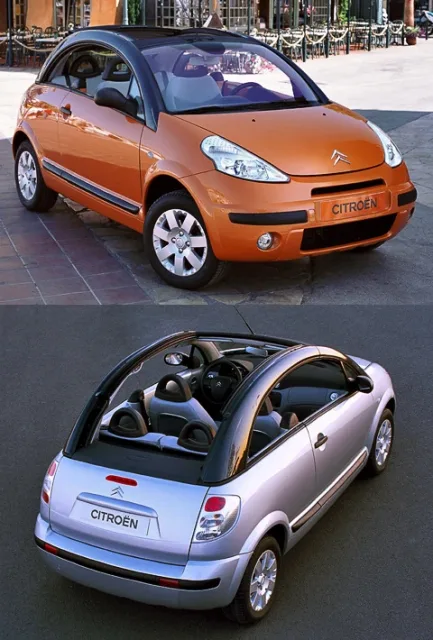
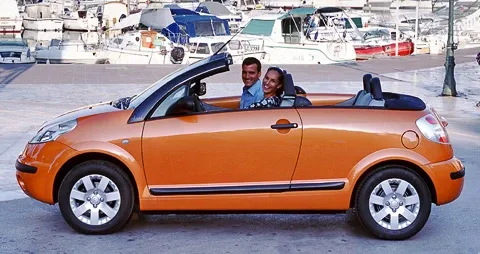
In 2003, the C3 Pluriel convertible saw the light of day. It attracted attention not only with its unusual appearance, but also with a variety of roof transformation options: the electric drive folded the fabric top, turning the car into a kind of targa, and to fully open it, you had to manually remove the massive side arches.
For the convertible, two petrol engines and one diesel were available, as well as two transmissions — manual and robotic. During the production run, the French slightly updated the interior and exterior of the model several times.
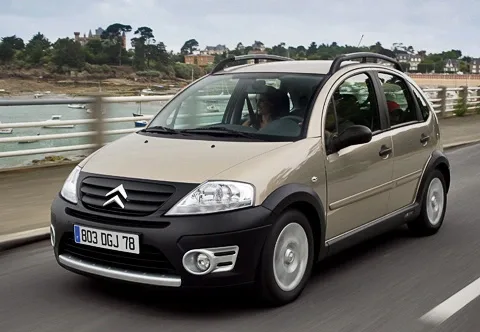
From 2004 to 2008, the C3 lineup included the XTR modification. Its main differences were enlarged wheel arches and black plastic body cladding along the lower part of the body, which gave the small car an off-road look. In addition to the aggressive exterior, the XTR could be equipped with a limited-slip differential.
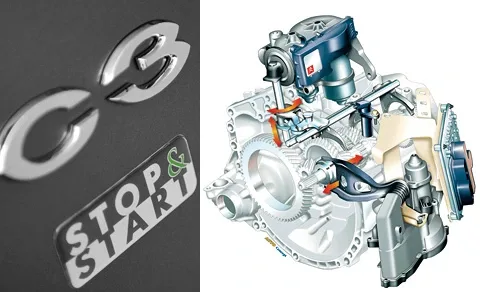
In 2004, the C3 with a 1.4-liter engine and Sensodrive robotic gearbox received a start/stop system that turned off the engine when speed dropped below 5 km/h and instantly restarted it as soon as the driver released the brake pedal. This was not the first such system in the world, but perhaps one of the first more or less successful ones — after the not-so-successful experiments of Volkswagen and Fiat in the 80s and 90s.
In October 2005, the C3 underwent a facelift. The bumpers, radiator grille, and rear lights were updated. The interior was not left without attention either: the front panel and instrument cluster were redesigned, and the trim materials became better quality and more pleasant to the touch — although even before they did not cause complaints. The engine lineup partially changed, and the steering was refined.
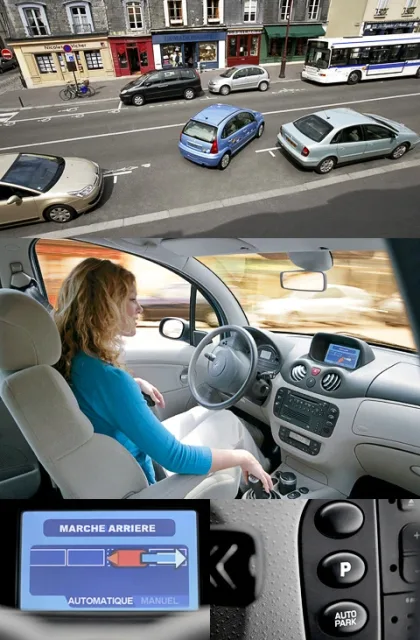
In the same 2005, the French demonstrated the experimental Citroen C3 with the semi-automatic parking system City Park. It independently found a suitable place and turned the steering wheel itself, while the driver only had to follow prompts on working with the pedals and gearbox. The system voiced instructions with a speech synthesizer and duplicated them on the central display. This development never reached mass production.
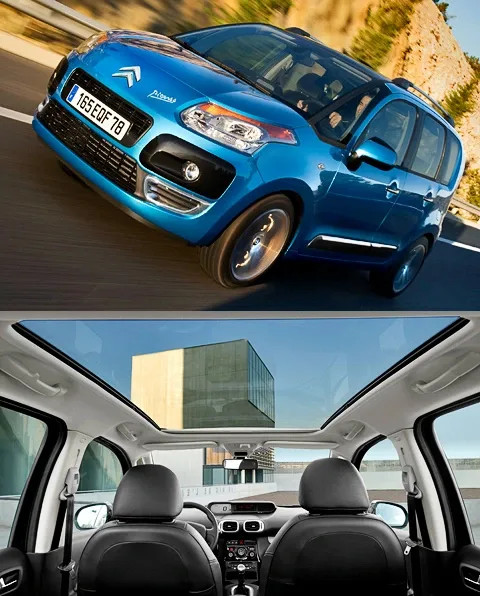
In July 2008, the C3 family was joined by the C3 Picasso compact MPV. The French remained true to themselves: a bright exterior and stylish interior — that is what immediately sets this model apart from competitors. For an extra charge, you could order a panoramic glass roof, which increased the total glazing area to 4.52 square meters, making the already spacious interior even lighter and airier.
The C3 Picasso was offered with two petrol VTi engines, created jointly with BMW — 1.4 liters (95 hp) and 1.6 liters (120 hp), as well as a pair of 1.6-liter HDi diesels with 90 and 110 hp. All versions were equipped with a five-speed manual, although engineers even then promised to add a robotic and six-speed manual gearbox in the future, as well as a start/stop system.
Behind the scenes
We got to know the small Citroens in truly breathtakingly beautiful places — among majestic mountains. True, time was extremely short: less than a day. Moreover, the Elbrus region met us with heavy rain, from which we managed to escape into the mountains in a couple of hours — from Nalchik to the village of Terskol. But there, thick fog covered us with incredible speed, smoothly turning into night darkness.
In Kabardino-Balkaria, you practically won't meet cats — they have been displaced by dogs, of which there are a huge number. However, the dogs behave quietly and friendly. The next day we reached the Blue Lakes, where we noticed that a dent appeared on the fifth door of the black hatchback. As it turned out, a cow left it.
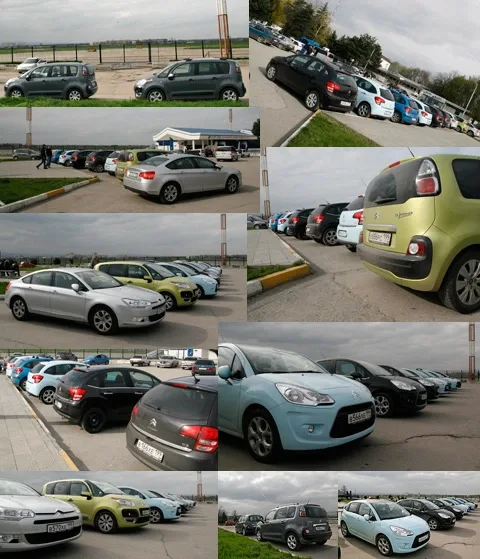
Before flying out from Nalchik airport, we were able to see the entire "fleet" that the Citroen representative office brought to the Elbrus region on two car carriers — 12 cars. Among them were seven "C3s" and three C3 Picassos. So many such cars have never been seen in these parts and are unlikely to be seen again. Perhaps such a bright and contrasting spectacle can interest even Satan himself.
When we, a group of more than a dozen young Muscovites, were going through security at the airport, the woman at the scanner was clearly embarrassed: each of us had identical binoculars in our bags. No one ever explained to her what that could mean. Nor to us. Perhaps that is Visiodrive.