
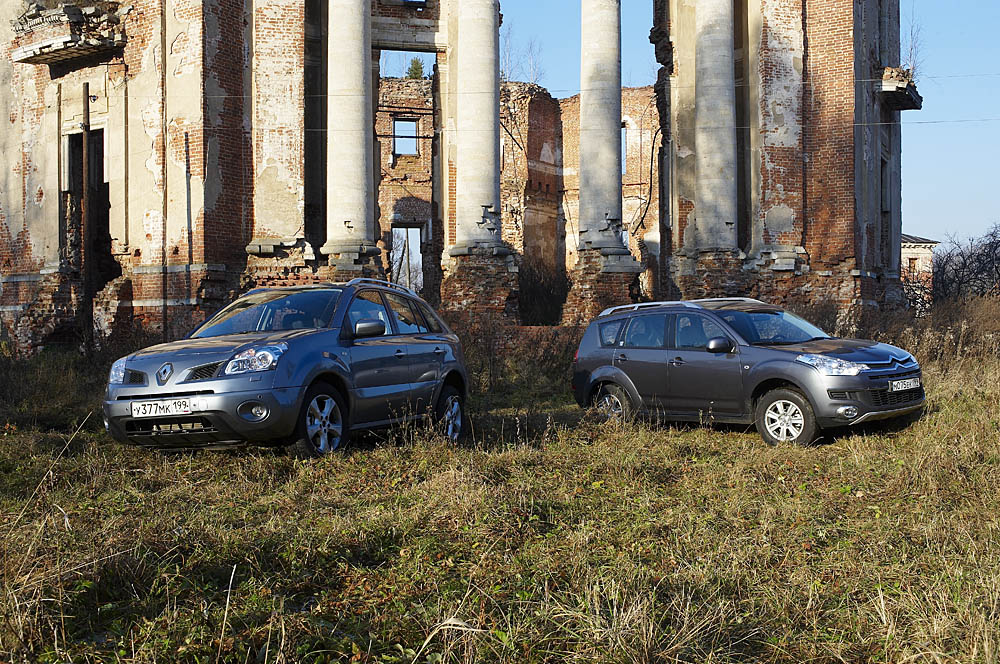
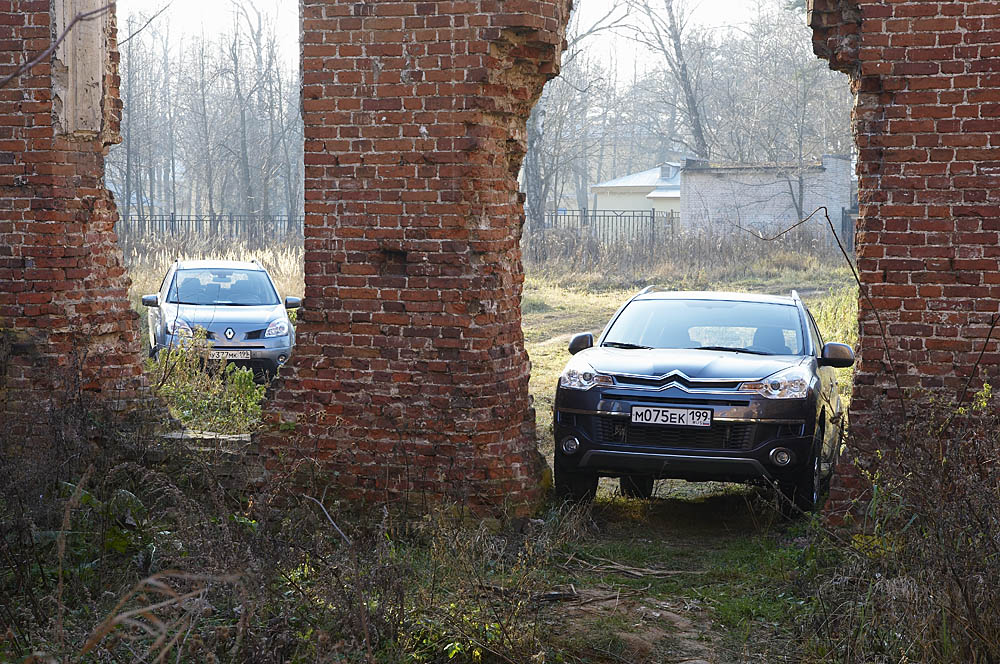
 Looking at this pair of cars, anyone will immediately decide that before them is a comparative test of two French crossovers. And they won't be mistaken. But only halfway. After all, only the appearance is French here, while under the hood is filling from Japan, like "Maska" candies in a bright wrapper. True, one "wrapper" has a more solid and intricate covering, while the second one is light, almost imperceptible. Looking at this pair of cars, anyone will immediately decide that before them is a comparative test of two French crossovers. And they won't be mistaken. But only halfway. After all, only the appearance is French here, while under the hood is filling from Japan, like "Maska" candies in a bright wrapper. True, one "wrapper" has a more solid and intricate covering, while the second one is light, almost imperceptible. |
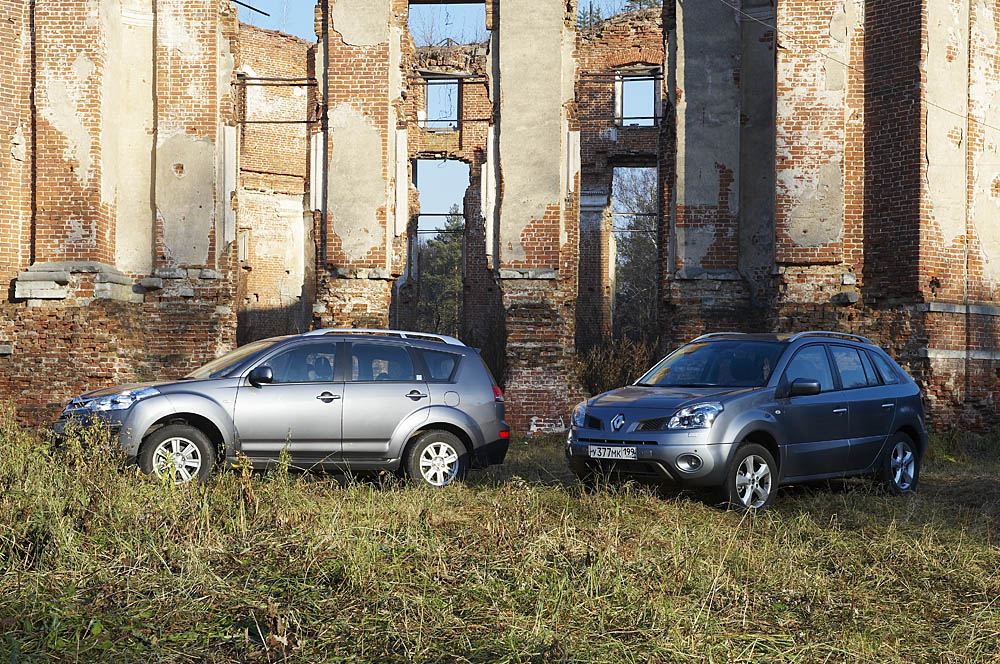 As you've already guessed, we're talking about platforms of Japanese cars that formed the basis of Renault and Citroen models. Koleos, for example, is built on the base of its alliance sibling — Nissan X-Trail. And C-Crosser is, in essence, a restyled Mitsubishi Outlander XL. Why did this happen? Why did they turn out to be not "white" inside? It's simple: the French didn't make it in time. Both of them. Now it's hard to find a car manufacturer that doesn't have some crossover in its lineup. But Renault and Citroen didn't have one until recently. Apparently, they had neither the desire nor the finances to create a crossover on their own. As you've already guessed, we're talking about platforms of Japanese cars that formed the basis of Renault and Citroen models. Koleos, for example, is built on the base of its alliance sibling — Nissan X-Trail. And C-Crosser is, in essence, a restyled Mitsubishi Outlander XL. Why did this happen? Why did they turn out to be not "white" inside? It's simple: the French didn't make it in time. Both of them. Now it's hard to find a car manufacturer that doesn't have some crossover in its lineup. But Renault and Citroen didn't have one until recently. Apparently, they had neither the desire nor the finances to create a crossover on their own. |
 That's where the Japanese came in handy: Mitsubishi handed over its Outlander XL to the PSA concern entirely and completely. Of course, not for free, but in exchange for a proven French 2.2-liter turbodiesel with 156 hp (which, by the way, is installed on both the C-Crosser and its sibling Peugeot 4007). And at Renault they reasoned: why reinvent the wheel if you can ask colleagues from the Renault-Nissan alliance for the base from one of the most sought-after crossovers in Russia — the X-Trail. That's how our heroes appeared — without much effort. Everyone seems satisfied: the French "fathers" proudly carry their "children," and the Japanese "mothers" are not offended. But what will happen to the buyer who has to raise and feed these "kids"? That's where the Japanese came in handy: Mitsubishi handed over its Outlander XL to the PSA concern entirely and completely. Of course, not for free, but in exchange for a proven French 2.2-liter turbodiesel with 156 hp (which, by the way, is installed on both the C-Crosser and its sibling Peugeot 4007). And at Renault they reasoned: why reinvent the wheel if you can ask colleagues from the Renault-Nissan alliance for the base from one of the most sought-after crossovers in Russia — the X-Trail. That's how our heroes appeared — without much effort. Everyone seems satisfied: the French "fathers" proudly carry their "children," and the Japanese "mothers" are not offended. But what will happen to the buyer who has to raise and feed these "kids"? |
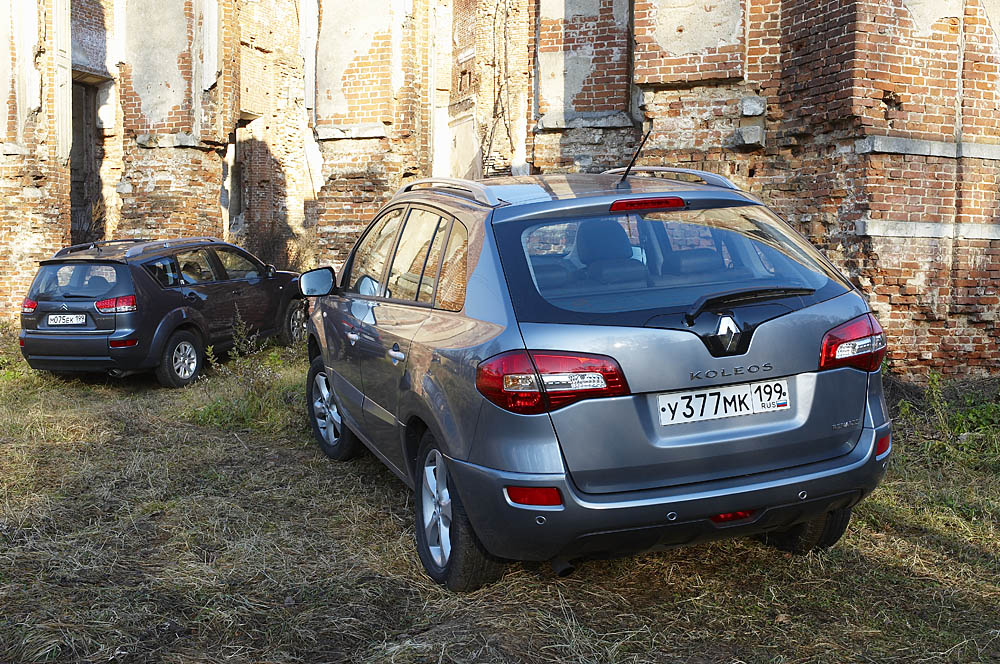
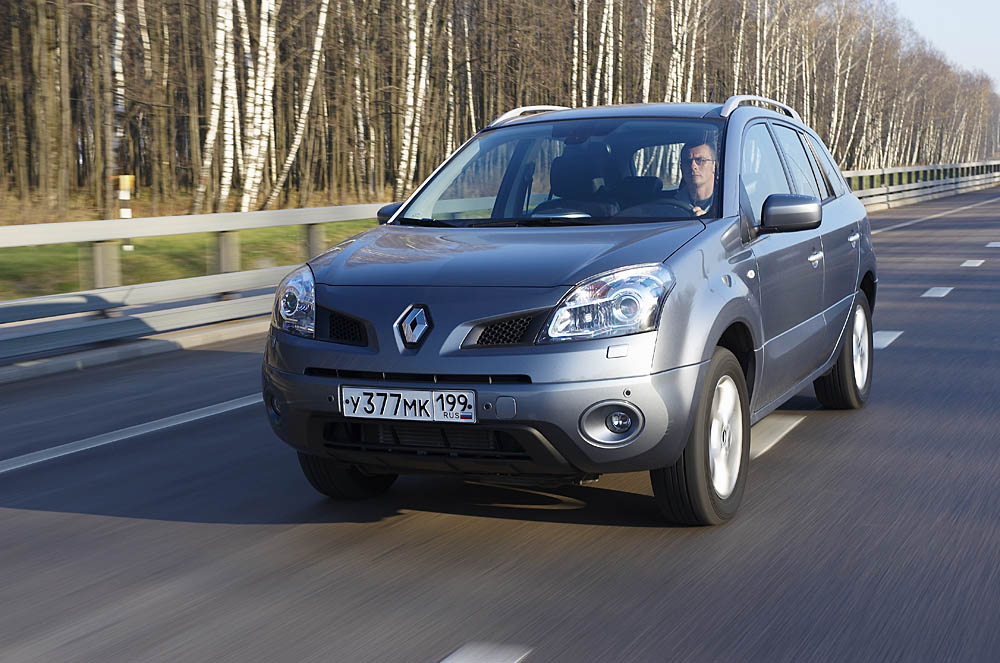
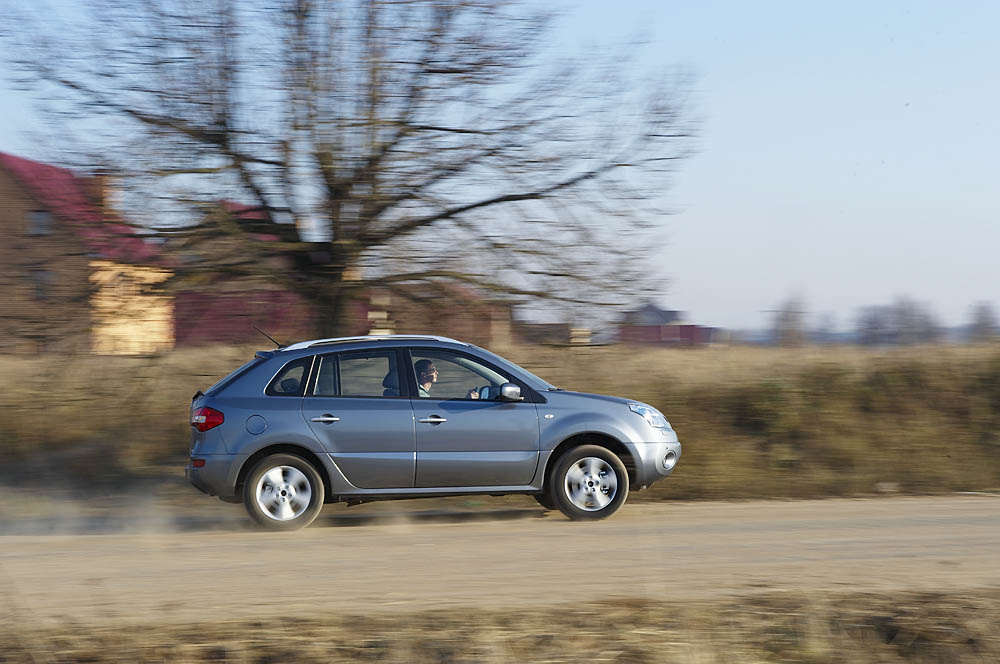
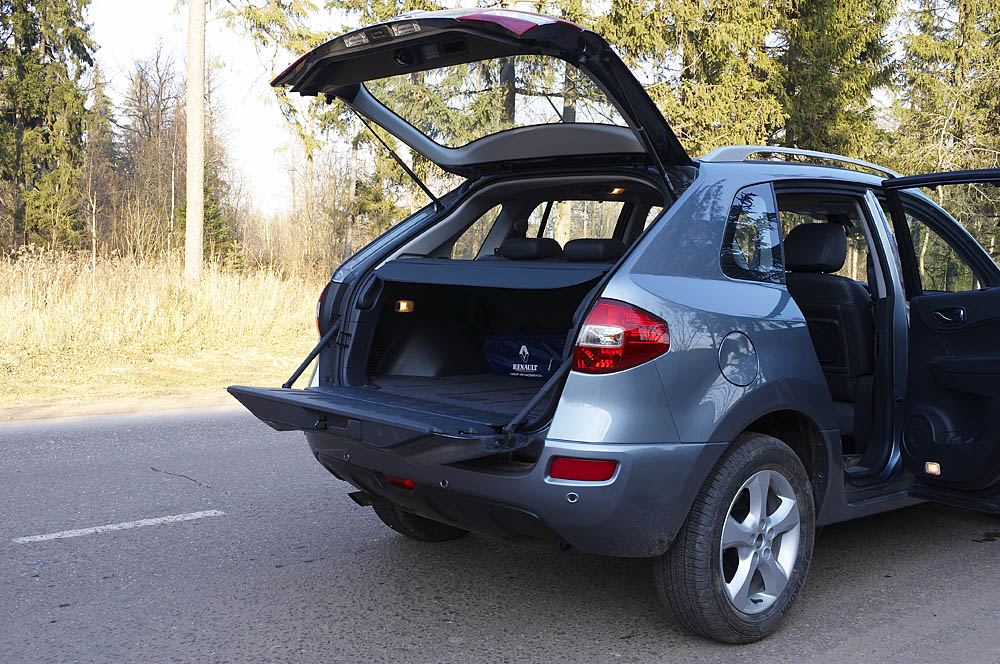
 The motives of a future Renault owner are, in general, clear to me. Honestly, Koleos is not X-Trail at all. First of all, it looks completely different. Let's not argue about the unusual appearance and admit the obvious: Koleos is original and doesn't resemble either the X-Trail or any other classmate. The cubic forms of the "Japanese" have been replaced by Renault design — streamlined lines, "cunning" rear lights, a recognizable front end with a massive crossbar in the middle, a large logo, and headlights running back. The motives of a future Renault owner are, in general, clear to me. Honestly, Koleos is not X-Trail at all. First of all, it looks completely different. Let's not argue about the unusual appearance and admit the obvious: Koleos is original and doesn't resemble either the X-Trail or any other classmate. The cubic forms of the "Japanese" have been replaced by Renault design — streamlined lines, "cunning" rear lights, a recognizable front end with a massive crossbar in the middle, a large logo, and headlights running back. |
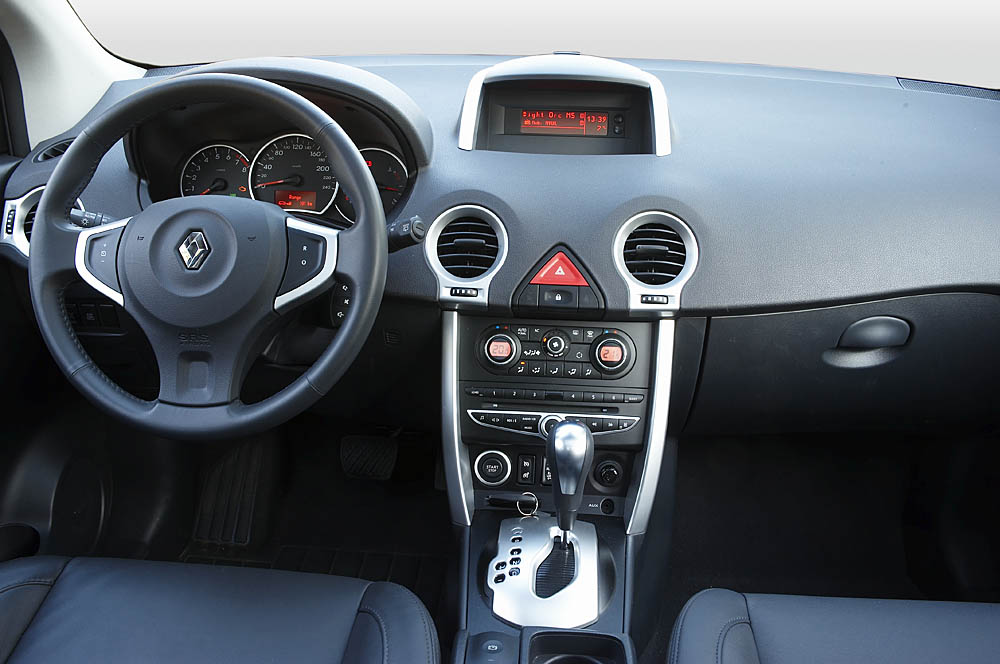
 The interior is also its own. And it's good. The French managed to bring a special warm mood and charm into the cabin, which is rare for crossovers of this class. Soft plastic of the front panel, leather seats that finally aren't as loose as on previous Renault models. Except that the silver plastic trim slightly stands out from the overall picture. In principle, all this is already enough to perceive Koleos as a competitor to X-Trail, and not as a "Pilot" in a "Mask" wrapper. But it turned out that the Renault also drives differently. The interior is also its own. And it's good. The French managed to bring a special warm mood and charm into the cabin, which is rare for crossovers of this class. Soft plastic of the front panel, leather seats that finally aren't as loose as on previous Renault models. Except that the silver plastic trim slightly stands out from the overall picture. In principle, all this is already enough to perceive Koleos as a competitor to X-Trail, and not as a "Pilot" in a "Mask" wrapper. But it turned out that the Renault also drives differently. |
 The 2.5-liter engine, continuously variable transmission, and All-Mode 4x4-i all-wheel drive moved here from the donor unchanged. In terms of feel, the "Frenchman's" acceleration is the same — calm and measured, but quite sufficient, without unnecessary emotions, with the CVT hanging at peak torque. We've already been through all this on the X-Trail. But the noise insulation and ride smoothness are simply excellent! The Koleos suspension is a real find for those looking for the most comfortable car in this class. For this, you can forgive it noticeable body rolls and not the most informative steering. You seem to float on the waves of traffic. On dirt roads, vibrations become a bit stronger, but impacts reach passengers in a softened form. The 2.5-liter engine, continuously variable transmission, and All-Mode 4x4-i all-wheel drive moved here from the donor unchanged. In terms of feel, the "Frenchman's" acceleration is the same — calm and measured, but quite sufficient, without unnecessary emotions, with the CVT hanging at peak torque. We've already been through all this on the X-Trail. But the noise insulation and ride smoothness are simply excellent! The Koleos suspension is a real find for those looking for the most comfortable car in this class. For this, you can forgive it noticeable body rolls and not the most informative steering. You seem to float on the waves of traffic. On dirt roads, vibrations become a bit stronger, but impacts reach passengers in a softened form. |
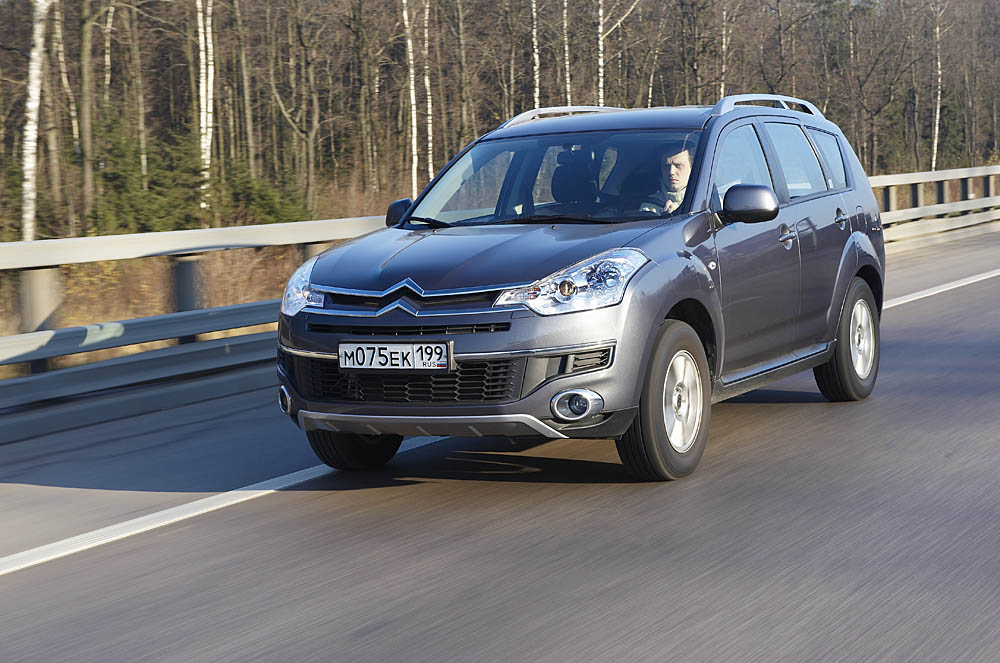
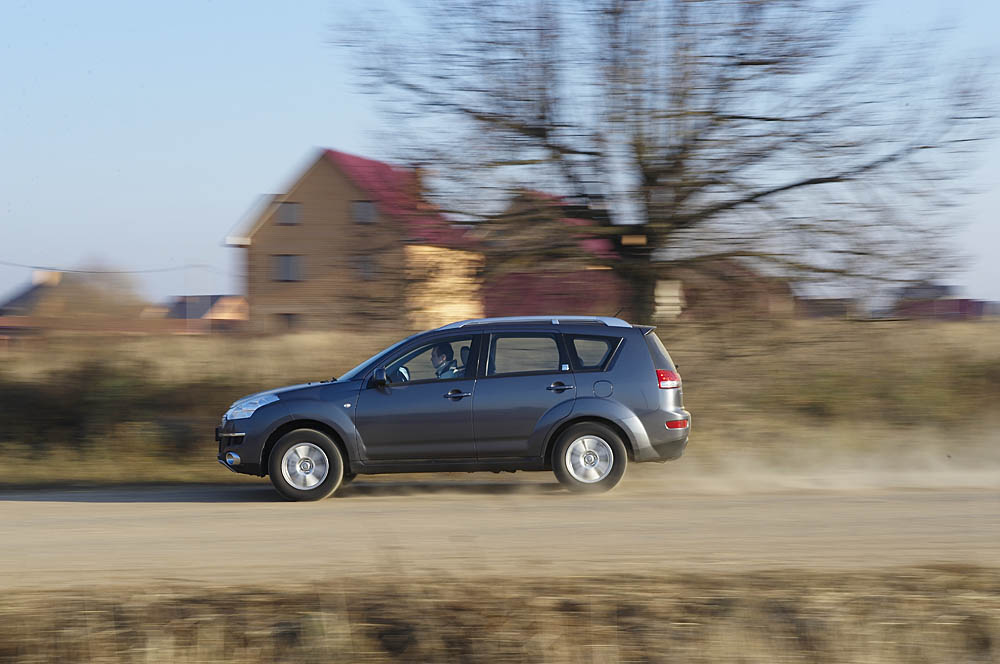
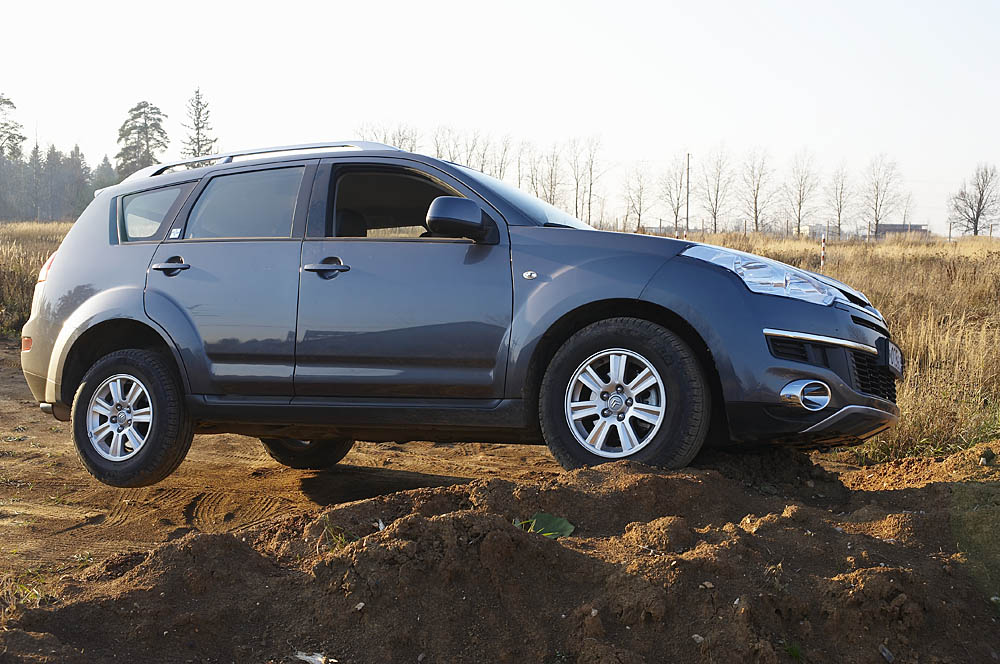
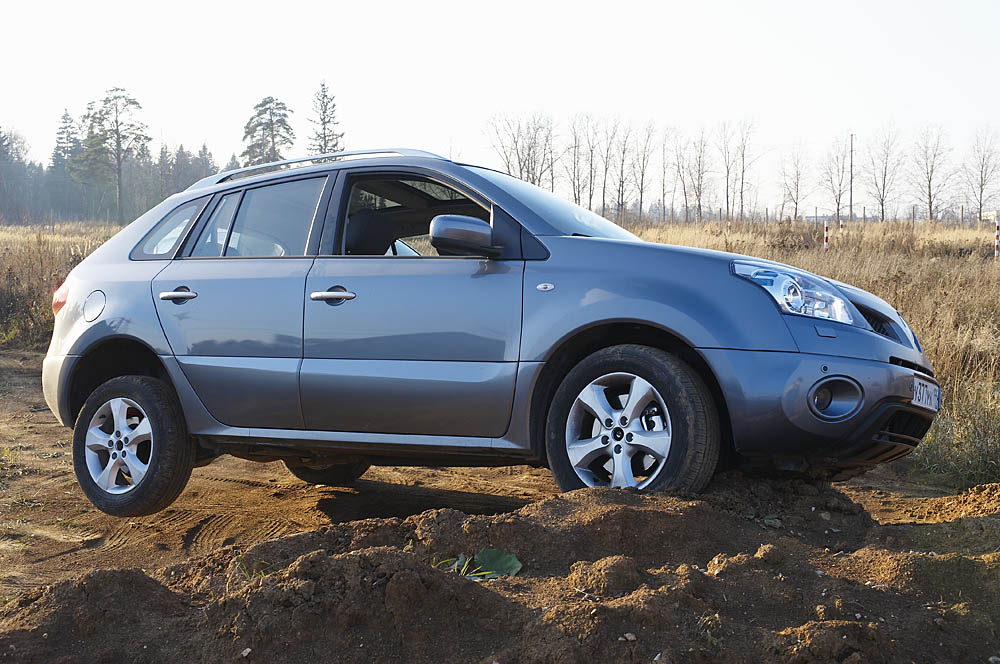
 You can also venture onto light off-road, but not serious. Although the Koleos has decent geometry, suspension travel is quite large, and there's even a transmission mode with locking of the center clutch, but still it feels better on asphalt than beyond it. You can also venture onto light off-road, but not serious. Although the Koleos has decent geometry, suspension travel is quite large, and there's even a transmission mode with locking of the center clutch, but still it feels better on asphalt than beyond it.So, Koleos differs from X-Trail quite significantly. And with Citroen, everything is more complicated. A couple of brand badges — on the radiator grille and steering wheel — plus a different front end, in my opinion, is not enough to turn a Japanese car into a French one. Although ardent Citroen fans might find it sufficient. But no matter which side you look at the C-Crosser from — outside or inside — it's still the same Outlander XL. |
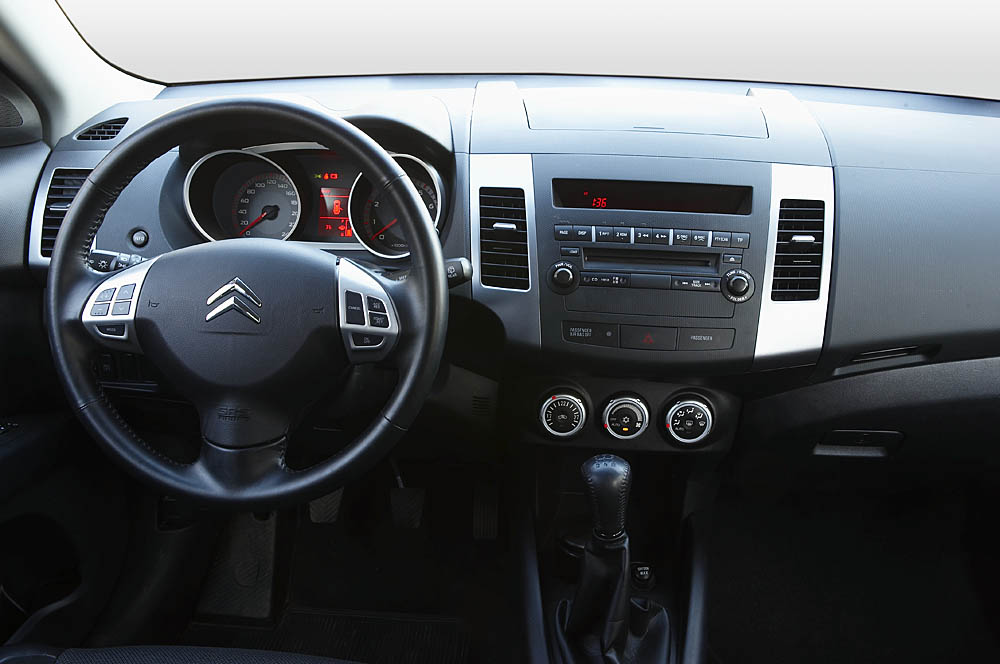
 The cabin is a complete clone. Compared to Mitsubishi, nothing has changed. And that's a minus, because in terms of interior, Koleos outshines its competitor. Hard plastic everywhere, dim lighting, simple instruments, lack of steering wheel reach adjustment and dual-zone climate control — clearly not pluses. If they had replaced the materials, added a couple of interesting solutions (Citroen is capable of that), livened up the lighting, slightly changed the instrument panel — and the C-Crosser would have played in a new way. But that, alas, didn't happen. The cabin is a complete clone. Compared to Mitsubishi, nothing has changed. And that's a minus, because in terms of interior, Koleos outshines its competitor. Hard plastic everywhere, dim lighting, simple instruments, lack of steering wheel reach adjustment and dual-zone climate control — clearly not pluses. If they had replaced the materials, added a couple of interesting solutions (Citroen is capable of that), livened up the lighting, slightly changed the instrument panel — and the C-Crosser would have played in a new way. But that, alas, didn't happen. |
 Nevertheless, I liked the seating position in the Citroen more — the seats here are denser than in the Renault and hold the body better. And this is not accidental. After all, unlike the phlegmatic Koleos, the C-Crosser is noticeably sharper in everything — in steering, brakes, and suspension (thanks to Mitsubishi). In terms of feel, the dynamics also seem better (although by numbers — worse). Probably, this illusion is the merit of the manual gearbox with clear shifting: after all, the power of both is the same (170 hp), and the all-wheel drive systems are structurally similar. Nevertheless, I liked the seating position in the Citroen more — the seats here are denser than in the Renault and hold the body better. And this is not accidental. After all, unlike the phlegmatic Koleos, the C-Crosser is noticeably sharper in everything — in steering, brakes, and suspension (thanks to Mitsubishi). In terms of feel, the dynamics also seem better (although by numbers — worse). Probably, this illusion is the merit of the manual gearbox with clear shifting: after all, the power of both is the same (170 hp), and the all-wheel drive systems are structurally similar. |
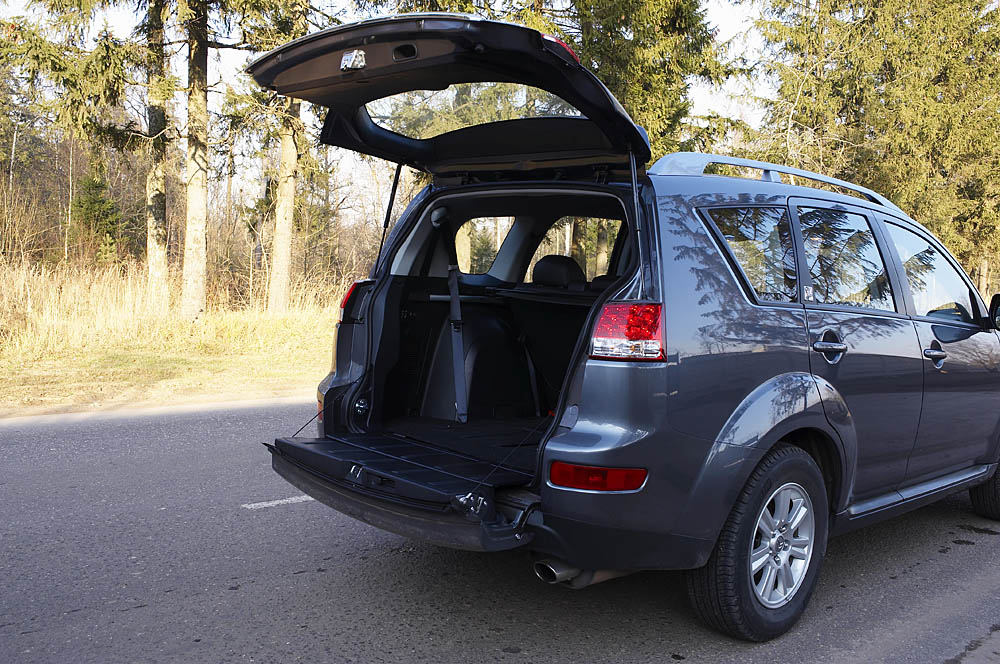
 Realizing that you can't surprise a buyer with such "novelty," Citroen prepared other trump cards. The C-Crosser is available in simple trims (like our test example) with a "manual" and 16-inch wheels, has a third row of seats for children, and also a version with that same 2.2-liter turbodiesel (maybe that's not so much, but, for example, the Outlander XL in Russia has neither one nor the other). Realizing that you can't surprise a buyer with such "novelty," Citroen prepared other trump cards. The C-Crosser is available in simple trims (like our test example) with a "manual" and 16-inch wheels, has a third row of seats for children, and also a version with that same 2.2-liter turbodiesel (maybe that's not so much, but, for example, the Outlander XL in Russia has neither one nor the other). |
 The main advantage of the crossover from Citroen is good handling for its class, which determines the portrait of a potential buyer of this Japanese-French "candy." This is a person who really wants their crossover to handle like an Outlander XL, but at the same time be European, in a more spectacular wrapper from Citroen. Such a buyer can only be wished to choose the diesel version — the French make excellent heavy-fuel engines. The main advantage of the crossover from Citroen is good handling for its class, which determines the portrait of a potential buyer of this Japanese-French "candy." This is a person who really wants their crossover to handle like an Outlander XL, but at the same time be European, in a more spectacular wrapper from Citroen. Such a buyer can only be wished to choose the diesel version — the French make excellent heavy-fuel engines.Perhaps it's even good that in every pack of "Pilots" there's its own "Mask"? Variety has never hurt anyone. The main thing is to be ready for it… |
 |
 |
 |
Japanese mother, or French candy wrappers
Remember, back in the days of happy socialist childhood, you would buy loose 'Pilot' candies with white filling, and among the whole bag there would definitely be at least one where only the wrapper was from 'Pilot': you unwrap it, bite into it, and inside – it's 'Mask'!

Test drive photos
Comments
No comments yet. Say the first word.