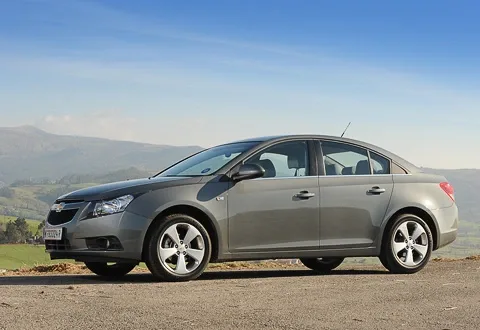
You can debate the harm of such spectacles as much as you like, but the result is the same: you'll still buy a ticket, grab a bucket of popcorn, and watch with pleasure as Bruce Willis, cursing, takes down another villain. It's simple, clear, and unpretentious. With cars, the story is similar. The Volkswagen Beetle was adored not for its driving qualities. The Citroen 2CV was affectionately called an "umbrella on wheels." And safety is not even worth mentioning: in a collision, both of these cars, like Willis's hero, could send the owner packing. When you need to quickly and cheaply satisfy your hunger, there's nothing better than McDonald's. A similar situation exists with modern cars like the Chevrolet Lacetti: no frills, but inexpensive and filling. Now it has been replaced by the Chevrolet Cruze. It also comes from Korea and also has an affordable price tag. The recipe seems the same. So why was it necessary to change the name — from the familiar to the awkward-sounding? Perhaps the old name was so strongly associated with the image of a "cheap workhorse for a thrifty owner" that it was decided to change it as well. Let even aesthetes not wrinkle their noses. "Moreover," note GM representatives, "this is the first model showcasing our new corporate style." Such an event cannot be ignored. Although the styling of the "split forehead" seems to be the same, the presentation has clearly changed. The Lacetti sedan was not ugly. But it could only be compared to actors in cheap American action movies: they act okay, but are forgotten immediately after the credits. You also can't remember what the movie was about: the Lacetti drove like nothing. The Cruze, however, has both flared wheel arches and a pleasant profile (even with a plug instead of a window in the rear pillar), and for the most demanding, even a chrome exhaust tip. The main thing is not to discuss the rear: the conversation will immediately turn to a debate about whether the Cruze is copied from the Honda Civic. Overall, I had only one question about the design: "Why are almost all Cruzes at the presentation gray? Couldn't they find more cheerful colors for such a car?" That's a compliment. And how does the Cruze fundamentally differ from the Captiva, Epica, or Aveo? In small details. Or rather, in many small details! The interior is interesting not only to look at but also, surprisingly, to touch. It is crafted with attention to detail. The architecture is in the spirit of the Cadillac CTS, with nice "fabric-like" inserts on the dashboard (in versions with leather interiors, they are made of "leather" but look much worse). The steering wheel has anatomical thumb grips, the seats have decent lateral support, a comfortable seating position (the column adjusts both for height and reach), and stylish instruments. The light control unit has a chrome rim. The standard audio system is acceptable. The list could go on. But there are also plenty of flaws. The ceiling handles lack micro-lifts, but the entire cabin is full of micro-play. The buttons don't press perfectly crisply, the glovebox lid doesn't close perfectly evenly — and so on down the list. In terms of build quality, the Cruze is not yet ready to be counted as a competitor to, say, Opel. But at least it has quality! From the point of view of interior appointments, the Cruze is perhaps the most interesting "Korean" we've seen in recent years. But technically, alas, it's no more interesting than a Big Mac. A standard recipe? This Chevrolet was developed where it always has been — in Korea. And as always, with GM's unification scale. The 1.6 petrol engine is borrowed from the Lacetti; the 1.8 engine, on the other hand, is from Opel. The 2.0 diesel is Korean, from the GM DAT division: it's also used in the Captiva and Antara. The gearboxes are also their own. The five-speed manual with long, tasteless throws and mediocre selectivity is the same as in the Lacetti. The automatic, however, has been carried over from the Epica sedan: a quite modern six-speed gearbox that even a Corolla would envy. The main thing here is not just a "Korean" Daewoo (in its home market, the Cruze is sold under that brand) posing in front of the Statue of Liberty. The platform here is new — Delta II, developed in Rüsselsheim by Opel engineers (the new Astra will also be built on it). Moreover, it is claimed that the car was also taught to drive by Germans. At least the European version, which has a stiffer suspension than the Korean or American versions. At first, the handling even seems sharp — the car willingly and quickly changes course. For the city, such agility is just right. The only problem is a lack of precision — on a steep arc, the trajectory constantly needs correcting. "But the Cruze, compared to the Astra, is more comfortable and handles bad roads better!" counter GM representatives. And indeed, the current Astra is more precise and sharper, but at the same time, it more often breaks from its trajectory on bumps, and the steering wheel kicks more in ruts. More interesting, but stiffer and more nervous. The Cruze, in general, is also not very soft, although body roll in sharp corners is considerable. But on the rare bad sections of Spanish roads, the suspension seemed very dense and resilient. And there is almost no pitching on waves. Better that way! It's a pity that corners are taken without enthusiasm. I lift off the throttle, and everything becomes quite good. On the highway, the Cruze holds up well — calm reactions and good directional stability (the wheelbase here is longer than many classmates). Plus, decent sound insulation. Only the engines spoil it, whining like a child whose favorite toy has been taken away. The 1.8 petrol combined with the automatic is especially vocal. After active driving, you want to stick a banana in the exhaust pipe. Maybe it will get quieter? Apparently, the automatic also can't stand its shouting — it sometimes stumbles. Although overall the combination is not bad, but during fast driving the engine gets annoying, and during calm driving, the transmission jerks: due to low torque at low revs, the gearbox has to constantly shift. The smaller engine comes only with a five-speed manual. And, surprisingly, it makes less noise. But with it, the Cruze drives quite boringly. There's even less elasticity, and you don't want to shift more often: the gearbox is not ideal. The quietest, surprisingly, is the two-liter diesel! A good engine, almost devoid of unpleasant vibrations and characteristic rattling. Like any modern diesel, it pulls poorly at low revs, but by two thousand, 320 N•m of torque matures. And that's no joke. With such traction, the automatic becomes silky: the car is responsive at a walk, at a gallop, and everywhere in between. No hesitations, no jerks. Here, six gears are used perfectly! It's a pity that the diesel is not for us.
The positioning of the model is also not entirely clear-cut. In most countries, the Cruze will replace the Lacetti, but here both cars will be sold in parallel: the old one remains on the Kaliningrad conveyor of Avtotor, while the new one will be assembled in Shushary. It's logical to assume that the Cruze will be positioned between the Lacetti and the Astra in price. But here's the problem: a new generation of Astra is coming out soon, and then the Cruze will find itself exactly in the place of the current model. The first production cars are promised by summer, and all of them will be locally assembled.
But no matter what the marketers have planned, the Cruze is a real step forward. If the Lacetti feels like jelly, then the Cruze is the same Astra, only after a sedative. The suspension is tightly assembled, and the steering responses are quick. All because in Europe, the average buyer of such a car is a person aged 40–50. This explains a lot: both the calm engines and the safe but bland handling. Who at that age needs a vigorous engine roar or a drift when lifting off the throttle? Only for a heart attack.
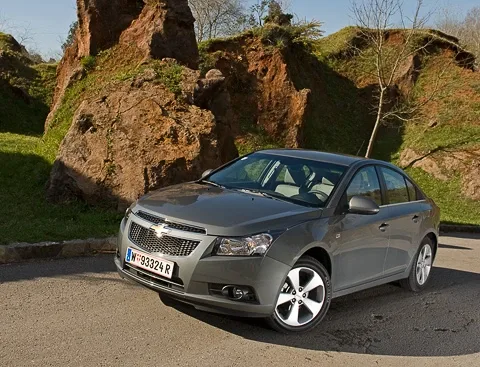
test-drive-12.jpg
The sedan is so far the only body type for the Cruze. A hatchback will appear only in the distant future. And instead of a station wagon, the Koreans developed the Orlando MPV.
Otherwise, the car turned out well. Korean designers managed to make the Cruze look more "American" than, say, the Chevrolet Tahoe. It seems that the Cruze is as reliable as the law of universal gravitation. Yes, it's still a kind of automotive fast food. But before, this unified cocktail was bland and vitamin-free, and now it finally has taste.

If the price doesn't disappoint, that will be a decisive argument for many. After all, with the money saved, you can buy a big TV — there's plenty of action on it right now.
Specifications
Characteristic Chevrolet Cruze 1.6 Chevrolet Cruze 1.8 Chevrolet Cruze 2.0 TD
Body
Number of doors/seats 4/5 4/5 4/5
Length, mm 4597 4597 4597
Width, mm 1788 1788 1788
Height, mm 1477 1477 1477
Wheelbase, mm 2685 2685 2685
Track front/rear, mm 1544/1558 1544/1558 1544/1558
Curb weight, kg 1285 1290 (1315)* 1427
Gross weight, kg 1788 (1813) 1793 (1818) 1930
Trunk volume, l 450 450 450
Engine
Type petrol, with distributed injection petrol, with distributed injection turbodiesel
Location front, transverse front, transverse front, transverse
Number and arrangement of cylinders 4, in-line 4, in-line 4, in-line
Number of valves 16 16 16
Displacement, cm3 1598 1796 1991
Max power, hp/rpm 113/6400 141/6200 150/4000
Max torque, N•m/rpm 153/4200 176/3800 320/2000
Transmission
Gearbox manual, five-speed manual, five-speed (automatic, six-speed) manual, five-speed (automatic, six-speed)
Drive front front front
Chassis
Front suspension independent, spring, McPherson independent, spring, McPherson independent, spring, McPherson
Rear suspension semi-independent, spring semi-independent, spring semi-independent, spring
Front brakes disc, ventilated disc, ventilated disc, ventilated
Rear brakes disc disc disc
Ground clearance, mm n/a n/a n/a
Performance characteristics
Maximum speed, km/h 185 200 (190) 210 (205)
Acceleration time 0–100 km/h, s 12.5 10 10 (11.2)
Fuel consumption, l/100 km
— urban cycle 9 9.3 (11.3) 7
— suburban cycle 5.5 5.3 (5.8) 4.8
— combined cycle 6.8 6.8 (7.8) 5.8
Emission standard Euro-4 Euro-4 Euro-4
Fuel tank capacity, l 60 60 60
Fuel AI-95 AI-95 diesel
*In parentheses for version with automatic transmission
Design
test-drive-14.jpg
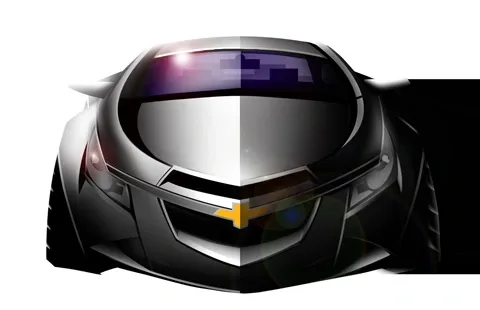
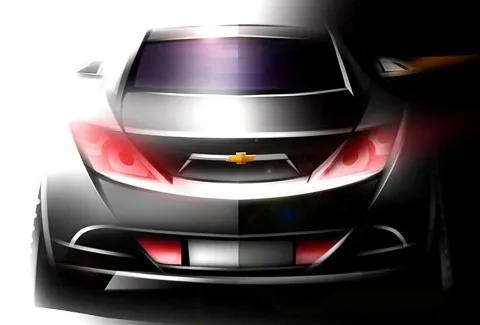
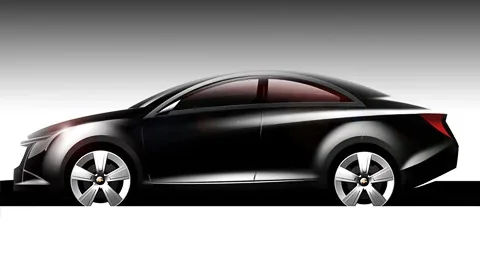
Several GM studios worked on the exterior, but the concept and its implementation are entirely the merit of the Korean division.
test-drive-15.jpg
test-drive-16.jpg
WTCC
test-drive-17.jpg
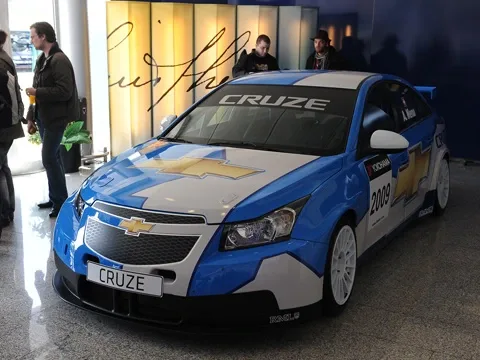
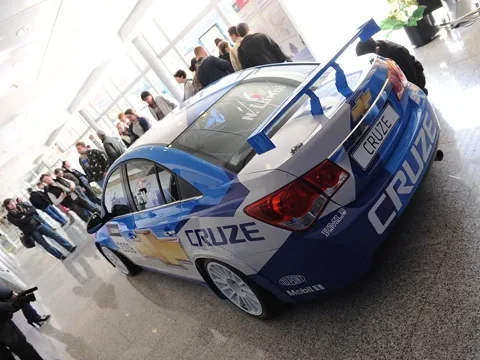
Cruze has already participated in several WTCC rounds, but there have been no loud victories yet. Will it get going?
test-drive-18.jpg
Behind the scenes
test-drive-19.jpg
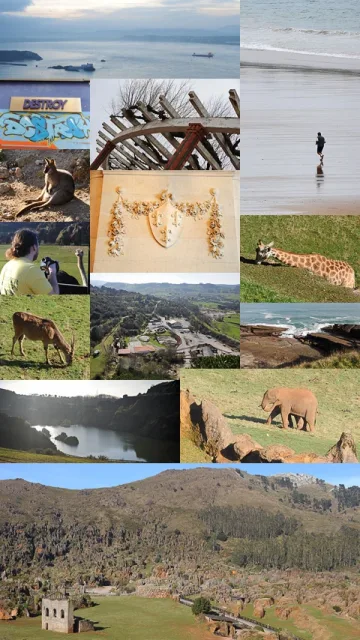
The presentation was held in northern Spain, near Bilbao. Honestly, I hadn't thought there was anything to see in these parts, but I was wrong. I was especially impressed by the national park — essentially a huge zoo that you can drive around by car!