
Chevrolet Captiva. Korean Crusader
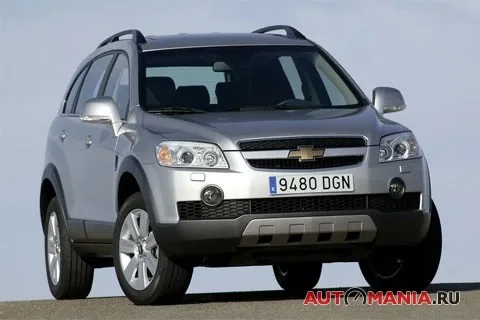
When "Americans" with Korean roots appeared on the market several years ago, they were met with caution. The prospects of the "Eastern Chevrolet" seemed vague then, although the Uzbek Nexia was steadily leading among foreign cars at that time. But for the strengthened brand, everything turned out well: developing markets readily accepted the Lanos, while more discerning buyers favorably received the Lacetti with its Italian charm and the compact Aveo. Oddly enough, more prestigious models also took root in Eastern Europe — the Evanda, its successor Epica, and one of GM-DAT's main hopes, the Captiva. That's what we'll talk about.
The history of Chevrolet SUVs spans more than seven decades — the start was given in 1936 with the Suburban Carryall model. Back then, it was a purely American car, as was the brand itself. But in the era of globalization and fierce competition, relying only on the overseas market is not possible. For General Motors, the Old World became no less important than the New. The concern's arsenal included the inherently European Opel and SAAB, but betting on them was a risk: Opel had only recently begun to rise, and SAAB was still floundering in crisis. So an additional player would have come in handy.
The choice fell on the Asian division of Chevrolet. Entrusting a newcomer with the development of an SUV was a bold step, but politically justified. If the project had failed, the Eastern Chevrolet, which had not yet had time to earn a reputation, would have lost little. And in case of success, the model could become the base for all the others. There was also a marketing calculation: Opel was fighting for compact segments and preparing a new Corsa, while SAAB sales were rapidly falling. One successful crossover would not have saved the situation, but it would not have hurt either.
The Korean engineers of General Motors did a brilliant job. The Americans, of course, shared technologies and the platform, but the contribution of Asian engineers should not be discounted. The exterior, for example, had to be developed almost from scratch. It was clear in advance that the Captiva would become a classic "crossover," but exactly what kind — no one knew. The result was successful — otherwise, the model would hardly have turned into the Antara.
Although who borrowed from whom is a debatable question, because both cars clearly reference the Antara GTC concept shown at the 2005 Frankfurt Motor Show. The muscular "face," elegant optics, dynamic silhouette — all of this debuted right there. The Koreans only had to bring the concept to production state, turning it into a typical compact SUV with moderate dimensions, careful detailing, and solid execution.
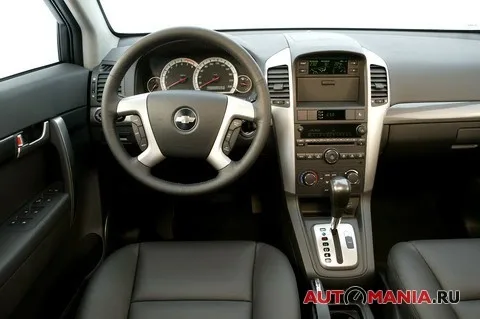
There are almost no complaints about the Chevrolet's appearance — a solid "four plus." But the interior, in my opinion, is somewhat weak, especially compared to its German relative. The monumental and restrained Antara inside resembles the Vectra, while the Captiva's cabin is done in the Asian design school. The front panel, despite its massiveness, looks less "adult" and cohesive. However, this mainly concerns the central console: the climate and audio system blocks in the Opel look more solid, and the vertical ventilation deflectors nowadays look outdated.
There are also questions about the trim materials — the plugs and curtains could have been more expensive. But these are trifles. In terms of comfort and ergonomics, the Captiva will not yield to any "local" competitor. First, it is offered in five- and seven-seat versions. Second, if you fold the rear sofa, a flat area forms behind the front seats. The front seat also folds, so there are no obstacles for transporting long items, especially since the rear window opens separately from the door.
The cabin's advantages do not end there. The front seats with good adjustment ranges and an anatomical profile give an almost perfect seating position. Three people can easily fit in the back — there is enough width. But there will be little legroom, especially for tall passengers. You have to find a compromise between the comfort of front and rear occupants. If the driver's seat is pushed all the way back, the car becomes six-seat — no more than two people will fit in the second row.
Formally, two petrol engines are provided for the Captiva — 2.4 and 3.2 liters. The younger unit is paired with a manual and automatic, the older one — only with an automatic. According to colleagues, the top version drives very briskly. We got the base 137-horsepower engine with a manual. And it is more than enough if you do not demand something supernatural from the car. In city traffic, the owner of such a car will feel confident.
The short "stick" obediently follows commands, gears engage clearly and without unnecessary noise. True, on the move, the engine has to be "revved" — the gear ratios are selected so that when second has already worked out, third has not yet engaged. Perhaps the gearbox was "tuned" for a diesel, or maybe it's about a hypothetical off-road mode. Although the latter is doubtful: from real "off-roaders," the Chevrolet got only increased ground clearance and black plastic body cladding, so it is better not to venture onto a weakly fortified track.
The Captiva's transmission is typical for a "crossover" — permanent front-wheel drive and a rear axle connected by a clutch. The electronics decide when to engage the rear wheels, leaving the driver the role of observer: no forced switches or "washers." On light off-road, the Chevrolet feels confident — the rear wheels engage quickly and clearly. But on a clay dirt road after rain, it spins mercilessly. Another problem also surfaces here — the clutch is prone to overheating, like all similar models, and after that it simply turns off. This is treated simply — you need to let the unit cool down, and everything works again.
|
Technical specifications: Chevrolet Captiva |
|
|
Length (mm) |
4635 |
|
Width (mm) |
1870 |
|
Height (mm) |
1755 |
|
Wheelbase (mm) |
2705 |
|
Weight (kg) |
1730 |
|
Trunk volume (l) |
465/930 |
|
Engine displacement (cc) |
2405 |
|
Max power (hp) |
137 at 5000 rpm |
|
Max torque (Nm) |
220 at 2200 rpm |
|
Max speed (km/h) |
185 |
|
Acceleration 0–100 km/h (s) |
11.5 |
|
Average fuel consumption per 100 km (l) |
9.3 |
|
Price (RUB) |
798,700 – 1,064,900 |
Source – AUTOMANIA.RU