
Advertising
About the BMW brand
Germany founded in 1917 Model range
General Information
BMW (Bayerische Motoren Werke AG) is a German automotive company specializing in the production of passenger cars, sports cars, SUVs, and motorcycles.Headquarters are located in Munich.
Corporate History
In 1913, on the northern outskirts of Munich, Karl Rapp and Gustav Otto, son of internal combustion engine inventor Nikolaus August Otto, founded two small aircraft engine companies. World War I immediately brought numerous orders for aircraft engines. Rapp and Otto decided to merge into a single aircraft engine plant. Thus, in Munich, an aircraft engine factory was established, which in July 1917 was registered under the name Bayerische Motoren Werke ("Bavarian Motor Works") - BMW. This date is considered the founding year of BMW, with Karl Rapp and Gustav Otto as its creators.After the end of World War I, the company was on the verge of collapse because Germans were prohibited from producing aircraft engines, which were the only product of BMW at the time. However, enterprising Rapp and Otto found a way out - the plant was repurposed to first produce motorcycle engines and then motorcycles themselves.
In 1923, the first BMW motorcycle, the R32, rolled off the assembly line, immediately gaining a reputation as a fast and reliable machine, confirmed by absolute speed records in international motorcycle races of the 1920s and 1930s.
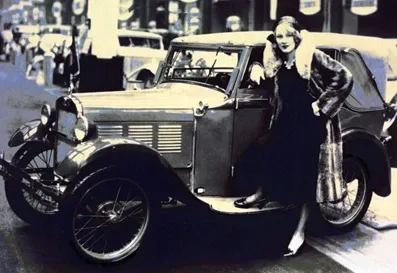
In 1928, the company acquired automobile plants in Eisenach (Thuringia), along with a license to produce the small car Dixi (a licensed version of the British Austin 7). Production began in 1929, and the Dixi became the first BMW car.
By the start of World War II, BMW was one of the most dynamically developing companies in the world, producing sports-oriented vehicles. Its achievements included several world records: Wolfgang von Gronau crossed the North Atlantic from east to west in an open Dornier Wal seaplane equipped with a BMW engine; Ernst Henne on an R12 motorcycle with a cardan drive, hydraulic shock absorbers, and telescopic fork (a BMW invention) set a world speed record for motorcycles at 279.5 km/h, unsurpassed for the next 14 years.
In 1933, production began on the "303" model, the first BMW car with a 6-cylinder engine. This model was the first to feature the characteristic radiator grille, popularly called BMW's "nostrils." These nostrils became a typical design element of all BMW cars.
In 1936, BMW launched the famous "328," one of the most successful sports cars. For its time, it featured avant-garde technical innovations: a tubular frame, a 6-cylinder engine with a light-alloy cylinder head, and a new valve mechanism with pushrods. With the 328 model, BMW became so famous in the second half of the 1930s that all subsequent cars with the company's two-color emblem were perceived by the public as a symbol of high quality, reliability, and beauty.
1938 - BMW acquired a license for Pratt & Whitney engines. Subsequently, the 132 model was developed and installed on the famous Junkers Ju 52. The same year saw the creation of the fastest pre-war motorcycle model, with a speed of 210 km/h. In 1939, German racer Georg Meier became European champion on this motorcycle.
The outbreak of war led to a halt in car production. Priority was again given to aircraft engines.
In 1944, BMW became the first in the world to start production of the BMW 109-003 jet engine. Rocket engine tests were also conducted. The end of World War II was a disaster for the company. Four plants located in the occupation zone were destroyed and dismantled. The main plant in Munich was dismantled by the British, who issued an order prohibiting production for three years.
Rapp and Otto, remaining true to their love of engines, decided to start from scratch again. They developed the single-cylinder R24 motorcycle, assembled in workshops almost by hand. It became BMW's first post-war product. In 1951, the first post-war passenger car, the "501" model, appeared. However, it did not bring financial success.
In 1955, production began on the R50 and R51 models, launching a new generation of motorcycles with a fully sprung chassis, and the small car "Isetta," a strange symbiosis of a motorcycle and a car. The three-wheeled vehicle with a door opening forward in the direction of travel was a huge success in impoverished post-war Germany. However, the subsequent craze for large limousines and associated losses brought the company to the brink of collapse. The question of selling the company arose. Mercedes-Benz hastened to announce its purchase, but this was prevented by minority shareholders, employees, and sales agents.
By restructuring its capital, BMW managed to continue its operations. For the third time, the company started all over again.
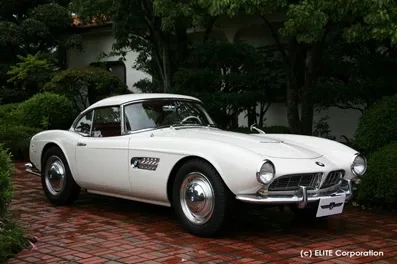
1956 - designer Albrecht Graf Goertz, living in New York, created a sensational car - a sports beauty. "BMW has even beaten the Italians" - newspapers wrote in 1956 when this car, the BMW 507, was presented. A total of 252 such cars were sold from 1956 to 1959. Today, it is one of the rarest and most expensive collector cars.
In 1959, with the help of the new BMW 700 model with an air cooling system, the company managed to overcome the internal crisis and lay the foundation for the brand's future success. Success was achieved not only in sales. The coupe version allowed BMW to achieve sports victories.
In 1962, the concept of the 1500 model - a light, compact, sporty car - was received with such enthusiasm in the market that production capacity could not meet demand.
In 1966, the two-door 1600-2 car was first presented. It served as the basis for the successful series of models from 1502 to 2002 with turbocharging. The successes of the "new class" contributed to the development of the entire model range. The BMW concern was able to revive the tradition of the 1930s and start producing six-cylinder models.
In 1969, BMW moved motorcycle production to Berlin. Production of a new series of motorcycles - "opposites" - began. In 1976, the R100 RS motorcycle was the first to feature a full-size fairing. In 1983, one of the most popular motorcycle models, the K100, was released.
In the 1970s, the first cars of the famous BMW series appeared - the 3 Series, 5 Series, 6 Series, and 7 Series models. The production of the 5 Series marked the beginning of a fundamentally new generation of BMW models. While the company had previously primarily occupied the niche of sports-type cars, it now also took its place in the segment of comfortable sedans. In 1977, a new breakthrough in the luxury class. With the advent of the 7 Series, the fundamental renewal of all BMW series was completed.
Since 1986, the BMW M3 has been the most successful car for road racing in the world. The compact two-door model was developed simultaneously for series production and motorsport. The result was simply triumphant for BMW. In 1987, Italian Roberto Ravaglia won first place in the World Touring Car Championship. And over the next five years, the BMW M3 dominated the sports scene.
In 1987, a new roadster, initially conceived as just an experimental model, continued the tradition of BMW roadsters from the 1930s and 1950s. The BMW Z1 was built in 8,000 units and featured ultra-modern technologies. The aerodynamics of this car were also exemplary. In 1987, BMW was one of the first in the world to use an electronic engine power control system.
In 1990, a new dream coupe: the BMW 850i. The heart of this elegant luxury coupe was a 12-cylinder engine that could literally shoot the car forward from any rpm. A completely new integral rear axle combined sporty qualities and the highest comfort in a unique way.
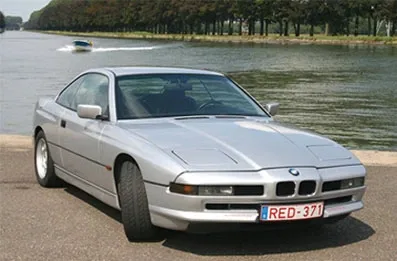
In the year of German reunification, the company, by founding BMW Rolls-Royce GmbH, returned to its roots in aircraft engine manufacturing, and in 1991 presented the new BR-700 aircraft engine. In the early 1990s, sporty compact cars of the third generation 3 Series and the 8 Series coupe appeared on the market.
In 1994, for 2.3 billion German marks, the company purchased the industrial group Rover Group, along with the largest complex in Great Britain for producing cars under the brands Rover, Land Rover, and MG. With this purchase, BMW's car lineup was supplemented with missing ultra-small class cars and SUVs.
Since 1995, all BMW cars have been equipped with a front passenger airbag and an anti-theft engine immobilizer as standard. In March of the same year, production of the 3 Series Touring began, which was distinguished not only by modern design but also by the most advanced technology. For example, for the first time in automotive history, the chassis was almost entirely made of aluminum.
In 1996, the BMW Z3 7 Series model was the first to be equipped with a diesel engine. The unique synthesis of dynamism and classic design represents a simply delightful concept. Additional advertising for the car was provided by the film "GoldenEye," in which super agent 007 James Bond drives the Z3. The BMW Z3 became a bestseller. The new plant in Spartanburg could not keep up with all orders.
In 1997, a motorcycle that leaves no one indifferent - the R 1200 C model - represents a completely new interpretation of a road motorcycle. The same year, BMW presented another dream car - the M Roadster, which, like no other, is the true embodiment of a purebred open sports car.
In spring 1998, the fifth generation of the successful 3 Series sedans debuted. Redesigned in many details, the new 3 Series offers not only an exceptional appearance but also the most modern engines, the latest suspension technologies, and the best safety standards in its class.
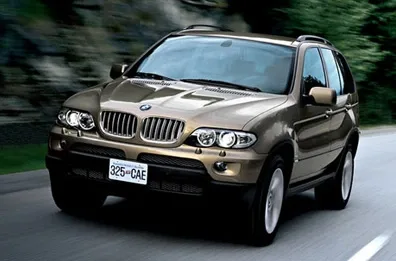
The beginning of 1999 was marked by the debut of the BMW X5, which became the world's first Sports Activity Vehicle: a car that uniquely combines elegance and practicality, thereby opening a new dimension of mobility.
And another first: the BMW Z8, a great sports car, celebrated its premiere in 1999 and delighted James Bond fans in the film "The World Is Not Enough."
In 1999, BMW also surprised automotive enthusiasts at the Frankfurt Motor Show by presenting the futuristic Z9 Gran Turismo concept.
Currently, BMW, which started as a small aircraft engine plant, produces its products at five plants in Germany and twenty-two subsidiaries scattered around the world. It is one of the few automotive companies that does not use robots in its factories. All assembly on the production line is done manually. At the end, only computer diagnostics of the car's main parameters are performed.