— By abandoning the mechanical selector for the automatic transmission in favor of an electronic one, we freed up space on the center tunnel for two large cup holders, so feel free to take a double supply of water on the road! — they told us before the first drive in the new BMW X5.
A double supply of water is, of course, great: it was hot in Athens. But the fact that the design changes are driven by the desire to free up space for cup holders... Has the X5 really turned into an ordinary family crossover? Surely, by stuffing the car with all these systems — AdaptiveDrive, Active Steering, xDrive, iDrive, Dynamic Stability Control, and Electronic Gear Selector — Munich was aiming to cater not just to "ordinary" drivers, but also to "ordinary American" ones? And what about the seven-seat cabin? Is the BMW X5 still a crossover with a sporty, fighting character, or has the car been turned into an all-wheel-drive van under pressure from marketers?
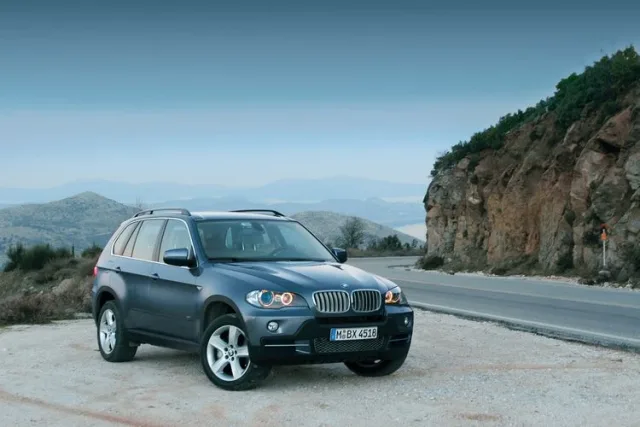
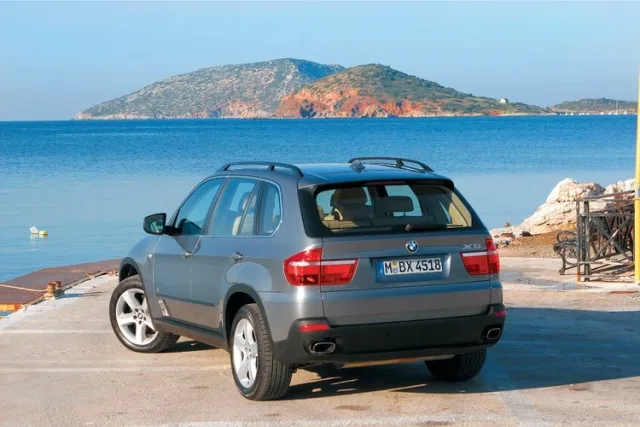
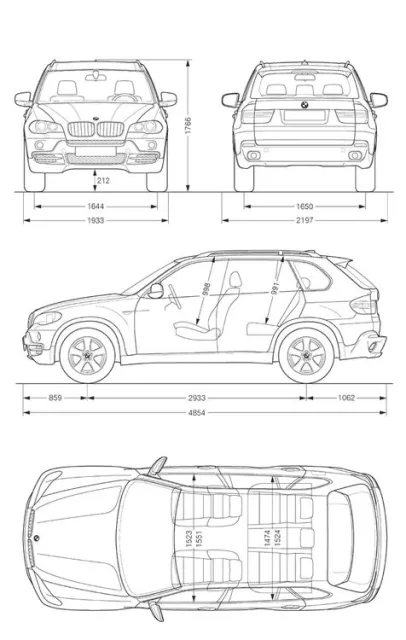
It hasn't been turned. Despite the BMW X5 becoming 18.7 cm longer and 6.1 cm wider, it has retained its face and proportions. The designers managed to distribute the "extra" centimeters very rationally along the entire body length, increasing the wheelbase by 11.3 cm. The car doesn't feel bulky; moreover, it now resembles the compact BMW X3, especially in the "three-quarter rear" view. And — no revolutionary design solutions! The sloping fifth-door line, "muscular" wheel arches, large "nostrils" on the hood, massive composite front bumper... And the tailgate is still split, though the lower section has become smaller — this makes loading luggage easier. And if the headlights are now slightly slanted, it doesn't spoil the still-masculine face at all. By the way, the headlights on the X5 with "ring-shaped daytime running lights" now ensure 100% identification even at night: this is a BMW.
There are more changes in the cabin. Like the current "five series," the center console is separated from the tunnel extension and slightly turned toward the driver. Within "wrist reach" are the controls for the dual-zone climate control and eight "hot" buttons, each of which can be programmed to your liking: for example, for quick dialing of specific phone numbers, entering a known destination for the navigation system, or tuning the radio to a favorite station. This is to avoid digging through the depths of the iDrive system that has appeared here. And iDrive has become friendlier: the menu now has only four main sections, and the cryptic abbreviations that annoyed in the BMW 7 Series have disappeared. But, as before, iDrive refused to communicate with me in Russian. No doubt, Munich is convinced that Russian buyers of the X5 know at least one foreign language. But I'm not convinced.
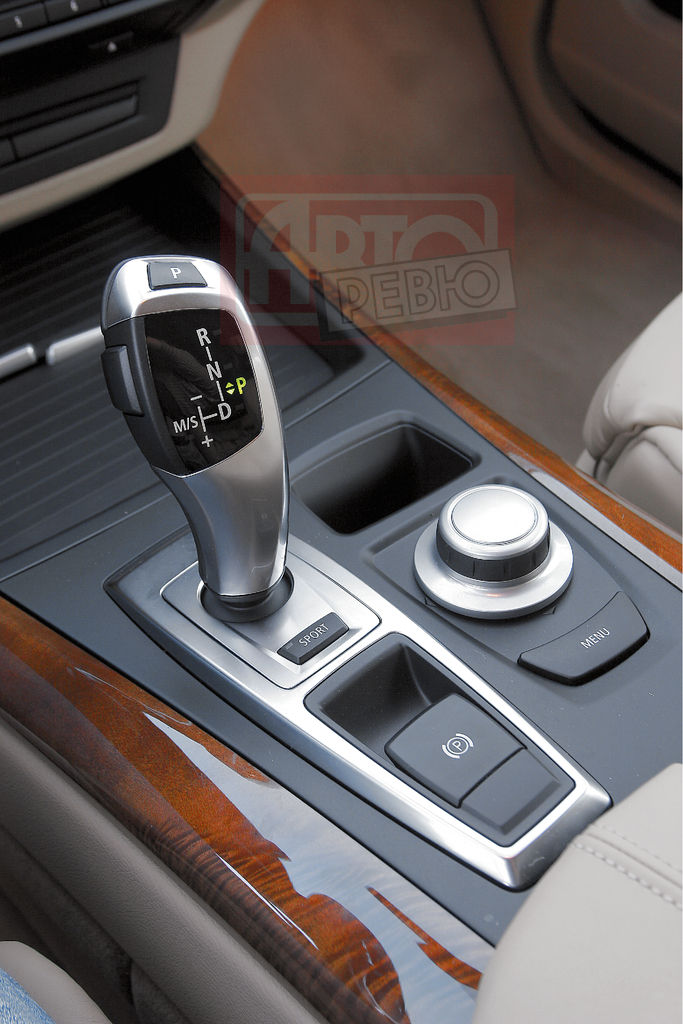 | 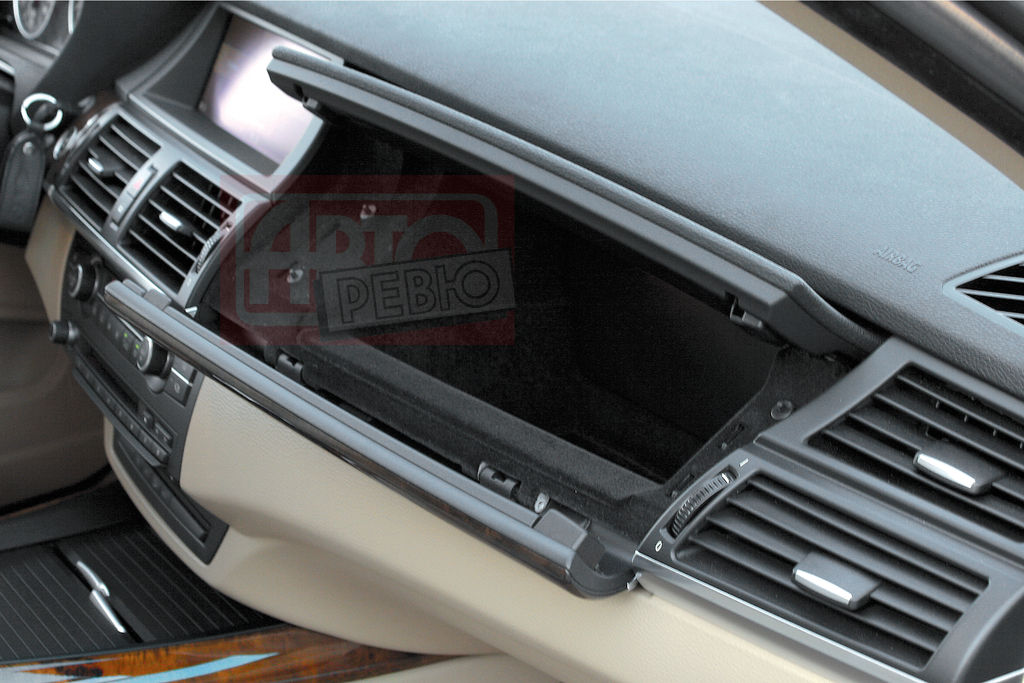 |
| Pushing the electronic joystick to the left switches the "automatic" to sport or manual mode, where gears are changed with longitudinal movements of the lever. The Sport button changes suspension settings | The "glove box" now has a split lid, but it's very small |
However, iDrive is far from the only new feature. Take, for example, the joystick for controlling the "automatic" — the very one that allowed large cup holders to be placed on the tunnel. Like the steering column selector on the BMW 7 Series, it has no fixed positions: pull the lever toward you — Drive mode engages; push it away — reverse engages. And Parking mode is activated by a button on top of the lever. It's unusual. But thanks to well-calibrated resistance and clear indication, within fifteen minutes I was manipulating the joystick almost automatically. The only thing I didn't like was the inconvenient shape of the selector: it doesn't fit well in the hand.
But the plump three-spoke steering wheel feels great in the hands. And the seat leaves a pleasant impression. Not enough lateral support? Then you can order sport seats with an adjustable backrest, like on the "five series."
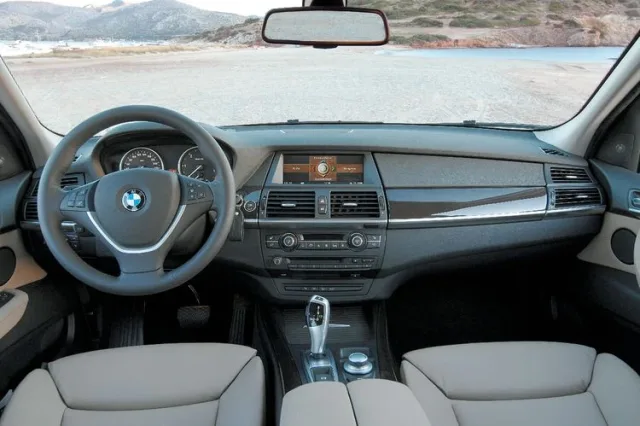
Overall, the interior is a model of functional, stylish, and expensive minimalism. Nothing in common with the optitronic iconostases of Mercedes and Audi: a BMW driver needs to watch the road, not get distracted by trifles. By the way, you can ignore the instruments in the new X5 altogether if you order the head-up display already familiar from other BMW models.
By and large, the new BMW X5 has no fundamentally new technologies or systems: everything, including chassis components, has already been "tested" on other models. Active Steering has moved from the "five series," electronically controlled shock absorbers from the "seven series," adjustable stabilizers (Dynamic Drive) are also among the options for the "five" and "seven," and the DSC stability system is used on all BMW models. The upgraded six-speed ZF "automatics" are familiar from the new BMW 335i coupes, and the xDrive all-wheel-drive system has been used on all-wheel-drive "five series" for two years, on the BMW X3, and it also equipped the "old" BMW X5 after the facelift. The innovation is only that all these systems are combined in a vehicle with a relatively high center of gravity, which required a complete revision of control programs. By the way, at the design stage it became clear that the speed of the previous communication channels was no longer sufficient: for data exchange between sensors, control units, and numerous actuators, a new FlexRay system is used — its bandwidth has increased 20 times, from 0.5 to 10 MB per second, thanks to which the response time of active shock absorbers and stabilizers has decreased from 10 to 2.5 milliseconds.
The engine lineup has changed. Of the two gasoline V-shaped "eights" (4.4 L and 4.8 L), only the top version 4.8 L with 355 hp remains. And even though the engine lost 5 hp, it has become quieter, more balanced, and more economical: average fuel consumption has dropped from 13.5 to 12.5 L/100 km. But, to look ahead, this has nothing to do with real driving conditions: by the end of my trip, the computer of the gasoline X5 declared that the average consumption was 20 L/100 km.
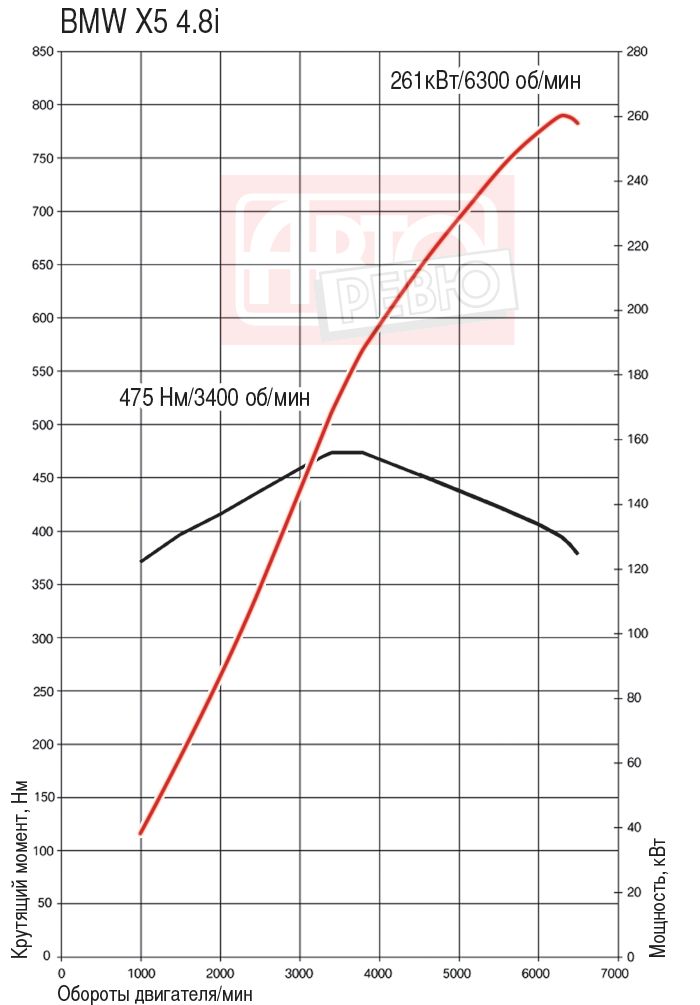 | |
| The gasoline V8 engine with a volume of 4.8 L is equipped with the throttleless Valvetronic system (the amount of fuel-air mixture is metered by valve lift) and the Double Vanos variable valve timing system. Optimized engine control programs, as well as intake and exhaust channels with lower resistance, have reduced average fuel consumption from 13.5 to 12.5 L/100 km | |
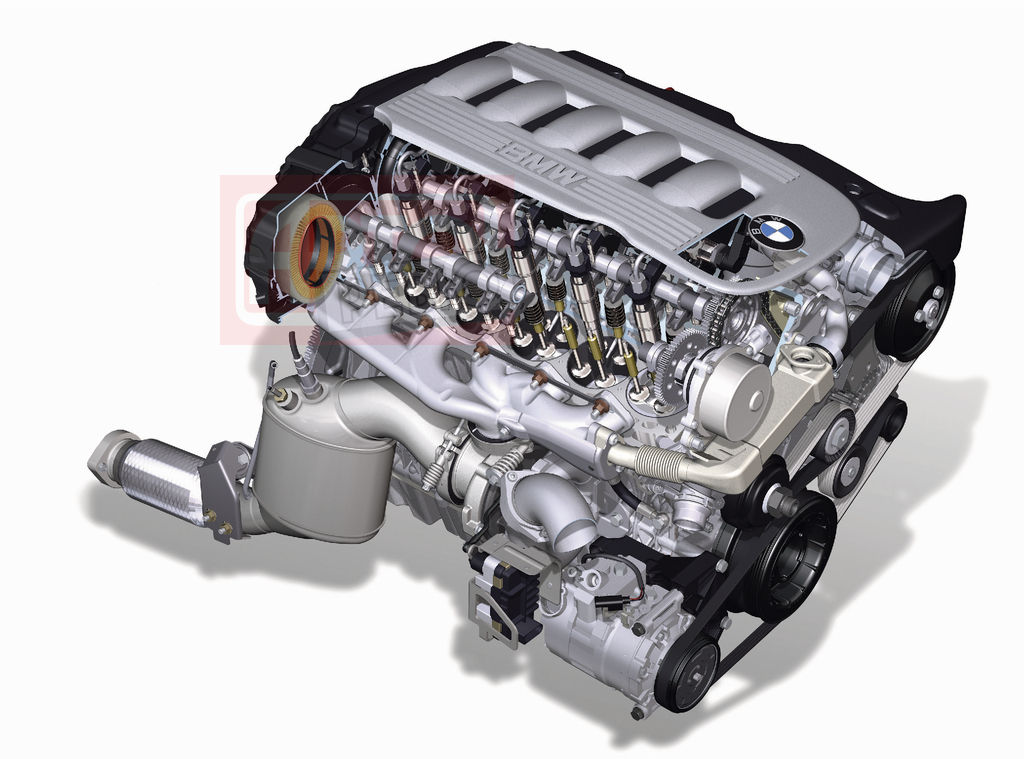 | 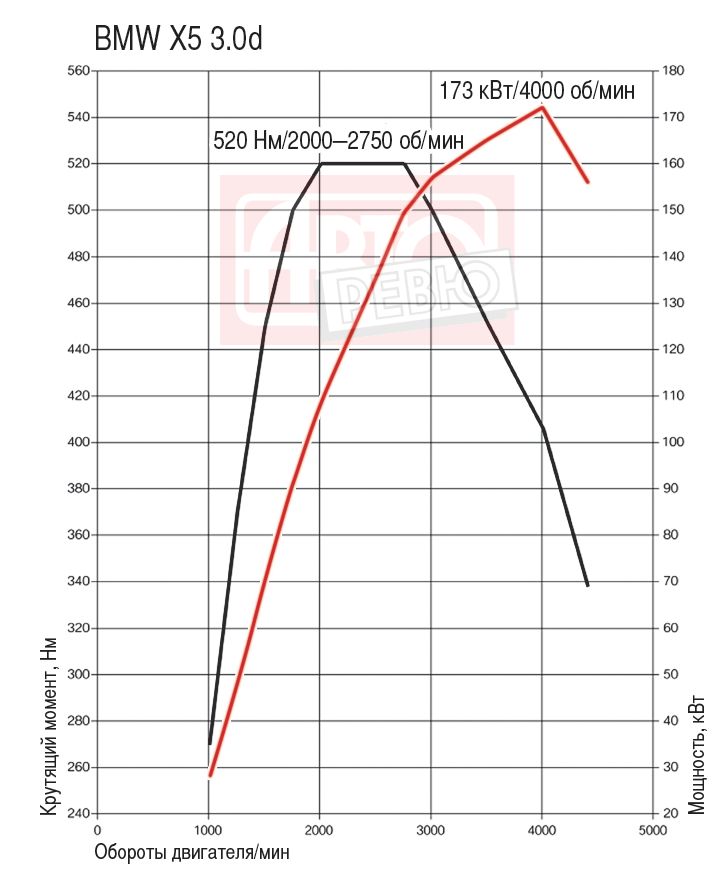 |
| The new three-liter turbodiesel with 235 hp is equipped with third-generation common rail — piezo injectors spray fuel into the cylinders at a pressure of 1600 atm. Maximum torque is 45 Nm higher than that of the gasoline 4.8i engine and is available from 2000 rpm thanks to a turbocharger with variable geometry | |
As before, there are also two three-liter six-cylinder engines: diesel (235 hp) and gasoline (272 hp). Both engines have gained power (17 and 41 hp, respectively) and undergone "liposuction." For example, the diesel engine, by switching to a fully aluminum cylinder block, has shed 25 kg at once! However, Russian consumers may not feel the advantages of the new diesel: it has higher requirements for fuel quality, and now BMW managers are thinking about whether to bring the new turbodiesel to Russia or not. If the decision is negative, the X5s with diesel engines of the previous generation will come to us.
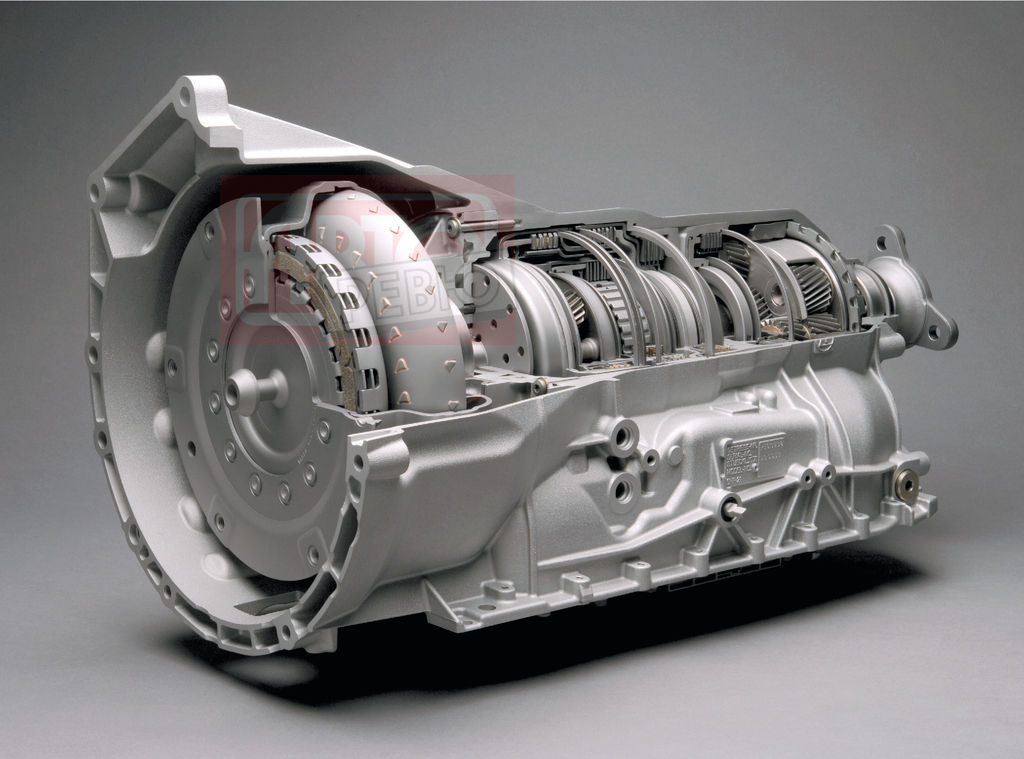 | The upgraded six-speed ZF "automatic" features a torque converter with powerful lockup and "fast" hydraulics, which halves gear shift time |
I'm choosing a BMW X5 4.8i with a full package of electronic systems. Acceleration to 100 km/h in 6.5 seconds? Seems plausible. But it's not about seconds, it's about how the BMW follows the gas pedal — from the get-go, without any eco-friendly compromises! Gears change quickly and smoothly. BMW transmission specialists claim that shift times have been halved. But honestly, I didn't notice any improvement in the automatic's operation — even in the first X5, the gearbox worked flawlessly. The only feature I don't recall is the throttle blips when downshifting: in kick-down mode, the electronics raise revs by one and a half to two thousand, making it easier for the gearbox to drop one or even two gears. So the manual shift mode (which is, of course, also provided) is akin to toys in a mobile phone. Much more relevant is the Sport mode, where the tachometer needle dances in the zone of maximum torque, and during deceleration, the automatic very appropriately engine-brakes. So with such an automatic, you don't need any manual! And there won't be one: less than 5% of all first-generation BMW X5s were equipped with a manual gearbox...
| Each handle has LED lighting |
The brakes are impeccable. In addition to ABS, the braking is assisted by the Dynamic Brake Control (DBC) system and Active Steering. For example, when braking on a split-mu surface, the steering wheel slightly turns toward the more slippery section, preventing a spin. However, there's a problem with the handbrake. It's now electronic, controlled by a button between the front seats. But when you press the gas, the BMW X5 doesn't automatically release the brake, as happens in other cars with similar systems: to release the handbrake, you must press the button while simultaneously depressing the brake pedal. It's cumbersome.
The chassis of my car was literally packed with optional electronics. Adjustable stabilizers, shock absorbers that change resistance depending on driving mode and road conditions, plus Active Steering — a steering mechanism that increases the steering ratio with speed and even corrects oversteer on its own. Overkill?
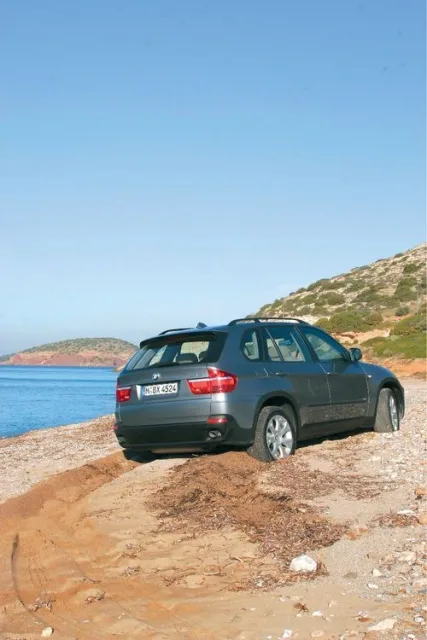
On asphalt tires, and without low-range gearing and adjustable air suspension, the BMW X5 is helpless on any serious off-road terrain
Half the route is already behind, and I don't feel any negative influence from the electronics. On a mountain road, the BMW X5 behaves like a sports coupe: minimal body roll, and you turn the steering wheel half as much as in other cars of this class. But the main thing is that there's no feeling of synthetic driving: I can feel the car perfectly both in sharp corners and on high-speed curves. Under one condition — if you don't push it to the point of sliding. Simulating a mistake, I enter a corner with deliberately excessive speed — and I feel the X5 drifting outward, without warning me with body roll or a drop in steering effort. Of course, a fraction of a second later, the stability control system kicks in, bringing the car back to the correct trajectory, but in that fraction of a second, I've already managed to cross into the oncoming lane.
And what if you press the Sport button, which switches the shock absorbers and stabilizers to a stiffer mode? Comfort decreased — the car began to twitch nervously on small bumps. But now it dives into corners more eagerly, and the handling became more neutral than understeering. Was it my imagination?
— No, it wasn't your imagination, — dispelled my doubts Jos van As, a chassis specialist, — in standard mode, the AdaptiveDrive system settings indeed give the car slight understeer, making it more stable on a straight line.
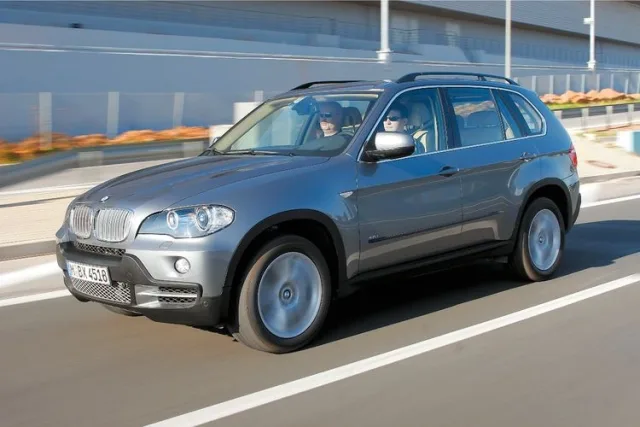
The lowest drag coefficient in its class (0.33) allows the X5 to reach 242 km/h. But the top speed may be limited according to the tire speed rating (H — 210 km/h or V — 240 km/h)
Yes, the AdaptiveDrive system can change the handling characteristics in real time, for example, making the front stabilizer stiffer and the rear softer. And vice versa. At the same time, optimal handling settings should not seriously compromise comfort. Stiff stabilizers, as well as shock absorbers, are good in corners, but on a straight road, ride smoothness suffers. Therefore, if you're speeding along a smooth winding serpentine, the suspension tightens up, automatically switching to Sport mode. But on a straight, uneven road, the stiffness of the stabilizers tends to zero, and the shock absorbers absorb bumps more softly. However, even in such a soft state, the BMW X5 is unlikely to be more comfortable than the Audi Q7 or Mercedes ML 500: in the eternal conflict between comfort and handling, BMW engineers, of course, prefer handling.
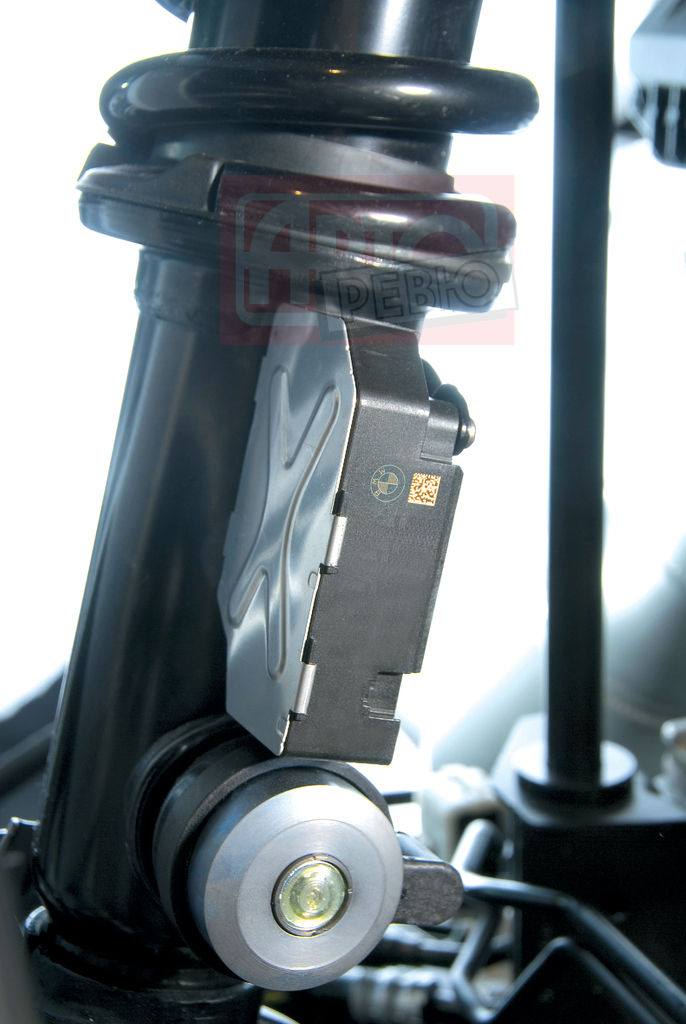 | 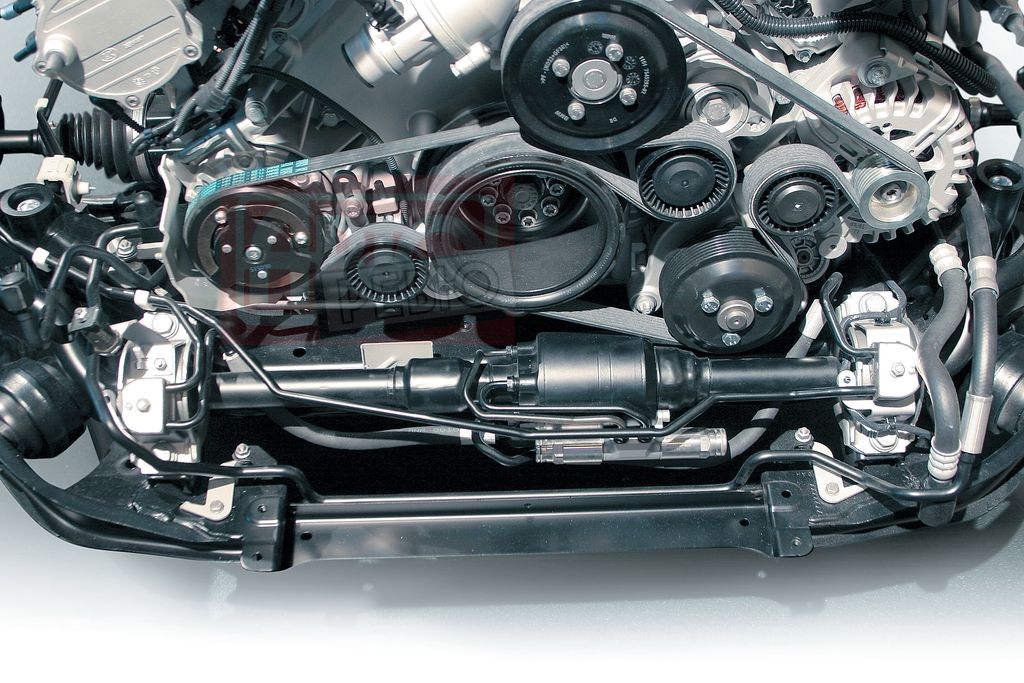 |
| Each Sachs shock absorber has a vertical acceleration and suspension travel sensor. Below the sensor is an electronically controlled valve. On rough roads, the shock absorbers operate in comfort mode, but with increasing speed and lateral acceleration, their resistance increases | The optional AdaptiveDrive system is not only adaptive shock absorbers but also adjustable stabilizers. On a straight road, they are in a relaxed state, but in corners, they effectively counteract body roll — on command from the electronics, the pressure in the hydraulic cylinders connecting the halves of the stabilizers rises to 160 bar |
And they fine-tuned it on the Nürburgring Nordschleife: the car covers the 20-kilometer track in nine minutes, ten seconds faster than its predecessor. And in special exercises — the slalom and the lane change — the new BMW X5, according to testers, significantly outperforms both its predecessor and main competitors, including the Porsche Cayenne and Audi Q7. Let's check.
Another feature was the negative camber of the rear wheels — on the old X5 4.8i, this was visible to the naked eye. But on the new car, the rear wheels seem to be parallel to each other.
— Negative camber increases the car's ultimate cornering capabilities but reduces straight-line stability. On the new BMW X5, good cornering behavior is provided by active stabilizers and shock absorbers, so there's no point in having negative camber now, — explains Jos van As.
— And what about the 20-inch wheels with different-width tires front and rear, which used to be fitted to the top version of the BMW X5? Why are all tires the same now?
— Different-width tires didn't have a significant impact on handling, — Jos's answer was disarming. — The difference in width was only due to the fact that if you put the same wide wheels in the front as in the rear, they would rub against the body and suspension components in corners. We still have an option of 20-inch wheels with 275/40 R20 tires in the front and 315/35 R20 in the rear, but believe me, the main effect is visual. There's also a slight increase in longitudinal grip.
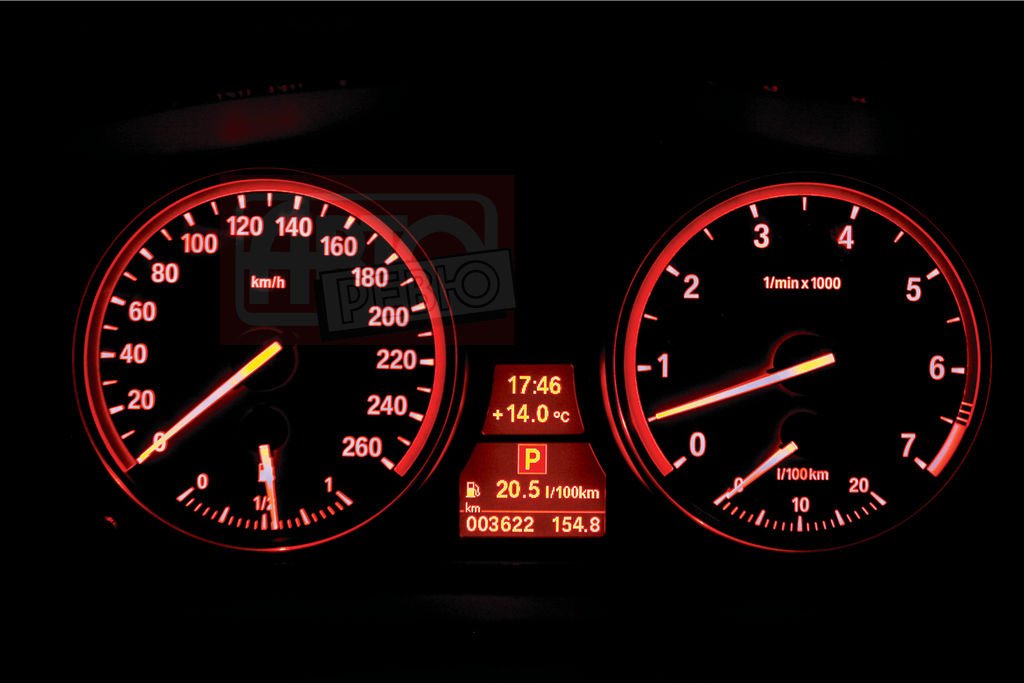 | 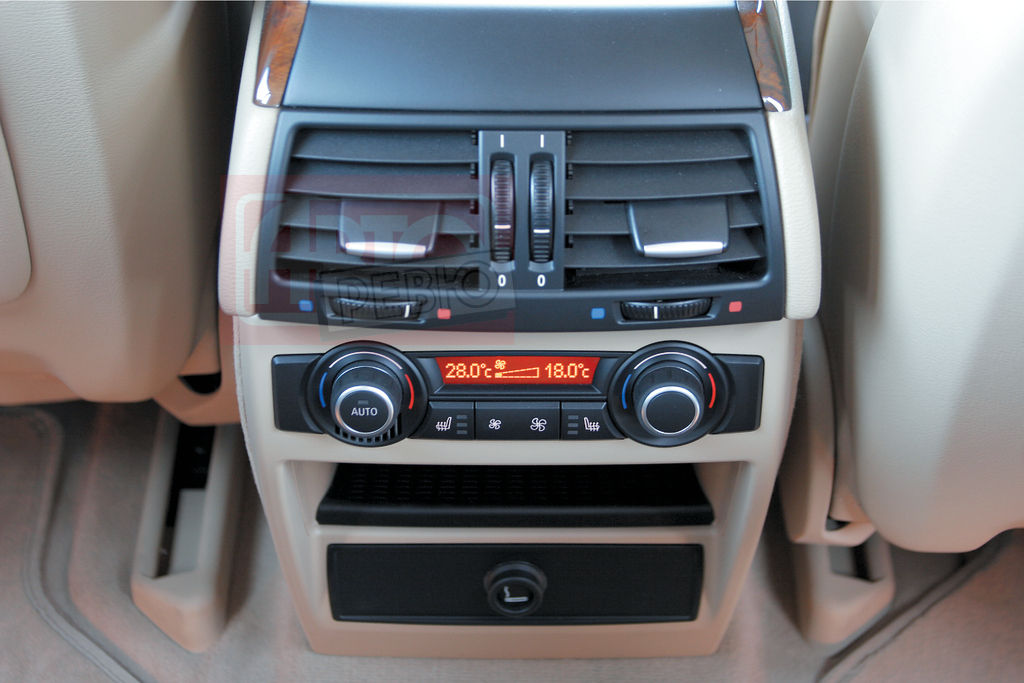 | |
| For an extra charge — a head-up display | Among the modest instruments, there's still an economy gauge. It's always pegged... | For an extra charge — rear two-zone climate control and heated seats |
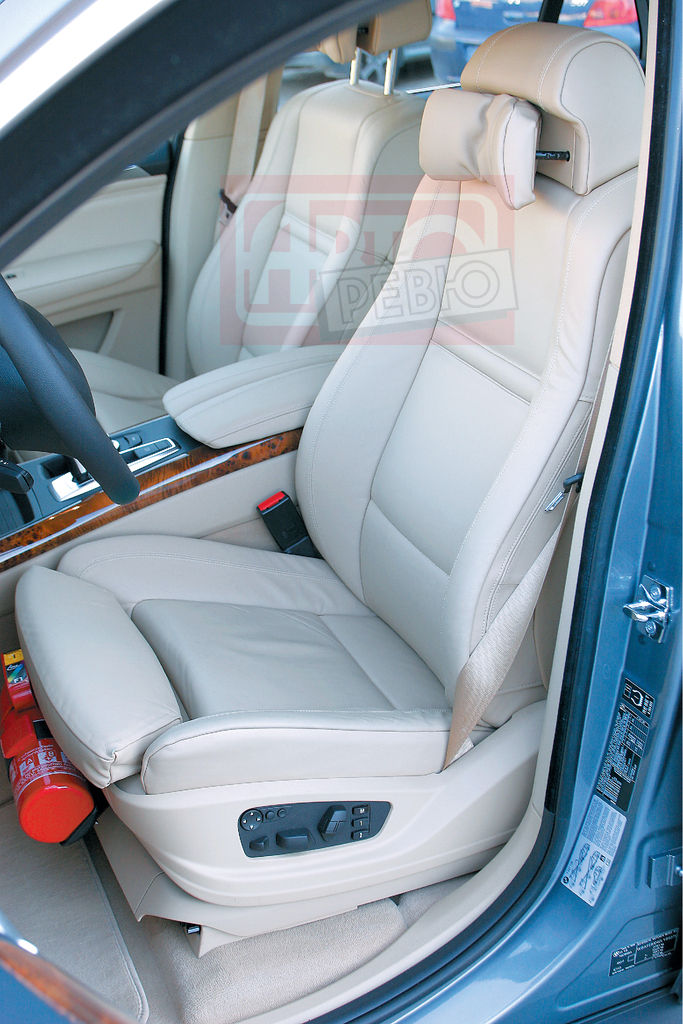 | 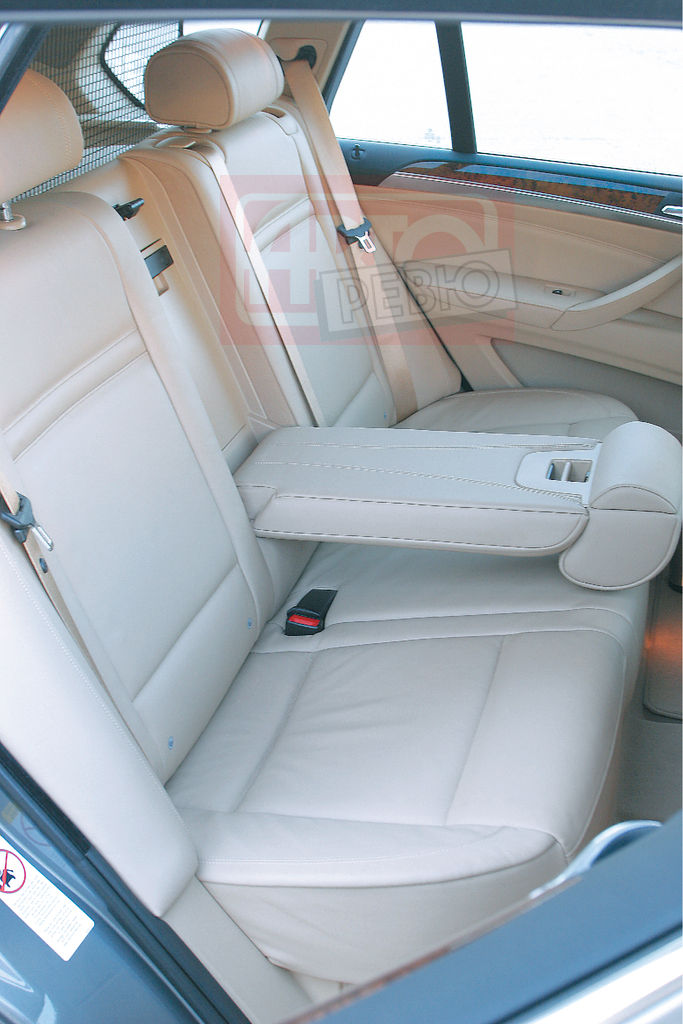 | 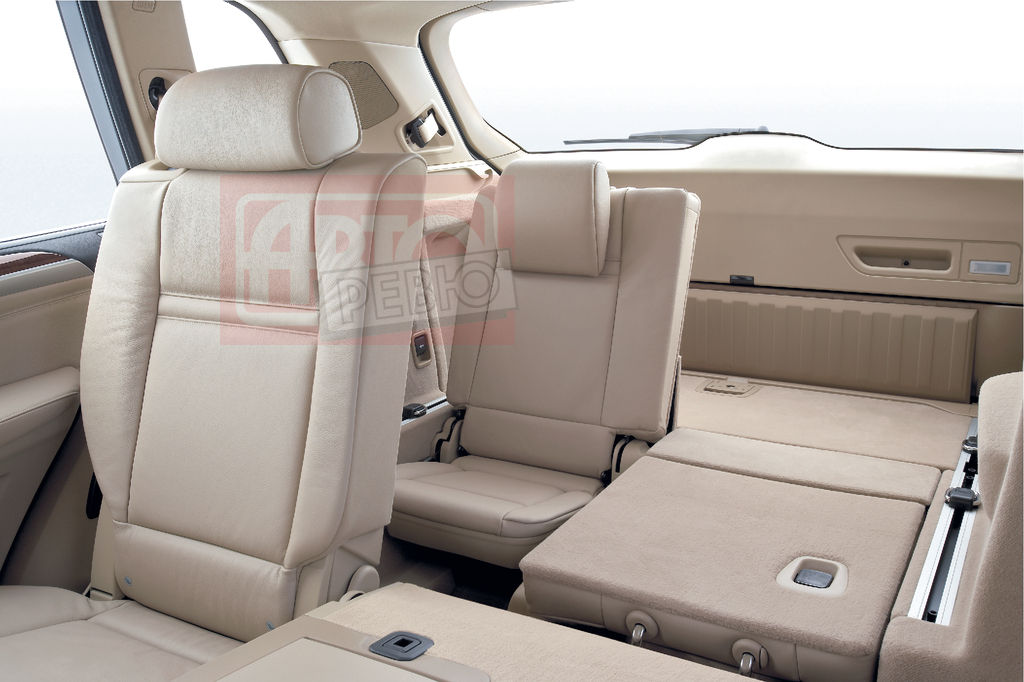 |
| These are standard seats, while sport seats with adjustable side support and ventilation are an extra cost | The rear has become more spacious, with seat adjustments — fore-aft and backrest angle | In the third row, only people up to 170 cm tall can sit comfortably |
I also took a ride in the more affordable version — with a diesel engine and regular suspension. A good, torquey diesel. And it revs up to almost 5000 rpm, providing excellent dynamics. According to the specs, the diesel BMW X5 loses less than two seconds to the top petrol version in acceleration to 100 km/h. But the main discovery for me was the sound — at high revs, the diesel emits a refined growl worthy of Bavarian petrol engines.
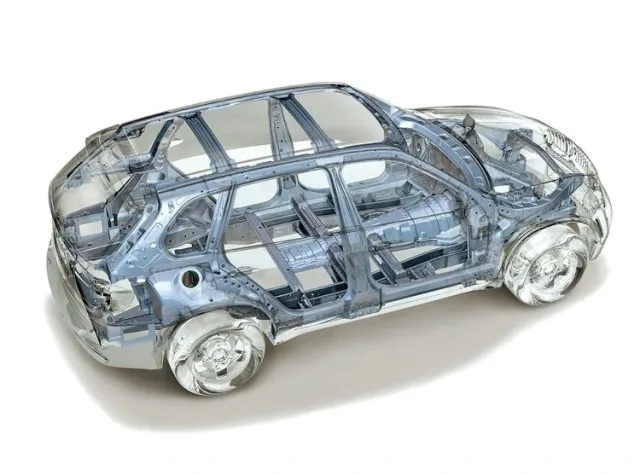
The static torsional rigidity of the body has increased from 23,500 to 27,000 Nm/deg. For comparison: the body rigidity of the BMW Z4 Coupe is 32,000 Nm/deg.
The handling of the car, devoid of "active" systems, left a quite pleasant impression: it is still a car for an active driver! Active and economical: with the same driving style, the computer of the diesel BMW showed a completely different average fuel consumption value — 13.6 l/100 km.
In the SUV guise, the BMW X5 was always a weakling, and now, having lost the air suspension that increased ground clearance by 60 mm, even more so. Pneumatic elements remain only at the rear — to maintain a horizontal body level regardless of load. There is no reduction gear, no mechanical locks in the transmission... As if in justification, BMW people even came up with another abbreviation for the X5 — it is, they say, a SAV, Sports Activity Vehicle, not an SUV, Sport Utility Vehicle. A brave colleague tried to drive onto the beach — and immediately got stuck in the sand.
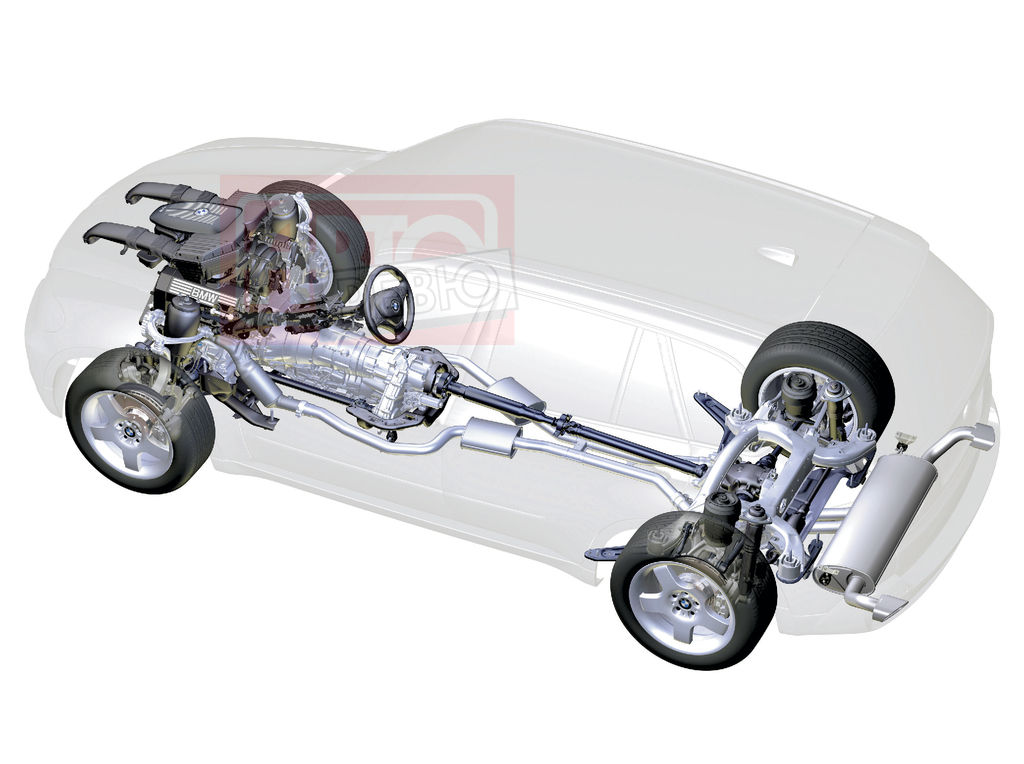 | The xDrive all-wheel drive transmission: as before, in normal straight-line driving, the multi-plate clutch is partially engaged — so that about 40% of the supplied torque is sent to the front wheels. But the electronics constantly "play" with the degree of locking — from fully "released" to fully "clamped" clutch. The response speed of the electric drive is 100 milliseconds |
As before, the BMW X5 will be assembled at the American plant in Spartanburg, closer to the main sales market: almost half of the "X-fives" do not leave the US borders. Americans will also get the right of first night: since November 24, the new BMW X5 is already sold in the USA, and at prices that are ridiculous for us — the BMW X5 3.0si costs $45,900, and the BMW X5 4.8i — $54,500. Europeans, and with them Russians, will have to wait until March 24, 2007. According to BMW representatives, the new car will cost on average 5-8% more than its predecessor. That is, in Russia, the BMW X5 can be purchased for at least 65,000-67,000 euros, and for the top version with a 4.8-liter engine you will have to pay at least 115,000 euros. But there is no doubt that demand will exceed supply, especially over the next two years. BMW fans are already looking for ways to get the new X5 from the first batch.
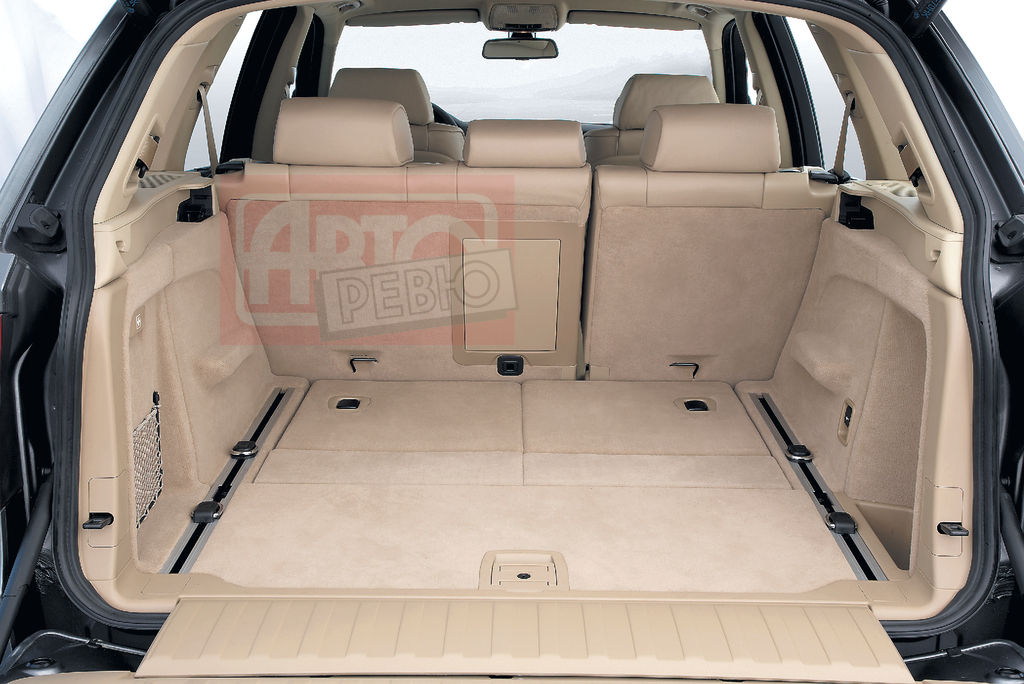 | 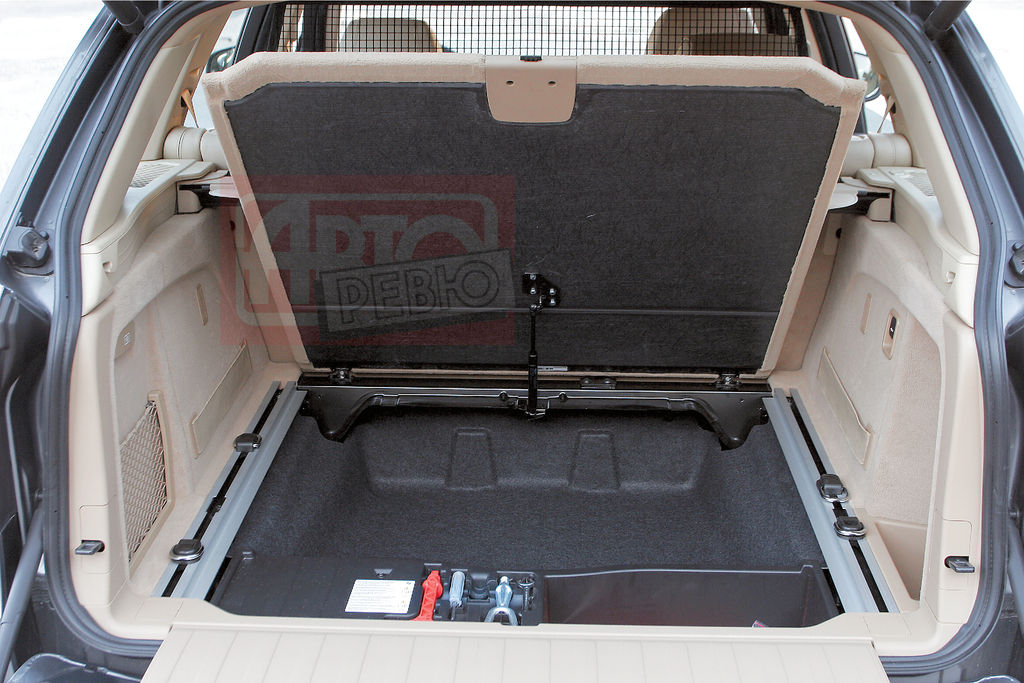 |
| The trunk volume has increased by 110 liters — up to 620 liters. And if you fold the rear seats, the cargo compartment volume reaches 1750 liters | The trunk floor is helped up by a gas strut. And under the floor there is a spacious niche: the BMW X5 no longer has a spare wheel. Already "in the base" the car is equipped with run-flat tires, on which after a puncture you can drive 150 km at a speed of no more than 80 km/h |
| Specifications | |||
| Vehicle | BMW X5 | ||
| Modification | 3.0si | 4.8i | 3.0d |
| Body type | 5-door station wagon | 5-door station wagon | 5-door station wagon |
| Number of seats | 5 (7) | 5 (7) | 5 (7) |
| Approach/departure angle, deg. | 25.4/22.9 | 25.4/22.9 | 25.4/22.9 |
| Trunk volume, l | 620—1750 | 620—1750 | 620—1750 |
| Curb weight, kg | 2125 | 2245 | 2180 |
| Gross weight, kg | 2680 | 2785 | 2740 |
| Engine | petrol, with distributed fuel injection | petrol, with distributed fuel injection | diesel, turbocharged |
| Location | front, longitudinal | front, longitudinal | front, longitudinal |
| Number and arrangement of cylinders | 6, in-line | 8, V-shaped | 6, in-line |
| Displacement, cm³ | 2996 | 4799 | 2993 |
| Cylinder bore/piston stroke, mm | 85.0/88.0 | 93.0/88.3 | 84.0/90.0 |
| Compression ratio | 10.7:1 | 10.5:1 | 17.0:1 |
| Number of valves | 24 | 32 | 24 |
| Max. power, hp/kW/rpm | 272/200/6650 | 355/261/6300 | 235/173/4000 |
| Max. torque, Nm/rpm | 315/2750 | 475/3400—3800 | 520/2000—2750 |
| Gearbox | automatic, 6-speed | automatic, 6-speed | automatic, 6-speed |
| Drive | all-wheel, with multi-plate clutch in front wheel drive | all-wheel, with multi-plate clutch in front wheel drive | all-wheel, with multi-plate clutch in front wheel drive |
| Front suspension | independent, spring, double-wishbone | independent, spring, double-wishbone | independent, spring, double-wishbone |
| Rear suspension | independent, multi-link, pneumatic | independent, multi-link, pneumatic | independent, multi-link, pneumatic |
| Front brakes | disc, ventilated | disc, ventilated | disc, ventilated |
| Rear brakes | disc, ventilated | disc, ventilated | disc, ventilated |
| Tires | 255/55 R18 | 255/55 R18 | 255/55 R18 |
| Maximum speed, km/h | 225 | 242 | 216 |
| Acceleration time 0—100 km/h, s | 8.1 | 6.5 | 8.3 |
| Fuel consumption, l/100 km | |||
| urban cycle | —* | 17.5 | 11.3 |
| extra-urban cycle | —* | 9.6 | 7.2 |
| combined cycle | 10.9 | 12.5 | 8.7 |
| Fuel tank capacity, l | 85 | 85 | 85 |
| Fuel | AI-91—98 | AI-91—98 | diesel fuel |
| * No data | |||